
Mounjaro has become one of the most widely discussed weight loss injections in recent years. It’s only natural to wonder about serious risks — cancer being a big one.

Current human studies show no evidence that Mounjaro causes cancer. The black box warning on the label comes from thyroid tumours found in rodent studies, not from patient data. People with a personal or family history of medullary thyroid carcinoma (MTC) or MEN 2 should avoid this medication.
These questions matter, especially when you’re weighing big health decisions. It’s worth looking at what the research actually says, not just headlines or scary stories. Here’s what the evidence tells us about Mounjaro and cancer risks: the thyroid cancer warning, effects on other cancers, and the safety steps in place.
Key takeaways

Direct answer: does Mounjaro cause cancer?
So, does Mounjaro cause cancer? The short answer: current human studies show no evidence it does.
The boxed warning on the label comes from thyroid tumours found in rodent studies, not from actual patients.
Current human evidence
Researchers have followed thousands of people in tirzepatide clinical trials for years. None of these trials turned up higher cancer rates in those taking Mounjaro.

The main SURMOUNT (Jastreboff et al., NEJM 2022) and SURPASS studies tracked people for up to two years. They checked closely for cancer. The rates for those on tirzepatide looked about the same as those on placebo.
Post-marketing surveillance (ongoing safety monitoring after a drug is approved and in widespread use) keeps collecting real-world data from people using Mounjaro. No cancer signal has emerged so far. These tracking systems stay in place because some effects take time to show up.
Tirzepatide (the active ingredient in Mounjaro) is a dual GLP-1 and GIP receptor agonist. It works on two appetite-regulating hormones instead of one, which distinguishes it from older GLP-1-only medications like semaglutide. Because it affects metabolic pathways throughout the body, researchers have been especially careful to monitor for any cancer signals.
The metabolic improvements, including better blood sugar control, reduced inflammation, and significant weight loss, may actually work in patients’ favour when it comes to long-term cancer risk.
Research on GLP-1 receptor agonists and cancer is ongoing. Scientists still aren’t sure if any effects are direct or indirect.
Sources of the cancer warning
The boxed warning comes from what happened to rodents, not humans.
During pre-clinical testing, rats and mice on tirzepatide developed thyroid C-cell tumours. These are a specific, rare type of thyroid cancer. The warning specifically mentions medullary thyroid carcinoma (MTC) and multiple endocrine neoplasia syndrome type 2 (MEN 2), a rare inherited condition that increases the risk of certain tumours in hormone-producing glands. If you or your family have a history of either, you should not use Mounjaro.
How risk is assessed in practice
Doctors weigh the real-world benefits of Mounjaro against the theoretical risks from animal data. For most people, the metabolic improvements from weight loss outweigh the rodent findings.
Before prescribing tirzepatide, your doctor will ask about your personal and family medical history. They’ll focus on thyroid cancer or MEN 2. If you have no history of either, the rodent findings don’t really apply to you.
Always speak to your GP or prescriber before starting Mounjaro, especially if you have a history of thyroid conditions, pancreatitis, or cancer.
Mounjaro and thyroid cancer risks
Animal studies sparked early concerns about thyroid C-cell tumours in rodents on tirzepatide. That’s why the medullary thyroid carcinoma warning exists.
Animal studies and C-cell tumours
Rodent studies showed tirzepatide triggered tumours in thyroid C-cells (specialised cells in the thyroid gland that produce the hormone calcitonin, which helps regulate calcium levels in your blood).
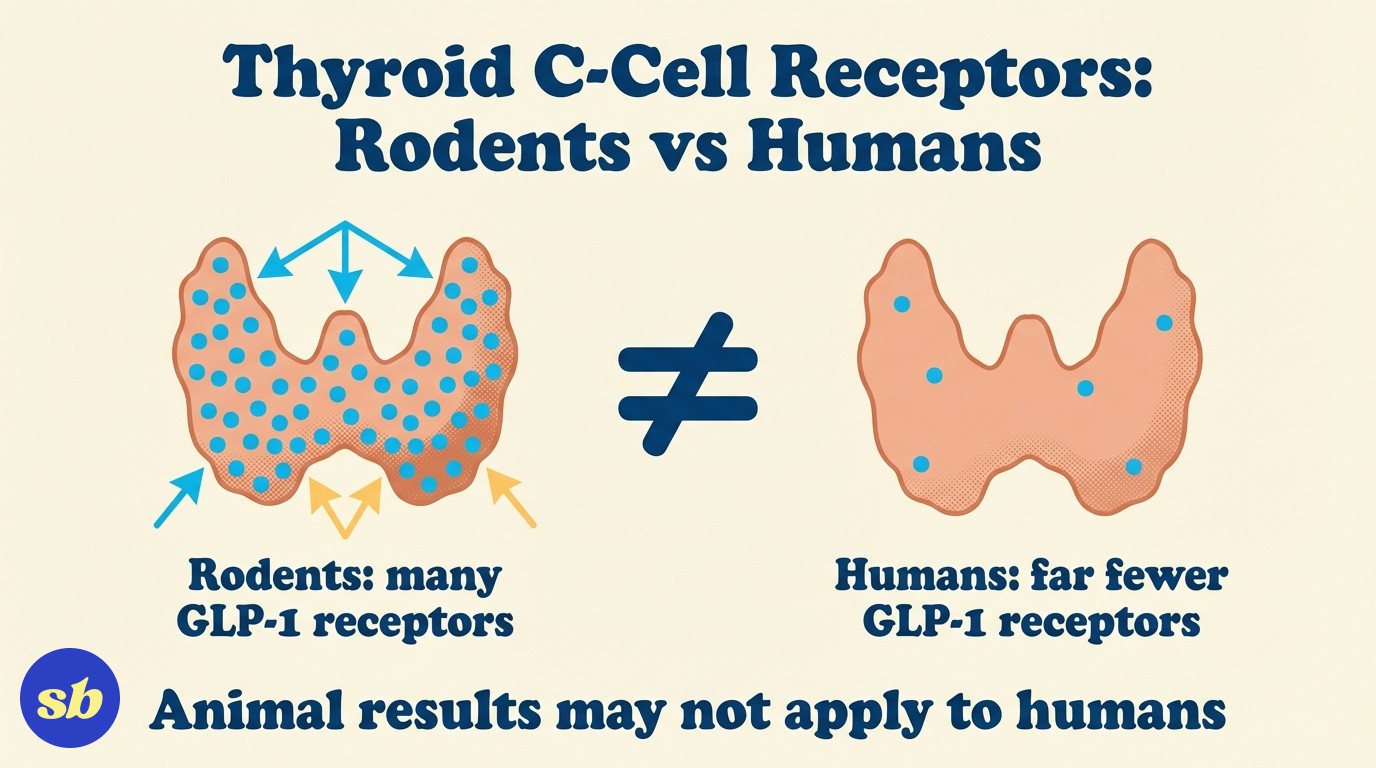
Glucagon-like peptide-1 receptor agonists overstimulated these cells in rodents, leading to abnormal growth. Rodents have far more GLP-1 receptors on their thyroid C-cells than humans, which makes them more sensitive to these effects. This biological difference matters: the animal findings were enough to prompt caution, but they don’t predict what happens in people. That’s why researchers have tracked real-world outcomes for years.
Medullary thyroid carcinoma (MTC) and MEN 2
Medullary thyroid carcinoma is rare, making up just 3–4% of thyroid cancers. It sometimes runs in families, especially with multiple endocrine neoplasia type 2 (MEN 2).
A recent study on thyroid cancer risk in GLP-1 users looked at 98,142 patients with thyroid nodules. The survival probability without developing thyroid cancer was 91%. Compared to metformin users, risk was about the same.
That doesn’t mean zero risk, but it doesn’t look higher than with other diabetes medications.
Guidelines for monitoring and screening
Guidelines don’t call for routine thyroid screening before starting Mounjaro, unless you have risk factors. Your doctor will ask about family history at your first visit.

Contact your GP promptly if you notice any of these symptoms:
- Lump or swelling in your neck
- Trouble swallowing or breathing
- Persistent hoarseness
- Unexplained neck pain
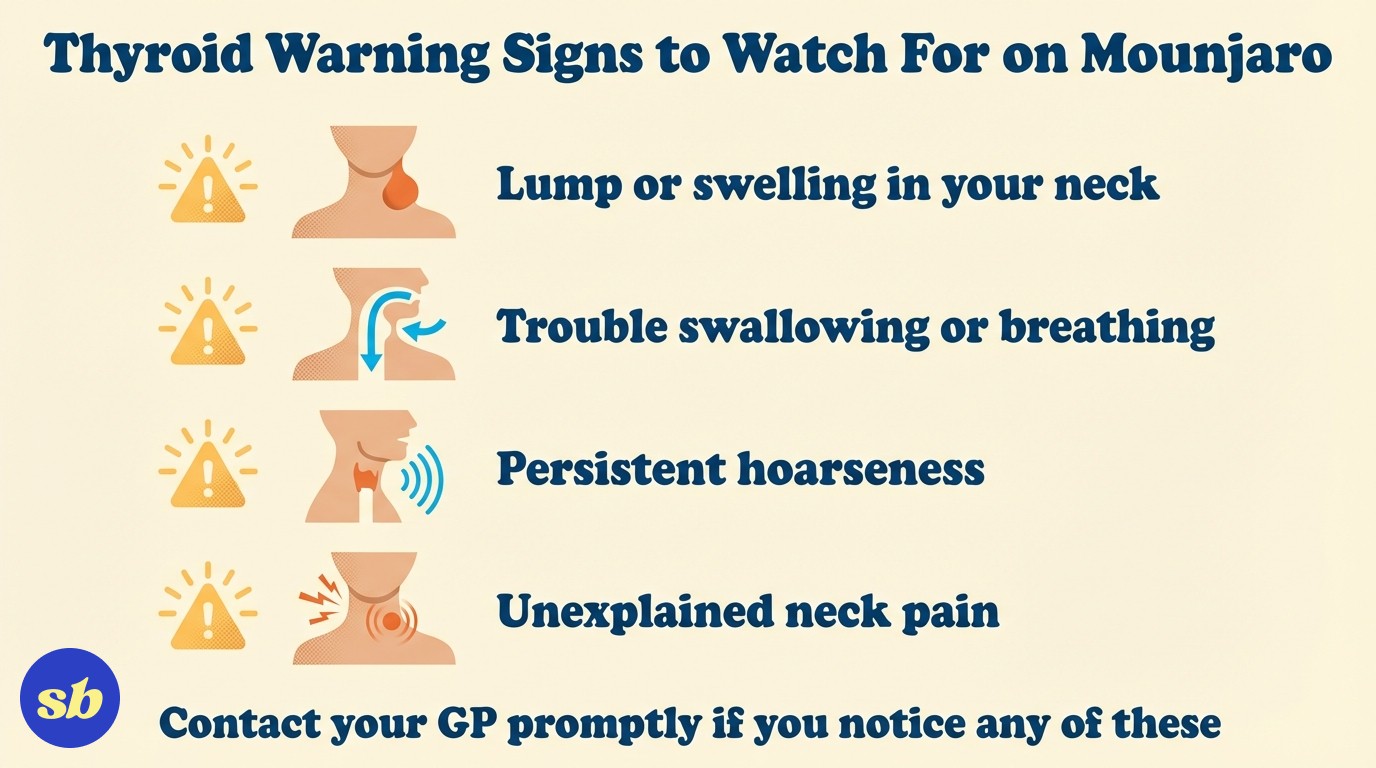
Early detection helps. Most people won’t develop thyroid problems, but it’s good to stay aware.

Seek immediate medical help if you experience:
- Severe abdominal pain, especially radiating to your back (possible pancreatitis)
- Signs of allergic reaction: facial swelling, difficulty breathing, severe rash
- Sudden severe neck swelling or difficulty breathing
Call 999 for suspected allergic reactions or pancreatitis.
Understanding calcitonin and ultrasound use
Some doctors check calcitonin levels before starting GLP-1 drugs. Calcitonin comes from thyroid C-cells. High levels might mean something’s off.
Routine calcitonin testing is controversial, though. It can lead to false positives and unnecessary worry.
Thyroid ultrasound gives a direct look at the gland. It can spot nodules or unusual growths. It’s not standard unless you have symptoms or a high-risk history.
Current evidence doesn’t support a broad increase in cancer risk with GLP-1 receptor agonists. The focus stays on people with known genetic risks, not everyone.
Risks for other cancer types
Researchers are also looking at Mounjaro and cancer risk beyond the thyroid. They’re studying links to pancreatic, breast, and other obesity-related cancers, though results are mixed.
Pancreatic cancer and pancreatitis
GLP-1 medications have raised pancreatic safety questions for years. Some people taking these drugs have developed pancreatitis (inflammation of the pancreas). Chronic pancreatitis can, in theory, raise pancreatic cancer risk over time.
Early studies on GLP-1 drugs like liraglutide raised concerns. Larger reviews haven’t confirmed a clear link. The connection between incretin mimetics (the drug class that includes Mounjaro, Wegovy, and Ozempic) and pancreatic damage is still being studied, especially for those with a history of pancreatitis.
Long-term data on Mounjaro is still limited. It targets both GLP-1 and GIP receptors, unlike older GLP-1-only medications. Whether this changes pancreatic cancer risk is not yet known.
If you’ve had pancreatitis before, most doctors won’t prescribe Mounjaro. It’s just not worth the risk.
Breast cancer and other malignancies
Some early research suggests GLP-1 drugs could actually slow certain cancers. Studies on liraglutide and exenatide showed these medications might reduce breast cancer cell growth in the lab, including in models of metastatic breast cancer where tumours have spread beyond the original site. Research in mice found tirzepatide may slow breast cancer growth (Lu et al., Biomolecules 2022), though animal studies rarely translate directly to humans.
Colorectal cancer research looks similar. GLP-1 drugs seemed to trigger cell death in colon cancer cells and shrink tumours in mice. The effects came from multiple pathways: less inflammation, changes in how cancer cells use energy, and so on.
These are early findings, though. Lab results and mouse studies are just a start. There are no solid human trials showing Mounjaro prevents or fights cancer in real life.
Obesity-related cancer and risk reduction
Obesity raises the risk for at least 13 cancer types, including colon, breast, liver, kidney, and pancreatic cancers (Cancer Research UK). Losing weight lowers those risks, which makes Mounjaro worth considering.
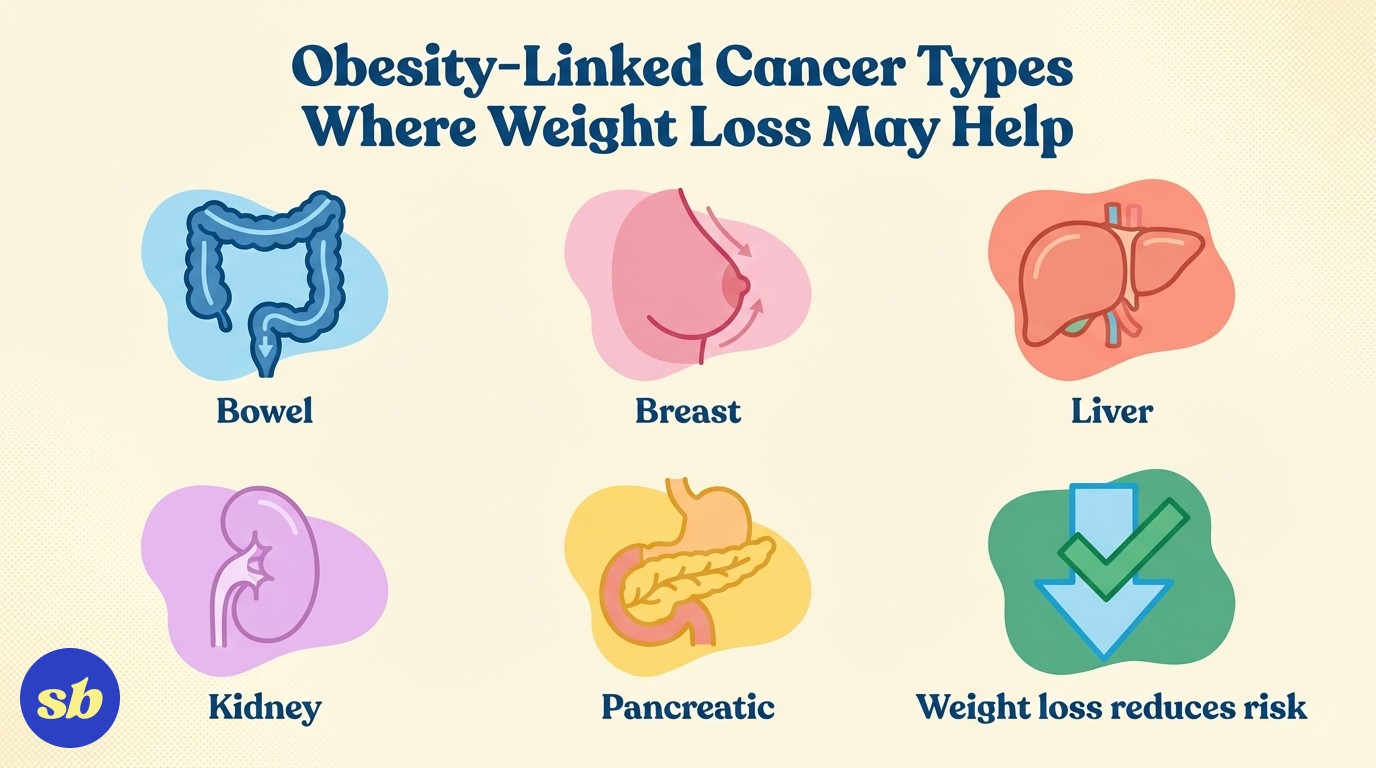
A meta-analysis of weight loss medications and obesity-associated cancer asked if these drugs reduce cancer risk by helping people lose weight. The results looked promising, but most studies didn’t track cancer outcomes directly — they focused on weight loss or diabetes.
The problem is time. Cancer takes years to develop. Mounjaro has only been approved since 2022 for diabetes and later for weight loss as Zepbound. There simply haven’t been enough years to see long-term cancer outcomes.
What we do know: sustained weight loss helps. Whether it’s from Mounjaro, other GLP-1s, or something else, losing extra weight seems to protect against many cancers.
Benefits, considerations, and ongoing safety measures
Mounjaro provides real benefits for weight loss and diabetes, but the cancer question deserves straight talk.
Weight loss, diabetes, and cancer links
In clinical trials, people taking tirzepatide lost an average of 15–22.5% of their body weight over 72 weeks (SURMOUNT-1 trial), and it helps manage type 2 diabetes better than many older medications. Individual results vary significantly.
Research suggests weight loss itself may lower cancer risk. Studies show GLP-1 medications reduced risk for multiple cancer types including pancreatic, colorectal, liver, and kidney cancers compared to insulin. One analysis found GLP-1 users had a 40% lower cancer risk than people who had bariatric surgery, even though they lost less weight (Bezin et al., JCI 2024).
This hints that GLP-1 receptor agonists might protect against cancer through more than just weight loss. Whether it’s inflammation, immune function, or something else isn’t clear yet.
Compared to metformin, Mounjaro showed similar cancer risk for most types. Against insulin, SGLT2 inhibitors (a different class of diabetes medication that works through the kidneys), or sulfonylureas (older diabetes tablets that stimulate insulin release), the GLP-1 group often came out ahead.
The benefits seem strongest for obesity-related cancers. For people with type 2 diabetes and extra weight, that’s worth considering.
Mounjaro also helps regulate blood sugar, reduces levels of the hunger hormone ghrelin, and improves metabolic health more broadly. These changes may contribute to lower cancer risk independently of weight loss, though researchers are still working out exactly which mechanisms matter most.
Side effects and long-term safety profile
Most side effects improve within 2–4 weeks as your body adjusts to each dose, but some people stop because of them. GLP-1 medications have also been linked to a small increased risk of gallbladder problems, including gallstones. Tell your GP if you experience sudden pain in the upper right side of your abdomen.
The safety profile for most cancers looks reassuring so far. Early animal studies showed thyroid problems in rats, and some databases suggested higher thyroid cancer rates, but controlled trials haven’t confirmed a consistent risk. Recent studies found no excess risk for thyroid, breast, colon, or pancreatic cancers with Mounjaro.
Long-term data is still coming in. These medications haven’t been around for decades, so knowledge is still building.
Monitoring, surveillance, and patient advice
Regular check-ups matter when you’re on Mounjaro. Your GP or diabetes nurse should track your response and watch for problems.
What monitoring typically includes:


Cancer screening sticks to standard NHS guidelines. You don’t need extra tests just because you’re taking Mounjaro. Keep up with routine screenings for breast, cervical, and bowel cancer.
How long follow-up is needed after stopping Mounjaro isn’t fully established. Some effects on weight and metabolism fade quickly, while others might persist.
Report any side effects through the Yellow Card scheme (the UK’s system for reporting suspected side effects to the MHRA, available online at yellowcard.mhra.gov.uk). It helps make things safer for everyone.
For a full comparison of available weight loss treatments, see our treatment comparison guide. You can also check our Mounjaro eligibility guide for full NHS criteria.
The bottom line
Current evidence does not show that Mounjaro causes cancer in humans. The black box warning comes from animal studies on a rare type of thyroid cancer, and people with a personal or family history of medullary thyroid carcinoma or MEN 2 should not use this medication. For most people, the weight loss and metabolic benefits of tirzepatide are likely to outweigh the theoretical risks, and losing weight may actually reduce the risk of several obesity-related cancers over time. Speak to your GP or prescriber if you have concerns about cancer risk, and keep up with routine NHS cancer screenings as recommended.
Frequently asked questions
Does Mounjaro cause thyroid cancer?
Animal studies showed thyroid C-cell tumours in rodents given tirzepatide, which is why Mounjaro carries a black box warning about medullary thyroid carcinoma (MTC). Human clinical trials and real-world data have not shown an increased risk. See the ‘Animal studies and C-cell tumours’ section above for a full explanation of why rodent findings may not apply to humans.
Should I get thyroid screening before starting Mounjaro?
Routine thyroid screening is not required unless you have risk factors such as a family history of MTC or MEN 2. Your prescriber will ask about your medical and family history during your consultation. Some doctors may check calcitonin levels, but this is not standard practice.
Can Mounjaro increase my risk of pancreatic cancer?
There is no confirmed link between Mounjaro and pancreatic cancer. Some GLP-1 medications have been associated with pancreatitis, and chronic pancreatitis could theoretically raise cancer risk over time, but large reviews have not confirmed a clear connection. See ‘Pancreatic cancer and pancreatitis’ above for more detail.
Does losing weight on Mounjaro reduce cancer risk?
Obesity is linked to at least 13 types of cancer, including breast, bowel, liver, and kidney cancers (Cancer Research UK). Losing weight is associated with reduced cancer risk. Some research suggests GLP-1 medications like Mounjaro may offer additional protective effects beyond weight loss alone, though more studies are needed.
What are the warning signs of thyroid cancer I should watch for?
Watch for a lump or swelling in your neck, trouble swallowing or breathing, persistent hoarseness, or unexplained neck pain. These symptoms are usually caused by something other than cancer, but contact your GP promptly if you notice them.
Is Mounjaro safer than other weight loss treatments when it comes to cancer?
Studies comparing GLP-1 medications to other diabetes and weight loss treatments generally show similar or lower cancer rates. One large analysis found GLP-1 users had lower cancer risk than those using insulin, and similar risk to metformin users. See ‘Weight loss, diabetes, and cancer links’ above for the full comparison.
How long has Mounjaro been studied for cancer risk?
Tirzepatide was approved for type 2 diabetes in 2022 and later for weight management. Clinical trials tracked participants for up to two years, and post-marketing surveillance continues to collect real-world safety data. Because cancer can take years or decades to develop, long-term studies are still ongoing.
Can I take Mounjaro if I have a family history of cancer?
For most types of cancer, a family history does not prevent you from using Mounjaro. The specific exception is medullary thyroid carcinoma (MTC) or multiple endocrine neoplasia syndrome type 2 (MEN 2) — if these run in your family, Mounjaro is not suitable. Discuss your full family medical history with your prescriber before starting treatment.
This article is for information only and does not replace medical advice. Always speak to your GP or prescriber before starting, stopping, or changing any weight loss medication. If you have concerns about cancer risk, discuss them with your healthcare team.
Sources: