
Starting Mounjaro can feel a bit like wandering into a maze of numbers and timelines. You’ve got your prescription, but now you’re left staring at the box, wondering: what dose do I actually start with? When do I move up? How long do I stay at each level?

Mounjaro (tirzepatide) comes with a structured dosing schedule. You start at 2.5 mg once a week, then increase every four weeks. This gradual approach helps your body adjust and keeps side effects manageable.
Understanding your tirzepatide dose schedule is necessary for getting the best results from treatment. Whether you’re starting Mounjaro in the UK through a private clinic or hoping for NHS access, the dosing pathway follows the same evidence-based approach.
The typical path goes from 2.5 mg to 5 mg, then 7.5 mg, 10 mg, 12.5 mg, and possibly up to 15 mg if needed. Each pen holds four doses, so you’ll use one pen per month at each strength.
It’s easy to get confused, especially when you hear different advice from different providers. This guide makes the Mounjaro dosing schedule less mysterious and more manageable.
Key takeaways

Mounjaro dosage chart: Stepwise dosing explained
Mounjaro uses a gradual, stepwise approach to dose increases. You start low and build up slowly, which helps reduce side effects like nausea. Roughly 1 in 4 people experience nausea, particularly during dose escalation, though this usually improves within 2-4 weeks on a stable dose.
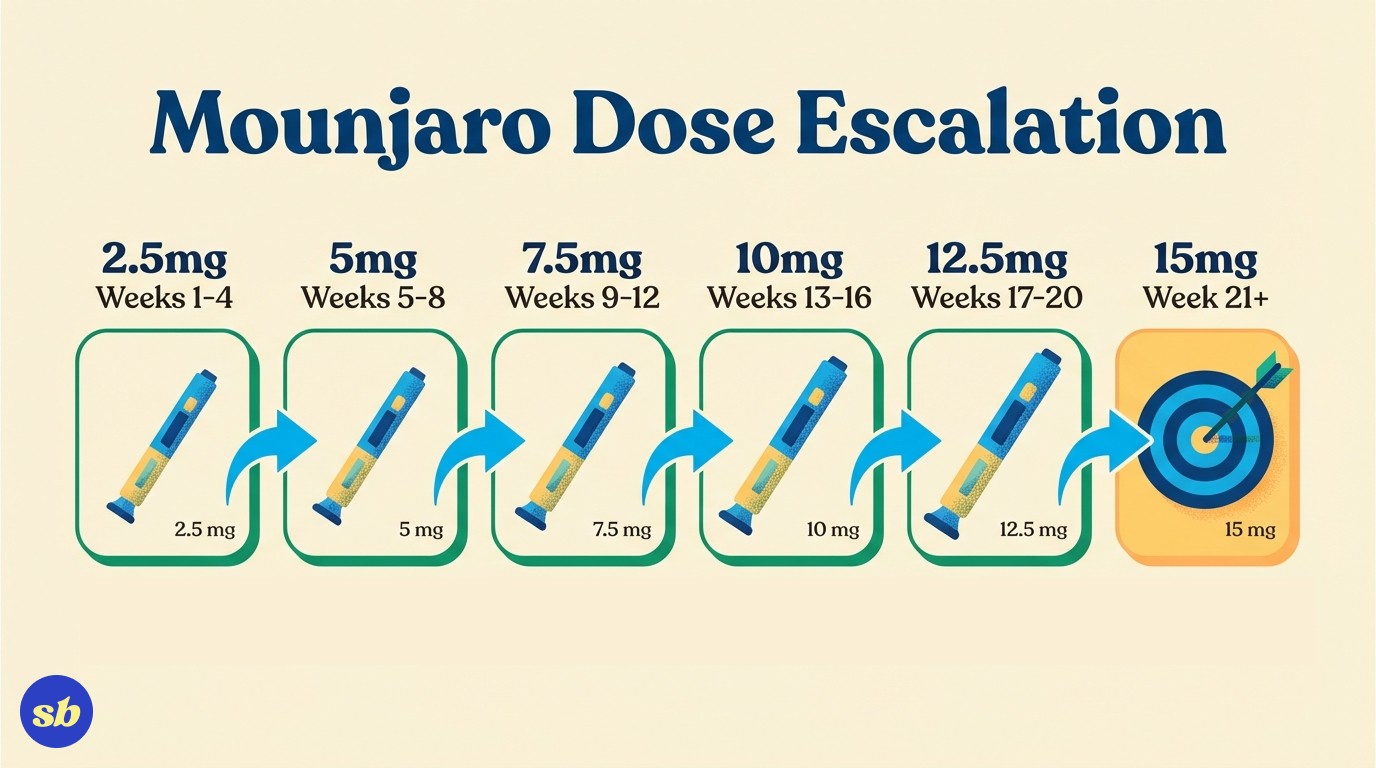
Mounjaro starting dose and dose escalation
Everyone begins Mounjaro at 2.5 mg once a week. This is the standard starting point whether you’re using it for type 2 diabetes or weight management.
The 2.5 mg dose isn’t really about seeing results. It’s about letting your body get used to the medication. Mounjaro is a dual GIP/GLP-1 receptor agonist (glucagon-like peptide-1), which means it works on two appetite-regulating hormones instead of one. This dual action is why it can be particularly effective, but it also means your digestive system needs time to adapt. You stick with this starting dose for four weeks before moving up.
After your first month, your prescriber will increase you to 5 mg weekly. This is where you might start noticing some changes. Some people see weight loss here, but many need to continue increasing to find their effective dose.
Mounjaro pens come pre-filled. No measuring, no guesswork. Just a once-weekly injection under the skin (subcutaneous injection). You inject into your stomach, thigh, or upper arm and rotate sites each week to avoid irritation.

Typical dose increase schedule and timeline
The full dose escalation takes about 20 weeks to reach the 15 mg maximum. That’s roughly five months of gradual increases.
Not everyone goes all the way to 15 mg. Your doctor might keep you at a lower dose if you’re seeing good results and tolerating the medication well.
| Dose | Weeks | Purpose |
|---|---|---|
| 2.5 mg | 1-4 | Body adjustment phase |
| 5 mg | 5-8 | Initial therapeutic dose |
| 7.5 mg | 9-12 | Continuing escalation |
| 10 mg | 13-16 | Higher therapeutic range |
| 12.5 mg | 17-20 | Near-maximum effect |
| 15 mg | 21+ | Maximum approved dose |
The timing matters. If you rush the schedule, you’re more likely to experience uncomfortable gastrointestinal (stomach and digestive) side effects. Your body needs time to adjust to each increase.
Four-week intervals work best for most people, as recommended in the Mounjaro prescribing information. Sometimes you might need to stay at a particular dose longer if side effects are troublesome. That’s completely fine and your prescriber can guide you.
Maintenance doses and staying on track
Your maintenance dose is the one you stick with long-term. Most people settle somewhere between 10 mg and 15 mg weekly, though the right tirzepatide dose for you depends on your individual response.
In the SURMOUNT-1 clinical trial, participants taking the highest dose (15 mg weekly) lost an average of 22.5% of their body weight over 72 weeks. At the 10 mg dose, average weight loss was 21.4%. These are averages, though, and individual results vary considerably.
Factors that affect your maintenance dose:
-
How much weight you’ve lost
-
Whether you’re experiencing side effects
-
Your blood sugar control (if you have type 2 diabetes)
-
How well the current dose is controlling your appetite
-
How you’re tolerating the weekly injection
Some people find their optimal dose at 7.5 mg or 10 mg. They’re losing weight steadily, feeling satisfied after meals, and not experiencing problematic side effects. There’s no requirement to reach the maximum dose if a lower one is working well.
Your Mounjaro pen delivers the exact dose your prescriber has chosen. Pharmacies typically supply boxes with enough pens for four weeks. Each pen is single-use and pre-filled.
The dual GIP and GLP-1 effect (targeting two appetite hormones instead of one) continues working as long as you maintain your dose. If you miss injections regularly, your appetite control may decrease and progress can stall.
Creating your personalised Mounjaro dosing schedule
Your Mounjaro schedule shouldn’t be one-size-fits-all. It needs to fit your body’s response, your goals, and how you’re feeling along the way.
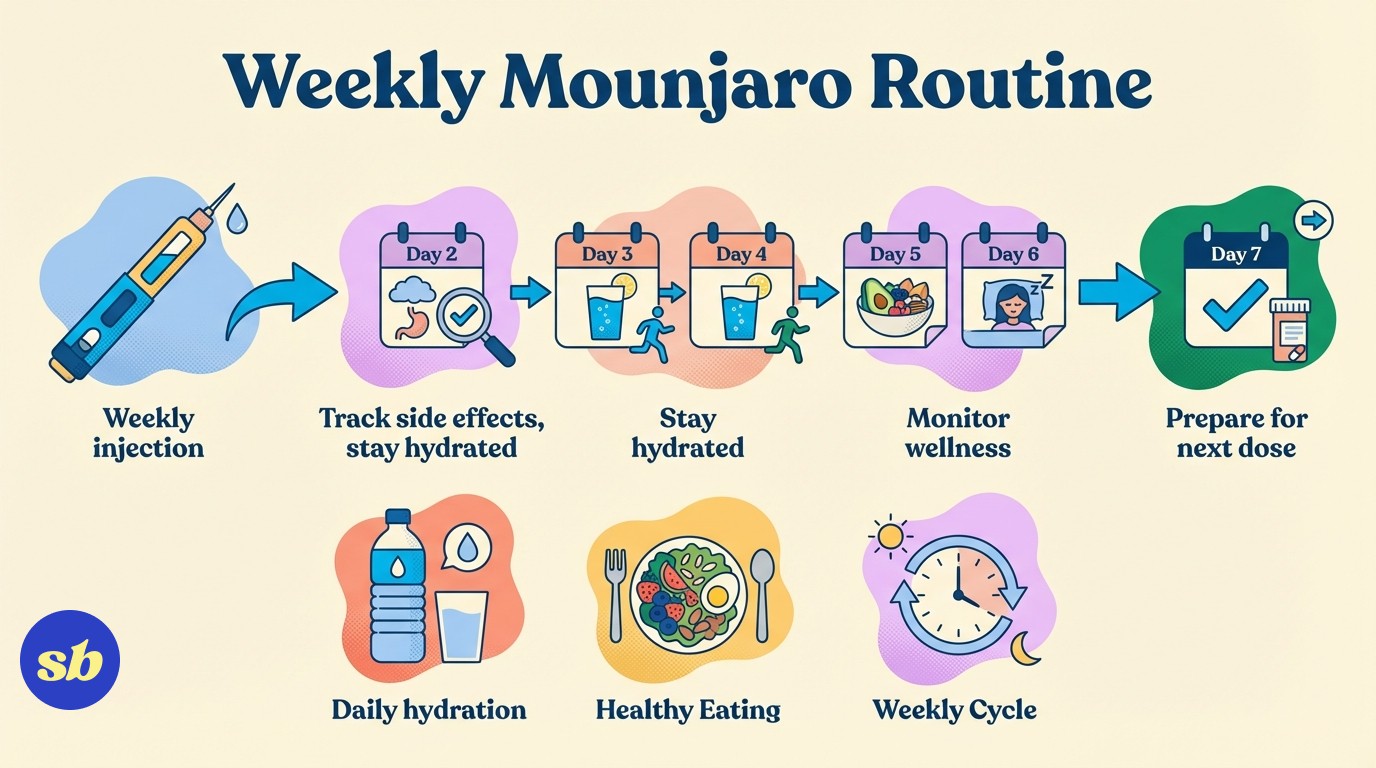
Working with your healthcare provider
Your doctor or prescriber helps you create a safe schedule for your Mounjaro treatment. They’ll review your medical history, check your current medications, and confirm Mounjaro is appropriate for you.
Most people start at 2.5 mg once weekly for the first four weeks. This dose isn’t about weight loss. It’s to help your body adjust and reduce the likelihood of nausea and other gastrointestinal side effects.
Your provider monitors your progress throughout treatment. They’ll track your weight, ask about side effects, and check blood sugar if you’re using Mounjaro for diabetes.

When to contact your prescriber
- Severe or persistent nausea or vomiting
- Signs of pancreatitis (inflammation of the pancreas, causing severe abdominal pain sometimes radiating to your back)
- Symptoms of an allergic reaction (rash, difficulty breathing, swelling)
- Unusual neck swelling or difficulty swallowing (potential thyroid issues)
- Sudden severe pain in your upper right abdomen (potential gallbladder problems)
- Any symptoms that concern you
Mounjaro can reduce the effectiveness of oral contraceptives due to delayed stomach emptying, as noted in the Mounjaro Summary of Product Characteristics. Current guidance recommends using barrier contraception (such as condoms) when starting Mounjaro and for four weeks after each dose increase. Mounjaro is not recommended during pregnancy or breastfeeding.
If you’re planning pregnancy, discuss stopping treatment with your prescriber at least two months beforehand. Your prescriber should discuss this with you.
When and how to adjust your dose
The standard plan is to increase your Mounjaro dose every four weeks. After the starter 2.5 mg, you move to 5 mg, then 7.5 mg, 10 mg, 12.5 mg, and potentially 15 mg.
But this isn’t set in stone. Some people need to stay at a lower dose longer if side effects are problematic. Others progress on schedule without issues. Your body will usually tell you what it needs. Staying well hydrated (aim for at least 2 litres of water daily) can help manage digestive side effects like nausea and constipation.
Your prescriber might keep you at a particular dose if you’re losing weight steadily and feeling well. There’s no rush to reach the maximum if your current dose is effective.
Missed dose instructions
Missing a dose happens. The important thing is knowing what to do next.
If you miss your weekly injection, take it as soon as you remember, provided it’s within four days of your scheduled dose. Then return to your regular weekly schedule.
If more than four days have passed since your missed dose, skip it entirely and wait for your next scheduled injection. Don’t try to double up or “catch up” with extra doses.

What to do:
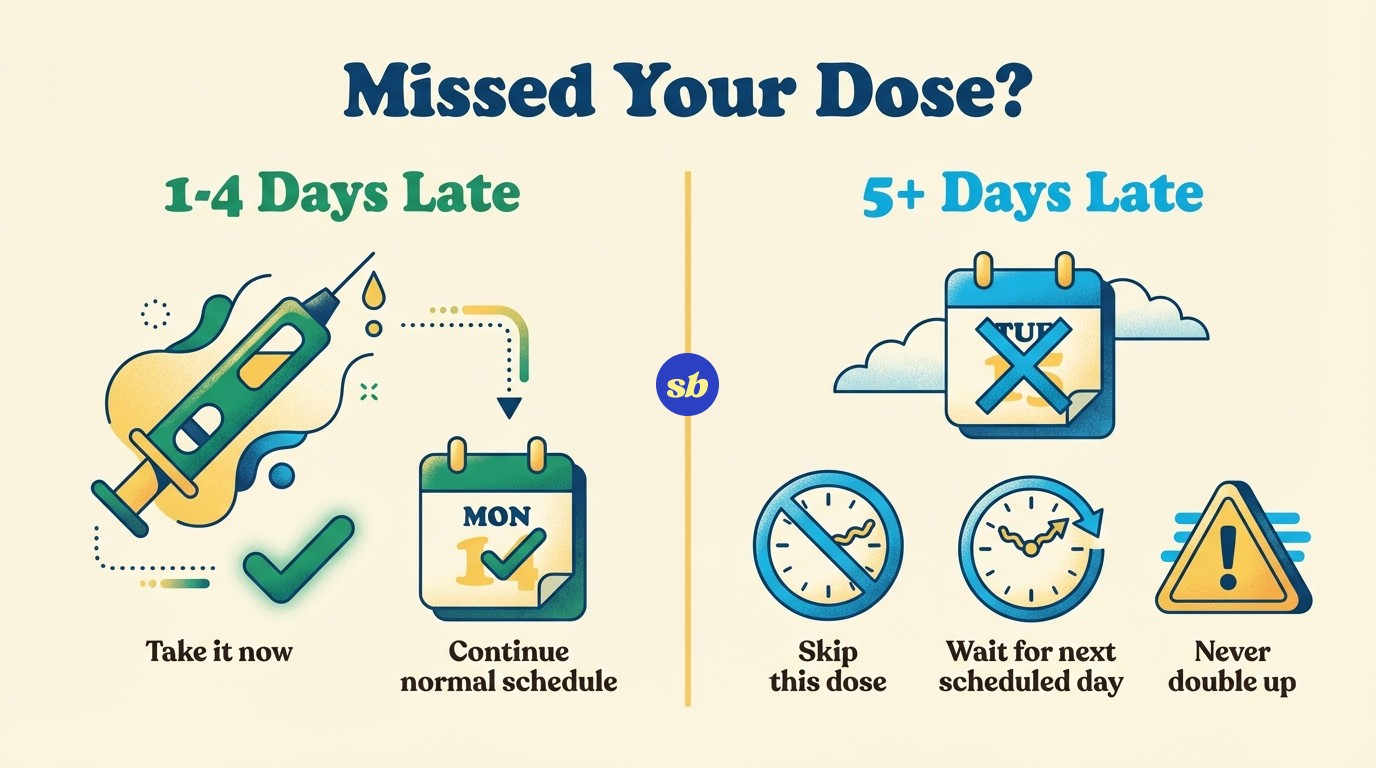
Setting a phone reminder or linking your injection day to a regular weekly activity can help you stay consistent.
If you keep missing doses, speak with your prescriber. They can help you find a better routine or adjust your treatment plan if needed.
Switching between weight loss injections
People sometimes switch from Ozempic or Wegovy (semaglutide) to Mounjaro, or vice versa. If you’re considering this, you’ll need to plan it with your prescriber.
All of these are GLP-1 based medications. Mounjaro also targets GIP receptors, so it works somewhat differently. The doses don’t correspond directly between medications, which makes switching more complex.
If you’re moving from semaglutide to Mounjaro, your prescriber will consider your current dose. However, they’ll typically start you at 2.5 mg of Mounjaro anyway to see how you respond.
Switching the other direction follows the same principle: start low and build up gradually. Your body needs time to adjust to the new medication, even if the mechanism is similar.
Considerations when switching:
Don’t attempt to switch between weight loss injections without medical guidance. Each medication peaks in your system at different times, and overlapping them creates unnecessary risk.
Drug interactions
Tell your prescriber about all medications you take. Important interactions include:
-
Insulin and sulfonylureas (diabetes medications): Combining these with Mounjaro increases hypoglycaemia (low blood sugar) risk. Your prescriber may need to reduce your diabetes medication doses.
-
Oral contraceptives: Mounjaro slows stomach emptying, which can reduce absorption of birth control pills. Use barrier contraception for four weeks after starting and after each dose increase.
-
Medications requiring precise blood levels (narrow therapeutic windows): Drugs like warfarin may need closer monitoring, as Mounjaro can affect absorption.
Storage and practical tips
For Mounjaro users in the UK, proper storage ensures your medication stays effective. Mounjaro pens should be stored in a refrigerator (2°C to 8°C) until you’re ready to use them, as specified in the Mounjaro patient information leaflet. Keep them in the original packaging to protect from light.
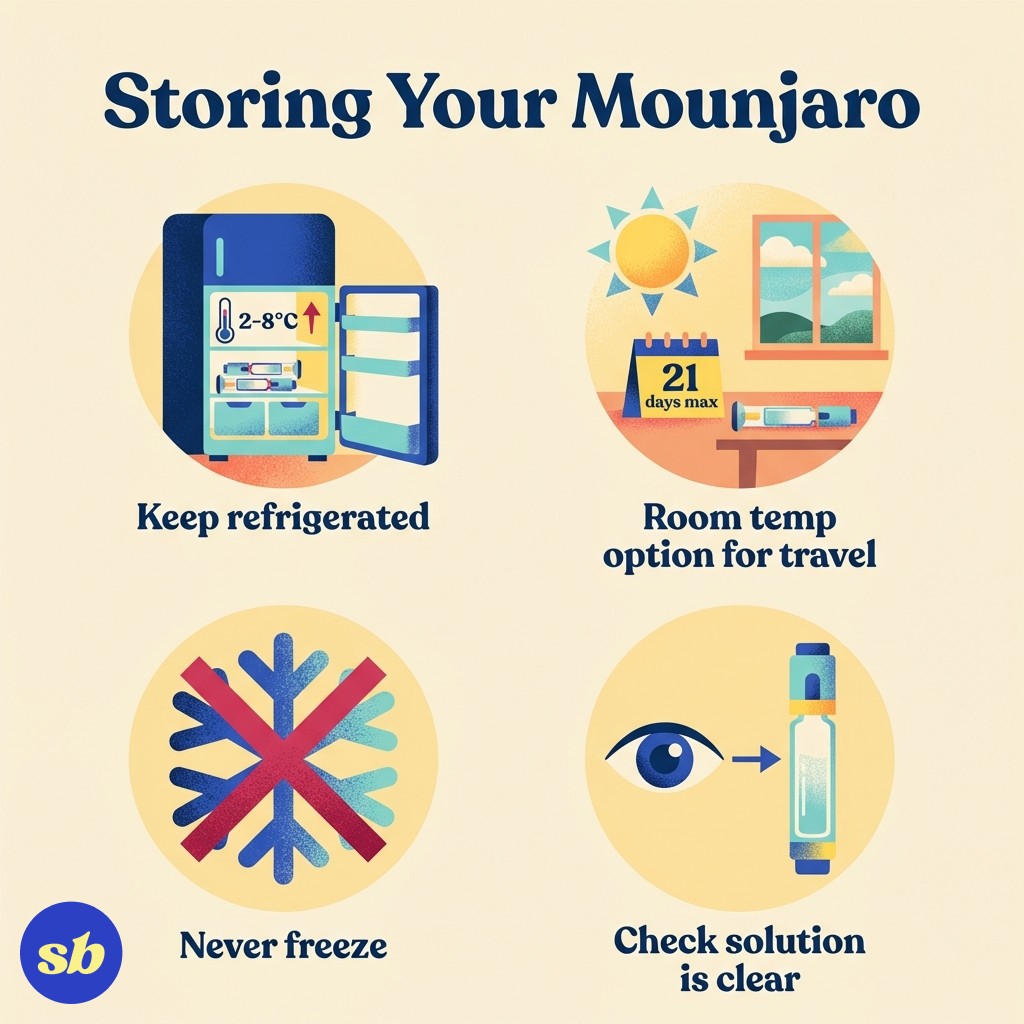
You can keep a pen at room temperature (up to 30°C) for up to 21 days if needed, which is useful for travel. Don’t freeze Mounjaro, and don’t use it if it’s been frozen.
Check the solution before injecting. It should be clear and colourless to slightly yellow. Don’t use it if it’s cloudy, discoloured, or contains particles.
Choosing the right provider
Dose escalation isn’t something you should be navigating alone. Some UK providers offer detailed guidance and clinical reviews at every step up, while others leave you to figure it out yourself — and how flexibly you can adjust your dose if side effects hit varies significantly too.
Frequently asked questions
How long does it take to see results?
Most people start noticing reduced appetite within the first few weeks, often during the initial 2.5 mg dose. Visible weight loss typically becomes apparent after 4-8 weeks, once you’ve moved to therapeutic doses. Maximum effects are usually seen after several months of treatment at higher doses.
Can I drink alcohol while taking Mounjaro?
There’s no strict prohibition on alcohol, but many people find their tolerance decreases. Alcohol can worsen nausea and may affect blood sugar control. If you have type 2 diabetes, alcohol combined with Mounjaro may increase hypoglycaemia risk. Moderation is sensible.
What happens if I stop taking Mounjaro?
Weight regain is common after stopping GLP-1 based medications. The SURMOUNT-4 trial showed that most people regain a significant portion of lost weight within one to two years of stopping treatment. Mounjaro is a long-term treatment for a chronic condition rather than a short-term fix. Discuss stopping treatment with your prescriber to plan appropriately.
What foods should I eat while taking Mounjaro?
Focus on smaller, protein-rich meals that are easier to digest. Good options include lean meats, fish, eggs, Greek yoghurt, vegetables, and whole grains. Avoid greasy, fatty, or very spicy foods, especially during dose increases, as these can worsen nausea. Eating slowly and stopping when you feel satisfied (rather than full) helps your body adjust.
Can I take Mounjaro if I have type 2 diabetes?
Yes, Mounjaro is licensed for both type 2 diabetes and weight management. If you’re already taking diabetes medications like insulin or sulfonylureas, your prescriber may need to reduce those doses to prevent low blood sugar. Your blood glucose control will be monitored throughout treatment.
How do I inject Mounjaro correctly?
Mounjaro comes in a pre-filled pen that handles the dosing for you. Choose your injection site (stomach, thigh, or upper arm), clean the area with an alcohol wipe, and press the pen firmly against your skin. Press the injection button and hold for 10 seconds until you hear two clicks confirming the dose is complete. Rotate your injection site each week to avoid skin irritation or lumps forming.
Is Mounjaro safe for long-term use?
Mounjaro has been studied in clinical trials lasting up to 72 weeks, and ongoing monitoring continues. It’s been approved by NICE (the body that assesses treatments for the NHS), meaning it meets UK standards for safety and effectiveness. It’s designed as a long-term treatment for chronic weight management, similar to how blood pressure medication works for hypertension. Your prescriber will monitor your progress and health markers regularly.
What if Mounjaro doesn’t work for me?
Individual responses vary. If you’re not seeing expected results after reaching therapeutic doses (typically 10-15 mg), your prescriber may review your lifestyle factors, check for other medical conditions affecting weight, or discuss alternative treatments. Some people respond better to different GLP-1 medications.
Can I exercise while taking Mounjaro?
Yes, regular physical activity is encouraged and can improve your results. Start gradually if you’re new to exercise. Some people feel tired initially, especially during dose increases, so listen to your body. Aim for a mix of cardio and strength training to help preserve muscle mass during weight loss.