You’ve probably seen all those posts promising that ice water torches calories or that warm lemon water somehow “kickstarts” your metabolism. The internet is full of supposed fat burning drinks that promise dramatic results. Some of it’s true, a lot of it isn’t, and most of it misses what actually matters, especially if you’re on treatment.

Cold drinks give your metabolism a slightly bigger nudge than hot ones, but the difference amounts to a handful of calories. What matters far more is staying well hydrated, choosing drinks that sit well with your treatment, and building habits you can maintain long term.
Research on cardiovascular and metabolic responses to cold versus hot caffeinated tea found cold drinks increased energy expenditure by about 8% compared to 4% for hot. But in real terms? The numbers are small.
Let’s dig into what the evidence actually says about drink temperature and metabolism, which beverages genuinely help when you’re on tirzepatide (Zepbound) or semaglutide (Wegovy), and how to make choices that work for your actual life. No magic, just info you can use.
Key takeaways

How water temperature influences metabolism
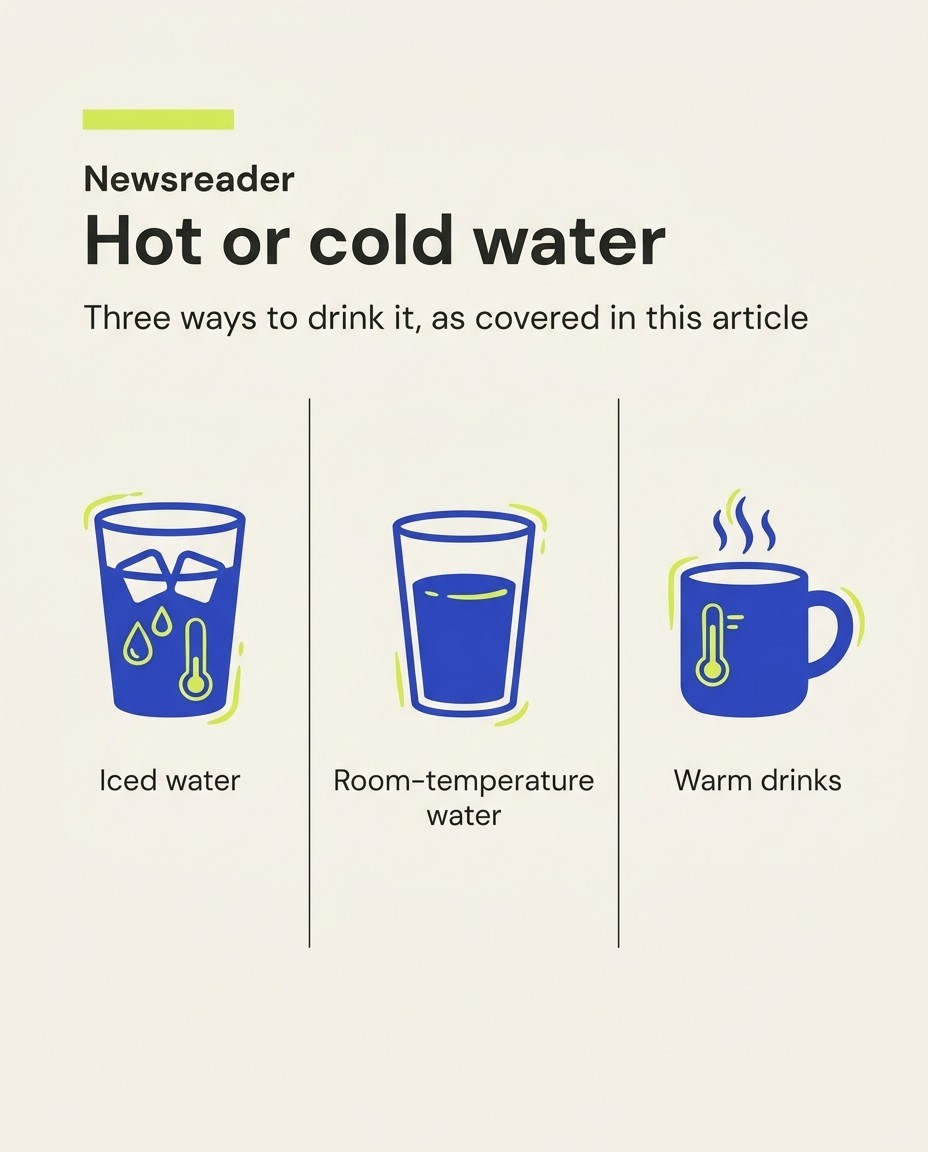
Water temperature does change how much energy your body uses, but not as much as some wellness trends want you to believe. Cold water makes your body work a bit harder to warm it, while hot water might help digestion, even if the metabolic effect is pretty mild.
Cold water and the thermogenic effect
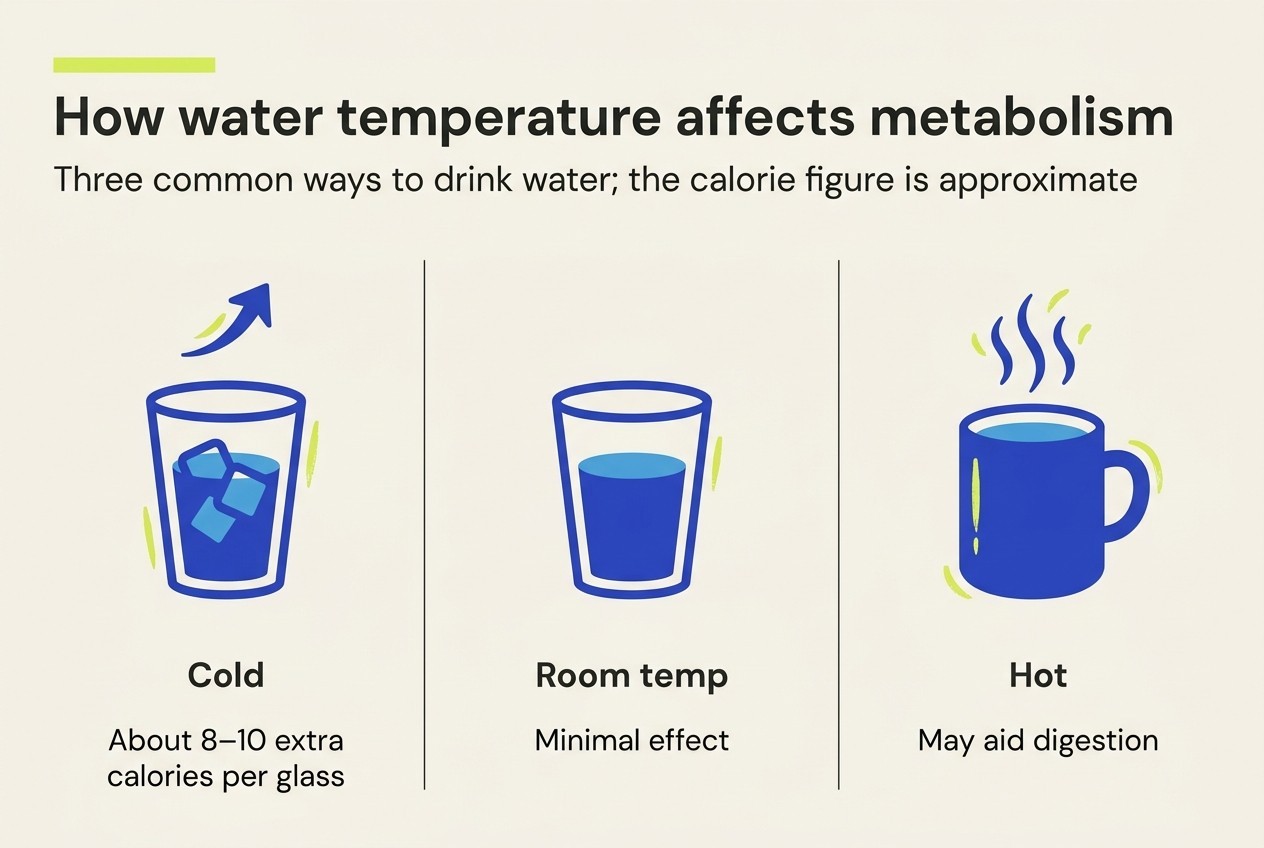
When you drink cold water, your body has to heat it up to your core temperature (about 98.6°F). That takes energy, so you burn a few extra calories. This is called the thermogenic effect: your body generating heat to warm the water, which uses a small amount of energy.
Research on water-induced thermogenesis (the small amount of energy your body uses to warm water to body temperature) checked if cold water gives you a real metabolic boost. The effect is there, but it’s tiny. Cold water might burn an extra 5 to 10 calories per glass compared to room temp.
If you drink eight glasses of cold water in a day, maybe you burn 40 to 80 extra calories. That’s something, but it’s not going to make or break your weight loss. It’s about the same as a 10-minute walk.
If you’re taking GLP-1 medications (like Zepbound or Wegovy, which work by mimicking a natural appetite-regulating hormone), hydration is what matters. If cold water helps you drink more, that’s the real win.
Hot water’s role in digestion and detoxification
Hot water doesn’t really boost your metabolism, but it can help your digestion feel easier. Lots of people notice warm water helps with bloating or constipation, which is common on Zepbound or Wegovy.
The claim that hot water “detoxifies” is a stretch. Your liver and kidneys do that job no matter what you drink. Still, warm drinks can get your bowels moving and help with regularity if your digestion’s sluggish.
Some evidence suggests hot drinks can influence metabolic responses by affecting heart rate and circulation, but these changes are fairly minor and don’t last long.
If you’re feeling nauseous — which affects approximately 1 in 4 people, particularly during dose escalation — hot water with lemon or ginger can be much more soothing than cold. Nausea typically improves within 2–4 weeks on a stable dose, and comfort counts when you’re trying to stay hydrated but feel off.
Room temperature water: neutral hydration
Room temp water sits around 68°F. Your body still warms it a little, but it doesn’t use much energy. For many, this is the easiest way to stay hydrated all day.
Some people find it easier to drink more water if it’s not ice cold. Cold water can feel too harsh, especially in the morning or if you’re already queasy.
There’s no special calorie burn from room temp water, but there’s no downside either. The main thing is just getting enough fluids, especially if your meds affect your thirst.
If you forget to drink, keeping a bottle of room temp water on your desk helps. The “best” temperature is really the one that gets you to drink enough.
Understanding the thermic effect of food
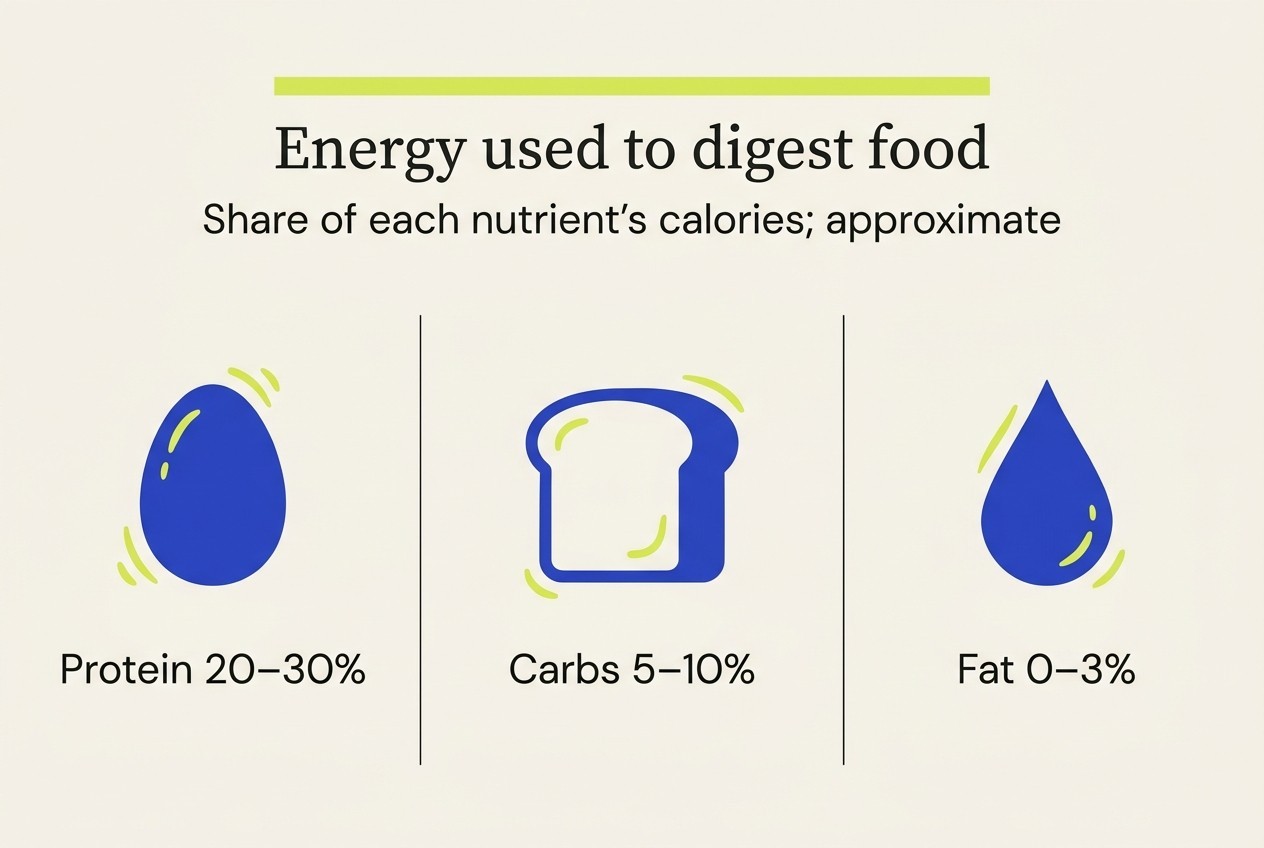
The thermic effect of food (TEF) is just the energy your body uses to digest and process nutrients. It’s about 10% of your daily energy use.
Different nutrients use different amounts of energy:
- Protein: 20–30% of calories
- Carbs: 5–10% of calories
- Fat: 0–3% of calories
This is one reason protein matters so much on weight loss meds. Your body uses more energy to break down protein than anything else.
Water doesn’t have calories, so it doesn’t have a real thermic effect. The energy you use to warm cold water is sometimes called “water-induced thermogenesis,” but that’s a different process from TEF.
That’s why eating feels different from just drinking water. After a high-protein meal, you might feel warmer. That’s your metabolism working. Combining adequate protein intake with regular physical activity gives you the strongest metabolic advantage while on treatment.
If you want to keep muscle while losing weight, eating enough protein and staying active gives you a small but real metabolic edge. Even light physical activity like walking increases your overall energy expenditure far more than any drink temperature trick.
Water choices for weight management
Drinking water helps with weight management, but temperature and timing only tweak the benefits a little.
Cold water for weight loss: facts and myths
We’ve all heard that cold water burns more calories because your body warms it up. That’s true, but the difference is small.
The real perk of cold water? People just tend to drink more when it’s cold, especially after being active. If you’re on Zepbound or Wegovy and struggling to stay hydrated because nothing tastes good, cold water might be easier to get down.
Don’t count on cold water alone for weight loss. If you’re swapping out sugary drinks for water, that’s where you’ll see real calorie savings.
The benefits of hot water for appetite control
Hot water takes longer to drink, so your stomach has more time to register fullness. That can help if you’re used to eating too fast.
Some people notice that sipping hot water between meals helps curb snacking. There isn’t much research, but it makes sense — it keeps your hands busy, and the warmth can be satisfying.
Water before meals: supporting satiety
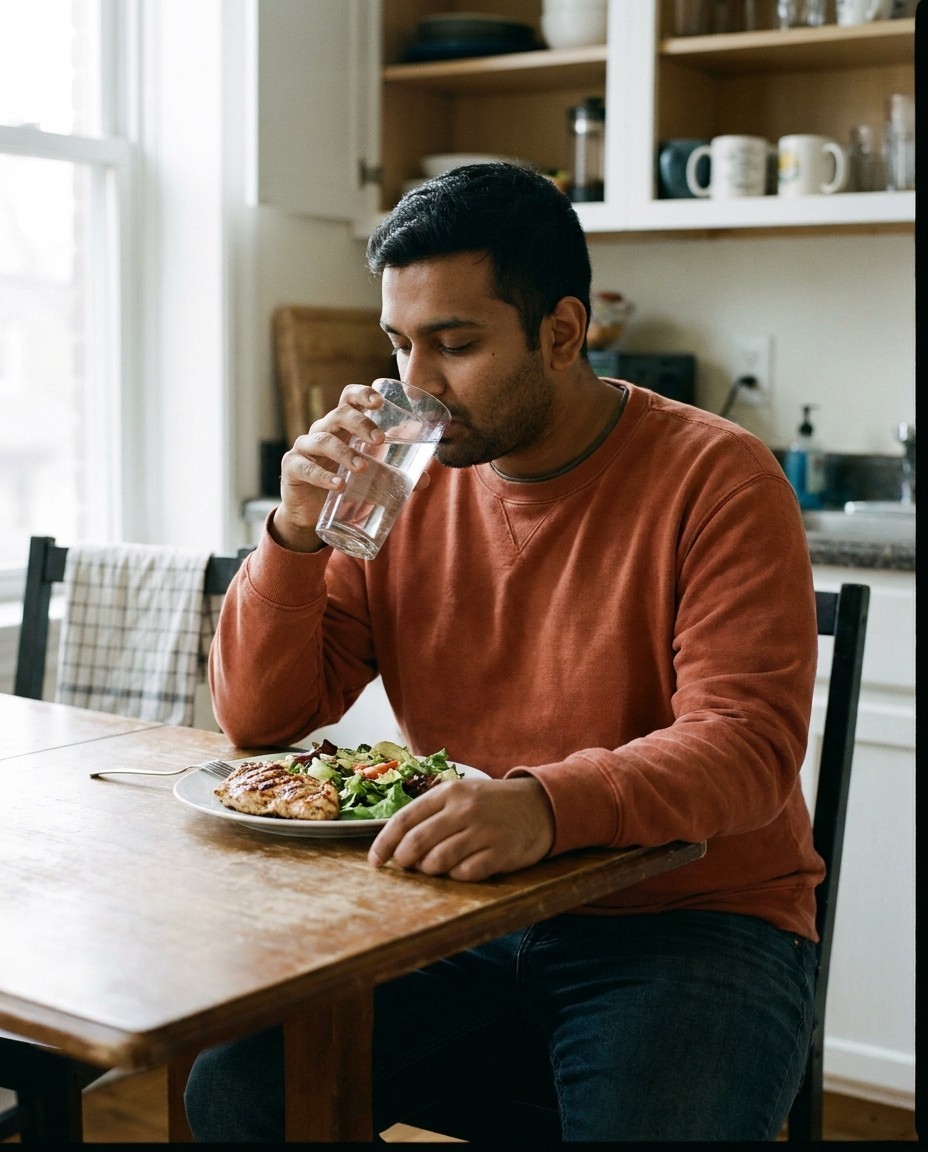
Drinking water before meals is a simple way to eat a bit less. Research suggests about 2 cups (500ml) of water about 30 minutes before eating helps you feel fuller (Dennis et al., Obesity, 2010).
This tip matters more if you’re not on GLP-1 meds. If you’re on Wegovy or Zepbound, your appetite’s already low. You might need reminders to eat enough protein, not to fill up on water.
Still, if you’re between doses or increasing slowly, water before meals can help. It physically fills your stomach, which signals your brain that you’re full.
How to do it:

Don’t overdo it and skip meals because you’re too full. You still need enough nutrition, especially protein, to keep your muscles while losing weight.
Drinks that support metabolic health
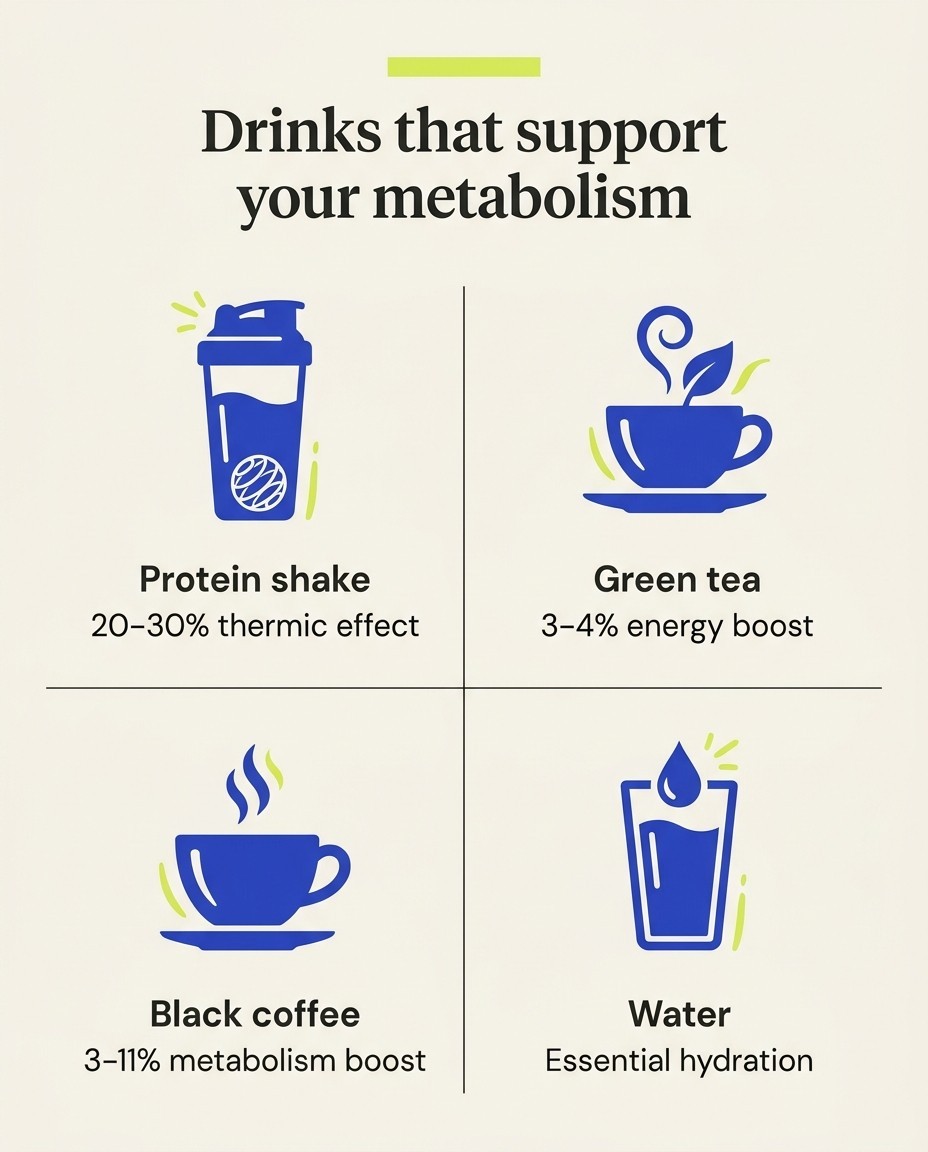
Some drinks really do affect how your body burns energy, though usually only modestly. You’ll find plenty of lists of fat burning drinks online, but the effects are more modest than most of those lists suggest. Protein shakes have a strong thermic effect, green tea has compounds that may support fat oxidation, and caffeine can give your metabolism a temporary nudge.
Protein shakes and the thermic effect
Your body uses more energy to digest protein than carbs or fat. That’s the thermic effect of food, and protein is the winner.
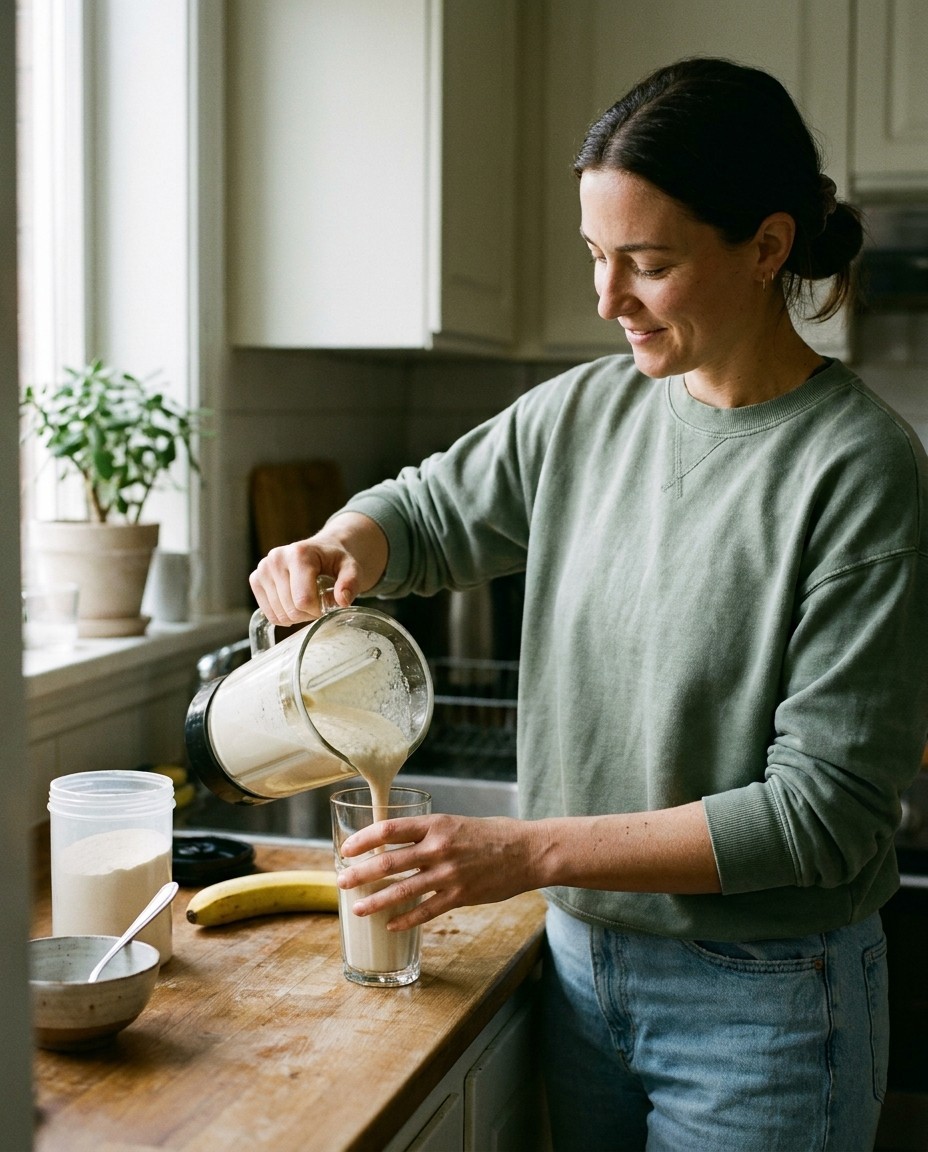
On GLP-1 meds, this matters more. You’re eating less, so hitting your protein goals is tough. A shake makes it easier to get 1.0–1.2g per kg of body weight (about 0.45–0.54g per pound), especially when you can’t face solid food.
When to drink protein shakes:
The thermogenic effect helps, but it’s not a miracle for weight loss. It’s about keeping muscle as your body changes.
Green tea, EGCG, and fat oxidation
Green tea has EGCG (epigallocatechin gallate), which seems to help your body burn fat for energy. Research shows green tea can increase fat oxidation at rest and during exercise.
The effect isn’t huge. Studies suggest green tea might boost energy use by 3–4% over a few hours — maybe 50–80 extra calories a day. EGCG appears to support lipolysis, the process of breaking down stored fat so your body can use it for energy. That said, don’t expect dramatic results from green tea alone.
What works best:
Green tea is a great, comforting, calorie-free drink when everything else tastes off. The metabolism boost is nice, but not the main reason to drink it.
Skip green tea extract supplements. The doses are usually too high and could stress your liver.
Coffee and other stimulant beverages
Caffeine bumps up your metabolism by 3–11%, especially if you don’t drink it often. The effect peaks 1–3 hours after drinking and then fades.
A study on caffeinated herbal tea found cold versions increased energy use by 8.3%, hot by 3.7% over 90 minutes.
Drinks with a metabolic effect:
- Black coffee (up to 400mg caffeine daily — roughly 3–4 cups)
- Yerba mate (about as much caffeine as coffee, more antioxidants)
- Green tea (less caffeine, plus EGCG)
But your body adapts fast. If you drink coffee daily, the boost drops off after a week or two.
If you’re on GLP-1 medications, caffeine can make nausea or a racing heart worse. Try half your usual amount if you’ve just upped your dose. Speak to your doctor or prescriber before making significant changes to your caffeine intake while on treatment.
Practical tips for incorporating the right beverages
You don’t need to overhaul your whole routine to get the most from your drinks. Small, thoughtful choices about hydration and beverage temperature can really support you while you’re on treatment.
Hydration strategies for daily life
If you’re on GLP-1 medications, your thirst cues can get oddly quiet. It’s easy to forget about water until dehydration symptoms creep in: dark urine, headaches, or feeling lightheaded. These signs are worth watching for because dehydration can make nausea and fatigue feel worse than they need to.
Setting a daily hydration goal helps a lot. The National Academies’ benchmark for total water is about 91 ounces a day for women and 125 ounces for men, counting food and all drinks. Roughly 80% of that, about 73 to 100 ounces (9 to 12½ cups), typically comes from drinks. Your own needs vary, so treat that as a rough baseline, and aim for the higher end if you notice nausea or constipation. Keeping a reusable bottle nearby — on your desk or in your bag — makes it easier to remember.
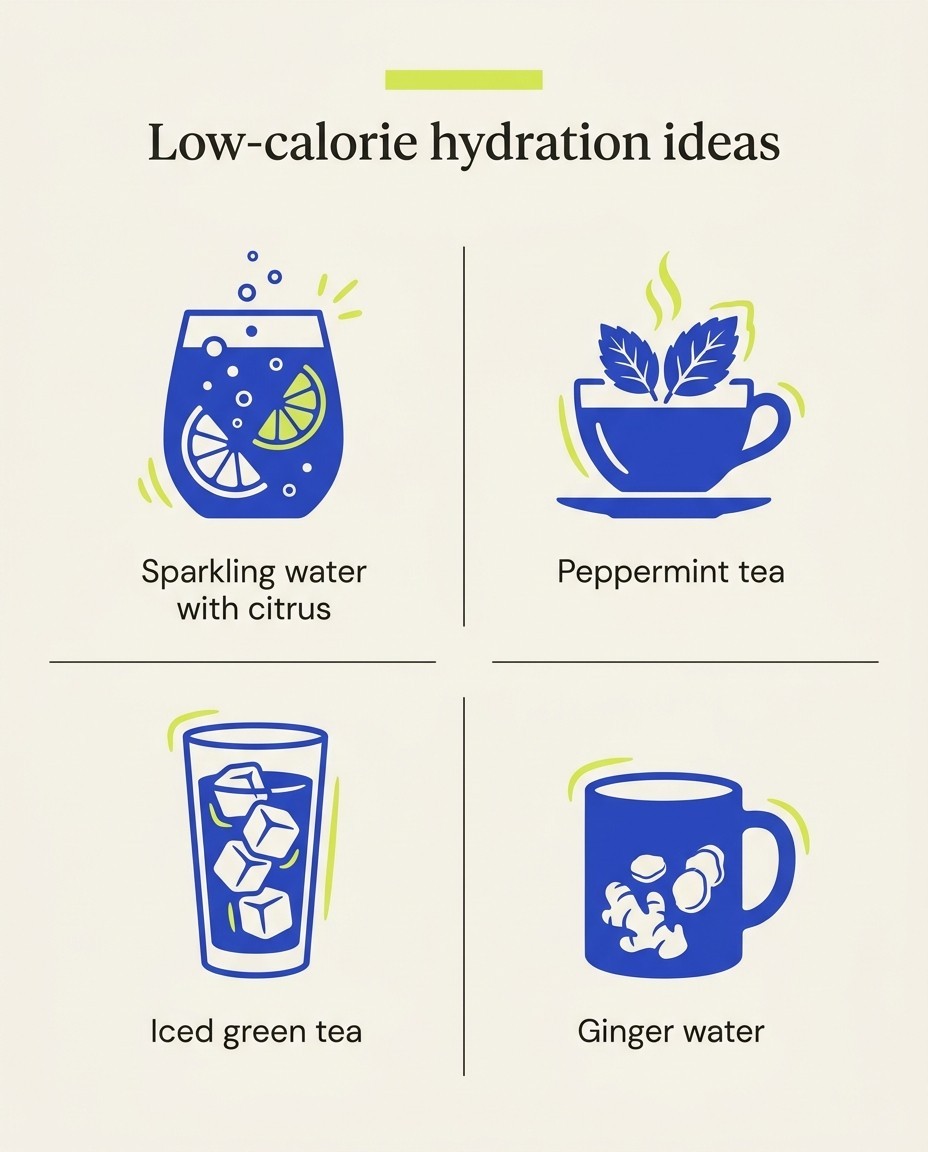
Temperature actually makes a difference. If cold water feels rough on your empty stomach in the morning, switch to room temperature. Some folks say cold water gives a tiny energy boost, but staying hydrated all day matters far more.
Mix things up without piling on calories:
- Sparkling water with lemon or lime
- Herbal teas (peppermint is great if you get nauseous)
- Iced green tea in the fridge
- Hot water with a slice of ginger
On busy days, it’s easy to drink far less than you think. Try tracking how much you drink for a few days to see where you stand.

Speak to your doctor or prescriber if you experience:
- Persistent nausea or vomiting that prevents you from keeping fluids down
- Signs of dehydration: dark urine, dizziness, dry mouth, or headaches that won’t ease
- Heart palpitations or a racing heart after caffeine
- Severe constipation lasting more than a few days despite increased fluid intake
Optimal timing for hot and cold drinks
Timing your drinks matters almost as much as what you drink. Hot and cold drinks hit your body differently.
Start your morning with water. Drink some before your first tea or coffee. If you take medication early, this helps it absorb better and can cut down on nausea.
Some people find hot drinks work better between meals. Green tea or plain black coffee (skip the milk if you’re watching calories) can give you a gentle energy boost without affecting your protein intake at meals.
Try not to chug water during meals. Drinking a lot while eating can leave you too full to get enough protein. Sip if you need to, but do most of your hydrating between meals.
If you wake up at night to use the bathroom, try switching to smaller sips of room temperature water after 7pm. That change can really help with sleep.
Choosing the best beverage for your routine
Your ideal drink depends on what you need right then. There’s no magic beverage that fits everyone during treatment.
For protein support: If plain water bores you, try adding a splash of sugar-free water enhancer. Staying hydrated lets your body actually use the protein you eat.
Some people say slightly chilled water (not ice-cold) goes down easier, especially when appetite is low.
For digestive comfort: A mug of warm water with fresh lemon can feel gentle if you’re fighting nausea. It just seems to sit better. Peppermint tea often helps with bloating.
Ginger tea, whether you drink it hot or cold, settles the stomach for a lot of folks.
For a metabolic boost: Green tea or yerba mate (unsweetened) offer a little boost, hot or cold.
| Situation | Best choice | Why it works |
|---|---|---|
| First thing morning | Room temperature water | Gentle on empty stomach, supports hydration |
| Before meals | Cold water | May help you notice fullness cues earlier |
| With nausea | Warm ginger or peppermint tea | Settles stomach, easier to sip slowly |
| Between meals | Hot green tea or black coffee | Gives structure to your day without calories |
| Evening | Room temperature herbal tea | Hydrates without keeping you up at night |
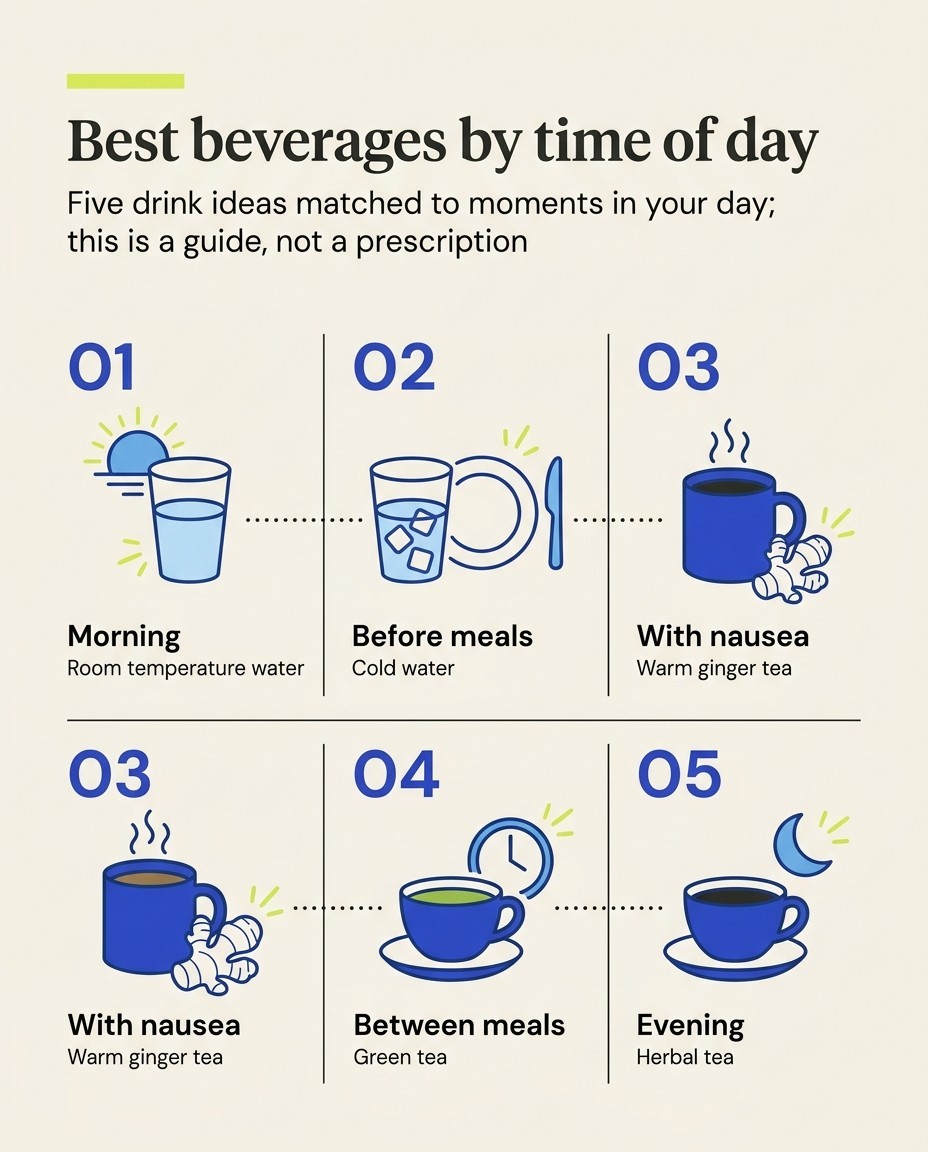
Don’t force yourself to drink ice-cold water if it makes you feel worse. It’s better to stay hydrated at any comfortable temperature than to chase some “perfect” water temperature you’ll end up avoiding.
The bottom line
Drink temperature makes a measurable but minor difference to your metabolism. Cold drinks burn a few extra calories, hot drinks can ease digestion and nausea, and room temperature water is perfectly fine if that’s what you prefer. If you’re on Zepbound or Wegovy, focus on drinking enough fluid daily (see the hydration tips above for ballpark targets), hitting your protein targets, and choosing drinks that don’t make nausea worse. The best beverage strategy is the one you’ll actually follow — not the one that promises the biggest metabolic boost on paper. Speak to your doctor or prescriber if you’re struggling with hydration or persistent side effects.
Frequently asked questions
Does drinking cold water actually burn calories?
Yes, but only a small amount. Your body uses energy to warm cold water to core temperature, burning roughly 8–10 extra calories per glass. Over a full day of drinking cold water, that might add up to 40–80 calories — about the same as a 10-minute walk. It’s real, but not significant enough to drive weight loss on its own.
Is it better to drink hot or cold water on Zepbound?
There’s no single best temperature. If you’re experiencing nausea, warm water with ginger or lemon tends to be easier to tolerate. If you find cold water more refreshing and it helps you drink more, go with that. The most important thing is staying hydrated — see the hydration section above for daily targets.
Can green tea help with weight loss on GLP-1 medications?
Green tea contains EGCG, which may boost fat oxidation by 3–4% over a few hours. That’s a modest effect. Green tea is a great calorie-free option that can be comforting when other drinks feel unappealing, but it won’t replace the effects of your medication or a balanced diet.
How much water should I drink while on Wegovy or Zepbound?
The National Academies’ benchmark for total water is about 91 ounces a day for women and 125 ounces for men, counting food and all drinks, which works out to roughly 73 and 100 ounces from drinks. Aim for the higher end if you’re experiencing digestive side effects like constipation or nausea. If you’re physically active, you may need more.
Should I avoid coffee while taking weight loss medication?
You don’t need to avoid coffee entirely, but be cautious — caffeine can worsen nausea or cause a racing heart, especially after a dose increase. Try reducing to half your usual amount when starting a new dose, and stick to black coffee if you’re watching calories.
Does warm lemon water really boost metabolism?
Warm lemon water doesn’t meaningfully boost your metabolism. The lemon adds flavor and a small amount of vitamin C, and the warmth can aid digestion and comfort. It’s a good option if it helps you drink more fluids, but it has no special fat-burning properties.
When is the best time to drink water for weight loss?
Drinking about 2 cups (500ml) of water about 20–30 minutes before meals can help you feel fuller and eat slightly less — see the “Water before meals” section above for the full picture. If you’re already on GLP-1 medication, focus on drinking between meals rather than filling up on water before eating, so you still get enough protein.
Can I drink protein shakes instead of eating solid food on treatment?
Protein shakes can be a useful way to meet your protein target (1.0–1.2g per kg of body weight daily, or about 0.45–0.54g per pound) when solid food feels unappealing. They’re not a complete replacement for meals, but they’re helpful first thing in the morning, after exercise, or when nausea makes eating difficult. Choose options with at least 20g of protein per serving and minimal added sugar.
This article is for general information only and does not replace medical advice. Always speak to your doctor or prescriber before making changes to your diet or fluid intake while on weight loss medication.
Sources: Clinical information in this article is based on published peer-reviewed research and guidance from US health authorities such as the National Academies and MedlinePlus. See the sources section below for full references.
Sources
- Cardiovascular and metabolic responses to cold versus hot caffeinated tea – Frontiers in Physiology, 2018
- Water-induced thermogenesis – Journal of Clinical Endocrinology & Metabolism, 2006
- Hot drinks and metabolic responses – Frontiers in Physiology, 2018
- Cold water and calorie expenditure – ScienceDirect, 2009
- Water consumption and hydration preferences – Baker LB, Jeukendrup AE. “Optimal composition of fluid-replacement beverages”, Comprehensive Physiology, 2014
- Replacing sugary drinks with water for weight management – Current Obesity Reports, 2023
- Water before meals and satiety (Dennis et al., Obesity, 2010)
- Hursel R, et al. “The effects of green tea on weight loss and weight maintenance: a meta-analysis” – International Journal of Obesity, 2009
- Dulloo AG, et al. “Normal caffeine consumption: influence on thermogenesis and daily energy expenditure” – American Journal of Clinical Nutrition, 1989
- Mazzanti G, et al. “Hepatotoxicity from green tea: a review of the literature” – European Journal of Clinical Pharmacology, 2009
- Dietary reference intakes for water – National Academies of Sciences, Engineering, and Medicine
- Dehydration – MedlinePlus, National Library of Medicine