
If you’re on Mounjaro, Wegovy, or Saxenda and your appetite has basically vanished, prepping meals ahead might sound pointless. It’s probably the best time to start.
Planning meals ahead helps you hit your protein goals, dodge that “I guess I should eat but nothing sounds good” panic, and actually take care of your body, even if eating feels like a hassle.

Meal prepping when you’re on weight loss medication means cooking protein-focused meals in smaller portions, two to three days at a time. It takes the guesswork out of eating well when your appetite is unpredictable and it’s simpler than most guides make it sound.
Look, you’re not here for a lecture about weight loss meds. You’re already jabbing yourself weekly and paying out of pocket. What you actually need is real-world advice for eating way less than before, while still keeping muscle and eating decently. Meal prepping is the simplest way to make sure you’ve always got healthy meals ready, even when cooking feels like the last thing you want to do.
The basics are easier than you’d expect. Meal prepping isn’t about strict rules, it’s just about what works for your life right now. We’ll walk you through prepping protein-focused meals in non-intimidating amounts, batch cooking when food is the last thing on your mind, and which recipes actually make sense when you’re eating a fraction of your old portions.
Key takeaways

Foundations of weight loss meal prep
Meal prep helps because it takes away daily food decisions when your appetite’s all over the place. When you get your portions and plate balance right, you’re much more likely to hit your protein goals without overthinking it.

How meal prep supports weight loss for beginners
On these meds, hunger cues just don’t work like they used to. Some days, you’ll forget to eat. Other days, nothing sounds good so you just graze.
Behavioural weight loss treatment gives you a way to make consistent changes. Having meals ready means you’ll actually eat — even if you’re not hungry. That’s more important than it sounds. Skipping meals might seem like it helps with weight loss, but you end up missing protein and losing muscle, not just fat.
A meal prep routine also saves you from grabbing whatever’s easiest when you finally do feel like eating. If that chicken and veg is already prepped, you’ll eat it. If not, toast or crisps start looking awfully tempting.
We usually prep for three to four days at a time. Food stays fresher and you won’t get sick of eating the same thing.
Understanding portion control and portion sizes
Your stomach’s just not the same size anymore. A normal plate now? It might feel impossible to finish.
People on GLP-1 meds generally need smaller portions than what most meal prep guides suggest. A typical serving is more like 150g to 200g total, not those 400g “fitness” portions you see online.
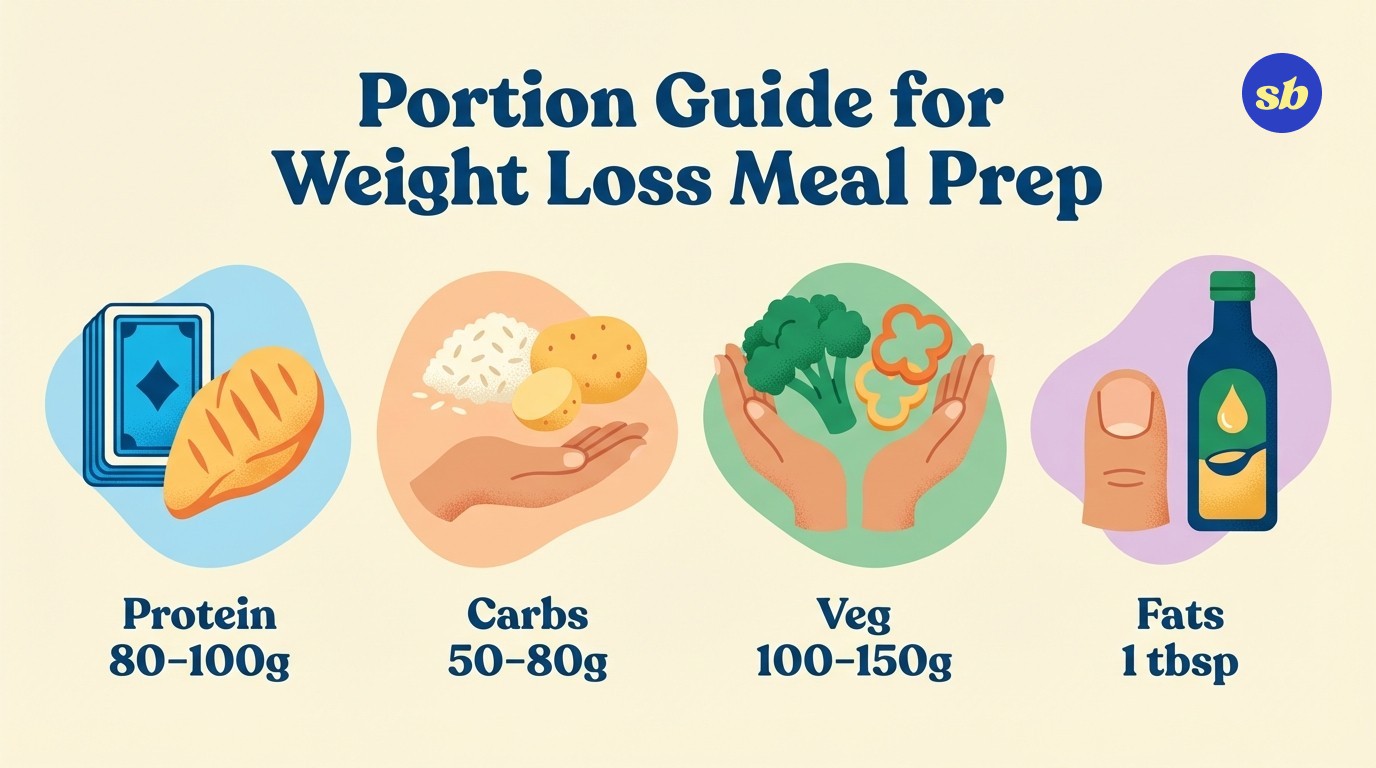
Here’s what actually works when your appetite’s tiny, based on British Nutrition Foundation portion guidance adjusted for people on weight loss medication:
| Food type | Portion size | Visual guide |
|---|---|---|
| Lean proteins | 80g to 100g cooked | Deck of cards |
| Complex carbohydrates | 50g to 80g cooked | Your cupped hand |
| Vegetables | 100g to 150g | Two cupped hands |
| Healthy fats | 1 tablespoon (15ml) | Your thumb tip |
Start small. If you’re honestly hungry later, add a snack. Forcing down a big meal when you’re full? That just makes you feel worse.
Weigh your food for a week or two. You’ll learn what these portions look like, then you can just eyeball it.
Balanced meals: proteins, carbohydrates, and healthy fats
Protein is the big deal right now. You’re losing weight fast and your body will break down muscle if it can’t get enough from food.
Weight loss medication works alongside a calorie deficit: you’re eating less than your body uses, which is why the weight comes off. Meal prepping helps you stay in that deficit without accidentally undereating or missing out on essential nutrients. The goal is to make every smaller meal count by packing in protein, fibre, and the vitamins your body needs.
Try to get 1.0g to 1.2g of protein per kilogram of your body weight each day. For someone weighing 80kg, that means roughly 80–100g of protein daily during weight loss. If you weigh 90kg, you’re looking at 90–108g spread across the day. This keeps your muscle and helps your metabolism stay up. The British Dietetic Association recommends increased protein intake during weight loss to preserve lean muscle mass.
Lean proteins that are easy when you’re not hungry:
-
Chicken breast or turkey mince
-
White fish like cod or haddock
-
Eggs or egg whites
-
Greek yoghurt (10g protein per 100g)
-
Cottage cheese
Complex carbohydrates (starchy foods that release energy slowly, keeping blood sugar stable) give you steady energy and are a good source of fibre, which helps with the constipation that’s common on these medications:
-
New potatoes or sweet potato
-
Brown rice or quinoa (both high in fibre)
-
Rolled oats
-
Wholemeal pasta
Healthy fats help your body absorb vitamins and keep hormones balanced:
-
Olive oil or rapeseed oil
-
Avocado (half is usually enough)
-
Nuts or nut butter (small portions — a 30g handful of almonds has around 180 calories, so they add up quickly)
-
Oily fish like salmon or mackerel
Always start your meal with the protein. Add carbs depending on how active you’ve been. Use fat for flavour, but measure it out. A tablespoon of olive oil is 120 calories — easy to triple that if you’re not careful.
The NHS Eatwell Guide is a helpful reference for balanced meals, though you’ll need to adjust portions when you’re on weight loss medication.
Meal prep styles: batch cooking and make-ahead meals
There are really just two main ways to meal prep for weight loss. Just pick what fits your week.
-
Batch cooking is when you make big amounts of one or two things. Roast a kilo of chicken thighs, steam a load of rice, chop up a bunch of veg. Mix and match as you go. This gives you variety without having to cook every day, and means you’ve always got healthy meals to fall back on. You can also adjust your portions depending on how hungry you are.
-
Make-ahead meals are full dishes portioned out into containers. Think chilli, curry, or pasta bake. Having a meal plan makes it easier to stick with healthy eating. Just grab a container, reheat, and you’re done. This is great if you want to avoid making decisions during the week.
Both styles work best when you stick to a routine. Plan your meals at the start of the week and set aside two or three hours. Sunday works for a lot of people, but pick whatever day is best.
Keep a list of five or six recipes that reheat well and that you actually like. Rotate through them. If you get bored, you’ll just stop doing it.
Step-by-step guide to successful meal preparation
Smart grocery shopping and meal planning
Meal planning for weight loss starts before you even walk into the shop. Write down what you’ll actually eat, then build your shopping list from there.
-
Start with your protein. Chicken breast, turkey mince, Greek yoghurt, eggs, and white fish are all easy to prep and gentle on your stomach. Try for 20-30g of protein per meal.
-
Add veggies that last. Broccoli, peppers, courgettes, and green beans are all packed with fibre and keep for days in the fridge. Frozen veg is a lifesaver — no waste, it’s always ready, and it’s just as nutritious as fresh.
-
Keep carbs simple if small portions are tough. Baby potatoes, microwave rice, and wholemeal wraps are quick. Pre-washed salad leaves save time when you just can’t be bothered.
Smart shopping tips:

Proper storage and meal prep containers
Bad containers will ruin your prepped meals by midweek. Airtight containers are a must, especially for anything with sauce.
Glass containers with clip lids are fantastic. They go straight from fridge to microwave and you can see what’s inside. We like rectangular ones. They stack better.
Plastic is fine if it’s BPA-free (a label meaning it doesn’t contain bisphenol A, a chemical you want to avoid in food containers) and seals well. Get a few of the same size so they stack neatly. It’s boring, but mismatched containers waste tons of fridge space.
Storage that actually matters:
| Food type | Storage time | Best container |
|---|---|---|
| Cooked chicken or turkey | 3–4 days | Glass with tight lid |
| Cooked fish | 2–3 days | Glass, separate from other foods |
| Chopped raw veg | 3–5 days | Plastic with paper towel to absorb moisture |
| Cooked rice or pasta | 4–5 days | Any airtight container |
| Mixed salads (undressed) | 2–3 days | Container with paper towel lining |
For more on safe food storage, see the Food Standards Agency’s chilling guidance.
Label everything with the date you made it. Honestly, meds can make your brain foggy and you won’t remember if that chicken is from Monday or Thursday.
Creating a weekly meal prep routine
Pick a day that works for you every week. Sunday is popular, but Wednesday night or Saturday morning works too.
Block out two or three hours. Sounds long, but you’re sorting out multiple meals at once. You can usually get five lunches and five dinners done in that time.
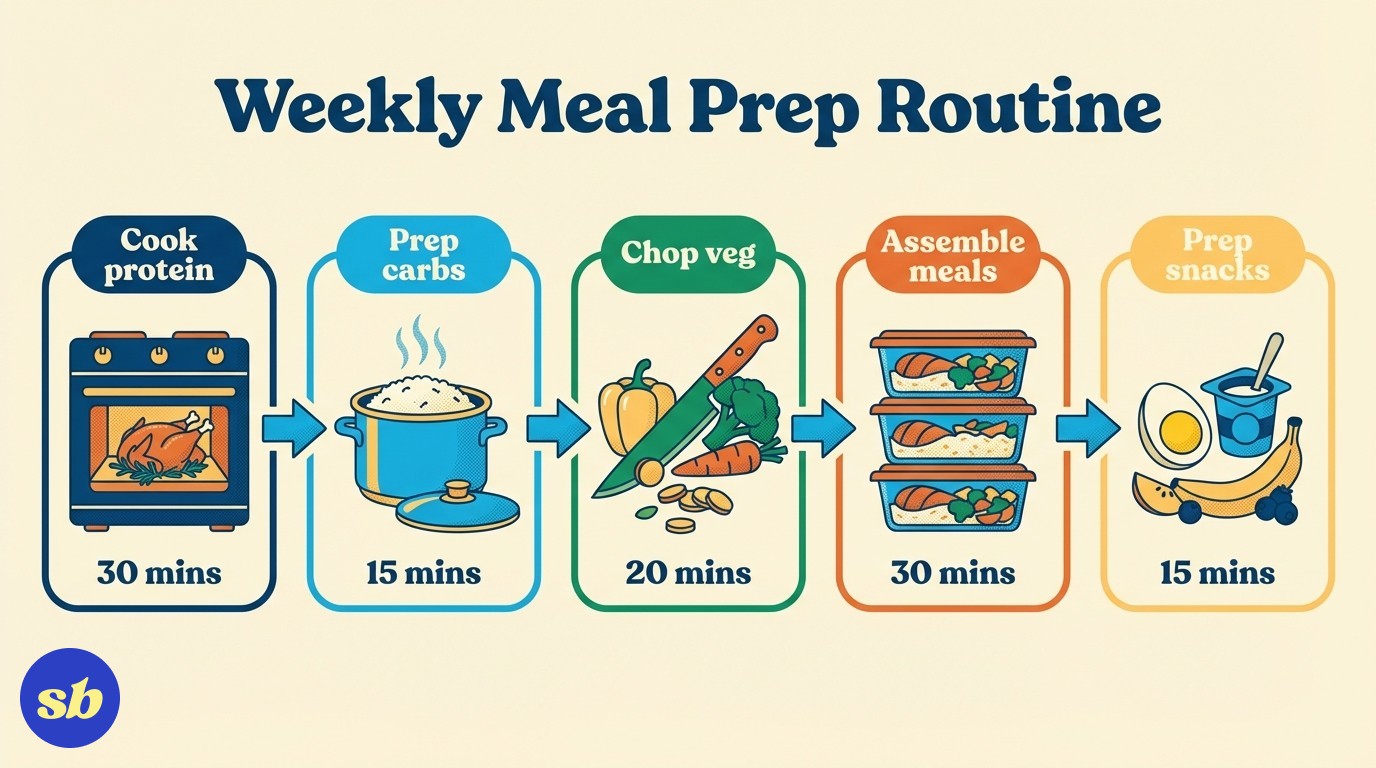
A simple weekly meal prep routine:
-
Start with protein (30 mins): Season and cook all your chicken, fish, or turkey at once. Use oven, grill, and hob together if you can.
-
Get carbs going (15 mins): Bake sweet potatoes, cook rice, or boil pasta while the protein cooks. Make a bit extra.
-
Prep veg (20 mins): Chop everything. Some you can cook now, others you’ll store raw for later.
-
Assemble meals (30 mins): Divide proteins, carbs, and veg into containers. Keep sauces separate if they’ll make things soggy.
-
Prep grab-and-go snacks (15 mins): Hard-boil eggs, portion yoghurt with berries, cut up veg sticks with hummus.
Some days, you just won’t want what you’ve prepped. Appetite changes all the time on these meds. Having something ready beats ordering takeaway or skipping meals, which just wrecks your protein intake.
Hydration and healthy snacks
Getting enough water can honestly feel impossible when you’re not thirsty, but it really does help with side effects. The NHS Eatwell Guide recommends 6–8 glasses of fluid daily as a baseline, but when you’re on GLP-1 medication, aiming for 2–3 litres a day helps with common side effects like nausea and constipation. Dehydration is more common on these medications because you’re eating less and may experience digestive side effects.
I fill up a big water bottle in the morning and just keep it with me. If plain water makes you queasy, try adding a squeeze of lemon or a splash of squash. Herbal tea totally counts, by the way.
If you need to, track your intake. Some folks set hourly reminders. Others just use an app. Whatever gets the water in — go with it.
Healthy snacks should be ready to eat the second you feel hungry. That window’s tiny, so if you have to mess around prepping something, you’ll probably just skip it.
Snacks to prep in advance:
-
Greek yoghurt portioned into small pots (add berries when you eat it)
-
Hard-boiled eggs in the fridge
-
Cheese cubes in containers
-
Protein shakes already mixed and ready
-
Sliced apple with little nut butter packets
-
Mini bags of nuts (20–30g portions)
Keep a stash at work and toss some in your bag. Blood sugar drops just hit different on these meds, and having protein nearby keeps you from reaching for biscuits that’ll sit like a brick in your stomach.

Speak to your GP or prescriber if you experience:
- Persistent nausea or vomiting that stops you eating for more than 48 hours
- Unexplained fatigue, hair loss, or feeling cold — these may signal nutritional deficiency
- Dizziness or confusion, especially when standing up (possible dehydration)
- Significant muscle weakness beyond normal tiredness
- Difficulty eating enough to meet basic nutritional needs despite trying smaller, frequent meals
These symptoms may need a dose adjustment or additional nutritional support.
Beginner-friendly meal prep recipes and ideas
Meal prep doesn’t have to be complicated, especially if you’re just starting weight loss medication. Simple recipes like overnight oats, chicken burrito bowls, and grab-and-go snacks help you stay consistent without spending hours in the kitchen.
Easy breakfasts: overnight oats and chia pudding
Breakfast gets tricky when your appetite disappears. Cold, soft options seem to work better than hot meals, especially in the early weeks.
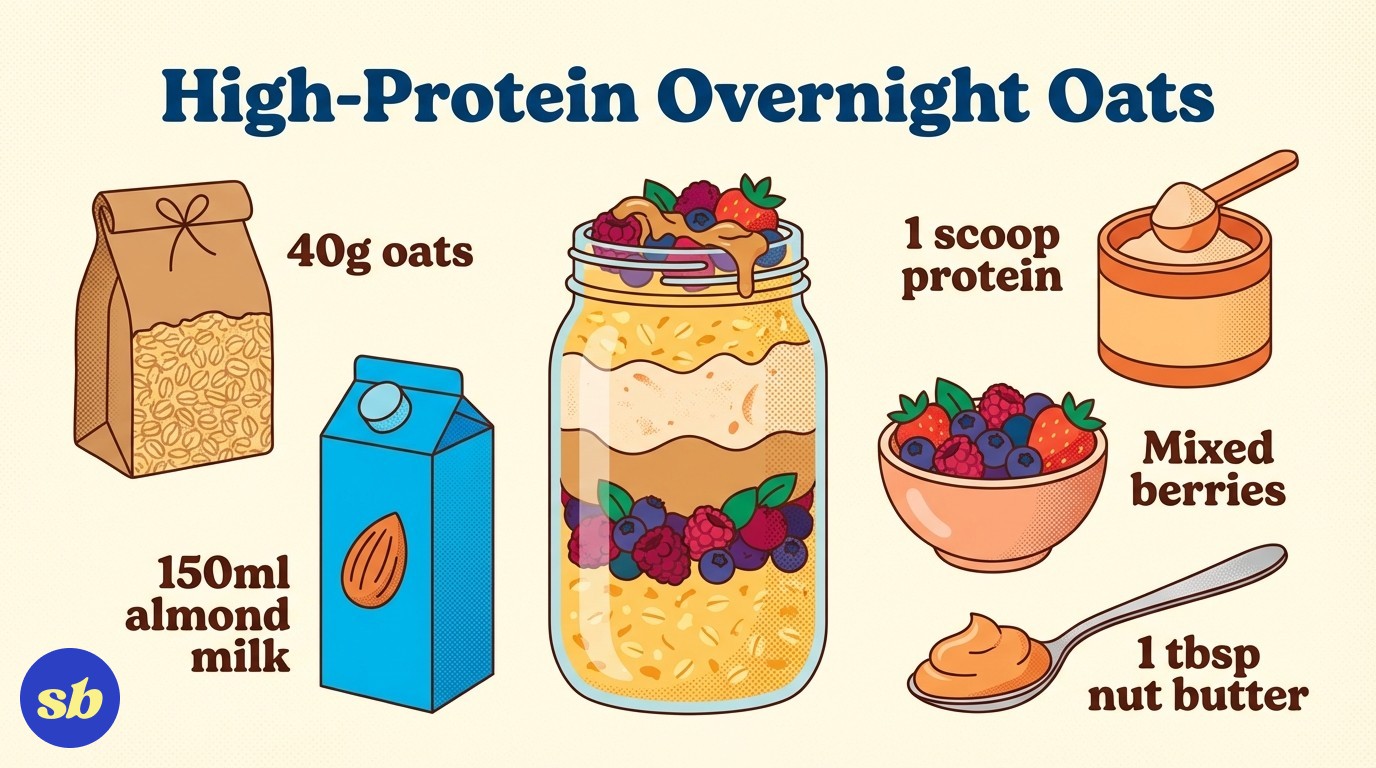
Overnight oats are a lifesaver because you can make five portions in one go. Mix 40g porridge oats with 150ml unsweetened almond milk in a jar. Add a scoop of protein powder if you’re struggling to hit your protein target. Stick it in the fridge overnight.
In the morning, top with berries and a spoonful of nut butter. Each serving has around 15–20g protein, depending on your powder.
Chia pudding is just as simple. Mix 3 tablespoons chia seeds with 200ml milk (dairy or plant-based). Stir again after five minutes to break up clumps. Leave it overnight.
Some people aren’t fans of the texture, but it’s so easy to eat when nothing else sounds good. You could add vanilla extract or cinnamon for extra flavour without piling on calories.
Both options keep for three or four days in the fridge. Make a batch on Sunday and you’re set until Wednesday.
Lunches and dinners: chicken burrito bowls and vegan lettuce wraps
We all want meal prep recipes for weight loss that actually taste good when reheated.
Chicken burrito bowls hit every mark. Cook 400g chicken breast with fajita seasoning. Split it between four containers with 100g cooked brown rice, black beans, sweetcorn, salsa, and some grated cheese.
Each bowl has about 35g protein and keeps you full for hours. The whole grains help with energy, too.
Swap in tofu if you want a plant-based version. Press it first, then marinate with the same seasoning.
Vegan lettuce wraps feel lighter but still satisfy. Cook 200g firm tofu or tempeh with soy sauce, ginger, and garlic. Toss in diced peppers, carrots, and spring onions.
Keep the filling and lettuce leaves separate. Iceberg or Little Gem work best since they don’t go soggy. Assemble them fresh when you’re ready to eat.
Both recipes cost under £10 for four portions and take about 30 minutes to prep.
Vegetarian, vegan, and balanced options
You don’t need meat to hit your protein goals, but vegetarian meal prep takes a bit more planning.
Lentil and vegetable curry works great for batch cooking. One tin of lentils gives you 9g protein per 100g serving. Add chickpeas to bump up the protein.
Serve it with 80g cooked quinoa instead of rice. That’s an extra 4g protein per portion.
Balanced options include protein, complex carbs, and loads of veg. Fill half the container with vegetables, a quarter with protein, and a quarter with whole grains.
Roasted vegetables keep well for four days. Try courgettes, peppers, aubergine, and cherry tomatoes tossed in a little olive oil.
For vegan prep, tofu scramble with spinach and mushrooms works for breakfast or lunch. Season with turmeric, black salt, and nutritional yeast.
Variety is the key. Eating the same thing five days straight gets boring fast.
Quick healthy snacks and Greek yoghurt parfaits
Snacks matter more than you’d think when your meals are smaller. Keep healthy meal prep ideas simple and focused on protein.
Greek yoghurt parfaits take two minutes, tops. Layer 150g Greek yoghurt (0% fat has 15g protein) with 50g berries and 20g granola in a jar.
Make three or four at a time. They last three days in the fridge and give you something sweet without messing up your progress.
Other grab-and-go options:
-
Hard-boiled eggs (6g protein each)
-
Hummus with carrot and cucumber sticks
-
Apple slices with almond butter
-
Protein balls made with dates and oats
-
Small portion of mixed nuts (just don’t go overboard with the calories)
Pre-portion everything. It’s way too easy to eat a whole bag of almonds without thinking.
We prep snack boxes on Sunday with different combos. Keep them in clear containers at the front of the fridge so you actually see them.
Maintaining consistency and enjoyment
Sticking with meal prepping gets easier when you tweak your approach as your body changes and keep your meals interesting enough to look forward to.
Adjusting your meal prep as you progress
Your appetite on treatment changes a lot. What felt manageable in month one might feel impossible a few months later.
Its best to start prepping smaller portions as our appetites dropped. Instead of filling big containers, switch to smaller ones. You can always grab seconds if you’re still hungry, but you won’t face a giant portion when you’re feeling nauseous.
Protein needs don’t shrink with your appetite. Even if you’re eating less, aim for 1.0 to 1.2g of protein per kg of body weight. This might mean your meal prep shifts more toward protein-forward options like Greek yoghurt pots, chicken breast strips you can nibble, or protein shakes in single servings.
Your healthy meal prep routine should stay flexible. Some weeks you’ll feel up to prepping five days of meals. Other weeks, just prepping three days plus some backup options like boiled eggs or pre-cooked chicken makes more sense.
Track what actually gets eaten. If certain meals just sit in the fridge, that’s a useful clue about what works for your changing body.
Keeping meals varied and interesting
Eating the same chicken and broccoli five days in a row? Yeah, that worked for a week. By week three, just looking at it made us feel a bit queasy.
It’s a good idea to rotate proteins each week. Maybe it’s chicken thighs one week, salmon fillets the next, then turkey mince or tofu. Switching things up gives you new flavours and textures, but you don’t have to overhaul your whole meal prep routine.
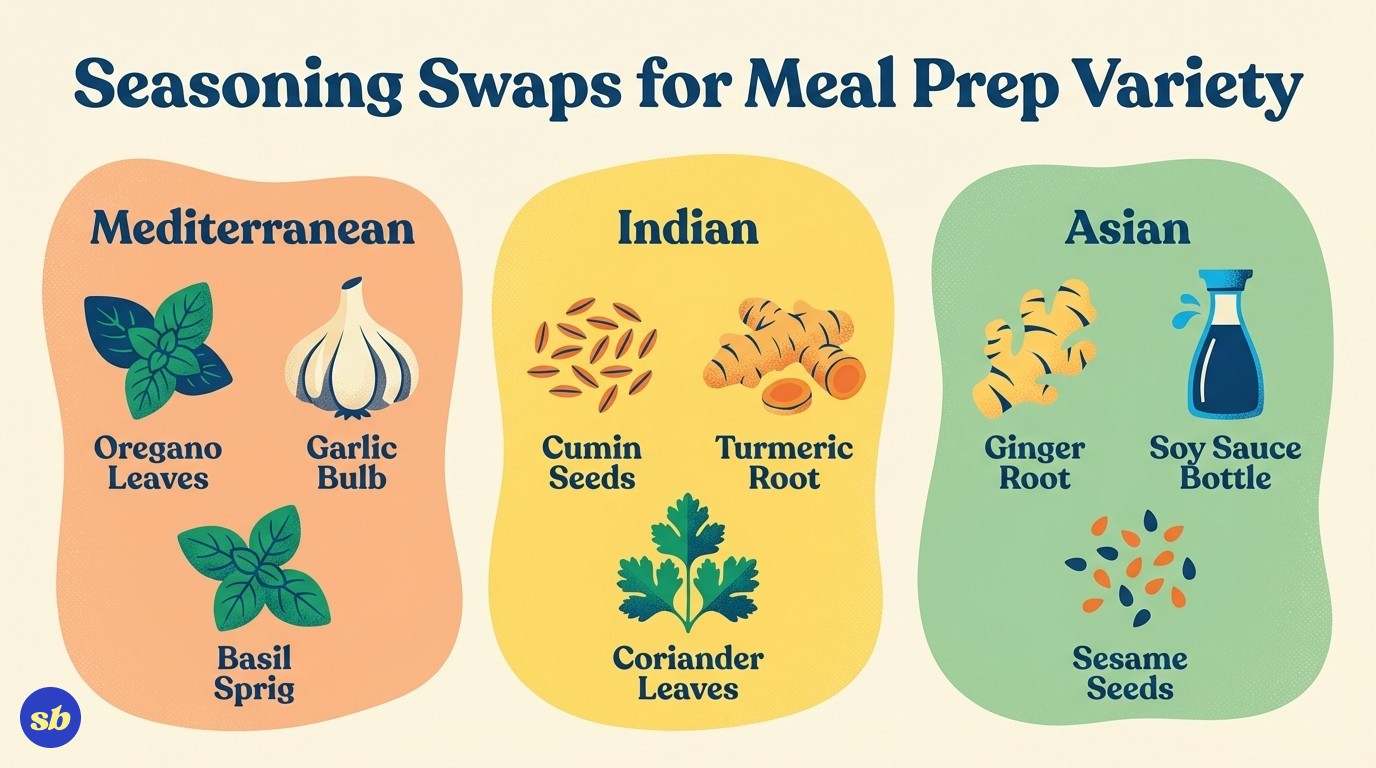
Stick to a base template, but change up the seasonings. Roasted vegetables feel totally different depending on what you use:
-
Mediterranean herbs like oregano, basil, and garlic
-
Indian spices — think cumin, turmeric, coriander
-
Asian flavours: ginger, soy sauce, sesame oil
Texture really matters, especially when your appetite dips. On some days, soft foods like soup or mashed sweet potato just go down easier. Other times, you crave something crunchy. It’s worth prepping both, so you don’t have to force down food that just isn’t appealing.
Research on weight loss maintenance points out that enjoying what you eat helps with long-term success. Not every meal needs to be thrilling, but it shouldn’t feel like a punishment either.
Keep a simple swap list on your phone. If chicken’s getting old, grab prawns instead. When roasted veg starts to bore you, you can have a stir-fry option ready. This way, you skip the decision fatigue and still get meals you actually want to eat.
The bottom line
Meal prep doesn’t need to be complicated, especially when your appetite is unpredictable on weight loss medication. Start with two or three protein-focused recipes, prep three to four days at a time, and adjust your portions as your body changes. Having healthy meals ready means you’ll eat well even on days when nothing sounds appealing. Pick a prep day, keep it simple, and build from there.
Getting the most from your treatment
Meal prepping is one side of making your weight loss treatment work, but finding the right provider matters too. Treatment costs, clinical support, and nutritional guidance vary between providers, so it’s worth comparing what’s included.
This guide is for general information only and doesn’t replace advice from your GP, prescriber, or a registered dietitian. If you’re on weight loss medication and making significant changes to your diet, speak to your healthcare team — especially if you’re experiencing persistent nausea, fatigue, or difficulty eating enough to meet your nutritional needs.
Frequently asked questions
How many meals should I prep at once when I’m on Mounjaro or Wegovy?
Start with three to four days’ worth. Food stays fresher, you won’t get bored of eating the same thing, and you can adjust portions if your appetite changes mid-week. Prepping five days at a time works once you know which meals you enjoy reheating.
What’s the best protein target for meal prep on weight loss medication?
Aim for 1.0–1.2g of protein per kilogram of your body weight each day. If you weigh 80kg, that’s roughly 80–100g of protein spread across your meals and snacks. Prioritise protein at every meal to preserve muscle while you’re losing weight.
How do I meal prep when nothing sounds good?
Focus on neutral-tasting, protein-rich foods that are easy to eat cold or warm — Greek yoghurt, hard-boiled eggs, plain chicken breast strips, and cottage cheese. Having these ready means you’ll eat something even when your appetite has vanished.
Can I freeze meal prepped food?
Yes. Curries, chilli, soups, and cooked proteins all freeze well for up to three months. Portion into individual containers before freezing so you can defrost exactly what you need. Avoid freezing salads, raw vegetables, or anything with a high water content.
How do I stop meal prep from getting boring?
Rotate your proteins weekly (chicken one week, salmon the next, then turkey mince or tofu). Keep a base template but change your seasonings — Mediterranean herbs, Indian spices, or Asian flavours give the same ingredients a completely different feel.
Is it normal to waste food when I’m on GLP-1 medication?
It’s common, especially in the first few months when your appetite drops dramatically. Prep smaller portions than you think you’ll need, freeze extras before they go off, and don’t feel guilty about eating less than you planned. Your body is adjusting.
Should I count calories when meal prepping for weight loss?
You don’t need to count every calorie, but being aware of portion sizes helps — especially with calorie-dense foods like nuts, oils, and cheese. Weighing your food for the first week or two teaches you what reasonable portions look like, then you can eyeball it.
What if I feel sick after eating my prepped meals?
Nausea is common on GLP-1 medications, particularly during dose escalation. Eat slowly, choose bland foods, and avoid anything greasy or heavily spiced on days when your stomach feels unsettled. If nausea persists for more than a few days, speak to your prescriber about adjusting your dose.
How much should I spend on weekly meal prep?
Most of the recipes in this guide cost under £10 for four portions. A full week of prepped lunches and dinners typically runs £20–£30. Buying protein on offer and using frozen vegetables keeps costs down without sacrificing nutrition.
Do I need special containers for meal prep?
Glass containers with clip lids are ideal — they go from fridge to microwave and last for years. BPA-free plastic works too. The most important thing is that they’re airtight and stackable. Invest in a set of the same size so they store neatly.
Sources
-
NHS. Water, drinks and hydration. Accessed April 2026.
-
NHS. The Eatwell Guide. Accessed April 2026.
-
British Nutrition Foundation. Getting portions right. Accessed April 2026.
-
Food Standards Agency. Chilling. Accessed April 2026.