


PCOS makes weight loss harder because of insulin resistance, hormonal imbalances, and a slower metabolism, not because of a lack of effort. Understanding these biological barriers is the first step to working with your body rather than against it.
If you have PCOS and can’t seem to lose weight, you’re definitely not alone. Women with PCOS face real biological barriers: insulin resistance, hormonal imbalances, and metabolic quirks that make the body cling to fat more stubbornly than you’d expect. Research even shows that women with PCOS often report extreme difficulty losing weight, even if they’re following the same diets that work for others.
It’s not about willpower or effort. Your body just works against you in invisible ways. But here’s the thing: once you know what’s going on, you can actually work with your biology instead of fighting it.
Let’s dig into the science behind why PCOS makes weight loss so tough, what happens with your hunger hormones, and some practical strategies that really help. No gimmicks, no magic fixes. Just honest info about what actually works.
Key takeaways

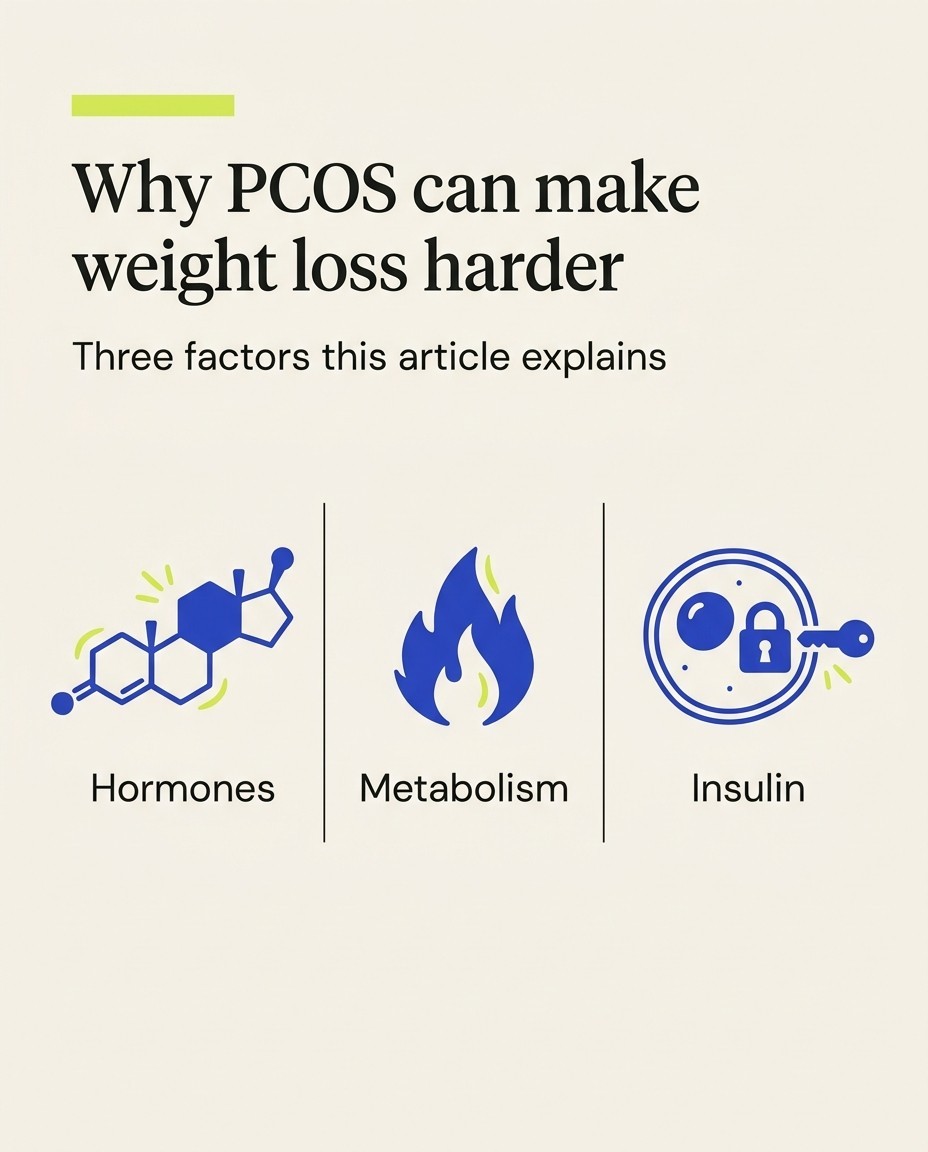
Key reasons weight loss is harder with PCOS
Women with PCOS deal with unique biological challenges that make losing weight genuinely harder than it is for women without it. The main issues? Insulin resistance, hormonal imbalances that disrupt hunger, and a slower metabolism.
Insulin resistance and its role in fat storage
Insulin resistance sits right at the center of why weight management feels so tough with PCOS. When your cells stop responding well to insulin, your pancreas just makes more to try and keep up.
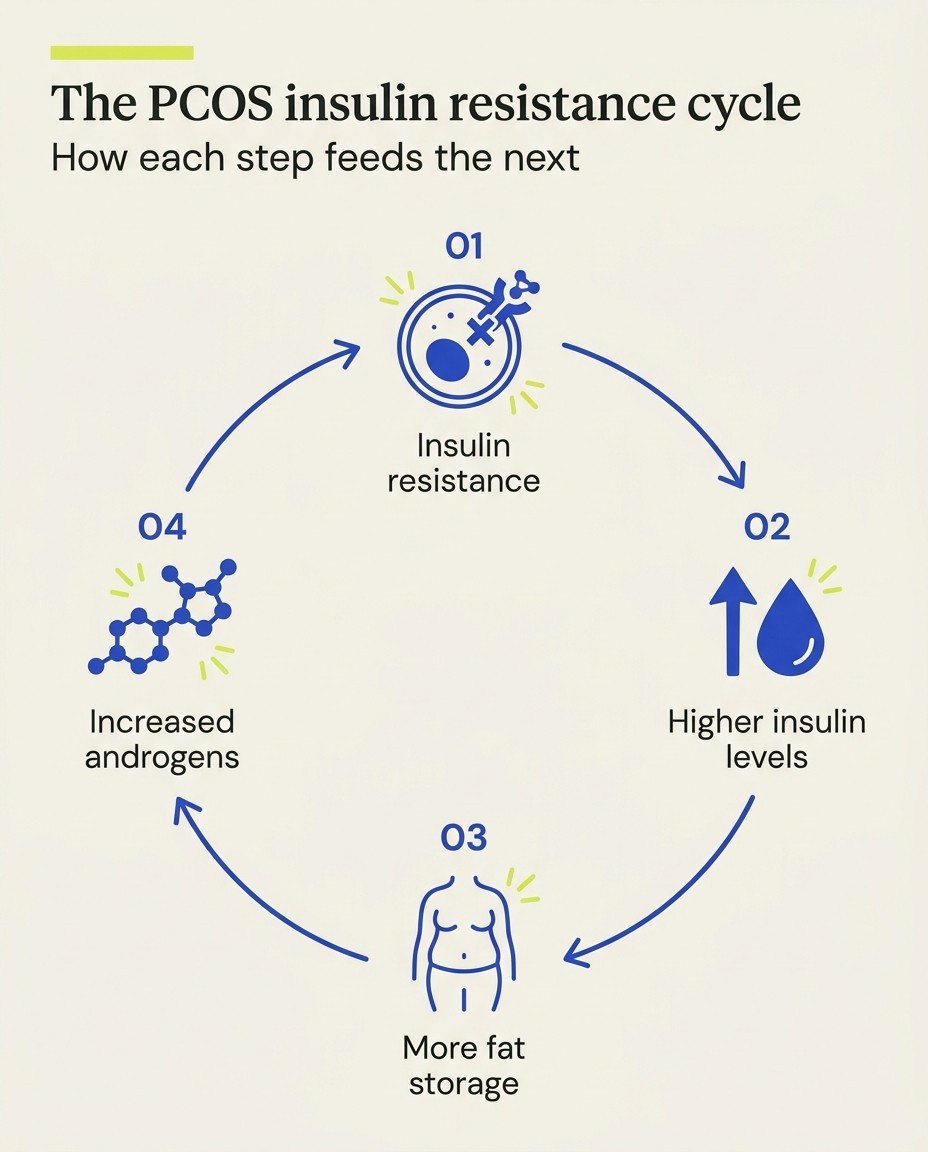
Higher insulin levels tell your body to store fat, especially around your belly. This visceral fat (the type that wraps around your internal organs) is particularly problematic because it’s metabolically active and worsens insulin resistance further. That creates a frustrating cycle: insulin resistance drives weight gain, and extra weight makes insulin resistance worse. This is one of the main reasons why PCOS and obesity are so closely linked, with research suggesting that 40–80% of women with PCOS carry excess weight.
Researchers have found that women with PCOS have built-in insulin resistance, even compared to women of the same weight who don’t have PCOS. Your body fights you on a cellular level.
This is why counting calories sometimes just doesn’t cut it. Your body handles glucose and stores energy differently if you’re insulin resistant.
Extra insulin also pushes your ovaries to make more androgens (male hormones like testosterone). These hormones get in the way of weight loss and worsen PCOS symptoms like irregular periods and extra hair growth.
Hormonal imbalances: androgens, leptin, and ghrelin
Several hormones that control hunger and fullness behave differently when you have PCOS. It’s not about willpower. Your body’s signaling system just misfires.
Ghrelin (the hunger hormone) levels are often lower in women with PCOS. Sounds good, right? But actually, it disrupts normal appetite regulation. Some studies suggest women with PCOS get hungry again soon after eating, making it harder to feel satisfied.
Leptin (the fullness hormone) often doesn’t work right in PCOS. Your brain ignores leptin’s “you’re full” message, even if you have plenty of it floating around.
Androgens cause trouble too. High testosterone and other male hormones bring on physical symptoms and also change how your body makes and stores fat. Higher androgen levels encourage fat storage in the belly, the kind most tied to metabolic issues.
All these hormonal imbalances mean your body’s internal messages about energy and hunger just don’t work like they should.
Metabolic rate and energy expenditure in PCOS
Your basal metabolic rate (BMR) might be lower if you have PCOS. BMR is the energy your body uses just to keep you alive each day. The research is mixed, but several studies show women with PCOS have a reduced metabolic rate, especially if their androgen levels are high.
Some women with PCOS burn less energy digesting and processing food, too. That’s called postprandial thermogenesis. If it’s lower, you use up fewer calories from the same meals than someone without PCOS.
There’s also something called metabolic inflexibility. Your body struggles to switch between burning carbs and burning fat for fuel. You might not adapt well to changes in diet or fasting. This metabolic rigidity helps explain why PCOS is so closely linked to obesity, and why standard calorie-counting approaches often fall short for women with the condition.
Studies measuring how your body uses oxygen and carbon dioxide suggest women with PCOS burn less fat for energy. Basically, your body hangs onto fat instead of burning it.
With a possibly lower BMR, sluggish thermogenesis, and metabolic inflexibility, you end up burning fewer calories all day than you’d expect. Even if you eat and exercise the same as someone without PCOS, the scale just moves slower.
The impact of appetite, cravings, and emotional factors
Women with PCOS often deal with mixed-up hunger signals, intense cravings, and emotional eating patterns that make weight loss feel like a constant struggle. These aren’t just about willpower. Hormonal imbalances and stress responses disrupt how your body controls appetite and mood.
Appetite-regulating hormones in PCOS
Your body uses hormones like leptin and ghrelin to tell you if you’re hungry or full. Leptin means satiety, ghrelin means hunger.
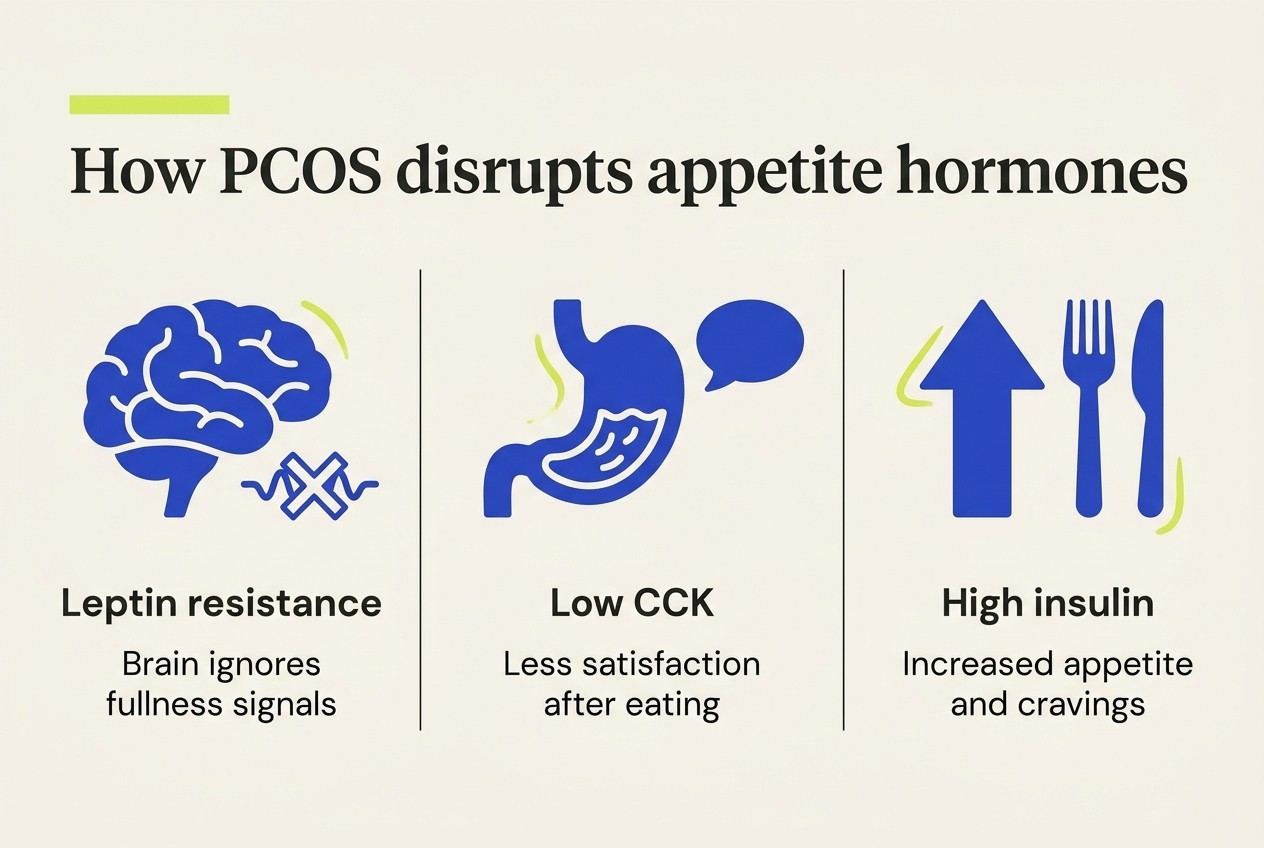
Women with PCOS often get leptin resistance. Your brain ignores leptin’s “stop eating” message, even if you have plenty. You might not feel full after eating, even if you’ve had a decent meal.
Researchers have found that problems in the hypothalamus (the part of your brain that controls appetite and energy balance) play a big role in appetite issues with PCOS. The hypothalamus can’t adjust properly for extra food intake, so it’s easy to overeat.
Cholecystokinin (CCK) should make you feel full after eating, but women with PCOS often don’t release enough of it. That makes it genuinely harder to tell when you’ve had enough.
Insulin resistance makes things worse. High insulin can ramp up your appetite and encourage fat storage, especially around your middle. It’s not about discipline. Your hormones are just making things more complicated.
Cravings, emotional eating, and stress
Anxiety and depression show up a lot in women with PCOS, often because of low self-esteem linked to weight gain, acne, or excess hair. These mood issues can trigger cravings and binge eating.
High androgen levels can mess with both your mood and your eating habits. Studies show high androgen levels are connected to psychological distress and food cravings, no matter your BMI.
When you’re stressed, your body pumps out more cortisol (a stress hormone that affects appetite and fat storage). High cortisol boosts your appetite and makes you crave high-fat, high-sugar foods. It also pushes your body to store more belly fat.
Common triggers for emotional eating in PCOS:

Stress management is crucial for weight loss. Mindfulness and meditation can help lower cortisol and break the stress-eating cycle. Even just 10 minutes a day can make a difference.
Sleep disturbance and its effect on weight
Poor sleep disrupts the same appetite hormones already affected by PCOS. If you don’t get enough sleep, ghrelin goes up and leptin drops. You end up hungrier and less satisfied after meals.
Women with PCOS are more likely to get sleep apnea (a condition where your breathing repeatedly stops and starts during sleep), especially if they’re carrying extra weight. Sleep apnea interrupts your sleep and makes insulin resistance worse. It’s another tough cycle that gets in the way of weight loss.
Sleep deprivation also affects your food choices. When you’re tired, it’s way easier to grab sugary snacks for quick energy. Your impulse control takes a hit when you haven’t slept enough.
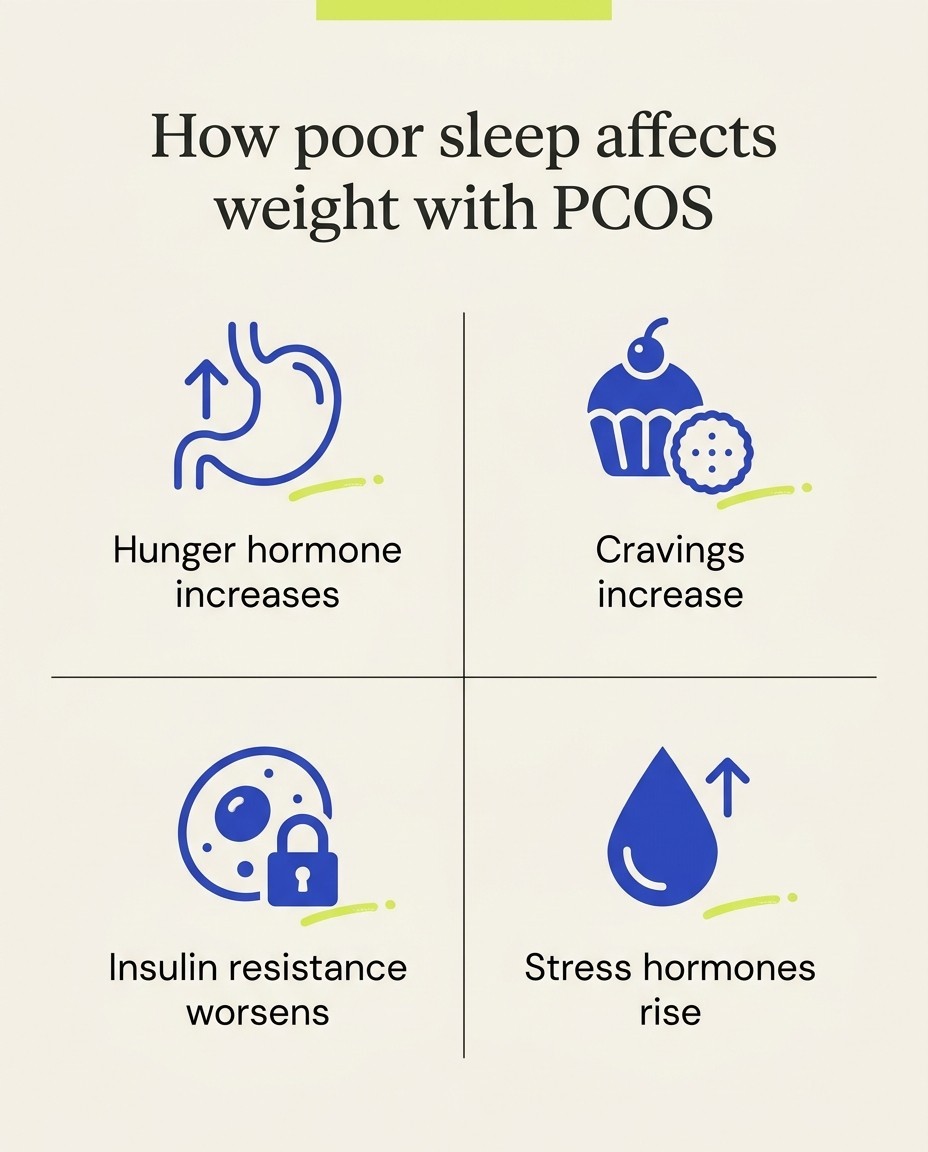
Sleep and weight connections:
Getting 7–9 hours of good sleep is just as important as diet and exercise for weight loss. If you think you might have sleep apnea, talk to your doctor about a sleep study. Treating sleep issues can make a big difference for weight management with PCOS.
Evidence-based dietary approaches for PCOS weight loss
If you’re dealing with PCOS and maybe using weight loss medication, certain diets can work with your treatment instead of against it. Research shows that some eating patterns help regulate insulin and support sustainable weight loss, while others just make things harder.
Low-glycemic index and high-fiber diets
Low-GI (glycemic index) eating patterns really help with insulin resistance in PCOS. The glycemic index ranks foods by how quickly they raise your blood sugar. Lower-GI foods release energy more slowly, which helps keep insulin levels steadier. It’s not about ditching all carbs, just picking the right ones.
Whole grains like oats, quinoa, and brown rice give you slow, steady energy. They don’t spike your blood sugar like white bread or pasta. Pair these with high-fiber foods to help your body manage insulin better.
Non-starchy veggies should fill up a good chunk of your plate. Leafy greens, broccoli, bell peppers, and zucchini are all great. Berries are a smart choice too: low-GI and packed with fiber.
Try to get at least 25–30g of fiber every day. It sounds like a lot, but it’s doable if you focus on veggies, legumes, and whole grains. Your gut will thank you, and you might even see better blood pressure.
Here’s a peek at a day of low-GI eating:
| Meal | Low-GI choice | Why it works |
|---|---|---|
| Breakfast | Oatmeal with berries and nuts | Oats give slow energy, berries add fiber |
| Lunch | Lentil soup with whole wheat bread | Legumes are low-GI and filling |
| Dinner | Grilled fish with quinoa and vegetables | Protein, slow carbs, and fiber in one meal |
Protein intake and food choices
Getting enough protein matters even more when you’re on weight loss meds. Your appetite might drop, but your body still needs protein to keep muscle as you lose weight.
Aim for about 0.45–0.55g of protein per pound of body weight. For someone weighing 176 lb, that means roughly 80–100g of protein daily during weight loss. Sounds doable, but it can be a challenge if your hunger is low.
Lean protein sources are your friends. Fish like salmon and mackerel give you protein and omega-3s. Eggs are quick and versatile. Tofu is a solid pick if you’re plant-based.
Don’t forget legumes and lentils. One serving gives you protein, fiber, and that steady energy release. They’re filling, which helps when you’re eating less overall.
Nuts, seeds, and avocado offer healthy fats plus some protein. A handful of almonds or a spoon of chia seeds can boost your intake without making you feel stuffed. These healthy fats also help with hormone balance, which is pretty important for PCOS.
Recommended and discouraged foods
Some foods really support your PCOS weight loss. Others just make it harder, even if you’re on medication.
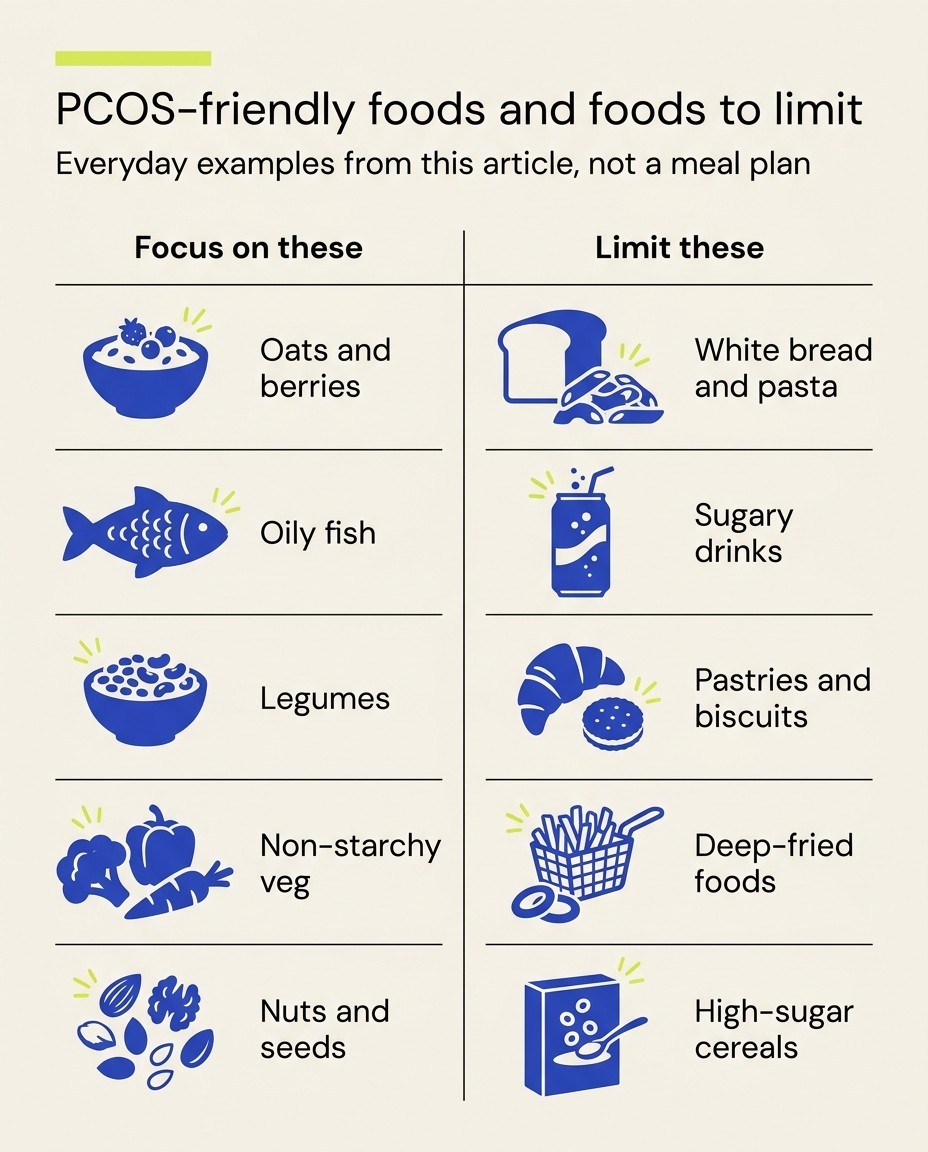
Foods to focus on:
- Oats for breakfast (steel-cut or old-fashioned rolled, not instant)
- Quinoa instead of white rice
- Legumes like chickpeas, black beans, and butter beans
- Fish twice a week (canned is fine)
- Eggs for easy protein
- Non-starchy veggies in all the colors
- Berries when you want something sweet
- Seeds like flax, chia, and pumpkin
- Avocado for healthy, filling fats
Foods to limit or skip:
- Highly processed foods with long ingredient lists
- White bread, white rice, and regular pasta
- Sugary drinks and fruit juices
- Pastries, cookies, and cakes
- Deep-fried foods
- High-sugar cereals
It’s not about being perfect. It’s about making choices that support your meds and your body’s needs with PCOS. Weight loss improves PCOS symptoms no matter the exact diet, but choosing nutrient-dense foods gets you there with less struggle.
You might have heard about ketogenic diets pushing your body into ketosis, where it burns fat for fuel instead of carbohydrates. Some women with PCOS find very low-carb eating helpful for managing insulin resistance, but there’s limited evidence that ketosis itself is necessary for PCOS weight loss. A balanced low-GI approach tends to be more sustainable and still delivers meaningful improvements in blood sugar and insulin levels without the restrictiveness of a strict ketogenic diet.
If you’re finding it hard to put together an eating plan that works for both your PCOS and your appetite, consider asking your doctor about seeing a registered dietitian. Nutritionists and dietitians who understand PCOS can help you build a realistic, personalized eating plan rather than relying on generic advice that doesn’t account for insulin resistance.
If you’re having trouble getting enough protein or certain vitamins from food, supplements for PCOS could be worth talking about with your doctor. But always start with food first.
Lifestyle, exercise, and medical interventions
Managing PCOS weight takes a targeted approach: specific types of exercise, medications or supplements that actually work, and behavioral strategies that tackle the unique metabolic challenges of PCOS. It’s not just about eating less or moving more.
Strength training, cardio, and physical activity
Strength training matters more than you might think when you have PCOS. Building muscle actually helps your body handle insulin better, which is a big deal since insulin resistance makes weight loss feel stubborn.
You don’t need fancy equipment to get started. Bodyweight moves (think squats, push-ups, rows) give your muscles the resistance they need to get stronger.
Even if you just fit in two sessions a week, you’ll probably notice a real difference in how your body deals with insulin.
Cardiovascular exercise shows particularly promising results for PCOS. Vigorous aerobic workouts change your body composition, boost your fitness, and work directly on insulin resistance.
That doesn’t mean you have to sprint everywhere, but honestly, just gentle walks probably aren’t enough by themselves.
The sweet spot? Mixing both approaches. People seem to get better results when they combine resistance work with higher-intensity cardio.
Your body reacts to different types of training, and that variety seems to really help break through the metabolic resistance PCOS throws at you.
Role of medications and supplements
Metformin, a prescription medication originally developed for type 2 diabetes, is still the one doctors study the most for PCOS-related weight management. It helps your body use insulin more efficiently, making weight loss a bit more doable. Common side effects include nausea, diarrhea, and stomach discomfort, particularly when first starting. These usually settle within a few weeks.
Your doctor might prescribe it even if you don’t have diabetes, just to target insulin resistance.
Inositol supplements (a type of B vitamin that plays a role in how your body processes insulin) have gotten some solid clinical support lately. Both myo-inositol and d-chiro-inositol help with metabolic health and lower androgen levels.
Research on inositol supplementation produces the most promising findings among PCOS supplements, with improvements in fasting blood glucose and hormone balance.
The evidence for other supplements? Still pretty hit or miss, honestly. Plenty of them sound great, but the research isn’t always there yet.
Talk to your doctor before starting any supplement, particularly if you’re taking other medication, as some supplements can interact with prescription treatments.
Combining medication or supplements with lifestyle changes usually works better than going with just one approach. They’re helpful tools, but let’s be real, they’re not magic fixes.
Behavioral and holistic practices
Lifestyle interventions really only work when you get proper behavioral support, not just a diet sheet or a basic exercise plan. People often skip over the psychological side of PCOS, but honestly, it can make or break your ability to stick with changes that last.
Yoga appears in some PCOS research, with small studies suggesting benefits for stress and possibly hormone levels, but the evidence isn’t strong enough yet to make firm recommendations.
Weight maintenance? It deserves just as much attention as losing weight in the first place. Long-term weight management gets trickier with PCOS because of those underlying metabolic quirks.
Building habits you can actually live with matters way more than scoring dramatic results that don’t last. That’s just the reality for most people.
Sleep quality and emotional well-being play a much bigger role than most folks realize. Bad sleep makes insulin resistance worse and, honestly, makes everything feel harder.
If you’re dealing with anxiety, depression, or disordered eating patterns, you can’t just ignore it. Tackling those issues is pretty much essential for real progress.
When to talk to your doctor

Talk to your doctor if you’re experiencing any of the following:
- You’ve been trying to lose weight for several months with no results despite consistent effort
- You suspect you have insulin resistance (signs include dark patches of skin on your neck or armpits, fatigue after meals, or difficulty losing weight despite calorie restriction)
- You’re experiencing symptoms of sleep apnea: loud snoring, waking up gasping, or feeling exhausted despite sleeping enough hours
- You’re struggling with anxiety, depression, or disordered eating patterns linked to your PCOS
- You’d like to discuss whether metformin or other medications might help alongside lifestyle changes
- Your periods have stopped completely or you’re experiencing new or worsening PCOS symptoms
The bottom line
Losing weight with PCOS is genuinely harder, but it’s not impossible. Insulin resistance, disrupted hunger hormones, and a slower metabolism all stack the deck against you, but targeted strategies like low-GI eating, strength training, proper sleep, and sometimes medication can help you make real progress. The key is working with your biology: focus on blood sugar management, prioritize protein, and don’t compare your results to people without PCOS. If you’re struggling, talk to your doctor about whether metformin or other treatments might help alongside lifestyle changes. You’re not failing. You’re dealing with a more complex situation, and that deserves a more tailored approach.
Frequently asked questions
Frequently asked questions
Is it actually harder to lose weight with PCOS, or does it just feel that way?
It is genuinely harder. Research shows that women with PCOS have higher levels of insulin resistance, disrupted appetite hormones, and a potentially lower metabolic rate, all of which make the body more resistant to weight loss, even when following the same diet and exercise routines as women without PCOS.
How much weight do I need to lose to see improvements in my PCOS symptoms?
Even a modest weight loss of 5–10% of your body weight can significantly improve insulin sensitivity, regulate menstrual cycles, and reduce androgen levels. For someone weighing 176 lb, that’s around 9–18 lb. You don’t need to reach a specific number on the scale to start seeing benefits.
Should I try a keto diet for PCOS?
Some women with PCOS find low-carb or ketogenic diets helpful for managing insulin resistance, but there’s no strong evidence that keto is better than a balanced low-GI diet for PCOS specifically. A low-GI diet with adequate protein is generally more sustainable long-term. Talk to your doctor or a registered dietitian before making major dietary changes.
Can metformin help me lose weight if I have PCOS?
Metformin can help improve insulin sensitivity, which may make weight loss slightly easier for some women with PCOS. It’s not a weight loss medication on its own, but it can be a useful tool alongside diet and exercise changes. Your doctor can advise whether it’s appropriate for you.
Does exercise type matter for PCOS weight loss?
Yes. Strength training is particularly beneficial because building muscle improves insulin sensitivity. Combining resistance training with moderate-to-vigorous cardio seems to give the best results. Gentle walking alone is helpful for general health but may not be enough to shift the metabolic resistance that comes with PCOS.
Why do I gain weight around my stomach with PCOS?
Higher insulin levels and excess androgens both promote fat storage around the abdomen. This visceral fat (the type stored around your organs) is metabolically active and can worsen insulin resistance, creating a frustrating cycle. Targeted strategies like reducing refined carbohydrates and increasing strength training can help.
Can supplements help with PCOS weight loss?
Inositol (particularly myo-inositol and d-chiro-inositol) has the strongest evidence among PCOS supplements, with studies showing improvements in insulin sensitivity and hormone levels. Other supplements like vitamin D, omega-3s, and berberine have some promising early research but less robust evidence. Always check with your doctor before starting supplements, especially alongside other medication.
How long does it take to see weight loss results with PCOS?
Progress is typically slower with PCOS, so give any new approach at least 8–12 weeks before judging whether it’s working. Focus on trends rather than daily fluctuations, and track improvements beyond the scale: better energy, more regular periods, and improved blood sugar levels all count as progress.
This article is for information only and does not replace medical advice. PCOS affects everyone differently, and the right approach for you depends on your individual health profile. Talk to your doctor or endocrinologist before starting any new diet, exercise program, or supplement, especially if you’re already taking medication.
For more information about PCOS, visit the NHS PCOS information page.
Sources:
- Insulin resistance and weight gain in PCOS – BMC Endocrine Disorders
- Hypothalamic appetite regulation in PCOS – Nutrients
- Psychological distress and PCOS – Endocrine
- Androgens and food cravings – Physiology & Behavior
- Exercise and lifestyle interventions for PCOS – BMC Endocrine Disorders
- Long-term weight management in PCOS – Journal of Women’s Health
- Sleep and ghrelin – PLoS Medicine
- Sleep deprivation and food desire – Nature Communications
- Sleep restriction and insulin sensitivity – Diabetes
- Sleep loss and cortisol – Sleep