

You’ve cleaned up your diet, you’re tracking every meal, and you’re doing everything “right.” So why does your stomach feel like a balloon by dinnertime?

Bloating on a diet usually happens because you’ve suddenly changed your fiber intake, you’re not drinking enough water, you’re eating too fast, or your body’s just adjusting to new foods. It doesn’t mean your diet’s failing.
It’s frustrating, isn’t it? You expect to feel lighter when you start eating better, not puffy and uncomfortable. But bloating and weight loss go hand in hand more often than you’d think. Feeling bloated when dieting is really common, especially in the first few weeks of a calorie deficit.
Your gut needs time to catch up with your changes. Sometimes, healthy foods can actually cause more gas and water retention at first.
The good news is that most diet-related bloating doesn’t last. Here’s what’s actually causing it and what you can do about it.
Key takeaways

Understanding bloating on a diet
Bloating while dieting can really throw you off, especially when you’re following all the “rules.” Usually, it’s about how your digestive system reacts to what you’re eating, not about eating too much or picking the “wrong” foods.
What is bloating and why does it happen?
Bloating feels like uncomfortable fullness or tightness in your belly. Sometimes your stomach even looks bigger than usual.
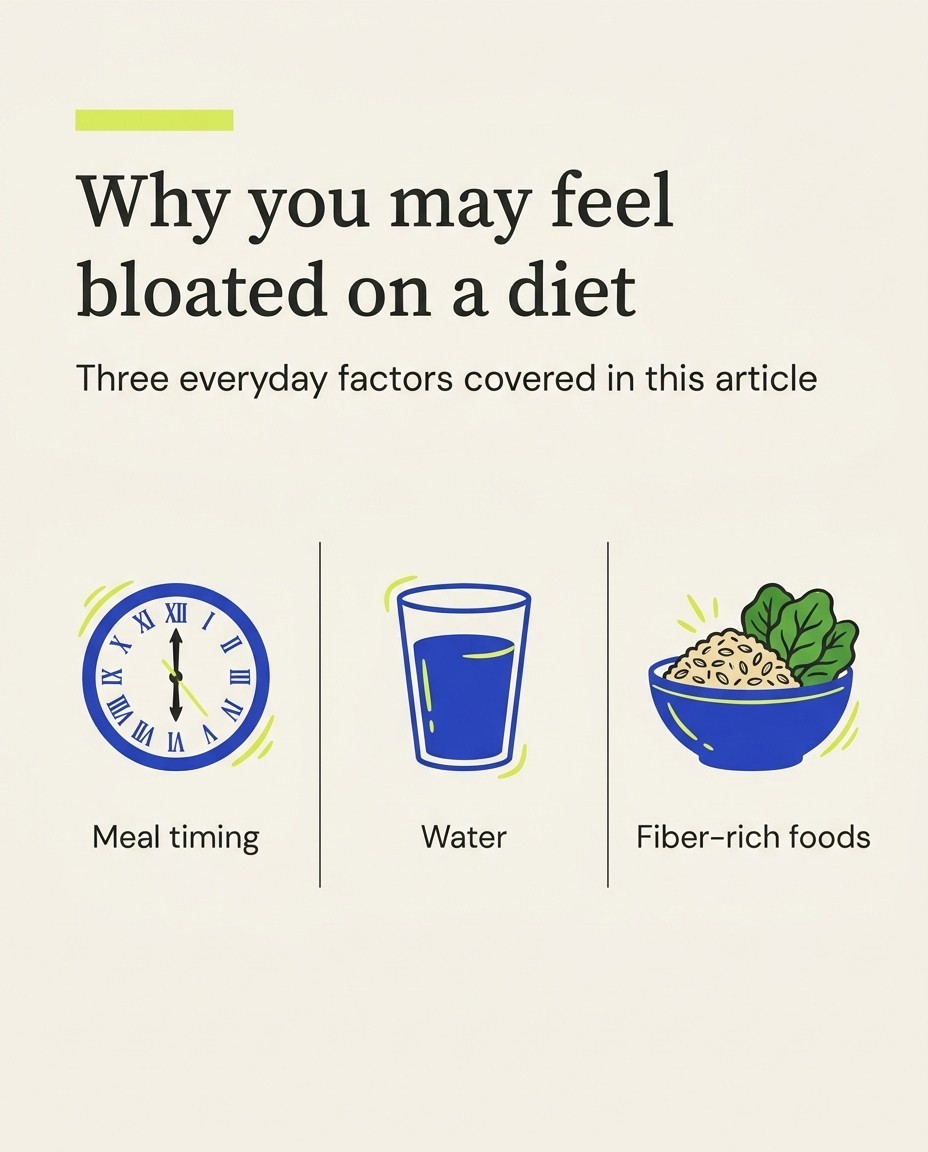
When you change your eating habits, your gut needs a little time to catch up. Maybe you’ve added more fiber or protein, switched up your foods, or started eating at different times. Your digestive system might push back for a bit.
Feeling bloated when dieting doesn’t mean you’re doing something wrong. A calorie deficit changes the volume and type of food moving through your gut, and that shift alone can trigger temporary bloating while your system recalibrates.
How you eat matters too. Large meals, not chewing well, or eating too fast can all make things worse.
Your body makes gas as it breaks down food. That’s totally normal. Some foods just create more gas than others.
You might even discover food intolerances you never noticed before, once you change your diet.
If you’re on GLP-1 weight loss medications (drugs that mimic a natural appetite-regulating hormone) like tirzepatide (Zepbound) or semaglutide (Wegovy), you might notice more bloating. Bloating on Zepbound and bloating on Wegovy are both frequently reported. These medications slow how quickly food leaves your stomach (called delayed gastric emptying), so food hangs around longer. That extra time lets gut bacteria ferment more, which means more gas.
Temporary vs persistent bloating
Most diet-related bloating doesn’t last long. It usually shows up a few hours after eating and fades by the next morning or within a day or two.
Your body tends to adjust to new eating habits within two to four weeks. For example, if you’ve upped your fiber, the bloating should settle as your gut bacteria get used to it.
Persistent bloating is a different story. According to clinical guidelines used by gastroenterologists, persistent bloating (the kind that shows up at least one day a week, sticks around for three months, and started at least six months ago) is classified as a functional gut disorder. This kind of bloating doesn’t just go away with simple diet tweaks.
If you’re dealing with that kind of ongoing bloating, check in with your doctor. They can rule out things like celiac disease, lactose intolerance, or other digestive issues that need specific care.
Symptoms associated with bloating
Bloating doesn’t usually come alone. That full, tight feeling often brings along some other annoyances.

These symptoms are normal with diet-related bloating:
- Your stomach looks bigger than usual (distension)
- Cramping or mild belly pain
- Extra gas or flatulence
- Gurgling or rumbling noises
- Temporary changes in bowel habits
These typically settle within two to four weeks as your gut adjusts.
Some people notice bloating with constipation. When waste gets stuck, bloating gets worse.
Others find that symptoms ramp up as the day goes on, especially after meals.
The intensity can really vary. Some days, it’s barely there. Other days, your pants feel tight by dinner, even if your weight hasn’t changed.
If you get severe pain, blood in your stool, unexplained weight loss, or you keep vomiting, call your doctor. Those need to be checked out.
Common dietary and lifestyle causes
Bloating on a diet usually comes down to what you’re eating, how you’re eating it, and how your gut’s handling the changes. Even healthy swaps can cause gas and discomfort if your body isn’t used to them.
Eating too quickly or swallowing air
If you rush through meals, you’ll probably swallow extra air with your food. This happens a lot when your appetite drops on medication and you’re trying to cram in protein during a short eating window.
That air has to go somewhere. You’ll either burp it up or it’ll travel through your intestines, causing bloating.
Habits that make you swallow more air:

You can fix this, but it takes attention. Slow down, put your fork down between bites, and chew well. It sounds simple, but it really does help.
High FODMAP and gas-producing foods
FODMAPs are fermentable carbs that some folks just can’t digest well. The name stands for fermentable oligosaccharides, disaccharides, monosaccharides, and polyols.
If your small intestine doesn’t absorb these carbs, they head to your colon. There, gut bacteria ferment them, making gas and causing bloating or cramps.
Lots of “diet foods” sneak in high FODMAPs. Overnight oats with apple and honey? High FODMAP. Cauliflower rice? Also high. Sugar-free protein bars with polyols? Yep, those too.
Common high FODMAP foods in diets:
| Food category | High FODMAP examples |
|---|---|
| Vegetables | Onions, garlic, cauliflower, mushrooms |
| Fruits | Apples, pears, watermelon, dried fruit |
| Legumes | Chickpeas, lentils, kidney beans |
| Grains | Wheat-based products, rye |
| Sweeteners | Honey, agave, sorbitol, mannitol |
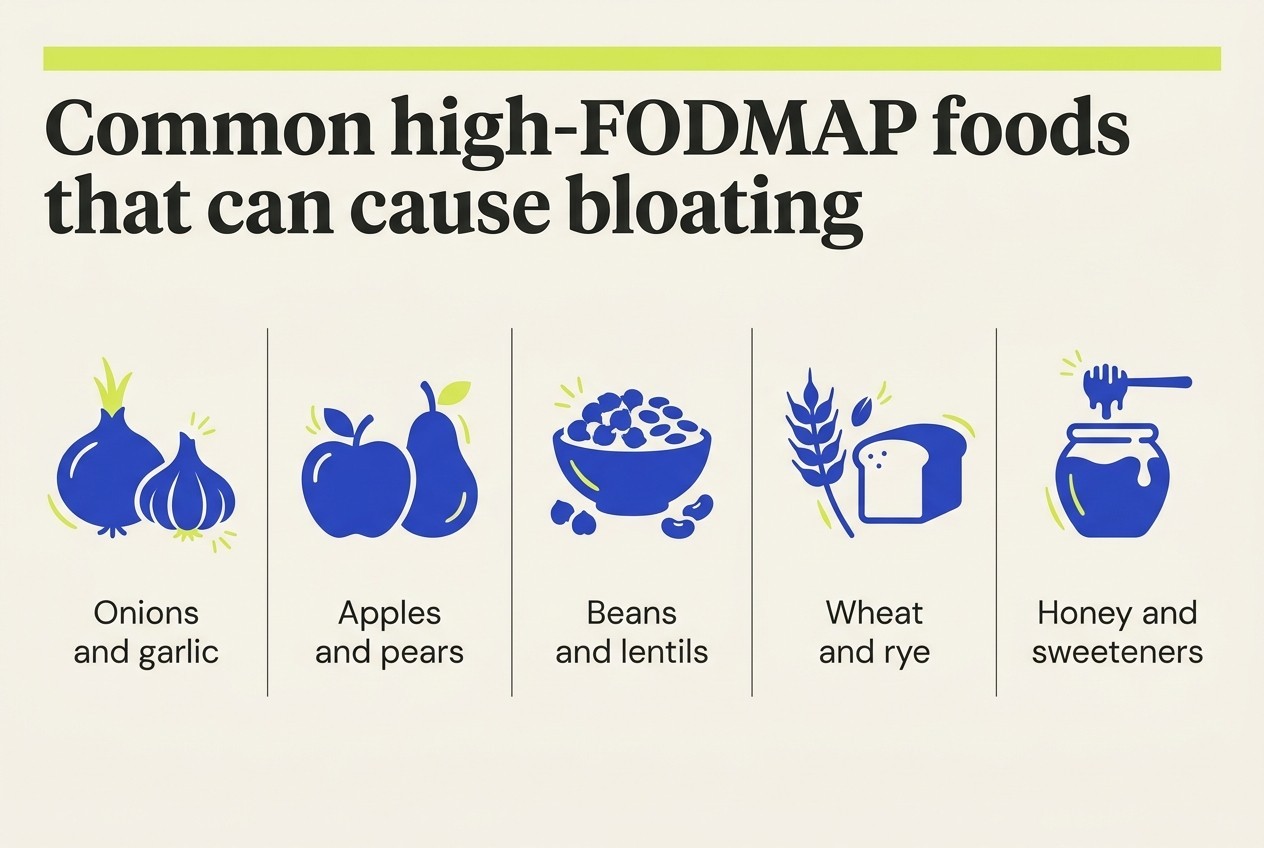
You don’t have to cut out all FODMAP foods unless you have IBS or another digestive condition. But if you’ve suddenly added a bunch of them and now you’re bloated, that’s probably why.
Food intolerances and sensitivities
Food intolerance isn’t the same as an allergy. It just means your body can’t break down certain foods because it’s missing some digestive enzymes.
Lactose is the main one, found in milk and dairy. If you’ve started eating Greek yogurt for protein or adding milk to shakes, lactose intolerance might be behind your bloating.
Food intolerances are sneaky. Symptoms don’t always hit right away. You might feel fine at first, then suddenly get bloated later.
Signs you might have a food intolerance:
- Bloating that starts 30 minutes to a few hours after eating
- Belly cramps or pain
- Lots of gas
- Loose stools or changes in your bathroom habits
- Symptoms that disappear when you skip the suspected food
The best way to figure it out? Cut out the food for two or three weeks, then try it again and see what happens. Keep a note of how you feel.
Constipation and sluggish digestion
Constipation is really common on GLP-1 medications. When your gut slows down, food and waste just hang out in your intestines longer than they should.
This builds up gas and stool, making you feel heavy and bloated. Your belly might even look puffier, and you can feel full even if you haven’t eaten much.
You need to tackle constipation and lifestyle changes together to keep things moving. It’s not just about what you eat: your gut has to process it too.
Ways to help your gut move:
If you’re only going once or twice a week, or straining a lot, talk to your doctor. Chronic constipation needs real help, not just more fiber.
Gut health and medical conditions
Sometimes, it’s not about what you’re eating. It’s about what’s happening inside your gut. Conditions like IBS and SIBO can flare up with diet changes. Your gut bacteria play a bigger part than most of us realize.
Irritable bowel syndrome and gut conditions
If you have IBS, switching to a healthier diet might actually make your bloating and distension worse at first. IBS symptoms like bloating, cramping, and bowel changes don’t always like sudden increases in fiber or new foods.
A lot of diet plans are packed with IBS triggers. Raw veggies, legumes, and whole grains can all set off symptoms, even if they’re “healthy.”
If you’ve got IBS, you’ll want to introduce these slowly. What bothers one person might be totally fine for someone else.
Some folks with IBS do better with smaller, more frequent meals. Others need to skip certain foods altogether.
If you’re getting ongoing bloating with stomach pain, it’s a good idea to check with your doctor about IBS or another gut issue.
The role of gut bacteria and microbiome
Your gut’s packed with trillions of bacteria that help digest food and make vitamins. When you change your diet, you change what these bacteria eat, and sometimes they don’t adapt quietly.
Weight loss medications can shift your gut microbiota too. Slower digestion means food hangs around longer, so bacteria get more time to ferment it, making extra gas.
Signs your gut bacteria are adjusting:
- More bloating after meals
- Extra gas
- Changes in your bathroom habits
- Noisy, gurgling stomach
Usually, your microbiome settles down in a few weeks. Adding a bit of live-culture yogurt, kefir, or fermented veggies can help, but don’t overdo it or you might just get more bloated.
Small intestinal bacterial overgrowth (SIBO) and celiac disease
SIBO crops up when too many bacteria set up shop in your small intestine, where they really don’t belong in high numbers. These bacteria ferment your food and pump out gas, so you end up feeling seriously bloated.
If you have SIBO, even switching to a “healthy” diet can sometimes make things worse. It’s frustrating.
Celiac disease is a different beast. Your immune system attacks your gut lining when you eat gluten. Lots of people with undiagnosed celiac disease start a new diet, feel worse, and can’t figure out what’s going on.
If you’re bloated, tired, dealing with diarrhea, or your weight keeps changing for no clear reason, it’s worth asking your doctor about testing.
Condition
Main trigger
Common symptoms

Testing
Both SIBO and celiac disease need a proper diagnosis. Don’t try to figure it out on your own or cut out big food groups before talking to your doctor. If you’ve already ditched gluten, celiac testing won’t really work.
Gut-brain connection and stress
Your gut and brain basically have an ongoing conversation through nerves and hormones. When you’re stressing about your weight, your diet, or how fast you’re making progress, your gut-brain connection can actually make bloating and gut symptoms worse.
Stress slows digestion down. Food hangs around in your stomach and intestines longer, so there’s more time for gas to build up.
We’ve all had that nervous stomach feeling, right? But if you’re stressed out all the time, bloating can stick around even if you’re eating the “right” foods.
Weight loss medications already slow how quickly your stomach empties. Add stress, and your gut can feel like it’s almost at a standstill.
Some folks notice their bloating gets worse on busy or anxious days, even if their meals don’t change at all.
Simple stuff can help. Try eating without distractions, chew your food well, and take a few deep breaths before you start. It might sound a bit “wellness influencer,” but honestly, calming your nervous system does help your gut do its job.
Reducing and managing bloating while dieting
Bloating during weight loss doesn’t mean you’re stuck with it forever. If you’re wondering how to reduce bloating on a diet, the good news is that tweaking what you eat, how you eat, and your daily routine can make a big difference.
Dietary adjustments for relief
A low FODMAP diet can help a lot with bloating. FODMAPs are short-chain carbs that your gut bacteria love to ferment, making gas. You’ll find them in foods like onions, garlic, wheat, beans, and some fruits.
Here’s how it usually works. First, you cut out high-FODMAP foods for a few weeks (2–8, give or take). Then you slowly bring them back one at a time to spot what actually bothers you. After that, you stick with a plan that only avoids your real triggers.
Common high-FODMAP foods to watch:
- Wheat and rye products
- Onions and garlic
- Apples, pears, and stone fruits
- Legumes and lentils
- Dairy products containing lactose
Lower-FODMAP alternatives:
- Rice, quinoa, and oats
- Scallions (just the green tops)
- Oranges, grapes, and berries
- Firm tofu and tempeh
- Lactose-free dairy or almond milk
Knowing which foods cause bloating on your specific diet helps you make targeted swaps rather than cutting out entire food groups unnecessarily. Most people only react to a handful of high-FODMAP foods, not all of them.
You’re not supposed to avoid these foods forever. Studies show this approach works best for managing bloating, especially if your appetite’s already changed from GLP-1 meds.
Improving eating habits
How you eat makes a big difference for reducing bloating.
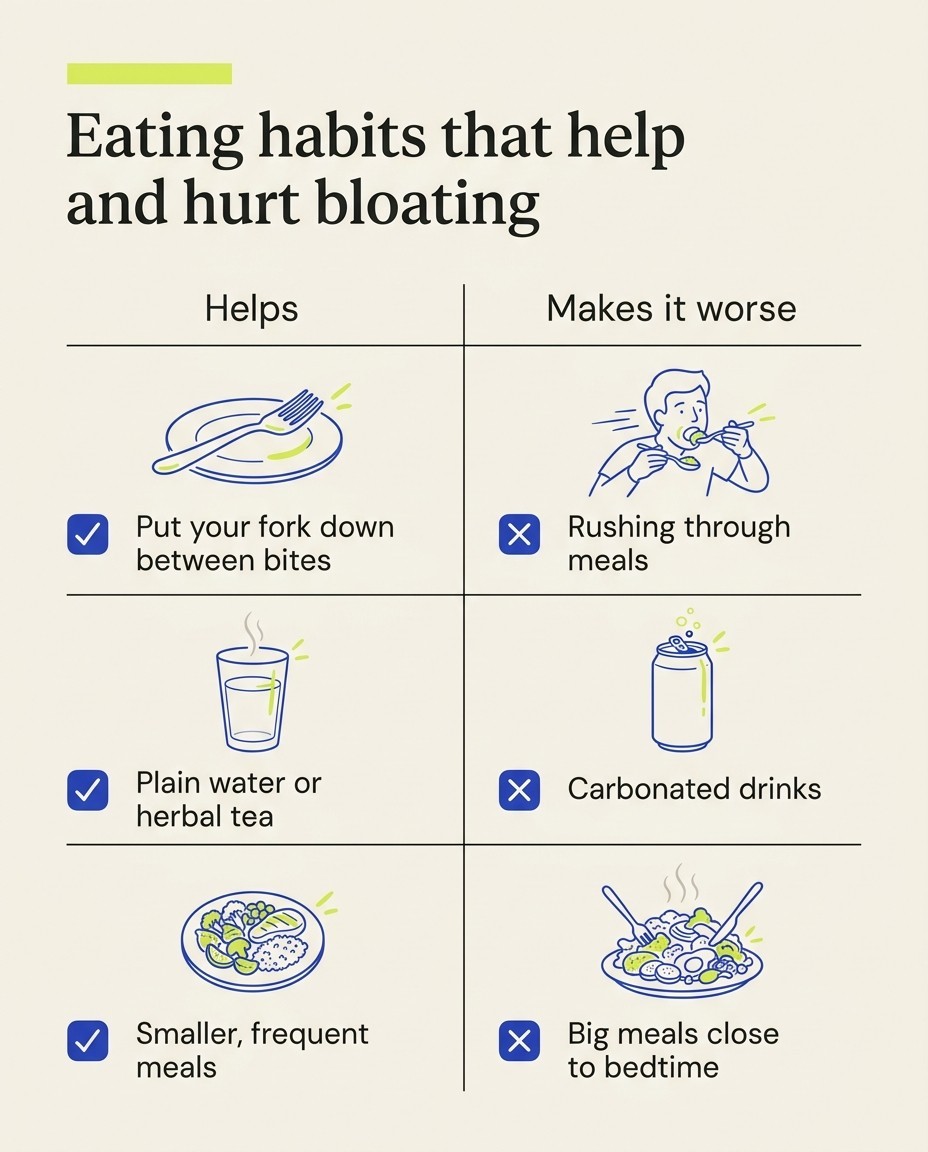
Eat slowly and chew properly. If you rush, you swallow more air. That sounds obvious, but it’s easy to forget when you’re busy. Try putting your fork down between bites. It actually helps.
Skip carbonated drinks. Sparkling water and diet sodas send extra gas straight to your gut. If you’re struggling to get enough fluids, plain water with lemon or herbal tea is easier on your system.
Don’t eat right before bed. Give yourself at least three hours between your last meal and sleep. It helps keep that bloated feeling away when you’re trying to rest.
Watch your portions. Smaller, more frequent meals are easier on your digestion than big ones. This is handy if you’re not super hungry but still need to get enough nutrients.
Drinking through straws or chewing gum can make you swallow extra air. If you’re already bloated, maybe skip those for now.
Probiotics and lifestyle tips
Probiotics might help balance your gut bacteria, but the evidence is kind of mixed. Supplements containing specific strains of beneficial bacteria, particularly Bifidobacterium and Lactobacillus species (among the most researched for gut health), have helped some people with bloating.
You can also get probiotics from food. Live-culture yogurt, kefir, sauerkraut, and kimchi all have good bacteria. Start with small amounts and see how you do.
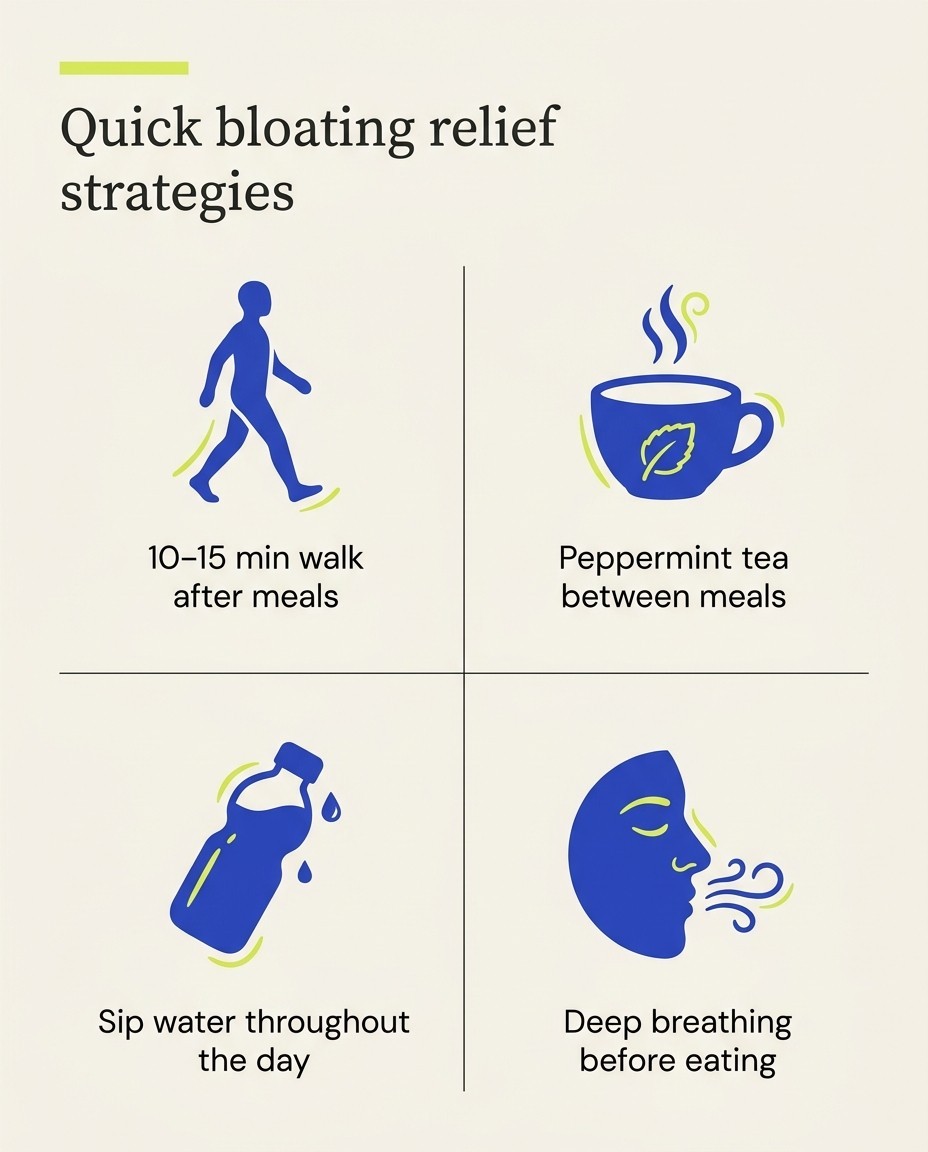
Peppermint tea can soothe bloating and stomach discomfort. The menthol helps relax your gut muscles. It usually works better if you drink it between meals.
Movement matters. You don’t need a hardcore workout. Even a 10–15 minute walk after eating can help move gas along and ease that tight feeling.
Stay hydrated, but don’t chug water during meals. Too much liquid with food can dilute your digestive enzymes. Just sip water throughout the day.
Stress really does mess with your gut. If you’re anxious about eating or your weight loss, that tension can make bloating worse. Even a few minutes of deep breathing or quiet time can help.
When to seek medical advice
Some symptoms really do need a doctor’s attention. It’s tempting to shrug them off as “just bloating,” but that’s not always wise.

Seek immediate medical help if you experience:
- Vomiting blood or material that looks like coffee grounds
- Severe abdominal pain that keeps getting worse
- Difficulty breathing or chest tightness along with bloating
Call 911 if you experience vomiting blood or difficulty breathing.

See your doctor if you notice:
- Bloating with vomiting that won’t go away
- Changes in bowel habits lasting more than a few weeks
- Unexplained weight loss beyond what you aimed for
These signs could point to something more serious than typical dietary bloating: a complication from medication, an underlying digestive condition, or something else that needs checking out.
If you keep feeling bloated and changing what you eat hasn’t helped after 4–6 weeks, it’s time to talk to your doctor. They might want to run some tests to rule out things like celiac disease, lactose intolerance, or small intestinal bacterial overgrowth.
Taking GLP-1 medications and feeling really bloated, especially with other gut symptoms? Reach out to the clinician who prescribed them. Sometimes, tweaking the dose or switching to a different formulation can make a real difference while still supporting your weight loss goals.
The bottom line
Bloating on a diet is almost always temporary. Your gut needs time to adjust to new foods, more fiber, or changes in meal timing. That adjustment period typically lasts two to four weeks. Simple changes like eating more slowly, staying well hydrated, and increasing fiber gradually can make a real difference. If your bloating persists beyond four to six weeks, comes with red-flag symptoms like vomiting blood or severe pain, or you’re taking GLP-1 medication and struggling with gut symptoms, talk to your doctor. They can check for underlying conditions like celiac disease or SIBO and help you find the right approach.
Frequently asked questions
Is it normal to feel bloated when you start a new diet?
Yes, bloating in the first few weeks of a diet change is very common. Your gut bacteria need time to adjust to new foods, especially if you’ve increased your fiber intake. Most people find the bloating settles within two to four weeks.
Can weight loss medications like Zepbound or Wegovy cause bloating?
Yes. GLP-1 medications slow how quickly food leaves your stomach, which means gut bacteria have more time to ferment food and produce gas. Bloating and constipation are among the most commonly reported side effects. If it’s bothering you, speak to your prescriber about adjusting your dose.
Does bloating mean I’m not losing weight?
No. Bloating is caused by gas and water retention in your gut, not fat gain. Your weight might fluctuate day to day because of bloating, but that’s not the same as gaining body fat. If you’re following your plan consistently, the bloating and the weight loss are usually separate issues.
How long does diet-related bloating last?
For most people, bloating from dietary changes settles within two to four weeks as your gut adjusts. If it persists beyond four to six weeks despite making adjustments, see your doctor to rule out underlying conditions like IBS, celiac disease, or SIBO.
Should I take probiotics for bloating?
The evidence is mixed. Some studies suggest that specific strains of Bifidobacterium and Lactobacillus may help, but probiotics aren’t a guaranteed fix. You can try fermented foods like live-culture yogurt, kefir, or sauerkraut in small amounts to see if they help. If you’re on GLP-1 medication, introduce them gradually.
What foods help reduce bloating?
Lower-FODMAP options like rice, oats, oranges, berries, firm tofu, and lactose-free dairy tend to be gentler on your gut. Peppermint tea and ginger can also soothe bloating. Avoid jumping into large amounts of beans, lentils, onions, garlic, or cruciferous vegetables all at once.
Can stress cause bloating even if I’m eating well?
Yes. Your gut and brain are closely connected. Stress slows digestion, giving gas more time to build up. If you’re on GLP-1 medication, which already slows gastric emptying, adding stress can make bloating noticeably worse. Eating without distractions and practicing slow, deep breathing before meals can help.
When should I see a doctor about bloating?
See your doctor if bloating persists beyond four to six weeks, if you notice blood in your stool, unexplained weight loss, severe abdominal pain, or vomiting that won’t stop. If you experience vomiting blood, difficulty breathing, or chest tightness alongside bloating, seek immediate medical attention.
This article is for information only and doesn’t replace medical advice. If you’re experiencing persistent bloating or other digestive symptoms, talk to your doctor or prescriber before making significant changes to your diet or medication.
Sources: Zepbound Summary of Product Characteristics, NICE TA924: Tirzepatide for managing overweight and obesity, NHS — Bloating, NHS — Constipation, NHS — Coeliac disease, Jastreboff et al. — Tirzepatide Once Weekly for the Treatment of Obesity, NEJM 2022, Gill et al. — Dietary fibre in gastrointestinal health and disease, Nature Reviews Gastroenterology & Hepatology 2021