

What do GLP-1 medications do? They mimic a gut hormone to help regulate blood sugar, turn down appetite and slow digestion. Those effects can support weight loss, though results and side effects vary from person to person.
Whether you’re considering a GLP-1, already taking one, or just trying to understand the headlines, here’s what these medications actually do, and what they don’t. They have different FDA-approved uses, even when they contain the same active ingredient. They can also cause side effects, and many people regain weight after stopping.
Key takeaways

How GLP-1 medications affect appetite and blood sugar
GLP-1 medications act on pathways involved in fullness, digestion and blood sugar. They can help you feel satisfied sooner and reduce blood sugar rises after meals.
How do they mimic the body’s GLP-1 hormone?
GLP-1 stands for glucagon-like peptide-1, a hormone your gut releases after you eat. The medications in this group are known as GLP-1 receptor agonists, which simply means they latch onto the same receptors as the natural hormone and switch on many of the same responses, only for much longer than your own GLP-1 lasts.
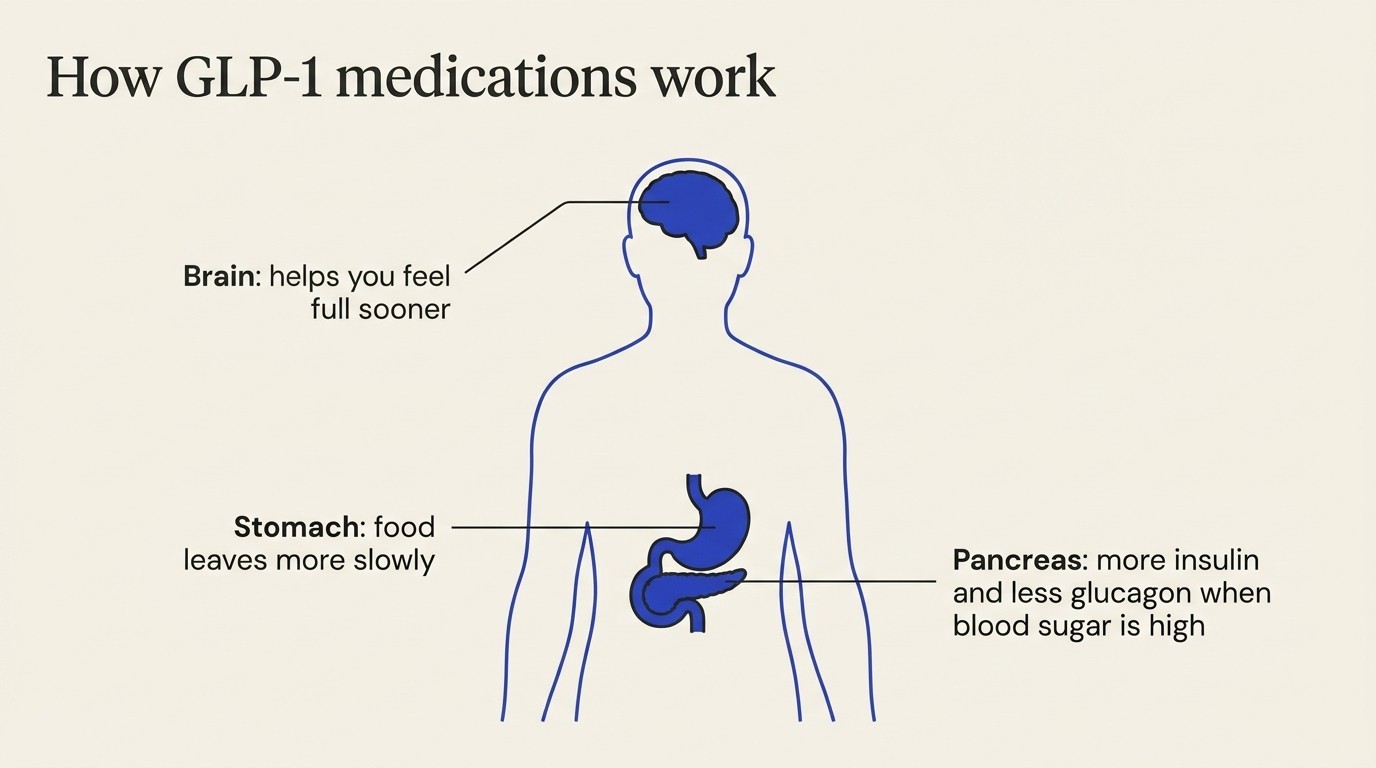
When your blood sugar is high, GLP-1 receptor agonists prompt your pancreas to release more insulin and less glucagon, a hormone that raises blood sugar. They also slow how quickly food leaves your stomach, so you stay full for longer after a meal, according to MedlinePlus.
What roles do appetite, digestion, and insulin play?
By acting on appetite signals in the brain and slowing stomach emptying, GLP-1 medications can reduce hunger and make smaller portions feel satisfying. That feeling of being satisfied after eating is called satiety. Many people also describe quieter “food noise,” the constant background thoughts about food, though not everyone notices this. For some people that means not thinking about the snack drawer at 3 p.m.; for others it means finishing half a restaurant meal and boxing up the rest without trying.

If eating less starts to feel distressing, or you notice old patterns around food or body image coming back, tell your doctor. That’s a normal thing to raise, and support is available.
Insulin helps move glucose from your bloodstream into your cells, where your body uses it for energy. GLP-1 medications increase insulin release in response to high blood sugar, which helps lower glucose levels. Because this effect only kicks in when blood sugar is high, GLP-1 medications on their own rarely cause low blood sugar. The risk goes up when they’re taken alongside insulin or sulfonylureas, another type of diabetes medication.
Which GLP-1 medications are FDA-approved?
FDA-approved products include medications for chronic weight management and medications for type 2 diabetes, and some active ingredients appear in products for both. The product name, dose and approved use all matter when you’re comparing them.
Which medications are approved for weight management?
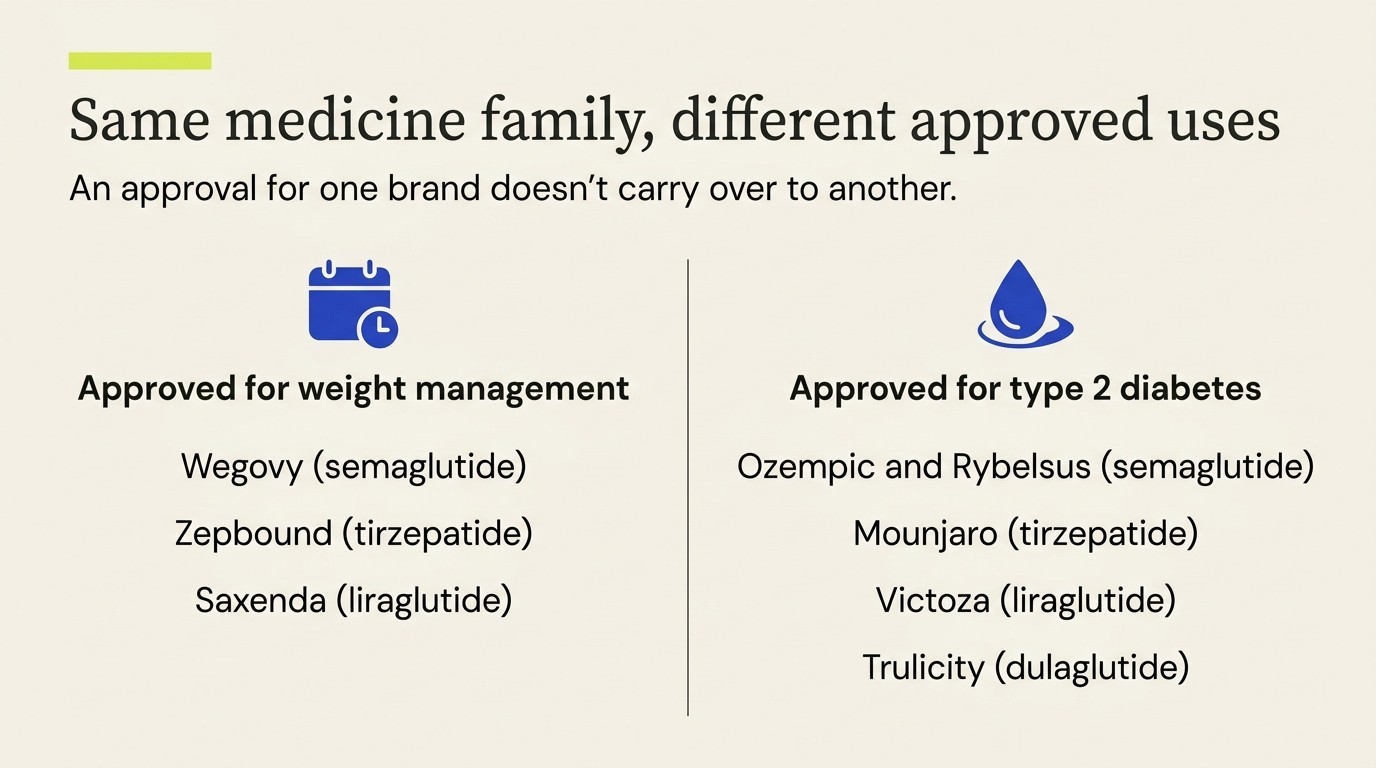
For weight management, FDA-approved options include liraglutide (Saxenda), semaglutide (Wegovy) and tirzepatide (Zepbound). Tirzepatide works a little differently: it mimics two gut hormones, GLP-1 and GIP (glucose-dependent insulinotropic polypeptide), which is why you’ll sometimes see it called a dual agonist.
Eligibility depends on the specific product and your age and health. For adults, weight-management medications are generally approved for people with obesity, or with overweight plus at least one weight-related condition such as high blood pressure, according to NIDDK. Some products are also approved for teens 12 and older. Wegovy and Zepbound have other approved uses too (see their FDA labels), so their labels and eligibility criteria aren’t interchangeable.
Most of these medications are given as an injection under the skin: Wegovy and Zepbound as a weekly injection, Saxenda once a day. Semaglutide also comes as a daily tablet, sold as Rybelsus for type 2 diabetes and as a Wegovy tablet for weight management in adults with obesity or overweight. Doses usually start low and increase gradually over several weeks, which helps limit side effects.
Which medications are approved for type 2 diabetes?
FDA-approved medications for type 2 diabetes include semaglutide (Ozempic and Rybelsus), liraglutide (Victoza) and dulaglutide (Trulicity). Tirzepatide (Mounjaro) is also approved for type 2 diabetes. An FDA-approved use for one brand does not automatically apply to another brand with the same ingredient.
For people with type 2 diabetes, these medications lower A1C, a blood test that reflects your average blood sugar over roughly the past three months.
What the evidence shows about benefits and trade-offs
GLP-1 medications can lead to meaningful weight loss and better blood sugar control, while digestive side effects and weight regain after stopping are important parts of the treatment picture. Your response can differ by medication, dose and health.
How much weight loss do studies show on average?
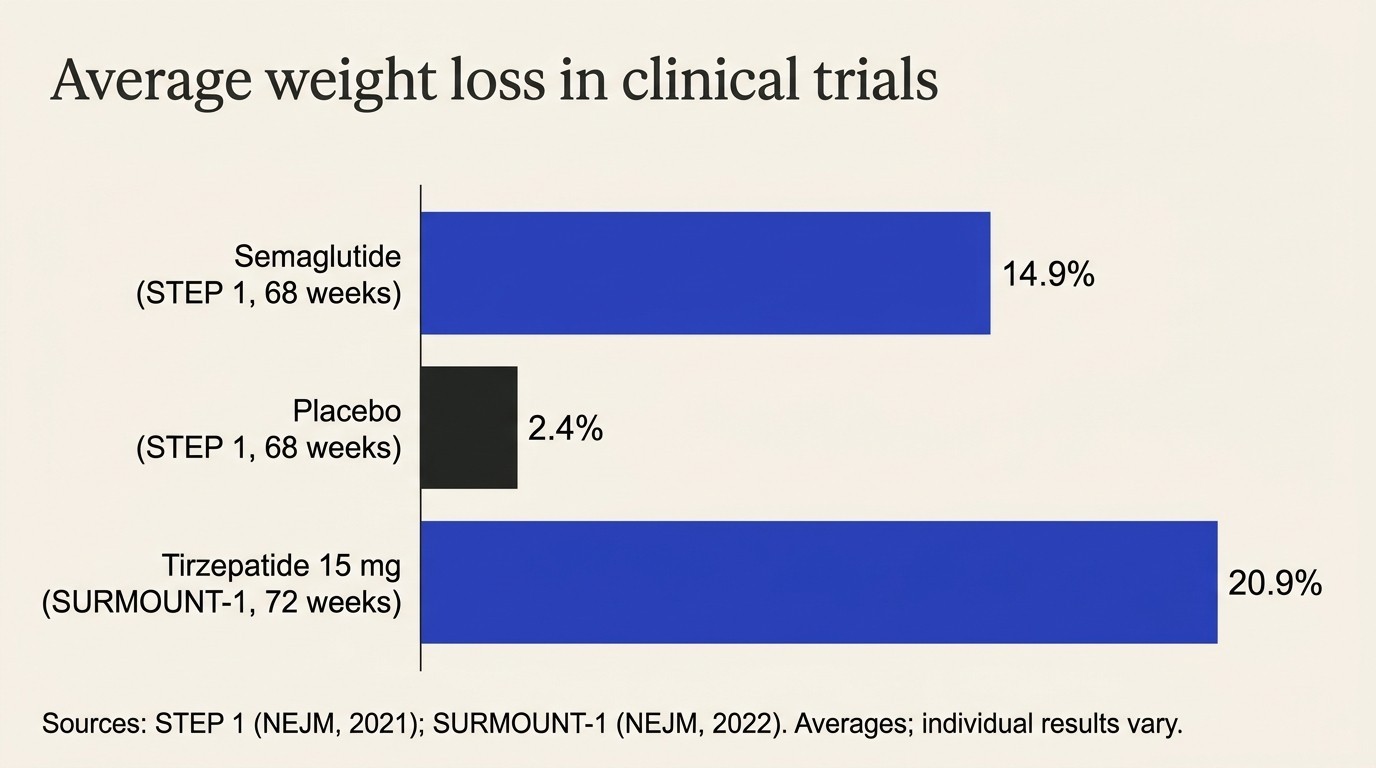
Weight loss varies, and results from one trial don’t predict exactly what you’ll experience. In the STEP 1 trial, adults taking semaglutide 2.4 mg (Wegovy) lost an average of 14.9% of their body weight over 68 weeks, compared with 2.4% on placebo. In SURMOUNT-1, adults on the highest dose of tirzepatide (Zepbound) lost an average of 20.9% over 72 weeks.
Your starting health, how long you stay on treatment, dose, side effects, and support with eating and activity can all affect your results.
What side effects are common, and what happens after stopping?
Nausea, vomiting, diarrhea, constipation and stomach discomfort are among the most common side effects. They’re most likely when you start treatment or after a dose increase, and for many people they ease within two to four weeks on a stable dose. Digestive symptoms are common, according to Cleveland Clinic, and persistent or severe symptoms need medical attention (see when to call your doctor below). If you have vomiting or diarrhea, sip water or an oral rehydration drink through the day so you don’t get dehydrated, which can strain your kidneys.
Weight regain is common after treatment ends. In the STEP 1 extension, a follow-up to the original trial, people who stopped semaglutide had regained about two-thirds of the weight they’d lost within a year. Your weight and blood sugar can change after stopping, so any treatment changes should be discussed with the doctor who prescribes it.
What are the less common but serious risks?
Less common but serious risks listed in drug safety information include pancreatitis, gallbladder problems like gallstones, and acute kidney injury, often linked to dehydration from vomiting or diarrhea. They also include severe stomach problems, such as delayed stomach emptying (gastroparesis). Severe or persistent stomach pain needs prompt medical care.
If you’re having surgery or a procedure that needs anesthesia or sedation, tell the team you take a GLP-1 medication. Slower stomach emptying can raise the risk of food being inhaled into the lungs, and US labels such as the Wegovy and Zepbound labels now include this warning.
In 2025, Europe’s medicines regulator concluded that NAION (non-arteritic anterior ischemic optic neuropathy, a sudden loss of blood flow to the optic nerve) is a very rare side effect of semaglutide, according to the EMA. If you notice sudden vision loss in one eye, get medical help right away.
Several of these medications also carry a boxed warning, the FDA’s strongest label warning, about thyroid C-cell tumors (growths in cells of the thyroid gland in your neck) seen in studies in rats and mice. It isn’t known whether this risk applies to people. Because of this, they aren’t used by people with a personal or family history of medullary thyroid cancer (a rare type of thyroid cancer) or multiple endocrine neoplasia type 2 (MEN 2), an inherited condition that causes tumors in hormone-producing glands. The details are in each product’s DailyMed label.

When to call your doctor
Call your doctor promptly if you have:
- Severe stomach pain that won’t go away, with or without vomiting, sometimes spreading to your back (a possible sign of pancreatitis)
- Pain in the upper right side of your belly, fever, yellowing of your skin or eyes, or pale stools (possible gallbladder problems)
- Vomiting or diarrhea that stops you from keeping fluids down, or signs of dehydration such as peeing much less than usual or feeling dizzy when you stand
- A lump or swelling in your neck, trouble swallowing, or a hoarse voice that doesn’t go away
- Shakiness, sweating, confusion or a racing heart if you also take insulin or a sulfonylurea (signs of low blood sugar)
- Any sudden change in your vision

When to call 911 or go to the ER
Call 911 or go to the ER if you have swelling of your face, lips, tongue or throat, trouble breathing, or you faint.
What these medications can’t replace, and who they may not suit
GLP-1 medications work best as part of a broader approach to health, and some medical histories or life circumstances can make them unsuitable. Your doctor can weigh potential benefits against your health needs and other medications.
Why do nutrition, strength training, and sleep still matter?
Eating enough nutrient-dense food helps you meet your nutritional needs when appetite is lower. Protein helps protect muscle while you lose weight. A practical target many people use is around 25–30 grams of protein per meal, from foods like Greek yogurt, eggs, chicken, fish, tofu or beans. Strength training helps maintain muscle and physical function, and regular movement supports heart health and helps you stay active.
Weight lost on these medications can include some muscle mass, and researchers are also looking at effects on bone density. This is one reason protein and strength training matter.

Sleep matters too. A medication can affect appetite and blood sugar, but it doesn’t provide protein, build strength or create restorative sleep. If nausea or a smaller appetite makes it hard to eat enough, your doctor or a registered dietitian can help you plan meals that fit your needs.
What about compounded and online versions?
Compounded GLP-1 products aren’t FDA-approved, so the FDA hasn’t reviewed them for safety, effectiveness or quality, and dosing can differ from the approved products. The agency has also warned about dosing errors and unapproved products sold online, according to FDA warnings.
The FDA declared the tirzepatide shortage over in December 2024 and the semaglutide shortage over in February 2025. That means compounding pharmacies are generally no longer allowed to make copies of these drugs.
What about cost and insurance?
Coverage for weight-management use varies widely by plan and changes often. As of October 2026, many plans still limit coverage for weight loss alone, though some approved uses, such as reducing heart risk, may be covered differently. Check your plan’s drug list or call your insurer, and ask your doctor’s office whether prior authorization is needed.
Why might a GLP-1 medication not be right for everyone?
A GLP-1 medication may not suit you if you’re pregnant, or if you have a personal or family history of medullary thyroid cancer or MEN 2. Severe digestive problems, allergies to a medication in this class, and some other health conditions can also affect whether treatment is appropriate.
Tirzepatide can make birth control pills less effective, especially when you start and after each dose increase, so ask your doctor about a backup method. If you’re pregnant, planning a pregnancy or breastfeeding, talk to your doctor early, as the labels include specific guidance.
Your other medications matter as well. Combining a GLP-1 medication with insulin or a sulfonylurea can raise the risk of low blood sugar, and some products need extra care if you have kidney problems. Your doctor can review your health history and the specific product label before making a treatment decision.
Other evidence-based options exist, such as structured lifestyle programs and bariatric surgery, and a doctor can help you compare them.
Other benefits: what’s proven and what’s still being studied
Some benefits beyond weight and blood sugar are established for particular medications and patient groups, while many other proposed effects are still being studied. The evidence and FDA-approved uses don’t apply equally to every product.
What’s proven
Some GLP-1 medications reduce heart risk in specific groups. Based on the SELECT trial, Wegovy is approved to reduce the risk of heart attack, stroke and death from heart disease in adults with established heart disease and overweight or obesity, according to the FDA.
Evidence also supports heart and kidney benefits for some people with type 2 diabetes, depending on the medication. Wegovy has an FDA-approved use for certain adults with metabolic dysfunction-associated steatohepatitis (MASH), a liver disease where fat buildup causes inflammation and scarring. Zepbound is approved for moderate-to-severe obstructive sleep apnea in adults with obesity (FDA approval). These are specific approved uses, not guarantees for every GLP-1 medication.
What’s still being studied
Researchers continue to study how GLP-1 medications affect heart and kidney health across wider groups of people, and whether they affect alcohol and nicotine cravings, Alzheimer’s disease and cognitive decline. None of these is an approved use, and research is still early.
Early findings about addiction-related outcomes are not the same as an approved treatment. A large study of US veterans reported links between GLP-1 use and lower rates of some outcomes, alongside higher rates of some risks (this study). These findings don’t show that the medications treat addiction.
The bottom line
GLP-1 medications can make a real difference to blood sugar, hunger and weight, and some have proven benefits for the heart, liver or sleep apnea. They work best alongside enough protein, some strength training and decent sleep. Side effects are common early on, and weight often returns after stopping, so it’s worth going in with a plan and a doctor you can talk to.
Frequently asked questions
What does GLP-1 stand for?
GLP-1 stands for glucagon-like peptide-1, a hormone released by your gut after you eat. Medications that mimic it, such as semaglutide and liraglutide, are called GLP-1 receptor agonists. Tirzepatide mimics GLP-1 and a second hormone, GIP.
How does GLP-1 work for weight loss?
GLP-1 medications reduce appetite and slow stomach emptying, which can help you feel full longer and eat less. Weight loss varies, and nutrition and activity still matter.
Is Ozempic a GLP-1 medication?
Yes. Ozempic is a semaglutide medication that acts on GLP-1 receptors and is approved for type 2 diabetes. Wegovy also contains semaglutide but has different approved uses and dosing.
What’s the difference between semaglutide and tirzepatide?
Semaglutide (Wegovy, Ozempic, Rybelsus) mimics one gut hormone, GLP-1. Tirzepatide (Zepbound, Mounjaro) mimics two, GLP-1 and GIP. In trials, tirzepatide led to more weight loss on average, but the right choice depends on your health, side effects, coverage and your doctor’s advice.
Can you take a GLP-1 medication without diabetes?
Yes. Wegovy, Zepbound and Saxenda are FDA-approved for weight management in adults with obesity, or with overweight plus at least one weight-related condition such as high blood pressure. See “Which medications are approved for weight management?” above for details.
What are the most common GLP-1 side effects?
Nausea, vomiting, diarrhea, constipation and stomach discomfort are common, especially when treatment begins or the dose increases. See “What side effects are common, and what happens after stopping?” above for how long they last.
Are compounded GLP-1s the same as Wegovy or Zepbound?
No. Compounded versions are not FDA-approved, so the FDA hasn’t reviewed them for safety, effectiveness or quality, and dosing can differ from the approved products.
Does insurance cover GLP-1 medications for weight loss?
It depends on your plan. Coverage for weight management varies widely and changes often, so check your plan’s drug list or call your insurer before you start.
Do people regain weight after stopping GLP-1 medication?
Many people regain some weight after stopping, and blood sugar may rise if the medication was helping manage diabetes. The amount regained varies, so treatment changes should be planned with your doctor.
Sources
- Wilding JPH et al. Once-weekly semaglutide in adults with overweight or obesity (STEP 1). New England Journal of Medicine, 2021. https://www.nejm.org/doi/full/10.1056/NEJMoa2032183
- Jastreboff AM et al. Tirzepatide once weekly for the treatment of obesity (SURMOUNT-1). New England Journal of Medicine, 2022. https://www.nejm.org/doi/full/10.1056/NEJMoa2206038
- Wilding JPH et al. Weight regain and cardiometabolic effects after withdrawal of semaglutide (STEP 1 extension). Diabetes, Obesity and Metabolism, 2022. https://dom-pubs.onlinelibrary.wiley.com/doi/10.1111/dom.14725
- Lincoff AM et al. Semaglutide and cardiovascular outcomes in obesity without diabetes (SELECT). New England Journal of Medicine, 2023. https://www.nejm.org/doi/full/10.1056/NEJMoa2307563
- Xie Y et al. Mapping the effectiveness and risks of GLP-1 receptor agonists. Nature Medicine, 2025. https://www.nature.com/articles/s41591-024-03412-w
- FDA. FDA’s concerns with unapproved GLP-1 drugs used for weight loss. https://www.fda.gov/drugs/postmarket-drug-safety-information-patients-and-providers/fdas-concerns-unapproved-glp-1-drugs-used-weight-loss
- FDA. FDA approves first treatment to reduce risk of serious heart problems specifically in adults with obesity or overweight. https://www.fda.gov/news-events/press-announcements/fda-approves-first-treatment-reduce-risk-serious-heart-problems-specifically-adults-obesity-or
- FDA. FDA approves first medication for obstructive sleep apnea. https://www.fda.gov/news-events/press-announcements/fda-approves-first-medication-obstructive-sleep-apnea
- NIDDK. Prescription medications to treat overweight and obesity. https://www.niddk.nih.gov/health-information/weight-management/prescription-medications-treat-overweight-obesity
- DailyMed prescribing information for Wegovy, Zepbound, Ozempic, Mounjaro and Saxenda. https://dailymed.nlm.nih.gov/dailymed/
- European Medicines Agency. Meeting highlights from the Pharmacovigilance Risk Assessment Committee (PRAC), June 2025. https://www.ema.europa.eu/en/news/meeting-highlights-pharmacovigilance-risk-assessment-committee-prac-2-5-june-2025
- MedlinePlus. Semaglutide injection. https://medlineplus.gov/druginfo/meds/a618008.html
- Cleveland Clinic. GLP-1 agonists. https://my.clevelandclinic.org/health/treatments/13901-glp-1-agonists