

Nobody really warns you about loose skin when you start your weight loss journey. You’re busy watching the numbers on the scale, dealing with side effects, and figuring out what to eat when you’re not even hungry. Then suddenly, you catch a glimpse in the mirror and realize your skin isn’t snapping back like you thought it would.

The good news? Losing weight gradually — about 1 to 2 pounds per week — and building muscle through strength training can really help reduce your risk of loose skin. It’s not a perfect fix, but these habits give your skin a fighting chance to adjust as your body changes. Age, genetics, and how long you’ve carried extra weight matter too, but there are practical things you can do that actually make a difference.
We pulled together what genuinely works, based on evidence — not hype. Some tips you can try right now. Others take a bit of patience. And yes, we’ll cover what to do if you still end up with loose skin, because honestly, it happens even if you do everything “right.” Good weight management means thinking about your skin alongside the numbers on the scale.
Key takeaways

If you’re taking prescription weight loss medication, speak to your doctor or prescriber before making significant changes to your diet or exercise routine.
Understanding loose skin and its causes
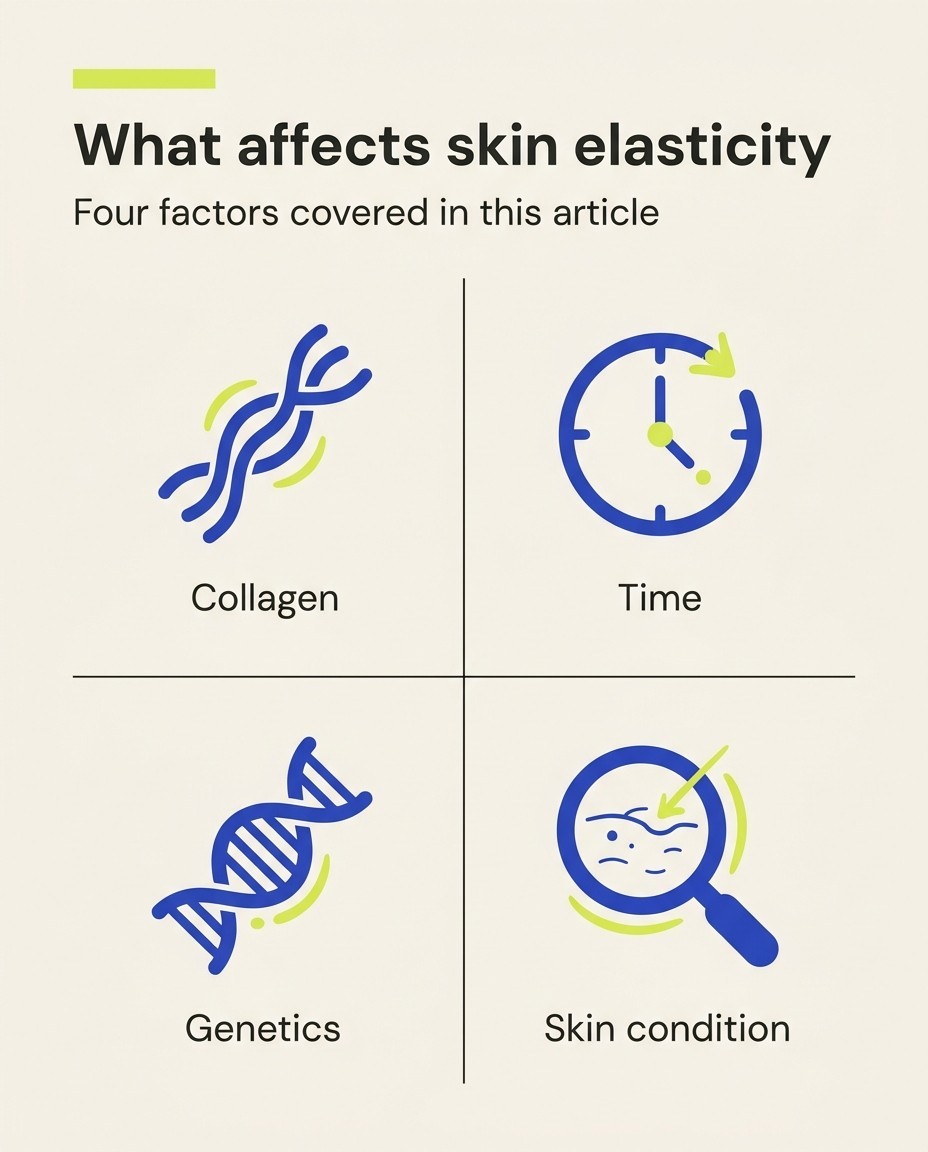
Skin that once covered a bigger body doesn’t always shrink back after weight loss. How much loose skin you get depends on your skin’s elasticity, how much weight you’ve lost, and things like age and genetics.
Why loose skin happens during weight loss
When you gain weight, your skin stretches to fit your new size. It’s a bit like a balloon that’s been blown up for a while.
The dermis (the layer just under your skin) expands as your body gets bigger. This stretching can damage the collagen and elastin fibers that keep skin tight.
If you lose weight too quickly, your skin doesn’t have enough time to catch up with your shrinking body. The skin that stretched out over months or years can’t shrink back overnight.
Losing a lot of weight matters too. If you drop 100 pounds or more, you’re more likely to notice loose skin than if you lose a smaller amount.
How long you’ve been overweight also affects your skin. The longer your skin stays stretched, the harder it is for it to snap back.
The role of skin elasticity, collagen, and elastin
Skin elasticity lets your skin stretch and then return to shape. Two proteins make this possible: collagen and elastin.
Collagen gives your skin structure and firmness. Elastin helps it stretch and bounce back. Together, they form a network that keeps skin tight.
When your skin stays stretched for a long time, collagen and elastin fibers can get damaged. That damage makes it harder for your skin to shrink after weight loss.
Other things can weaken these proteins. Too much sun breaks down collagen and elastin. Smoking damages collagen and leads to saggy skin.
As you get older, your body makes less collagen and elastin. Your skin naturally becomes less elastic over time, even without weight changes.
Age, genetics, and skin laxity
Your age really affects how your skin handles weight loss. Older skin has less collagen and usually ends up looser after losing weight.
If you’re in your 20s or 30s, your skin has more bounce and is more likely to tighten up after moderate weight loss.
If you’re over 40, you’ve already lost some collagen and elastin just from aging. That makes loose skin more likely after big weight changes.
Genetics play a role too. Some people just have skin that sags more, while others have naturally firmer skin that handles weight loss better.
You can’t change your genes or stop aging, but knowing this helps set realistic expectations for what your skin might look like after you lose weight.
Distinguishing between loose skin and fat
Sometimes you think you have loose skin, but it’s actually leftover fat. That’s an important difference.
Loose skin feels thin and kind of papery when you pinch it. You can grab it between your fingers, and it’s not thick.
If it feels thick and you can pinch more than a few millimeters, you probably still have some fat under the skin.
Real loose skin tends to hang in folds or wrinkles, especially on your upper arms, belly, or thighs. The skin looks deflated, not full.
If you’re still losing weight, especially on a GLP-1 receptor agonist like tirzepatide (Zepbound) or semaglutide (Wegovy), give it time. These medications work by mimicking natural appetite-regulating hormones, and the weight loss they produce can be significant. Some skin that looks loose now might tighten as you lose more fat and your body adjusts. Building muscle helps fill out areas that look saggy, too.
Top strategies to prevent loose skin while losing weight
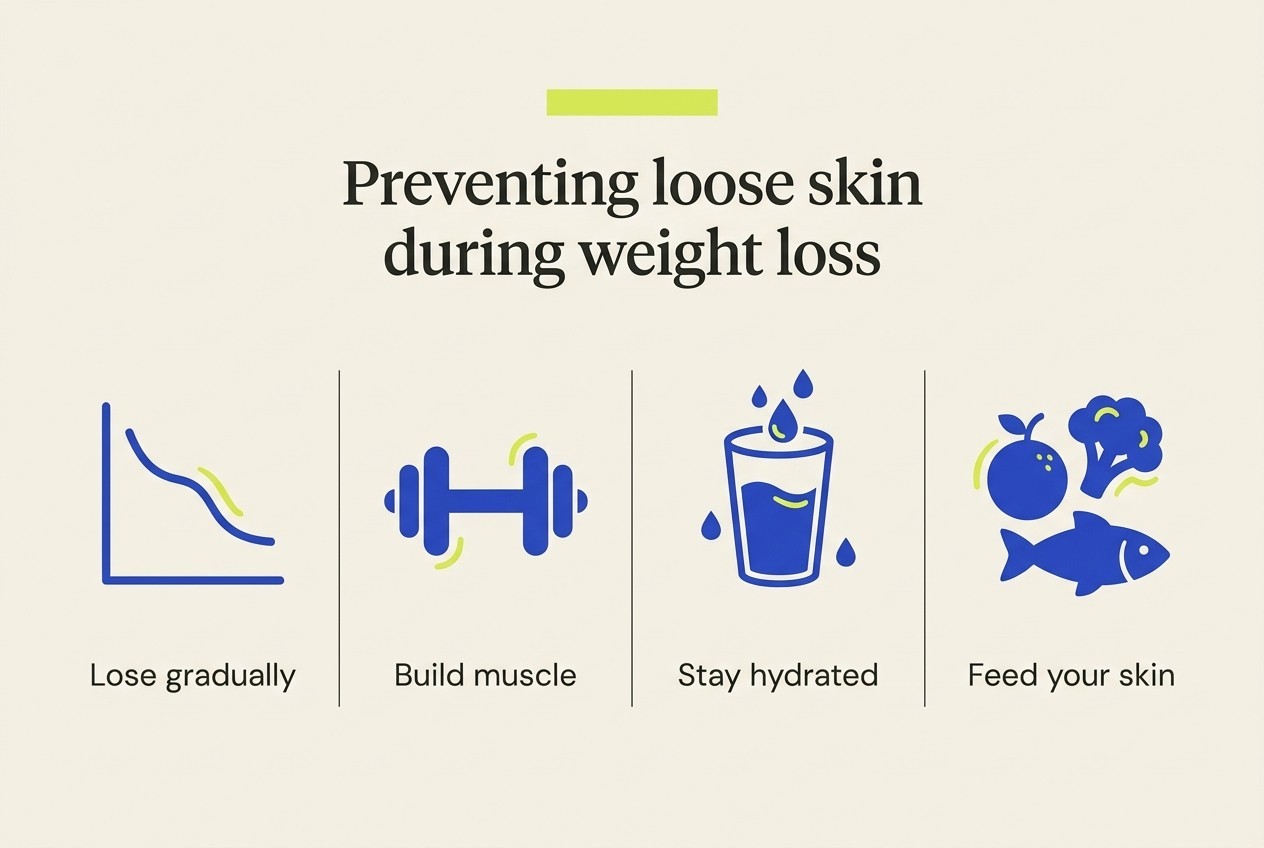
Protecting your skin during weight loss means slowing down, building muscle, and giving your body what it needs to stay elastic.
Aim for gradual and sustainable weight loss
Losing weight too fast might seem exciting, but your skin just can’t keep up. When you drop weight quickly, your skin doesn’t have time to shrink with you.
Aiming for 1 to 2 pounds per week is a good goal. It’s not flashy, but it gives your skin a shot at keeping up as you lose fat.
The risk of loose skin jumps if you lose 100 pounds or more. With GLP-1 receptor agonists like Zepbound or Wegovy, you might lose weight faster than with diet and exercise alone. That’s why it’s important to track your weight loss pace, even if the medication is doing most of the work. Good weight management during treatment means paying attention to speed, not just the total amount lost.
Build and protect muscle with strength training
Replacing fat with muscle is one of the best ways to avoid loose skin. Muscle fills out your skin and gives a firmer look.
Resistance training helps build muscle as you lose fat. You don’t have to lift huge weights. Twice a week with dumbbells, bands, or bodyweight moves like push-ups and squats works fine.
Gradually make your workouts harder over time. This “progressive overload” is what actually builds muscle. If you only do cardio, you’re missing a key tool for keeping skin tight.
Protein is crucial for muscle building. Aim for about 0.55–0.7g of protein per pound of body weight daily if you’re combining strength training with weight loss. For someone weighing 176 pounds, that’s roughly 96–120g of protein per day.
Hydrate the skin from the inside out
Water isn’t just for thirst. It actually helps your skin stay flexible and supple.
Well-hydrated skin can stretch and adapt better as your body changes. If you’re dehydrated, your skin looks dull and loses its bounce.
Aim for at least 68 ounces (about 8½ cups) of water daily. The NHS Eatwell Guide recommends 6–8 glasses of fluid daily as a baseline. If you exercise a lot, take certain medications, or live somewhere hot, you’ll need more.
Hydration isn’t just about what you drink. Using a moisturizer with hyaluronic acid (a substance that holds up to 1,000 times its weight in water) or glycerin helps lock in moisture from the outside. It won’t prevent loose skin by itself, but it’s good for overall skin health while you lose weight.
Optimize nutrition for collagen production
Collagen gives your skin structure and firmness. As you age, your body makes less. Supporting collagen production matters even more when you’re losing weight.
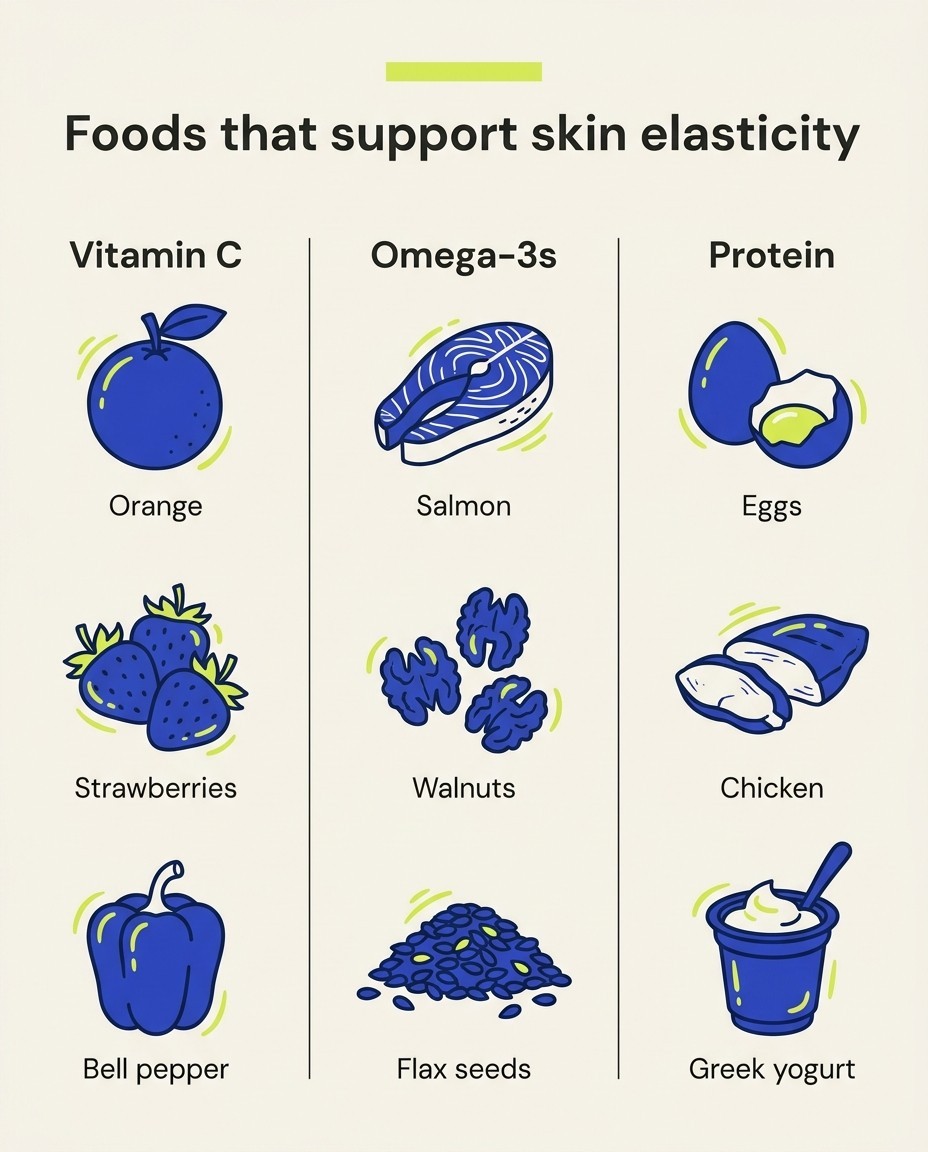
Vitamin C is key for building collagen. Oranges, strawberries, bell peppers, broccoli, and kale are all good sources. Without enough vitamin C, your body can’t make collagen well, no matter how much protein you eat.
Omega-3 fatty acids from oily fish like salmon, mackerel, and sardines help reduce inflammation and may improve skin elasticity. If you don’t eat fish, try flaxseeds, chia seeds, or walnuts.
Some people use collagen supplements. The evidence is mixed, but some research suggests they may help with skin hydration and elasticity. They’re not a miracle, but they could help a bit if your diet is already good. If you’re taking any prescription medication, check with your pharmacist before starting collagen supplements, as they may interact with some treatments.
Protect your skin from sun damage, too. Sun breaks down collagen and elastin, making loose skin more likely. Use a broad-spectrum sunscreen (one that protects against both UVA and UVB rays) with at least SPF 30 every day, even when it’s cloudy.
Supporting and protecting your skin’s health
Your skin needs support while you’re losing weight — it won’t just magically bounce back. Sun protection, the right skincare, and daily habits all help your skin deal with weight loss.
The importance of daily sun protection
Sun damages the collagen and elastin in your skin. These proteins help your skin stay firm as you lose weight.
The reality is that if you’re losing a lot of weight, sun exposure breaks down collagen and elastin, making loose skin more likely. This matters all year, not just on vacation.
Use a broad-spectrum sunscreen with SPF 30 or higher every day. Don’t forget your neck, chest, and hands. These spots often show loose skin first.
Reapply every couple of hours if you’re outside for long. Sun damage adds up, so protecting your skin now helps months down the line.
Skin care products and firming creams
Moisturizers with hyaluronic acid help your skin hold onto water and stay soft. Look for hyaluronic acid or glycerin on the label.
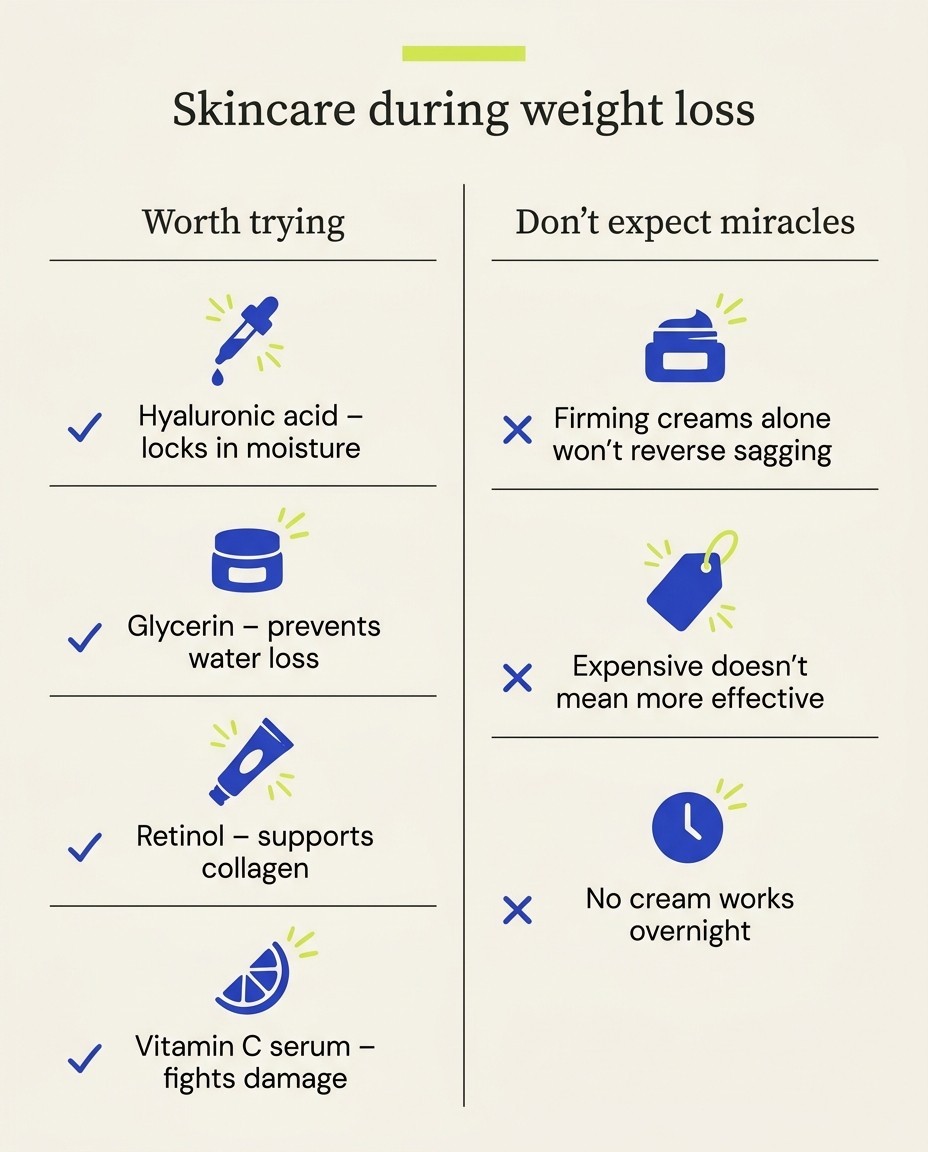
Can firming creams really fix loose skin? Not really. They won’t reverse major sagging, but they do help your skin’s moisture barrier and texture, which is still worth it.
We’ve found these ingredients helpful:

Retinol increases sun sensitivity, so always use sunscreen when using retinol products. Avoid retinol if you’re pregnant or planning to become pregnant.
Apply moisturizer to damp skin after you shower. Focus on spots where you’re losing fat — like your belly, arms, or thighs.
Don’t expect miracles from creams. They’re good for healthy skin, but they can’t erase lots of loose skin after big weight loss.
Healthy lifestyle habits for skin elasticity
Stay hydrated. Your skin works better when you drink enough water — aim for at least 68 ounces a day, or more if you’re active.
Sleep is underrated. Your skin repairs itself at night, and bad sleep messes with this process.
Don’t smoke. Smoking cuts down collagen production and damages what you have. If you’re worried about loose skin, quitting can really help.
Eat for your skin. Try to include:
- Vitamin C from fruits and vegetables (vital for collagen)
- Omega-3s from fish, nuts, or seeds (help with inflammation)
- Protein for building skin structure
- Zinc from shellfish, legumes, or seeds (helps repair skin)
If you’re on GLP-1 medication, getting enough protein is even more important. During active weight loss, aim for about 0.45–0.55g of protein per pound of body weight daily, more if you’re doing regular strength training. Those amino acids help you keep muscle and feed your skin’s repair processes at the same time.
Try to manage stress. Chronic stress raises cortisol (your body’s main stress hormone), which breaks down collagen and slows skin repair. Easier said than done, but it’s worth trying.
Advanced options for tightening loose skin
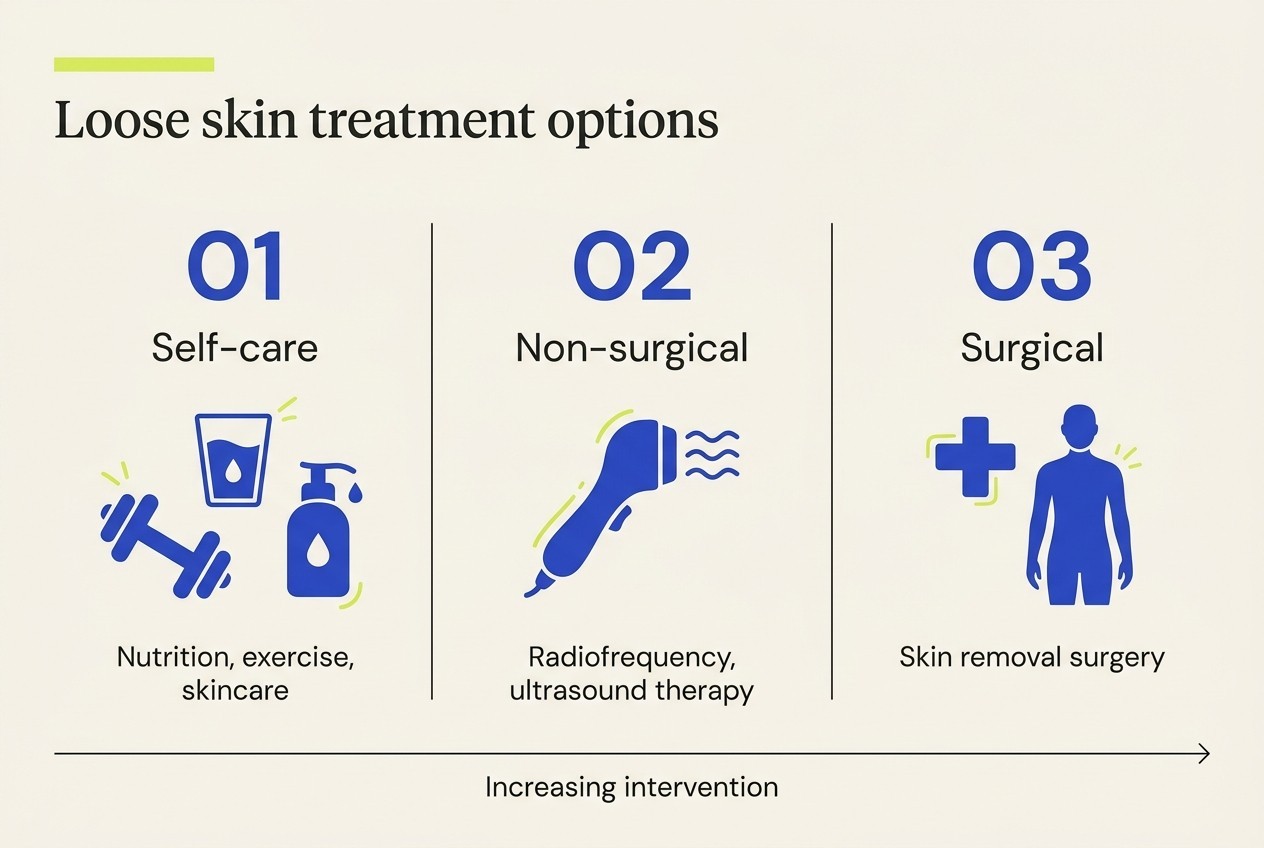
If slow weight loss and strength training don’t do enough for loose skin, medical treatments might help. These range from non-invasive procedures that boost collagen to surgeries that remove extra skin completely.
Non-surgical skin tightening treatments
If loose skin is mild or moderate, non-surgical options are worth considering before jumping straight to surgery. These treatments heat up the deeper layers of your skin, which gets your body to make more collagen.
Radiofrequency therapy relies on energy waves to warm up the tissue beneath your skin. This heat nudges your body to start building fresh collagen, but it takes a few months to really see the difference. Most folks need several sessions, and changes show up slowly, usually three to six months.
Ultherapy takes a different approach, using focused ultrasound energy to target precise layers in your skin. It’s especially good for tightening things up and actually causes visible tightening at the surface. Usually, one session is enough, but you’ll have to wait about two to three months for the full effect.
These options work best if you’re at a lower body weight and only have mild sagging. They can’t do miracles if there’s a lot of loose skin, but honestly, they can boost texture and firmness with no surgery and no downtime.
Prices are all over the place, depending on the clinic, the treatment area, and the tech they use.
Always check that your practitioner is appropriately licensed and qualified before undergoing any skin tightening procedure.
Surgical solutions for excess skin
If you’ve lost a lot of weight (usually 110 pounds or more), surgery might end up being your only real option for getting rid of extra skin. These are big decisions, so you should talk things over with a qualified plastic surgeon before jumping in.
Abdominoplasty (tummy tuck) actually removes loose skin and tightens up your abdominal muscles. People tend to choose this procedure most often after losing a significant amount of weight. Recovery can take anywhere from four to six weeks, and you’ll end up with a horizontal scar low on your stomach.
Brachioplasty (arm lift) targets that loose skin hanging from your upper arms. Surgeons usually make the incision from your armpit down to your elbow, so the scar is pretty visible. Most folks get back to light activities in about two weeks.
Thigh lift takes away extra skin from your inner or outer thighs. Surgeons might put the incisions in your groin crease or run them vertically down your inner thigh, depending on how much skin you need removed.
Lower body lift goes even further, tackling loose skin around your abdomen, hips, buttocks, and outer thighs all in one go. This surgery takes several hours and you’ll need a longer recovery time.
If you go private, you’re looking at costs between £6,000 and £15,000 for each procedure.
It’s best to wait at least 12 to 18 months after you hit your goal weight before thinking about surgery. Your weight should be steady, and your skin needs a chance to shrink back as much as it can on its own.

Speak to your doctor if loose skin is:
- Causing skin infections, rashes, or irritation in skin folds
- Limiting your mobility or ability to exercise
- Significantly affecting your mental health or quality of life
Your doctor can refer you to a dermatologist or plastic surgeon if the skin is causing physical problems.
The bottom line
Loose skin after weight loss isn’t completely preventable, but you can significantly reduce your risk. Lose weight gradually, prioritize strength training, stay hydrated, and eat enough protein and vitamin C to support your skin’s natural repair processes. If you’re taking weight loss medication like Zepbound or Wegovy, pay extra attention to your rate of weight loss and protein intake. And if loose skin does develop, know that both non-surgical and surgical options exist. Speak to your doctor if loose skin is affecting your physical comfort or quality of life — they can refer you to the right specialist.
Frequently asked questions
Frequently asked questions
Will I definitely get loose skin if I lose a lot of weight?
Not necessarily. Factors like your age, genetics, how long you’ve carried extra weight, and how quickly you lose it all play a role. Losing weight gradually, building muscle through strength training, and supporting your skin with proper nutrition all reduce the risk. Some people lose significant amounts of weight with minimal loose skin, while others experience more — individual results vary.
Does Zepbound or Wegovy cause more loose skin than other weight loss methods?
GLP-1 medications like Zepbound and Wegovy can lead to faster weight loss than diet and exercise alone, which may increase the risk of loose skin. The medication itself doesn’t directly affect your skin — it’s the pace and amount of weight loss that matters. If you’re on these treatments, focus on adequate protein intake (about 0.45–0.55g per pound of body weight daily) and regular strength training to help preserve muscle and support skin elasticity.
How long does it take for skin to tighten after losing weight?
Skin can continue to tighten for up to two years after you reach your goal weight. The process is gradual, and younger people with better skin elasticity tend to see faster improvement. If you’ve lost a large amount of weight, give your skin at least 12–18 months before considering surgical options.
Do collagen supplements actually help with loose skin?
The evidence is mixed. Some small studies suggest that hydrolyzed collagen supplements may improve skin hydration and elasticity, but they’re unlikely to prevent or reverse significant loose skin on their own. They work best as part of an overall approach that includes adequate protein, vitamin C, hydration, and strength training. If you’re considering supplements, speak to your pharmacist to check they won’t interact with any medications you’re taking.
Can exercise alone prevent loose skin?
Exercise helps but isn’t a complete solution. Strength training is particularly valuable because building muscle fills out areas where fat has been lost, reducing the appearance of sagging. However, exercise can’t fully compensate for factors like age, genetics, or very rapid weight loss. Combining regular resistance training with gradual weight loss gives you the best chance.
What’s the best moisturizer for loose skin during weight loss?
Look for moisturizers containing hyaluronic acid (which holds moisture in the skin) or glycerin. While no cream can prevent or reverse significant loose skin, keeping your skin well-hydrated improves its texture and overall health. Apply to damp skin after showering for best absorption. Products containing retinol may also support collagen production over time, though you should start with a low concentration.
At what age does loose skin become more likely after weight loss?
Skin elasticity naturally decreases with age as your body produces less collagen and elastin. People in their 20s and 30s generally see better skin tightening after moderate weight loss. After 40, the risk of loose skin increases, particularly after significant weight loss. However, age is just one factor — the amount and speed of weight loss, genetics, sun exposure history, and smoking all play a role too.
This article is for information only and does not replace medical advice. Speak to your doctor or prescriber before making changes to your weight loss plan, starting new supplements, or pursuing skin tightening treatments. If you’re considering surgical options, always consult a qualified plastic surgeon.
Sources
- NHS — Start Losing Weight — National Health Service
- NHS — The Eatwell Guide — National Health Service
- NHS — Strength and flexibility exercises — National Health Service
- NHS — Cosmetic procedures — National Health Service
- Varani J et al. “Decreased collagen production in chronologically aged skin” — American Journal of Pathology, 2006
- de Miranda RB et al. “Effects of hydrolyzed collagen supplementation on skin aging: a systematic review and meta-analysis” — International Journal of Dermatology, 2021
- Alam M et al. “Ultrasound tightening of facial and neck skin” — Dermatologic Surgery (Wiley)
- Cancer Research UK — Sun, UV and cancer — Cancer Research UK
- BAAPS — Surgical procedures — British Association of Aesthetic Plastic Surgeons