

You’ve probably heard someone say muscle weighs more than fat. If you’ve taken a GLP-1 weight loss medication like tirzepatide (Zepbound) or semaglutide (Wegovy) — treatments that work by mimicking a natural appetite-regulating hormone — you might’ve noticed the scale isn’t budging as much as you’d hoped, even though your clothes fit differently. Honestly, it’s frustrating.

But here’s the thing: muscle doesn’t actually weigh more than fat. A pound of muscle and a pound of fat both weigh the same. The big difference is muscle is much denser than fat, so it takes up less space in your body. Imagine comparing a pound of feathers to a pound of bricks. Same weight, but the bricks are much more compact.
This really matters when you’re using GLP-1 medication. If you understand the difference between muscle and fat, you’ll see why your body might change in ways the scale doesn’t reflect. It can also help you focus on habits that keep your muscle mass while you’re losing weight — something a nutritionist or dietitian can help you plan for. That’s key for keeping the weight off down the road.
:::key-takeaways## Key takeaways
- Muscle and fat weigh the same pound for pound, but muscle is denser and takes up less space in your body.
- Muscle tissue contains about 70% water, while fat has less than 25%, which makes muscle more compact.
- Keeping muscle during weight loss helps maintain your metabolism and supports long-term weight maintenance.
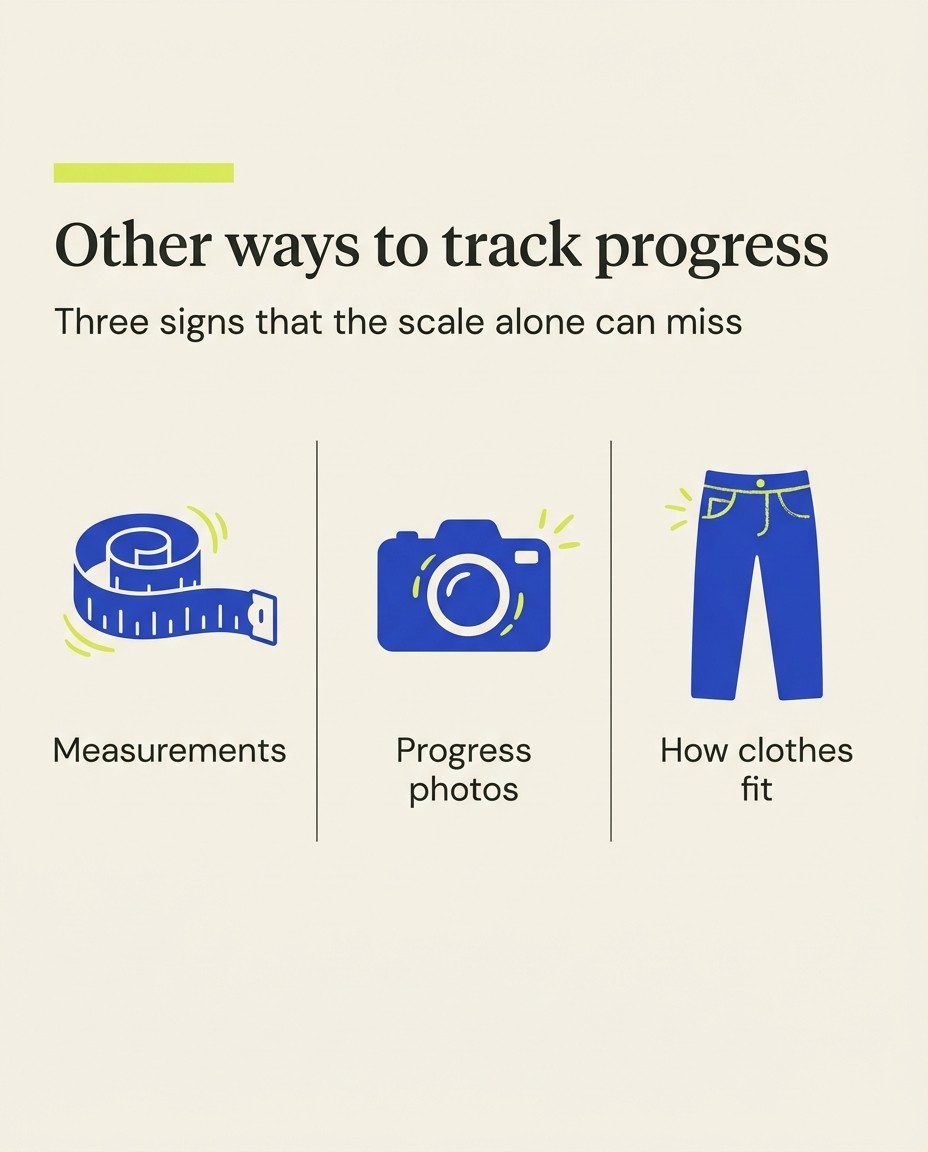
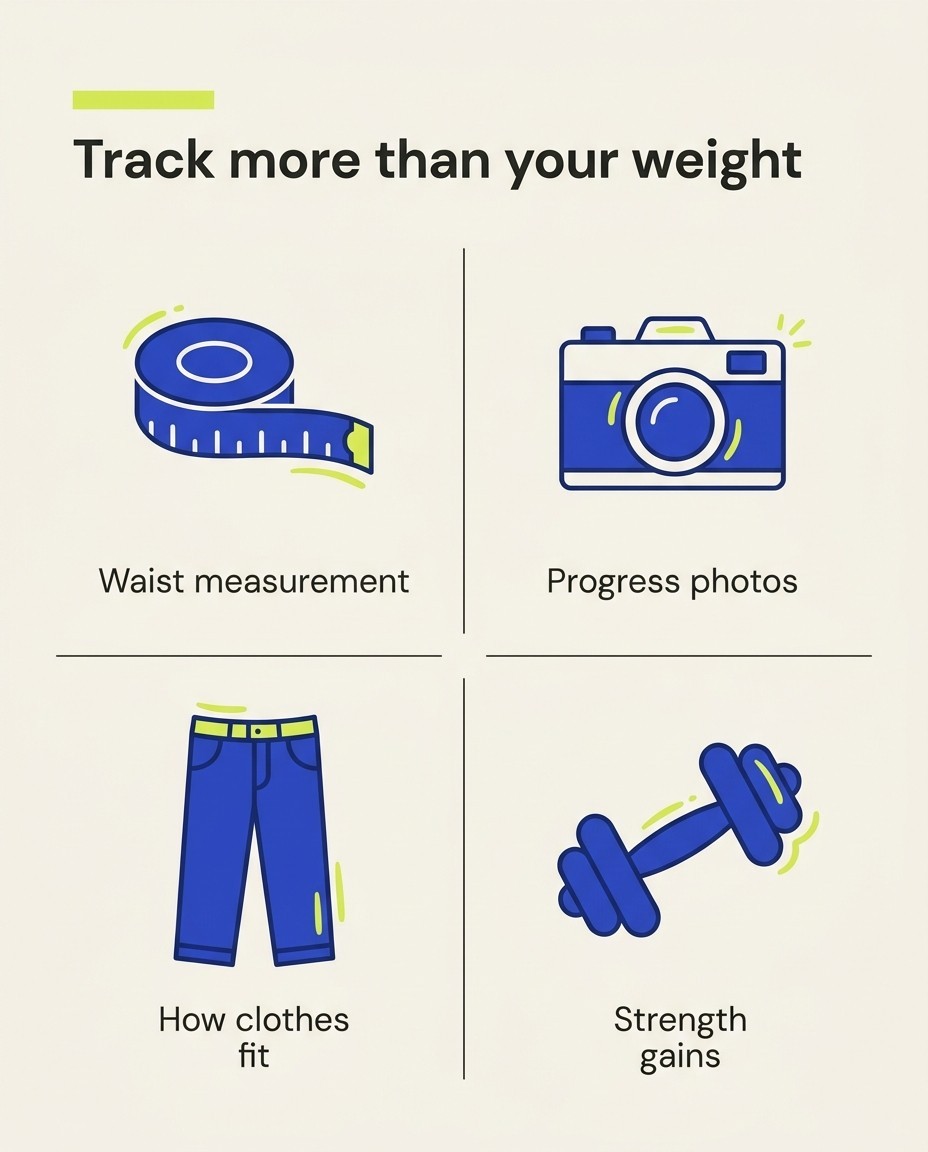
- Tracking measurements, progress photos, and how your clothes fit gives a better picture of progress than weight alone.
:::
Why muscle appears to weigh more than fat
Muscle doesn’t actually weigh more than fat. A pound of each is still a pound. What really changes is how much room each takes up in your body, and that’s all about tissue density.
Density differences between muscle and fat
When people say muscle weighs more than fat, they actually mean muscle is denser. Muscle tissue is about 18% more dense than fat tissue.
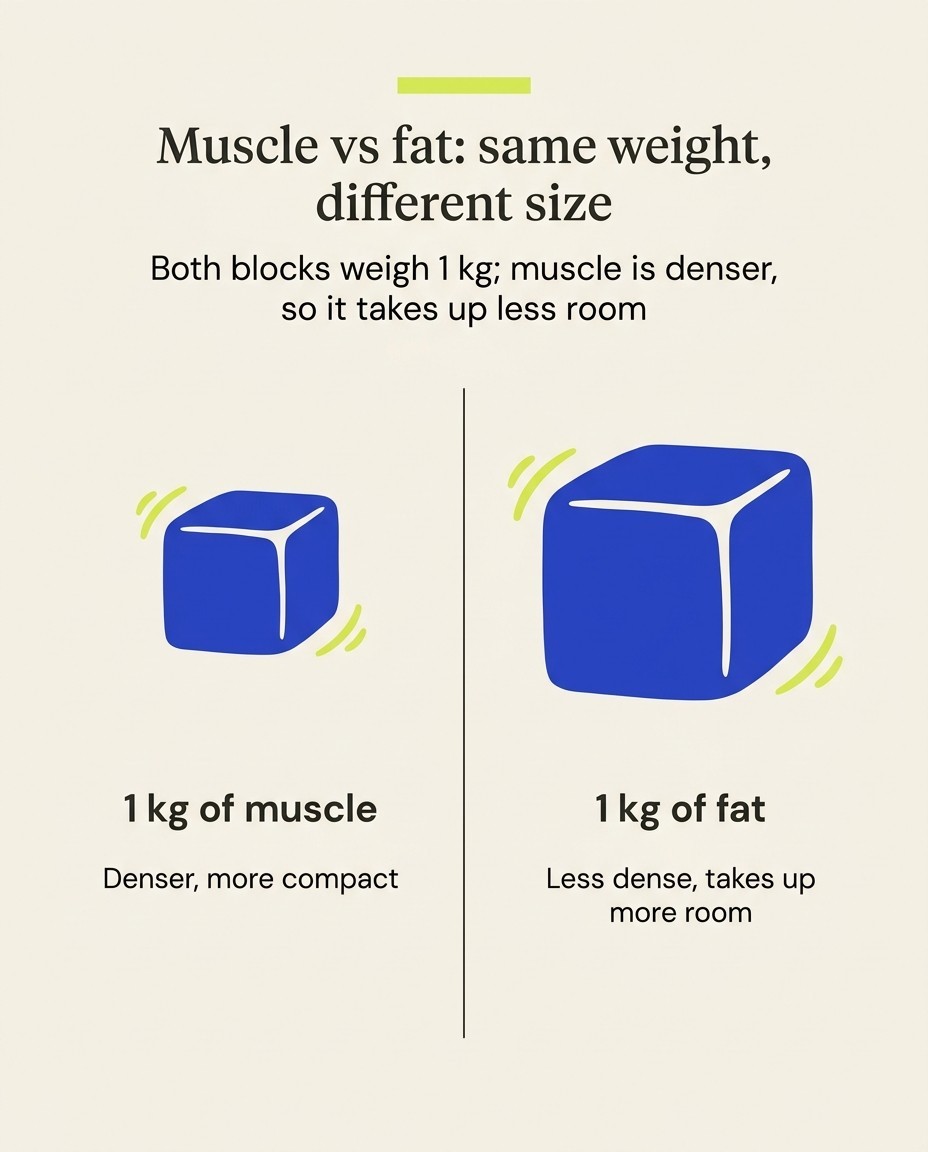
Think of a rock and a pillow. Maybe they weigh the same, but the rock is way smaller because it’s packed so tightly.
Your body works the same way. Muscle fibers pack in protein, water, and minerals. Fat cells mostly store triglycerides (a type of stored fat), which take up more space per unit of weight.
This density difference is why two people can weigh exactly the same but look totally different. Someone with more muscle usually looks leaner and more toned than someone with the same weight but more body fat.
How muscle takes up less space
Because muscle takes up less space than fat, you might actually drop clothing sizes while your weight stays the same or even goes up. This is especially true if you’re combining GLP-1 meds with resistance training.
A person with 154 pounds of mostly muscle will look much smaller than someone with 154 pounds of mostly fat. The person with more muscle will typically wear a smaller clothing size, even at the same weight on the scale.
So, the scale? It doesn’t tell the whole story. You could be losing fat and gaining muscle at the same time, which means your body composition is improving even if the number on the scale barely moves.
Visual changes despite scale weight
So many people get discouraged because their body weight isn’t dropping as fast as they’d hoped, even though their clothes fit better and they look different in photos.
Your body might be going through recomposition. You’re losing fat and building or keeping muscle. What happens? Your measurements shrink, your shape changes, but the scale refuses to budge.
Honestly, that’s a win. Keeping muscle mass during weight loss is crucial for long-term results. People who lose mostly fat (not muscle) tend to keep the weight off better.
You might notice:
- Your waist is getting smaller
- Clothes are looser around your middle
- Your face seems slimmer
- Arms and legs look more defined
- But your weight has only dropped a little (or not at all)
Common myths about muscle and fat
A lot of people believe muscle “turns into” fat when you stop working out. That’s not possible. Muscle and fat are totally different tissues. One can’t turn into the other.
What really happens if you stop resistance training? You lose muscle mass over time. If you keep eating the same but move less, you might gain fat. But your muscle isn’t magically becoming fat — you’re just losing one and gaining the other.
Some folks also think muscle weighs way more than fat, like two or three times as much. Actually, muscle is about 18% more dense — not drastically heavier.
People sometimes worry that lifting weights will make them “bulky” or cause unwanted weight gain. In reality, building a lot of muscle takes serious time and effort. Research on body composition shows muscle develops slowly compared to how quickly fat can accumulate.
Body composition and health implications
How muscle and fat affect your body goes way beyond the number on the scale. Body composition shapes how your body responds to nutrition, exercise, and weight loss treatments.
Body fat versus muscle mass
Body fat percentage tells you how much of your weight comes from fat versus everything else. Two people might weigh the same but look totally different depending on how much fat and muscle they have.
When you measure body composition, you’re looking at fat-free mass (muscle, bone, organs, water) compared to fat mass. Someone with more muscle might weigh more but wear a smaller size. They’ll often have better health markers too.
Your body fat percentage matters more than your total weight. Women naturally carry more fat than men (it’s essential for hormone health). General body fat percentage guidelines suggest 21–33% is a healthy range for women and 8–19% for men, though these shift with age and individual factors. The Royal College of General Practitioners and NHS don’t set rigid body fat targets, so treat these as rough benchmarks rather than hard rules.
Why body composition matters more than weight
The scale can’t tell you if you’re losing fat or muscle. Some people lose a lot of weight but end up feeling weaker because they’ve lost muscle too.
BMI (body mass index) has some big flaws. It doesn’t factor in muscle at all. Someone muscular might get labeled “overweight” when they’re actually pretty lean.
Body weight loss and BMI only tell part of the story. Losing muscle (fat-free mass) affects your strength, metabolism, and how you feel day-to-day.
Your basal metabolic rate (the number of calories your body burns at rest just to keep functioning) depends a lot on muscle mass. More muscle means you burn more calories at rest. Lose muscle during weight loss, and your metabolism slows down more than if you’d kept that muscle.
Obesity-related risks and health conditions
Obesity puts stress on almost every part of your body. The risks aren’t just about carrying extra weight — they’re about what that extra fat does inside.
Too much body fat, especially around your waist, raises your risk of:
- High blood pressure and heart disease
- Type 2 diabetes and insulin resistance
- Fatty liver disease
- Sleep apnea
- Joint pain and less mobility
- Some cancers
Obesity-related conditions often improve when your body composition changes, even if you only lose a little weight. Losing fat and keeping muscle gives you better health outcomes than dropping weight fast and losing muscle too.
Waist size predicts metabolic risk better than BMI. For women, a waist over 31.5 inches raises risk. For men, it’s 37 inches (NICE guideline CG189). These numbers matter no matter what you weigh overall.
Role of lean muscle mass in well-being
Lean muscle mass does a lot more than just make you stronger. It protects your bones, helps control blood sugar, and keeps your metabolism healthy.
Muscle acts as a “sink” for glucose. More muscle means your body handles carbs better. This is especially important if you’re insulin resistant (where your body doesn’t respond to insulin as well as it should) or have type 2 diabetes.
Bone density partly depends on muscle mass. When muscle pulls on bone, it keeps bones strong. Mechanical stresses on bones and muscles help keep your skeleton healthy as you age.
We need muscle for all the daily stuff — getting up from a chair, carrying groceries, playing with your kids. All of that gets harder if muscle mass drops.
If you’re on weight loss meds, keeping muscle is even more important. The appetite suppression can make it tough to get enough protein — the nutrition and training sections below cover specific targets.
How you feel and function after losing weight depends on your body composition. If you lose fat but keep muscle, you’ll feel stronger, have more energy, and your metabolism will hold up better than if you lose both.
Measuring muscle, fat, and body composition
When you’re taking medication, the number on the scale can’t tell you if you’re losing fat, muscle, or just water. There are a few ways to measure body composition, and they all come with their own pros and cons.
Popular methods to assess body composition
Skinfold calipers are the old-school method you might remember from gym class. Someone pinches your skin in certain spots (like your triceps, belly, and thigh) and measures the thickness. It’s quick and cheap, but accuracy depends on who’s doing it. If you carry extra weight, skinfold calipers can be less accurate because they’re harder to use properly.
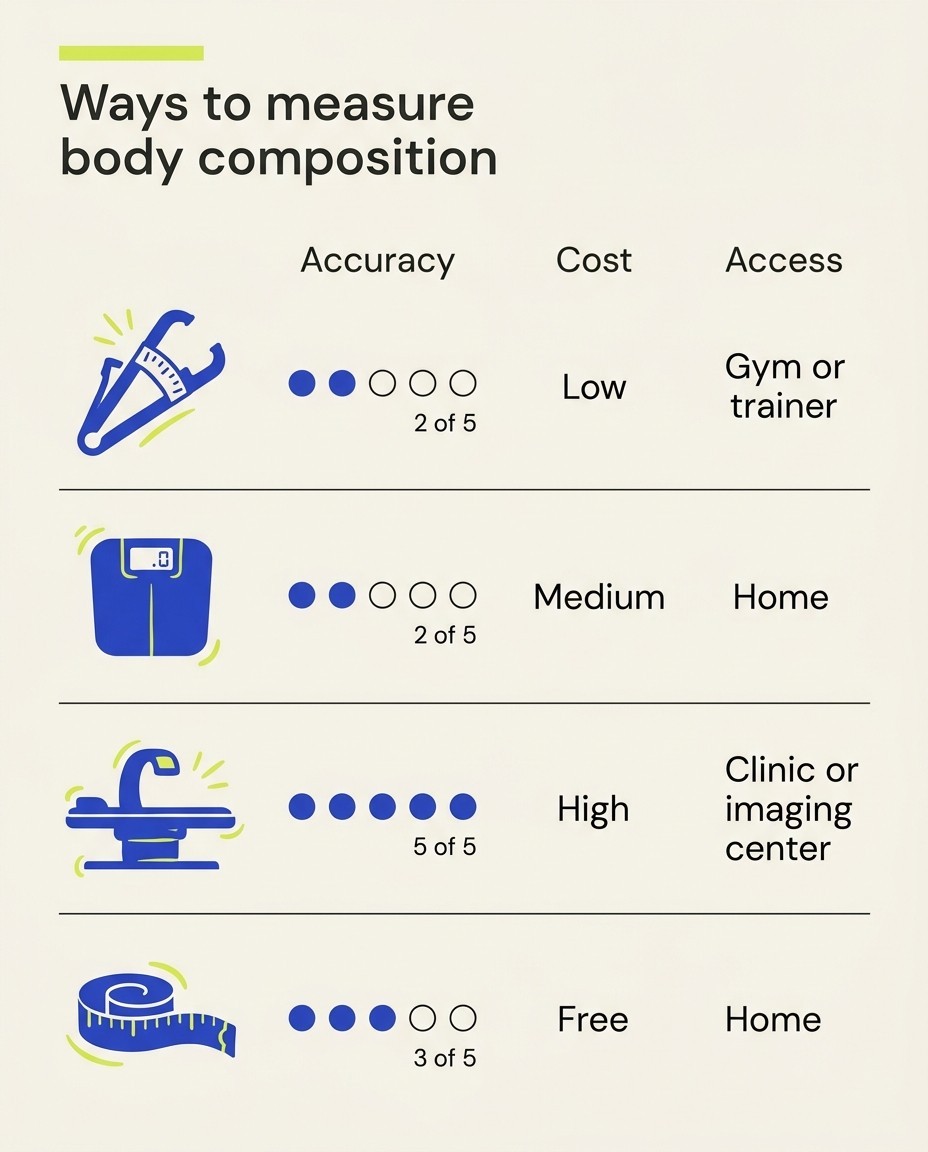
Bioelectrical impedance is what most “body fat percentage” bathroom scales use. It sends a tiny current through your body. Fat and muscle resist the current differently. These scales are convenient but can be thrown off by your hydration level. Drink a lot of water or get dehydrated, and your numbers might swing.
Hydrostatic weighing means you get dunked in a tank of water after exhaling all your air. It figures out your body density based on how much water you displace. It’s pretty accurate for total body fat but doesn’t show where that fat is. Not many places offer this anymore.
Understanding BMI limitations
BMI divides your weight in kilograms by your height in meters squared (use the NHS BMI calculator to check yours). Everyone uses it because it’s easy to calculate, but honestly, it has some big flaws. It can’t tell muscle from fat, which can be a real issue.
Maybe you lift weights and have plenty of muscle — BMI could still call you overweight. Or you might have a “normal” BMI, but actually carry more fat and less muscle than you’d think. When you’re losing weight on medication, BMI doesn’t show whether you’re losing fat or muscle.
BMI ignores where your body stores fat. Visceral fat (the stuff around your organs) is riskier than subcutaneous fat (the kind just under your skin). Two people with the same BMI might have totally different health profiles.
For tracking progress on treatment, BMI is a starting point, but it’s never the whole story.
Advanced techniques for accurate measurement
If you want accuracy, DEXA scans (dual-energy X-ray absorptiometry) are hard to beat. They use low-dose X-rays to separate your body into bone, fat, and lean tissue. You just lie still for about 10 minutes while the machine does its thing. DEXA shows excellent agreement with other methods for measuring total body fat and highlights where fat sits.
But here’s the catch: they’re pricey and not easy to get. If you’re worried about muscle loss, getting a DEXA scan before and a few months into treatment gives you real data.
MRI scanning can measure muscle volumes and fat infiltration in even more detail than DEXA. It can spot fat in your liver or muscles. But it’s expensive and mostly used in research, not for routine check-ins.
3D body scanners are popping up in some gyms and clinics. They give you a digital model of your body so you can track changes visually. They’re handy for seeing progress, but not as precise as DEXA for breaking down fat versus muscle.
Tracking progress beyond the scale
A simple tape measure can reveal changes the scale won’t. Measure your waist, hips, chest, thighs, and upper arms. Write down your numbers every two to four weeks.
Waist measurement matters more than most people think. It’s a decent stand-in for visceral fat. As you lose weight, you should see your waist shrinking.
Take photos in the same spot, same lighting, and same clothes (or none at all). Day-to-day, you won’t notice much, but three-month-old photos tell a different story.
Notice how your clothes fit. Those jeans that used to pinch? Maybe they’re comfy now. It’s subjective, sure, but it’s real feedback.
If you’re dropping weight but your body fat percentage barely changes, you might be losing muscle too. That’s when it’s worth checking your protein intake and whether you’re doing any resistance training.
Building muscle, losing fat, and achieving balance
On treatment, your appetite drops and the pounds come off. But what’s actually leaving? Ideally, it’s mostly fat, but without the right approach, you can lose muscle too. That slows your metabolism and leaves you feeling weaker.
Lifestyle strategies for muscle gain and fat loss
You can’t build muscle and lose fat at the same rate, but you can do both if you’re smart about it.
Trained individuals can build muscle and lose fat simultaneously, especially if they’re new to strength work or have extra body fat. This is called body recomposition. It’s slower than pure fat loss or muscle gain, but it’s realistic and sustainable.
The trick is to combine three things: resistance training, enough protein, and a modest calorie deficit. Not a huge one. If you cut calories too much, your body starts breaking down muscle for energy. That’s the last thing you want.
On treatment, this balance gets tricky. Appetite is already low. You might end up eating 800 or 1,000 calories without even trying. That’s not enough to support muscle, even if weight loss is your goal.
What actually works:

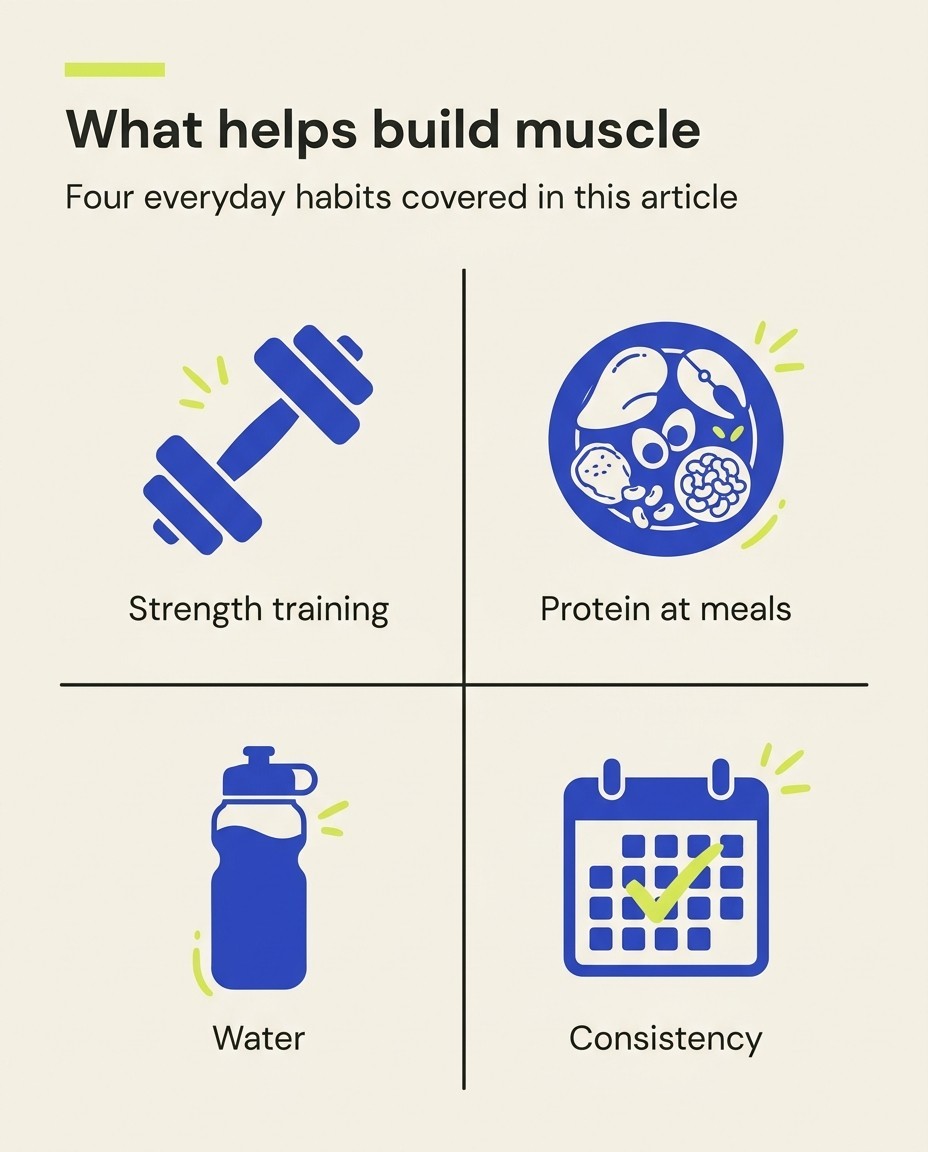
The role of strength and resistance training
Resistance exercise is hands-down the best way to preserve muscle mass during weight loss. Without it, you lose muscle with the fat. With it, you can actually gain muscle while losing fat.
Strength training sends your body a message: “We need this muscle.” It encourages your metabolism to burn fat instead of breaking down lean tissue. Even two sessions per week can make a real difference.
You don’t need a fancy gym. Bodyweight moves, resistance bands, or a set of dumbbells at home all work. What matters is progressive overload. That means making things a little harder over time — add weight, do more reps, or slow down the movement.
A simple weekly plan:
If you’re just starting, try squats, push-ups, rows, and planks. These work multiple muscles and build functional strength.
Nutrition and calorie deficit
Here’s the tricky part. You need a calorie deficit to lose fat, but you also need fuel to build or keep muscle. On treatment, your appetite is already low, so sometimes you end up eating way too little.
It’s easy to skip meals or eat tiny portions without noticing. If you’re only eating 800 calories a day, your body will start breaking down muscle for energy, even if you’re working out.
Protein is absolutely essential. Aim for about 0.55 to 0.7g per pound of body weight if you’re doing regular resistance training. For someone at 176 pounds, that’s roughly 96 to 120g of protein each day. It sounds like a lot, especially if you’re not hungry, but your muscles really do need it.
If you can’t face solid food, try:
- Protein shakes or smoothies
- Greek yogurt with protein powder
- Eggs, even just one or two
- Cottage cheese
- Canned tuna or salmon
Pair your protein with some carbs after a workout. Muscles need glycogen (their stored energy from carbohydrates) to recover. A banana, some toast, or a bit of rice all help.
Track your intake for a week if you’re not sure what you’re eating. You might be surprised by how little it is. Apps like MyFitnessPal can make it easier to spot what’s missing.
If you’re finding it difficult to hit your protein targets or you’re not sure what to eat on treatment, it’s worth speaking to a registered dietitian or nutritionist. They can build a plan around your appetite levels and make sure you’re getting what your body needs while the medication does its work.
Supporting healthy body recomposition
Body recomposition really does require patience. Honestly, the scale might barely budge, even though your body’s shifting in all sorts of ways.
You could lose 4 pounds of fat and pick up 2 pounds of muscle, but the number on the scale would only show a 2-pound drop. That’s why measurements and photos usually tell a much better story than weight alone.
Sleep matters more than most people realize. Your muscles actually repair themselves when you’re resting, not during the workout.
Try to get seven to nine hours each night. If you skimp on sleep, your cortisol levels (a stress hormone) can shoot up, and that just encourages your body to store fat and break down muscle.
Don’t forget about hydration. A lot of us just don’t drink enough, especially if we’re not feeling super hungry.
Water supports all your body’s metabolic processes, including fat burning and muscle recovery. Aim for at least 68 fluid ounces (about eight and a half cups) a day — maybe more if you’re pushing yourself in the gym.
If you’re struggling to eat enough on treatment, or you’re feeling unusually weak or fatigued, speak to your doctor or prescriber. They can review your dose or refer you to a dietitian or nutritionist who understands weight loss medication.
The bottom line
Muscle doesn’t weigh more than fat — it’s just denser, taking up less space in your body. If you’re on a GLP-1 medication and the scale isn’t moving as fast as you’d like, that doesn’t mean nothing’s happening. Track your measurements, take progress photos, and pay attention to how your clothes fit. Focus on keeping your muscle mass by eating enough protein (about 0.45–0.55g per pound of body weight daily) and doing resistance training at least twice a week. If you’re unsure whether your body composition is changing in the right direction, speak to your doctor or prescriber about getting a proper assessment.
Frequently asked questions
Does muscle really weigh more than fat?
Not exactly. A pound of muscle and a pound of fat weigh the same. The difference is density — muscle is about 18% denser than fat, so it takes up less space. That’s why someone with more muscle can weigh the same as someone with more fat but look noticeably leaner.
Can you lose fat and gain muscle at the same time?
Yes, this is called body recomposition. It’s especially possible if you’re relatively new to resistance training or carrying extra body fat. It requires a combination of strength training, adequate protein intake (about 0.45–0.55g per pound of body weight daily), and a modest calorie deficit. Progress may be slower on the scale, but your body shape and measurements will change.
Why is my weight not dropping on Zepbound or Wegovy even though I look different?
You’re likely losing fat and maintaining (or gaining) muscle, especially if you’re exercising. Since muscle is denser than fat, your body is getting smaller even though the scale hasn’t shifted much. Track your waist measurement and take progress photos — these often tell a more accurate story.
How do I know if I’m losing muscle instead of fat?
Signs include feeling weaker during everyday activities, losing strength in workouts, and your body fat percentage staying the same even as weight drops. If you’re concerned, a DEXA scan can give you a detailed breakdown of fat versus lean tissue. Make sure you’re eating enough protein and doing resistance training at least twice a week.
What’s the best way to measure body composition?
DEXA scans are the most accurate widely available method, showing fat, muscle, and bone mass separately. For day-to-day tracking, a tape measure (waist, hips, thighs, arms) and progress photos are practical and free. Bathroom body fat scales can give a rough trend but aren’t precise.
How much protein do I need to maintain muscle on weight loss medication?
Aim for about 0.45–0.55g of protein per pound of body weight daily during active weight loss. For someone weighing 176 pounds, that means roughly 80–100g of protein each day. If appetite is low, protein shakes, Greek yogurt, eggs, and canned fish are easy options. A registered dietitian or nutritionist can help you build a plan that works with your appetite on treatment.
Does BMI account for muscle mass?
No. BMI only considers your height and weight, so it can’t distinguish between muscle and fat. Someone who is muscular may have a “high” BMI despite being lean, while someone with low muscle mass could have a “normal” BMI but carry more fat than is healthy. Waist circumference and body fat percentage give a fuller picture.
Will lifting weights make me gain weight?
Possibly a small amount, but that’s not a bad thing. Muscle gain on the scale usually means your body composition is improving. You’d need months of consistent, progressive training to add a meaningful amount of muscle mass. Any weight gained from muscle takes up less space than the fat you’re losing, so you’ll likely look and feel leaner even if the scale goes up slightly.

This article is for general information only and doesn’t replace medical advice. If you’re taking or considering weight loss medication, speak to your doctor or prescriber before making changes to your diet or exercise routine.
Sources: NICE CG189: Obesity identification, assessment and management, NHS BMI calculator, NHS sleep guidance