


Yes, sleep directly affects weight loss. Research shows that poor sleep quality can reduce the amount of fat you lose during calorie restriction. People who don’t sleep enough tend to lose more muscle instead of fat.
Everyone talks about eating less and moving more, but hardly anyone mentions the third pillar of weight loss: getting enough rest. When you skimp on sleep, your body clings to fat stores. Your hunger hormones get out of whack, and suddenly you’re craving the very foods you’re trying to avoid.
That bone-deep fatigue? It makes sticking to your workout routine feel impossible.
Key takeaways

The fundamental link between sleep and weight loss
Sleep does more than leave you feeling refreshed. It shapes how your body processes food, stores fat, and responds to weight loss treatments.
How sleep duration influences body weight
How much sleep do you actually need for weight loss? People who sleep less than six hours a night have a higher risk of gaining weight and developing obesity. When you shortchange your sleep, your body pumps out more ghrelin (the hormone that makes you hungry) and less leptin (the hormone that signals fullness).
This hormonal shift makes sticking to your eating plan genuinely harder. It’s not a lack of willpower. Your body is biochemically pushing you toward food.
Studies on sleep and weight loss interventions show that baseline sleep habits may predict how well dietary changes work. If you start out sleep-deprived, you might find the process tougher than someone who’s well-rested.
Most adults need seven to nine hours a night. If you’re taking tirzepatide (Zepbound) or semaglutide (Wegovy) and weight loss feels slow, your sleep duration could be part of the story.
Sleep quality versus sleep quantity
Just lying in bed for eight hours doesn’t guarantee eight hours of good sleep. We’ve all had those nights: plenty of time in bed but still waking up groggy.
Sleep quality matters as much as duration for weight management. Poor quality sleep (frequent waking, light sleep, or sleep disorders) affects your metabolism differently than simply getting fewer hours.
Research on sleep health and weight change during behavioral weight loss programs found that better overall sleep health led to greater weight loss. That means regular sleep, good timing, and efficient sleep, not just more hours.
Learning how to sleep better is a genuine weight loss strategy, not just a comfort issue.

Talk to your doctor if your weight loss medication is causing nausea or other side effects that disrupt your sleep. Rest quality really could be affecting your results.
Short sleep, obesity, and body mass index
People who consistently sleep five hours or less per night have much higher rates of obesity compared to those who sleep eight hours. This link is well-known at this point.
It also works in reverse. Carrying extra weight can cause sleep problems like sleep apnea, which then makes weight loss even harder. It’s a frustrating cycle, honestly.
Studies examining sleep loss and obesity risk show that even children who sleep less than six hours have higher rates of obesity. The habits we form early tend to stick with us.
If you’re overweight and struggling with short sleep, it makes sense to tackle both together. Your medication works better when your sleep supports it.
Hormones, metabolism, and appetite regulation
Sleep affects far more than how rested you feel. It changes the hormones that control hunger, how your body burns energy, and where you store fat.
The roles of ghrelin and leptin in appetite
When you’re sleep-deprived, your body produces more ghrelin and less leptin. Ghrelin makes you feel hungry. Leptin tells your brain when you’ve had enough.
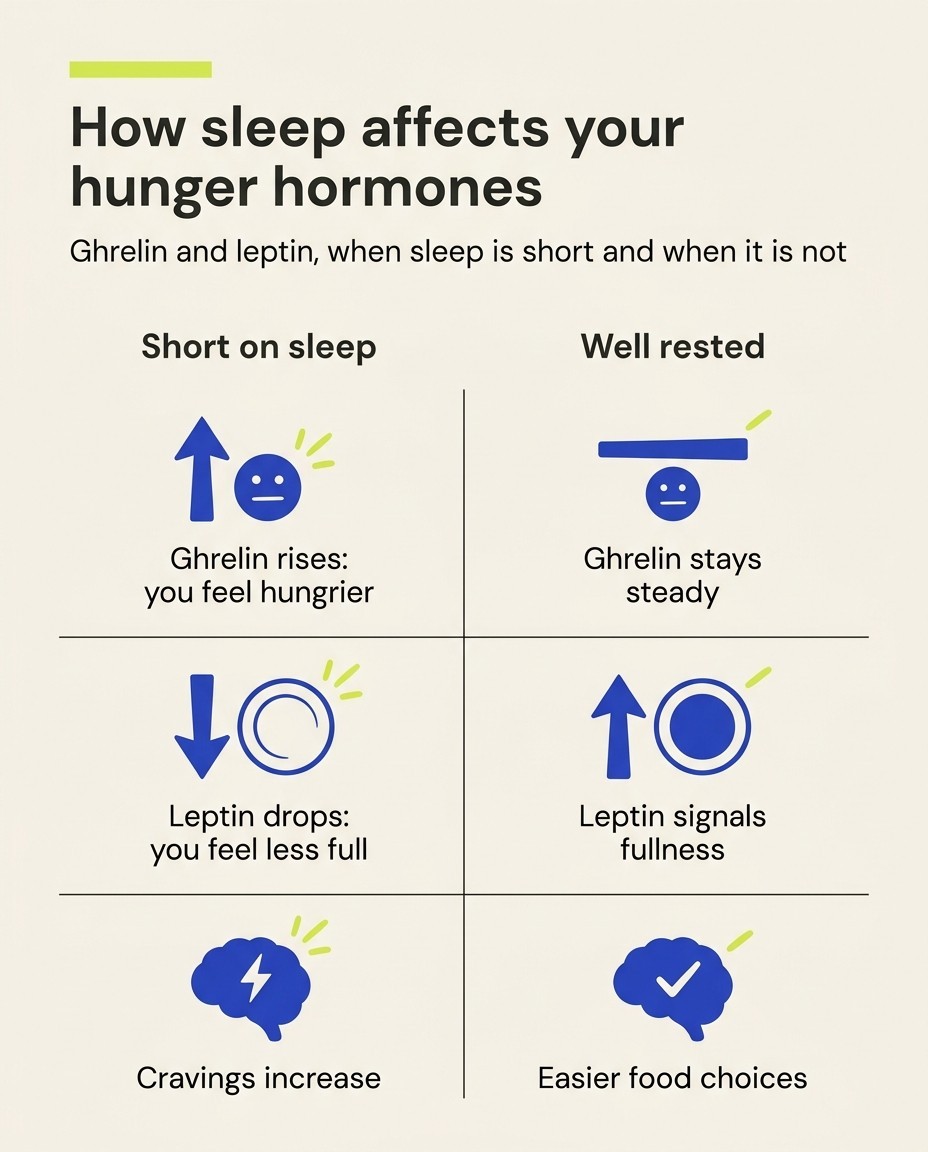
Poor sleep changes these appetite-regulating hormones in ways that make weight loss harder. Ghrelin goes up, so you feel hungrier. Leptin drops, so you don’t feel satisfied after eating.
These hormonal changes from lack of sleep are real and measurable. It comes down to biology, not willpower.
If you’re on Zepbound or Wegovy (both GLP-1 medications that mimic a natural appetite-regulating hormone), you’re already working with altered appetite signals. Sleep deprivation can mess with how well these medications regulate your hunger. Getting enough sleep helps the medication work as intended.
Insomnia complicates things even more. When you can’t sleep consistently, these hormone disruptions become chronic.
How poor sleep alters metabolic function
Sleep loss changes how your body processes glucose and burns energy. Even a few bad nights can make your cells less responsive to insulin, the hormone that helps your body convert food into energy. When this happens (known as insulin resistance), your body is more likely to store calories as fat rather than burn them.
Your metabolism slows down when you’re tired. You move less, fidget less, and burn fewer calories across the day.
Chronic sleep deprivation creates a metabolic environment that favors storing fat, not burning it. This works against your medication and your weight loss efforts.
When you’re well-rested, your body is more likely to burn fat for fuel. When you’re sleep-deprived, it holds onto fat and may even break down muscle instead.
Cortisol, stress, and fat storage
Lack of sleep raises cortisol, your main stress hormone, and that directly affects where you store fat.
High cortisol tells your body to keep fat around your middle. This deep belly fat (called visceral fat) wraps around your organs, is the hardest to lose, and carries the highest health risks, including heart disease and type 2 diabetes.
Sleep deprivation creates hormonal changes that increase insulin resistance and encourage fat storage. Your body thinks you’re under threat and decides to conserve energy.
When you combine high cortisol, disrupted hunger hormones, and poor metabolism, your body fights to keep weight on.
If you’re already dealing with medication side effects, poor sleep adds another layer of difficulty. You might feel hungrier, more tired, and frustrated by slow progress.
How sleep impacts eating behavior and physical activity
Poor sleep does more than make you tired. It shifts how your body regulates hunger, what foods you reach for, and how likely you are to exercise.
Sleep deprivation and cravings for energy-dense foods
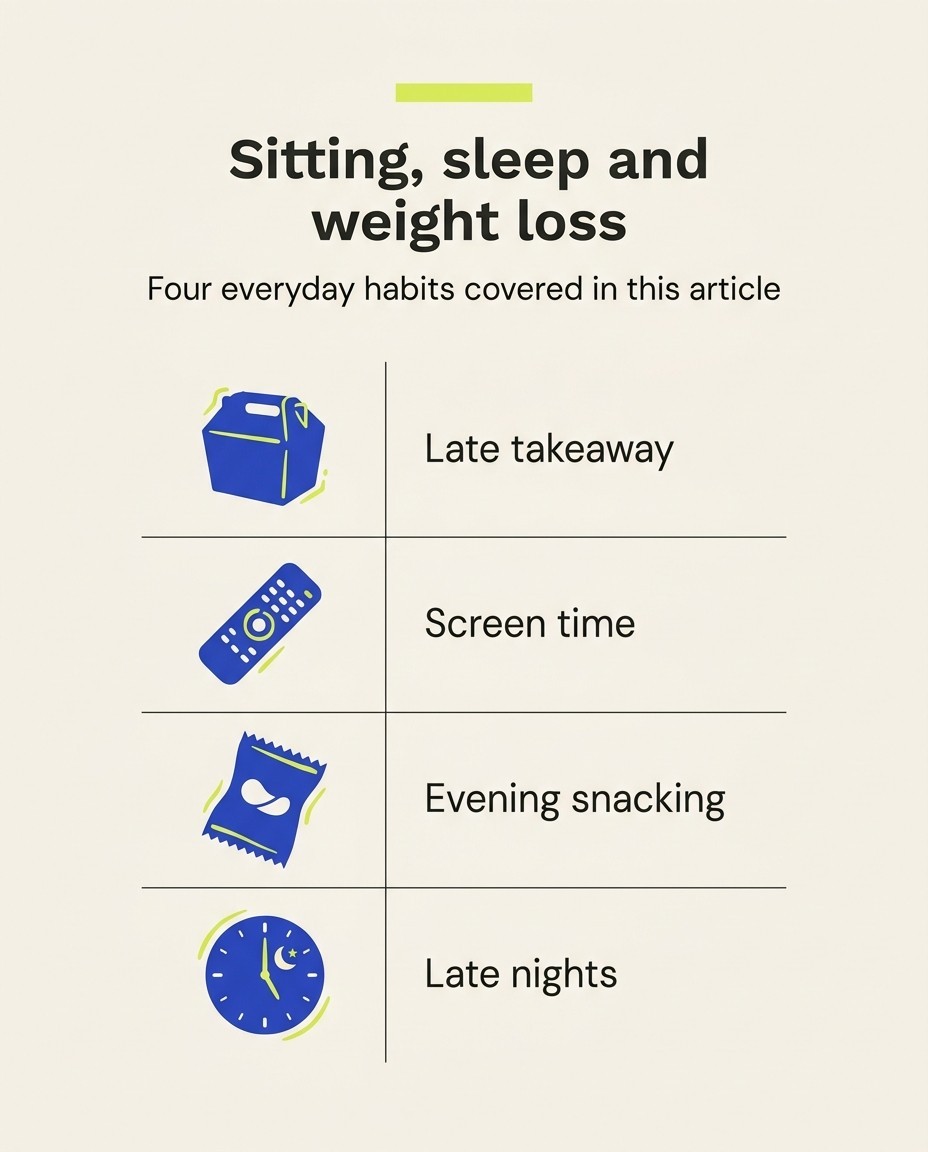
Poor sleep drives you to crave high-calorie, high-carb foods, and it’s not just in your head.
Research shows that insufficient sleep undermines dietary efforts even when you’re trying to lose weight. A University of Chicago study (Nedeltcheva et al., 2010) found that people who slept 5.5 hours per night lost 55% less body fat than those who slept 8.5 hours, even though both groups ate the same restricted diet.
After a bad night’s sleep, your brain’s reward centers light up more when you see sugary or fatty foods. It’s not a lack of willpower. Biology is working against you.
If you’re on Zepbound or Wegovy, you might notice this less. Still, sleep matters for eating behavior and nutrition choices beyond just hunger.
Impacts of sleep on physical activity and exercise motivation
Poor sleep can make you skip movement altogether. When you’re exhausted, skipping the gym feels like the only option.
Studies tracking sleep and physical activity show that people who sleep poorly move less the next day. They take fewer steps, do less structured exercise, and sit more.
Some of this is just physical. Sleep deprivation lowers your energy and makes exercise feel tougher than it actually is. Your perceived exertion goes up, even if the workout isn’t harder.
There’s a motivational side too. When you’re tired, even getting ready for the gym can feel like a mountain to climb. Decreased motivation for physical activity is a real effect of poor sleep.
Regular movement helps preserve muscle mass during weight loss. If sleep keeps derailing your activity plans, you could lose more muscle than you want.
Sleep, impulse control, and snacking habits
Sleep deprivation weakens your prefrontal cortex, the part of your brain that handles decision-making and impulse control. That makes it harder to say no to foods you’d usually avoid.
Late-night snacking gets more tempting when you’re awake longer, though it goes deeper than just having extra hours in the evening. Poor sleep changes eating self-regulation at a brain level.
You’re more likely to:
-
Eat bigger portions without realizing it
-
Reach for convenience foods instead of planned meals
-
Snack mindlessly while watching TV or scrolling
-
Give in to cravings faster
One study found that eating behaviors and sleep hygiene during weight loss were strongly connected. People who slept better found it easier to stick to their eating plans, even when hunger hit.
If you’re taking weight loss medication, you might think appetite suppression will fix this. Sometimes it helps. But plenty of people on treatment still struggle with evening snacking when they’re tired, even if they’re not physically hungry.
Improving sleep for better weight management
Good quality sleep shapes how your body responds to weight loss medication and whether you’ll keep the weight off for good.
Sleep hygiene practices for healthy weight
Sleep hygiene sounds a bit formal, but it’s really just about daily habits that help you sleep better. On Zepbound or Wegovy, poor sleep quality can sabotage your weight loss.
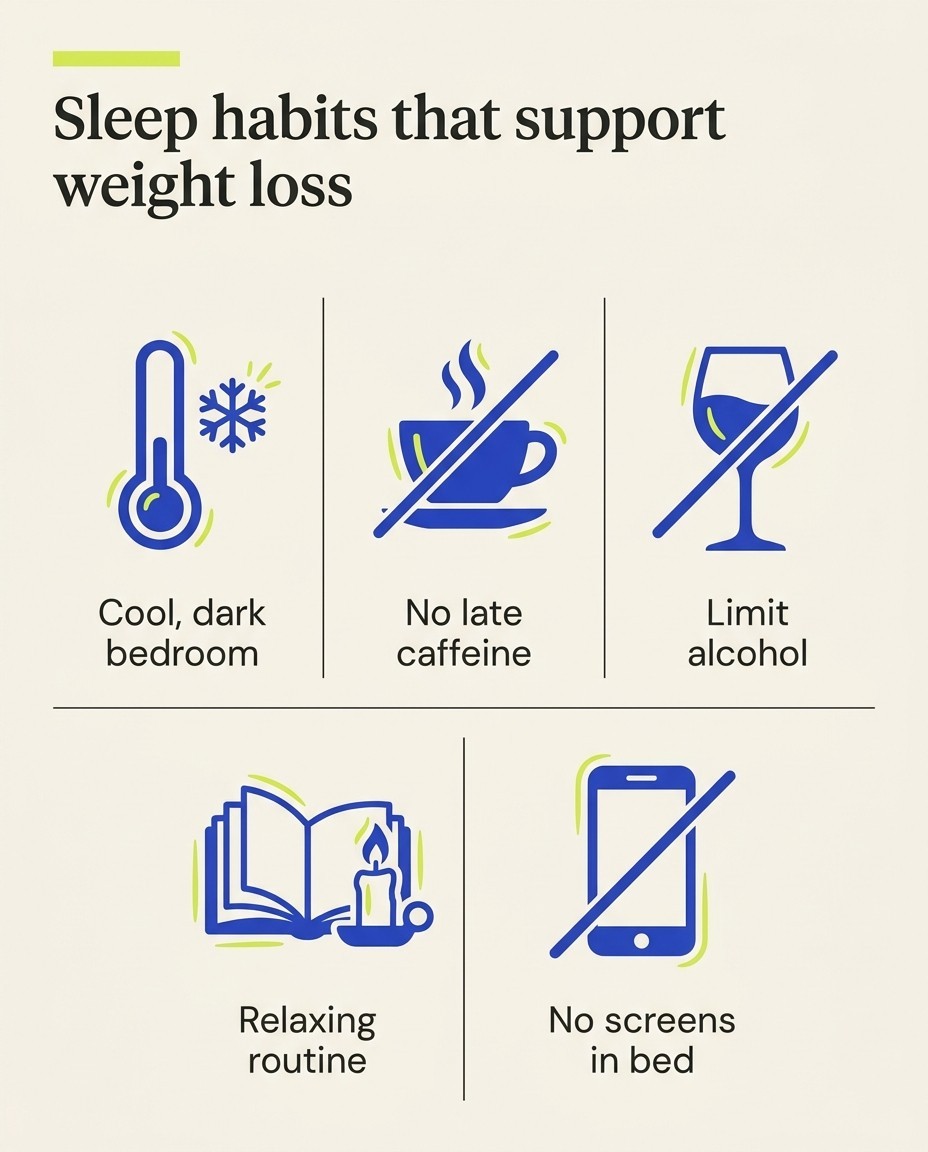
Start with your bedroom temperature. The Sleep Charity recommends keeping your bedroom around 61–64°F for the best sleep.
Your room should be dark, really dark. Blackout curtains or a sleep mask can help a lot.
Screen time is a big one. The blue light from phones and tablets tells your brain it’s daytime. Try to put devices away at least an hour before bed. If that’s tough, use night mode or blue light filters.
Key sleep hygiene habits:

If GLP-1 medications make you nauseous at night, try eating your last meal 3–4 hours before bed. That might help with nighttime discomfort.
The NHS has practical tips on improving your sleep if you’d like more guidance.
The importance of a consistent sleep schedule
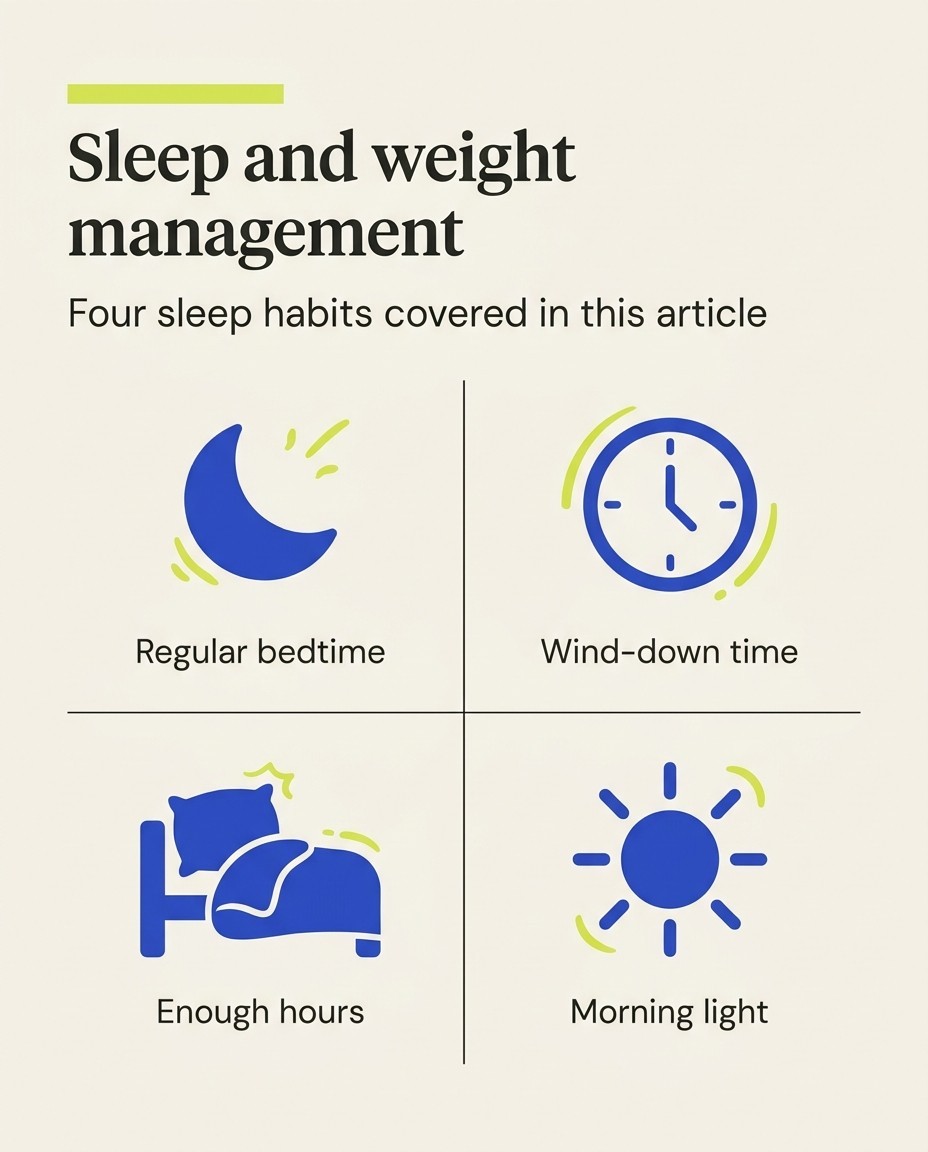
There’s no magic bedtime for weight loss. What matters is consistency. Your body has an internal clock, known as your circadian rhythm. If you keep changing your bedtime and wake-up time, you throw that clock out of sync, and your weight loss can stall as a result.
Researchers actually found that high sleep variability predicts poorer weight loss results. That’s not exactly encouraging, right?
Try to keep your sleep and wake times as consistent as possible. Even on weekends. I know, nobody likes hearing that, but it does help. Ideally, your schedule shouldn’t swing more than an hour in either direction.
If you work shifts, things get trickier. You’ll probably need to tighten up other parts of your sleep routine. Blocking out light during the day becomes really important if you have to sleep while it’s bright out.
Signs your sleep schedule needs work:
Talk to your doctor if you regularly experience:
- Loud snoring or gasping during sleep (possible sleep apnea)
- Difficulty falling or staying asleep most nights for more than four weeks
- Daytime sleepiness that affects your daily activities
- Restless legs or uncomfortable sensations that prevent sleep
- Sleep problems that started or worsened after beginning weight loss medication
Sleep disorders can affect how well your treatment works. Your doctor can assess whether a referral to a sleep clinic is appropriate.
Maintaining weight loss through better sleep
Here’s something a lot of people miss: improving your sleep can help you lose weight and keep it off. Research shows that weight reduction can improve sleep quality, but the relationship works both ways. Better sleep supports lasting weight management. Studies also link better sleep health with more fat loss during weight management, not just less weight overall, but actually losing fat rather than muscle.
How sleep supports weight maintenance:
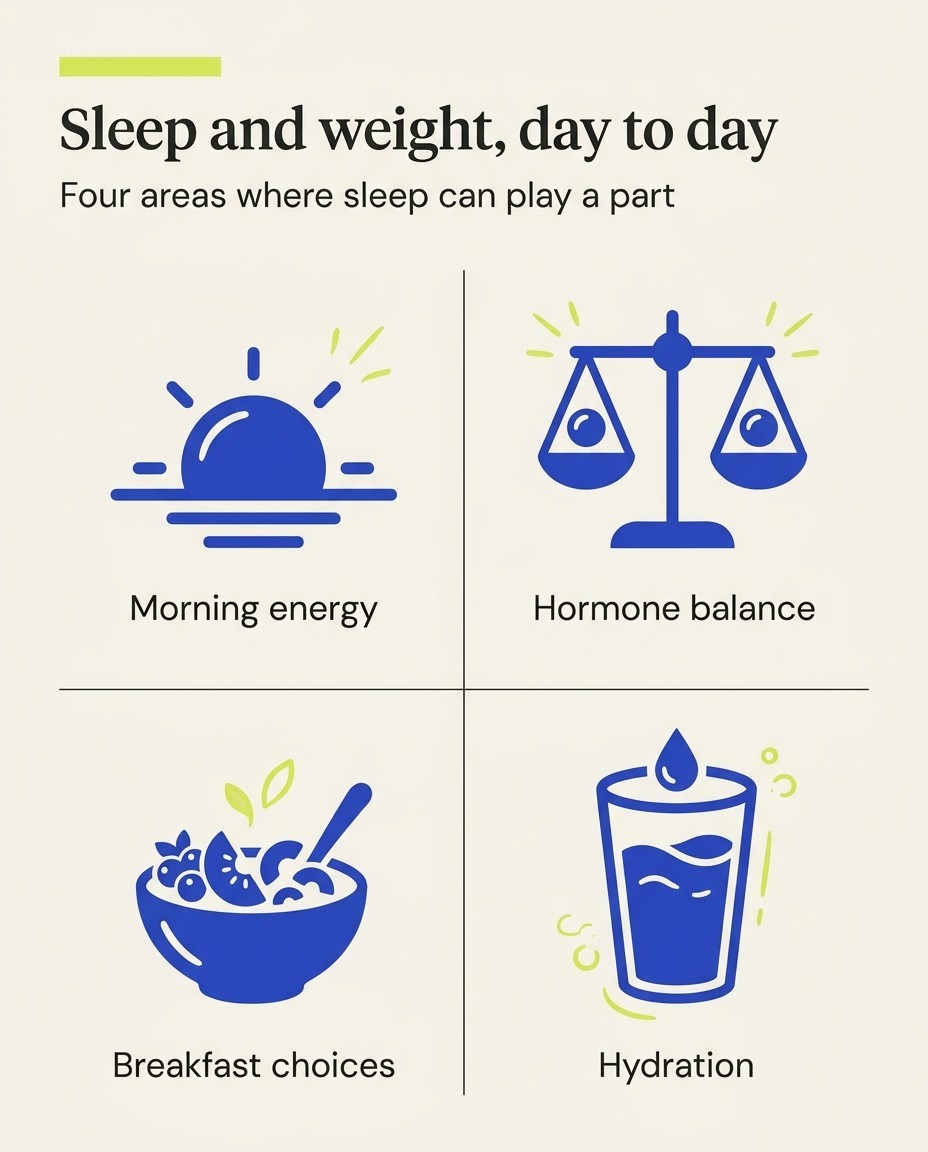
If you’ve started losing weight and your sleep’s gotten better, that’s probably not just luck. Lots of folks notice that even a small amount of weight loss can ease sleep apnea and other sleep issues. That can kick off a nice cycle where better sleep makes sticking to healthy habits a whole lot easier.
Frequently asked questions
Frequently asked questions
How many hours of sleep do I need for weight loss?
Most adults need seven to nine hours per night. Research consistently shows that sleeping fewer than six hours is associated with higher rates of weight gain and obesity. If you’re on weight loss medication, getting at least seven hours gives your body the best chance to respond to treatment.
Can poor sleep stop me from losing weight on Zepbound or Wegovy?
Poor sleep won’t completely block your weight loss, but it can slow your progress. Sleep deprivation increases hunger hormones, reduces fat burning, and makes it harder to stick to healthy eating habits. All of these work against what your medication is trying to do. Improving your sleep can help your GLP-1 medication work more effectively.
Why do I crave junk food when I’m tired?
Sleep deprivation increases ghrelin (the hunger hormone) and decreases leptin (the fullness hormone). At the same time, your brain’s reward centers become more responsive to high-calorie foods. This combination makes sugary, fatty foods feel almost irresistible. It’s a biological response, not a lack of willpower.
Does losing weight improve your sleep?
Yes. Research shows that weight loss can improve sleep quality, particularly if you have conditions like sleep apnea. Even modest weight loss (5–10% of body weight) can reduce snoring and improve breathing during sleep. This creates a positive cycle where better sleep supports further weight management.
Will nausea from Zepbound or Wegovy affect my sleep?
It can. Nausea is one of the most common side effects of GLP-1 medications, and it can disrupt your sleep if it’s worst at night. Try eating your last meal three to four hours before bed and keep meals small and bland in the evening. If nighttime nausea persists, talk to your doctor. They may suggest adjusting your dose timing.
Is it better to sleep longer or sleep more consistently?
Both matter, but consistency may be slightly more important. Research shows that high sleep variability (sleeping different amounts each night or going to bed at wildly different times) predicts poorer weight loss outcomes. Aim for both: seven to nine hours on a regular schedule, even on weekends.
Can sleep apnea prevent weight loss?
Sleep apnea fragments your sleep and reduces sleep quality, which can increase hunger hormones, lower your energy levels, and make weight loss harder. If you snore loudly, wake up gasping, or feel exhausted despite spending enough time in bed, ask your doctor about a sleep apnea assessment. Treating sleep apnea can help break the cycle.
Should I exercise if I haven’t slept well?
Light activity like a short walk is usually fine and may actually help you feel better. However, intense exercise on very little sleep can increase your injury risk and raise cortisol levels further. On days when you’re sleep-deprived, gentle movement is better than pushing through a hard workout. Prioritize getting better sleep that night instead.
The bottom line
Sleep is one of the most underrated factors in weight loss. If you’re taking Zepbound or Wegovy and your progress feels slower than expected, improving your sleep could make a real difference. Aim for seven to nine hours of consistent, quality sleep each night. Keep your bedroom cool and dark, stick to regular sleep and wake times, and talk to your doctor if sleep problems persist. Your medication works best when your body has the rest it needs to respond properly.
This article is for general information only and does not replace medical advice. If you have concerns about your sleep, weight, or medication, talk to your doctor or prescriber before making changes to your treatment plan.