
You step on the scale and, out of nowhere, the number’s jumped up. Or maybe your rings feel tight, your ankles balloon by the evening, or your jeans hug a bit more than usual, even though you’ve been careful with what you eat. If you’re on a GLP-1 weight loss injection like tirzepatide (Zepbound), semaglutide (Wegovy), or liraglutide (Saxenda) (medications that work by mimicking a natural appetite hormone), water retention during weight loss is especially frustrating when you feel like you’re doing everything right.
Water retention is when your body holds onto extra fluid in your tissues, and it can add a few pounds to the scale without any actual fat gain. It’s honestly one of the most common reasons the scale doesn’t reflect your actual progress. Your sodium intake, hormone swings, medication changes, and even how much you move all mess with how your body retains water.
The upside? Most water retention is temporary and manageable once you figure out what’s behind it. Let’s run through the main reasons your body might be hanging onto extra fluid, what’s normal, what needs a closer look, and some practical steps to help your body get back to normal.

Water retention is when your body holds onto extra fluid in your tissues, adding temporary weight that isn’t fat. Common triggers include high sodium intake, hormonal changes, medications, and inactivity. Most water retention resolves on its own with hydration, movement, and dietary adjustments — but persistent swelling should be checked by your doctor.
Key takeaways

Understanding water retention and water weight
Your body holds onto extra fluid instead of getting rid of it properly, and that’s water retention. You’ll notice swelling, puffiness, and that irritating, temporary weight gain, especially when you’re focused on your health goals.
What is water retention?
Water retention (also called fluid retention or edema) happens when excess fluid builds up in your tissues. Normally, your body keeps fluid moving in and out of your cells very precisely. But when something disrupts that balance, fluid starts pooling between your cells.
It’s not the same as gaining fat. Water weight can show up or vanish within days (or even hours), while fat takes much longer to change.
You’re about 60% water. Most of that stays inside your cells, doing things like transporting nutrients and keeping you at the right temperature. The rest sits in your blood and between your cells. If you retain water, that “between cells” space swells up.
Several systems help control fluid balance. Your kidneys filter out extra water through urine. Your lymphatic system drains fluid from tissues. Hormones like aldosterone (a hormone produced by your adrenal glands) tell your kidneys when to hold onto sodium and water or let them go.
How water weight develops in the body
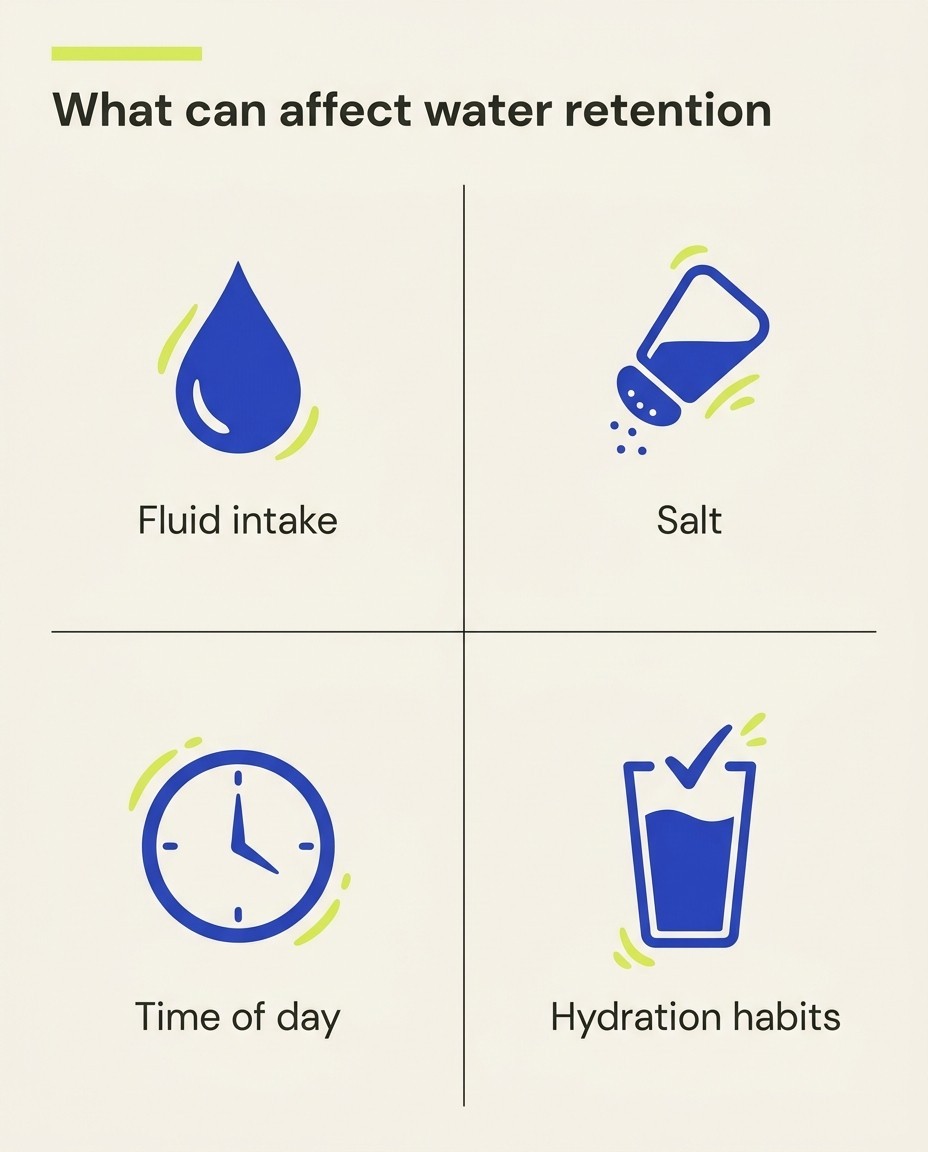
Your body starts holding extra water when something throws off its normal fluid balance. One of the most common culprits? Eating more salt than usual. Sodium makes your body hold onto water to keep your blood at the right concentration.
Hormones are a huge factor. Many people see more water retention at certain points in their menstrual cycle, especially the week before a period. Estrogen and progesterone affect how much fluid your kidneys keep.
If you’ve just started or changed your GLP-1 medication, you might notice more water retention. These meds slow how quickly food leaves your stomach and can temporarily shift your fluid balance as your body gets used to them.
Water retention on Zepbound or Wegovy is particularly common during the first few weeks of treatment or after a dose increase. As your body adjusts to the medication, it may temporarily hold onto more fluid. This usually settles within two to four weeks on a stable dose. If you’re tracking your weight closely, try weighing yourself at the same time each week rather than daily — this smooths out the fluid fluctuations and gives you a more accurate picture of fat loss.
Standing or sitting for ages makes fluid pool in your lower body. Gravity pulls water down into your legs, ankles, and feet. That’s why your shoes might feel tight after a long day.
Your body also holds onto more water when you start exercising harder. Muscles store glycogen (a form of stored carbohydrate your body uses for fuel), and each gram of glycogen holds onto roughly three grams of water. More activity means more glycogen and more water weight.
Signs and symptoms of fluid retention
The most obvious sign? Swelling. You’ll usually spot it in your:
- Ankles and feet
- Hands and fingers
- Face (especially around your eyes)
- Abdomen
- Lower legs
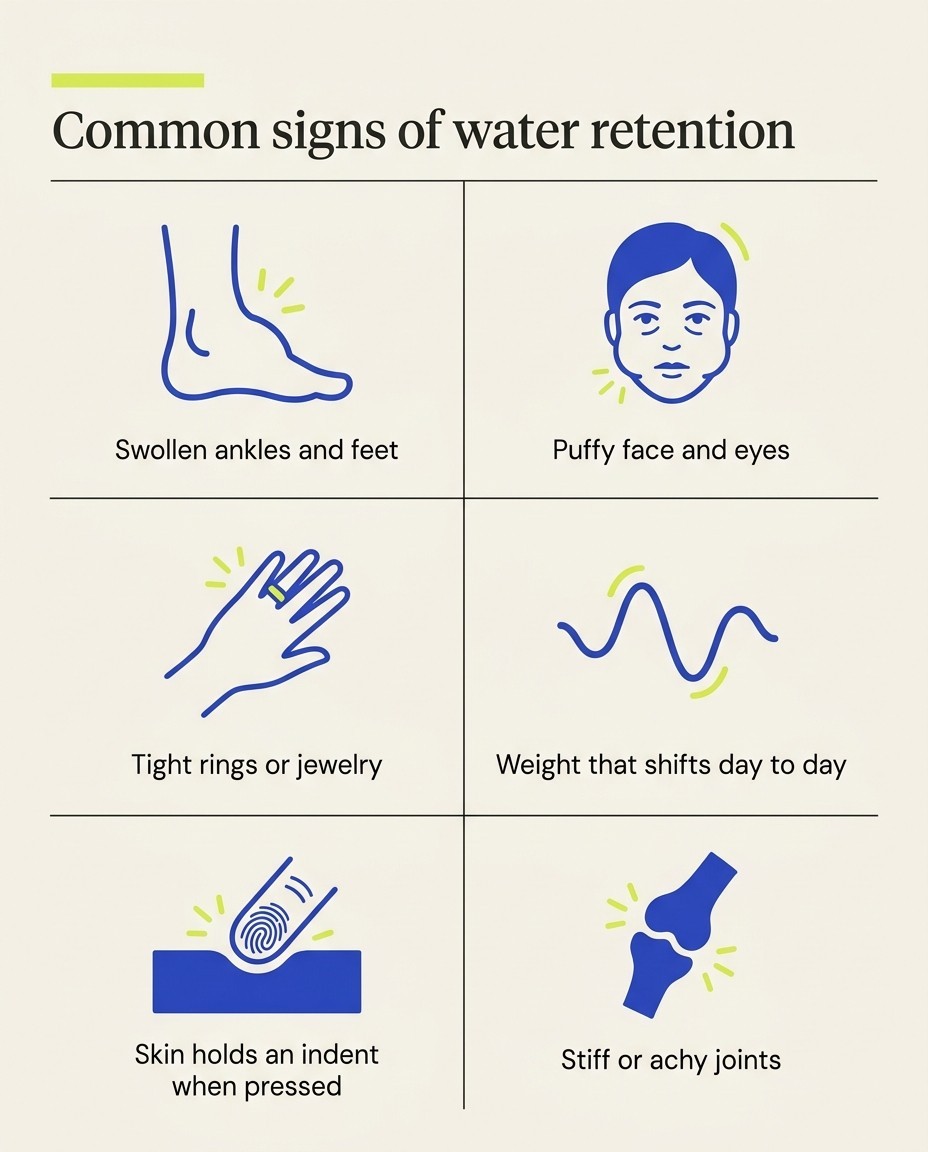
Puffiness in your face often shows up first thing in the morning. You might see it under your eyes or feel like your cheeks look rounder.
Clothes, shoes, or jewelry can feel tight. Rings that slid off yesterday might get stuck. Shoes that fit in the morning could pinch by afternoon.
If you press your finger into swollen skin and the indent stays for a bit, that’s called pitting edema, a sign that fluid has built up in the tissue beneath your skin.
Weight can jump up suddenly. Gaining 2 to 4 pounds overnight (without eating more) is almost always water, not fat.
Some people feel stiff or achy where they’re swollen. The skin can look stretched or shiny over puffy areas.
Common causes of retaining water weight
Water retention can happen for all sorts of reasons, from last night’s salty takeout to your daily meds. Some causes are harmless and short-lived, but others mean you should check in with your doctor.
Dietary factors and salty foods
Salt is probably the top reason for sudden bloating and puffiness. When you eat salty foods, your body holds onto extra water to dilute the sodium in your blood. That keeps your cells working right.
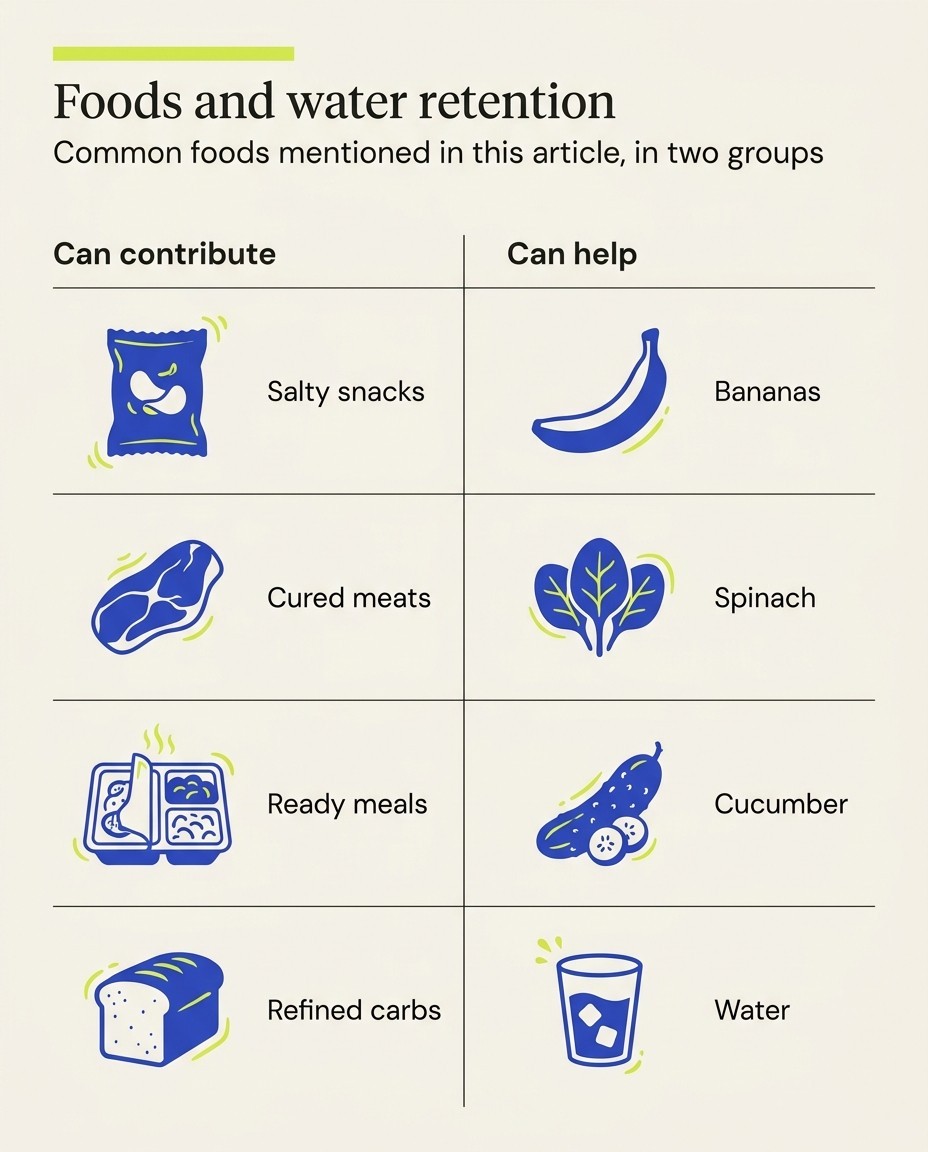
One salty meal can make you retain two pounds or more of water overnight. Takeout, processed snacks, cured meats, and canned soups are loaded with sodium. Even foods that don’t taste salty, like bread or cheese, can sneak in a lot.
Refined carbs can also bring on water retention, but in a different way. Eating white bread, pasta, or sugary stuff makes your body release insulin to manage blood sugar. Insulin tells your kidneys to hang onto sodium, so you keep more water.
Each gram of carbohydrate stored as glycogen in your muscles carries about three grams of water. That’s why people often lose a few pounds (2–4 lb) quickly when they cut carbs, and it’s mostly water, not fat.
Hormones and premenstrual syndrome
Many people notice they hold onto more water the week before their period. It’s normal, and shifting hormone levels are to blame.
Progesterone rises in the second half of your cycle, and it makes your body retain sodium and water. At the same time, dropping estrogen changes how your kidneys handle fluids.
The result? Bloating, swollen fingers, tender breasts, and sometimes a few extra pounds. Some barely notice it, others see big changes. Usually, the water weight disappears a few days after your period starts.
If you’re on Zepbound or Wegovy, you might spot PMS-related water retention more easily now that you’re tracking your weight closely. It doesn’t mean your treatment isn’t working.
If you’re tracking your weight on Zepbound or Wegovy, hormonal water retention can make it look like your treatment has stalled. It hasn’t. Try comparing your weight at the same point in your cycle each month rather than week to week. This gives you a much clearer picture of your actual progress.
Medications and steroids
A bunch of common medications can make your body hold onto water. If you’ve started something new and feel puffy or see your weight jump, check the side effects.
NSAIDs (nonsteroidal anti-inflammatory drugs) like ibuprofen and naproxen can mess with kidney function and cause fluid retention. People often take them without thinking, but regular use can bring on bloating.
Corticosteroids (steroid medications used to treat inflammation, such as prednisolone) are especially known for causing water retention. They make your kidneys keep sodium, which brings water along. People on long-term steroids often get a puffy face and swollen ankles.
Some blood pressure meds, certain antidepressants, and diabetes medications can also affect fluid balance. Never stop a prescription without talking to your doctor, as they can usually switch you to something that doesn’t cause the same trouble.
Underlying health conditions
If water retention sticks around and doesn’t budge, it sometimes points to something more serious. Most bloating is harmless, but certain patterns need a doctor’s eye.
Heart failure causes fluid to build up because the heart can’t pump blood effectively. That leads to swelling in your ankles, legs, and sometimes your belly. Kidney disease changes how your body filters fluids and balances sodium.
Cirrhosis messes with your liver’s ability to make certain proteins, which affects how fluid moves around your body. This can cause pretty dramatic swelling in your abdomen. Severe malnutrition also throws off protein levels and can lead to edema.
Less common causes include lymphedema (when your lymphatic system doesn’t drain properly). Rarely, ovarian cancer can cause fluid retention in your belly. If swelling won’t go away with less salt or by putting your feet up, make an appointment with your doctor. Sudden swelling in just one leg, or swelling with chest pain or trouble breathing, needs urgent care.
Managing and reducing water retention
Changing up your daily routine can really help when you’re feeling puffy. Here’s what actually works, from adjusting your meals to knowing when to call your doctor.
Lifestyle changes to shed water weight
Movement is one of the most effective ways to reduce swelling and shift excess fluid. Even a quick 20-minute walk gets your lymphatic system moving and pushes fluid out of your legs and ankles. Elevating your feet for 15 minutes after a long day also brings fast relief.
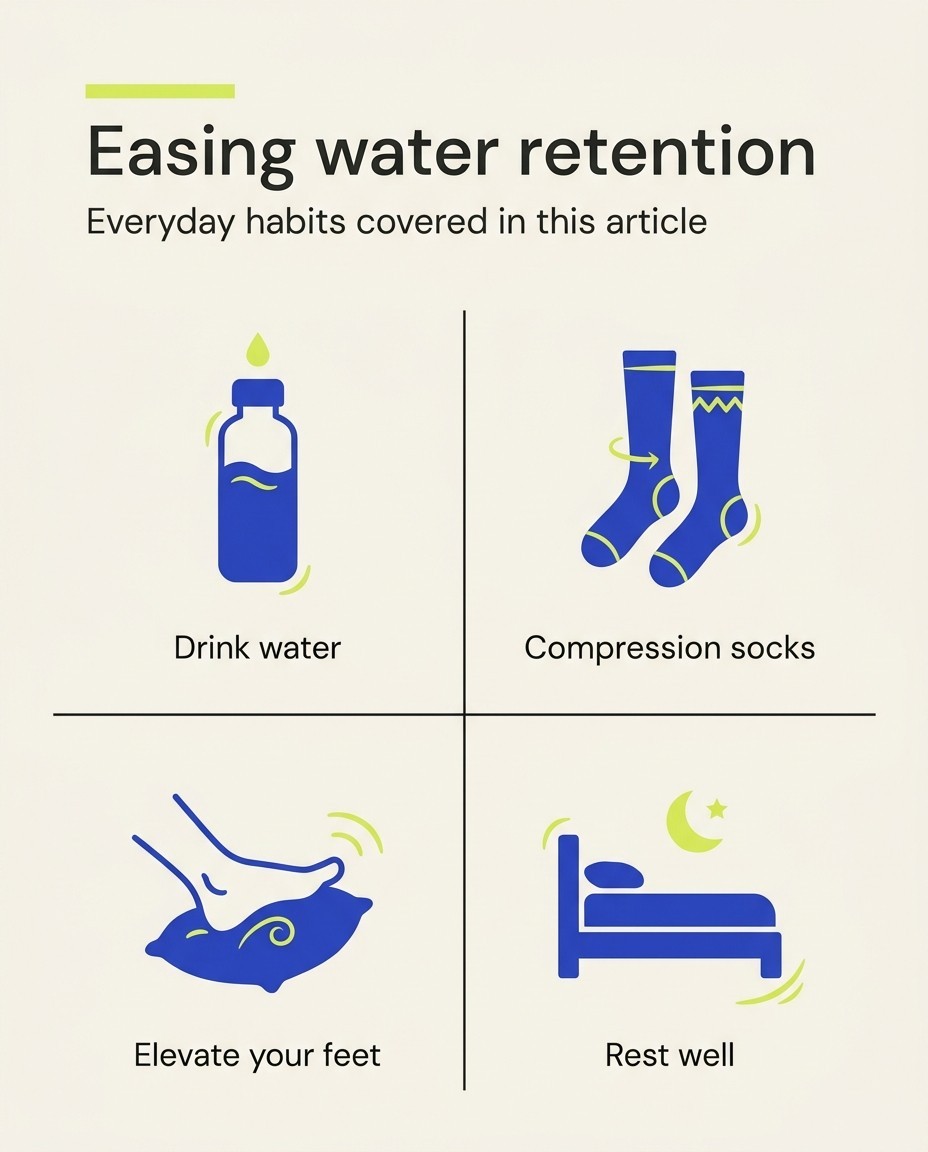
Don’t underestimate sleep. When you’re short on sleep, your body produces more cortisol (a stress hormone), which can make water retention worse. Try to get seven to nine hours if you can.
Compression socks aren’t just for plane rides. If you’re standing all day or stuck sitting, they help keep fluid from building up in your lower legs. Most drugstores stock them.
Hot, humid weather makes water retention worse. On warm days, stick to cooler spaces and avoid standing still for too long.
Dietary steps to reduce water retention
Cutting back on salt is the best move you can make. Processed foods like ham, chips, and prepackaged meals usually have way more sodium than you’d expect. Even things that don’t taste salty might have 2–3g of sodium per serving.
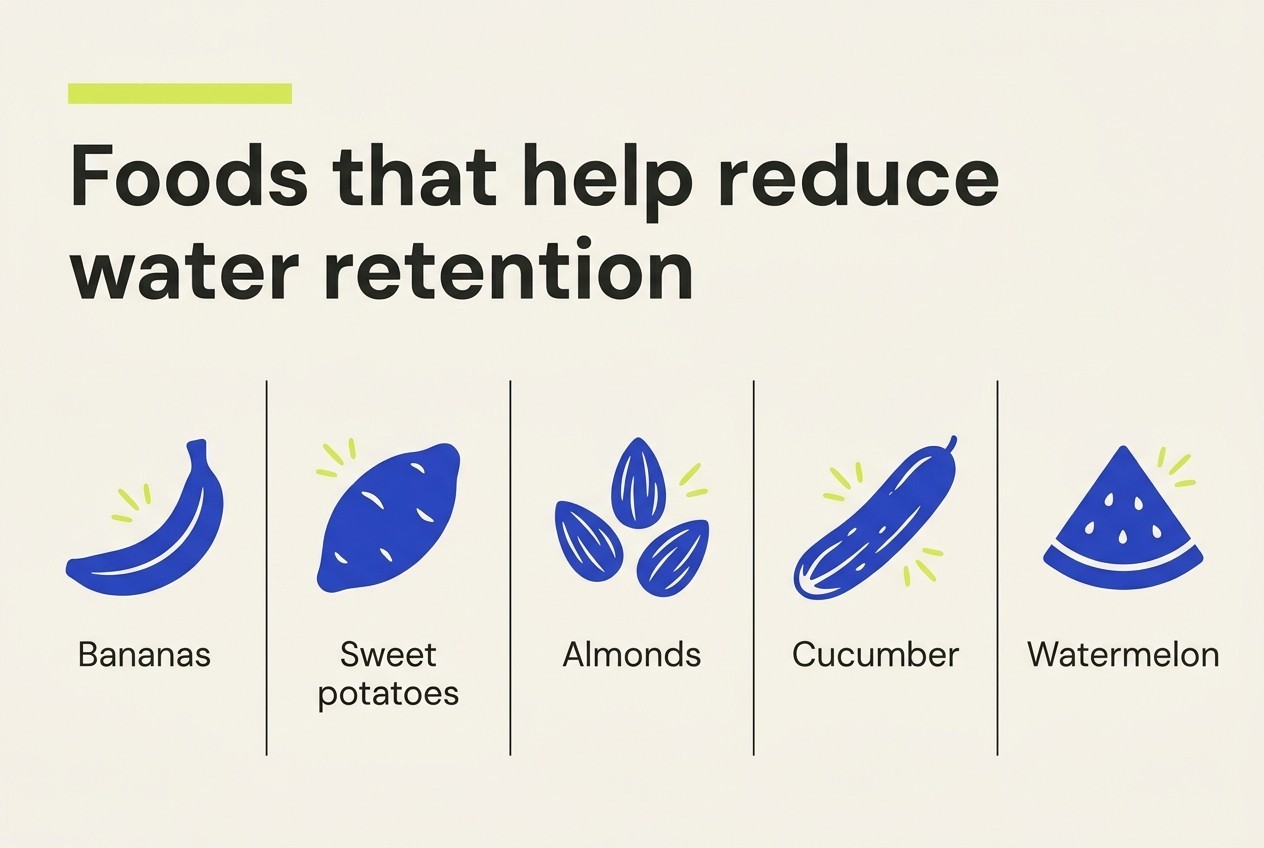
Foods that help reduce water retention:

Vitamin B6 can help with hormonal water retention. You’ll find it in chickpeas, salmon, and chicken breast. Some people find 50–100mg daily helps with hormonal bloating, though evidence is mixed. Don’t exceed 100mg without medical advice, as high-dose B6 over long periods can cause nerve damage. Speak to your doctor before supplementing.
Staying hydrated actually helps your body let go of stored fluid, even though it sounds backwards. Aim for about 8–13 cups (2–3 liters) a day, more if you’re active or it’s hot out.
Alcohol makes bloating worse. It dehydrates you, which weirdly makes your body hold onto more fluid.
Medical treatments and water pills
Diuretics (water pills) help your kidneys flush out extra sodium and water through urine. Your doctor might prescribe them if lifestyle tweaks haven’t helped or if your water retention comes from a medical issue.
| Type | Example | Common use |
|---|---|---|
| Loop diuretics | Furosemide | The strongest, used for heart or kidney problems |
| Thiazide diuretics | Bendroflumethiazide | Milder, often for high blood pressure |
| Potassium-sparing diuretics | Spironolactone | Useful for hormonal water retention |
Not everyone should take water pills. They can mess with your potassium, blood pressure, and other meds. Never use someone else’s prescription or buy them online, and always get medical advice.
If you’re on a GLP-1 med like Zepbound or Wegovy, tell your doctor before starting diuretics. The combo can affect your hydration, especially if you’re also dealing with nausea or eating less.
When to seek medical advice
Some symptoms need urgent attention. Knowing the difference between routine bloating and a medical emergency can save your life.

Call 911 immediately if you experience:
- Sudden shortness of breath or chest pain alongside swelling
- Sudden severe swelling in one leg (possible blood clot)
- Facial swelling with difficulty breathing (possible allergic reaction)
These symptoms may indicate a blood clot, heart problem, or serious allergic reaction and need emergency treatment.
If you’re taking a GLP-1 medication and experience severe abdominal pain radiating to your back, seek emergency medical help — this could be a sign of pancreatitis.

See your doctor if:
- Water retention persists for more than a week despite lifestyle changes
- You notice unexplained weight gain or unusual tiredness
- Your urination patterns have changed
- You’ve recently started a new medication and are experiencing swelling
Let your doctor know about all the medications and supplements you’re taking. Some of these, like certain blood pressure tablets, NSAIDs such as ibuprofen, and some diabetes medications, can actually cause fluid retention.
Your doctor may order blood tests to look at kidney function, thyroid levels, or electrolyte balance (minerals like sodium and potassium that help regulate fluid). These tests help spot underlying causes that need specific treatment instead of just managing symptoms.
The bottom line
Water retention is one of the most common and most frustrating reasons the number on the scale doesn’t match your efforts. The good news is that most water weight is temporary. Cutting back on sodium, staying hydrated with at least 8 cups (about 2 liters) of water daily, moving regularly, and giving your body time to adjust to medication changes will usually sort things out within a few days. If swelling persists for more than a week, appears suddenly in one leg, or comes with breathlessness or chest pain, see your doctor or call 911 — these symptoms need prompt medical attention.
Frequently asked questions
Frequently asked questions
How much water weight can you gain in a day?
It’s common to see fluctuations of 1–4 lb in a single day from water alone. After a particularly salty meal, some people retain even more. This is temporary fluid, not fat, and typically settles within a day or two once your sodium and hydration levels balance out.
Does drinking more water help with water retention?
Yes, counterintuitive as it sounds. When you’re dehydrated, your body holds onto more fluid as a safeguard. Drinking at least 8 cups (about 2 liters) of water daily signals to your body that it’s safe to release stored fluid. Aim for about 8–13 cups (2–3 liters) if you’re active or in warm weather.
Can Zepbound or Wegovy cause water retention?
GLP-1 medications like Zepbound, Mounjaro, and Wegovy can temporarily affect fluid balance, particularly during the first few weeks or after a dose increase. This usually settles as your body adjusts. If swelling persists or worsens, speak to your prescriber, as they can check whether it’s medication-related or something else.
How long does water retention last?
Most water retention from dietary causes (like a salty meal) clears within 24–48 hours. Hormonal water retention typically resolves a few days after your period starts. Medication-related fluid retention may take a few weeks to settle after starting or changing a dose. If swelling lasts more than a week despite lifestyle changes, see your doctor.
Is water retention a sign of something serious?
Usually not. Most water retention is caused by diet, hormones, or inactivity and resolves on its own. However, persistent swelling that doesn’t improve with lifestyle changes can sometimes indicate heart, kidney, or liver problems. Sudden swelling in one leg, or swelling with breathlessness or chest pain, needs urgent medical attention.
What foods help reduce water retention?
Potassium-rich foods like bananas, sweet potatoes, spinach, and avocados help balance sodium levels. Magnesium-rich foods such as almonds, dark chocolate, and pumpkin seeds may also help. Natural diuretic foods include cucumber, celery, asparagus, and watermelon. Reducing processed foods and limiting sodium to around 6g of salt per day makes the biggest difference.
Should I take water pills for water retention?
Don’t take diuretics (water pills) without medical advice. They’re prescription medications that your doctor may recommend if lifestyle changes haven’t helped, or if your fluid retention is caused by an underlying health condition. They can affect your potassium levels and interact with other medications, including GLP-1 treatments. Never buy them online or use someone else’s prescription.
Does exercise help with water retention?
Yes. Even gentle movement like a 20-minute walk helps your lymphatic system circulate fluid and reduces pooling in your legs and ankles. Regular exercise also helps regulate the hormones involved in fluid balance. However, new or more intense exercise can temporarily increase water retention as your muscles store more glycogen, and this settles within a week or two.
This article is for general information only and does not replace professional medical advice. Always speak to your doctor or prescriber before making changes to your medication or treatment plan. If you’re experiencing persistent or severe symptoms, seek medical attention promptly.
Sources
- NHS — Oedema (fluid retention) — NHS
- Physiology, Body Fluids — StatPearls, National Library of Medicine
- Relationship between muscle water and glycogen recovery — Fernández-Elías VE et al., European Journal of Applied Physiology, 2015
- Pre-menstrual syndrome — NHS
- Heart failure — British Heart Foundation
- Non-steroidal anti-inflammatory drugs — British National Formulary
- Corticosteroids — general use — British National Formulary
- Diuretics — British National Formulary
- How to get to sleep — NHS
- B vitamins and folic acid — NHS
- Salt in your diet — NHS
- Zepbound Summary of Product Characteristics — Electronic Medicines Compendium