

Let’s be honest: you’ve probably found yourself here before. Maybe it’s been a rough day at work, or a tough conversation, or you’re just feeling off. Suddenly, you’re staring into the fridge, not even hungry, but eating anyway. That’s emotional eating, sometimes called comfort eating. And if you’re taking tirzepatide (Zepbound), semaglutide (Wegovy), or another GLP-1 medication (GLP-1 stands for glucagon-like peptide-1; these treatments mimic a natural hormone that reduces appetite), you might think it’s been fixed. But, honestly? It hasn’t, at least not completely.

If you want to stop emotional eating, you’ll need to spot the difference between real hunger and emotional triggers. Then, you can start building practical strategies, like mindfulness-based emotional eating awareness training, to address the habits, not just your appetite. Sure, your medication can suppress physical hunger, but it doesn’t break the habit of reaching for snacks when you’re anxious, bored, or sad. That’s a different kind of work.
We’ve gathered what actually helps, based on research and stories from people dealing with this while on treatment. Understanding what causes emotional eating is step one, and there are practical things you can try right away.
Key takeaways

Understanding emotional eating
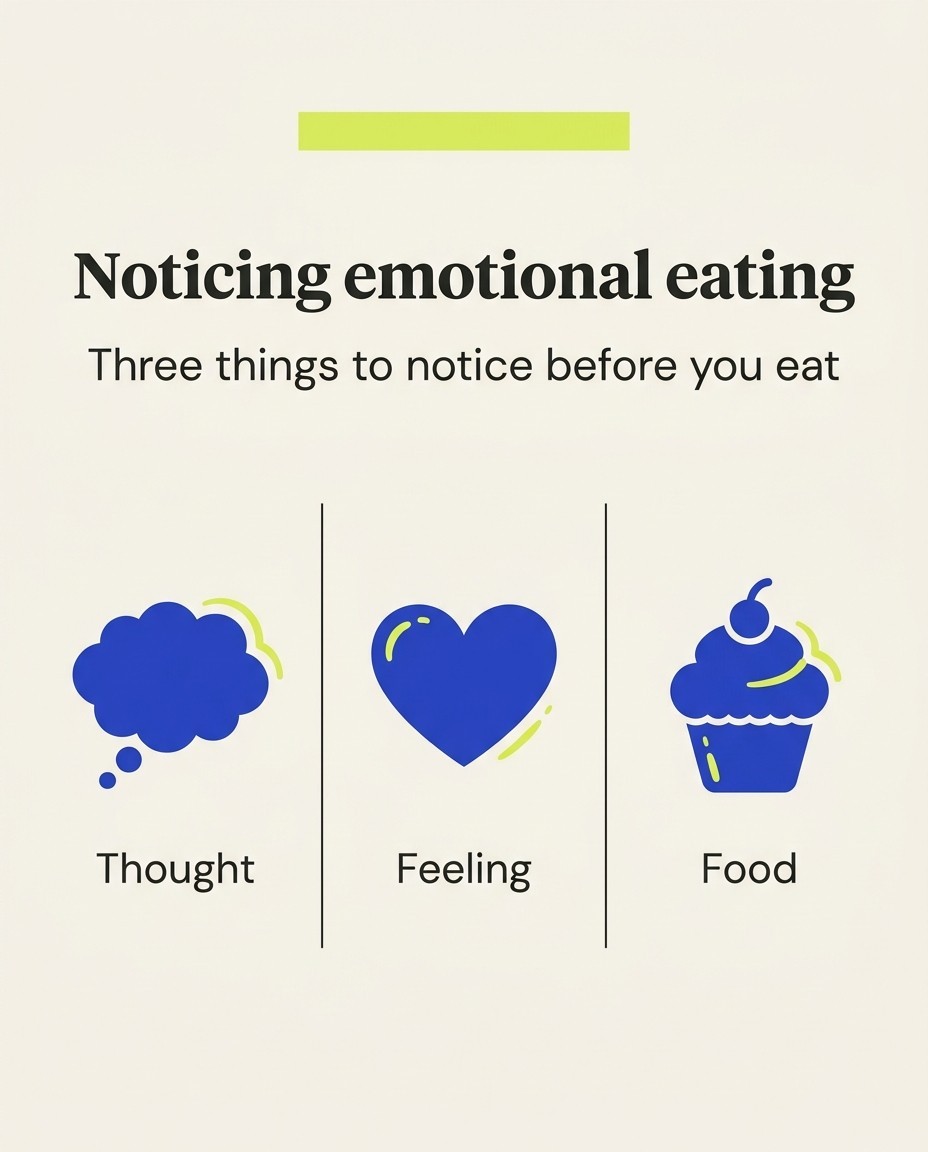
Emotional eating happens when we use food to deal with feelings, not to fuel our bodies. It can feel automatic, almost like you’re on autopilot. For people on weight loss medication, understanding the link between emotional eating and weight loss is important, because the medication handles the physical hunger but leaves the emotional patterns untouched. Learning to spot the difference between emotional and physical hunger is the first step to changing it.
What is emotional eating?
Emotional eating, sometimes called comfort eating, means eating in response to feelings, not out of real hunger. Maybe you reach for food because you’re stressed, bored, lonely, or even happy.
Food turns into a coping tool. You’re not eating because your body needs it. You’re eating because, right then, it feels like the only thing that might help.
Most people do this at some point. But when emotional eating becomes your go-to way to deal with tough feelings, it can mess with weight loss and leave you feeling out of control.
Research links emotional eating to trouble with emotion regulation. Basically, if you haven’t found other ways to process feelings, food becomes the default.
The emotional eating cycle
This cycle usually goes like this:
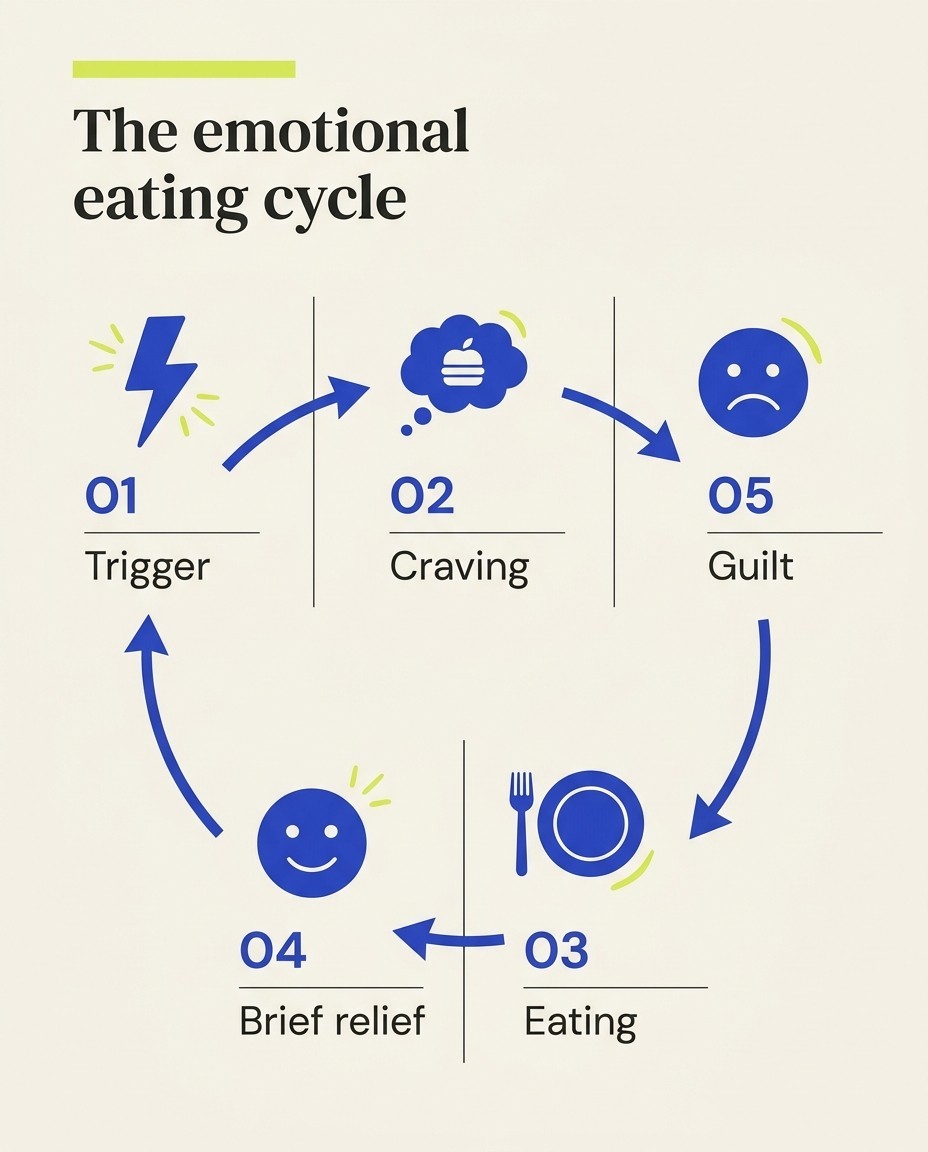
- Trigger: Something creates an uncomfortable emotion, such as stress, an argument, or loneliness.
- Craving: Suddenly, you want to eat, and not just anything. Usually chips, chocolate, or takeout.
- Eating: You eat quickly, often without really tasting it.
- Temporary relief: For a few moments, you feel better or numb.
- Guilt and shame: The original feeling returns, now with regret about eating.
Each time you repeat this, your brain remembers that food brings quick relief, even if it’s just for a moment. That makes the cycle stronger.
To break it, you can interrupt the cycle anywhere. Maybe you spot the trigger sooner, try different coping strategies, or simply slow down and pay attention while eating.
Emotional hunger versus physical hunger
Knowing the difference between emotional and physical hunger is huge. Once you know what to look for, it gets easier.
Physical hunger
Emotional hunger
Physical hunger creeps in. Your stomach might growl, your energy drops, and most foods sound fine. You feel satisfied once you’ve eaten enough.
Emotional hunger comes out of nowhere. You “need” food right now, and only certain things will do. You might eat past fullness, trying to fill an emotional gap, not a physical one. It’s almost like you’re on autopilot, a kind of mindless eating.
If you’re on a GLP-1 medication, this difference matters even more. The meds cut down physical hunger a lot. So if you’re still getting strong urges to eat, it’s almost certainly emotional. That’s actually helpful: it points to what needs your attention.
Common causes and triggers
Emotional eating doesn’t just show up randomly. It’s usually tied to specific feelings, situations, or even body signals that make food seem like the answer, even when it’s not about hunger.
Emotional triggers and stress
Stress tops the list when it comes to what triggers emotional eating. When you’re anxious, overwhelmed, or sad, your body releases cortisol, a stress hormone. Cortisol can boost your appetite, particularly for sugary or fatty foods, because your body interprets stress as a signal to refuel.
Eating really can make you feel better, at least for a little while. Food distracts you from tough emotions, but the relief fades fast. Then you’re back to the original feeling, plus guilt or frustration.
Common emotional triggers:
- Work stress or deadlines
- Fights or tension with others
- Feeling lonely or bored
- Being criticized or feeling unappreciated
- Worries about money
If you’re taking GLP-1 meds, you might realize something strange. The physical urge to eat during stress drops, but the mental habit can stick around, even if you’re not actually hungry.
Comfort foods and cravings
Everyone has their go-to comfort foods. There’s real science behind why certain foods trigger cravings.
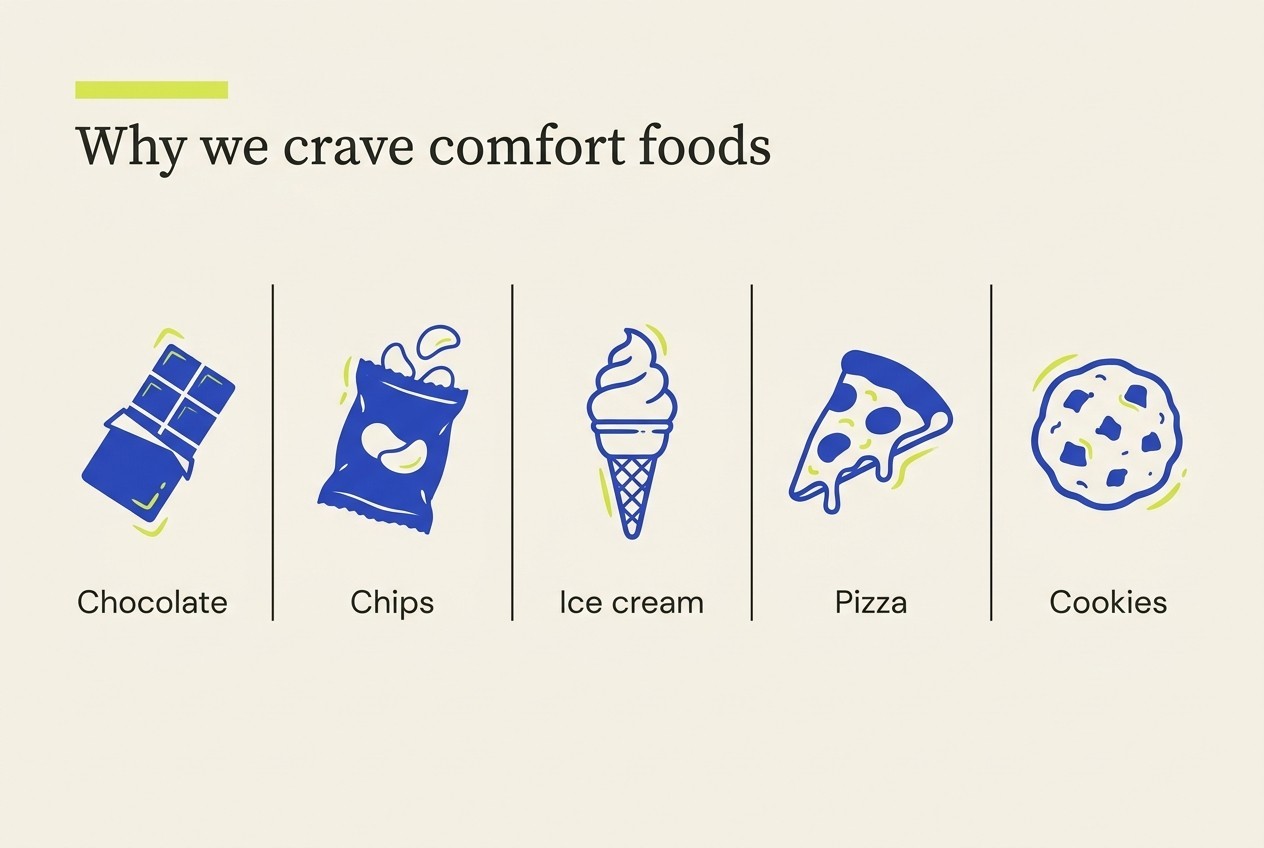
Usually, these foods are high in sugar, fat, or both. They light up the reward centers in your brain and release dopamine. Your brain remembers this, so you start to link certain foods with feeling better.
Typical comfort food patterns:
Food type
Why we crave it
Some of these habits start way back in childhood. If you got candy when you were upset, your brain might still connect sugar with comfort even years later.
The role of hunger hormones
Your body uses hormones to tell you when to eat and when to stop. Ghrelin signals hunger (think of it as your body’s “feed me” hormone); leptin tells you you’re full (your body’s “stop eating” signal). When stress or poor sleep messes with these, the relationship between food and mood becomes more complicated, and emotional eating can get harder to manage.
Chronic stress and lack of sleep can throw these hormones off. If you’re tired, ghrelin goes up and leptin drops, so you feel hungrier and less satisfied.
GLP-1 medications (like Zepbound and Wegovy) work by mimicking natural hormones that reduce appetite and help you feel full longer, bringing things back in balance a bit. But they don’t fix emotional eating. You might not feel truly hungry when stressed, but your brain can still want food.
Once you spot these patterns, it’s easier to see the difference between real hunger and emotional cravings. Physical hunger builds up slowly. Emotional hunger is sudden and usually wants specific foods.
Proven strategies to stop emotional eating
Managing emotional eating takes practice, but there are approaches that really help. The ideas below focus on building awareness, noticing patterns, and finding better ways to handle tough feelings, without grabbing food.
Practicing mindfulness
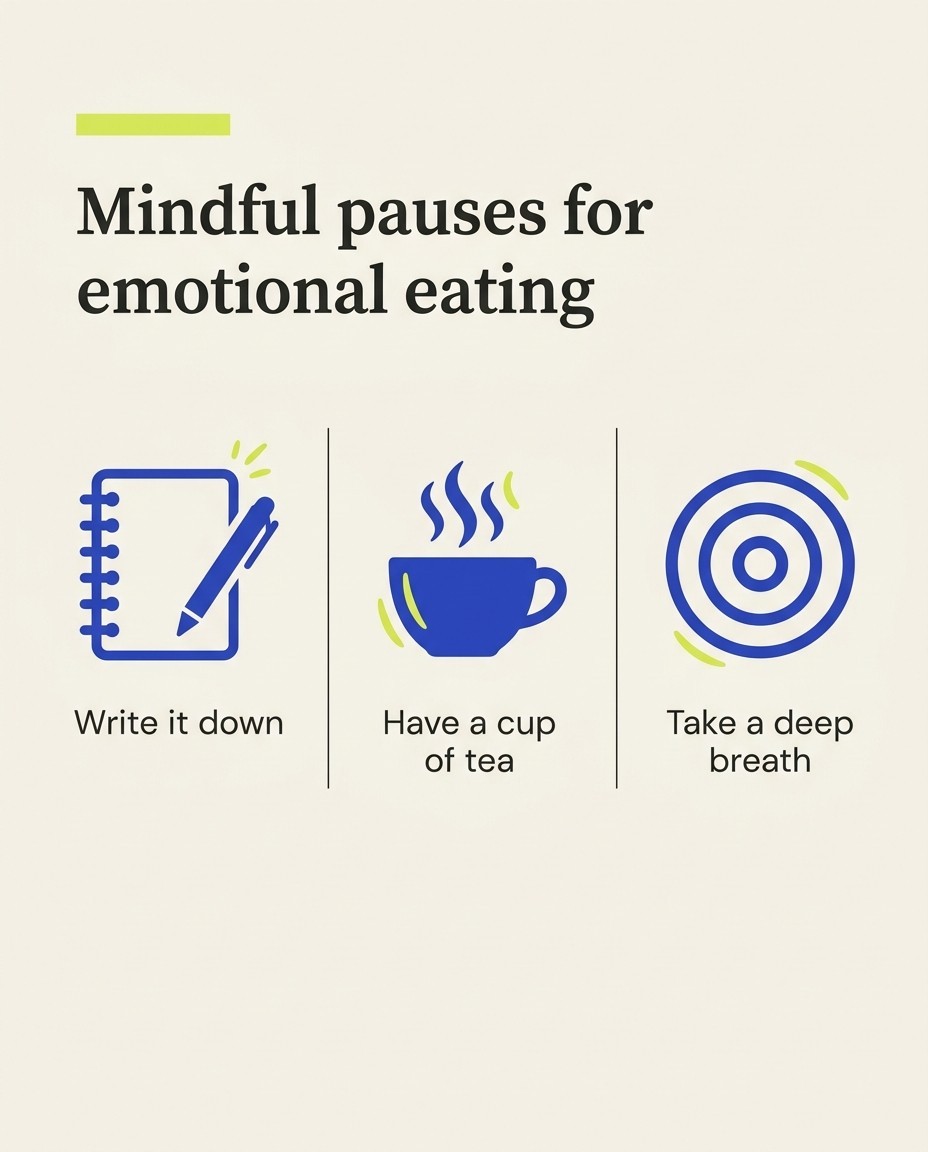
Mindfulness lets you tune in to what’s really going on before you reach for food. It’s about pausing and asking: am I actually hungry, or just feeling something uncomfortable? Practicing mindful eating alongside your weight loss treatment can help you recognize these moments before you act on them.
When you eat mindfully, you pay attention to each bite, the taste, the texture, how your body feels. It sounds easy, but if you’re used to eating while distracted, it’s a shift.
Mindfulness meditation training can lower cravings and help you control impulses. Even a few minutes of deep breathing can make a difference. You’re retraining your brain to react differently to emotional triggers.
Try this: Before eating, take three deep breaths. Ask yourself if you’re hungry or just feeling something you’d rather not feel. Sometimes it’s both, and that’s okay. The important thing is noticing.
Keeping an eating diary
Writing down what you eat might sound boring, but it can show you patterns you’d never notice otherwise. It’s about connecting your emotions and your eating, not counting calories.
Jot down:
- What you ate and when
- How hungry you felt (1–10)
- What you were feeling
- Where you were, and who was with you
After a while, you’ll spot patterns. Maybe you always want chips after a stressful meeting. Maybe Sunday nights mean snacking before a tough week. Research shows emotion regulation shapes comfort eating, and tracking helps you see your own triggers.
You don’t need anything fancy. A notes app works. The goal is awareness, not perfection.
Journaling and recognizing patterns
Journaling goes a bit deeper. Here, you can explore what’s really going on when you eat emotionally.
Write about what happened just before you ate. What were you thinking? What feeling were you trying to escape: boredom, loneliness, anxiety? Sometimes, it’s even happiness (yep, celebration eating is real).
Check back on your entries every week or two. Patterns will pop up. Maybe work stress always leads to evening snacks. Maybe certain people leave you wanting comfort food.
Once you see these patterns, you can prepare. If you know Thursday meetings leave you wanting to raid the fridge, plan something different: a walk, a call with a friend. The urge may not vanish, but you can change how you deal with it.
Healthy stress reduction techniques
Stress is a massive trigger for emotional eating. When you’re stressed, your body wants quick comfort, and food is fast.
You can’t erase stress, but you can find ways to manage it that don’t involve eating. Here are some things that help:
Physical:

Mental:
- Call someone who understands
- Write out what’s bugging you
- Watch something funny
- Play a game or do a puzzle
Mindfulness can help you regulate emotions, which can change how you eat when you’re stressed. But you need to find what actually works for you.
Some people swear by meditation apps. Others can’t stand them and prefer a workout. The best stress-buster is the one you’ll actually use when you’re feeling low. Try different things until you find your go-to.
Long-term success and building healthy habits
Getting free from emotional eating isn’t just about resisting cravings. It’s about building new habits that really work, getting support when binge eating takes over, and knowing when it’s time to ask for help beyond just willpower.
Developing alternative coping mechanisms
Let’s be honest: telling ourselves to just stop eating when we’re stressed almost never works. We need something else to do with our hands, our minds, our bodies.
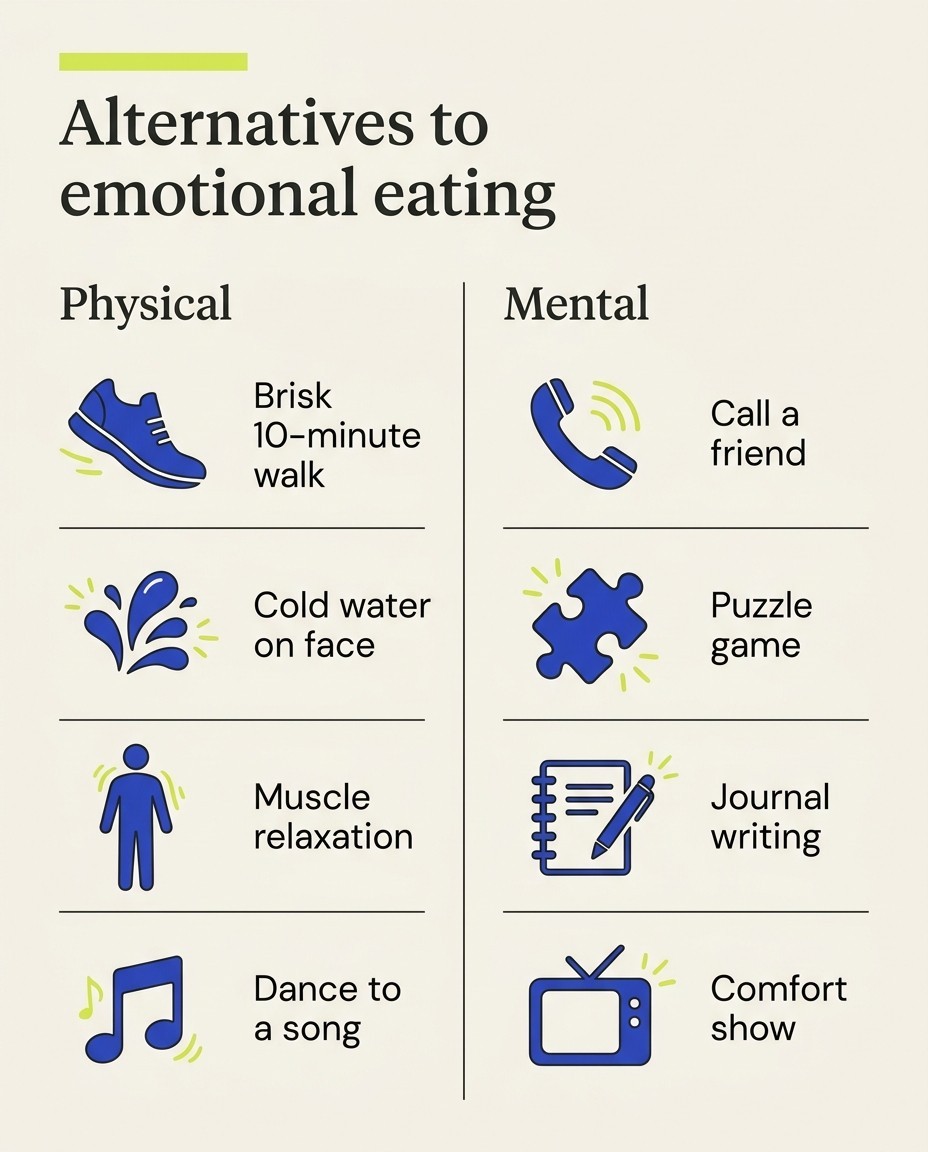
The best strategy? Build a toolbox of alternatives that match how intense your emotions feel right then. If you’re only a little off-balance, maybe a quick five-minute walk helps. When you’re really distressed, you’ll probably need something more substantial.
Physical alternatives often help the most:
Mental distractions that actually require focus:
- Call a friend (yes, actually call, not just text)
- Play a puzzle game on your phone
- Write three pages in your journal without stopping
- Watch a specific comfort show (not just scroll endlessly)
Choose your alternatives before the urge hits. When you’re already reaching for snacks, your brain doesn’t want to brainstorm. Write your list now. Stick it on your fridge if you have to. Research on successful long-term diet change suggests that people who keep healthy habits plan their responses to tough situations ahead of time.
Pick just one or two alternatives to start. Get comfortable with those before you try to add more.
Addressing binge eating behaviors
Binge eating disorder goes beyond the occasional emotional overeat. It means eating a lot in a short period, feeling out of control, and often pushing past comfortable fullness.
If you’re taking a GLP-1 medication, you might notice your binge urges drop off. The medication can help with urges, but it doesn’t really fix the emotional patterns underneath.
You might be dealing with binge eating if you notice:
- Eating when you aren’t physically hungry
- Eating much faster than usual
- Eating until you’re uncomfortably full
- Feeling disgusted, depressed, or guilty after eating
- Often eating alone because you feel embarrassed
If you recognize several of these signs, talk to your doctor. Binge eating disorder is a recognized condition with effective treatments.
Studies show that successful dieters gradually reduce uncontrolled eating, but it takes effort. You can’t just hope it goes away.
Try eating regular meals at set times, even if you’re not hungry. It feels counterintuitive when you want to manage emotional eating, but skipping meals usually leads to bigger binges later. Keep a simple log of when binges happen and what you were feeling before. You’ll probably spot patterns in a week or two.
Don’t aim for perfection. The real goal is to make binges less frequent and less intense over time.
Seeking professional support
Some patterns just feel too overwhelming to tackle alone. Honestly, that’s not a personal failing, it’s just how life goes sometimes.
A therapist with training in cognitive behavioral therapy (CBT) can help you spot the thoughts that set off emotional eating. Together, you’ll work on building new ways to respond. CBT for binge eating disorder has strong evidence behind it, and NICE recommends it as a first-line treatment.
You’ll start to question thoughts like, “I’ve already ruined today, might as well keep eating,” and swap them for something that actually helps.
If you see a registered dietitian, you’ll get practical food strategies that make sense for real life. They help you set up eating routines that lower the urge to binge, and they’ll also look at the emotional side of eating behavior.

When should you get help sooner rather than later?
- Binge eating episodes happen several times a week
- You restrict food a lot to “make up” for binges
- You use laxatives or force yourself to vomit
- Emotional eating is hurting your relationships or work
- You’re having thoughts of self-harm related to body image or eating
- You’ve tried to manage on your own for months and nothing’s changing
If you’re looking for binge eating help, your doctor is a good starting point. Some therapists offer sliding scale fees.
Research on long-term weight maintenance suggests people who reach out for support tend to do better. It’s not about willpower, it’s about having the right help when you need it.
Frequently asked questions
Can GLP-1 medications like Zepbound or Wegovy stop emotional eating?
Not entirely. GLP-1 medications reduce physical hunger effectively, but emotional eating is driven by feelings rather than hunger signals. You may notice fewer cravings overall, but the habit of reaching for food when stressed, bored, or upset can persist. Medication works best alongside strategies like mindful eating and building alternative coping mechanisms.
How do I know if I’m eating emotionally or just hungry?
Physical hunger builds gradually: your stomach growls, your energy dips, and most foods sound appealing. Emotional hunger hits suddenly, usually craves specific comfort foods, and often continues past fullness. If you’ve eaten recently but feel an urgent need for chips or chocolate, it’s likely emotional. Keeping an eating diary can help you spot the difference.
What is the difference between emotional eating and binge eating disorder?
Emotional eating is using food to cope with feelings, and most people do it occasionally. Binge eating disorder (BED) involves regularly eating large amounts in a short time, feeling out of control during episodes, and experiencing significant distress afterward. If you binge eat several times a week and feel unable to stop, talk to your doctor, as BED is a recognized condition with effective treatments.
How long does it take to break emotional eating habits?
There’s no fixed timeline, but most people start noticing patterns within two to three weeks of keeping an eating diary. Building reliable alternative coping strategies usually takes a few months of practice. Be patient with yourself. These habits often develop over years, so they won’t disappear overnight. Progress means binges becoming less frequent and less intense, not perfection.
Should I see a therapist for emotional eating?
Consider professional support if emotional eating happens most days, if it’s affecting your weight loss progress or mental health, or if you’ve tried managing it on your own for several months without improvement. Cognitive behavioral therapy (CBT) is particularly effective. Your doctor can help you find a therapist who offers CBT.
What should I eat when I’m craving comfort food?
Rather than trying to resist all cravings, try swapping in satisfying alternatives. If you want something crunchy, try apple slices with peanut butter. For something warm and comforting, a bowl of oatmeal or soup can help. Greek yogurt with berries gives you a sweet hit with protein. The key is having these alternatives ready so you don’t have to decide when the craving hits.
Does stress always cause emotional eating?
Stress is the most common trigger, but it’s not the only one. Boredom, loneliness, tiredness, and even positive emotions like celebration can drive emotional eating. Some people eat more after arguments or when they feel unappreciated. Tracking your eating alongside your mood helps identify your personal triggers, which may be different from what you’d expect.
Can emotional eating come back after I’ve managed it?
Yes, particularly during stressful life events, changes in routine, or if you stop your GLP-1 medication. This doesn’t mean you’ve failed. The coping strategies you’ve built remain useful, and returning to techniques like mindful eating or journaling can help you get back on track quickly. Think of managing emotional eating as an ongoing skill rather than a one-time fix.
The bottom line
Emotional eating is one of the most common challenges people face on weight loss medication, and it’s completely normal. GLP-1 treatments like Zepbound and Wegovy can reduce physical hunger, but they won’t rewire the emotional habits you’ve built over years. The good news is that with practice, you can change how you respond to difficult emotions. Spotting your triggers, building alternative coping strategies, and slowing down around food all make a difference. If emotional eating feels overwhelming or crosses into binge eating, talk to your doctor about a referral to a therapist. You don’t have to figure this out alone.
This article is for information only and does not replace medical advice. If you’re concerned about emotional eating, binge eating, or your relationship with food, talk to your doctor or prescriber before making changes to your treatment.