

You know that voice in your head that just won’t stop talking about food? It pops up during work meetings, wonders what’s for dinner, keeps you awake planning tomorrow’s meals, and sometimes makes you feel guilty about every bite. That’s what people now call food noise. If you’re on tirzepatide (Zepbound) or semaglutide (Wegovy), you might have noticed something weird—maybe it suddenly went quiet.

Food noise means persistent, unwanted thoughts about food that cause distress and get in the way of daily life. This isn’t just thinking about lunch — it’s constant, intrusive mental chatter that’s exhausting and tough to control.
A lot of us didn’t even realize it was happening until GLP-1 medications (which mimic a natural appetite-regulating hormone) suddenly turned down the volume.
The relief can feel strange at first. One patient said it was like a part of her brain just went silent. If you’ve felt that sudden quiet, you’re not making it up.
Understanding what food noise actually is, and why these medications seem to quiet it, might help make sense of what’s going on.
Key takeaways

What is food noise?
Food noise means persistent, intrusive thoughts about food that feel unwanted and tough to control.
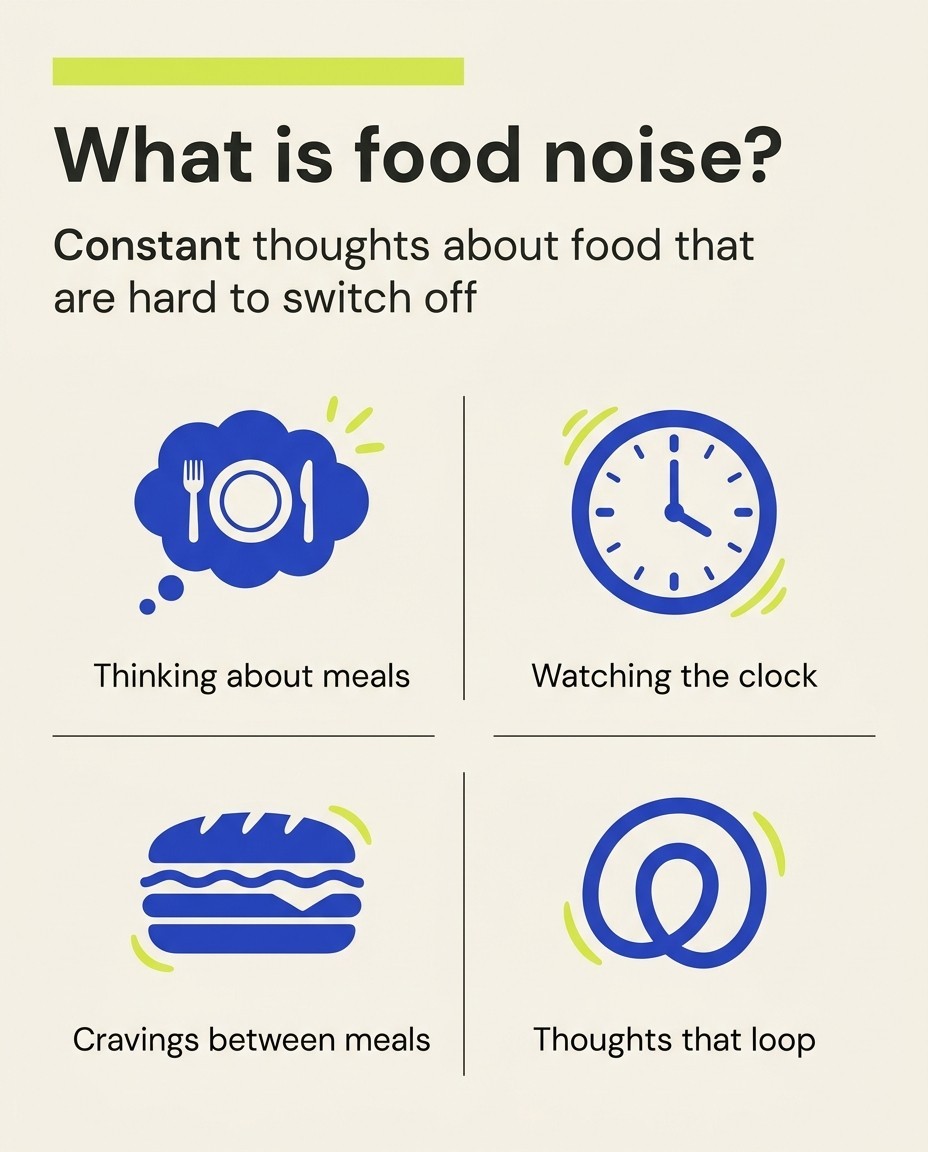
These thoughts go way beyond normal hunger or meal planning. They can create real mental distress.
Defining food noise
Food noise happens when thoughts about food feel unwanted or distressing and start causing social, mental, or physical problems. It’s not just thinking about what’s for dinner. It’s that constant mental chatter some people on weight loss medication only noticed once it finally went quiet.
Patients themselves came up with the term, especially those taking GLP-1 medications like Zepbound (tirzepatide) or Wegovy (semaglutide). They described a relief from something they hadn’t even realized was there. One person said, “All of a sudden it was like some part of my brain that was always there just went quiet.”
Food noise includes four main features: cognitive burden, persistence, dysphoria (feeling uneasy), and self-stigma. This isn’t the same as food cravings, though cravings can play a part. The thoughts might be about whether you’re eating the right foods, the right amounts, at the right times.
They can show up when you’re trying to focus on work, spending time with family, or even trying to sleep.
How food noise differs from normal hunger
Normal hunger is physical. Your stomach feels empty, your energy drops, and eating fixes it.
Food noise doesn’t care if you’re hungry. You might have just finished eating and already find yourself thinking about your next meal. Or maybe you’re planning breakfast while still eating lunch.
Physical hunger serves a purpose. It tells you when you need fuel. Food noise doesn’t help. It’s mental rumination that gets in the way of normal thinking.
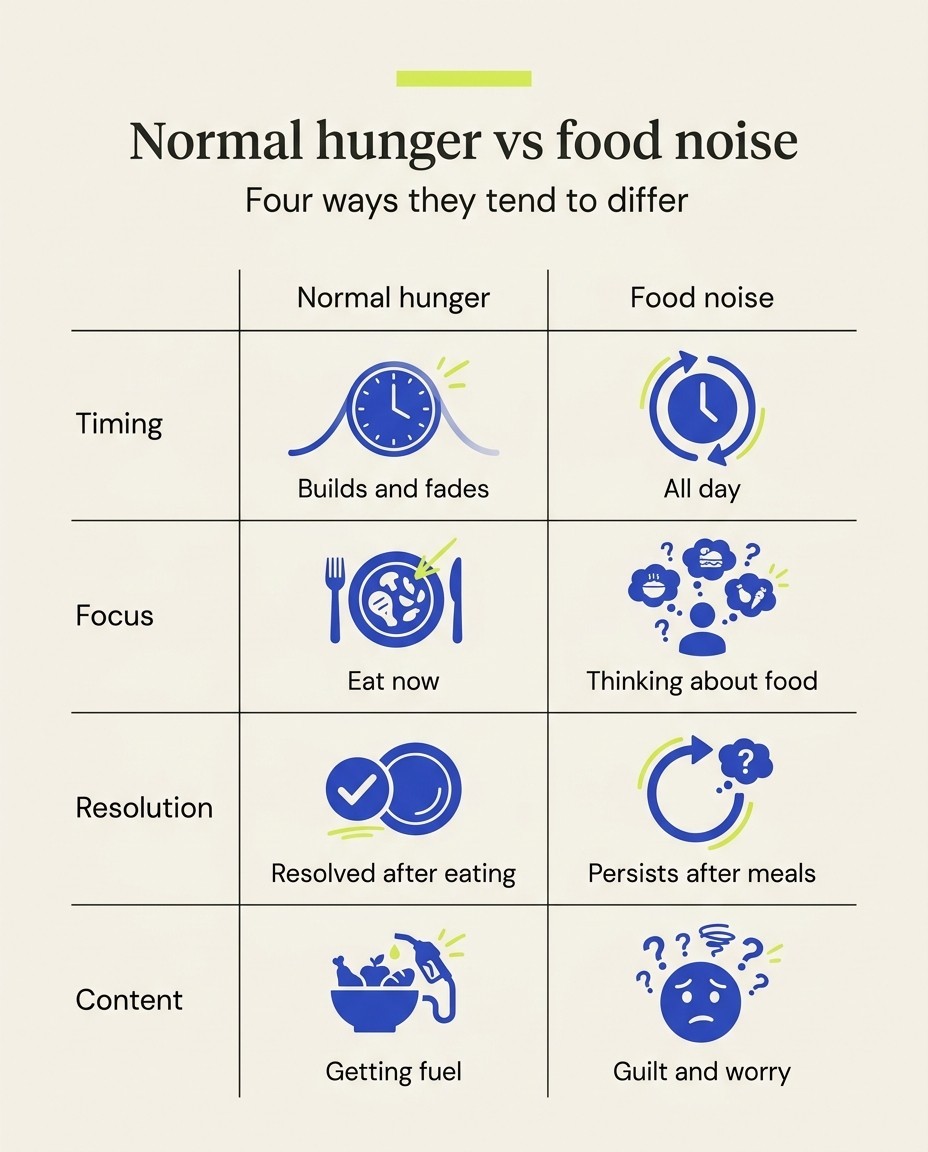
Here’s what makes food noise different:
- Timing: Hunger builds up and goes away after eating. Food noise can stick around all day.
- Focus: Hunger makes you want to eat now. Food noise makes you think about food, even when you’re not hungry at all.
- Resolution: Eating solves hunger. Food noise doesn’t go away after a meal.
- Content: Hunger is about getting food. Food noise is about worrying if you’re eating “right,” feeling guilty, or stressing about future meals.
Common signs and symptoms
You might have food noise if these patterns sound familiar.
Mental chatter that won’t stop
The thoughts just keep coming. One person described it as “this noise in my head all the time, it’s always there.” You might feel like food-related thoughts take up most of your waking hours.
Intrusive thoughts at the worst times
The chatter interrupts whatever you’re doing: meetings, driving, watching TV, talking to friends. Food thoughts just barge in.
Obsessing over eating “correctly”
You might find yourself thinking about eating, getting food, preparing it, and planning your next meal while still eating your current one. The thoughts often come with questions: Am I eating enough? Too much? Was that the right amount of calories? Should I have had more protein?
Relief when it finally quiets
Many people only notice food noise after it stops, often with medication. The sudden quiet can feel almost surreal.
Psychological and emotional aspects
Food noise isn’t just annoying. It really weighs on you emotionally.
Dysphoria and distress
These persistent thoughts create a pretty unpleasant state. It’s exhausting to have your brain stuck on food worries. A lot of people feel trapped by their own heads.
Self-stigma and shame
Food noise can bring on self-criticism. You might feel like you should be able to control your thoughts, and when you can’t, it just makes you feel worse about yourself.
Loss of control
The thoughts aren’t voluntary. You can’t just decide to stop thinking about food. This lack of control can be especially tough if you’re already working hard to manage your eating.
Impact on quality of life
Food noise can mess with your focus at work, make it hard to be present with family, or suck the joy out of activities that have nothing to do with food. Some researchers even point out it could be dangerous in situations where you need to pay full attention, like driving or detailed work.
Looking back, the psychological burden often becomes more obvious. People who get relief from food noise on medication sometimes describe years of trying (and failing) to quiet these thoughts using willpower alone.
Causes and triggers of food noise
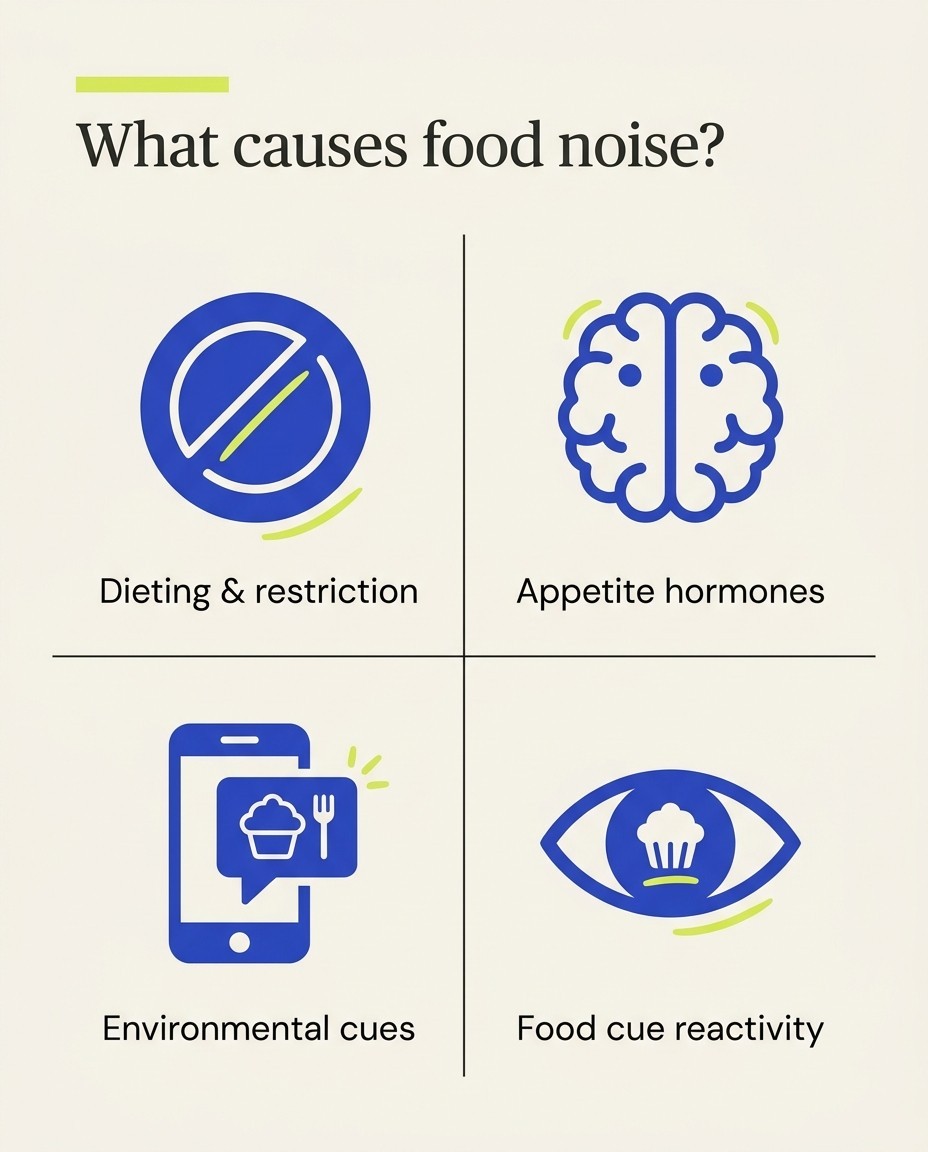
Food noise doesn’t just show up for no reason. Usually, it’s a mix of biological signals, restrictive eating, being surrounded by food cues, and how our brains react to all of that.
Dieting and restriction
When we cut calories or avoid certain foods, our bodies often push back with stronger hunger signals and more food thoughts. This isn’t about weak willpower. It’s biology.
Restricting food can boost ghrelin, the hunger hormone. At the same time, it can lower leptin, which helps us feel full. This hormonal shift makes food thoughts even harder to ignore.
Dieting can also make “forbidden” foods way more appealing. When we tell ourselves “no,” our brains sometimes can’t stop thinking about that exact thing. This cycle of restriction, obsession, and maybe overeating when we finally give in gets pretty common.
A lot of people on GLP-1 meds notice this pattern changes. The reduction in food-related thoughts often happens because the medication helps regulate appetite hormones better than willpower ever could.
Appetite hormones and brain chemistry
Our appetite runs on a complicated system of hormones talking between our gut, brain, and other organs. When this system gets out of whack, food noise gets louder.
Ghrelin goes up when our stomach is empty and drops after we eat. Some people have ghrelin levels that stay high even after meals, so hunger cues just keep coming.
GLP-1 is a hormone our bodies release after eating. It signals fullness, helps regulate glucose levels, and keeps blood sugar steady. People with obesity sometimes don’t get much of a GLP-1 response (Verdich et al., 2001), so their bodies don’t send a strong “stop eating” message. GLP-1 medications like Zepbound (tirzepatide) and Wegovy (semaglutide) mimic this hormone, helping with appetite and often quieting those persistent food thoughts. Tirzepatide is a dual GLP-1 and GIP receptor agonist, meaning it works on two appetite-regulating hormones instead of one. These medications were originally developed to manage Type 2 diabetes, where they help control blood sugar, but researchers noticed they also had a powerful effect on appetite and food-related thinking.
Other hormones like leptin and peptide YY (another gut hormone that signals fullness after eating) matter too. If those signals don’t work right, our brains might treat every food cue as urgent.
Environmental and emotional triggers
Food cues are everywhere. Social media ads, the smell of pastries, delivery app notifications: they all can spark food thoughts, even if you’re not actually hungry.
Emotions make food noise louder. Stress, boredom, sadness, or even excitement can ramp up food thoughts. Emotional eating (reaching for food to cope with feelings rather than hunger) often goes hand in hand with food noise. If you’re tired or anxious, your brain reacts more strongly to food cues, and that can turn a passing thought into an overwhelming urge.
Sleep plays a role. Not getting enough sleep messes with hunger hormones and makes you more vulnerable to food thoughts all day. Cravings often get stronger in the evening, too.
Your environment matters. A noisy, chaotic space can make you more impulsive about food. A calm place with fewer food cues usually helps quiet the mental chatter.
Food cue reactivity
Food cue reactivity is about how strongly you react when you see, smell, or think about food. Some people just react more than others.
Seeing a food cue fires up your brain’s reward system. That triggers cravings and pushes you to seek out food, even if you’re not hungry. People with higher food cue reactivity get more persistent food thoughts and might find it tougher to resist eating.
This isn’t the same for everyone. Genetics, weight, eating habits, and even your current mood all play a part. Someone with high reactivity might scroll past a food photo online and immediately start thinking about their next meal.
Research shows that people with overeating behaviors or binge eating disorder often react more strongly to food cues. The upside? Food cue reactivity isn’t permanent. Medications, therapy, and changing your environment can all help dial down how much you react to food triggers.
The impact of food noise on well-being
Food noise doesn’t just fill your head with food thoughts. It can change how you eat, mess with your mental health, and sometimes push you toward patterns that look a lot like disordered eating.
Effects on eating habits
When your mind won’t quit spinning about food, your eating habits can shift. Some people eat more than they need because eating feels like the only way to quiet the noise.
Others swing the other way. They try to control the noise with strict rules about what and when they eat. This might mean cutting out whole food groups or sticking to a rigid eating schedule.
Research on food noise shows people often obsess over eating the “right” foods or the perfect amount of calories. One patient said she spent 80% of her waking hours thinking about whether she was eating “properly.”
Normal food decisions can start to feel exhausting. Planning a meal becomes a big ordeal. Eating out with friends turns stressful instead of fun.
Mental health and emotional well-being
That constant mental chatter takes a toll on your mood and headspace. Many people describe feeling anxious, guilty, or ashamed about their relationship with food.
This sets up a rough cycle. Worrying about food makes you feel worse, and feeling worse makes the food thoughts even louder.
Food noise often comes with dysphoria, so these thoughts aren’t just frequent—they’re genuinely unpleasant. People say they feel unable to control how often or how intensely these thoughts show up.
The relief some people feel when food noise fades away says a lot. One person said it was like a buzzing in her brain finally stopped. She said she’d stay on her medication forever just for that peace, even if she didn’t lose a single pound.
Link to disordered eating patterns
Food noise sits in a tricky spot between normal food thoughts and disordered eating. It’s natural to think about food, but food noise can start to look a lot like eating disorders.
The preoccupation, the rigid rules, the emotional distress: it all mirrors what happens in binge eating disorder or restrictive eating. Some people bounce between restricting food and binge episodes.
Food guilt becomes a big deal. You eat something “off plan” and then spiral into hours of self-criticism or mental math about how to “make up for it.”
Body image worries often get tangled up with food noise, especially if you’re trying to lose weight. The thoughts aren’t just about food—they’re about what eating certain things might mean for your weight or how you look.
While food noise pops up in conversations about obesity and weight loss, people with diagnosed eating disorders experience similar things. The line between intense food preoccupation and disordered eating isn’t always clear.
If you recognize these patterns in yourself, it’s worth speaking to your doctor. They can refer you to specialist support, and organizations like Beat offer confidential helplines and online support. The NHS eating disorders page also has helpful information and further resources.

Speak to your doctor if:
- Food thoughts are taking up most of your waking hours
- You’re regularly skipping meals or binge eating
- You feel unable to eat without anxiety or guilt
- Food noise is affecting your work, relationships, or sleep
Your doctor can refer you to an eating disorder specialist or discuss whether medication might help.
How to reduce and manage food noise
Dealing with constant thoughts about food takes some practical strategies. What you eat is only part of weight management. The mental side matters just as much. You’ll need to mix daily habits, emotional regulation, and sometimes medical support. It’s really about finding what works for you and not expecting perfection, just something you can actually stick with over time.
Lifestyle and behavioral strategies
We all know that constant and transient factors shape how strongly we react to food cues. Even small tweaks to your daily routine can genuinely quiet that food noise.
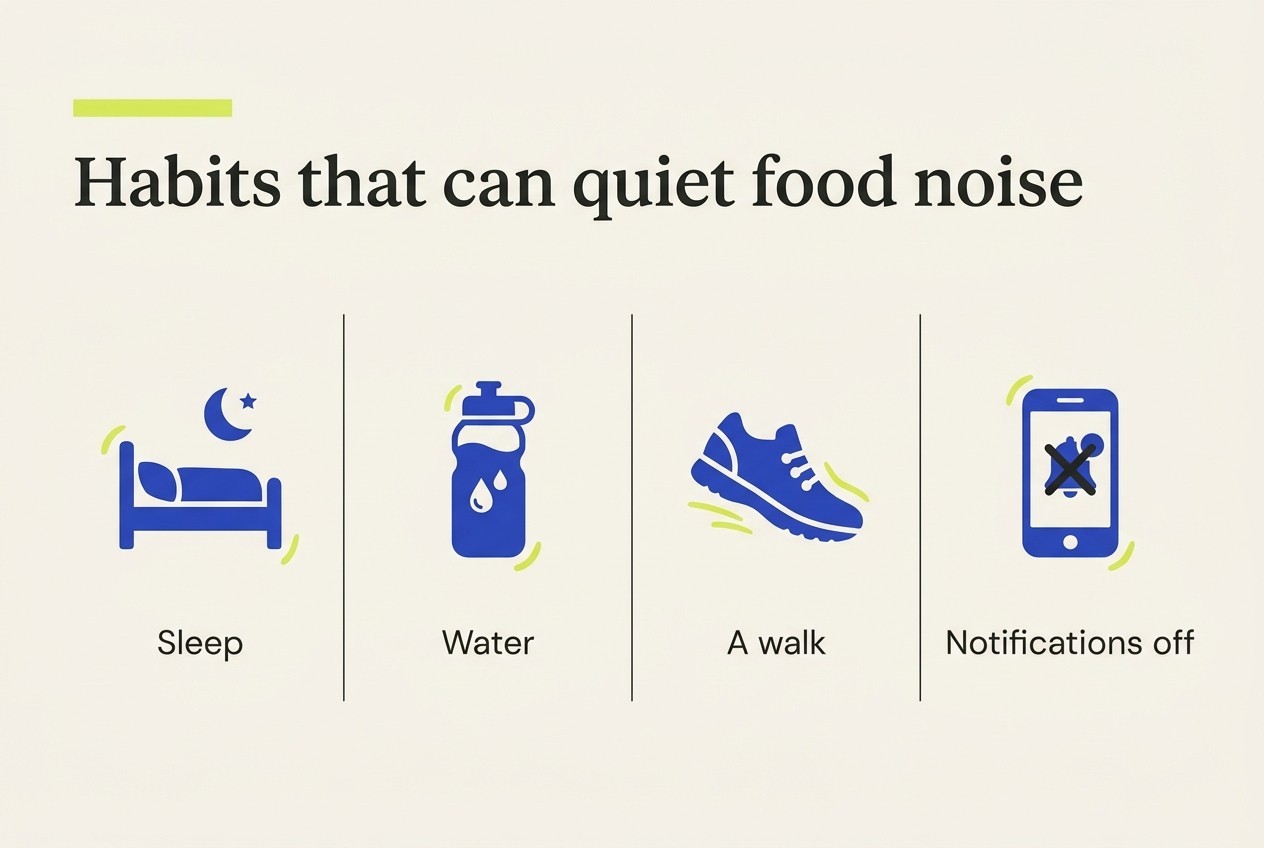
Sleep makes a real difference. If you’re not sleeping enough, your brain just can’t fight cravings as well. Try aiming for seven to nine hours each night. Being tired makes it so much harder to resist those tempting snacks.
Staying hydrated helps too. Aim for at least 68 ounces (about 2 liters) of water daily — the NHS Eatwell Guide recommends 6–8 glasses of fluid daily as a baseline. Dehydration can sometimes feel like hunger, which adds to the mental chatter.
Stress management matters too. When stress hits, food thoughts get louder. You could try deep breathing for five minutes, especially when you’re feeling overwhelmed. Regular walks, jotting your thoughts in a journal, or talking things out with a therapist can also help.
Managing your environment helps. We can’t dodge every food cue, but we can limit how often we see them. For example:

Physical activity changes food cue reactivity. Moving your body does more than just burn calories. It actually shifts how your brain reacts to food cues, and that can turn down the mental chatter about food.
Role of mindful eating and self-compassion
Cognitive strategies really help when food thoughts pop up. Studies show that using tools like cognitive reappraisal can help manage how your brain responds to food cues.
What is cognitive reappraisal? It’s basically learning to reframe your thoughts about food. Instead of thinking, “I can’t stop wanting chips, I’m failing,” try telling yourself, “I’m noticing I want chips right now, and that’s just a thought passing through.”
Mindful eating slows things down. When you eat while scrolling or watching TV, it’s way easier to overeat and not even notice. Try eating without distractions, even just now and then. Notice the textures, the flavors, and check in to see if you’re actually full.
Self-compassion is underrated. When we get harsh with ourselves about food, those thoughts usually get louder. So when food noise starts up, try to acknowledge it without beating yourself up. These thoughts aren’t moral failings—they’re just patterns your brain learned from life, biology, and your environment.
Simple self-compassion practice: If food noise is getting overwhelming, pause for a second. Ask yourself what you’d say to a friend in your shoes. Most of us would be a lot kinder to a friend than we are to ourselves.
Weight loss medications and GLP-1 treatments
GLP-1 receptor agonists like semaglutide (Wegovy, Ozempic) and tirzepatide (Zepbound, Mounjaro) have made a big difference for many people in reducing what’s called food noise. People often say those constant food thoughts just fade into the background within a few weeks of starting.
How do they work? These meds activate GLP-1 receptors throughout your body, including spots in your brain that deal with appetite and reward. They affect the hypothalamus (the part of your brain that controls hunger and appetite) and other areas that shape eating habits and cravings.
What people actually experience: Folks describe thinking about food less, not feeling so pulled toward delivery apps, and not planning the next meal while still eating the current one. Hunger doesn’t disappear, but the obsessive edge of food thoughts really softens.
The realistic picture: GLP-1 medications aren’t some magic fix. They work best when you pair them with behavioral changes. Some people notice food noise drops a lot in the first month. For others, it’s a slower shift. Side effects like nausea can be tough, especially when you’re upping the dose. Speak to your doctor or prescriber before starting or changing any weight loss medication. They’ll check whether it’s suitable for you and monitor your progress.
What about stopping treatment? This is the key question. Right now, research suggests food noise often comes back if you stop treatment. That’s not a personal failure—it just shows how much biology and brain wiring are involved in appetite and cravings.
Building sustainable eating routines
Honestly, the best way forward? Mix any treatment with habits you can actually stick with, long after the treatment ends.
A bit of structure really cuts down on all that decision fatigue about food. It’s underrated.
Regular meal timing matters. If you eat at about the same times each day, you’ll probably find you’re less likely to fall into those random, snacky moments. This doesn’t have to mean a strict schedule, but a loose rhythm makes a difference.
Protein at each meal reduces food noise. Getting enough protein (say, about 0.45 to 0.55g per pound of body weight daily) keeps you full for longer and dials down those pesky between-meal cravings. Adequate protein also supports body composition during weight loss, helping preserve muscle while you lose fat. Throw some Greek yogurt in at breakfast, maybe chicken at lunch, and fish or tofu at dinner. Nothing fancy, but it works. If you’re unsure how much protein you need, a registered dietitian can help tailor your intake to your goals and your medication.
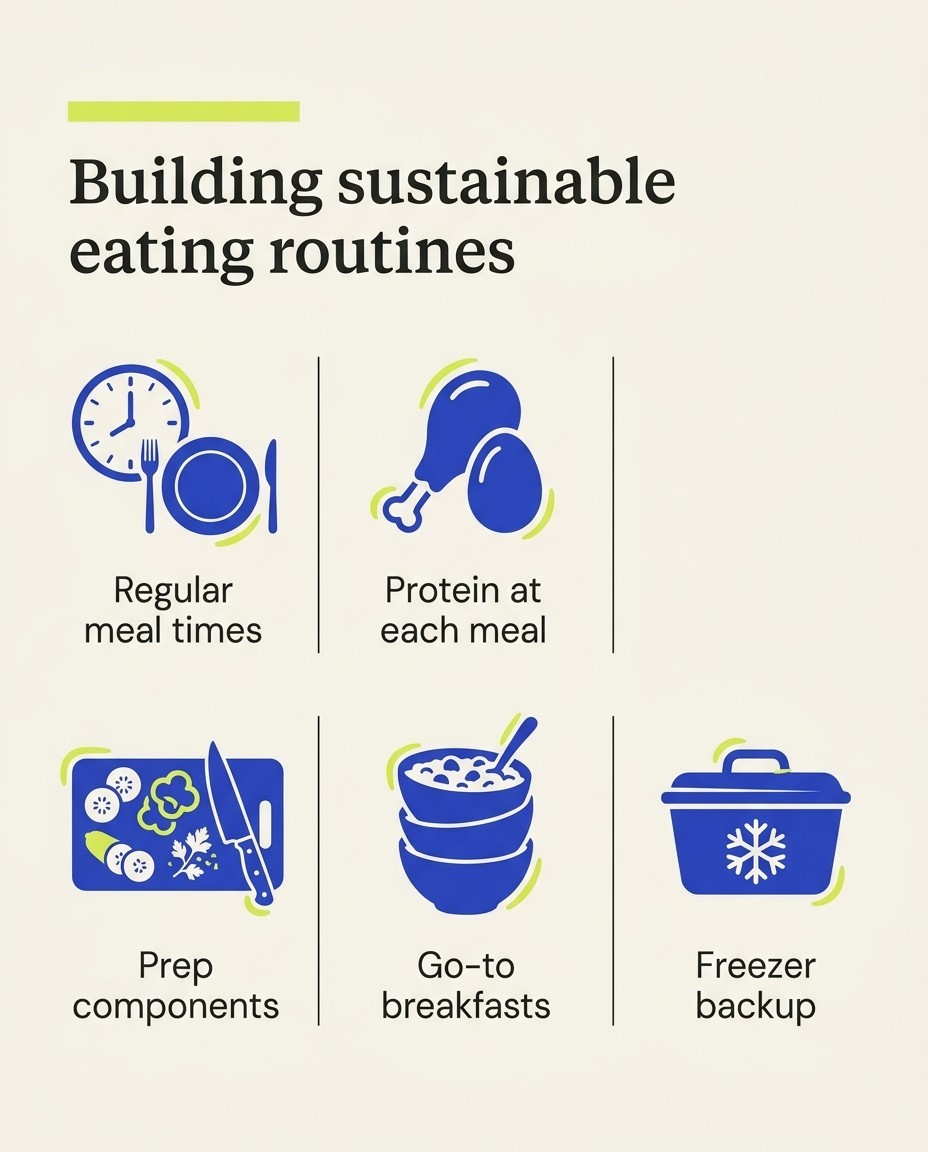
Practical meal patterns that help:
What about flexibility? Routines that last don’t box you in. They give you a framework that takes care of the boring choices, but you still get to be spontaneous. Just because you have a weekday routine doesn’t mean you can’t enjoy a long, lazy brunch on Sunday.
The truth is, routines only work if you’re honest about what your life actually looks like. Forget about that perfect meal plan you’ll never follow. A simple pattern you can stick to most days? That’s what really makes food choices feel lighter.
Frequently asked questions
Frequently asked questions
Is food noise a real medical condition?
Food noise isn’t a formal medical diagnosis, but it describes a real and well-documented experience. Research published in 2025 identified four key features — cognitive burden, persistence, dysphoria, and self-stigma — that distinguish it from normal food thoughts. Clinicians and researchers increasingly recognize food noise as a meaningful aspect of living with obesity.
How quickly do GLP-1 medications reduce food noise?
Many people notice a reduction in food thoughts within the first few weeks of starting a GLP-1 medication like Zepbound or Wegovy. The timing varies — some people feel a difference almost immediately, while for others it’s a more gradual shift over the first month or two. Your experience may also change as your dose increases.
Will food noise come back if I stop taking medication?
Current research suggests that food noise often returns when GLP-1 medication is stopped. This isn’t a personal failure — it reflects the biological nature of appetite regulation. If you’re considering stopping treatment, speak to your prescriber about a plan to manage the transition, including behavioral strategies that can help.
Is food noise the same as an eating disorder?
Not exactly, but there’s overlap. Food noise — persistent, distressing thoughts about food — is something many people experience without meeting the criteria for an eating disorder. However, if food thoughts are severely affecting your daily life, causing you to restrict food or binge eat, or creating significant emotional distress, it’s worth speaking to your doctor. They can assess whether specialist support would help.
Can you reduce food noise without medication?
Yes. Strategies like regular meal timing, adequate protein intake (aim for about 0.45–0.55g per pound of body weight daily), good sleep, stress management, and reducing exposure to food cues can all help. Cognitive techniques like mindful eating and reframing food thoughts also make a difference. For some people, these approaches are enough. For others, medication provides the additional support needed.
Does everyone experience food noise?
No. Food noise exists on a spectrum. Some people rarely think about food outside of mealtimes, while others experience near-constant food-related thoughts. People living with obesity, those with a history of dieting, and those with higher food cue reactivity tend to experience more intense food noise.
Should I speak to my doctor about food noise?
If food thoughts are causing you distress, affecting your concentration, or pushing you toward unhealthy eating patterns, it’s worth mentioning to your doctor. They can discuss whether a GLP-1 medication might be appropriate, refer you to a registered dietitian for nutritional support, or connect you with mental health services if needed.
Can food noise cause weight gain?
Food noise itself doesn’t directly cause weight gain, but it can lead to eating patterns that do. When your mind is constantly fixated on food, it’s harder to make thoughtful choices. Some people eat more to try to quiet the thoughts, while others swing between restriction and overeating. Addressing food noise — whether through medication, behavioral strategies, or both — can help break these cycles.
The bottom line
Food noise is real, it’s biological, and you’re not imagining it. Those constant, intrusive thoughts about food aren’t a sign of weak willpower — they’re driven by hormones, brain chemistry, and years of learned patterns.
If you’re taking a GLP-1 medication like Zepbound or Wegovy and the food noise has gone quiet, that relief is one of the most meaningful changes many people experience. If you’re not on medication, strategies like regular meals, enough protein, good sleep, and managing your environment can all help turn down the volume.
Whatever your situation, speak to your doctor or prescriber if food thoughts are causing you real distress or affecting your daily life. You don’t have to just live with it.
This article is for information only and doesn’t replace medical advice. If you’re concerned about food noise, disordered eating, or your relationship with food, speak to your doctor or prescriber before making changes to your treatment.