

You’ve probably seen it in your own life. The weeks when everything feels overwhelming often end up being the same weeks when the number on the scale sneaks up. Stress really can lead to weight gain, and there’s plenty of research to back that up. Higher stress levels are linked to more weight gain, especially around the belly.

Yes: stress triggers hormonal changes that increase appetite, shift cravings toward high-calorie foods, and encourage fat storage around your middle. Your biology is working against you when cortisol (your body’s main stress hormone) stays elevated.
Comfort eating is part of it, though there’s more going on. When you’re under stress, your body pumps out cortisol, a hormone that cranks up your appetite and tells your body to store more fat. Stress also messes with your sleep, shifts your cravings, and zaps your motivation to move.
Researchers have found that stress changes sleep, eating habits, and weight in ways that make it harder to keep weight off.
If you’re already using medication like tirzepatide (Zepbound) or semaglutide (Wegovy), prescription weight loss treatments that work by mimicking appetite-regulating hormones, understanding how stress affects your body can help you spot patterns and make changes that actually work.
Key takeaways

How stress leads to weight gain
Stress changes how your body works. The cortisol your body releases when you’re stressed affects where you store fat and what you want to eat.
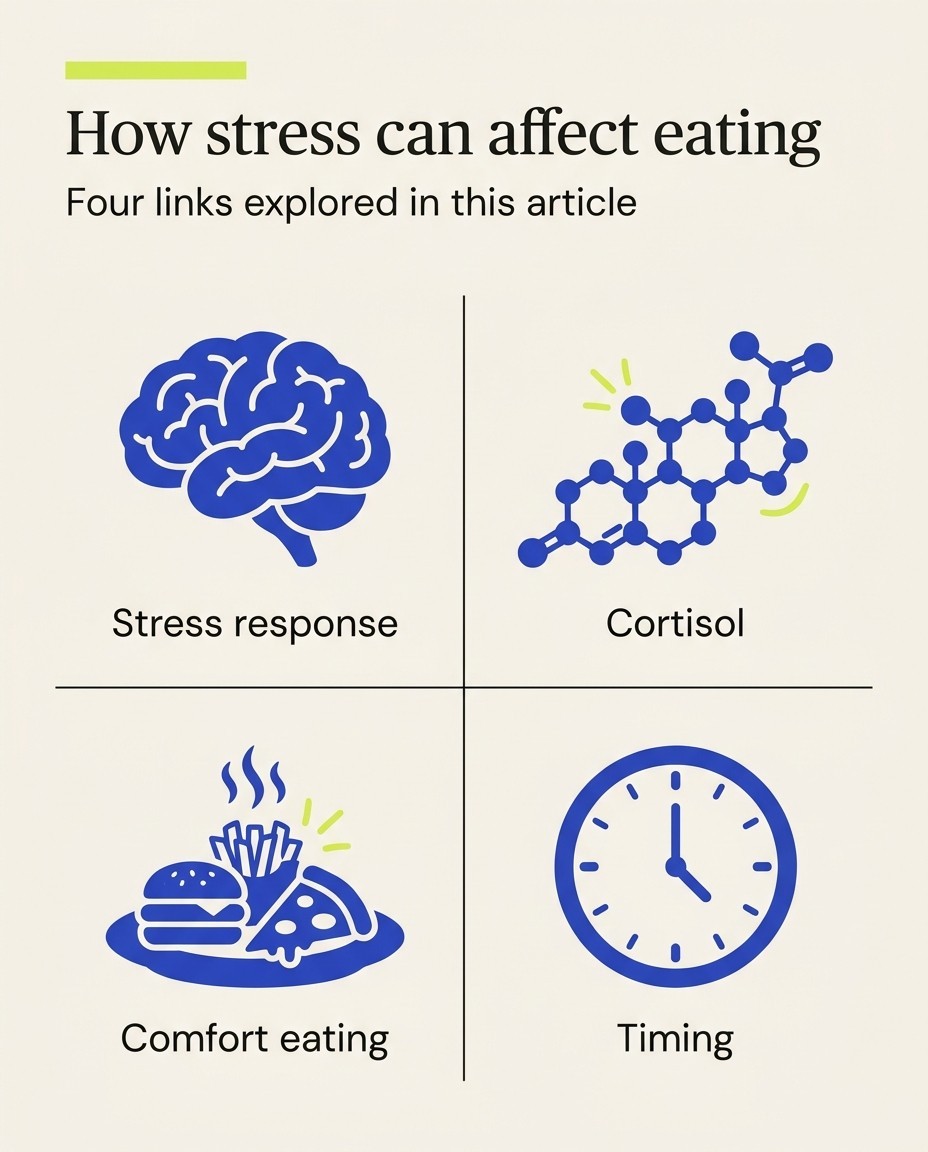
The role of cortisol and the stress response
Your body releases cortisol as part of the fight-or-flight reaction. It’s supposed to give you a burst of energy in a crisis. But here’s the catch: your body treats work emails the same as running from a wild animal.
When cortisol stays high for a long time, it starts to mess with how your body uses sugar and insulin. Your cells stop responding to insulin as well (a process called insulin resistance), so more sugar hangs around in your blood and eventually gets stored as fat.
Cortisol also decides where fat goes. Chronic stress tends to pile fat onto the abdomen, especially the visceral fat (the deeper fat that wraps around your organs rather than sitting just under the skin). This goes beyond your waistline. Visceral fat is linked to a higher risk of type 2 diabetes, heart disease, and metabolic syndrome.
Your stress response also tells your adrenal glands to keep making cortisol. It turns into a loop that’s hard to break if you don’t tackle the stress itself.
Cravings and emotional eating
Ever notice you never crave salad when you’re stressed? That’s cortisol at work. It boosts your appetite, especially for foods loaded with sugar, fat, and salt. These foods light up your brain’s reward system, making you feel better, at least for a little while.
Stress changes eating habits in ways that go well beyond hunger. You might find yourself eating when you’re not even hungry, eating faster, ignoring portions, or skipping meals and then bingeing later.
If you’re on weight loss medication like Zepbound or Wegovy, things get complicated. These medications curb your physical hunger, but stress can still spark emotional eating. You might catch yourself wanting food even when you’re full, or feeling guilty about eating at all.
Using food to cope with stress, what researchers call stress-induced eating, doesn’t vanish just because your appetite drops. Old habits stick around, which is why addressing the emotional side of eating matters just as much as the physical side.
Changes in metabolism and fat storage
Chronic stress can slow your metabolism, meaning you burn fewer calories even at rest. Studies show that stress can cause weight gain even if you don’t eat more.
Cortisol changes how your body uses protein, carbohydrates, and fat. It can break down muscle for energy while still storing more fat. That’s extra frustrating if you’re trying to lose weight. Muscle burns more calories than fat, so losing muscle makes it even harder to shift weight.
Poor sleep often comes with stress and just makes things worse. Not getting enough sleep boosts cortisol and ghrelin (the hormone that makes you feel hungry), while lowering leptin (the hormone that tells you you’re full). The result is that you feel hungrier, crave higher-calorie food, and your body is worse at processing what you eat.
This combination of high cortisol, lousy sleep, and a sluggish metabolism sets you up for weight gain, even if you’re eating less or working out.
The impact of chronic stress on health and weight
When stress sticks around, it rewires how your body deals with food, stores fat, and responds to any weight loss treatment you’re using.
Chronic stress and obesity
The link between chronic stress and obesity is complicated. Some people lose weight when stressed, but a lot of people gain.
It often depends on how your body reacts. If stress drives you to comfort foods and your metabolism slows, weight goes up. But if stress kills your appetite or revs up calorie burn, you might drop weight instead.
This pattern shows up differently depending on your starting weight. Workplace studies found people with higher BMIs (body mass index, a measure of weight relative to height) gained weight during stressful times, while those with lower BMIs sometimes lost.
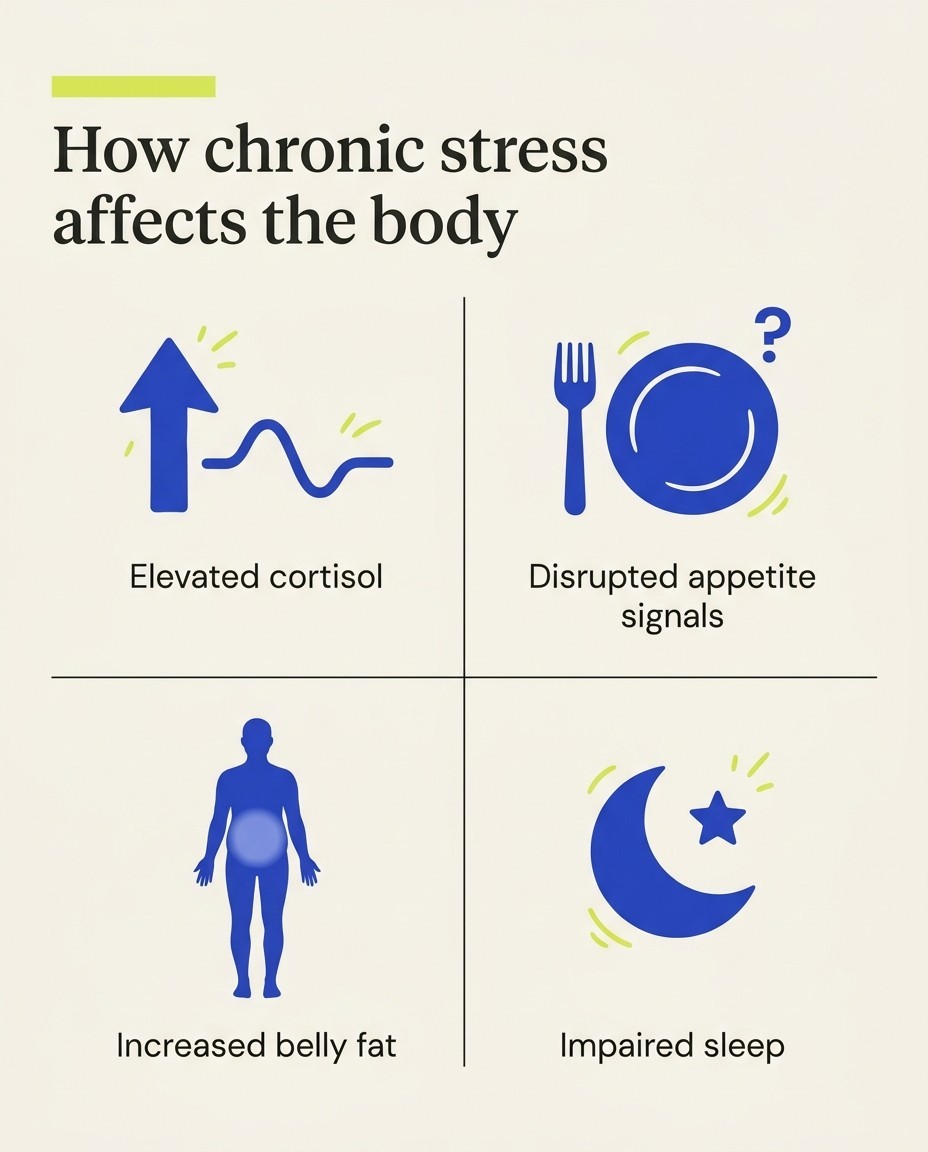
Here’s what’s happening:
- Cortisol stays high for weeks or months
- Appetite signals get scrambled
- Fat piles up around your belly
- Hunger and fullness cues get fuzzy
If you’re on Zepbound or Wegovy, chronic stress can work against the medication’s effects on appetite and metabolism.
Stress, depression, and anxiety
Stress rarely travels solo. It often brings depression and anxiety along. Together, they twist up your eating habits in all sorts of ways.
Stress and depression feed off each other. Stress drags down your mood, which makes stress feel even heavier. Each one messes with your appetite differently.
Depression might make food seem pointless, or it might turn eating into your only comfort. Anxiety often ruins your sleep, which throws off hunger hormones the next day. If you’re using GLP-1 medications (treatments like Wegovy and Zepbound that mimic a natural hormone called glucagon-like peptide-1 to reduce appetite), your hunger signals are already being adjusted by the medication, and adding stress and low mood into the mix makes things more unpredictable.
Patterns we often see:
- More emotional eating, less sense of control
- No interest in cooking or meal prep
- Odd eating times because routines fall apart
- Struggling to tell if you’re hungry, bored, or anxious
If you’re juggling weight loss and mental health, you’re definitely not alone. Speak to your doctor or prescriber if your mood is affecting your ability to eat well or stick with your treatment plan, as they can help.

Contact your doctor or prescriber if you notice:
- Persistent low mood or loss of interest in things you used to enjoy
- Anxiety that’s interfering with daily life, sleep, or eating
- Feeling unable to cope with stress despite trying self-help strategies
- Thoughts of self-harm: get help right away
Inflammation and long-term health risks
Chronic stress does more than affect your weight. It triggers inflammation throughout your body, raising your risk for a range of other health issues.
When stress hormones stay high, your immune system gets stuck on alert. This causes ongoing low-grade inflammation that damages blood vessels, worsens insulin resistance, and bumps up your risk for heart disease.
Stress, obesity, and inflammation feed off each other. More weight means more inflammation, inflammation makes losing weight harder, and stress makes both worse.
Long-term risks include:
- Higher chance of type 2 diabetes
- Raised blood pressure and heart disease risk
- Greater risk for metabolic syndrome (a cluster of conditions including high blood sugar, excess belly fat, and abnormal cholesterol levels)
- Faster cellular aging
GLP-1 medications help with blood sugar control and may reduce some inflammation, but they can’t undo all the effects of unmanaged stress. Managing stress protects your long-term health while you’re on treatment. Weight is just one part of that picture.
Stress-related habits that influence weight
When stress becomes your new normal, it changes how you eat, move, and sleep. These daily habits often matter more for your weight than hormones alone.
Unhealthy eating patterns
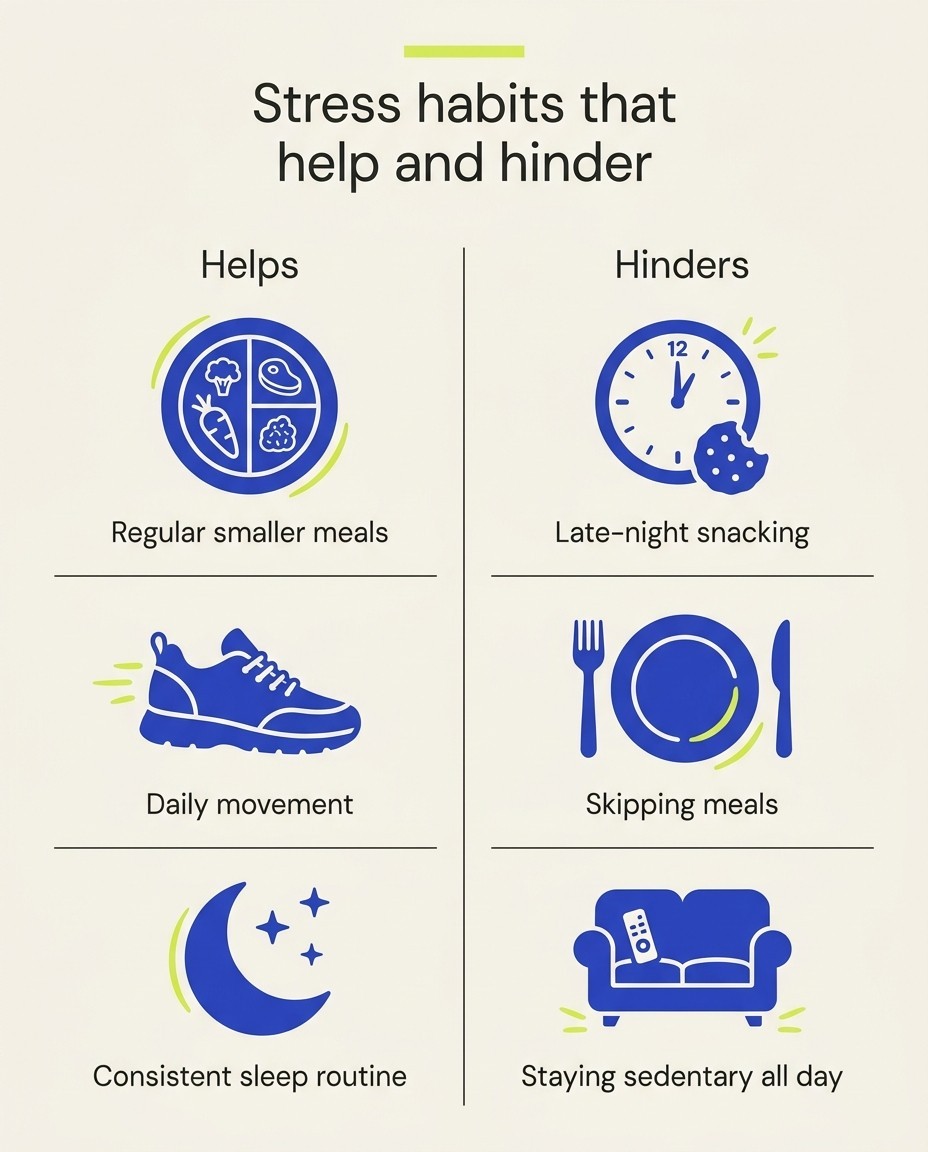
Stress changes what and when we eat. Lots of us reach for high-calorie comfort food when we’re frazzled. That’s not a flaw. It’s how our brains are wired.
Emotional eating usually means chips, chocolate, cookies, or takeout, not vegetables. These foods light up our brain’s reward pathways and offer quick relief, but they’re packed with extra calories that add up over time.
Skipping meals is common when you’re stressed. You might think skipping lunch saves time or calories, but it often backfires. By the time you eat, you’re starving and more likely to overdo it or grab whatever’s easiest.
Breaking stress eating patterns:

Mindful eating can help break this cycle. It’s about paying attention: eating without distractions, noticing when you’re full, and choosing foods on purpose. You don’t need to restrict. Just be more aware of why you’re eating and how the food makes you feel.
Physical activity and sedentary lifestyles
Stress saps your energy for exercise. After a rough day, the couch wins over the gym, no contest.
We convince ourselves we’re too tired to move, but regular physical activity actually cuts stress and boosts energy over time. Still, when you’re already wiped out, starting feels impossible.
Work stress keeps most of us glued to our chairs. Add in commuting, and you can go all day barely moving. That slows your metabolism and means you burn fewer calories overall.
Even a short walk can break the stress cycle. You don’t need a hardcore workout. Fifteen minutes at lunch or after dinner counts. Moving helps clear your head, improves your sleep, and supports muscle maintenance, which is particularly important if you’re losing weight on medication.
Easy ways to move more when stressed:
You don’t need to be perfect. Just look for small ways to move that actually fit your life.
The role of sleep and daily routines
Poor sleep and stress feed on each other. When you’re stressed, sleep gets harder. When you’re tired, everything feels more stressful.
Adequate sleep supports weight management more than most people realize. Not enough sleep messes with hunger hormones, making you crave high-calorie food and making your body worse at processing sugar. The NHS recommends most adults aim for seven to nine hours a night.
Stress also throws off your routines. Meal times slip, bedtimes get later, and healthy habits fall apart.
Sleep habits that help manage stress and weight:
Even small routines help bring order to chaos. A regular breakfast or evening walk tells your body what to expect, making it easier to eat well and feel less stressed.
Strategies to manage stress and prevent weight gain
Managing stress can help you break the cycle between cortisol and weight gain. Simple things like mindful eating, breathing exercises, or talking to a therapist really can make a difference for your mental health and your weight.
Mindfulness and mindful eating
Mindfulness helps you spot stress before it leads to overeating. If you’re on GLP-1 medication like Wegovy or Zepbound, your hunger cues are already shifted, so tuning into what your body is telling you matters even more.
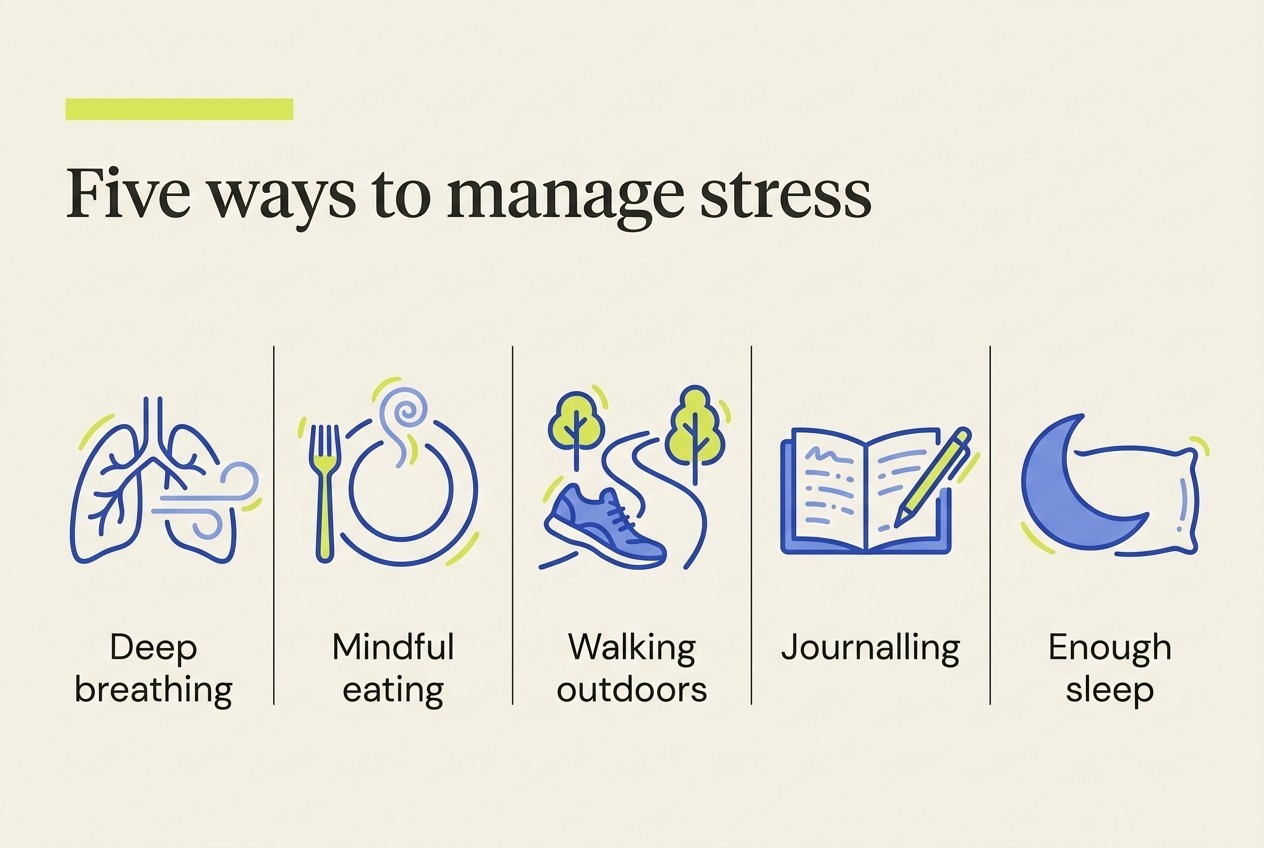
Deep breathing is one of the simplest ways to lower cortisol. Try inhaling for four counts, holding for four, and exhaling for six. Just two minutes can make a noticeable difference to how you feel.
Mindful eating means sitting down without your phone and actually tasting your food. Most of us eat while distracted. When you slow down, you notice fullness sooner and you’re less likely to grab sugary snacks when stress hits.
Start with one mindful meal a day. Notice the texture, the taste, and how full you feel. This becomes especially important when your medication curbs your appetite, as you need to make sure you’re getting enough protein and nutrients from what you do eat. During active weight loss, aim for 0.45–0.55 g of protein per pound of body weight daily to help preserve muscle.
Stress management techniques
Reducing stress with regular activities can protect against weight gain more effectively than just changing your diet. You don’t need a fancy gym membership.
Daily stress management options:
Breathing exercises work because they directly calm your nervous system. Stress usually makes you breathe fast and shallow, which keeps your body in fight-or-flight mode. Slow, deep breathing signals your body to relax, and that’s surprisingly effective at bringing cortisol down.
Sleep matters more than most of us admit. Poor sleep bumps up your cortisol, which leads to cravings and makes losing weight a real struggle. Aim for seven to nine hours and keep your bedroom cool and dark if you can. Staying well hydrated helps too. Aim for at least 68 ounces (about 8½ cups) of water daily, as dehydration can worsen both stress and fatigue.
Professional help and medical treatments
Sometimes stress needs more than self-help strategies. A mental health professional can teach you cognitive behavioral therapy (CBT) techniques, a structured approach that helps you identify and change the thought patterns driving stress eating.
CBT helps you spot those automatic thoughts that push you toward food when you’re anxious or overwhelmed. A therapist will work with you to build practical coping strategies that don’t revolve around food.
Many people find CBT particularly useful alongside weight loss medication. The medication addresses the physical side of appetite, while CBT tackles the psychological triggers. Together, they cover more ground than either approach alone.
Your GP can refer you to NHS talking therapies, though waiting times vary by area. You can also self-refer in many areas. Private therapy typically costs between £50 and £100 per session but usually has shorter waiting times.
Already taking Wegovy, Zepbound, or a similar medication? Talk to your prescriber if you think stress is undermining your progress. They may be able to adjust your treatment plan or recommend additional support. Weight loss medication tends to work better when combined with stress management. The medication curbs your appetite, but you still need to deal with those emotional triggers that drive you to eat.
The bottom line
Stress and weight gain are closely connected, and it has little to do with willpower. Cortisol changes your appetite, shifts where your body stores fat, disrupts your sleep, and makes it harder to stick with healthy habits. If you’re on weight loss medication, unmanaged stress can undermine how well it works.
You don’t need to overhaul your life overnight. Start with one small change, a daily walk, a mindful meal, a proper bedtime routine, and build from there. If stress is significantly affecting your eating, sleep, or mood, speak to your doctor about a referral for talk therapy or additional support.
Managing stress isn’t optional alongside weight loss treatment. It’s a core part of making the treatment work and protecting your long-term health.
Frequently asked questions
Can stress alone make you gain weight without eating more?
Yes. Chronic stress raises cortisol, which can slow your metabolism and shift how your body stores fat, particularly around your abdomen. Research shows that stress can contribute to weight gain even without increased calorie intake, partly through changes in fat storage and muscle breakdown.
How does cortisol affect weight?
Cortisol is your body’s main stress hormone. When it stays elevated for weeks or months, it increases appetite (especially for high-calorie foods), promotes fat storage around your middle (visceral fat), and can break down muscle tissue. It also worsens insulin resistance, making your body less efficient at processing sugar.
Does stress cause belly fat specifically?
It does tend to. Cortisol preferentially directs fat storage to the abdomen, particularly the visceral fat that wraps around your organs. This type of fat is more metabolically active and is linked to higher risks of type 2 diabetes, heart disease, and metabolic syndrome.
Can stress affect how well Zepbound or Wegovy works?
Chronic stress can work against your medication. While GLP-1 treatments reduce physical hunger, stress-driven emotional eating operates through different pathways in your brain. High cortisol also disrupts sleep and metabolism, which can slow your progress. Managing stress alongside your medication helps both work more effectively.
What is stress eating and how do I stop it?
Stress eating is reaching for food in response to emotional distress rather than physical hunger. It’s a normal response, not a character flaw. To manage it, try pausing before eating to check whether you’re genuinely hungry. Mindful eating, regular meals, and having a non-food stress response ready (like a short walk or breathing exercise) can help break the pattern over time.
How much does sleep affect stress-related weight gain?
Significantly. Poor sleep raises cortisol and ghrelin (the hunger hormone) while lowering leptin (the fullness hormone). This combination makes you hungrier, more drawn to high-calorie foods, and worse at processing sugar. The NHS recommends seven to nine hours for most adults.
Should I see my doctor about stress and weight gain?
If stress is significantly affecting your eating habits, sleep, mood, or ability to manage your weight, yes, speak to your doctor. They can refer you for talk therapy like CBT, check for underlying conditions, and review whether your current treatment plan needs adjusting. You can also self-refer to NHS talking therapies in many areas.
What is the best exercise for stress and weight management?
The best exercise is whatever you’ll actually do consistently. Research suggests that even moderate activity like a 20-minute daily walk reduces cortisol and improves mood. You don’t need intense workouts. Regular movement matters more than intensity. If you’re on weight loss medication, incorporating some resistance exercise (bodyweight exercises, resistance bands, or weights) also helps preserve muscle as you lose weight.
This article is for information only and doesn’t replace medical advice. If stress is affecting your health, eating habits, or weight management, speak to your doctor or prescriber before making changes to your treatment.
Sources:
- Block, J.P. et al. (2009) “Psychosocial stress and change in weight among US adults”, Obesity
- Geiker, N.R.W. et al. (2018) “Does stress influence sleep patterns, food intake, weight gain, abdominal obesity and weight loss interventions and vice versa?”, Obesity Reviews
- Wardle, J. et al. (2000) “Stress and adiposity: a meta-analysis of longitudinal studies”, International Journal of Obesity
- Dallman, M.F. et al. (2003) “Chronic stress and body composition”, American Journal of Physiology
- Björntorp, P. (2001) “Do stress reactions cause abdominal obesity?”, Obesity Reviews
- van der Valk, E.S. et al. (2018) “Stress and obesity: are there more susceptible individuals?”, Trends in Endocrinology & Metabolism
- Hewagalamulage, S.D. et al. (2016) “Stress, cortisol, and obesity”, Hormones
- Oliver, G. & Wardle, J. (1999) “Perceived effects of stress on food choice”, Physiology & Behavior
- NHS — Sleep and tiredness
- NHS — Talking therapies