

Constipation is one of the most common digestive side effects of Mounjaro (tirzepatide). If you’re struggling to go, feeling blocked up, or noticing harder stools than usual, you’re experiencing what many others go through during treatment with this GLP-1 medication.
Mounjaro slows your entire digestive system, including how quickly waste moves through your bowels. This can lead to constipation, especially when combined with eating less and potentially drinking less fluid. The good news is that constipation is usually manageable with lifestyle adjustments and, if needed, over-the-counter remedies.
Why does Mounjaro cause constipation?
Mounjaro works as a dual GLP-1 (glucagon-like peptide-1) and GIP (glucose-dependent insulinotropic polypeptide) receptor agonist, approved by NICE for weight management, meaning it mimics two hormones that regulate appetite and blood sugar.
One of its key effects is slowing gastric emptying (how quickly food leaves your stomach), and this effect extends throughout your digestive system (Jalleh et al., 2025).
Key takeaways


Several factors contribute to constipation on Mounjaro:
Slower gut motility
Your entire digestive tract slows down on Mounjaro, not just your stomach. When waste material moves more slowly through your intestines, more water gets absorbed from it, making stools harder and more difficult to pass.
This is the primary mechanism behind Mounjaro-related constipation and affects most people to some degree (Mounjaro SmPC).
Eating less
When you eat less food, there’s less bulk moving through your digestive system. Less bulk means less stimulation for your bowels to contract and move things along.
Some people on Mounjaro eat significantly less than before, which naturally results in less frequent bowel movements. However, there’s a difference between less frequent stools (normal) and difficulty passing stools (constipation).
Drinking less fluid
If you’re eating less, you’re also getting less fluid from food. Many people also drink less when their appetite is suppressed, not realising that fluid needs remain high.
Adequate hydration is essential for soft, passable stools. When you’re dehydrated, your body extracts more water from your intestines, making stools harder.
Dietary changes
Some people change what they eat on Mounjaro, sometimes reducing fibre intake without realising it. If you’re eating less overall and choosing low-fibre foods (white bread, processed snacks, refined carbohydrates), constipation is more likely.
Less physical activity
If fatigue or reduced energy has you moving less than usual, this can worsen constipation. Physical activity helps stimulate bowel movements.
What does Mounjaro constipation feel like?
Constipation can show up in several ways:
- Bowel movements less than three times per week
- Stools that are hard, dry, or lumpy
- Difficulty or straining when trying to go
- Feeling like you haven’t fully emptied your bowels
- Abdominal discomfort or Abdominal bloating symptoms
- Feeling “blocked up” or heavy in your lower abdomen
- Abdominal pain that improves after a bowel movement
Some people alternate between constipation and diarrhoea as their digestive system adjusts to Mounjaro. This can be frustrating but usually settles over time.
How to prevent and treat constipation on Mounjaro
Several strategies can help keep things moving, from lifestyle changes to over-the-counter remedies.
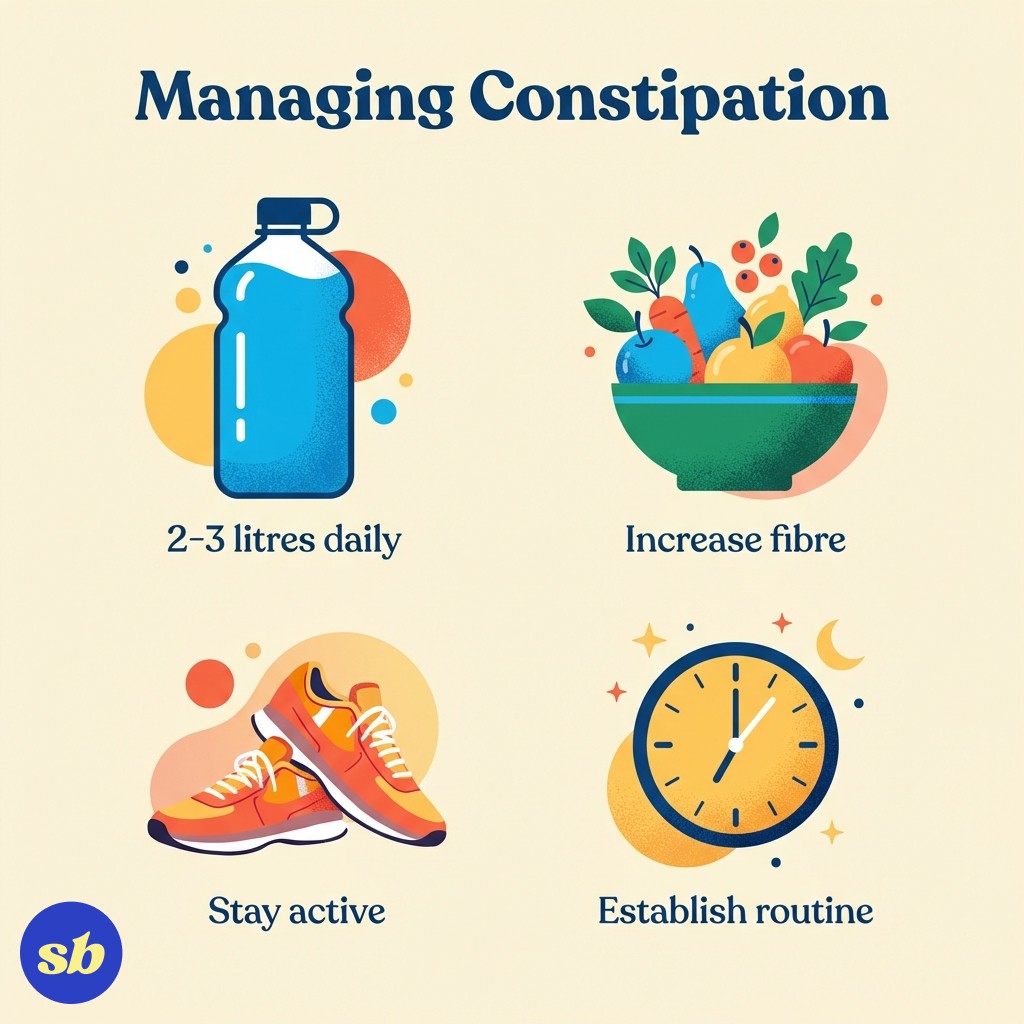
Drink plenty of fluids
This is the most important step. Aim for at least 2–3 litres of fluid daily, more if you’re active or in warm weather. Water is best, but other fluids count too:
- Herbal teas
- Diluted squash
- Clear broths
- Water with lemon or cucumber
Warm drinks in the morning can help stimulate bowel movements. A cup of warm water or tea upon waking is a gentle way to get things moving.
Increase fibre gradually
Fibre adds bulk to your stools and helps them move through your intestines. Good sources include:
- Fruits (especially prunes, pears, apples with skin)
- Vegetables (broccoli, carrots, leafy greens)
- Whole grains (oats, whole wheat bread, brown rice)
- Legumes (beans, lentils, chickpeas)
- Nuts and seeds (especially linseeds, also known as flaxseeds)
Increase fibre gradually to avoid worsening Abdominal bloating and gas. Your gut needs time to adjust. Also, fibre only works if you’re drinking enough fluid. Without adequate water, extra fibre can actually make constipation worse.
Stay active
Regular physical activity stimulates your bowels. Even a daily 20–30 minute walk can make a real difference. Other helpful activities include:
- Swimming
- Cycling
- Yoga (certain poses specifically help with digestion)
- Any movement that engages your core
If fatigue is making exercise difficult, even gentle movement is better than none.
Establish a routine
Your bowels respond to routine. Try to:
- Wake up at consistent times
- Eat meals at regular intervals
- Allow time for the toilet after breakfast (your body’s natural urge to have a bowel movement after eating makes this a good time)
- Don’t ignore the urge to go
Rushing in the morning and ignoring your body’s signals can worsen constipation over time.
Try natural remedies
Several natural approaches can help:

- Prunes or prune juice: a traditional remedy backed by research. Prunes contain sorbitol, a natural laxative, plus fibre and polyphenols that help soften stools (Koyama et al., 2022). Start with 3–4 prunes or a small glass of juice daily.
- Linseeds: add a tablespoon to porridge, yoghurt, or smoothies. They need to be ground or soaked to be effective.
- Warm water with lemon: drinking this first thing in the morning can stimulate digestion.
- Kiwi fruit: a multicentre randomised trial found eating two green kiwis daily significantly improved constipation and bowel comfort.
- Coffee: for some people, caffeine stimulates bowel movements. If you tolerate coffee, a cup in the morning might help.
Over-the-counter laxatives
If lifestyle measures aren’t enough, several pharmacy options can help. For more detail on laxative types, see the NHS laxatives guide. Start with gentler options and progress if needed:

Bulk-forming laxatives:
- Fybogel (ispaghula husk)
- Work by adding bulk to stools
- Take with plenty of water
- May take 2–3 days to work
Osmotic laxatives:
- Lactulose (liquid)
- Macrogol (Laxido, Movicol)
- Draw water into the bowel to soften stools
- Effective and gentle for regular use
Stimulant laxatives (short-term only):
- Senna
- Bisacodyl (Dulcolax)
- Stimulate bowel contractions
- Effective but not for long-term use
- Can cause cramping
Stool softeners:
- Docusate sodium
- Make stools softer and easier to pass
- Gentler than stimulants
Ask your pharmacist for advice on which type is best for your situation. Most are safe to use with Mounjaro, but check if you take other medications.
When constipation becomes a problem
Mild constipation is uncomfortable but not dangerous. However, some situations need medical attention. For general guidance, see the NHS constipation advice.
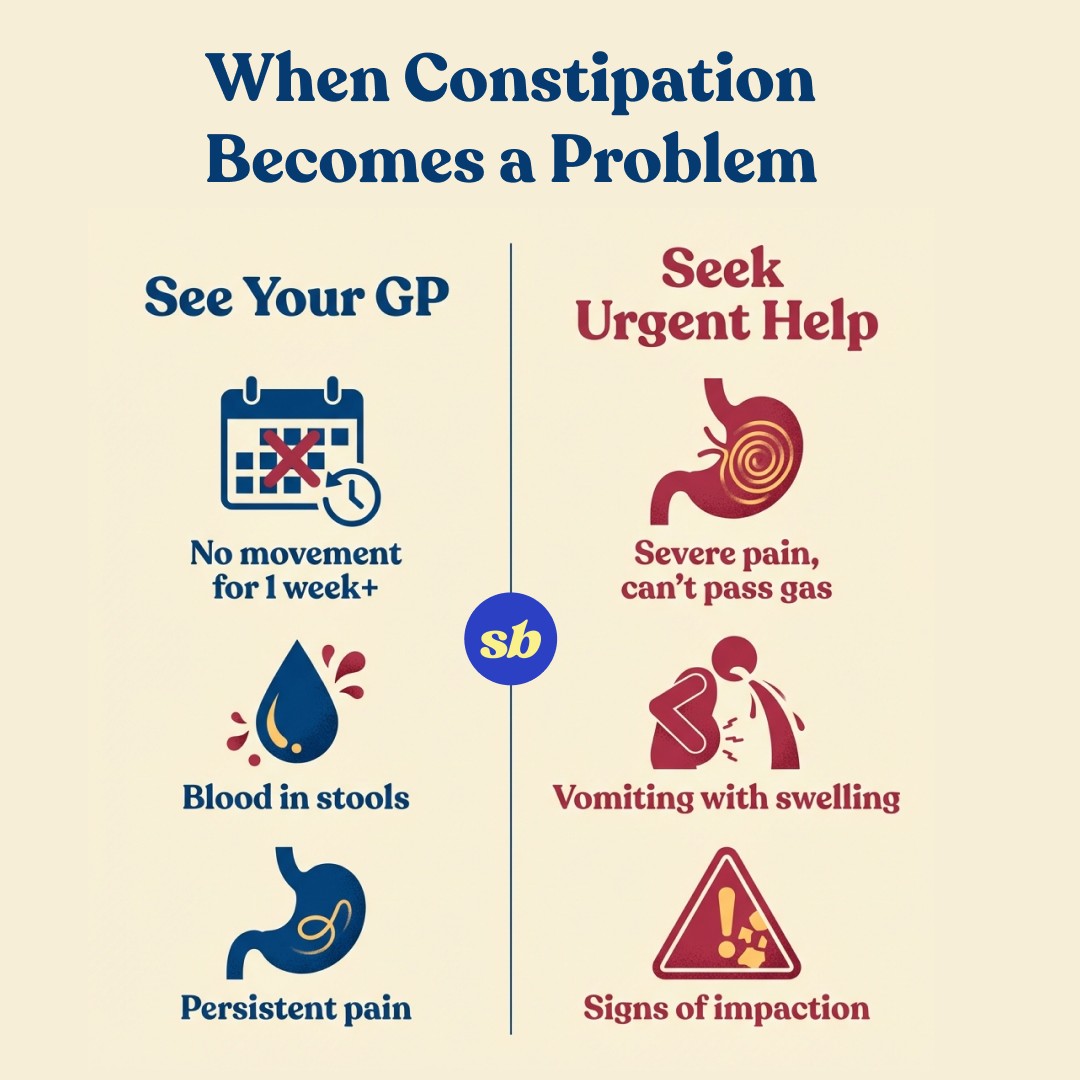

See your GP if you experience
- No bowel movement for more than a week
- Severe abdominal pain
- Blood in your stools or on toilet paper
- Unexplained weight loss (beyond expected Mounjaro effects)
- Constipation alternating with diarrhoea for several weeks
- Vomiting alongside constipation
- Constipation that doesn’t respond to treatment

Seek urgent help if you have
- Severe abdominal pain with inability to pass gas
- Vomiting with abdominal swelling
- Signs of faecal impaction (where hard stool becomes stuck and difficult to pass), such as overflow diarrhoea around hard stools
Severe, prolonged constipation can occasionally lead to complications like faecal impaction or bowel obstruction, which require medical treatment.
Constipation alongside other digestive symptoms
Constipation often occurs alongside other Mounjaro digestive side effects:
- Bloating: often accompanies constipation
- abdominal pain that improves: can result from backed-up stools
- Sulphur burps: share the same underlying cause
- Stomach upset symptoms: can worsen when constipated
The strategies that help constipation (hydration, fibre, movement) often improve these other symptoms too, as they address the common cause: Mounjaro’s effect on gut motility.
Does Mounjaro constipation improve over time?
For many people, yes. Constipation tends to be worst during the first few weeks of treatment or after dose increases, then improves as your body adjusts.
However, some degree of slower bowel movements may persist throughout treatment, simply because Mounjaro continues to slow your digestive system. Maintaining good hydration, adequate fibre, and regular activity helps manage this ongoing effect.
If you’ve switched from another GLP-1 medication like Wegovy or Ozempic and notice constipation worsening, this may be because tirzepatide’s dual action on both GLP-1 and GIP receptors can have a more pronounced effect on gut motility for some people.
If constipation remains problematic despite lifestyle measures, speak to your healthcare provider. They can ensure nothing else is contributing and may suggest adjustments to your treatment plan.
Summary
Constipation is a common side effect of Mounjaro, caused by the medication’s effect on gut motility combined with reduced food and fluid intake. It usually improves as your body adjusts, though some degree of slower digestion may persist throughout treatment.
Staying well hydrated, gradually increasing fibre intake, staying active, and using over-the-counter laxatives when needed can manage constipation for most people.
If constipation is severe, persistent, or accompanied by concerning symptoms, speak to your healthcare provider.
Finding the right provider
If gut side effects are wearing you down and your current provider isn’t offering practical guidance, it might be time to compare alternatives. Clinical support, dose flexibility, and how often you’re reviewed all vary significantly between UK providers.
Frequently asked questions
How common is constipation on Mounjaro?
In the SURMOUNT-1 clinical trial, constipation affected 6–11% of participants depending on dose, making it one of the more common digestive side effects of tirzepatide alongside nausea and diarrhoea (Jastreboff et al., 2022). Similar rates are seen with other GLP-1 medications like semaglutide, as they share the same mechanism of slowing gut motility.
Is it normal to not poo every day on Mounjaro?
Yes. When you’re eating less, you’ll naturally have fewer bowel movements. Anywhere from three times daily to three times weekly can be normal, according to NHS guidance on normal bowel habits. Constipation is only a problem if stools are hard, difficult to pass, or causing discomfort.
Why am I constipated even though I’m drinking lots of water?
Constipation on Mounjaro is primarily caused by slower gut motility, which hydration alone can’t fully overcome. You may also need more fibre, more physical activity, or a gentle laxative to help things along.
Should I eat more fibre for constipation on Mounjaro?
Yes, but increase gradually to avoid worsening bloating and gas. Good sources include fruits, vegetables, whole grains, and legumes. Fibre only helps if you’re also drinking plenty of fluids.
When should I worry about constipation on Mounjaro?
See your GP if you haven’t had a bowel movement for more than a week, if you have blood in your stools, severe abdominal pain, or vomiting. Also seek advice if constipation doesn’t respond to treatment or significantly affects your quality of life.
Does constipation mean Mounjaro isn’t working?
No. Constipation is a side effect unrelated to how well Mounjaro works for weight loss or blood sugar control. Many people experience constipation whilst still achieving good results from the medication.
Can I take laxatives every day while on Mounjaro?
Bulk-forming laxatives like Fybogel and osmotic laxatives like lactulose or Movicol are generally safe for regular use. However, stimulant laxatives like senna or bisacodyl should only be used short-term. If you find yourself needing laxatives regularly, speak to your pharmacist or GP about the best option for ongoing use.
Will constipation affect my weight loss on Mounjaro?
Constipation itself doesn’t affect how well Mounjaro works for weight loss. However, severe constipation can cause temporary increases on the scales due to retained stool, which some people find discouraging. Focus on the overall trend rather than daily fluctuations, and remember that constipation is a side effect, not a sign that the medication isn’t working.