

Stomach pain is one of the most common complaints among people taking Mounjaro. It can range from mild discomfort after eating to sharper cramps that make you want to lie down. If you’re experiencing abdominal pain on tirzepatide, you’re far from alone, and there’s plenty you can do to manage it.
Key takeaways

Why does Mounjaro cause stomach pain?
Mounjaro works as a dual GLP-1 and GIP receptor agonist. In practical terms, this means it mimics two natural hormones (GLP-1 and GIP) that regulate appetite and blood sugar. One of its key effects is slowing gastric emptying (the process by which food leaves your stomach and enters your intestines), which means food stays in your stomach longer before moving into your small intestine.
This delayed emptying helps you feel fuller for longer, which supports weight loss. But it can also cause discomfort as your stomach works harder to process food at a slower pace.
Several things can lead to stomach pain:
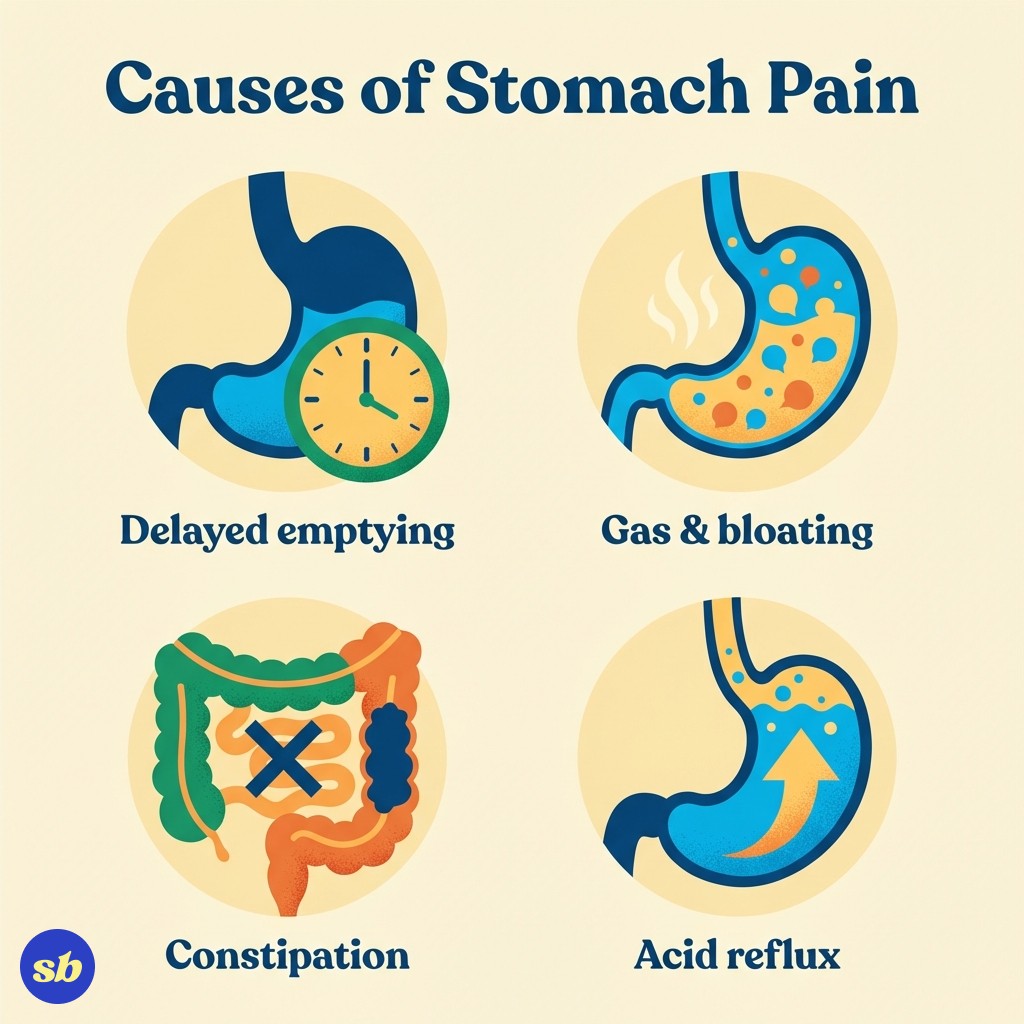
Delayed gastric emptying
When digestion slows down, food can create a heavy, uncomfortable sensation. Your stomach continues producing acid and churning to digest the food, which can cause stomach cramps or a gnawing pain.
This effect is most pronounced when you first start Mounjaro or increase your dose. Your digestive system needs time to adapt to this new pace.
Gas and bloating
When digestion slows, food sits in your gut longer, giving bacteria more time to ferment it. This produces gas, which can cause cramping pain that comes and goes, pressure in your abdomen, and discomfort that moves around your belly.
Bloating and sulphur burps often accompany this type of stomach pain and cramping.
Constipation
Slower digestion can lead to Sluggish digestion, which causes its own abdominal discomfort. If you’re not having regular bowel movements, stool can back up and cause lower abdominal cramping, a feeling of fullness or pressure, and general discomfort.
Acid reflux and heartburn
Mounjaro can trigger acid reflux in some people. When stomach acid travels back up into your oesophagus (the tube connecting your throat to your stomach), it can cause burning pain in your upper abdomen or chest that some people mistake for stomach pain.
Eating habits
When your appetite is suppressed, it’s tempting to either skip meals or eat too quickly when you do eat. Both can contribute to stomach pain:
- Eating too fast causes you to swallow air, which leads to gas and cramps
- Skipping meals then eating larger portions overwhelms your slowed digestive system
- Choosing rich or fatty foods takes longer to digest and can worsen discomfort
Where does Mounjaro stomach pain typically occur?
The location of your pain can help identify the cause:
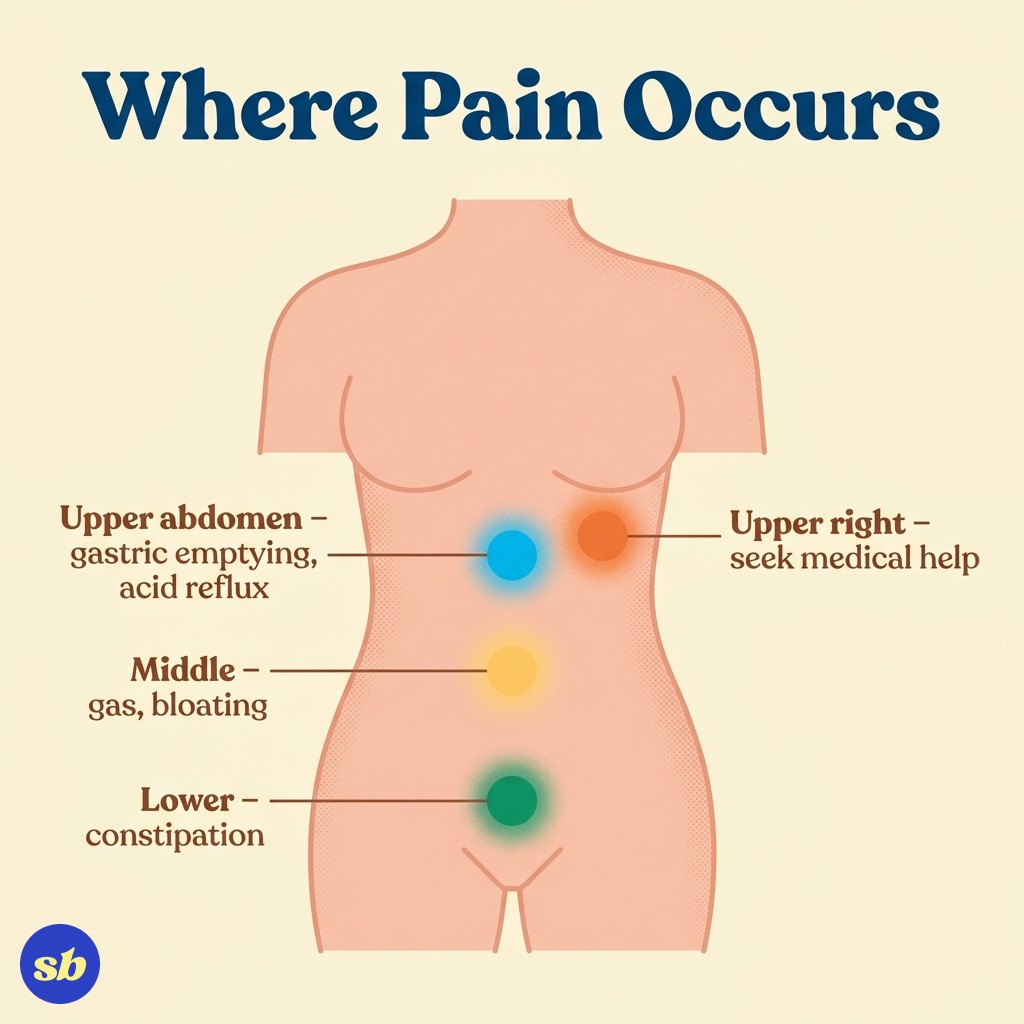
- Upper abdomen (below ribs): Usually related to delayed gastric emptying, acid reflux, or the stomach working to process food. This is the most common location for Mounjaro-related pain.
- Middle abdomen (around navel): Often indicates gas, bloating, or intestinal cramping as food moves through your system.
- Lower abdomen: More likely related to constipation or bowel-related issues.
- Upper right abdomen: Could indicate gallbladder involvement, which is a known risk with rapid weight loss. See the section on when to seek medical help.
How to get relief from stomach pain on Mounjaro
Several strategies can help reduce the frequency and intensity of stomach discomfort.
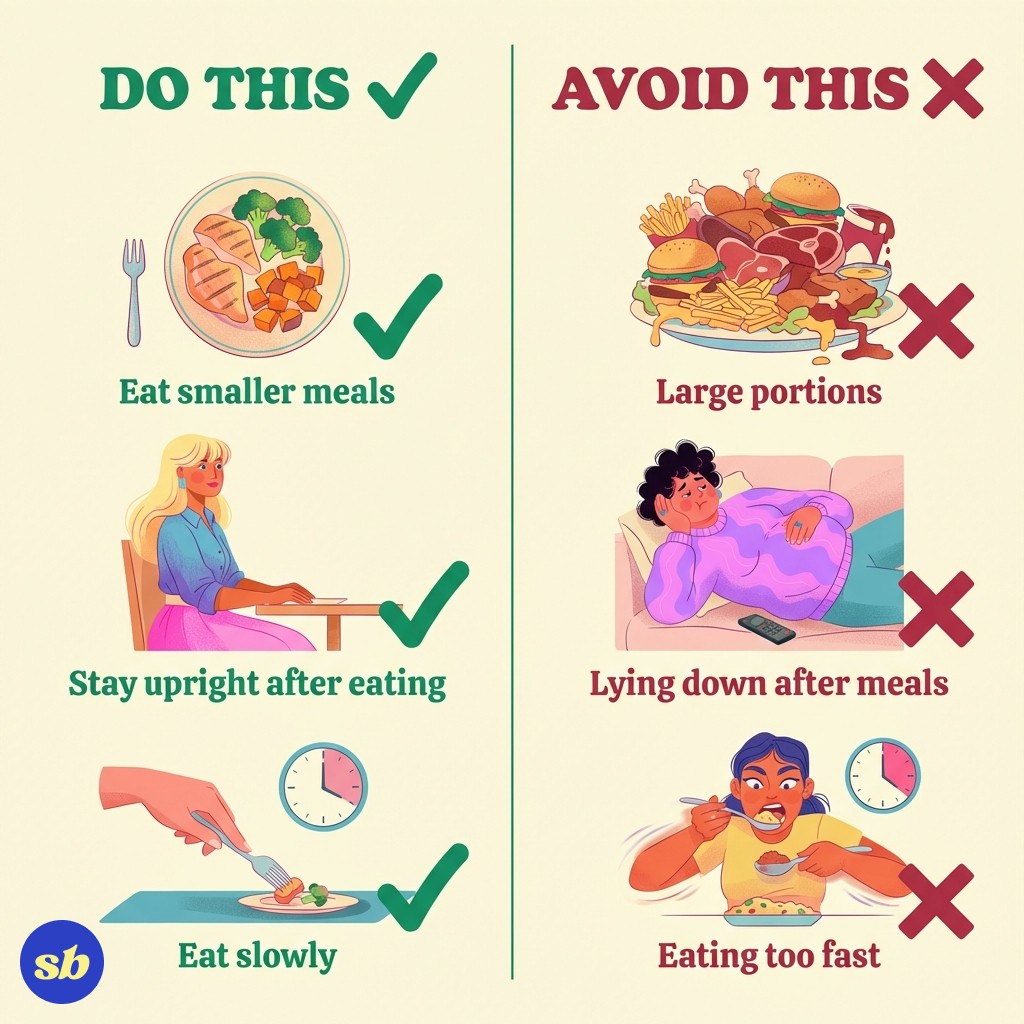
Eat smaller, more frequent meals
Large meals overwhelm your slowed digestive system and sit heavily in your stomach. Eating five or six small meals throughout the day gives your stomach a better chance of keeping up.
Practical tips:
- Stop eating when you feel satisfied, not full
- Leave food on your plate if you need to
- Space meals at least two to three hours apart
- What used to be a normal portion might now be too much
What feels like “barely eating” might actually be appropriate for your slowed digestive system.
Chew thoroughly and eat slowly
Rushing meals causes you to swallow air and overwhelms your digestive system. Take your time:
- Put your fork down between bites
- Chew each mouthful thoroughly (aim for 20 to 30 chews)
- Allow 20 to 30 minutes for meals
- Avoid eating whilst distracted (TV, phone, computer)
Proper chewing breaks food down mechanically before it reaches your stomach, making it easier to digest.
Avoid trigger foods
Certain foods are more likely to cause stomach pain on Mounjaro:
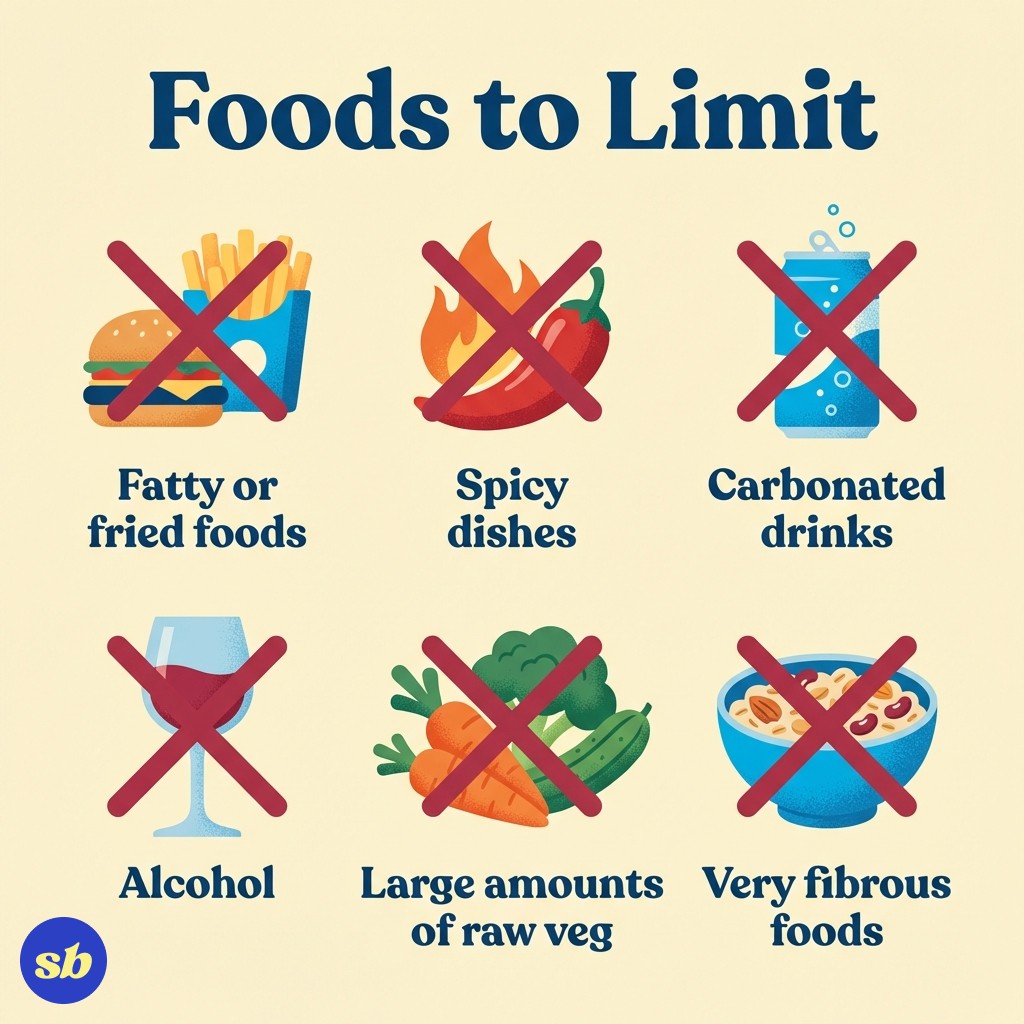
- Fatty or fried foods take longest to digest
- Spicy dishes can irritate the stomach lining
- Very fibrous foods in large amounts
- Carbonated drinks add gas to your system
- Alcohol irritates the digestive tract
- Large amounts of raw vegetables can be hard to digest
Keep a food diary for a week to identify your personal triggers. What bothers one person might be fine for another.
Stay upright after eating
Lying down after meals can worsen stomach discomfort and contribute to acid reflux. Try to:
- Stay upright for at least two to three hours after eating
- Take a gentle walk after meals if possible
- If you need to rest, recline rather than lying flat
- Avoid eating close to bedtime
Try gentle remedies
Several over-the-counter options can provide relief. However, if you’re taking other medications, check with your pharmacist or prescriber before using these, as some can interact with other treatments:
- Simeticone (Wind-eze): Helps break up gas bubbles
- Peppermint tea: Can relax digestive muscles and ease cramping
- Ginger tea or supplements: Traditional remedy for stomach upset
- Antacids (Gaviscon, Rennie): If heartburn is contributing
- Heat pad: Warmth on your abdomen can relax cramping muscles
For more information on managing digestive discomfort, see the NHS guide to indigestion.
Address constipation proactively
If constipation is contributing to your stomach pain, don’t let it build up:
- Drink at least 2 litres of water daily
- Include fibre-rich foods gradually
- Stay physically active
- Consider a gentle laxative like lactulose if needed
See our guide on Mounjaro constipation for more detailed advice.
Time your injection
Some people find that stomach symptoms are worse on certain days relative to their injection. Experiment with timing:
- Some prefer evening injections to sleep through initial effects
- Others prefer morning injections to avoid nighttime discomfort
- Note any patterns and discuss with your prescriber
Stomach pain after eating
Many people notice stomach pain specifically after meals. This is directly related to delayed gastric emptying: your stomach is working harder to process food at a slower pace.
To reduce post-meal pain:
- Make your meals smaller and more frequent
- Choose easily digestible foods
- Avoid lying down after eating
- Wait at least 20 minutes before deciding if you need more food
If you used to eat large meals, your expectations might need adjusting. What feels like a small meal might be plenty for your slowed digestive system.
Stomach pain and other digestive symptoms
Stomach pain rarely occurs alone on Mounjaro. Digestive issues are very common with tirzepatide, and according to the product literature, gastrointestinal side effects affect more than 1 in 10 people. You might also experience:
- Nausea, often alongside stomach discomfort
- Bloating, sharing the same underlying cause
- Diarrhoea, which can alternate with constipation
- Sulphur burps, resulting from the same digestive slowdown
- Heartburn, often mistaken for stomach pain
The strategies that help with stomach pain (smaller meals, avoiding trigger foods, eating slowly) generally help with these other symptoms too.
When does stomach pain improve?
For most people, stomach pain is worse during the first few weeks on Mounjaro or after dose increases. As your body adapts to the medication, symptoms typically improve.
Expect a pattern of:
- Increased discomfort when starting or increasing dose
- Gradual improvement over two to four weeks
- Possible return of symptoms with the next dose increase
- Overall improvement as your body fully adjusts
If stomach pain persists beyond a few weeks at the same dose, or if it’s severe enough to significantly affect your quality of life, speak to your healthcare provider.
When to seek medical help
Most stomach pain on Mounjaro is uncomfortable but not dangerous. However, some symptoms require immediate medical attention.

Seek urgent care if you experience
- Severe, sudden abdominal pain
- Pain in your upper right abdomen (possible gallbladder issue)
- Pain that radiates to your back, which could indicate pancreatitis (inflammation of the pancreas, a serious condition requiring urgent treatment)
- Vomiting that won’t stop
- Blood in your vomit or stool
- Fever alongside stomach pain
- Abdominal pain with jaundice (yellowing of skin or eyes, which can indicate liver or gallbladder problems)
- Pain so severe you can’t stand upright
Mounjaro can increase the risk of gallbladder problems and, rarely, pancreatitis. According to the product information, acute pancreatitis has been reported in clinical trials. These conditions require prompt treatment, so don’t ignore severe or unusual pain.

Contact your GP if
- Pain persists for more than a few weeks without improvement
- You’re unable to eat or drink due to discomfort
- Pain is affecting your sleep or daily activities
- Over-the-counter remedies aren’t helping
- You notice unexplained weight loss beyond what’s expected
The bottom line
Stomach pain is a common side effect of Mounjaro, usually caused by the medication’s effect on gastric emptying. Food moves through your system more slowly, which can cause discomfort, cramping, and bloating.
The good news is that stomach pain typically improves as your body adjusts. Eating smaller meals, avoiding trigger foods, chewing thoroughly, and staying upright after eating can all help reduce symptoms.
If stomach pain is severe, persists beyond the adjustment period, or comes with warning signs like fever or vomiting, seek medical attention.
Finding the right provider
If stomach pain is making you reconsider your current setup, the level of clinical support your provider offers can make a real difference. Some providers include regular reviews and clear guidance for managing GI side effects, while others leave you to figure it out alone.
Frequently asked questions
When should I worry about stomach pain on Mounjaro?
Seek immediate help for severe pain, pain in your upper right abdomen, pain radiating to your back, vomiting blood, or fever with stomach pain. See your GP if pain persists for weeks without improvement.
Can Mounjaro cause serious stomach problems?
Mounjaro can increase the risk of gallstones (due to rapid weight loss) and, rarely, pancreatitis. Severe or persistent pain, especially in the upper right abdomen or radiating to the back, should be evaluated promptly.
Does stomach pain mean Mounjaro isn’t working?
No. Stomach pain is a common side effect unrelated to how well Mounjaro works for weight loss. Many people experience temporary digestive discomfort whilst still achieving good results.
Can I take painkillers for Mounjaro stomach pain?
Paracetamol is generally safe to take for stomach pain. However, avoid non-steroidal anti-inflammatory drugs (NSAIDs) like ibuprofen on an empty stomach, as they can irritate the stomach lining and worsen discomfort. If you’re unsure, check with your pharmacist.
Should I reduce my Mounjaro dose if I have stomach pain?
Don’t adjust your dose without speaking to your prescriber. Stomach pain often improves as your body adjusts, so reducing the dose may not be necessary. If symptoms are severe or persistent, your prescriber might recommend staying at your current dose longer before increasing, or in some cases, temporarily reducing the dose.
How long does stomach pain last on Mounjaro?
Stomach pain typically improves within two to four weeks as your body adjusts to each dose. You may experience temporary discomfort again when your dose increases, but this usually settles more quickly than the initial adjustment period. If pain persists beyond a few weeks at the same dose, speak to your prescriber.
What foods should I avoid to reduce stomach pain on Mounjaro?
The main foods to avoid are fatty or fried foods, spicy dishes, carbonated drinks, alcohol, and large amounts of raw vegetables. Everyone’s triggers are different, so keeping a food diary for a week can help you identify which foods cause you the most discomfort.
Can I take antacids with Mounjaro?
Yes, over-the-counter antacids like Gaviscon or Rennie are generally safe to take with Mounjaro and can help if heartburn is contributing to your stomach discomfort. If you’re taking other medications, check with your pharmacist first to avoid any interactions.