
Mounjaro is a once-weekly injection that has helped thousands of people lose weight, but it comes with some uncomfortable side effects. Dry mouth is one of those surprises that doesn’t always make it into the glossy before-and-after stories.
It’s real, though, and it can mess with your daily comfort and oral health. People sometimes feel caught off guard by it.

Dry mouth on Mounjaro happens because the medication can reduce saliva production and change your fluid balance. It can lead to bad breath, trouble swallowing, and even boost your risk of tooth decay if you don’t get on top of it. It’s manageable with regular hydration, sugar-free gum, saliva substitutes, and good oral hygiene, but you should tell your dentist you’re taking Mounjaro so they can monitor your teeth and gums more closely.
This guide walks you through why this happens, what you can do about it, and how to keep your mouth healthy as you lose weight. You don’t have to just put up with it. Speak to your GP or prescriber if dry mouth is affecting your quality of life — they can help you find the right approach.
Key takeaways

What causes dry mouth on Mounjaro?
Tirzepatide (the active ingredient in Mounjaro) is a dual GLP-1 and GIP receptor agonist, a type of medication that mimics natural hormones to reduce appetite and help control blood sugar. It slows down how fast your stomach empties food, which helps you feel full longer. For more detail on what Mounjaro contains and how it works, see the official Mounjaro patient information leaflet.
This is great for weight management and type 2 diabetes control, but it can affect saliva production too. When your stomach empties more slowly, your digestive system changes, and your mouth might not make as much saliva. Xerostomia is the medical term for this condition, and it affects up to 1 in 10 people taking GLP-1 receptor agonists.
It’s more than just being a bit parched. You might notice a sticky feeling, trouble swallowing dry foods, or changes in taste. Sometimes your lips crack more easily or your tongue feels rough. Unlike ordinary thirst, true dry mouth from Mounjaro sticks around even when you’re hydrated — your salivary glands are simply making less saliva.
We need saliva for a lot more than comfort. It protects your teeth, helps you taste, and makes swallowing easier. When you have less, your mouth might feel sticky or rough, especially in the morning.

These dry mouth symptoms are common and usually manageable at home:
- Sticky or dry feeling in your mouth, especially in the morning
- Increased thirst
- Slightly rough or coated tongue
- Minor lip dryness or cracking
- Mild changes in taste
These symptoms often improve within 2–4 weeks as your body adjusts to each dose. The hydration and oral care tips in this guide can help you manage them.
Why dry mouth gets worse: contributing factors
Dry mouth on Mounjaro isn’t always a direct side effect of the drug itself. It’s often tied to how your body reacts to treatment, including changes in eating, fluid balance, and blood sugar.
Dehydration from gastrointestinal side effects
Common side effects like nausea, vomiting, and diarrhoea can lead to dehydration quickly, as shown in the SURMOUNT-1 trial. When you’re nauseous, drinking water is the last thing you want to do, but that’s when you need it most. Vomiting and diarrhoea cause you to lose fluids fast, and your body can’t keep up. If you have these symptoms regularly, dry mouth almost always follows.
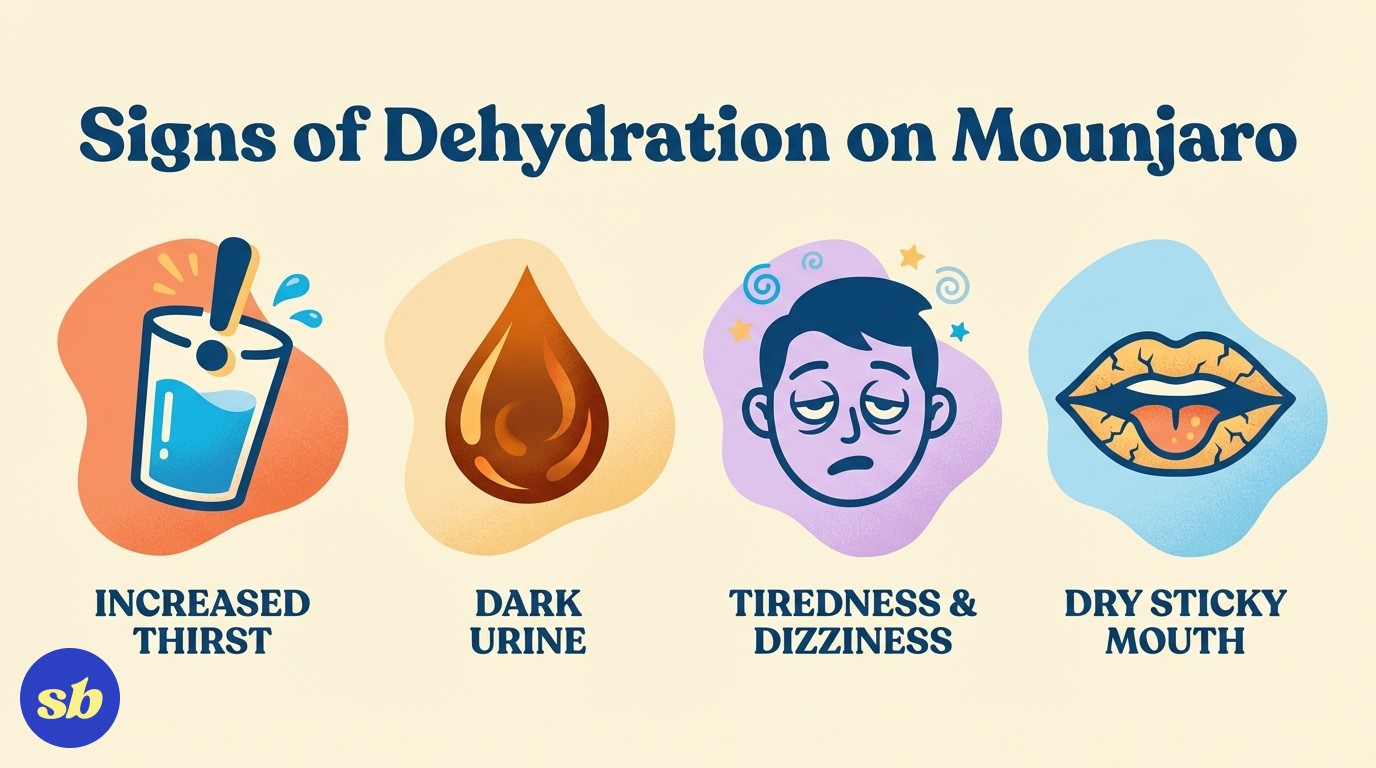
Signs you might be dehydrated:

Reduced fluid intake from appetite suppression
Mounjaro suppresses your appetite — that’s a big reason it works for weight loss. But eating less often means you might drink less, too. Think about how much of your daily fluids come from meals. If you’re skipping meals or eating tiny portions, those drinks vanish with them.
Mounjaro can also mix up hunger and thirst signals, so you might not feel like drinking even if your body needs it.
Blood sugar changes
Mounjaro helps control blood sugar, which is one of its key benefits for people with type 2 diabetes. High blood sugar usually makes you thirsty because your body tries to flush out extra glucose in urine. When Mounjaro brings your blood sugar down, you might not feel as thirsty — but that doesn’t mean you need less water, as described in the Mounjaro Summary of Product Characteristics.
Keep an eye on your water intake, especially in the first few weeks. Don’t wait until you’re thirsty — just build drinking water into your daily routine.
Managing and relieving dry mouth
Small tweaks to your day and the right products can make a real difference. This section covers everything in one place.
Hydration strategies
Water is your best friend here. Aim for at least 2 litres daily, and more if you’re experiencing digestive side effects (2–3 litres is a better target in that case). The NHS Eatwell Guide recommends 6–8 glasses of fluid daily as a baseline, but you may need more while on Mounjaro.
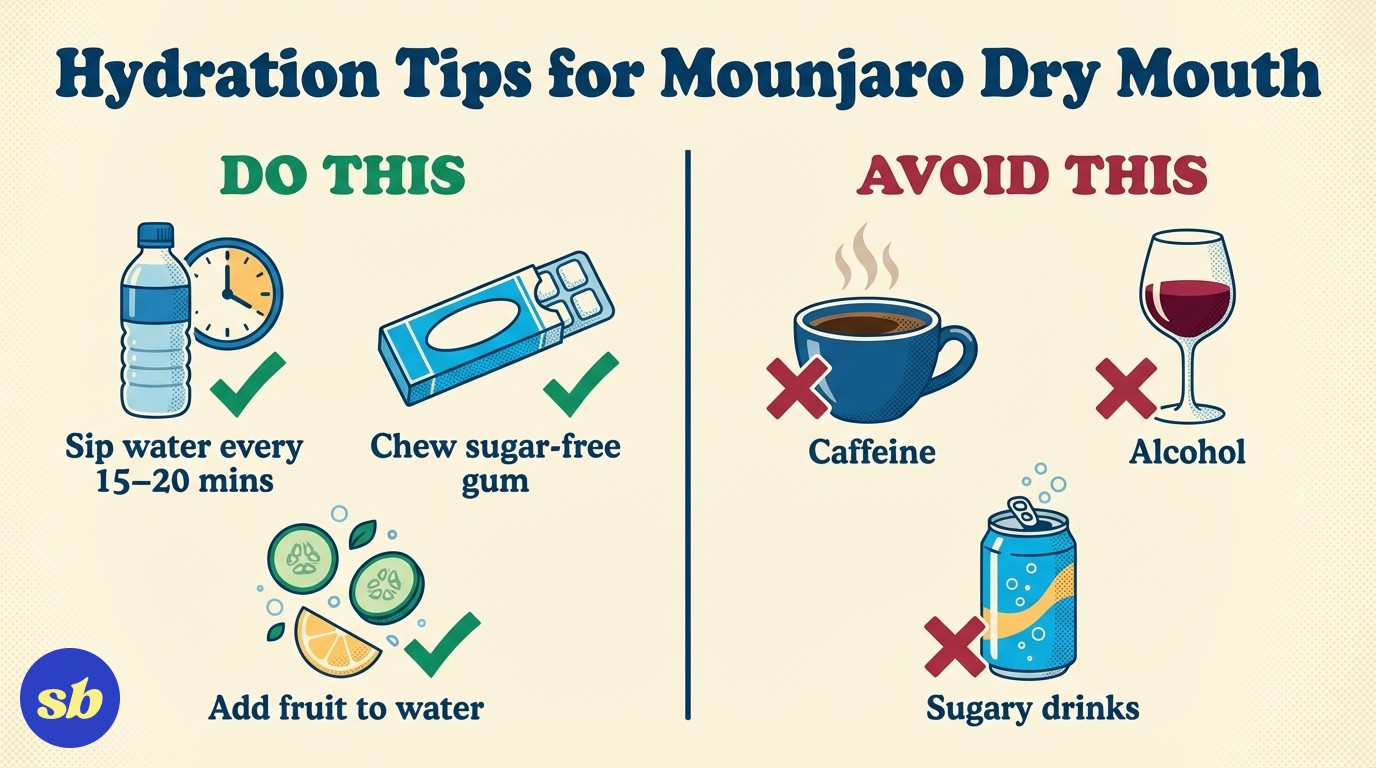
Keep a water bottle with you and take small sips every 15–20 minutes, even if you don’t feel thirsty. Sipping throughout the day works better than chugging big glasses. Hydration supports weight loss too, so you’re helping your treatment work better while easing dry mouth. Set phone reminders if you tend to forget.
Limit caffeine and alcohol — they make dry mouth worse. If plain water is boring, throw in a slice of lemon or cucumber. Skip sugary drinks — they can hurt your teeth when your mouth is already dry.
Stimulating saliva production
Your mouth makes less saliva on Mounjaro, but you can encourage what’s there. Chewing sugar-free gum with xylitol is a simple way to get saliva flowing and protect your teeth at the same time. Chew for 10–15 minutes after eating.
Sugar-free lozenges work in a similar way and are handy when gum’s not practical. Sucking on ice chips gives temporary relief and keeps you hydrated. Some people like crunchy veggies like celery or carrots — the chewing helps boost saliva.
Over-the-counter remedies
If natural methods aren’t enough, saliva substitutes can help. These sprays, gels, or rinses mimic your mouth’s moisture. Most pharmacies stock them, no prescription needed. Use them as needed, especially before meals or talking a lot.
A humidifier in your bedroom at night can help too. Dry air while you sleep leaves your mouth feeling rough in the morning. Breathing through your nose instead of your mouth also helps, though that’s not always easy.
Avoid spicy or salty foods if they irritate your mouth. Stick to softer, moister foods when your mouth feels especially dry. Soups, stews, and smoothies can be easier to handle.
Protecting your oral health while using Mounjaro
Dry mouth from Mounjaro can create real problems for your teeth and gums if you’re not careful. Saliva usually washes away food particles and neutralises acids that attack your enamel (the hard protective outer layer of your teeth). Without enough of it, bacteria multiply faster and form sticky plaque that clings to your teeth and gums.
Dry mouth can lead to increased tooth decay because there’s less saliva to buffer acids and remineralise enamel. We’ve seen patients develop multiple cavities within months of starting treatment when they haven’t adjusted their oral care routine.
Gum disease is also a bigger risk — dry gums get inflamed and bleed more easily, which can turn into periodontal disease (serious gum infection that damages the soft tissue and bone supporting your teeth) if left unchecked. If you smoke, the risks go up even more, since smoking already reduces saliva and damages your gums.
Essential oral hygiene habits
Since Mounjaro is a weekly injection you’ll be taking for an extended period, it’s worth building good habits from the start.
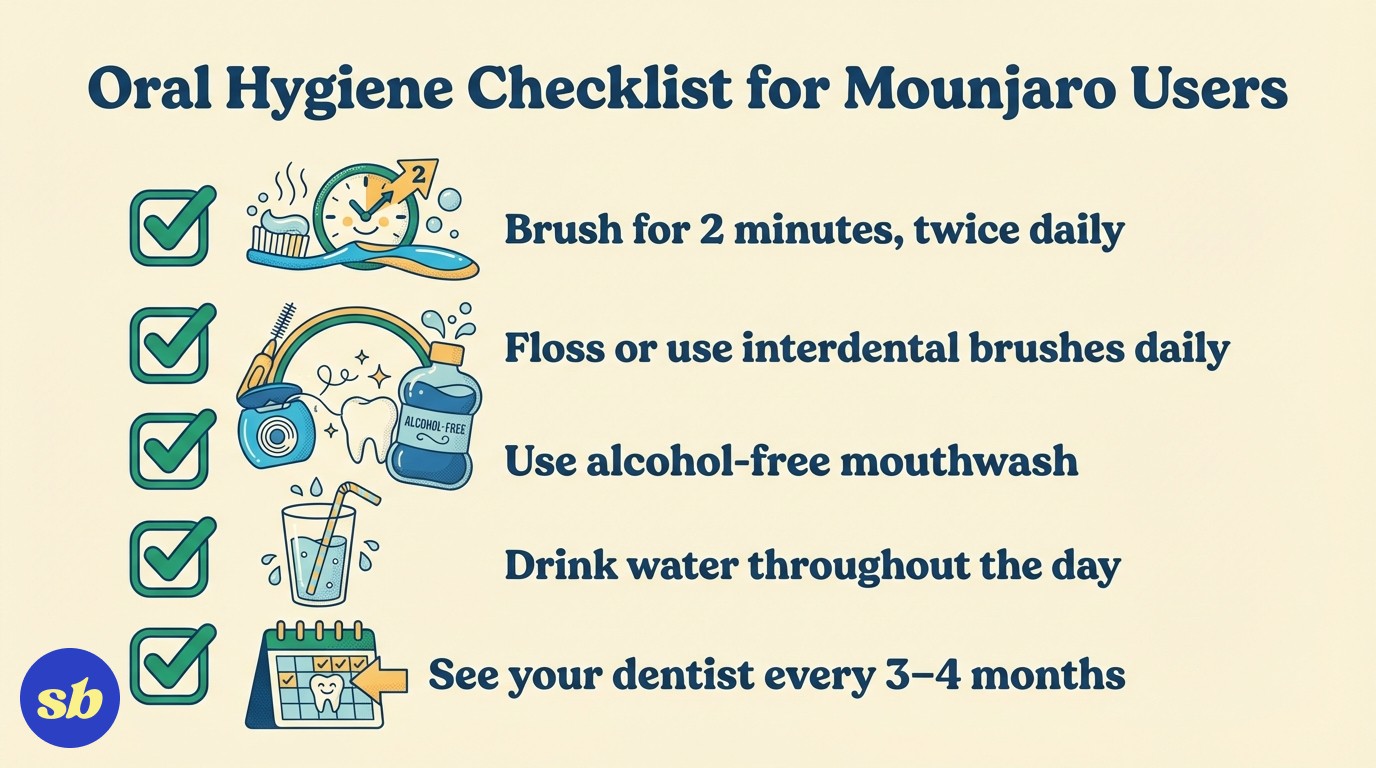
Visit your dentist every three to four months rather than waiting six — they can catch early signs of decay or gum trouble before things get out of hand. Let them know you’re taking Mounjaro so they can monitor your oral health more closely. They might recommend fluoride treatments or a prescription toothpaste for extra protection. For more on keeping your teeth and gums healthy, see the NHS guide to healthy teeth and gums.
Dealing with bad breath and taste changes
Bad breath often shows up alongside dry mouth. When you don’t have enough saliva to rinse away bacteria, they pile up on your tongue and cause unpleasant odours.
Gastroparesis (a condition where the stomach takes too long to empty its contents) and delayed gastric emptying from GLP-1 medications can make things worse. Food that hangs around in your stomach longer than it should can lead to breath issues that actually start deeper in your digestive system, which can be frustrating.
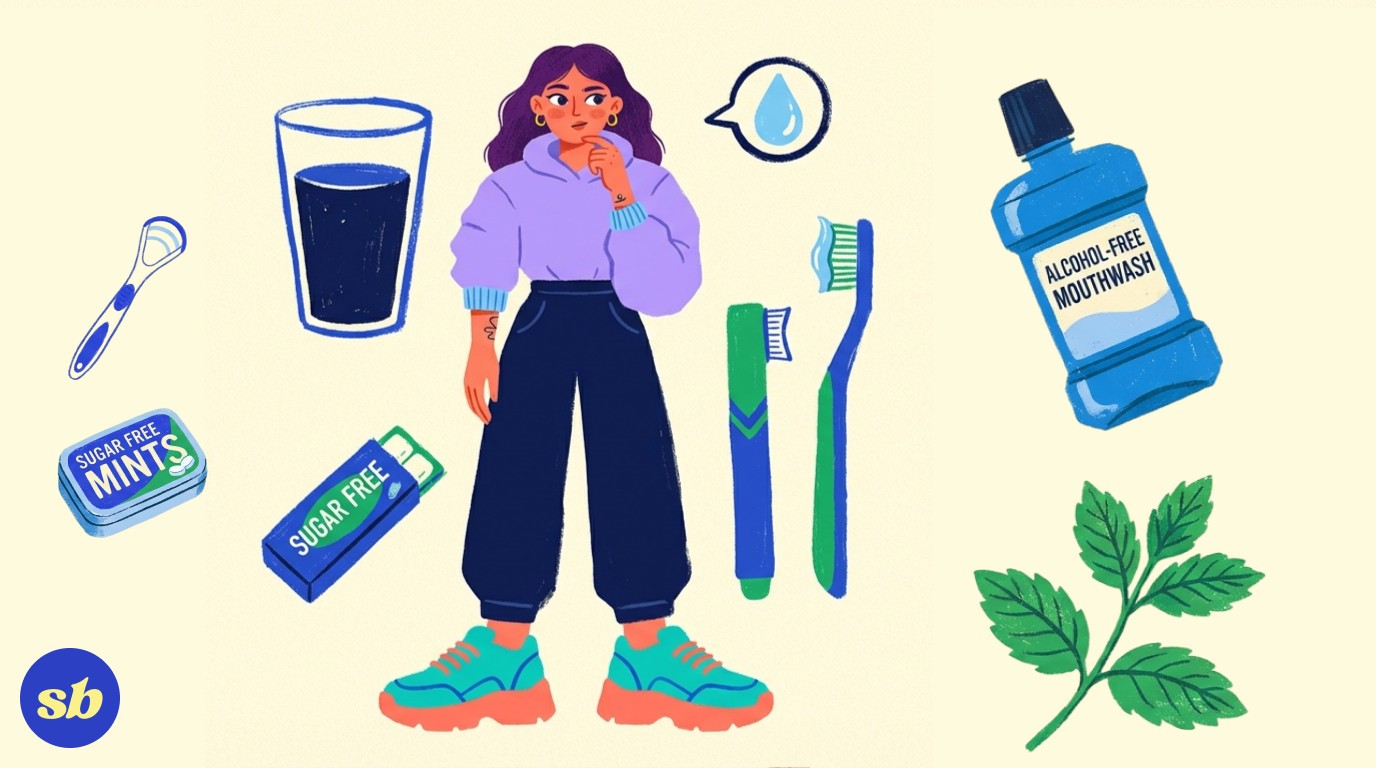
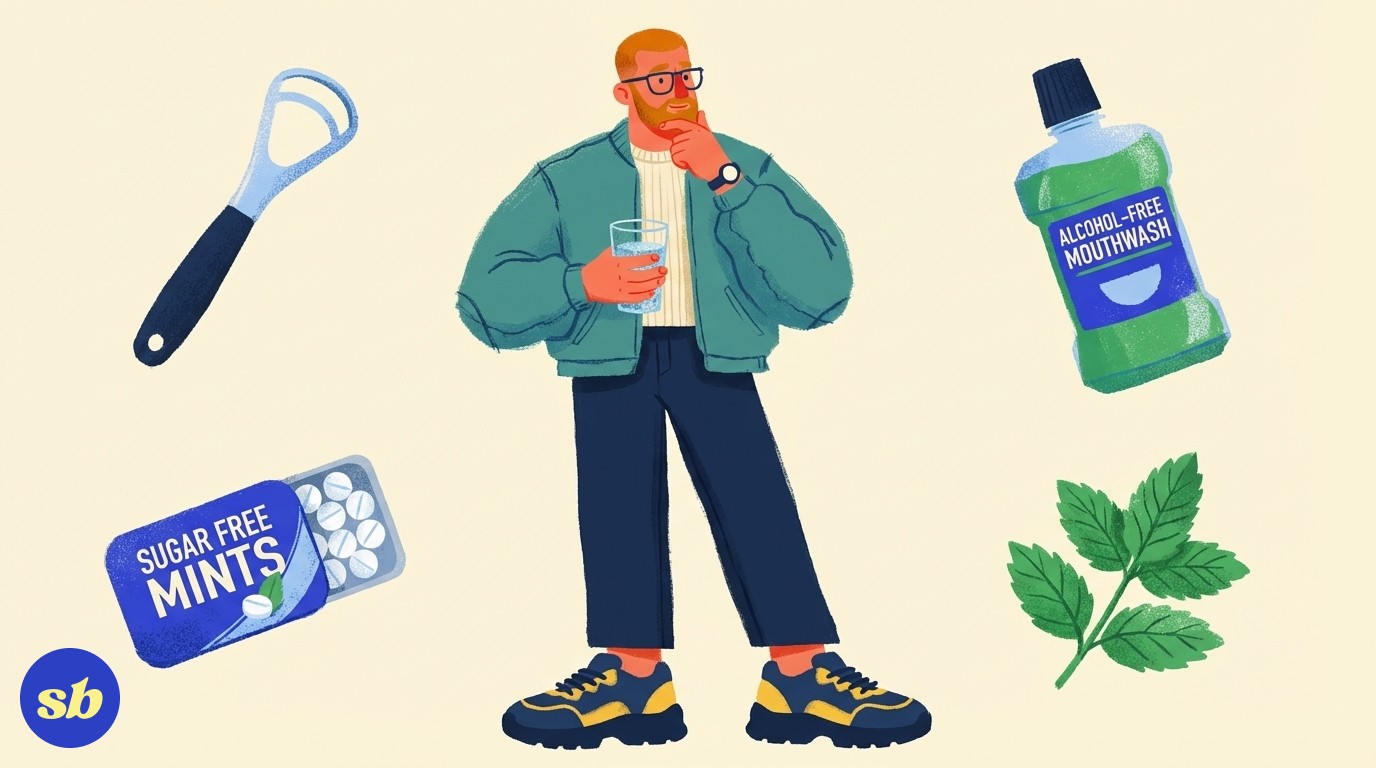
Scrape or brush your tongue whenever you brush your teeth — most of those odour-causing bacteria love to camp out on the tongue’s surface, so this quick step really helps. Sugar-free mints or gum can help cover up bad tastes and boost your saliva flow.
Some people notice their sense of taste changes, or they get a weird metallic flavour. Usually, this fades as your body gets used to the medication.
When to see your GP or dentist
Most dry mouth symptoms are manageable at home, but some situations need professional attention.

See your GP or prescriber if you experience:
- Dry mouth that doesn’t improve after several weeks despite trying the strategies in this guide
- Difficulty swallowing food or liquids regularly
- Persistent mouth sores or infections (white patches, red areas, or painful spots)
- Signs of dehydration that don’t improve with increased fluids (dark urine, dizziness, fatigue)
- Severe or persistent nausea, vomiting, or diarrhoea that makes it hard to stay hydrated
Your prescriber may be able to adjust your dose or suggest additional treatments.

Seek immediate medical help if you experience:
- Severe abdominal pain, especially pain that radiates to your back (potential pancreatitis)
- Signs of allergic reaction: facial swelling, difficulty breathing, severe rash
- Confusion, fainting, or severe weakness
- Inability to keep any fluids down for more than 24 hours
Call 999 for suspected allergic reactions or pancreatitis.
Book a dental appointment sooner than your next scheduled visit if you notice:
-
Sudden increase in cavities or tooth sensitivity
-
Bleeding, swollen, or receding gums
-
Persistent bad breath that doesn’t improve with oral hygiene
-
Loose teeth or changes in how your dentures fit
The bottom line
Dry mouth is a common but manageable side effect of Mounjaro. It happens because tirzepatide can reduce saliva production and change your fluid balance, and it’s often made worse by dehydration from other side effects like nausea or reduced appetite.
The most effective approach combines staying well hydrated (at least 2 litres of water daily), stimulating saliva with sugar-free gum or lozenges, and stepping up your oral hygiene routine. If dry mouth is significantly affecting your quality of life or isn’t improving after a few weeks, speak to your GP or prescriber — they can review your dose and discuss other options.
Frequently asked questions
How long does dry mouth last on Mounjaro?
For most people, it improves within 2–4 weeks as your body adjusts to each dose. Some people experience it throughout treatment, particularly after dose increases. If it persists, your prescriber may be able to adjust your dosing schedule.
Can Mounjaro damage your teeth?
Mounjaro itself doesn’t directly damage teeth, but the dry mouth it causes can increase your risk of tooth decay and gum disease. See “Protecting your oral health” above for the full picture and what to do about it.
Should I tell my dentist I’m taking Mounjaro?
Yes. They need to know so they can monitor for early signs of tooth decay, gum disease, or other oral health changes. They may recommend more frequent check-ups, fluoride treatments, or prescription-strength fluoride toothpaste.
Is dry mouth from Mounjaro a sign of dehydration?
Not always. Mounjaro can reduce saliva production independently of hydration, so you might still feel dry-mouthed even when drinking plenty of water. If you’re also experiencing dark urine, dizziness, or fatigue, you may need to increase your fluid intake.
Can I use regular mouthwash for Mounjaro dry mouth?
Avoid mouthwashes that contain alcohol — they’ll dry your mouth out further. Choose an alcohol-free mouthwash, ideally one designed for dry mouth. Your pharmacist can recommend suitable options.
Does dry mouth from Mounjaro go away if I stop the medication?
Dry mouth caused by Mounjaro typically resolves once you stop taking the medication, as your salivary glands return to normal function. Never stop or change your medication without speaking to your prescriber first. If dry mouth is significantly affecting your quality of life, your prescriber can discuss options including dose adjustment or alternative treatments.
This article is for information only and does not replace medical advice. Speak to your GP, prescriber, or dentist before making changes to your treatment or oral care routine. If you’re experiencing side effects from Mounjaro, your prescriber can help you find the best approach for managing them.
Sources
-
Xerostomia and GLP-1 receptor agonist medications – British Dental Journal / Nature
-
Xerostomia: an update of causes and treatments – EXCLI Journal
-
Mounjaro Summary of Product Characteristics – Electronic Medicines Compendium (EMC)
-
Mounjaro patient information leaflet – Electronic Medicines Compendium (EMC)
-
NICE TA1026: Tirzepatide for managing overweight and obesity – National Institute for Health and Care Excellence
-
SURMOUNT-1 trial: Tirzepatide once weekly for the treatment of obesity – New England Journal of Medicine
-
How GLP-1 medications have the potential to cause halitosis – Perio-Implant Advisory