
Diarrhoea is one of the most common side effects of Mounjaro (tirzepatide), affecting around 12–17% of people in clinical trials. If you’re dealing with loose stools or more frequent trips to the bathroom, you’re far from alone.

Diarrhoea happens on Mounjaro because the medication changes how quickly food moves through your intestines. It’s usually temporary and improves within 2–4 weeks on a stable dose. Staying hydrated, eating bland foods, and avoiding triggers can help you manage symptoms whilst your body adjusts.
Key takeaways

Why does Mounjaro cause diarrhoea?
Mounjaro contains tirzepatide, which works on two appetite-regulating hormones: GLP-1 and GIP. By mimicking these hormones, the medication helps you feel fuller for longer and reduces appetite, which is how it supports weight loss. These hormones also affect your digestive system.
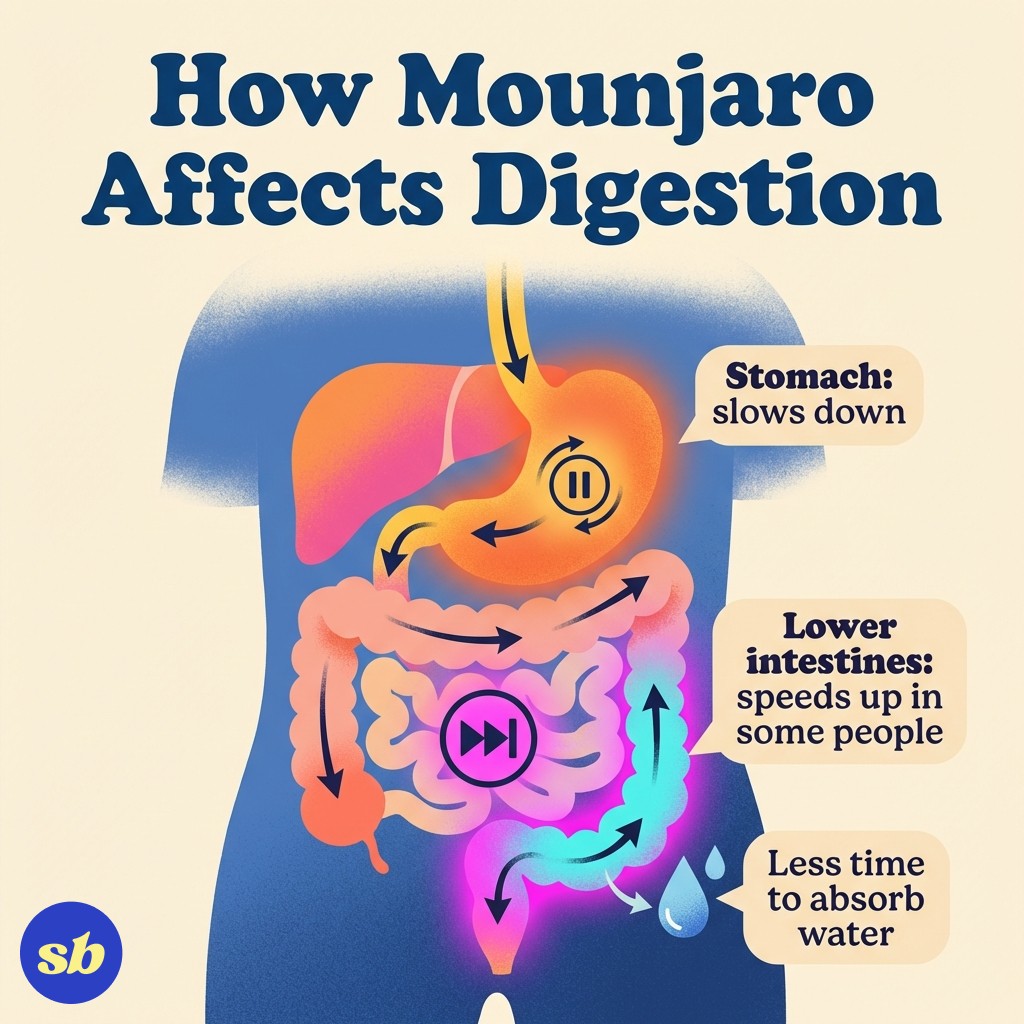
Mounjaro primarily slows gastric emptying (how quickly food leaves your stomach and enters your small intestine), but it can have the opposite effect further along your digestive tract. In some people, food moves through the lower intestines faster than usual. When this happens, your body doesn’t have enough time to absorb water from the stool, which results in loose or watery stools.
Several factors can make diarrhoea more likely:
- Starting the medication or increasing your dose triggers a fresh adjustment period
- Eating high-fat or greasy foods puts extra strain on your digestive system
- Consuming large meals overwhelms your altered digestive pace
- Drinking alcohol can irritate your gut and worsen symptoms
- Taking other medications that affect digestion may compound the effect
Diarrhoea is one of several digestive side effects you might experience on Mounjaro. Some people alternate between diarrhoea and constipation as their digestive system adjusts.
How long does Mounjaro diarrhoea last?
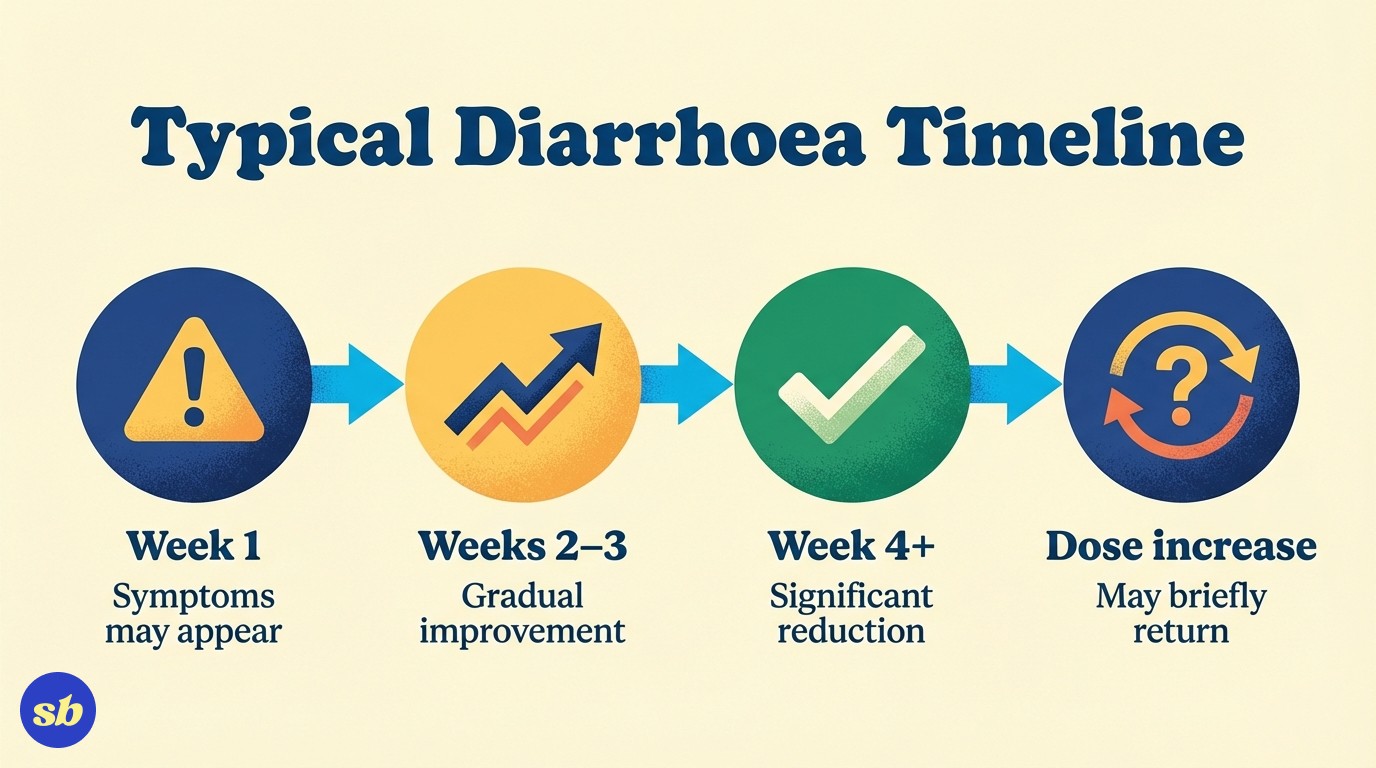
For most people, diarrhoea improves within the first two to four weeks on a stable dose. Your digestive system needs time to adapt to how Mounjaro affects the speed of digestion, and this adjustment period varies from person to person.
You might notice diarrhoea returning temporarily each time you move up to a higher dose. This is normal, as each increase essentially restarts the adjustment process. The pattern typically goes:
- Week 1: Symptoms may appear or worsen after starting or increasing dose
- Weeks 2–3: Gradual improvement as your body adjusts
- Week 4 onwards: Most people find symptoms have reduced
- After dose increases: Pattern may briefly repeat, often less severely
If diarrhoea persists for more than a few weeks at the same dose, or if it’s severe enough to interfere with your daily life, speak to your GP or prescriber. They might recommend adjusting your treatment plan.
How to manage diarrhoea on Mounjaro
You can’t completely prevent digestive changes from the medication, but several strategies can help reduce the frequency and severity of diarrhoea and provide relief whilst your body adjusts.
Stay hydrated
This is the most important thing you can do. Diarrhoea causes you to lose fluids and electrolytes (essential minerals like sodium and potassium that help your body function properly) more quickly than usual. The NHS recommends 6–8 glasses of fluid daily as a baseline, but you’ll need more when experiencing diarrhoea.
Aim for at least 2–3 litres of fluid daily, and consider adding an electrolyte drink or oral rehydration sachets like Dioralyte (available from pharmacies without prescription) if diarrhoea is frequent. These replace lost salts and sugars alongside fluids.
Good options include:
- Water (sip throughout the day)
- Diluted squash
- Clear broths
- Oral rehydration sachets such as Dioralyte
- Coconut water (naturally contains electrolytes)
Diarrhoea can cause you to lose up to a litre or more of fluid per day during severe episodes, so replacing this is essential. Signs of dehydration to watch for:
- Dark yellow urine
- Dry mouth or lips
- Dizziness or lightheadedness
- Fatigue beyond normal Mounjaro tiredness
- Reduced urination
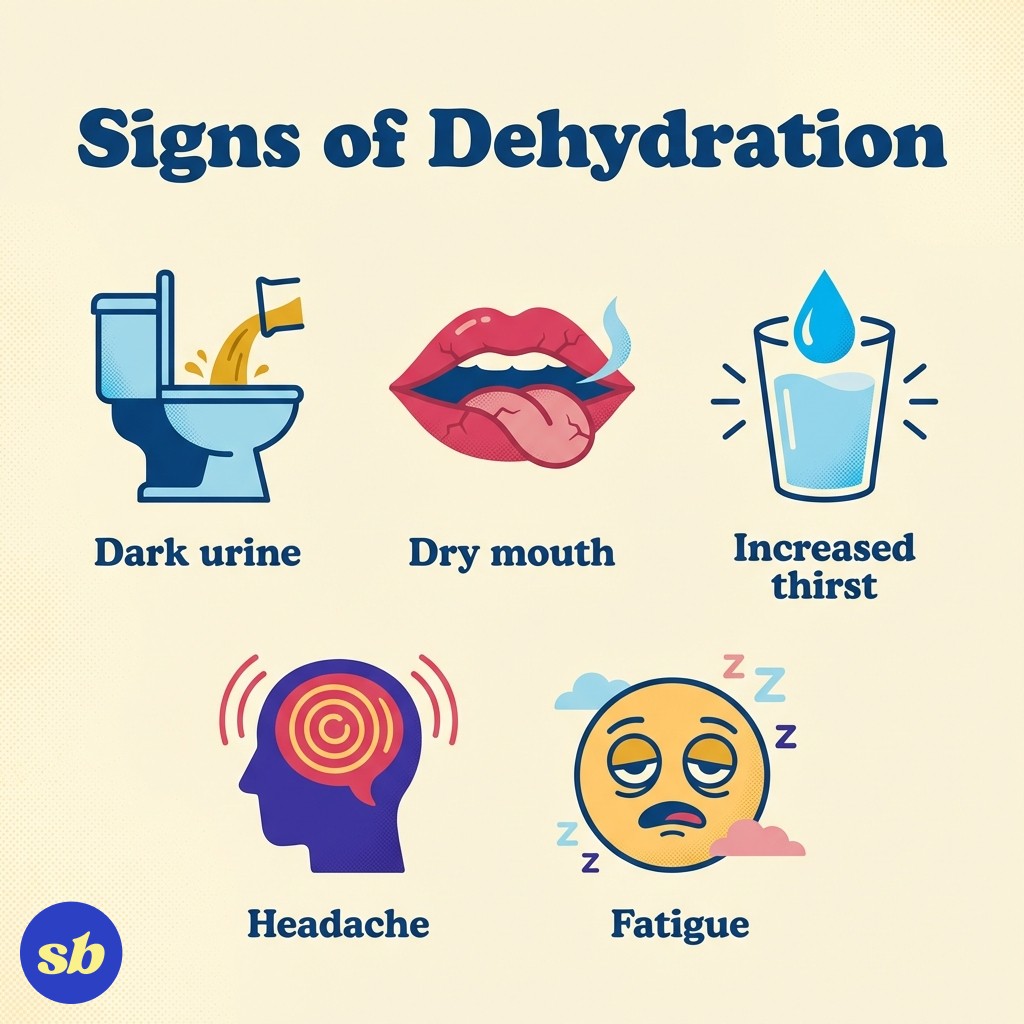
If you notice these signs, increase your fluid intake immediately.
Follow the BRAT diet temporarily
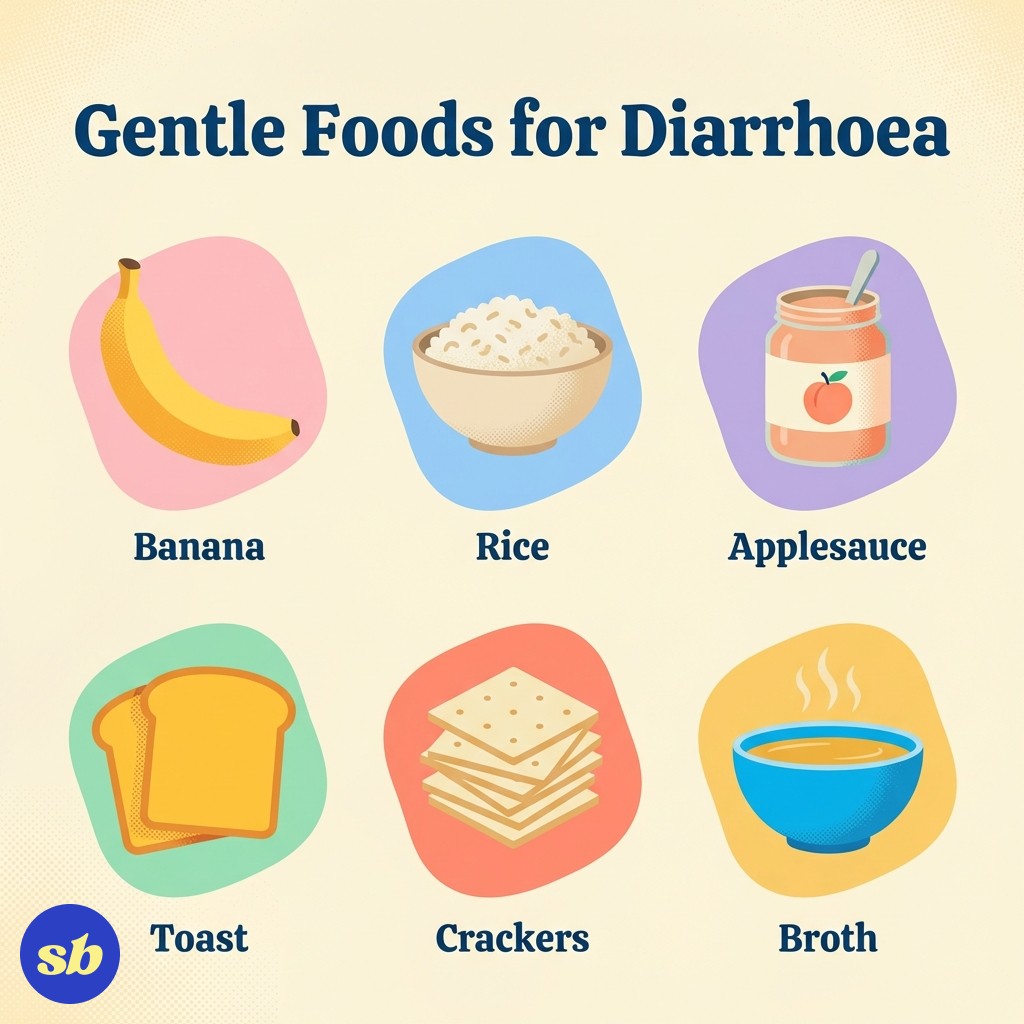
When diarrhoea is at its worst, bland, easy-to-digest foods can help. The BRAT diet (bananas, rice, applesauce, and toast) has long been recommended for settling upset digestive systems, as outlined in NHS guidance on managing diarrhoea. These foods are low in fibre and gentle on your gut.
Other good options include:
- Plain crackers
- Boiled potatoes (without butter or oil)
- Chicken broth
- Plain chicken or fish
- White pasta (without rich sauces)
Once symptoms improve, gradually reintroduce other foods.
Avoid trigger foods
Certain foods are more likely to worsen diarrhoea:
- Fatty or fried foods (slow to digest and can irritate the gut)
- Spicy dishes (can stimulate bowel movements)
- Dairy products (especially if you’re lactose sensitive)
- Caffeine and alcohol (both can stimulate the bowel)
- Artificial sweeteners like sorbitol, which have a laxative effect
- High-fibre foods during acute episodes (reintroduce gradually once settled)
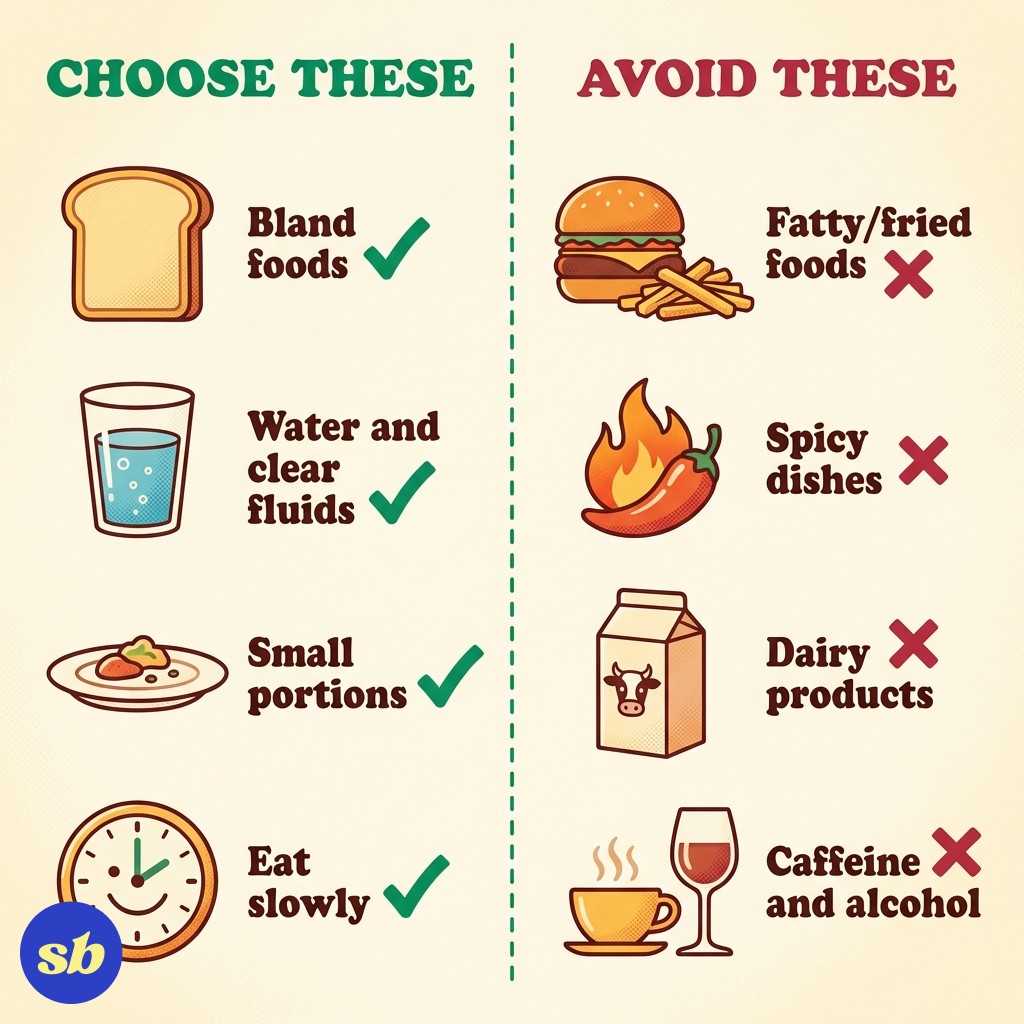
Eat smaller, more frequent meals
Large meals can overwhelm your digestive system and trigger diarrhoea. Eating five or six smaller meals throughout the day puts less strain on your gut and gives your body a better chance of absorbing nutrients properly.
Stop eating when you feel satisfied rather than full. Your slowed stomach emptying combined with faster intestinal transit creates a tricky balance that smaller portions help manage.
Consider over-the-counter remedies
Medications like loperamide (sold as Imodium) can help control diarrhoea by slowing how quickly food moves through your bowels. These are generally safe to use with Mounjaro according to the Mounjaro summary of product characteristics, but check with your pharmacist first, especially if you’re taking other medications.
Probiotic supplements might also help by supporting healthy gut bacteria. Some evidence suggests that products containing Lactobacillus or Saccharomyces boulardii may help manage diarrhoea.
Don’t stop taking Mounjaro without speaking to your prescriber first. Diarrhoea typically improves as your body adjusts, and your prescriber can advise if any changes to your treatment are needed.
Diarrhoea alongside other digestive symptoms
Diarrhoea on Mounjaro often comes with other digestive side effects. You might also experience:
- Feeling nauseous, especially early in treatment
- Abdominal cramping or cramping
- Mounjaro-related bloating and gas
- Sulphur burps
These symptoms share a common cause: Mounjaro’s effect on your digestive system. The strategies that help with diarrhoea (smaller meals, staying hydrated, avoiding trigger foods) generally help with these other symptoms too.
Some people find themselves alternating between diarrhoea and constipation. This can be frustrating, but it usually stabilises as your body adjusts to the medication over several weeks.
Does diarrhoea affect weight loss?
Some people worry that diarrhoea might reduce the effectiveness of Mounjaro for weight loss. The concern is understandable: if food is moving through your system too quickly, are you absorbing the medication properly?
Because Mounjaro is injected under the skin rather than taken orally, diarrhoea doesn’t affect how the medication enters your bloodstream. Your body absorbs the full dose regardless of what’s happening in your digestive tract.
Severe or prolonged diarrhoea can lead to dehydration and electrolyte imbalances, which can affect your overall wellbeing and energy levels. Managing diarrhoea helps you stay healthy and maintain the lifestyle changes that support weight loss.
When to see a doctor
Most diarrhoea on Mounjaro is mild and resolves on its own. Some situations need medical attention.

Contact your GP or prescriber if you experience
- Diarrhoea lasting more than a few days without improvement
- Signs of dehydration that don’t improve with increased fluids
- Blood in your stool
- Severe abdominal pain or cramping
- Fever alongside diarrhoea
- Inability to keep fluids down

Seek urgent medical help if you have
- Severe dehydration (very dark urine, dizziness, confusion, rapid heartbeat)
- High fever with diarrhoea
- Blood or mucus in your stool
- Severe, unrelenting abdominal pain
Severe diarrhoea can occasionally indicate more serious conditions that require prompt treatment.
Frequently asked questions
How common is diarrhoea on Mounjaro?
Diarrhoea affects approximately 12–17% of people taking Mounjaro. In the SURMOUNT clinical trials, this made it one of the most common digestive side effects alongside nausea.
Is diarrhoea common with tirzepatide?
Yes. Tirzepatide is the active ingredient in Mounjaro, and diarrhoea affects around 12–17% of people taking it. This makes it one of the most common digestive side effects, alongside nausea. Symptoms typically improve within a few weeks as your body adjusts to the medication.
How long does Mounjaro diarrhoea last?
Most people find diarrhoea improves within two to four weeks on a stable dose. It may return temporarily after dose increases but typically becomes less severe over time as your body adjusts.
What helps with diarrhoea on Mounjaro?
Staying well hydrated is most important. Eating smaller, bland meals, avoiding fatty and spicy foods, and using over-the-counter remedies like loperamide (Imodium) when needed can all help manage symptoms.
Can I take Imodium with Mounjaro?
Yes, loperamide (Imodium) is generally safe to use with Mounjaro. It works by slowing how quickly food moves through your bowels, which can help counteract the diarrhoea. Check with your pharmacist if you’re taking other medications.
Why do I have diarrhoea even though Mounjaro slows digestion?
Mounjaro affects different parts of your digestive system in different ways. It slows gastric emptying (how quickly food leaves your stomach), but it can speed up transit through the lower intestines in some people, causing diarrhoea. Individual responses vary.
Should I stop taking Mounjaro if I have diarrhoea?
Don’t stop your medication without discussing it with your prescriber. Diarrhoea often improves as your body adjusts. If it’s severe or persistent, your prescriber can advise on whether dose adjustment or other changes might help.
Does diarrhoea mean Mounjaro isn’t working?
No. Diarrhoea is a side effect unrelated to how well Mounjaro works for weight loss or blood sugar control. The medication is injected, so digestive symptoms don’t affect its absorption or effectiveness.
When should I worry about diarrhoea on Mounjaro?
Seek medical advice if diarrhoea lasts more than a few days without improvement, if you notice blood in your stool, if you have severe abdominal pain, or if you show signs of dehydration that don’t improve with increased fluid intake.
Does when I eat affect diarrhoea?
Some people find that eating smaller meals spread throughout the day, rather than large meals, helps reduce digestive symptoms including diarrhoea. There’s no specific timing relative to your injection that’s proven to help, but avoiding large or fatty meals in the days after injecting may ease symptoms during dose escalation.
Can I drink alcohol whilst taking Mounjaro if I have diarrhoea?
Avoid alcohol when you’re experiencing diarrhoea, as it can irritate your gut and make symptoms worse. Alcohol also contributes to dehydration, which is already a concern with diarrhoea. Once your symptoms have settled, moderate alcohol consumption is generally fine, but be aware it may trigger digestive symptoms in some people.
What to do next
If you’re experiencing diarrhoea on Mounjaro, the key steps are staying hydrated, adjusting your diet temporarily, and giving your body time to adjust. Most people find symptoms improve within a few weeks.
If diarrhoea persists or becomes severe, speak to your GP or prescriber. They can review your treatment and advise on next steps.
Finding the right provider
If gut side effects are knocking your confidence in your current provider, it’s worth seeing what else is out there. Provider quality varies a lot when it comes to ongoing clinical support, dose escalation guidance, and how easy it is to pause or adjust treatment when symptoms flare.
Last reviewed: December 2024
Sources
Sources:
- SURMOUNT-1 trial results – New England Journal of Medicine
- Mounjaro summary of product characteristics – Electronic Medicines Compendium
- NHS guidance on diarrhoea – NHS
- NHS water, drinks and hydration – NHS
- NHS dehydration guidance – NHS