
The 75 Soft Challenge isn’t about beating yourself up to get fit. It’s a kinder, more doable version of those extreme fitness programmes. Just four daily habits you can actually stick with, even if you’re juggling meds, work, and the rest of life.
We’ve watched people on weight loss meds use this challenge to build habits that actually support their treatment. The real question isn’t “does it work?” but “do these rules fit your body, your meds, and your day-to-day life right now?”

The 75 Soft Challenge asks you to follow four daily habits for 75 days: eat well (with some wiggle room), drink 3 litres of water, exercise for 45 minutes (with one recovery day per week), and read 10 pages. Unlike 75 Hard, you don’t restart if you miss a day, making it a realistic framework for building lasting habits, especially alongside weight loss medication.
Key takeaways

What is the 75 soft challenge?
You’ve got four daily rules to follow for 75 straight days. Unlike stricter programmes, this one lets you be flexible. Miss a day? You don’t have to start over. Just pick up where you left off.
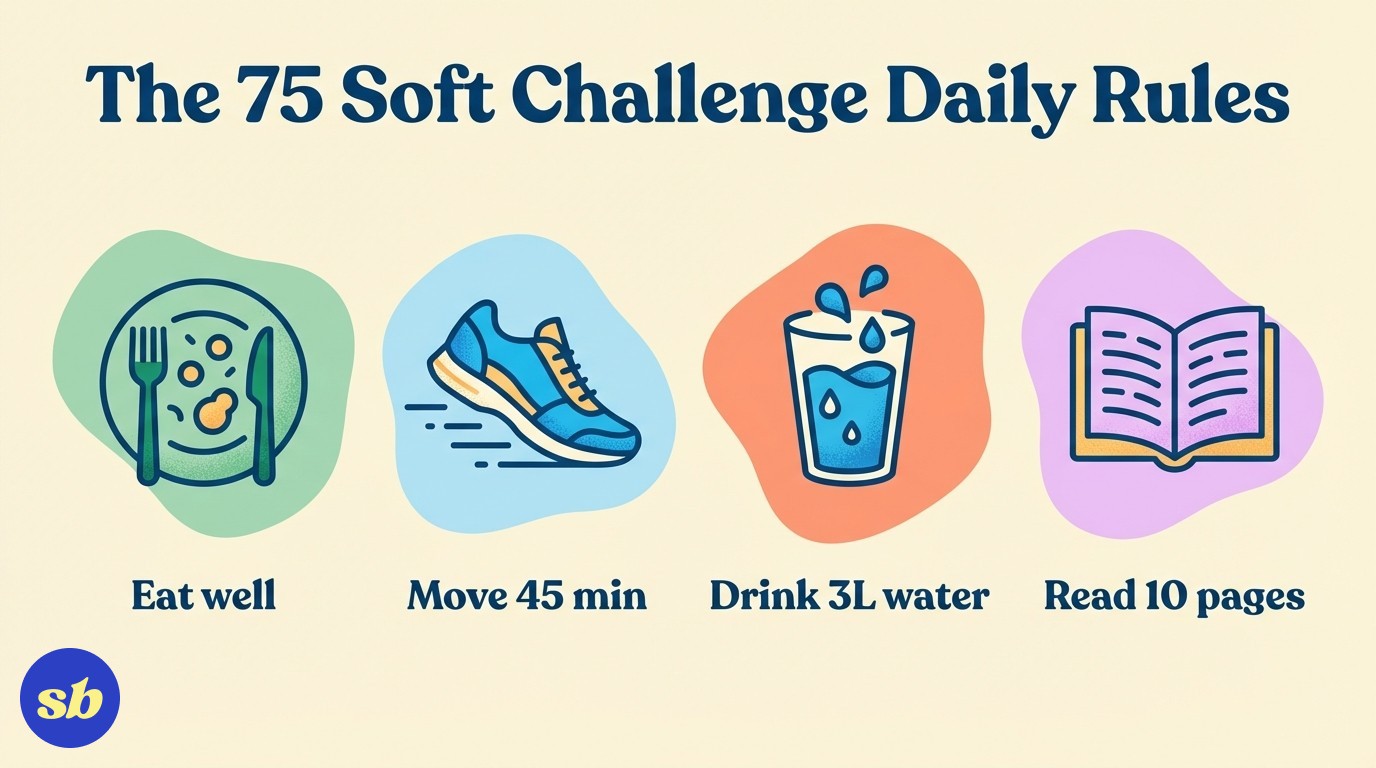
There aren’t any weigh-ins or progress photos. No one’s telling you what “eating well” means — you decide what works for your body and your goals. The 75 Soft Challenge is all about building habits, not proving how tough you are.
If you’re on GLP-1 medications like Mounjaro or Wegovy (prescription weight loss injections that work by reducing appetite and helping you feel full longer), this challenge can actually work with your treatment. Drinking enough water helps with side effects. The exercise rule is flexible, so you can adjust the intensity if you’re not feeling great. And reading gives you a nice evening routine, especially if your appetite’s changed.
You don’t have to cut out food groups or count every macro. That’s a relief when your hunger signals are already all over the place thanks to medication.
Origins and comparison to 75 hard
The 75 Soft Challenge popped up as a friendlier alternative to 75 Hard, which Andy Frisella created in 2019. The original 75 Hard makes you do two 45-minute workouts every day (one outdoors), follow a strict diet with no alcohol or cheat meals, drink a gallon of water, read 10 pages, and take a daily progress photo. Miss anything and you start over from day one.
That’s just not realistic for a lot of people. If you’re dealing with medication side effects or just don’t want to live like a fitness monk, it’s a tough sell.
The soft version keeps the structure but ditches the punishment. You still go for 75 days, but the rules flex to fit your life. Only one workout, not two. Alcohol is okay now and then. No need to exercise outside in freezing rain. And if you sleep through your alarm, you just keep going.
75 Hard

75 Soft

Honestly, the wellness focus of the soft version feels more important than just proving we can tough it out.
Who should try the challenge?
This challenge works well if you want some structure but don’t want to go to extremes. It suits people trying to build habits without the rigid rules of 75 Hard.
If you’re on weight loss meds and need a framework for healthy changes, it lines up well. The daily habits are just good basics: hydration, moving, mindful eating, and stress management.
If you tend to fall into all-or-nothing thinking, this challenge can help. One off day doesn’t erase your progress. You can have a glass of wine at a wedding and still be on track.
You might like this challenge if:
-
You want accountability but hate extreme restrictions
-
You’re starting or restarting exercise habits
-
You need to drink more water (especially common on GLP-1 meds)
-
You want to build a reading habit in the evenings
-
You prefer some flexibility
If you have a history of disordered eating, speak to your GP before starting. Any structured challenge can trigger obsessive behaviour around food, exercise, or tracking. Your mental health matters more than any 75-day programme. And if you’re already nailing healthy habits, you don’t need to add rules just for the sake of it.
Core rules and how to get started
Daily habits for success
Printing out a 75 Soft Challenge printable tracker can really help. You can find free printable templates online, or make your own grid with the four daily habits across the top and 75 days down the side. Ticking off those boxes feels surprisingly satisfying, and a visible streak of checkmarks is a powerful motivator.
Healthy eating and hydration
Eating well doesn’t mean eating perfectly. Aim for balanced, nutritious meals most of the time, with one treat meal where you eat whatever you want. No foods are banned.
If you’re on GLP-1 meds, this is actually easier. Your appetite’s already down, so focusing on nutrient-dense foods just makes sense. Sometimes the struggle is eating enough, not cutting back.
Some eating tips:
-
Try to get protein at every meal — during active weight loss, aim for around 1.0–1.2g per kilogram of body weight daily. For someone weighing 80kg, that’s roughly 80–100g of protein spread across the day
-
Add veggies or fruit to most meals
-
Don’t stress about your treat meal, whether that’s pizza, takeaway, dessert, or whatever you’re craving
-
Eat when you’re hungry, even if it’s not much
This aligns with common recommendations of protein needs during weight loss.
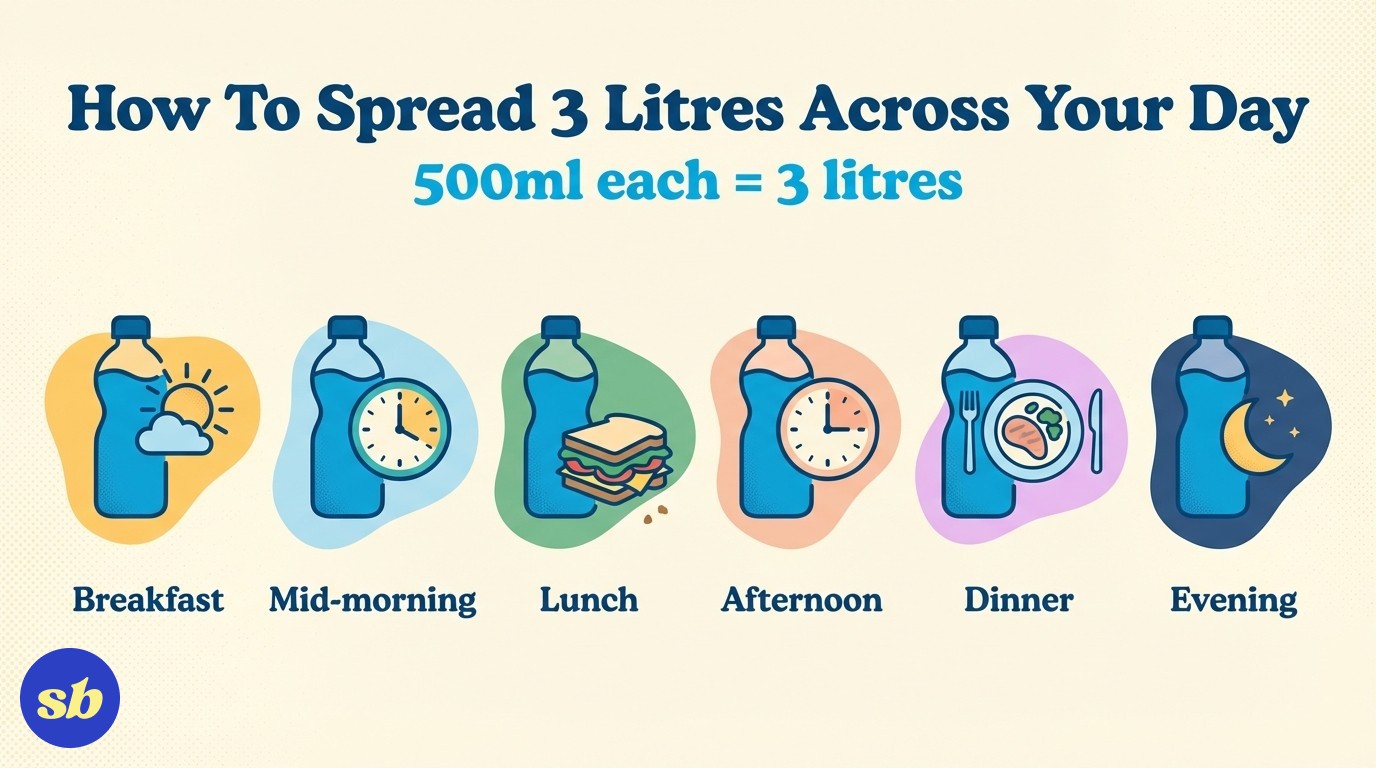
Drinking 3 litres of water sounds like a lot. That’s six 500ml bottles. The NHS Eatwell Guide recommends 6–8 glasses of fluid daily as a baseline, so the challenge target of 3 litres goes well beyond that, which is actually helpful if you’re on GLP-1 medication, where 2–3 litres daily is commonly recommended to manage digestive side effects.
-
Spread it out: one with breakfast, one mid-morning, one at lunch, one mid-afternoon, one at dinner, and one in the evening.
-
If nausea hits, try adding lemon, drinking at room temp, or sipping slowly. Little bits throughout the day are better than chugging a litre at once.
-
Some folks adjust the water goal with their nutritionist based on body weight or activity. That’s fine. The point is to stay hydrated, not hit a random number and feel awful.
For more hydration tips while on medication, see our guide to managing dehydration on Mounjaro.
Exercise and active recovery
You’ll move for 45 minutes every day, with one rest day a week. No need for brutal workouts, a brisk walk totally counts.
The NHS recommends at least 150 minutes of moderate activity per week. The 75 Soft Challenge’s 45 minutes daily exceeds this, which is great as long as you’re listening to your body.
Pick stuff you actually enjoy. If you hate running, skip it. If you love swimming, go for it. The best routine is the one you’ll stick with for 75 days.
Movement ideas:
-
Walking (solo, with a friend, or with a podcast)
-
Swimming or water aerobics
-
Cycling or stationary bike
-
Yoga or Pilates
-
Strength training at home or at the gym
-
Dancing, even in your kitchen
-
Gardening or heavy cleaning
If you work with a personal trainer, ask them to adjust your programme based on how you’re feeling. Stamina can be all over the place, especially with new meds or dose changes (when your medication amount is gradually increased).
Active recovery is important. Your rest day isn’t slacking, it’s when your muscles repair and get stronger. Gentle stretching, a slow walk, or just chilling out all count.
Listen to your body. If you’re wiped out or feeling sick, a gentle walk is better than forcing a tough workout. Moderation keeps you going for the full 75 days.

See your GP or prescriber if you experience:
- Persistent dizziness or lightheadedness during exercise
- Extreme fatigue that doesn’t improve with rest days
- Severe nausea that prevents you from staying hydrated
- Heart palpitations or chest tightness during activity
- Signs of dehydration (dark urine, dry mouth, confusion) despite drinking water
These could indicate that your exercise intensity or hydration needs adjusting alongside your medication.
Tracking progress and accountability
Track four things each day: exercise, meals, water, and reading. A simple checklist works better than a complicated spreadsheet. Use paper, your phone, or whatever you’ll actually stick with.
While there are 75 Soft Challenge apps available, most people find a simple paper tracker or notes app works just as well. The key is picking something you’ll actually open every day. If you prefer digital tracking, search for a 75 Soft Challenge app that lets you tick off all four habits in one place.
Even though the requirement isn’t as rigid as 75 hard, progress photos help tell a story the scale can’t. Take front, side, and back photos in the same clothes and lighting, and compare at day 25, day 50, and day 75. You’ll notice changes in fit and energy before you see big shifts on the scale — this matters especially on GLP-1 medication, where weight can fluctuate.
Lots of people use a basic table to track their week:
| Day | Exercise | Eating | Water | Reading |
|---|---|---|---|---|
| Monday | ✓ | ✓ | ✓ | ✓ |
| Tuesday | ✓ | ✓ | ✓ | ✓ |
Your accountability buddy doesn’t have to do the challenge with you, they just need to check in and care. A quick daily text can keep you honest when you’re tempted to skip.
Some clinics and GPs encourage tracking habits alongside your meds. If you’re already logging food or symptoms, adding these four habits is pretty easy. The routine helps, especially if you’re dealing with brain fog or fatigue.
Skip daily weigh-ins. Your weight can swing a lot, especially on GLP-1 meds. Weekly or even monthly measurements (waist, hips, thighs) give you a better picture.
Benefits and real-life results
People who complete the 75 Soft Challenge tend to notice real changes in their habits and energy levels, without the burnout that comes with extreme programmes.
Physical and mental health improvements
Most people doing the 75 Soft Challenge for weight loss alongside their medication say they feel stronger, have steadier energy, and actually keep up the habits after the 75 day challenge ends.
The daily 45-minute workout gets you moving regularly, but you avoid injuries from overdoing it. That rest day really matters.
Drinking three litres of water daily helps with digestion, skin, and energy levels. If you’re on weight loss meds, hydration is even more important for managing side effects.
Mental health gets a boost, too. Tracking your progress through daily check-ins lets you spot small wins you’d usually miss. Research shows that self-monitoring is one of the most effective behaviour change techniques. Reading 10 pages a day helps create a calm routine, which a lot of people say helps with sleep and stress.
The flexibility is good for your mindset. Can’t make it to the gym? Go swimming or take a walk. The adaptability stops that “I messed up, so I quit” thinking that ruins so many attempts at getting healthy.
Building sustainable wellness routines
The 75 Soft Challenge works because it fits real life. You’re not meal-prepping five times a day or training like a pro athlete. You’re just building a routine that can survive a busy week.
The food part gets you thinking about what you eat, instead of just following strict rules. One meal focused on whole foods each day builds a solid foundation. You start to notice what actually makes you feel good.
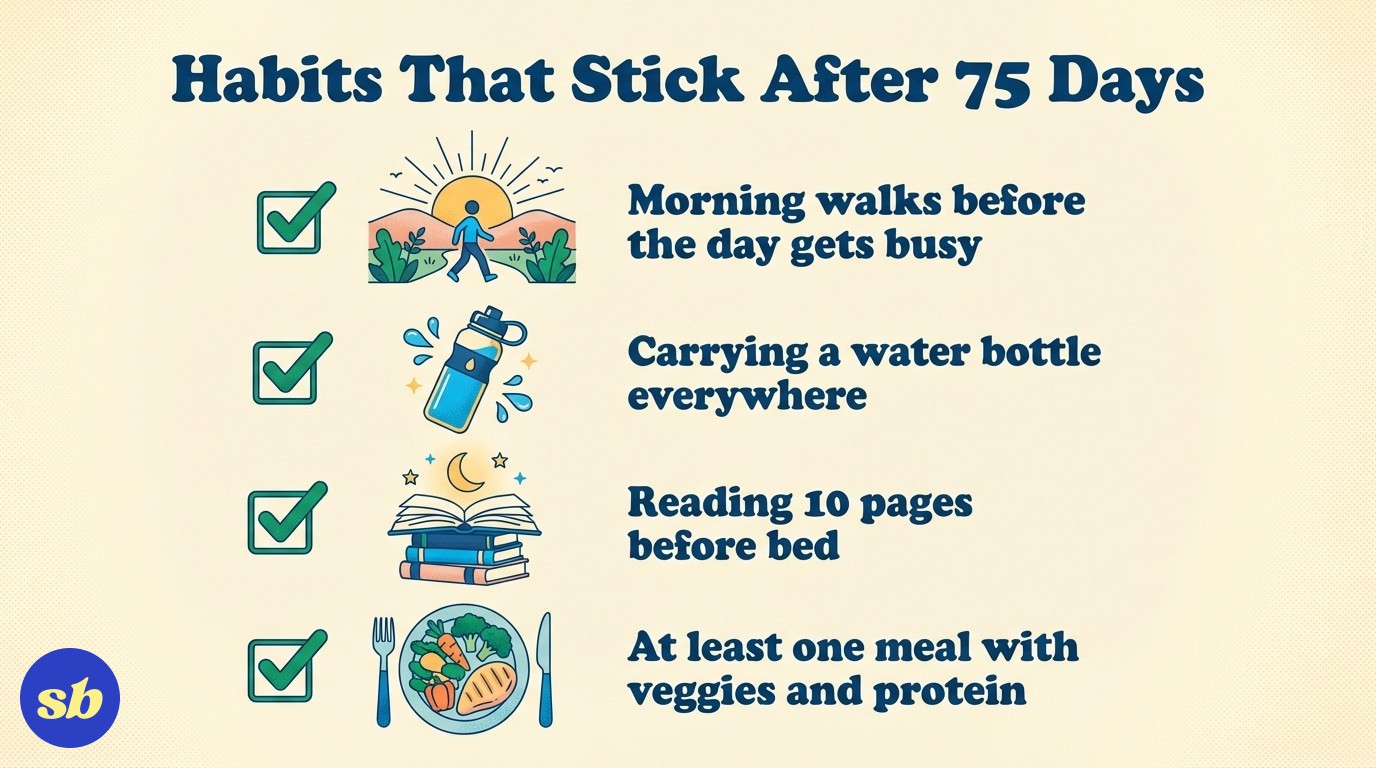
Some habits that stick:
-
Morning walks before things get busy
-
Carrying a water bottle everywhere
-
Reading 10 pages before bed instead of scrolling
-
Making sure at least one meal has veggies and protein
Research on habit formation suggests that flexibility is key to making healthy routines last (Lally et al., 2010, European Journal of Social Psychology). If you need something even gentler, there’s always the 75 Medium Challenge.
Challenges and tips for success
Honestly, the first week feels a bit awkward. You might forget to drink enough water, or maybe it hits you at 10pm that you haven’t read yet.
That’s pretty normal. Setting some phone reminders helps, at least until the habits start to feel automatic.
Fitting in 45 minutes of exercise gets tricky when life’s busy. Splitting it up works just fine. A 20-minute walk in the morning, then 25 minutes of yoga later? Totally counts. The rules make room for this.
Common struggles and practical fixes:
| Challenge | What actually helps |
|---|---|
| Forgetting water intake | Fill three one-litre bottles each morning, finish them by bedtime |
| Too tired for exercise | Count gentle movement like swimming or stretching — your rest day exists for a reason |
| Reading feels like a chore | Audiobooks count; keep a book in your bag for waiting rooms |
| Alcohol at social events | Sparkling water with lime looks like a drink — most people don’t notice or care |

These are normal when starting the challenge (especially on GLP-1 medication):
- Feeling hungrier on exercise days — your body needs fuel for movement
- Mild bloating from increased water intake — this usually settles within a week
- Low energy in the first 1–2 weeks as your body adjusts to a new routine
- Needing to reduce exercise intensity after a dose increase
People on weight loss medication sometimes worry about how hard they should push exercise. Just listen to your body. If you feel weak or dizzy, pull back. This challenge should support your treatment, not make things harder.
The no alcohol rule actually surprises a lot of people with how much it helps sleep quality. You might feel a bit awkward at social events at first. Having a clear reason like, “I’m doing a 75-day challenge,” makes it way easier to turn down drinks.
Track everything somewhere you can see it. A simple tick sheet on your fridge works better than any complicated app. When you see a long streak of checkmarks, you probably won’t want to break it.
Adapting the challenge to fit your lifestyle
The 75 Soft Challenge really works best when you make it your own. Finding that balance between following the rules and making smart tweaks helps you build habits that actually stick.
Making modifications approachable
Strict all-or-nothing programmes usually backfire, especially if you’re already juggling treatment side effects. The best thing about 75 Soft is its built-in flexibility.
Start by checking which rules feel doable right now. If nausea makes the full 45 minutes difficult, adjust the intensity or split the session. The real goal is consistency, not perfection.
Sensible swaps that keep you on track:

Having an accountability partner makes these tweaks feel like smart planning instead of cheating. They’ll help you tell the difference between a real need to adapt and just wanting to skip.
Moderation matters way more than intensity. We’re after habits you can live with, not a sprint that leaves you wiped out by day 30.
Long-term impact beyond 75 days
The real test kicks in after you finish. Most people notice they’ve built a foundation that just seems to carry on, but only if the challenge felt doable while they were doing it.
Wellness is something you keep working on, not a one-time 75-day fix. The habits you’re building now should still make sense in three months, six months, or even a year down the line.
This matters even more if you’re on medication that affects your appetite or energy. If you found out that a 30-minute walk feels better than pushing through 45 minutes of hard cardio, stick with what works. Your body usually knows best.
A lot of people stay on treatment for a long time. The challenge might show you how to move and eat in ways that actually support your life, not work against it.
You don’t need to prove anything to anyone. It’s about building a life that includes movement, staying hydrated, and making better food choices, without making yourself miserable.
The 75 Soft Challenge isn’t a miracle programme. It’s a framework for building four healthy daily habits that work alongside your life and your treatment. The flexibility is the whole point. Adjust the rules to fit your body, stay consistent rather than perfect, and speak to your GP or prescriber if you’re unsure how to balance the challenge with your medication. The habits you build in 75 days should be ones you’d happily keep for 75 more.
This guide is for general information only and doesn’t replace medical advice. If you’re taking prescription weight loss medication, speak to your GP or prescriber before starting the 75 Soft Challenge — they can help you adjust the exercise intensity, hydration targets, and nutritional goals to suit your treatment plan.
Sources: NHS Eatwell Guide — water and hydration, British Dietetic Association — protein, NHS physical activity guidelines, Michie et al. (2009) — self-monitoring and behaviour change, Lally et al. (2010) — habit formation
Frequently asked questions
Can I do the 75 Soft Challenge while taking Mounjaro or Wegovy?
Yes. The challenge’s flexibility makes it compatible with GLP-1 medication. You may need to adjust the exercise intensity on days when side effects like nausea or fatigue are worse, and your GP or prescriber can help you set appropriate hydration and nutrition targets alongside your treatment.
What happens if I miss a day on the 75 Soft Challenge?
You keep going. Unlike 75 Hard, you don’t restart from day one. Just pick up where you left off the next day. The goal is building consistent habits, not achieving a perfect streak.
Is 3 litres of water a day too much?
For most adults, 3 litres is safe and beneficial, especially if you’re exercising daily and taking weight loss medication, which can increase your risk of dehydration. If you have kidney problems or your GP has advised you to limit fluids, check with them first. The NHS Eatwell Guide recommends 6–8 glasses (about 1.2 litres) as a minimum baseline.
Can I split the 45-minute workout into shorter sessions?
Yes. Two 20-minute walks and a 5-minute stretch still adds up to 45 minutes. Splitting sessions is especially helpful on days when medication side effects make longer exercise difficult.
Does the 75 Soft Challenge actually work for weight loss?
The challenge builds habits (regular movement, better hydration, mindful eating) that support weight loss over time. It’s not a weight loss programme in itself, but combined with medication and medical support, the daily structure helps many people see results. Individual outcomes vary significantly.
What counts as active recovery on my rest day?
Gentle stretching, a slow walk, yoga, foam rolling, or even a leisurely swim. The key is that you’re moving your body without pushing hard. Active recovery helps your muscles repair and reduces soreness.
Can I drink alcohol during the 75 Soft Challenge?
The rule allows alcohol on social occasions only. So a glass of wine at a dinner party is fine, but a bottle on the sofa on a Tuesday isn’t. Many people find that cutting back on regular drinking improves their sleep, energy, and weight loss progress.
What should I read for the 75 Soft Challenge?
Any book counts. The original challenge suggests non-fiction or personal development, but there’s no strict rule. Pick something you enjoy — you’re more likely to stick with the habit if you’re reading something you actually want to read. Audiobooks are a good alternative if reading feels like a chore.