
Wegovy and Mounjaro keep popping up in conversations about weight loss. Both are weekly injections that help control appetite and support significant weight loss for people living with obesity or those who are overweight with related health conditions. As leading prescription obesity treatments available in the UK, they’ve become popular options for people seeking NHS weight loss injections or exploring private weight loss clinics.
Choosing between these medications can feel overwhelming. The science behind how they work is different, the costs aren’t the same, and you might wonder about side effects or whether you even qualify.
We’ve pulled together this guide to help you understand the key differences so you can make a choice that feels right for you.

In head-to-head clinical trials, Mounjaro produced greater average weight loss (20.2%) than Wegovy (13.7%) over 72 weeks. Both are effective treatments, but your best choice depends on your medical history, budget, and how your body responds.
Key takeaways

Wegovy vs Mounjaro: how do they work?
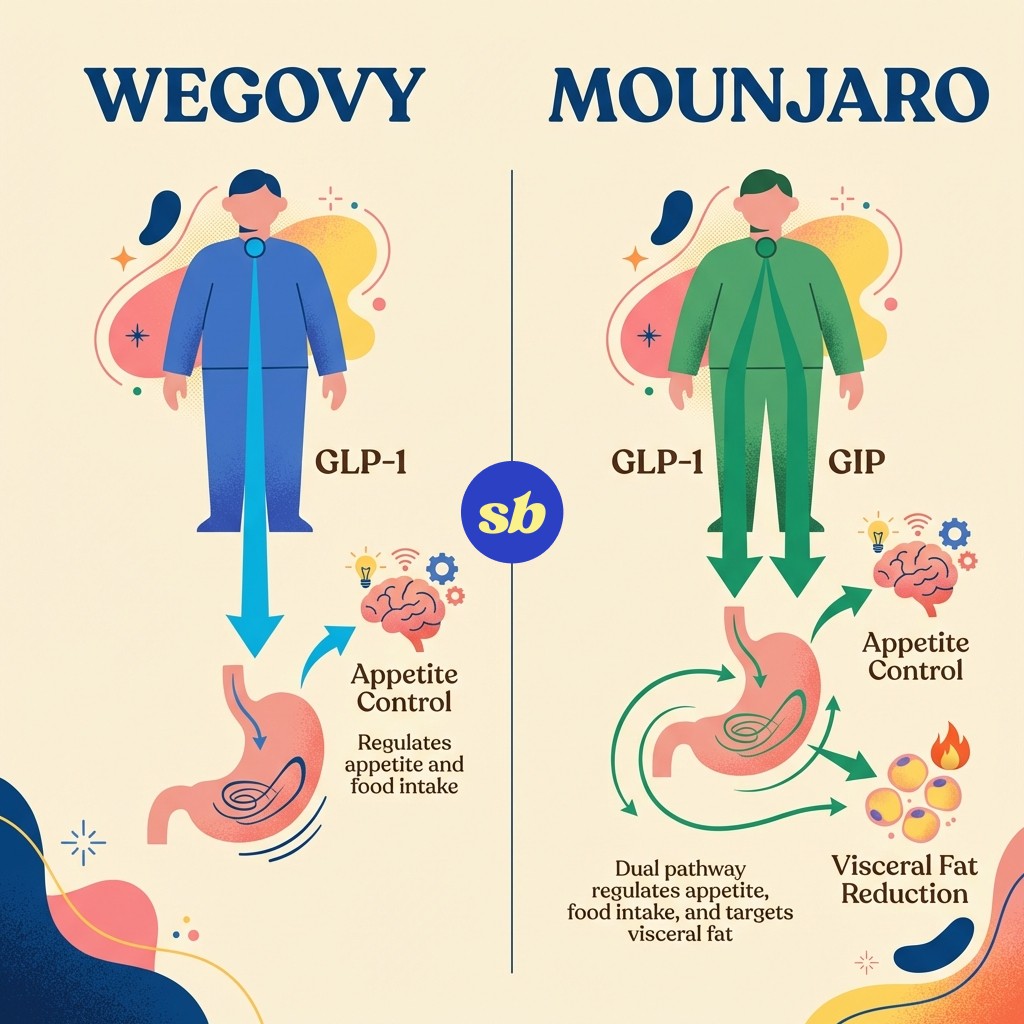
Both medications target hormones that control hunger and blood sugar. Mounjaro works on two hormone pathways, while Wegovy focuses on just one.
This difference changes how strongly they suppress appetite and how much weight loss you might see.
Differences in active ingredients
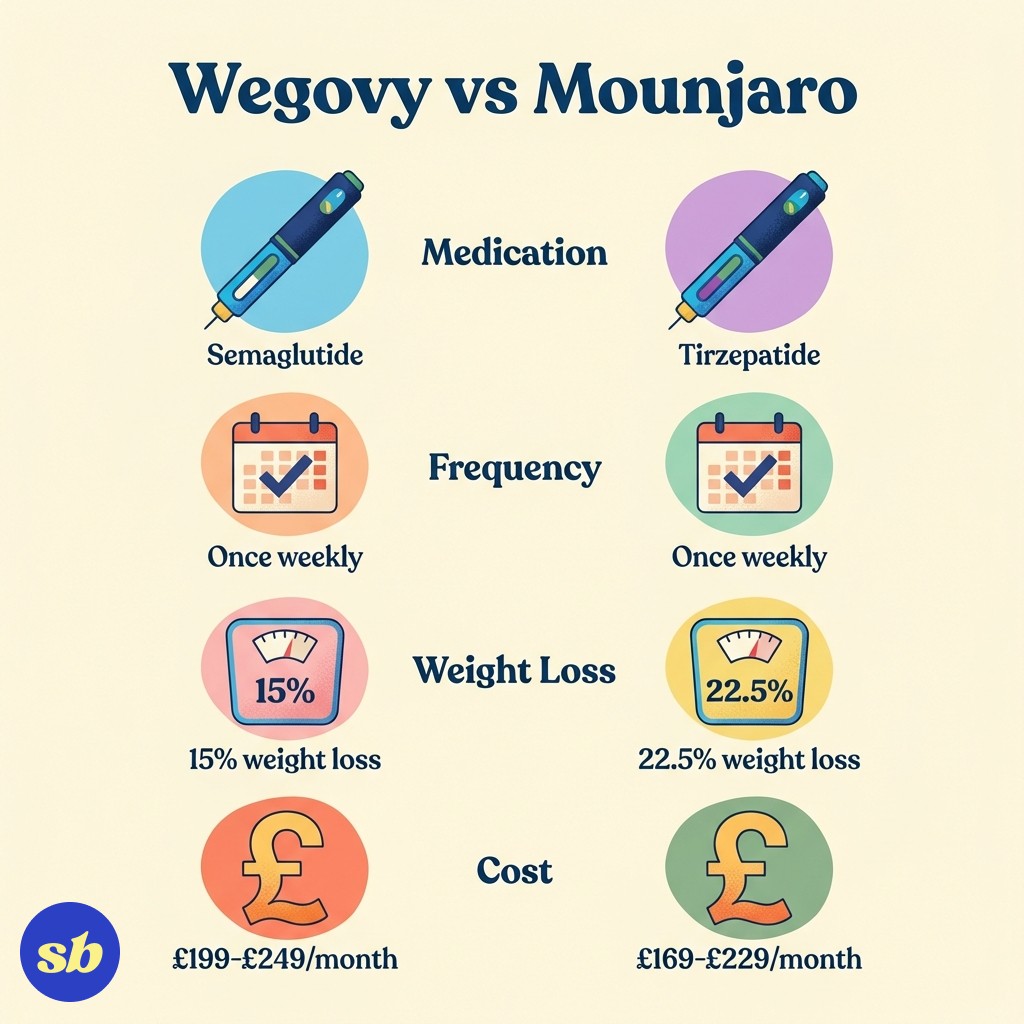
Wegovy contains semaglutide as its active ingredient. It’s a once-weekly injection that mimics a single hormone in your body.
Mounjaro uses tirzepatide (the active ingredient in Mounjaro). It’s also a weekly dose injection, but the molecule is designed to target two hormones at once.
The names get confusing. Semaglutide is the drug itself, while Wegovy is the brand name for the weight loss version.
Tirzepatide is sold as Mounjaro for both diabetes and weight management. Both come as pre-filled injection pens you inject under the skin.
You don’t need any special training to use them. It’s pretty straightforward: your prescriber will show you during your initial assessment.
Mechanisms of action: GLP-1 vs GLP-1 and GIP
Wegovy is a GLP-1 receptor agonist. GLP-1 (glucagon-like peptide-1) is a hormone your gut releases after eating.
When GLP-1 binds to receptors in your brain, it tells you that you’re full. It also slows down how quickly food leaves your stomach (so you feel satisfied longer) and helps your pancreas release insulin when blood sugar rises.
Mounjaro goes a step further as a dual GLP-1 and GIP receptor agonist. It mimics both GLP-1 and GIP (glucose-dependent insulinotropic peptide).
GIP is another gut hormone, a type of polypeptide that works alongside GLP-1 to control insulin release and how your body processes fat.
Research shows that when you combine GLP-1 with GIP, the impact on weight loss is stronger than using GLP-1 alone, as demonstrated in the SURMOUNT clinical trials.
The dual action appears to target visceral fat more effectively. Visceral fat is the fat stored deep in your abdomen that wraps around your organs. It’s the type most strongly linked to serious health conditions like heart disease and type 2 diabetes, even more so than the fat you can pinch. According to research published in the Lancet, reducing visceral fat is particularly important for long-term health improvements.
Impact on appetite and metabolism
Both medications change how hungry you feel throughout the day. Some people even say they forget to eat or feel satisfied after just a few bites.
How they reduce appetite:
- They slow gastric emptying: this means food stays in your stomach longer, helping you feel full for an extended period
- They signal your brain that you’re satisfied
- They reduce cravings and the urge to snack between meals
Mounjaro’s dual action on GLP-1 and GIP receptors appears to create a stronger effect on appetite regulation. In the SURMOUNT-1 trial, patients on tirzepatide lost between 15% and 22.5% of their body weight over 72 weeks, depending on the dose.
In the STEP 1 trial, Wegovy users lost around 15% of their body weight over 68 weeks. According to the published data, half the participants lost 15% or more of their starting body weight. Both drugs also improve how your body responds to insulin, which helps keep blood sugar stable.
For people with type 2 diabetes, this is especially helpful. These medications were originally developed as medication for diabetes before their weight loss benefits became clear. The metabolic changes aren’t just about eating less: your body starts processing fat differently, especially visceral fat.
Effectiveness for weight loss and obesity
Both medications deliver significant weight loss. In head-to-head clinical studies, tirzepatide (Mounjaro) has consistently shown greater average weight loss than semaglutide (Wegovy).
The difference matters whether you’re managing obesity alone or alongside type 2 diabetes.
Clinical trial results and head-to-head studies
The most comprehensive comparison came from a real-world study tracking over 18,000 patients who took either Mounjaro or Wegovy between May 2022 and September 2023.
Researchers matched patients carefully to compare like with like.
Key findings:
- Patients on Mounjaro were more likely to reach 5%, 10%, and 15% weight loss thresholds
- At 12 months, Mounjaro users lost an average of 6.9 kg (about 1 stone 1 lb) more than those on Wegovy
- This advantage held true whether patients had type 2 diabetes or not
The study found that people on Mounjaro reached weight loss goals faster. At three months, they’d already lost 2.4 kg more on average. By six months, that gap widened to 4.3 kg.
What stands out is the consistency: Mounjaro showed better results at every weight loss threshold measured.
Expected weight loss results
So what can you realistically expect? Let’s look at the numbers from clinical trials and real-world use.
In the SURMOUNT-1 trial, Mounjaro users lost around 20-22% of their starting body weight at the highest maintenance dose (the dose you continue taking long-term after the initial build-up period). That’s roughly one-fifth of your total weight.
Wegovy delivers strong results too. In the STEP 1 trial, participants lost an average of 14.9% of their body weight at the full 2.4 mg dose over 68 weeks, with half the participants achieving 15% or more weight loss.
For someone weighing 100 kg (about 15 stone 10 lb), that’s the difference between losing around 15 kg (2 stone 5 lb) versus 20-22 kg (3 stone 2 lb to 3 stone 7 lb).
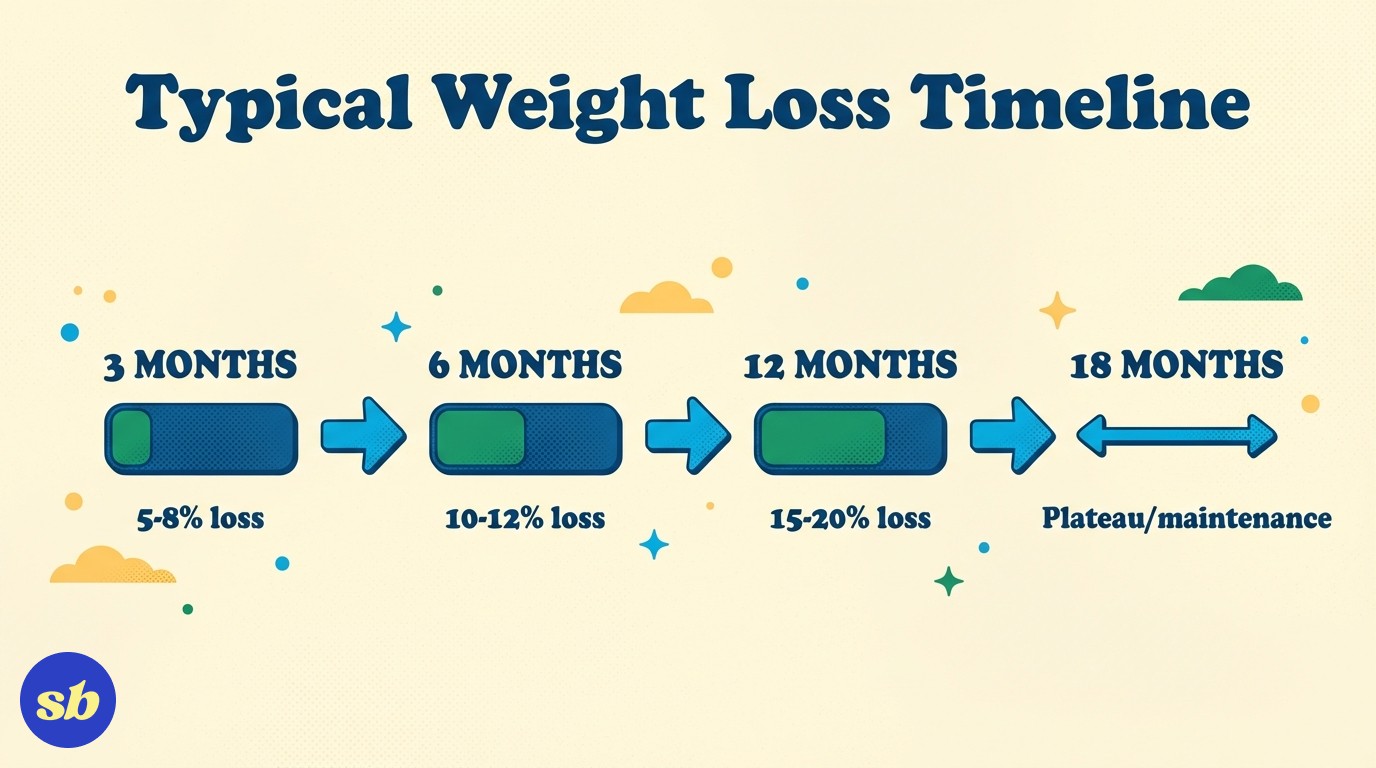
Typical weight loss timeline:
- Months 1-3: Initial weight loss starts, often 5-8% of body weight
- Months 3-6: Continued loss as you reach your maintenance dose
- Months 6-12: Peak weight loss, usually plateauing around month 12-18
Your BMI (body mass index, a measure of weight relative to height; you can check yours on the NHS website) matters. If you’re starting with a BMI over 35, you might see more dramatic absolute weight loss.
But these medications work best alongside healthy diet and lifestyle changes. They’re not magic pills. They’re tools that make it easier to eat less and make healthier choices.
During active weight loss, aim for 1.0-1.2g of protein per kilogram of body weight daily to help preserve muscle mass. For someone weighing 80kg, this means roughly 80-100g of protein daily.
Suitability for obesity and type 2 diabetes
Both medications tackle obesity and type 2 diabetes, but they’re approved for slightly different uses in the UK.
Wegovy is approved specifically as a weight loss treatment for adults with a BMI of 35 or above (or 30 with weight-related health conditions like high blood pressure or type 2 diabetes).
Mounjaro started out approved for type 2 diabetes but is now available for weight management too. Both medications have been assessed by NICE (the National Institute for Health and Care Excellence), the body that evaluates treatments for the NHS. Mounjaro was approved under NICE TA924 for weight management.
If you have type 2 diabetes alongside obesity, Mounjaro shows stronger performance in managing both conditions. The drug works on two hormone pathways instead of one, which appears to give it an edge.
For obesity without diabetes, both medications work well. The choice often comes down to how much weight you need to lose, availability, cost, and how you respond to treatment.
Some people tolerate one better than the other. Your prescriber will look at your full medical history, current BMI, and whether you have type 2 diabetes before recommending either medication. Your eligibility will be carefully assessed during your consultation.
Speak to your GP or prescriber before starting any weight loss medication to ensure it’s right for your individual circumstances.
How Wegovy and Mounjaro compare with other treatments
Let’s put these medications in context with other weight loss treatments available in the UK.
Older weight loss medications:
- Orlistat (Xenical, Alli): Blocks fat absorption, typically delivers modest weight loss of around 3-5% more than diet alone
- Mysimba (naltrexone/bupropion): Reduces appetite, achieves roughly 5-8% weight loss in clinical trials
- Saxenda (liraglutide): An earlier GLP-1 medication that produces around 8% weight loss over 56 weeks
Wegovy and Mounjaro clearly outperform these options. We’re talking about roughly double the weight loss compared to older medications.
But here’s the catch: cost. These newer treatments are significantly more expensive than older options.
Orlistat is much cheaper and available over the counter in lower doses. It might be worth trying first if cost is a major factor, though results are more modest.
What about Ozempic? That’s semaglutide too, but at lower doses approved for type 2 diabetes. Some people use it off-label for weight loss, but Wegovy is specifically formulated for weight management at the higher 2.4 mg dose.
Comparing side effects and safety
Both Wegovy and Mounjaro can cause digestive issues, especially when you first start. The side effect profiles are broadly similar, with gastrointestinal symptoms being most common for both medications.
Common gastrointestinal side effects
Most people notice stomach and digestive issues with both medications. According to pooled data from the STEP 1-3 trials, around 44% of Wegovy users experienced nausea, 30% had diarrhoea, and 25% experienced vomiting. For Mounjaro, approximately 1 in 4 people experience nausea, particularly during dose escalation, with rates of 18-29% reported in SURMOUNT trials depending on dose.
The SURMOUNT-5 trial, which directly compared the two medications, found that gastrointestinal side effects leading to treatment discontinuation were actually slightly more common with Wegovy (5.6%) than Mounjaro (2.7%).
Vomiting, constipation, acid reflux, and stomach pain can occur with either option. Some people also experience fatigue, especially in the first few weeks of treatment.
These side effects usually hit hardest in the first few weeks after you start or increase your dose. Over time, most people see symptoms improve significantly within two to four weeks on a stable dose as your body adjusts.
Starting on a low dose and increasing gradually helps reduce the intensity of side effects. This gradual approach gives your body time to adjust to the medication. Other issues like bloating, tiredness, and headaches can happen, but they’re usually less troublesome than the stomach symptoms.

Managing digestive side effects:
Serious and rare risks
Both medications carry warnings about thyroid C-cell tumours. This risk has only been observed in animal studies, not in humans so far.
However, if you or your family has a history of medullary thyroid carcinoma or Multiple Endocrine Neoplasia syndrome type 2 (MEN2), these medications aren’t suitable for you. Contact your doctor if you notice a lump or swelling in your neck, difficulty swallowing, hoarseness, or shortness of breath, as these could indicate thyroid problems.
Rare but serious side effects can occur:
- Pancreatitis (inflammation of the pancreas) is a risk with both drugs. Seek immediate medical help if you experience severe abdominal pain that spreads to your back
- Gallstones and gallbladder problems sometimes occur, especially with rapid weight loss
- Kidney problems can develop if you become dehydrated from vomiting or diarrhoea
- Heart rate increases: both medications can slightly raise your resting heart rate
Who shouldn’t take these medications:
- People with a personal or family history of medullary thyroid cancer or MEN2
- Anyone with a history of pancreatitis
- Pregnant women or those planning to become pregnant (prescribing information recommends stopping treatment at least 2 months before trying to conceive)
- People with severe gastrointestinal disease
- Anyone with a history of serious allergic reactions to semaglutide or tirzepatide
Women of childbearing age should note that Mounjaro may reduce the effectiveness of oral contraceptives. According to the prescribing information, use additional barrier contraception (such as condoms) for 4 weeks after starting treatment and for 4 weeks after each dose increase.
Your prescriber will assess your full medical history before recommending either medication.
Managing and minimising side effects
Start with the lowest dose and give your body time to adjust. Eat smaller, more frequent meals: large portions tend to make nausea worse. Skip fatty or spicy food if you’re feeling off.
Drink plenty of water, especially if you’re experiencing diarrhoea or vomiting. Ginger tea sometimes helps settle nausea. Some people need anti-nausea medication for the first month.
Watch for redness or itching at the injection site. Rotating where you inject can help.

Seek immediate medical help if you experience
- Severe abdominal pain that spreads to your back (possible sign of pancreatitis)
- Signs of allergic reaction: facial swelling, difficulty breathing, spreading rash
- Confusion, fainting, or severe weakness
- Severe nausea or vomiting that prevents you eating or drinking
Call 999 for suspected allergic reactions or pancreatitis.

Contact your GP or prescriber if you notice
- Constant stomach pain that doesn’t improve
- Signs of dehydration (dark urine, dizziness, confusion)
- A lump or swelling in your neck, difficulty swallowing, or hoarseness
- Any symptoms that concern you
Hair loss can happen if you’re losing weight quickly, but it usually resolves once your weight stabilises. Never skip doses to avoid side effects: it can actually make things worse when you restart.
Cost, dosing, and access
Both medications require weekly injections and gradual dose increases, but their final doses and pricing differ. Access varies depending on whether you go through the NHS or a private provider.
Dosage schedules and weekly injections
Wegovy and Mounjaro both use once-weekly injections. You inject them under your skin, usually belly, thigh, or upper arm.
Wegovy’s dosing starts at 0.25 mg for a month. Then you increase every four weeks: 0.5 mg, 1 mg, 1.7 mg, and finally 2.4 mg.
The maintenance dose is 2.4 mg. This is the dose you’ll continue taking long-term once you’ve completed the initial build-up. Some people stay at 1.7 mg if the higher dose causes too many side effects.
Mounjaro works similarly but with different doses. You begin at 2.5 mg for four weeks, then move to 5 mg. Your prescriber might increase it to 7.5 mg, 10 mg, 12.5 mg, or even 15 mg depending on your response and weight loss goals.
Many people find their optimal dose between 10 mg and 15 mg for long-term weight management.
The pens come pre-filled and ready to use: no measuring required. Both Novo Nordisk (Wegovy) and Eli Lilly (Mounjaro) have designed their pens to be straightforward for self-injection.
NHS vs private access
NHS access:
Getting an NHS weight loss injection requires meeting specific criteria. Mounjaro is available on the NHS through specialist weight management services if you’re living with obesity and have weight-related health conditions such as type 2 diabetes, high blood pressure, dyslipidaemia, obstructive sleep apnoea, or cardiovascular disease.
Initially, access through GP practices is limited to those with the highest clinical need: a BMI of 40+ (or 37.5+ if you’re of Asian, Black African, African-Caribbean, or Middle Eastern heritage) plus at least 4 weight-related conditions.
Wegovy is available via specialist weight management services for adults with a BMI of 35+ (or 32.5+ for people of Asian, Chinese, Middle Eastern, Black African, or African-Caribbean heritage), or a BMI of 30-34.9 (or 27.5-32.4 for these ethnic groups) with additional criteria set by the specialist service.
Eligibility may vary by area. Check with your local integrated care board (ICB) for specific criteria in your region.
You can check your BMI on the NHS website. Your prescriber will also consider your medical history: certain conditions like pancreatitis or thyroid cancer rule out these treatments.
For more information about NHS access, see the NHS England weight management injections page.
The catch? NHS waiting lists for specialist weight management services can be long, and not all areas offer these treatments yet.
Private access:
Private weight loss clinics across the UK offer quicker access to these obesity treatments, though you’ll pay out of pocket. You’ll still need a consultation to confirm you’re suitable for treatment.
Online prescription services have made these treatments more accessible, though you’ll still need a thorough eligibility assessment. Many private providers include support from a health coach as part of your healthcare journey, helping you make the lifestyle changes needed for long-term success.
When choosing a private provider, check they’re registered with the Care Quality Commission (CQC) and that prescriptions come from qualified healthcare professionals.
Understanding the costs
Pricing for these medications varies significantly depending on your provider, the dose you’re on, and whether you’re paying per dose or monthly.
What affects the price:
- Lower starter doses cost less than higher maintenance doses
- Different providers charge different prices for the same medication
- Some providers include consultations and support; others charge separately
- Prices change frequently as supply and competition shift
Rather than quote specific prices that may be outdated, we recommend using our comparison tool to see current costs across UK providers. This lets you compare like-for-like and find the best value for your situation.
Both manufacturers run patient support programmes that may help with costs in certain circumstances. Ask your provider about options if cost is a barrier.
Making your decision
Choosing between Wegovy and Mounjaro isn’t straightforward. Both are effective treatments that can help you lose significant weight and improve your health.
Mounjaro may be the better choice if:
- You want to maximise weight loss
- You have type 2 diabetes alongside obesity
- You’re comfortable with a newer medication with a shorter track record
Wegovy may be the better choice if:
- You want a medication with a longer history of use
- Mounjaro isn’t available or affordable
- You experienced difficult side effects with Mounjaro and want to try an alternative
The most important step is talking to a qualified healthcare professional who can assess your individual situation. They’ll consider your medical history, weight loss goals, and any conditions that might affect which medication is safer for you.
The bottom line
Mounjaro and Wegovy are both effective prescription weight loss treatments, but they work differently and produce different levels of results. In head-to-head trials, Mounjaro delivered greater average weight loss thanks to its dual-hormone approach, though both medications represent a significant step forward from older treatments.
Your best option depends on your medical history, whether you have type 2 diabetes, your budget, and how your body responds. Speak to your GP or prescriber to discuss which treatment suits your circumstances, and use our comparison tool to find the most suitable provider.
Choosing the right treatment provider
Once you’ve weighed up Wegovy against Mounjaro, the next question is which provider to use. Costs, ongoing clinical support, and how flexibly you can switch between treatments all vary significantly between UK providers.
This guide is for information only and doesn’t replace medical advice. Speak to your GP or prescriber before starting or changing any weight loss treatment.
Sources: Clinical information in this guide is based on the SURMOUNT-5 trial (NEJM), the SURMOUNT-1 trial (NEJM), the STEP 1 trial (NEJM), a real-world comparison study (JAMA Internal Medicine), the Mounjaro SmPC, the Wegovy SmPC, and NICE TA924.
Frequently asked questions
How quickly will I lose weight?
Most people see noticeable weight loss within the first month, though the full effect takes longer. On average, you’ll lose 5-8% of your body weight in the first three months. Maximum weight loss typically occurs around 12-18 months of treatment. Individual results vary based on your starting weight, dose, and how well you stick to lifestyle changes alongside medication.
Can I take these medications if I have type 2 diabetes?
Yes. Both are suitable for people with type 2 diabetes, and they can help manage blood sugar as well as weight. Mounjaro may be particularly effective if you have diabetes, as clinical trials showed stronger results in this group. Your prescriber may need to adjust any existing diabetes medications to avoid low blood sugar.
What happens if I stop taking the medication?
Research shows that most people regain weight after stopping treatment, often returning to their original weight within a year or two. These medications work by suppressing appetite: when you stop, your appetite typically returns to previous levels. This is why many prescribers view them as long-term treatments rather than short-term fixes.
Are side effects worse with one medication?
The side effect profiles are broadly similar. Both cause gastrointestinal symptoms like nausea, diarrhoea, and vomiting, particularly during dose escalation. The SURMOUNT-5 trial found that fewer people discontinued Mounjaro due to gastrointestinal side effects (2.7%) compared to Wegovy (5.6%). However, individual responses vary: some people tolerate one better than the other.
How do I inject the medication?
Both come as pre-filled pens that make self-injection straightforward. You inject once weekly under the skin of your belly, thigh, or upper arm. Most people find it much easier than expected: the needles are small and the pens do most of the work. Your provider will show you how to use the pen when you start treatment.
Can I drink alcohol while taking these medications?
Moderate alcohol consumption is generally fine, but be aware that these medications slow stomach emptying, which can intensify alcohol’s effects. You may feel drunk more quickly or experience worse hangovers. Heavy drinking isn’t advisable as it adds empty calories and can worsen side effects like nausea.
What if the medication doesn’t work for me?
Not everyone responds equally. Some people lose less weight than average, and a small percentage see minimal results. If you’re not losing weight after 3-4 months at an adequate dose, your prescriber may suggest switching to the other medication, adjusting your dose, or exploring other options. Response can depend on factors including genetics, adherence, and lifestyle factors.
Is one medication “better” than the other?
Clinical trials consistently show Mounjaro produces greater average weight loss: about 20% of body weight compared to around 14-15% for Wegovy in head-to-head comparison. However, “better” depends on your individual circumstances. Some people respond better to Wegovy, tolerate it better, or prefer it for other reasons. Both are effective treatments, and the right choice depends on your goals, medical history, and how your body responds.
How long do I need to take the medication?
These medications are typically prescribed as long-term treatments. Most people who stop regain the weight they lost. Current evidence suggests ongoing treatment is needed to maintain weight loss. Your prescriber will discuss the long-term plan with you, including regular reviews to assess whether continued treatment is appropriate.
Can I combine these medications with other weight loss treatments?
You should not combine Wegovy or Mounjaro with other GLP-1 medications (including Ozempic or Saxenda) as this increases the risk of serious side effects. However, these medications work best alongside lifestyle changes: a balanced diet and regular physical activity. Some people also work with dietitians or health coaches as part of their treatment programme. Always discuss any supplements or other treatments with your prescriber before combining them.