
Staying motivated while losing weight isn’t really about one magical burst of inspiration. It’s about building little systems into your days that keep you going, even when the honeymoon phase is over.

Honestly, the best way to stay motivated is by setting goals you can actually reach, building daily habits that fit your real life, and having support from people who get what you’re dealing with.
Most of us kick things off feeling pumped. The tough part hits around week three, when the novelty fades and life gets messy.
We wanted to focus on what really helps people keep going, not just what sounds good on paper. That means looking at lifestyle changes that actually stick, tracking methods that don’t make you want to quit, ways to handle setbacks without spiralling, and building a support network that actually helps.
Key takeaways

Setting realistic foundations for lasting motivation
Willpower alone doesn’t fuel motivation. It comes from having reasons that matter to you, goals that feel possible, and routines you can actually stick with after the first month.

Clarifying your reasons and finding your ‘why’
We usually start trying to lose weight with vague reasons like wanting to “be healthier” or “feel better.” Those aren’t bad, but they’re too fuzzy to keep you going when things get tough.
Research says knowing your personal motivations really helps you stick with weight loss. There’s a difference between intrinsic motivation (reasons that come from inside you) and extrinsic motivation (doing it for outside approval or rewards). Put simply, intrinsic motivation means doing something because it matters to you personally, while extrinsic motivation means doing it for a reward or to avoid criticism.
Intrinsic reasons just work better. Instead of “I want to lose weight because my partner thinks I should,” maybe it’s “I want more energy to play with my kids.” Or instead of chasing some social media body ideal, you focus on managing your blood sugar or easing joint pain.
Jot down three to five reasons that actually matter to you. Stick them somewhere you’ll see them. When motivation dips (and it will), those reminders can help you remember why you started.
Establishing achievable and incremental goals
Setting goals for weight loss sounds simple, but the way you frame them changes everything. Lots of us zero in on outcome goals like “lose 3 stone” or “fit into a size 12.” Those aren’t bad, but you can’t control them completely.
Process goals focus on what you can do every day. Instead of “lose 2 stone by summer,” you might go with “eat 1.0–1.2g of protein per kilogram of body weight daily (roughly 80–100g for someone weighing 80kg)” or “walk 8,000 steps five days a week.” Research on goal setting shows that people who focus on daily habits stick with it longer.
Start with small steps. If you don’t exercise now, don’t promise five gym sessions a week. Try two short walks instead. If your diet needs work, change up breakfast first.
A registered dietitian or exercise physiologist (a specialist in physical activity and health) can help you pick goals that fit your life. They’ll look at your habits, health, and if you are on any medication.
Track your process goals, not just your weight. Did you hit your protein goal four days this week? That’s real progress.
Choosing sustainable approaches over quick fixes
We’ve all seen the ads. “Lose a stone in two weeks!” or “Drop fat with this one weird trick!” The diet industry loves quick fixes that never last.
Honestly, healthy weight loss usually means losing about 0.5 to 1kg per week. That might feel slow, but it’s what helps you keep the weight off. Faster than that, and you risk yo-yo dieting, where you lose, gain it back, and repeat. That cycle makes things harder in the long run.

Long-term weight management research points to a few things that work:
Ask yourself: could I keep this up a year from now? If not, it’s probably not sustainable. Nobody needs perfection. Just patterns you can live with.
Building effective habits and routines
Weight loss meds change your appetite, but they don’t build the habits that keep weight off for good. The real work? Creating routines that last, tracking what works, and learning how to bounce back when life gets messy.
Tracking progress and self-monitoring
Your bathroom scales don’t tell the full story. Often your body changes in ways the scales miss.
A weight loss journal helps you spot patterns the scales won’t show. Write down what you ate, how you felt, your energy, and any side effects. After a few weeks, you might notice things like nausea getting worse when you skip breakfast, or sleeping better on days you hit your protein goal.
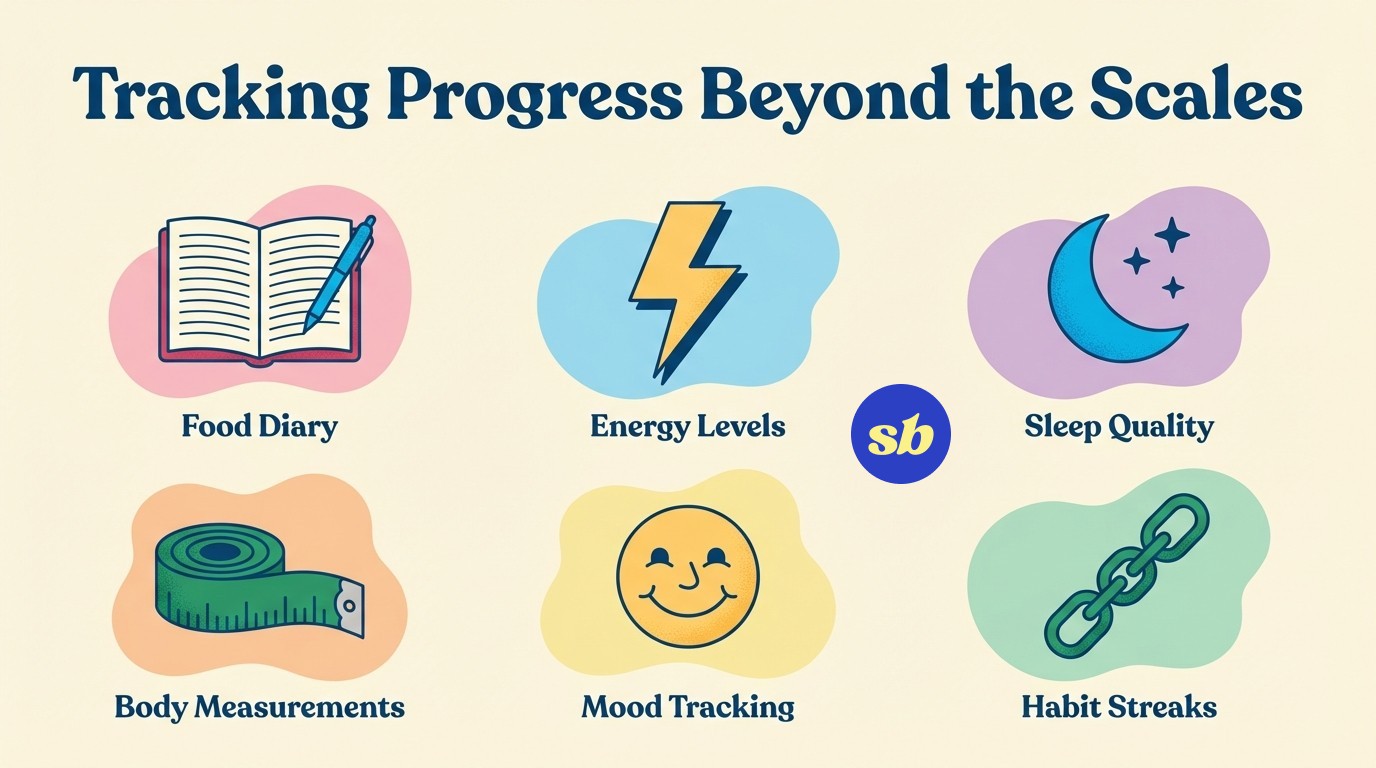
A food diary isn’t about counting every calorie. It’s about understanding how your appetite is changing. When your appetite hormones shift on medication, you might forget to eat enough protein or go too long without food. Tracking helps you stay on track even when you don’t feel hungry.
Be specific with self-monitoring. Instead of “ate well today,” jot down “hit my protein target, three meals, felt good.” Research on behaviour change says immediate, positive feedback builds habits faster than just focusing on weight.
Track non-food wins too. Did you prep meals on Sunday? Drink enough water? These matter just as much as the number on the scales.
Some people find wearable technology helpful for staying motivated too. A continuous glucose monitor, sometimes called a glucose biosensor, tracks your glucose levels in real time and shows how different meals affect your blood sugar throughout the day.
Seeing that a high-protein lunch keeps your energy steadier than a bowl of pasta can reinforce the habits you’re building. These devices aren’t essential, but if you’re someone who responds well to data and feedback, they can add another layer of insight alongside your food diary.
Creating an environment for success
Your kitchen and daily routine either help your plan or work against it. Small tweaks can make willpower less necessary.
Stock your fridge with easy, high-protein foods. Pre-cooked chicken, Greek yoghurt, eggs, and protein shakes are lifesavers when your appetite disappears and you don’t want to cook. Keep fibre-rich options like oats, lentils, and frozen vegetables on hand too — they fill you up and support digestion, which can help if medication has changed your gut habits. If it’s easy to grab, you’ll actually eat it.
Remove friction from healthy choices. Put your trainers by the door. Prep breakfast the night before. Keep a water bottle at your desk. Aim for at least 2 litres of water daily — the NHS Eatwell Guide recommends 6–8 glasses of fluid daily as a baseline, but you may need more during active weight loss. Habits built into routines stick better than ones that rely on motivation.
Your social environment counts too. Keep your GP informed about your progress and any difficulties. They can adjust your medication dose, refer you to a dietitian, or offer support for both physical and mental health during weight loss.
Set up your day to cut down on decisions. Eat similar breakfasts. Exercise at the same time. Decision fatigue is real, especially when you’re getting used to medication.
Celebrating non-scale victories and rewarding yourself
The scales might not budge for a while, but your body is still changing. Non-scale wins keep you motivated when things stall.
Maybe your jeans fit better. Maybe you’re sleeping more soundly. Or maybe you’re not preoccupied with food all day. These wins matter way more than half a kilo up or down.
Track more than just weight. Take monthly photos. Notice when you climb stairs without getting winded. Write down when someone says you look well. People who keep weight off focus on daily habits, not just end results.
Reward yourself for sticking with it, not being perfect. Hit your protein goal five days this week? Buy that book you’ve wanted. Walked three times? Treat yourself to a massage. Make rewards quick and tied to the habit you want to keep.
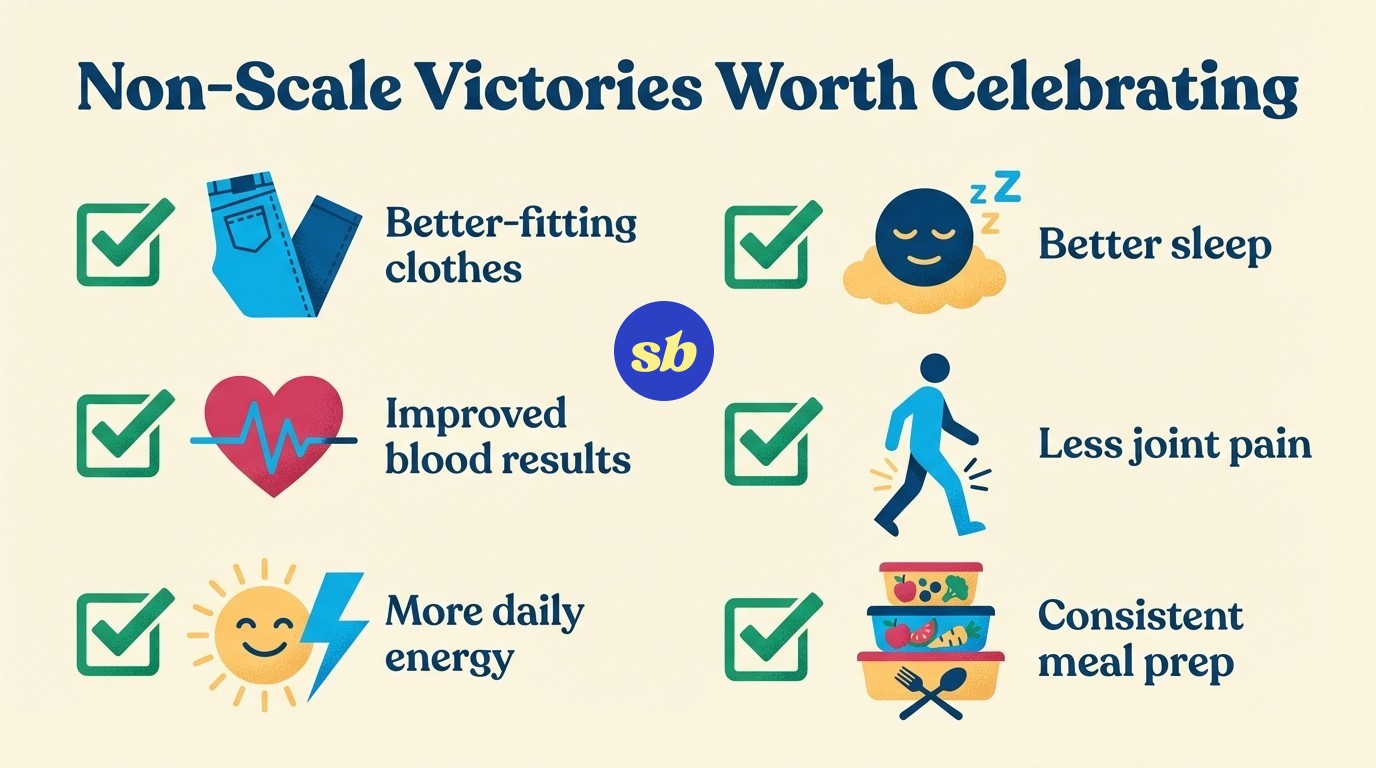
Don’t wait to hit a magic number before you reward yourself. Small wins add up.
Overcoming setbacks and staying consistent
Some weeks, the scales go up. You might miss injections. Maybe you eat a full Christmas dinner and feel lousy. That’s just real life.

Plan for setbacks before they happen. What will you do if you’re too nauseous for protein? If you miss an injection? If you regain a bit? Having a plan takes the panic out of it.

Speak to your GP or prescriber if:
- You’re regularly skipping doses or struggling with side effects
- You’ve lost motivation and feel low or anxious about your weight
- You’re losing weight faster than 1kg per week consistently
- You’re not eating enough and feel weak, dizzy, or exhausted
- You’ve noticed hair thinning, persistent nausea, or other new symptoms
Forgive yourself quickly. One rough week doesn’t erase all your progress. Building habits takes self-compassion, not punishment. Get back to your routine at the next meal, not next week.
Positive self-talk might sound cheesy, but it helps. Swap “I’ve ruined everything” for “I had a tough day, and tomorrow I’ll get back on track.” The second one’s true. The first isn’t.
Stick with the basics even when motivation disappears. Take your meds. Eat protein. Drink water. Move your body, even a little. These habits matter more than being perfect. Track your progress during hard times so you can see you’re still moving forward, just slower.
Powerful tools and social strategies for motivation
The right tools and people can make weight loss less lonely and way more doable. Whether it’s tracking habits, finding support, or discovering movement you actually like, these strategies help you keep going when motivation is low.
Using fitness apps and journals
Weight loss apps can be hit or miss. Lots of people hate calorie counting and want more encouragement. Still, the right app can help. Look for ones that let you track habits, not just calories.
Self-monitoring, feedback, and goal setting show up over and over in effective weight loss programmes. Apps that combine these features with reminders and personal touches usually work better than plain calorie counters.
Think about what you actually need. Some of us love detailed meal planners. Others just want a simple habit tracker. The best app is the one you’ll still use in three months.
Seeking accountability and support networks
Accountability works because it adds some outside pressure. When someone else knows your goals, you’re more likely to stick with them.
Social support helps with motivation and sticking to habits. Maybe that’s a friend who checks in, an online group for people on similar medications, or a structured support group.
Reddit and HealthUnlocked have active communities where people share tips about managing side effects, protein intake, and exercise while taking GLP-1 medications. The real benefit is hearing that your struggles are normal and picking up ideas from people who’ve been there.
Find movement you enjoy with a buddy or group. Any regular activity is more compelling when you’ve promised to show up for someone else. Sometimes the social side matters more than the exercise itself.
Working with weight loss coaches and professionals
A weight loss coach brings structure and expertise that friends just can’t always give you. They notice patterns you might overlook and really get how behaviour change works.
Motivational interviewing is one tool professionals use to help you figure out what actually matters to you. Instead of telling you what to do, they help you dig into your own reasons for wanting change. That approach tends to stick a lot better than just feeling pressure from the outside.
Try to find someone who gets GLP-1 medications. Ideally, they’ll understand protein needs, muscle preservation, and how to keep training when your appetite has pretty much disappeared.
A good professional will also create meal plans that fit your real life, not some fantasy version of it.
Enjoying exercise by finding activities you love
The best type of physical activity is the one you’ll actually stick with six months from now.
Find an exercise you enjoy instead of dragging yourself through workouts you can’t stand. If running feels like torture, why not try swimming, cycling, walking, or even dancing? Sometimes, especially if medication affects your energy, gentler physical activity just makes more sense.
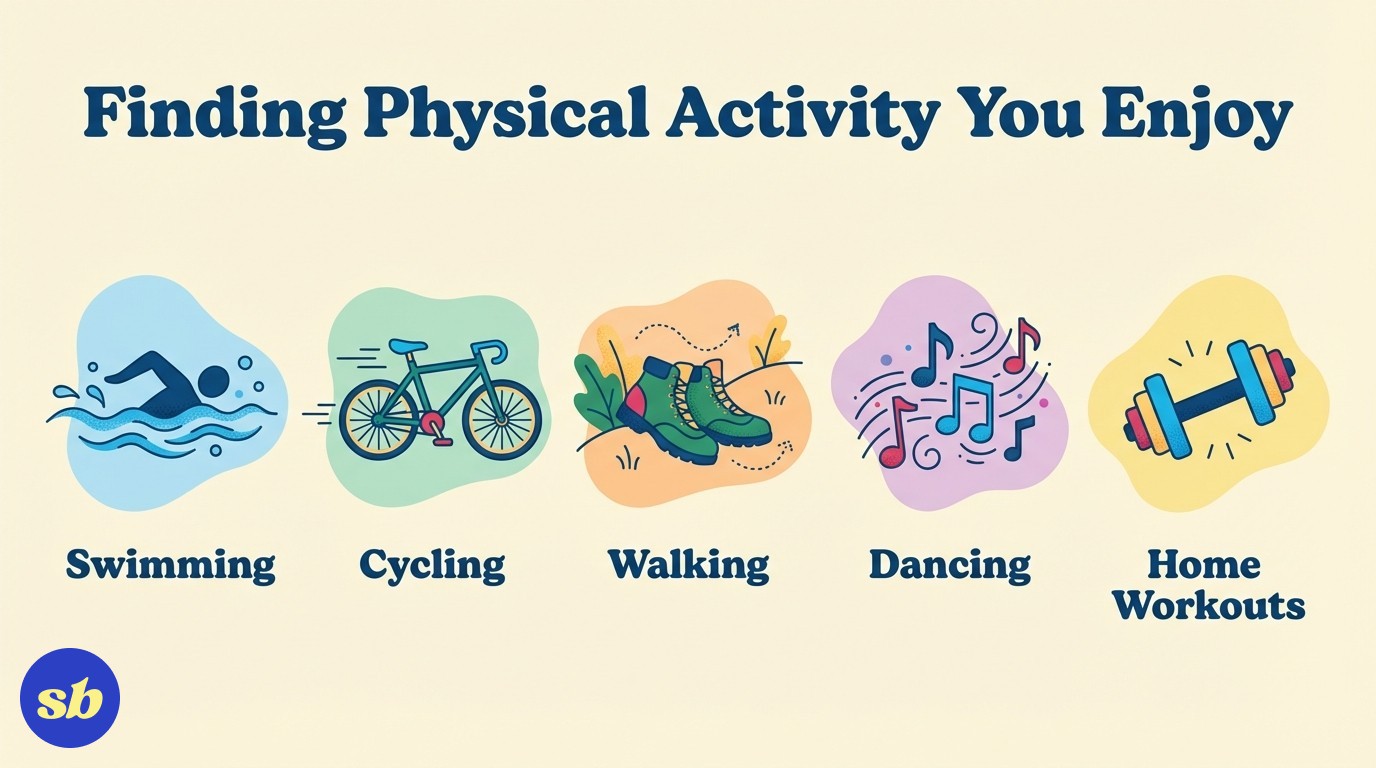
Moving your body helps you keep muscle as you drop pounds. That’s honestly more important than burning the most calories possible.
Try resistance training twice a week, even if it’s just light weights or bodyweight moves. That way, you give your muscles some love.
A gym membership can be worth it, but only if you actually use it. Home workouts, walking groups, or even hobbies like gardening totally count.
Consistency? That always wins out over intensity.
The bottom line
Staying motivated to lose weight is less about willpower and more about building systems that work for your real life. Set small, specific goals you can hit daily. Track your habits — not just your weight. Lean on people who understand what you’re going through, whether that’s a GP, a coach, or an online community.
If you’re on medication, remember it’s a tool that works best alongside consistent habits around food, movement, and self-care. Progress isn’t always linear, and a rough week doesn’t undo months of effort. Focus on what you can control today, celebrate the wins the scales don’t show, and keep going.
This article is for general information only and does not replace medical advice. If you’re taking or considering weight loss medication, speak to your GP or prescriber before making changes to your treatment, diet, or exercise routine. If you experience persistent or worsening side effects, contact your healthcare provider.
Sources: NHS – Start losing weight, NHS Eatwell Guide, British Dietetic Association – Protein
Frequently asked questions
How do I stay motivated to lose weight when I’ve hit a plateau?
Plateaus are a normal part of weight loss, especially after the first few months. Focus on non-scale victories like improved energy, better-fitting clothes, or healthier blood pressure. Review your habits — are you hitting your protein target and staying active? If you’re on medication, speak to your prescriber about whether a dose adjustment might help. Often, the plateau breaks on its own if you stay consistent.
Is it normal to lose motivation after the first few weeks?
Yes, very normal. The initial excitement fades around week three to four for most people. This is when shifting from motivation to routine matters most. Focus on the smallest version of your healthy habits — even a 10-minute walk or one protein-rich meal counts. Motivation comes and goes, but habits carry you through the gaps.
How often should I weigh myself?
There’s no single right answer. Some people find weekly weigh-ins helpful for spotting trends, while others find the scales demotivating. If you weigh yourself, do it at the same time each week and look at the trend over a month rather than day-to-day changes. Tracking non-scale metrics like how your clothes fit or your energy levels can be just as valuable.
Can exercise help with motivation even if I don’t lose weight from it?
Yes. Regular physical activity improves mood, sleep, and energy — all of which support motivation. Exercise also helps preserve muscle during weight loss, which matters more than the calories burned during a single session. The mental health benefits alone make movement worth it, regardless of what the scales say.
What should I do if I’ve had a bad week?
Get back to your routine at the next meal, not next Monday. One difficult week doesn’t erase weeks or months of progress. Focus on the basics: take your medication, eat enough protein, stay hydrated, and move your body even briefly. Self-compassion is more effective than self-punishment.
Should I use a food diary or tracking app?
A food diary works well for spotting patterns — when you eat, how you feel afterwards, and whether you’re getting enough protein. You don’t need to count every calorie. The best tracking method is one you’ll actually use consistently. Some people prefer a simple notes app, others like dedicated habit trackers. Try a few and stick with whatever feels least like a chore.
When should I ask for professional help with motivation?
If you’ve been struggling with motivation for several weeks, feel low or anxious about your weight, or find yourself in a cycle of restriction and overeating, speak to your GP. They can refer you to a dietitian, an exercise specialist, or a mental health professional. A weight loss coach who understands GLP-1 medications can also help you build practical strategies tailored to your situation.