

Starting Zepbound can feel overwhelming. You’ve got the prescription, but now what?
How do you actually make the most of this treatment while staying safe and feeling your best?

Success with Zepbound comes down to combining your weekly injection with practical daily habits — eating well, staying hydrated, managing side effects early, and tracking your progress. These tips help you get the best results while feeling comfortable throughout your treatment.
Honestly, success with Zepbound goes way beyond just taking your weekly injection. Small changes to your routine, diet, and lifestyle really do make a difference in how you feel and the results you see.
We’ve pulled together practical tips based on real experiences and clinical guidance to help you navigate your journey with tirzepatide (the active ingredient in Zepbound) a bit more confidently. Whether you’re living with obesity or overweight with weight-related health conditions, or managing weight alongside other conditions, having the right strategies makes everything a little easier. Maybe you’re wrestling with side effects, or maybe you’re unsure about what to eat or how to travel with your medication.
Key takeaways


This guide is for information only and does not replace medical advice. Always speak to your doctor or prescriber before starting, stopping, or changing any weight loss medication. The tips in this article are based on clinical guidance and real-world experience, but your prescriber knows your individual health needs best.
Getting started with Zepbound
Starting Zepbound feels like a big step. You’ll need to set honest goals and ride out the first few weeks while your body adapts.
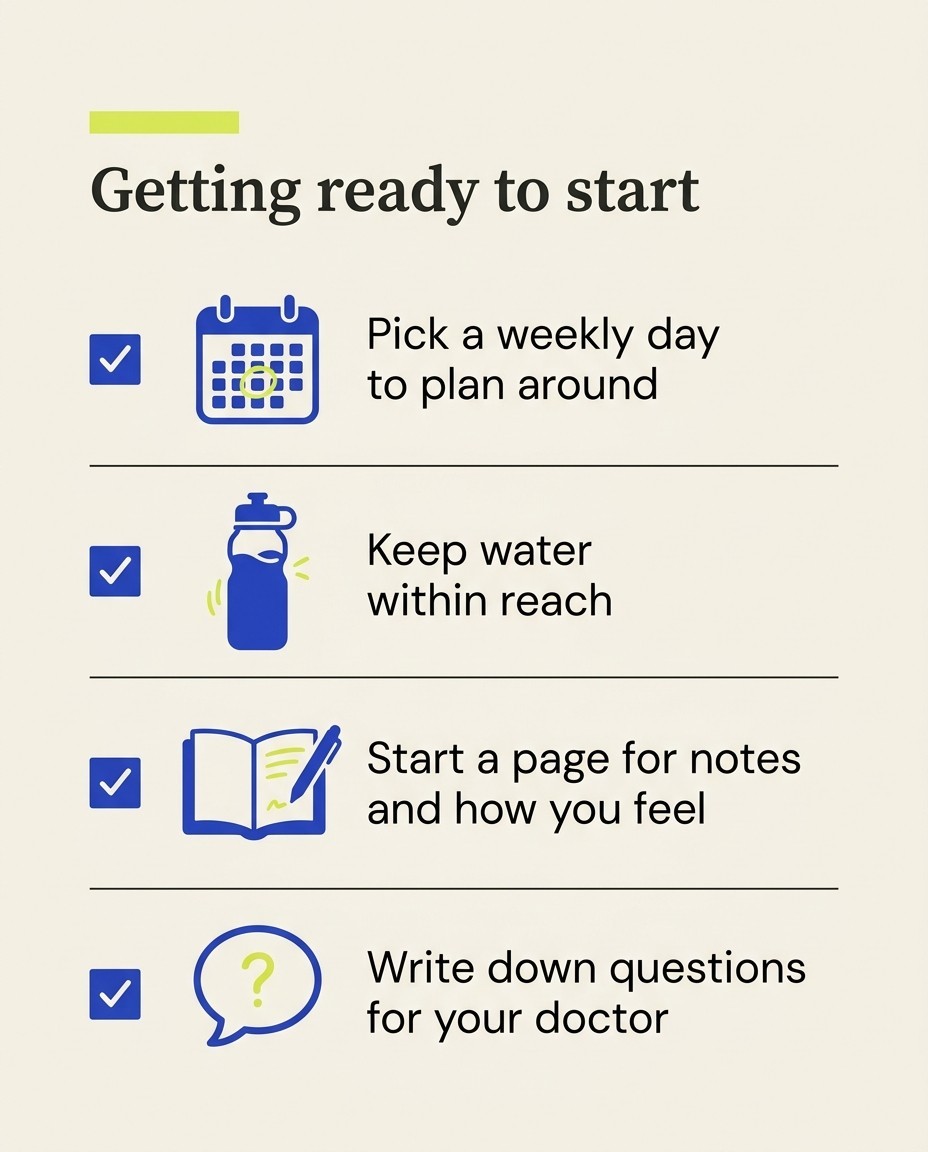
Finding people who get what you’re going through helps too.
Setting realistic expectations
We’ve all seen those headlines about people losing 20% of their body weight. Dramatic before-and-after photos are everywhere.
Here’s what we actually know. In SURMOUNT-1 clinical trials, people taking Zepbound lost an average of 15-22.5% of their body weight over 72 weeks, with up to 22.5% at the highest dose (15mg). Individual results vary significantly (SURMOUNT-1, Jastreboff et al., NEJM 2022).
That’s significant, but it doesn’t happen overnight.
Tirzepatide was originally developed for type 2 diabetes (as Mounjaro) before being approved for weight management. It’s now prescribed for people living with obesity, or those who are overweight with weight-related health conditions. Understanding this background helps set the right expectations: this is a clinically proven treatment, not a quick fix.
Many people see initial weight loss of a few percent in the first month, though this varies widely. Some weeks you’ll lose nothing. Other weeks you might lose 2 pounds or more.
Your body doesn’t care about the research papers.
Tirzepatide is a dual GLP-1 (glucagon-like peptide-1) and GIP receptor agonist. In plain English, it works on two appetite-regulating hormones instead of one. GLP-1 medications like Zepbound mimic natural gut hormones that tell your brain you’re full, and slow how quickly food leaves your stomach, helping you feel full longer.
But let’s be real: they’re not magic. You still need to eat proper meals and move your body when you can.
Think of Zepbound as a tool that makes the hard parts a bit easier. It quiets down ghrelin, the hormone that triggers hunger signals in your brain, which is why you’ll likely find it easier to skip the cookie jar at work.
You’re still the one in charge.
Navigating the initial adjustment period
The first few weeks on Zepbound can feel rough. Your body needs some time to adjust.
Approximately 1 in 4 people experience nausea, with rates of 25-29% across the 5mg, 10mg and 15mg doses in the weight-management trials, compared with 8% on placebo. Most nausea, vomiting and diarrhea happened during dose escalation and decreased over time (Zepbound prescribing information).

These side effects are common and usually settle within 2-4 weeks:
- Nausea (especially after eating)
- Feeling tired or sluggish
- Constipation or loose stools
- Reduced appetite (sometimes eating feels like a chore)
Monitor these at home and speak to your prescriber if they don’t improve.
You’ll start on 2.5mg once weekly for the first 4 weeks. Your dose increases every 4 weeks after that, moving through 5mg, 7.5mg, 10mg, 12.5mg, and potentially up to a maximum of 15mg once weekly, depending on your response and how well you tolerate each dose. The Zepbound pen comes pre-filled, so you don’t have to measure anything.
You just inject it under the skin of your stomach, thigh, or upper arm.
Try to inject on the same day each week. Pick a day that works for you and stick to it.
Nausea usually peaks around days two to four after your injection. See the section on reducing nausea and digestive discomfort below for practical management strategies.
Constipation usually gets better with more fiber. Add vegetables, fruits, and whole grains.
Drink plenty of water. If that’s still not enough, a gentle fiber supplement can help.
If you take oral contraceptives, be aware that Zepbound may reduce their effectiveness. Use additional barrier contraception (such as condoms) for 4 weeks after starting treatment and for 4 weeks after each dose increase.
Building your support system
Your Zepbound journey works better when you’re not doing it alone. Finding people who understand what you’re experiencing makes the hard days easier.
Look for online communities where people share their experiences. Facebook groups and Reddit forums have thousands of people using GLP-1 medications. They’ll answer questions your doctor might not have time for. They can reassure you when you hit a plateau.
Tell the people you live with what you’re doing. They need to know why you’re eating less or why certain foods suddenly make you feel ill. You might need them to be patient when you’re tired or irritable during the adjustment period.
Find a doctor or healthcare professional who listens. You need someone who’ll adjust your dose based on how you’re feeling, not just check boxes. Good healthcare support means regular check-ins where your concerns are taken seriously. If your current provider rushes appointments or brushes off your concerns, consider looking elsewhere.
Keep track of your progress. Not just weight, but how you feel: energy, sleep, how your clothes fit.
Some people benefit from working with a dietitian who understands how the Zepbound injection affects appetite and digestion. Dietitians can help you get enough protein and nutrients, even when eating feels tough.
Essential lifestyle tips for best results
Getting the most from Zepbound means pairing it with smart daily habits. Nutrition, hydration, and regular movement help the medication work better and keep your energy steady.
Establishing a balanced diet
Honestly, a balanced diet makes all the difference on Zepbound.
The medication helps control appetite, but what you eat still matters. Focus on whole foods that actually nourish you.
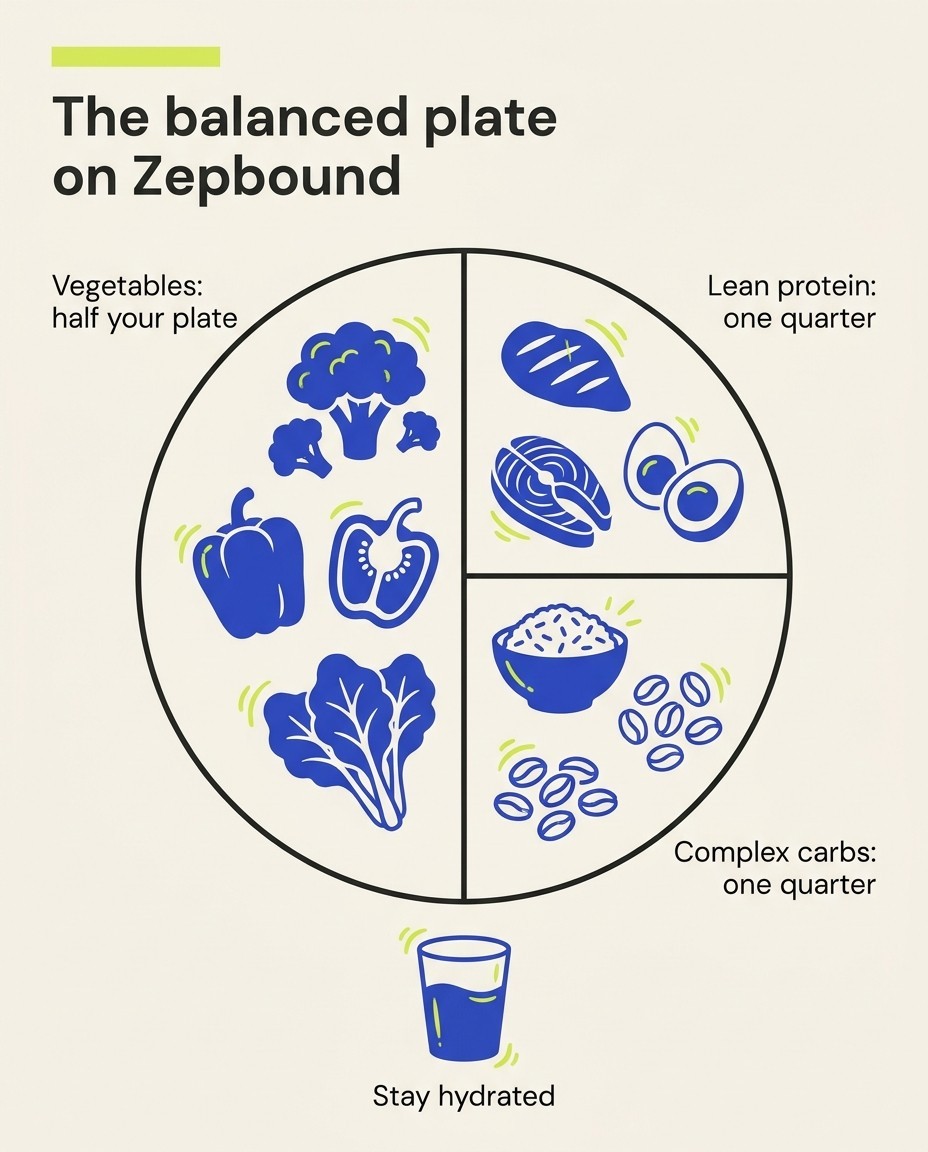
Fill half your plate with vegetables at each meal. Add a quarter of lean protein and a quarter of complex carbs.
This simple approach keeps you full longer and helps with blood sugar (the amount of glucose in your blood, which affects energy and cravings).
Track your portions, especially in the first few weeks. Many people naturally eat less on Zepbound, but being mindful helps you get enough vitamins and minerals even with smaller meals.
Don’t skip meals just because you’re not hungry. Eating regularly prevents energy crashes and helps maintain muscle while you lose weight.
Three meals or five smaller ones both work: pick what fits your life.
Hydration and electrolytes
Staying hydrated matters even more on Zepbound. The medication slows digestion, so your body needs extra fluids.
Aim for at least 64 ounces (8 cups) of water daily. On Zepbound you may need more: around 64-96 ounces (8-12 cups) daily if you’re experiencing digestive side effects like constipation or nausea. Drink more if you exercise or live somewhere hot.
Watch for signs of dehydration like headaches, dry mouth, or tiredness. Sometimes those are just signals you need more water.
If you’re drinking plenty but still feel off, consider adding electrolytes. A high-fiber diet helps manage constipation, but fiber needs water to do its job.
Keep a water bottle with you. Small sips work better than chugging big amounts, especially if you’re feeling nauseous.
Choosing lean proteins and whole grains
Protein is your best friend on Zepbound. It helps you keep muscle while you lose fat and keeps you satisfied.
Good lean protein choices:

During active weight loss, aim for about 0.45-0.55g of protein per pound of body weight daily. For someone weighing 180 pounds, that’s roughly 80-100g of protein spread across your meals, about 20-30g per meal. If solid food feels like too much, protein shakes can help fill the gap.
Whole foods should still come first when possible.
Swap out refined grains for whole grains. Brown rice, quinoa, and oats digest slowly and keep your blood sugar stable.
This works with Zepbound’s effects, not against them.
Some people add psyllium husk or collagen peptides to their routine. Psyllium helps with digestion, while collagen supports skin elasticity during weight loss.
Incorporating regular exercise
Regular physical activity really amplifies what Zepbound does for weight management. You don’t have to train like an athlete, but consistent movement makes a measurable difference to your results and how you feel day to day.
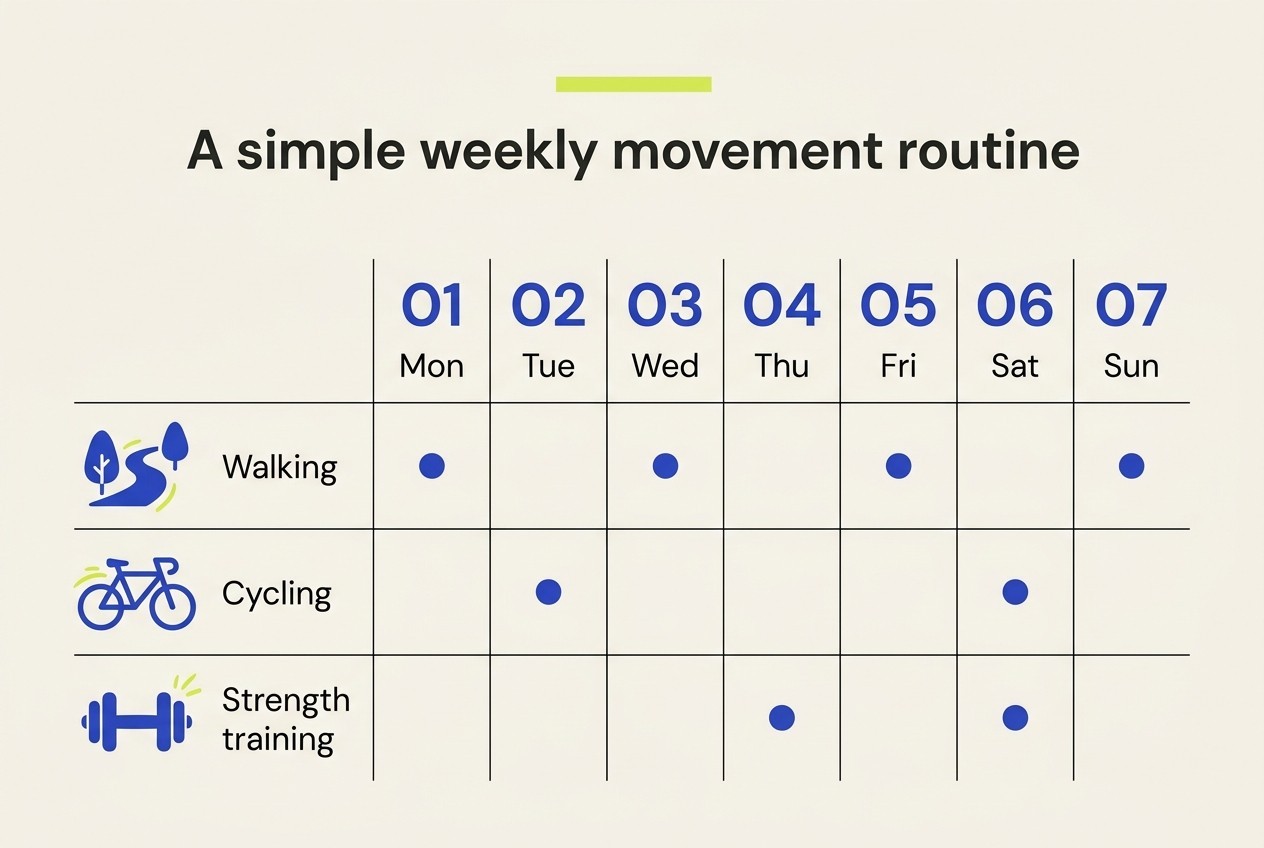
Start with walking if you’re new to exercise. Twenty minutes daily beats an hour once a week.
Build up as your fitness improves.
Strength training twice a week helps you keep muscle. Muscle burns more calories than fat, even when you’re resting.
Try cycling if joint pain makes other exercise tricky. It’s low impact but still effective.
Simple weekly exercise plan:
Listen to your body in the first weeks on Zepbound. Energy can dip as you adjust, so scale back if you need to, then add more as you feel stronger.
Managing side effects and overcoming challenges
Starting Zepbound usually means dealing with some uncomfortable side effects, especially in the first few weeks.
Many people also hit plateaus or struggle to stay motivated when the scale doesn’t budge. Knowing what to expect and having a few tricks up your sleeve makes it all more manageable.
Tips for reducing nausea and digestive discomfort
Eating smaller, more frequent meals really helps with nausea. Large portions can make you feel worse, especially when your stomach empties more slowly.
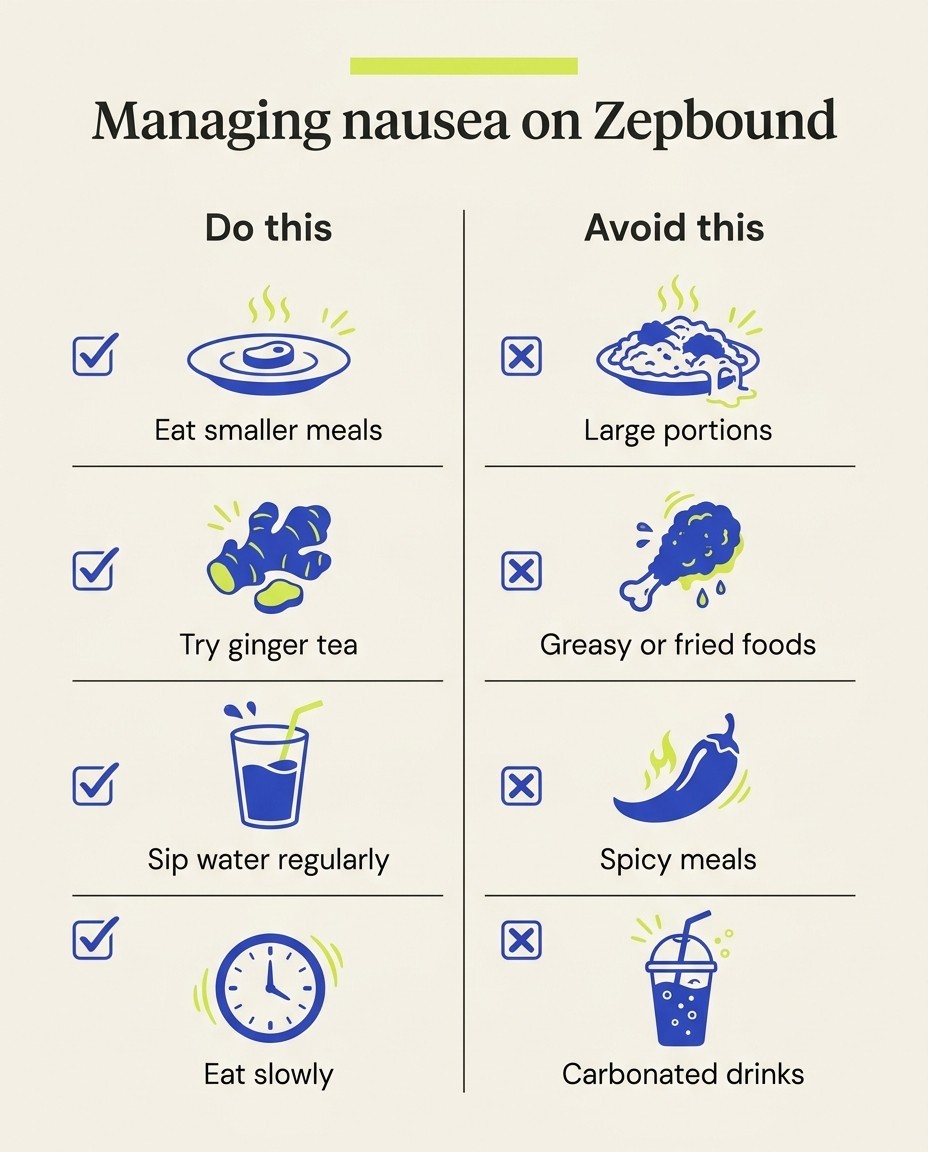
Avoid greasy, fried, or spicy foods. These tend to sit heavy and trigger nausea.
Stick to bland, easy-to-digest options like plain rice, toast, bananas, or steamed veggies when you’re feeling rough.
Stay hydrated. Sipping water regularly helps with both nausea and constipation.
If plain water doesn’t appeal, try herbal teas or sugar-free flavored water.
Ginger can work wonders for nausea. Ginger tea, ginger cookies, or even ginger candy might settle your stomach.
Some people also find relief with anti-nausea wristbands.
For constipation, focus on fiber-rich foods and consider a gentle over-the-counter remedy if you need it.
Time your meals around your injection day. Some people feel worse in the day or two after injecting, so planning lighter meals during that window can help. Others inject before bed and sleep through the worst of it.
See your doctor or prescriber if you experience:
- Nausea or vomiting that doesn’t improve after 2-4 weeks on a stable dose
- Signs of gallbladder problems: pain in the upper right side of your abdomen, especially after eating
- Symptoms of a thyroid issue: a lump or swelling in your neck, difficulty swallowing, or a hoarse voice
- Persistent diarrhea or constipation that doesn’t respond to dietary changes
- Signs of dehydration that don’t improve with increased fluid intake
Zepbound isn’t suitable for everyone. It’s not recommended if you have a personal or family history of medullary thyroid carcinoma or Multiple Endocrine Neoplasia syndrome type 2 (MEN2): your prescriber will check for these during your consultation. It’s also not suitable during pregnancy or breastfeeding.
Dealing with plateaus and motivation
Weight loss plateaus are totally normal and, honestly, pretty frustrating. Your body adapts to weight loss by slowing metabolism a bit.
This doesn’t mean the medication has stopped working.
First, check if you’re still following a balanced Zepbound diet. It’s easy to let portions creep up or slip back into old habits once the initial excitement fades.
Track your meals for a few days to see if anything’s changed.
Are you getting enough protein? Sometimes people focus so much on calories that protein intake drops too low.
That can slow your progress and leave you tired.
Regular walking or light activity helps keep your metabolism ticking, as covered in the exercise section above.
Sometimes plateaus happen because you might need a dose increase. If you’ve been on the same dose for several weeks and progress has totally stalled, talk to your prescriber about moving up.
Remember, weight fluctuates daily due to water, hormones, and digestion. The number on the scale doesn’t tell the whole story.
Celebrating non-scale victories (NSVs)
NSVs are the changes that happen beyond what the scale shows. They’re often more meaningful than the number itself.
Common NSVs include clothes fitting better, more energy, better sleep, and improved blood sugar readings.
You might notice you can climb stairs without getting breathless or play with your kids without feeling wiped out.
Many people report less joint pain, lower blood pressure, or being able to stop certain medications. These health wins matter more than losing another pound or two.
Mood and confidence changes count too. Feeling more comfortable in social situations, trying new activities, or just feeling proud for sticking to your plan: these are all worth celebrating.
Keep a journal of these victories. Write down when your wedding ring feels loose or when someone compliments you.
On tough days, reading back through these moments reminds you why you started.
Optimizing your Zepbound routine
Getting the most from Zepbound means nailing the basics: where and how you inject, how you store your pen, and how you track what’s working.
These aren’t complicated steps, but they make a real difference to your results and how you feel along the way.
Mastering injection techniques
The Zepbound KwikPen is pretty straightforward to use, but honestly, your technique matters more than you’d think. The pen comes pre-filled and holds four weekly doses for one person, and you attach a new pen needle for each injection. Wipe the pen’s inner seal with an alcohol swab, attach the needle and prime the pen as your Instructions for Use describe. Then turn the dose knob all the way until it stops, insert the needle, push the dose knob in until it stops, and count slowly to five. Check that the zero icon is showing before you pull the needle out to make sure you get the full dose (Zepbound prescribing information).
Rotate your injection sites each week. You can use your stomach, thigh, or upper arm.
Most people say the stomach is easiest, but switching things up helps prevent irritation and keeps absorption steady.
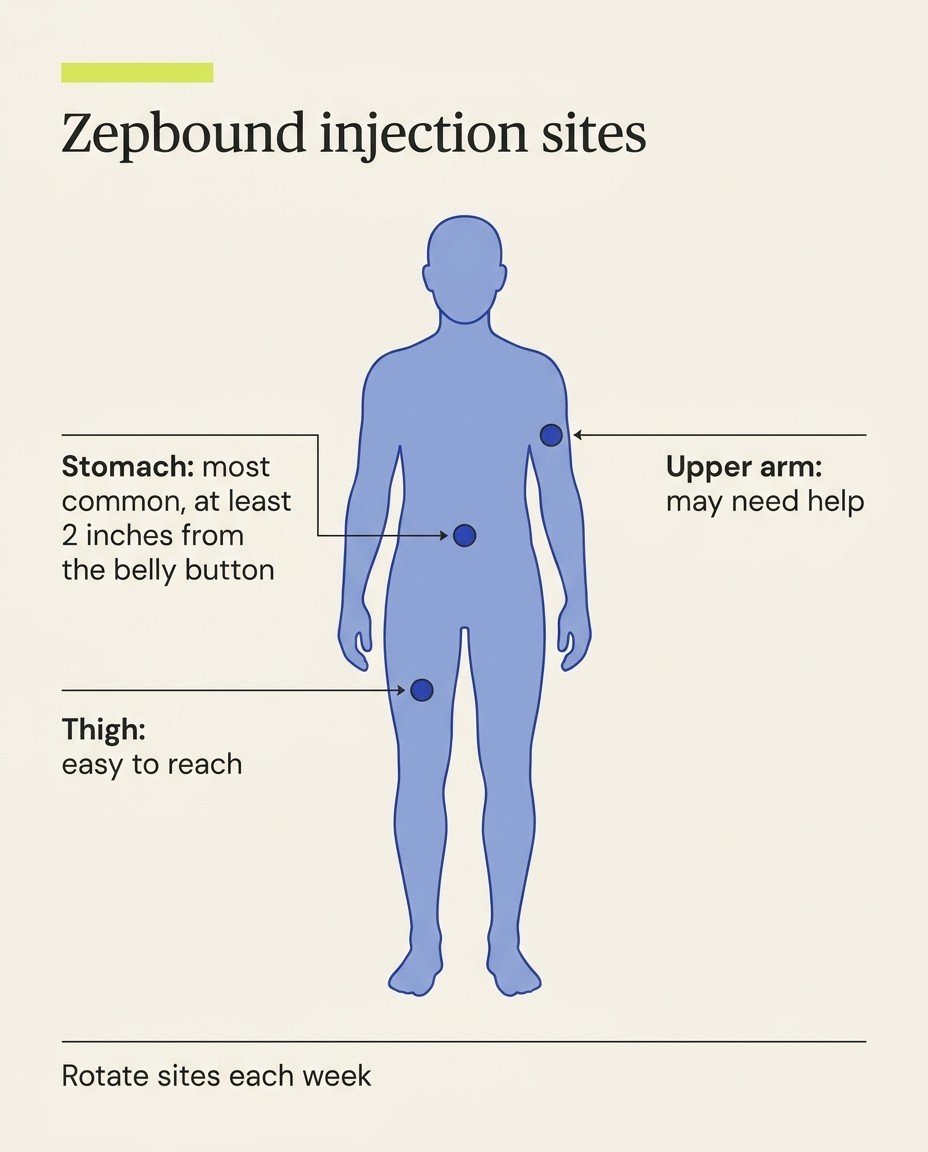
Inject at least 2 inches away from your belly button. Try not to use the same spot two times in a row.
Clean the area with an alcohol wipe and let it dry completely before you inject. Wet skin can sting: nobody likes that.
Pinch the skin gently to make a little fold.
Some folks like to inject after a shower since the skin’s softer and more relaxed then.
If needles make you nervous, try icing the area for a minute first. It can numb things up a bit.
Proper storage and handling of your pen
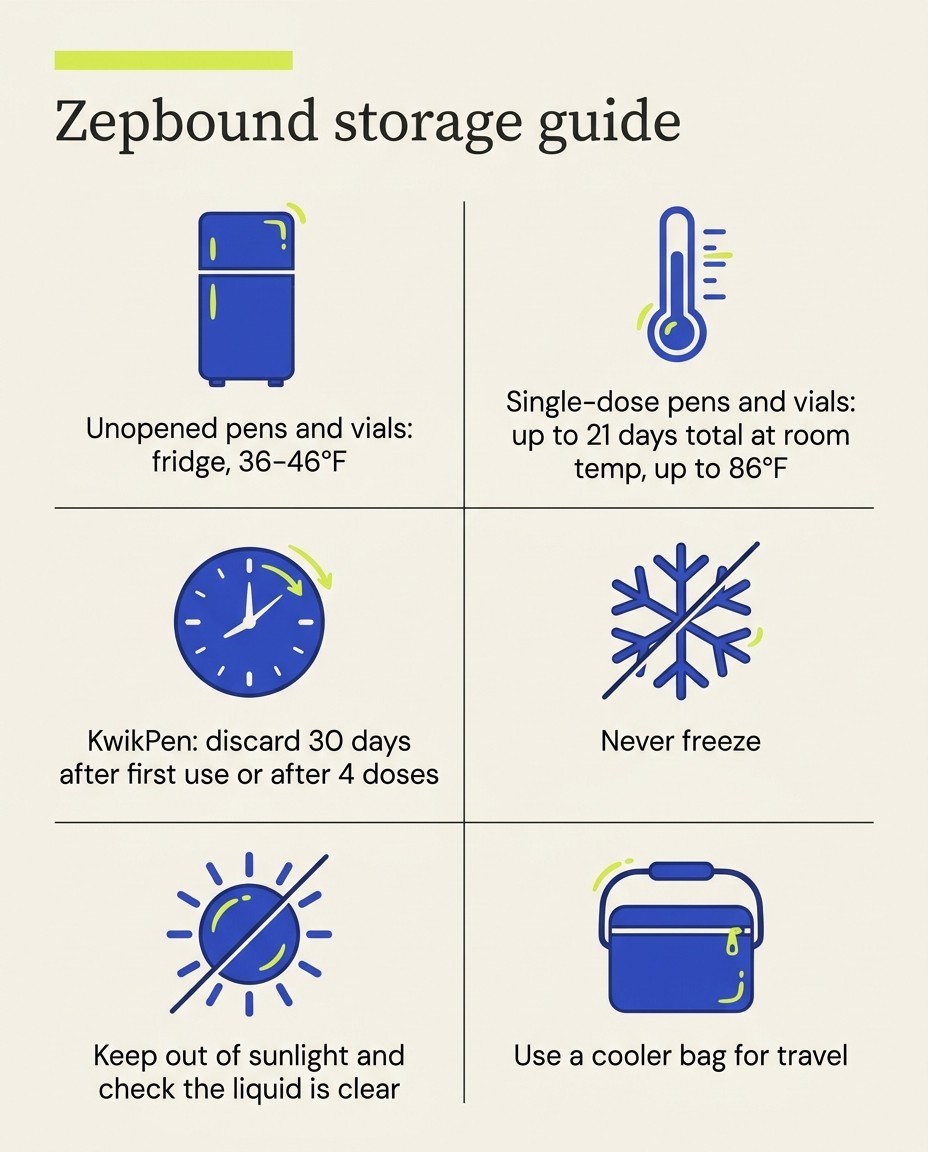
Your Zepbound pen needs to stay cold to work properly.
-
Store unopened pens in the fridge, between 36°F and 46°F, in the original carton. Don’t freeze them, ever: a frozen pen is ruined (Zepbound prescribing information).
-
Once you’ve started a KwikPen, keep it in its carton in the fridge or at room temperature (up to 86°F). Throw it away 30 days after first use, or after your 4 weekly doses, even if there is medicine left in it. An unopened KwikPen kept at room temperature should be thrown away after 30 days. If you keep it in the fridge door, it’s easy to grab and less likely to freeze there.
-
Never leave your pen in direct sunlight or in a hot car. Heat breaks down the medication fast.
-
Always check the liquid before you inject. It should be clear and colorless.
-
If it looks cloudy, discolored, or has weird particles floating in it, just skip it.
-
When you’re traveling with Zepbound, use an insulated cooler bag with an ice pack.
-
Keep the pen away from direct contact with ice so it doesn’t freeze.
Tracking progress and staying accountable
You can’t improve what you don’t measure.
Weigh yourself once a week, same day, same time. Honestly, first thing in the morning’s probably easiest. Daily weigh-ins just mess with your head, since weight jumps around for all sorts of reasons.
Take progress photos every two weeks. Try to stand in the same spot, wear the same clothes, and keep the lighting the same. Sometimes photos reveal changes the scale misses entirely.
Jot down how you feel, not just your weight. Energy levels, hunger, weird side effects: track them. This way, you can figure out what’s actually working (or not) with your Zepbound diet plan.
Keep a simple food diary. No need to count every last calorie, but writing down what you eat keeps you honest. It’s wild how easy it is to forget about that handful of chips at lunch.
Set small, specific goals. “Lose 4 pounds this month” beats “lose weight” any day. Break big targets into weekly steps so you can measure them and actually celebrate when you hit them.

Seek immediate medical help if you experience:
- Severe abdominal pain, especially if it spreads to your back (this could be a sign of pancreatitis)
- Signs of an allergic reaction: swelling of the face, lips, tongue, or throat, difficulty breathing, or a severe rash
- Severe or persistent vomiting that won’t stop
- Sudden changes in vision
- Confusion, fainting, or severe weakness
Call 911 if you suspect a severe allergic reaction or pancreatitis.
Frequently asked questions about Zepbound
What is the best day and time to take Zepbound?
There’s no single best day or time. Choose whichever day fits your routine and stick with it consistently. Some people prefer injecting in the evening or before bed so they can sleep through any initial nausea. The important thing is taking it on the same day each week, roughly 24 hours apart each time.
How long does it take for Zepbound to start working?
Most people notice reduced appetite within the first week or two. Visible weight loss typically starts within the first month, though the rate varies. In clinical trials (SURMOUNT-1), participants saw significant weight loss building steadily over 72 weeks, with the greatest effects at higher maintenance doses (SURMOUNT-1, Jastreboff et al., NEJM 2022).
Can I drink alcohol while taking Zepbound?
There’s no strict rule against alcohol, but many people find their tolerance drops significantly on Zepbound. Alcohol can worsen nausea and digestive side effects, and it adds empty calories that work against your weight loss goals. If you do drink, start with small amounts to see how you react and stay well hydrated.
What should I eat on my Zepbound injection day?
On injection day and the day or two after, stick to smaller, lighter meals. Bland foods like plain rice, toast, bananas, and steamed vegetables are easiest to digest. Avoid greasy, fried, or heavily spiced foods. Some people find eating a small meal before their injection helps reduce nausea.
How much weight can I expect to lose on Zepbound?
In SURMOUNT-1 clinical trials, participants lost an average of 15-22.5% of their body weight over 72 weeks, depending on dose. However, individual results vary significantly: some people lose more, some less. Weight loss tends to be gradual and steady rather than dramatic (SURMOUNT-1, Jastreboff et al., NEJM 2022).
What happens if I miss a Zepbound injection?
If you miss your injection and it’s been fewer than 4 days (96 hours), take it as soon as you remember. If more than 4 days have passed, skip that dose and take your next one on your regular scheduled day. Don’t double up to make up for a missed dose. If you miss several doses, speak to your prescriber about whether you need to restart at a lower dose.
Can I take Mounjaro if I have type 2 diabetes?
Yes: tirzepatide was originally developed for type 2 diabetes management and is approved for this use. It helps improve blood sugar control by lowering HbA1c levels as well as supporting weight loss. If you have type 2 diabetes and take insulin (such as insulin glargine or insulin degludec), your prescriber will need to monitor your blood sugar closely and may reduce your insulin dose to prevent hypoglycemia.
How do I use the Zepbound KwikPen?
The Zepbound KwikPen is a pre-filled, single-patient-use pen that holds four weekly doses. Wipe the inner seal with an alcohol swab, attach a new pen needle and prime the pen as your Instructions for Use describe. Turn the dose knob all the way until it stops, insert the needle at the injection site, push the dose knob in until it stops, and count slowly to 5. Check that the zero icon is showing before you remove the needle. Afterward, unscrew the needle and put it in a sharps container. Your prescriber or pharmacist can walk you through it the first time.
The bottom line
Zepbound works best when you pair it with consistent daily habits: balanced meals with enough protein, steady hydration, regular movement, and good injection technique. Side effects like nausea and digestive discomfort are common early on but usually improve within 2-4 weeks on a stable dose. Track your progress beyond just the scale, build a support system, and speak to your prescriber if something doesn’t feel right. Small, sustainable changes add up to meaningful results over time.
Sources:
-
SURMOUNT-1 trial: Tirzepatide once weekly for the treatment of obesity — Jastreboff et al., New England Journal of Medicine, 2022
-
Zepbound prescribing information — Eli Lilly and Company (FDA-approved labeling)
-
Physical Activity Guidelines for Adults — Centers for Disease Control and Prevention