
Starting tirzepatide (Zepbound) can feel like a real turning point in your weight management. But the medication works best when you pair it with the right food choices.

While taking Zepbound, it’s smart to avoid high-fat foods, greasy or fried items, spicy dishes, sugary snacks, soda, and heavily processed meals. These can worsen side effects like nausea, bloating, and stomach discomfort. Swapping in nutrient-dense whole foods can help you feel better and see more progress.
We get it. Doing everything right and still feeling lousy or not losing weight is frustrating. Some foods don’t just slow your progress; they can actually make Zepbound harder to tolerate.
Figuring out which foods to avoid isn’t about being super strict. It’s about working with your body, and with the medication, so you can actually feel good. When you know what sets off discomfort or stalls your progress, you get to make choices that support your goals without feeling totally deprived.
Key takeaways

Understanding Zepbound and dietary sensitivities
Zepbound (tirzepatide, the active ingredient) changes how your digestive system works. Certain foods can make side effects worse or get in the way of weight loss.
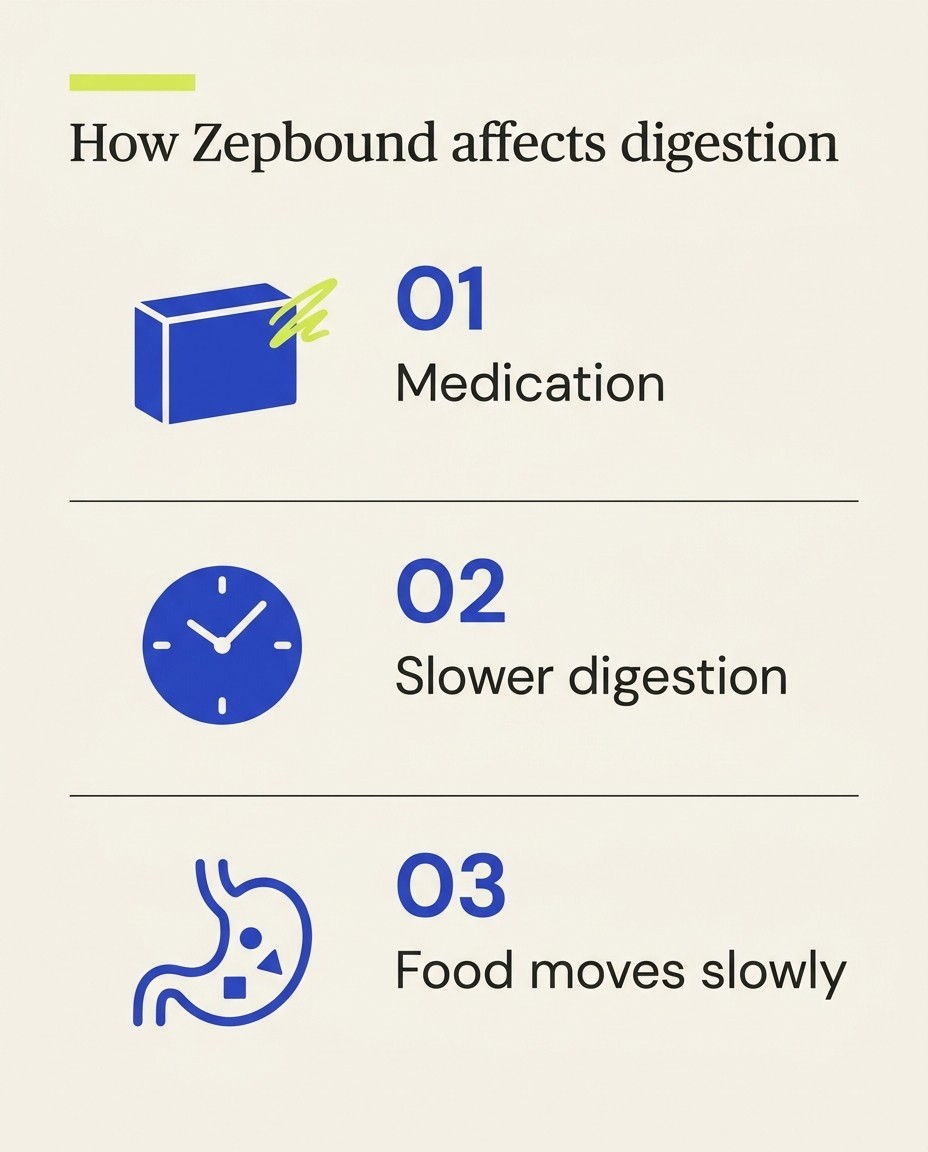
The medication slows digestion and reduces appetite by acting on GLP-1 (glucagon-like peptide-1) and GIP (glucose-dependent insulinotropic polypeptide) hormones. So what you eat suddenly matters way more than you might expect.
How Zepbound alters digestion and appetite
Zepbound isn’t like older weight loss medications. It targets two hormone receptors at once.
Tirzepatide is a GLP-1 receptor agonist that also activates GIP pathways. In simple terms, it works on two appetite-regulating hormones instead of one. Administered as a weekly injection, it slows gastric emptying (the rate at which food leaves your stomach), so food stays in your stomach longer than usual.
You’ll probably feel full after eating smaller portions. That’s because tirzepatide signals your brain that you’ve had enough, even if there’s still food left on your plate.
The medication also changes how your body handles blood sugar. It helps your pancreas release insulin when you eat and dials down the sugar your liver makes. For people with type 2 diabetes, this can make a real difference (Mounjaro prescribing information).
But here’s where it gets tricky. Since your stomach empties so slowly, rich or heavy foods can sit there for hours. Understanding how tirzepatide affects appetite and metabolism helps explain why food choices matter so much on this medication.
This can lead to nausea, bloating, and a kind of discomfort you might not expect. The good news is that most side effects improve within 2–4 weeks as your body adjusts to each dose. Side effects are most common in the first few weeks after each dose increase.
Why some foods trigger side effects
When your digestive system slows down, fatty and greasy foods become real troublemakers. They already take longer to digest, and Zepbound just makes that worse. High-fat meals can trigger nausea because your stomach has to work overtime to process them.
Spicy foods can irritate your stomach lining, and when food is moving slowly, that irritation sticks around longer. A lot of people notice they just can’t handle spice like they used to on Zepbound.
Ultra-processed foods and refined sugars spike your blood sugar fast. Even though Zepbound helps regulate blood sugar, processed foods can work against your weight loss goals by triggering cravings and energy dips. These foods also don’t fill you up, so you end up hungry again way too soon.
Carbonated drinks and fizzy beverages add gas to a digestive system that’s already slowed down. That means more bloating and feeling overly full.
The role of a balanced diet on Zepbound
A balanced diet can actually help the medication do its job.
Protein-rich foods help you keep your muscle mass while you lose weight. When weight drops quickly on Zepbound, your body might burn muscle along with fat if you’re not getting enough protein. Lean meats, fish, eggs, and legumes help protect your muscles.
Fiber from veggies, fruits, and whole grains keeps your digestive system moving, even with tirzepatide slowing things down. This helps avoid constipation, which is a common side effect. It’s better to increase fiber gradually rather than going all-in overnight.
Supporting satiety and appetite control is easier when you stick to nutrient-dense foods. These foods work with Zepbound’s appetite-suppressing effects, not against them.
Low-glycemic foods (those that raise blood sugar gradually rather than sharply) like whole grains and legumes release energy slowly. They help you avoid blood sugar spikes and keep you feeling steady.
Core foods to avoid while taking Zepbound
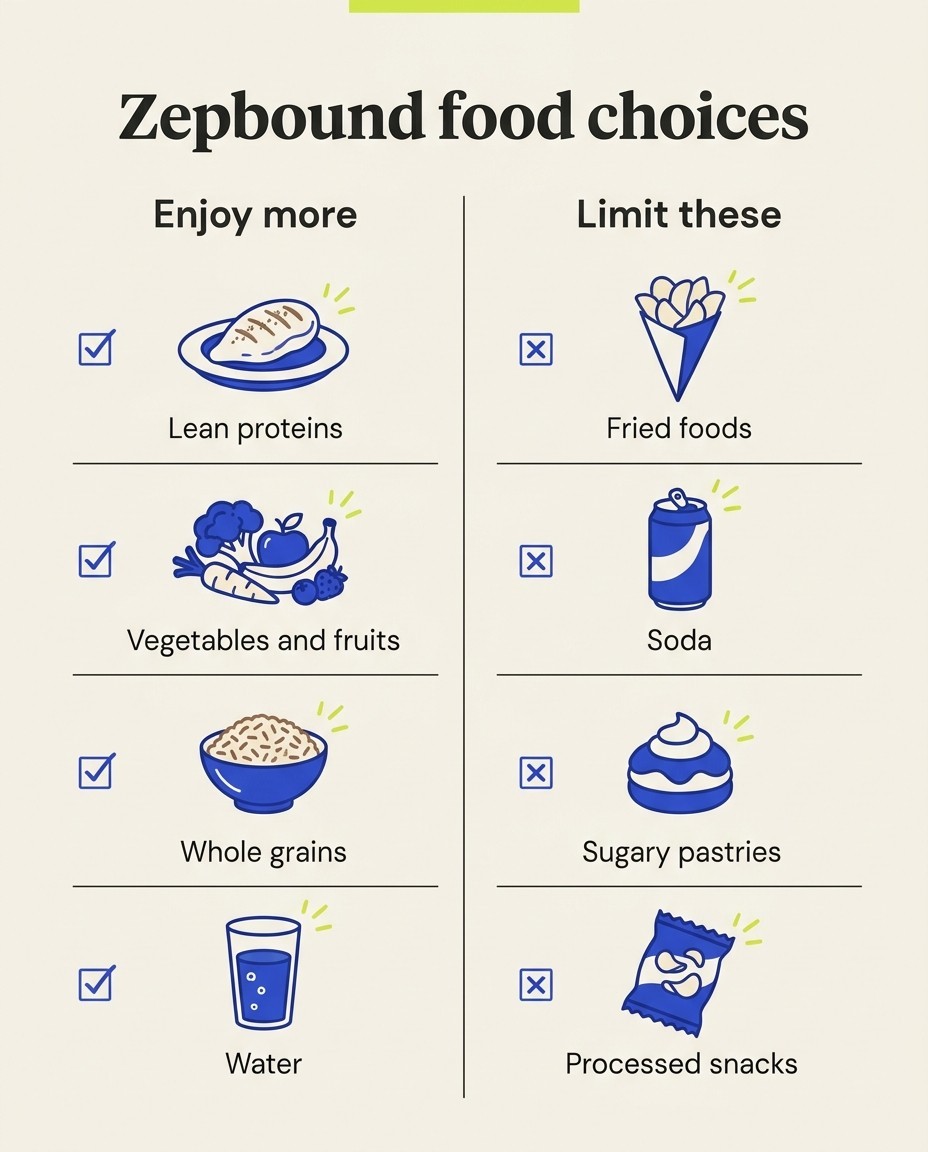
Some foods just make Zepbound’s side effects worse or fight against its appetite-suppressing benefits. High-fat foods, refined sugar, and alcohol are usually the biggest culprits.
High-fat and fried foods
Fried foods and meals loaded with saturated fats (the type found mainly in animal products, butter, and processed foods) are rough when you’re on Zepbound. Since the medication slows down digestion, greasy foods just hang around in your stomach for ages.
This can trigger nausea, bloating, and discomfort that sticks around. Plenty of people have learned this the hard way after a plate of fish and fries or a big fried breakfast.
Foods to limit or avoid:
-
French fries, fried chicken, and battered fish
-
Fatty cuts of red meat with visible fat
-
Full-fat dairy products like cream and butter
-
Pastries and baked goods made with shortening or lard
-
Fast food burgers and fried chicken sandwiches
Trans fats (artificially created fats found in some processed and fried foods) are especially bad news. They make side effects worse and are very calorie-dense, which doesn’t help weight loss at all.
Refined carbohydrates and sugary foods
White bread, pastries, and other refined grains spike your blood sugar fast. You end up hungry again not long after.
Candy, soda, and desserts loaded with sugar do the same thing. They’re full of empty calories without any real satisfaction.
Sugary drinks are sneaky. Your body doesn’t register liquid calories the way it does solid food.
Common culprits to watch:
-
White bread, white rice, and regular pasta
-
Cakes, cookies, and sweet pastries
-
Soda and fruit juice with added sugar
-
Candy, candy bars, and ice cream
-
Breakfast cereals with high sugar content
Focusing on whole foods helps you stay in a calorie deficit and keeps hunger in check.
Ultra-processed and packaged foods
Ultra-processed foods usually combine the worst stuff: refined carbs, unhealthy fats, and tons of added sugar all in one.
These products are engineered to be hyper-palatable (designed to be so tasty they override your natural fullness signals), so they can override Zepbound’s appetite-suppressing effects.
Prepackaged meals, chips, and packaged snacks might seem easy, but they’re high in calories and low in nutrients your body actually needs.
If you eat ultra-processed foods while on Zepbound, you can end up eating more calories than you realize. The lack of protein and fiber means you won’t feel full for long, either.
Examples include:
-
Instant noodles and noodle cups
-
Frozen pizzas and microwave meals
-
Packaged chips and savory snacks
-
Store-bought cakes and cookies
-
Processed meat products like hot dogs and pigs in a blanket
Alcohol and carbonated beverages
Alcohol and Zepbound don’t mix well. Alcohol is full of empty calories and can drop your blood sugar too low when combined with the medication.
It also makes it way easier to make poor food choices.
Lots of people say their alcohol tolerance drops a lot on Zepbound. What used to feel normal can suddenly make you feel lousy.
Carbonated drinks, even the sugar-free ones, can cause bloating and gas. With your stomach already emptying slowly, fizzy drinks can make you feel stuffed and uncomfortable.
Drinks to approach carefully:
-
Beer, wine, and liquor
-
Sodas and sparkling water
-
Energy drinks with high caffeine and sugar
-
Sweetened alcoholic beverages like hard lemonade and premixed cocktails
If you do drink, keep it to small amounts and eat something first. If you take other medications alongside Zepbound, check with your prescriber about potential interactions, particularly if you take diabetes medication, as the combination may increase the risk of low blood sugar (hypoglycemia). Most people find it’s just easier to limit alcohol while taking Zepbound altogether for now.
Managing and preventing Zepbound side effects through food choices
What you eat really does affect how you feel on Zepbound. Some foods trigger or worsen digestive issues like nausea, bloating, and constipation, while others help keep things settled.

These are common and usually settle on their own:
- Mild nausea in the first 1–2 weeks of a new dose
- Reduced appetite and feeling full quickly
- Mild bloating or changes in bowel habits
- Occasional stomach discomfort after eating
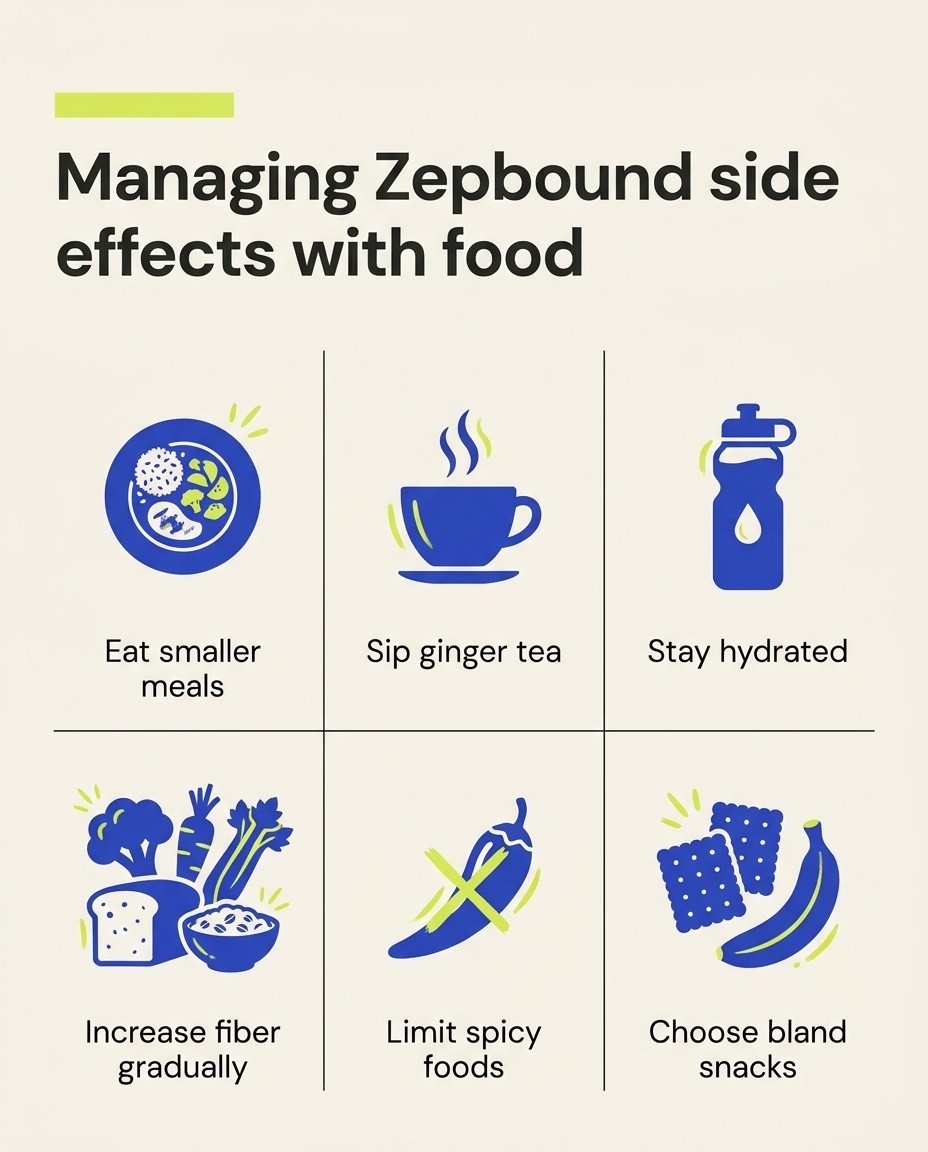
Most of these improve within 2–4 weeks as your body adjusts. Eating smaller, bland meals and staying hydrated can help.
Avoiding foods that worsen nausea, bloating, and reflux
As covered above, greasy, fried, and fatty foods are top offenders for nausea and reflux on Zepbound. Spicy foods like garlic, chili, and hot sauces can also ramp up reflux, and fizzy drinks add gas that worsens bloating. Still water or herbal teas are usually a better bet.
Foods to limit or avoid:
-
Deep-fried foods (fries, fried chicken, doughnuts)
-
Creamy or butter-heavy dishes
-
Spicy curries or hot sauces
-
Soda and sparkling water
-
High-fat dairy products like whole milk and cheese
Smaller portions can help too. Even healthy food in huge amounts can overwhelm your stomach and trigger nausea.
Identifying foods that may cause diarrhea or constipation
Constipation comes up a lot for people on Zepbound. Fiber from vegetables, fruits, whole grains, and legumes helps add bulk and keep things moving — but drinking plenty of water with fiber is crucial, otherwise it can actually make things worse.
Some people get diarrhea, especially if they eat too much fat or artificial sweeteners. Sugar alcohols like sorbitol and xylitol (found in sugar-free candy and drinks) can cause loose stools and cramping.
Dairy can also be a problem if you’re sensitive to lactose. Managing gastrointestinal side effects means paying attention to how your body reacts.
For constipation, include more:

For diarrhea, limit:
-
Sugar-free products with artificial sweeteners
-
Very high-fat meals
-
Dairy if you’re lactose-intolerant
-
Excessive amounts of coffee
Listen to your body. What bothers one person might be fine for someone else.

Contact your doctor or prescriber if you notice:
- Nausea or vomiting that doesn’t improve after 2–4 weeks on a stable dose
- Persistent constipation or diarrhea despite dietary changes
- Unexplained changes in your blood sugar levels
- Any side effect that’s affecting your ability to eat or drink normally

Seek immediate medical help if you experience:
- Severe abdominal pain, especially radiating to your back. This could be a sign of pancreatitis, a rare but serious inflammation of the pancreas that has been reported with GLP-1 receptor agonist medications including Zepbound
- Signs of allergic reaction: facial swelling, difficulty breathing, severe rash
- Severe or persistent vomiting that won’t stop
- Signs of gallbladder problems: intense pain in the upper right abdomen
Call 911 for suspected allergic reactions or pancreatitis.
Sustainable eating habits and healthier alternatives
Building a sustainable diet around Zepbound is about picking foods that support your weight management goals and keep you feeling satisfied. This approach works better than any extreme or restrictive diet for long-term results.
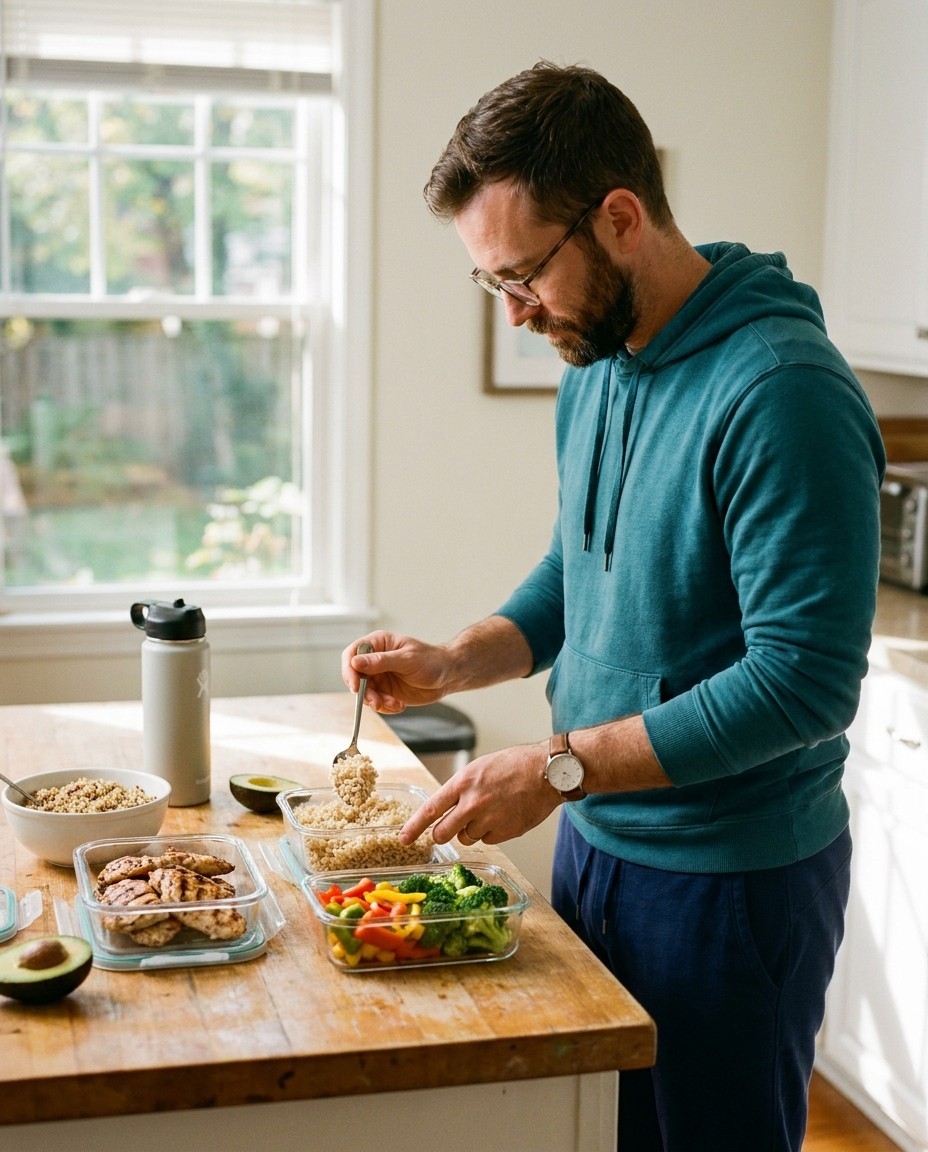
Choosing lean protein and plant-based options
Protein keeps muscle loss at bay while you lose weight, and it helps you stay full. That matters even more when you’re on Zepbound, since your appetite’s already lower.
Chicken breast, turkey, and fish like salmon or cod fit nicely into most meals. They’re light on saturated fat and don’t weigh you down.
Eggs work for breakfast and bring nutrients without feeling heavy. They’re easy to prep, too.
If you’re into plant-based proteins, tofu and tempeh soak up flavors and taste great in stir-fries or salads. Beans, lentils, and chickpeas deliver both protein and fiber, so you don’t end up overeating.
During active weight loss on Zepbound, aim for around 0.45–0.55g of protein per pound of body weight daily. For someone weighing 180 pounds, that means roughly 80–100g of protein spread across your meals. Greek yogurt makes the cut too, offering protein and gut-friendly probiotics.
Incorporating whole grains and fiber-rich foods
Whole grains give you complex carbs that release energy slowly. That way, you avoid those annoying blood sugar spikes and crashes.
Brown rice, quinoa, and whole wheat foods deserve a spot in any Zepbound-friendly diet. They’ve got more nutrients and fiber than the white, refined stuff.
Fiber-rich foods that work well:
If you’re new to high-fiber foods, start small and ramp up over a few weeks. Too much fiber at once can leave you bloated or uncomfortable.
Focusing on healthy fats and minimally processed choices
Healthy fats help your hormones and let your body absorb vitamins. They also make meals taste better, which is pretty important when you’re eating less.
Avocado brings a creamy texture and heart-healthy fats. Try tossing a quarter of one on toast or into a salad.
Olive oil shines for cooking or just drizzling over roasted veggies.
Nuts and seeds pack a lot of nutrition into tiny servings. Walnuts offer omega-3s that support brain health. Almonds and pistachios are easy snacks, just don’t go overboard since they’re calorie-rich.
For dairy, low-fat options tend to work better with Zepbound, since full-fat dairy can slow digestion further and worsen nausea.
Pick whole foods instead of processed ones when you can. Minimally processed choices tend to work better with Zepbound and give you more nutrition for your calories.
Hydration and meal planning for better tolerance
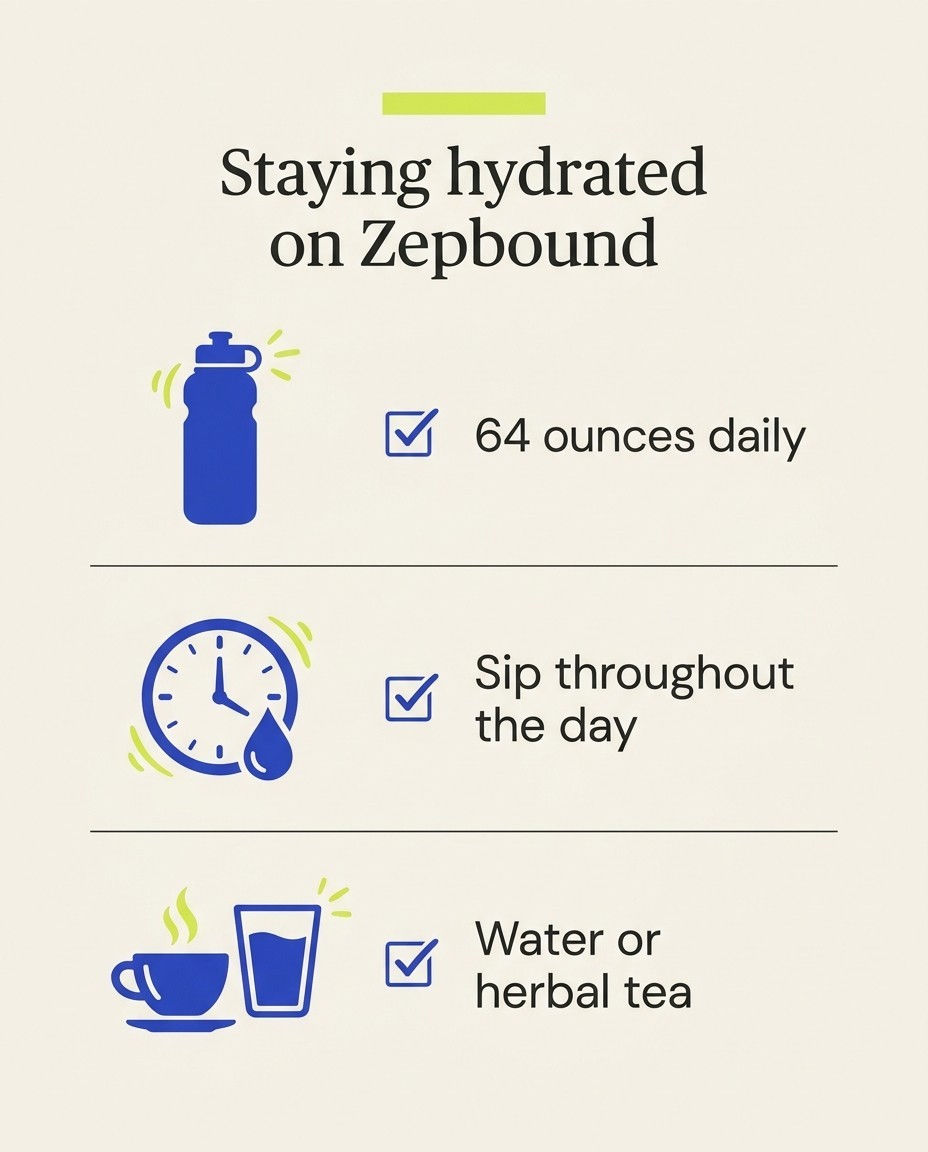
Water keeps fiber moving through your digestive system and helps prevent constipation. It can also cut down on nausea, which some people notice when they start Zepbound.
Try to drink at least 64 ounces (8 cups) of water daily, or 64–100 ounces if you’re experiencing digestive side effects like constipation or bloating. The CDC notes that daily water needs vary with age, sex, activity level and illness, and that water-rich foods count toward your fluids too, but you may need more on Zepbound. Sipping water throughout the day feels easier than chugging a bunch at once. Keep a bottle close by so you remember.
Meal planning can make sticking to a balanced diet less of a headache. If you prep proteins and whole grains ahead of time, you’re less likely to grab random snacks when you get hungry.
Simple meal planning tips:
Smaller, more frequent meals usually feel better than just three big ones. That lines up with how Zepbound changes digestion, so you might find your stomach thanks you, and your energy stays steadier too.
The bottom line
Zepbound works best when you support it with the right food choices. Avoiding high-fat, greasy, spicy, and ultra-processed foods can significantly reduce side effects like nausea, bloating, and constipation. Focus on lean proteins, whole grains, plenty of vegetables, and staying well hydrated, and increase fiber gradually rather than all at once.
Most digestive side effects improve within 2–4 weeks on a stable dose. If you’re finding it hard to manage, speak to your doctor or prescriber. They can offer personalized advice and check whether any adjustments are needed.
Frequently asked questions
Can I eat normally while taking Zepbound?
You can eat a varied diet on Zepbound, but you’ll likely find that smaller portions of whole, nutrient-dense foods work best. Many people naturally eat less because the medication reduces appetite. The key is choosing foods that support your goals and don’t worsen side effects: lean proteins, whole grains, vegetables, and healthy fats in moderate amounts.
What happens if I eat fatty food on Zepbound?
High-fat and greasy foods can cause nausea, bloating, and stomach discomfort because Zepbound slows how quickly food leaves your stomach. Fatty foods already take longer to digest, so the combination can leave you feeling uncomfortably full for hours. If you do eat something rich, keep the portion small and eat slowly.
Is it OK to drink alcohol while taking Zepbound?
It’s best to be very cautious with alcohol on Zepbound. Alcohol is calorie-dense, can lower your blood sugar to unsafe levels when combined with the medication, and many people find their tolerance drops significantly. If you do choose to drink, stick to small amounts and always eat something first. Speak to your prescriber if you have concerns.
How much water should I drink on Zepbound?
Aim for at least 64 ounces (8 cups) daily, or 64–100 ounces if you’re experiencing digestive side effects. See the hydration section above for full guidance.
Can I follow a keto diet while taking Zepbound?
A strict keto diet isn’t generally recommended alongside Zepbound. The very high fat content can worsen digestive side effects like nausea and bloating, since the medication already slows gastric emptying. A balanced diet with lean proteins, whole grains, vegetables, and moderate healthy fats typically works better. If you’re considering a keto diet or any restrictive eating plan, speak to your prescriber or a registered dietitian first.
What about a carnivore diet on Zepbound?
A carnivore diet, which relies exclusively on animal products, isn’t ideal while taking Zepbound. Without fiber from fruits, vegetables, and whole grains, constipation can become a significant problem, especially since the medication already slows your digestive system. The lack of dietary variety also makes it harder to get all the micronutrients your body needs during active weight loss. Most healthcare professionals recommend a balanced approach that includes a range of food groups.
What are the best foods to eat on Zepbound?
Focus on lean proteins (chicken, fish, eggs, legumes), whole grains (brown rice, quinoa, oats), plenty of vegetables and fruits, and small amounts of healthy fats (olive oil, avocado, nuts). These foods support weight management, help prevent muscle loss, and are easier on your digestive system. Eating smaller, more frequent meals rather than three large ones also tends to work better.
Should I take Zepbound on an empty stomach?
Zepbound is injected under the skin once weekly and doesn’t need to be taken with food. Eating regular, balanced meals throughout the week helps reduce side effects and supports steady weight loss. Don’t skip meals in an attempt to lose weight faster, as this can lead to muscle loss and make side effects worse.
When should I see a doctor about Zepbound side effects?
Most side effects like mild nausea and bloating improve within 2–4 weeks on a stable dose. See the safety warnings above for the full list of symptoms that need immediate medical help or a doctor’s visit.
Does Zepbound affect oral contraceptives?
Zepbound may reduce the effectiveness of oral contraceptives. Use additional barrier contraception (such as condoms) for 4 weeks after starting treatment and for 4 weeks after each dose increase. Speak to your prescriber if you have any concerns about contraception while taking Zepbound.
This article is for informational purposes only and does not replace medical advice. Always speak to your doctor or prescriber before making significant dietary changes while taking Zepbound. If you experience severe or persistent side effects, contact your healthcare provider.
Zepbound is not suitable for everyone. It should not be used if you have a personal or family history of medullary thyroid carcinoma or multiple endocrine neoplasia syndrome type 2 (MEN2). Your prescriber will check for these and other contraindications before starting treatment.
Sources: Clinical information in this article is based on the Zepbound Prescribing Information and published clinical research including the SURMOUNT-1 trial.
Sources
-
Zepbound Prescribing Information – DailyMed, National Library of Medicine
-
SURMOUNT-1 trial: Tirzepatide once weekly for the treatment of obesity – New England Journal of Medicine
-
Dietary Fats – MedlinePlus