

Living with PCOS? It can feel like your body’s working against you. Weight gain that won’t budge, irregular periods, insulin resistance — sometimes it seems like everything’s conspiring to make progress impossible.
A lot of women with PCOS have tried restrictive diets, intensive workouts, and all sorts of plans, only to see minimal results. That frustration is real.

Zepbound (tirzepatide) may help women with PCOS by improving insulin resistance, one of the condition’s root causes, while also supporting weight loss and potentially restoring more regular ovulation. It is not FDA-approved specifically for PCOS, but its dual-action mechanism makes it a promising option to discuss with your doctor or prescriber.
We’ve dug into how Zepbound actually works for PCOS, what benefits you might see, and what you should know before considering it. While it’s not FDA-approved specifically for PCOS, it’s one of a newer generation of weight loss medications that may help with better ovulation rates in women with obesity and PCOS.
Key takeaways

Understanding PCOS and its key challenges
PCOS disrupts how your body processes insulin and produces hormones. This leads to symptoms that affect fertility, appearance, and long-term health.
The condition is more than just ovarian cysts. It creates a cycle of metabolic and hormonal problems that can feel overwhelming.
What is polycystic ovary syndrome?
Polycystic ovary syndrome is an endocrine disorder (a condition that affects how your body produces and responds to hormones). It affects somewhere between 6% and 20% of women during their reproductive years.
Despite what the name suggests, not everyone with PCOS actually has cysts on their ovaries.
Doctors usually diagnose PCOS using the Rotterdam criteria, the internationally recognized standard for diagnosis. You need at least two of three conditions: irregular or absent periods (called anovulation, meaning your ovaries aren’t releasing eggs regularly), signs of high androgen levels like excess hair growth or acne, and polycystic ovaries on an ultrasound.
PCOS doesn’t look the same for everyone. Some women mainly struggle with irregular periods and infertility. Others notice visible symptoms like hirsutism (excess facial or body hair), acne, or androgenic alopecia (hair loss on the scalp).
PCOS isn’t just a reproductive issue. It affects how your whole body handles metabolism and hormones. You can read more about the condition on the MedlinePlus PCOS overview page.
Insulin resistance in PCOS
Between 50% and 70% of women with PCOS deal with insulin resistance. Their cells don’t respond properly to insulin, the hormone that moves glucose from blood into cells for energy.
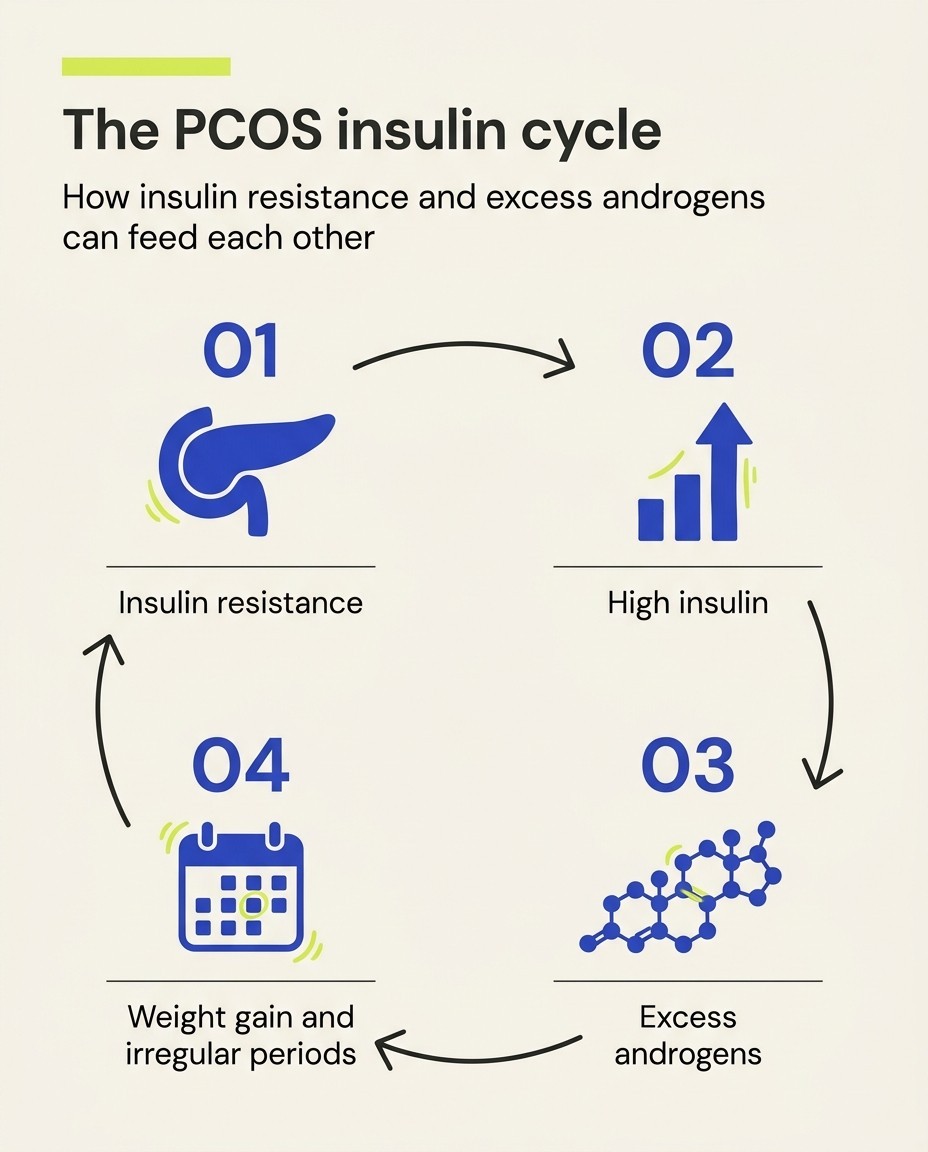
When cells ignore insulin, the pancreas pumps out even more. These high insulin levels set off a chain reaction in the body.
This state of chronically elevated insulin is known medically as hyperinsulinemia. It goes beyond simple insulin resistance: your body is actively producing far more insulin than it should, and those excess levels directly drive many of the most frustrating PCOS symptoms.
High insulin nudges the ovaries to make excess androgens (male hormones), which worsens many PCOS symptoms. This causes hyperandrogenism (abnormally high levels of male hormones like testosterone), which brings on several visible symptoms:
Common androgenic symptoms:
- Hirsutism (extra hair on your face, chest, or back)
- Acne, often along the jawline and chin
- Androgenic alopecia (thinning hair on the scalp)
- Oily skin
You might also notice physical signs like acanthosis nigricans, those dark, velvety patches of skin around the neck, armpits, or groin. Losing weight feels nearly impossible, even with diet and exercise.
The link between insulin resistance and PCOS symptoms creates a cycle that’s hard to break. Insulin resistance leads to weight gain, especially visceral fat (fat stored deep around your internal organs, which is more metabolically harmful than fat under the skin). That extra weight then makes insulin resistance worse.
Hormonal imbalances and their impact on fertility
Irregular periods are a huge complaint. Some women go months between periods, while others have unpredictable bleeding. This happens because high androgen and insulin levels disrupt normal ovulation.
The hormonal imbalance hits fertility, too. Without regular ovulation, getting pregnant gets a lot harder. PCOS is one of the leading causes of infertility in women.
Long-term health risks associated with PCOS
PCOS isn’t just about the symptoms you notice now. It carries some serious long-term health risks.
Women with PCOS are much more likely to develop type 2 diabetes. The insulin resistance that drives PCOS can progress to diabetes if you don’t manage it. Some studies suggest the risk is four to seven times higher than in women without PCOS.
Metabolic syndrome shows up more often, too. This is a cluster of conditions, high blood pressure, abnormal cholesterol, and excess visceral fat, that together raise your risk of heart disease and type 2 diabetes.
The endometrial lining can also get thick if periods are irregular or absent. When the uterine lining doesn’t shed regularly, it builds up and increases the risk of endometrial cancer. Women who go months without a period should speak to their doctor about this.
The combination of obesity, insulin resistance, and hormonal imbalances means you need ongoing management to avoid these complications.
How Zepbound works for PCOS
Zepbound takes a different approach from older weight loss medications and PCOS treatments. It works on two hormone pathways at once, not just one.
This dual action helps improve insulin resistance, reduces appetite, and may restore hormonal balance in ways that single-pathway treatments cannot.
Mechanism of action: tirzepatide and hormonal pathways
Tirzepatide (the active ingredient in Zepbound) is a dual GLP-1 and GIP receptor agonist. Most weight loss injections target just one pathway — GLP-1. Zepbound targets both, mimicking natural gut hormones your body releases after eating.
GLP-1 (glucagon-like peptide-1) and GIP (glucose-dependent insulinotropic polypeptide) are hormones that help regulate blood sugar and appetite.
When tirzepatide activates GLP-1 receptors, it tells your pancreas to release more insulin when blood sugar is high. It also blocks glucagon, a hormone that raises blood sugar. At the same time, Zepbound slows how quickly food leaves your stomach, helping you feel full longer.
The GIP part of tirzepatide works alongside GLP-1 to boost insulin release even more. It also changes how your body stores and processes fat and may help reduce inflammation.
Early research suggests this dual action may be more effective than GLP-1-only medications for weight loss. This is particularly relevant for PCOS, where losing even 5% of your body weight can boost ovulation and lower testosterone.
For women with PCOS, improving insulin resistance means the ovaries aren’t constantly pushed to produce excess androgens. This can lead to more regular periods, less excess hair, fewer breakouts, and improvements in menstrual regularity.
You’ll start on 2.5mg once weekly for 4 weeks. Your dose increases every 4 weeks through 5mg, 7.5mg, 10mg, 12.5mg, up to a maximum of 15mg once weekly, depending on your response and how well you tolerate it. For more details, see the Zepbound prescribing information.
Regulating blood sugar and appetite
Zepbound manages blood sugar by increasing insulin release only when glucose is high. Unlike some older diabetes medications, it’s much less likely to cause your blood sugar to drop too low between meals.
Tirzepatide also suppresses glucagon. Normally, glucagon tells your liver to release glucose. By blocking this, Zepbound keeps blood sugar from spiking.
The appetite effects are pretty noticeable. Zepbound slows gastric emptying, so food stays in your stomach longer. You feel full sooner and stay satisfied between meals. Many people end up eating less without feeling deprived.
Comparison with other medications
How does Zepbound compare to other PCOS treatments?
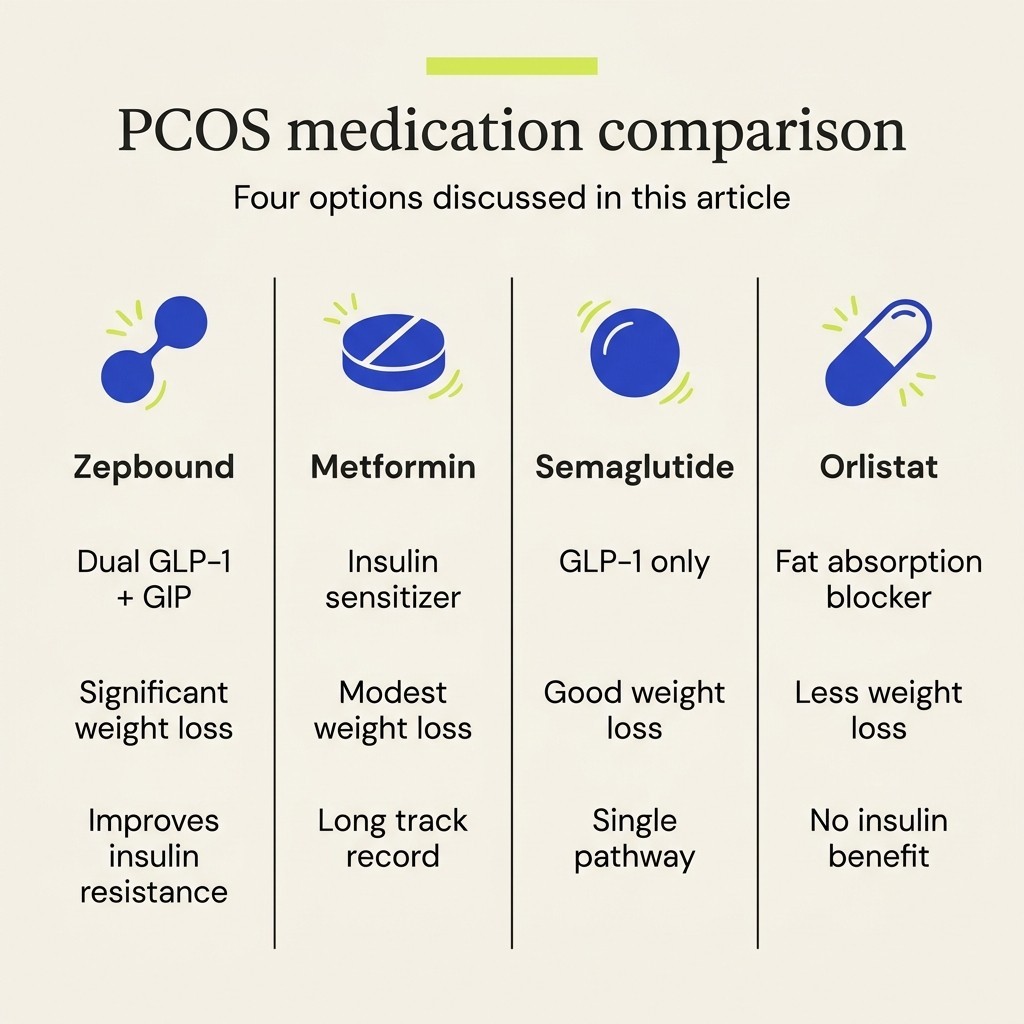
Metformin has been the standard for years. It improves insulin sensitivity and helps with modest weight loss. But research comparing GLP-1 receptor agonists to metformin found that GLP-1 medications were more effective at improving insulin sensitivity in women with PCOS. Zepbound’s dual action may offer even more.
Semaglutide (Ozempic, Wegovy) is a GLP-1-only medication. It works for weight loss and blood sugar control. But since Zepbound targets both GLP-1 and GIP, clinical trials showed higher average weight loss with tirzepatide compared to semaglutide, 22.5% vs 15% at maximum doses, though no head-to-head trials exist specifically in women with PCOS, and individual responses vary.
Orlistat blocks fat absorption in your gut. It can cause some pretty uncomfortable digestive side effects and usually leads to less weight loss than GLP-1 medications. It doesn’t really address insulin resistance, either.
It’s worth noting that Zepbound works very differently from insulin-based treatments like insulin glargine, a long-acting insulin used to manage blood sugar in type 2 diabetes. While insulin glargine replaces or supplements your body’s insulin supply, Zepbound improves how your body responds to its own insulin and reduces appetite. That’s a fundamentally different approach, and one that’s more suited to the insulin resistance seen in PCOS.
Zepbound is just the brand name for tirzepatide when prescribed for weight management. Same active ingredient as Mounjaro, its type 2 diabetes brand.
Benefits and considerations for Zepbound in PCOS management
Zepbound offers some real advantages for women with PCOS, especially with weight loss and improved insulin function.
Still, it’s important to weigh these benefits against possible side effects and your own health situation.
Weight loss and metabolic improvements
For a lot of women with PCOS, losing weight feels like pushing a boulder up a hill. The condition itself makes weight management harder thanks to insulin resistance and hormone swings.
In clinical trials (SURMOUNT-1), people taking tirzepatide at the highest dose (15mg) lost an average of 22.5% of their body weight over 72 weeks, with results ranging from 15–22.5% depending on dose. Individual results vary significantly.
Even dropping just 5% of your body weight can ease PCOS symptoms. Modest weight loss helps restore more regular periods and can lower testosterone levels.
The metabolic improvements go beyond the number on the scale. Blood pressure often drops, and HbA1c levels (a blood test that shows your average blood sugar over the past 2–3 months) usually improve. These changes lower the risk of developing type 2 diabetes, which is higher in women with PCOS.
Improving insulin sensitivity and reducing androgens
By improving insulin resistance, Zepbound helps your cells respond to insulin better, so your body doesn’t have to produce as much. Lower insulin levels mean your ovaries don’t get that constant push to make androgens. As a result, you might see less excess hair, fewer breakouts, and maybe even notice your scalp hair thinning less.
Some women spot these changes within just a few months of starting Zepbound. Improvements in insulin sensitivity often show up pretty quickly, sometimes even before the scale starts to budge.
Impact on menstrual regularity and fertility
Irregular periods are a classic PCOS frustration. Some women go months without a period, while others deal with cycles so unpredictable it makes planning feel impossible.
Zepbound helps regulate cycles by tackling hormonal disruption at its source. When your insulin drops and androgens calm down, your body’s normal ovulation signals can finally get through.
Studies show women on similar medications get more regular bleeding patterns. A lot of these fertility improvements seem to go hand-in-hand with losing even a little weight.
If you’re trying to conceive, restoring ovulation is everything. Zepbound may help by nudging your cycles back on track. It might even improve the health of your uterine lining, which matters for implantation.
Important: According to the Zepbound prescribing information, Zepbound may reduce the effectiveness of oral contraceptives. Use additional barrier contraception (such as condoms) for 4 weeks after starting treatment and for 4 weeks after each dose increase. This is especially important if you’re using hormonal contraception to manage PCOS symptoms. Zepbound is not recommended during pregnancy or if you’re actively trying to conceive. Speak to your prescriber about the right timing if pregnancy is part of your plan.
Potential risks and side effects
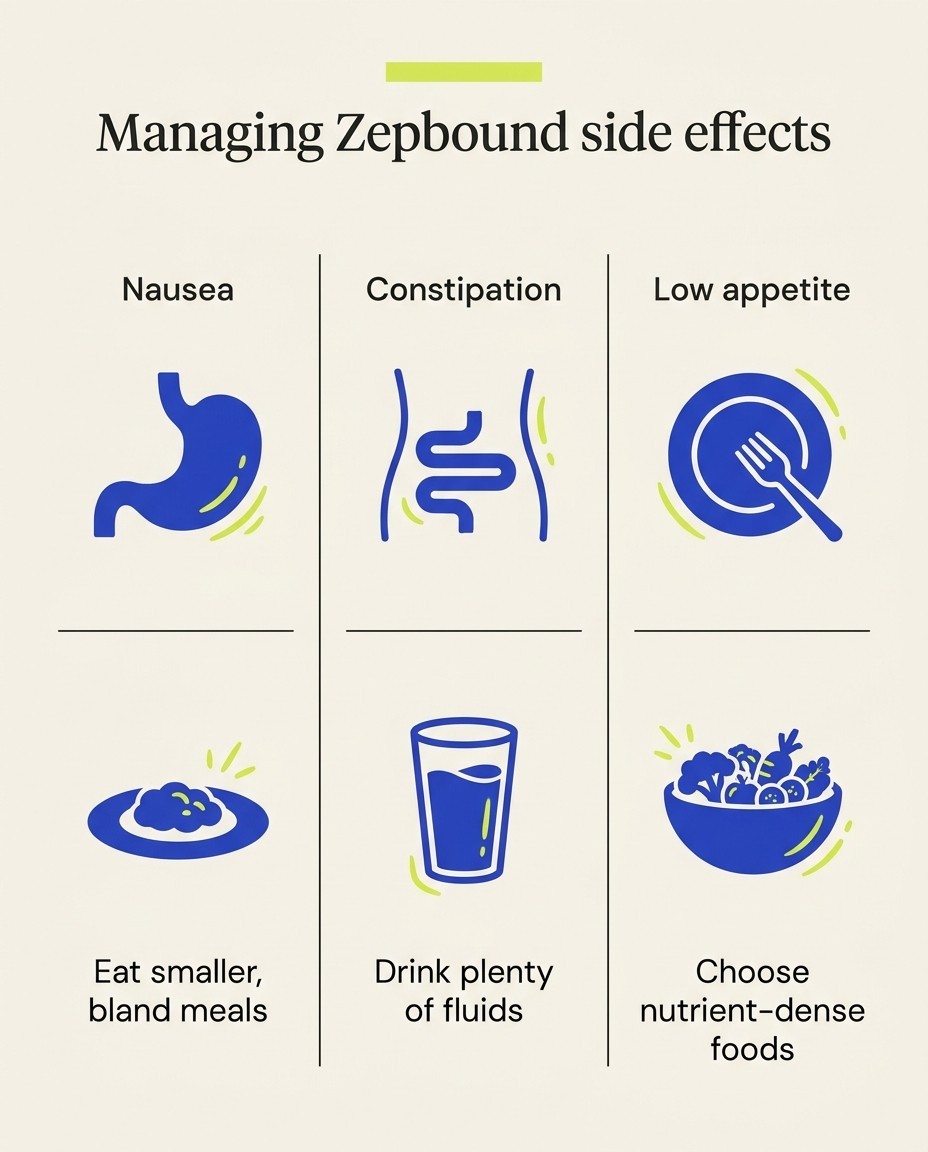
Like any medication, Zepbound comes with its own set of possible side effects. Most of them affect your digestive system.

These side effects are common and usually settle down on their own:
- Mild nausea, especially in the first week or two after a dose change
- Reduced appetite (this is actually part of how the medication works)
- Occasional loose stools or mild constipation
- Mild injection site redness
These typically improve within 2–4 weeks as your body adjusts to each dose.
Side effects are most common in the first few weeks after each dose increase. Starting with a low dose and ramping up slowly helps a lot. Eating smaller meals and steering clear of strong smells can also make nausea easier to handle.

Seek immediate medical help if you experience:
- Severe abdominal pain that doesn’t go away, especially if it radiates to your back (possible pancreatitis)
- Signs of allergic reaction: swelling of the face, lips, or throat, or difficulty breathing
- Severe or persistent vomiting that won’t stop
- Sudden changes in vision
Call 911 for suspected allergic reactions.

See your doctor if you notice:
- Persistent nausea or vomiting that doesn’t improve after 2–4 weeks
- A lump or swelling in your neck
- Difficulty swallowing or persistent hoarseness
- Signs of gallbladder problems (pain in the upper right side of your stomach)
- Symptoms of low blood sugar if taking other diabetes medications
Zepbound is not suitable if you or a close family member have a history of medullary thyroid cancer, or a rare condition called multiple endocrine neoplasia syndrome type 2 (MEN2). Your prescriber will ask about these before prescribing.
Blood pressure can shift too, though Zepbound often helps people with high blood pressure lower it. Regular monitoring is a good idea.
Integrating lifestyle modifications with Zepbound
Zepbound works best when you pair it with real changes to how you eat, move, and handle stress. Diet and exercise support your metabolism and give the medication a boost. Adding things like inositol can also help tackle insulin resistance from a few different angles.
The role of diet and exercise
Zepbound isn’t magic on its own. What you eat and how you move still matter.
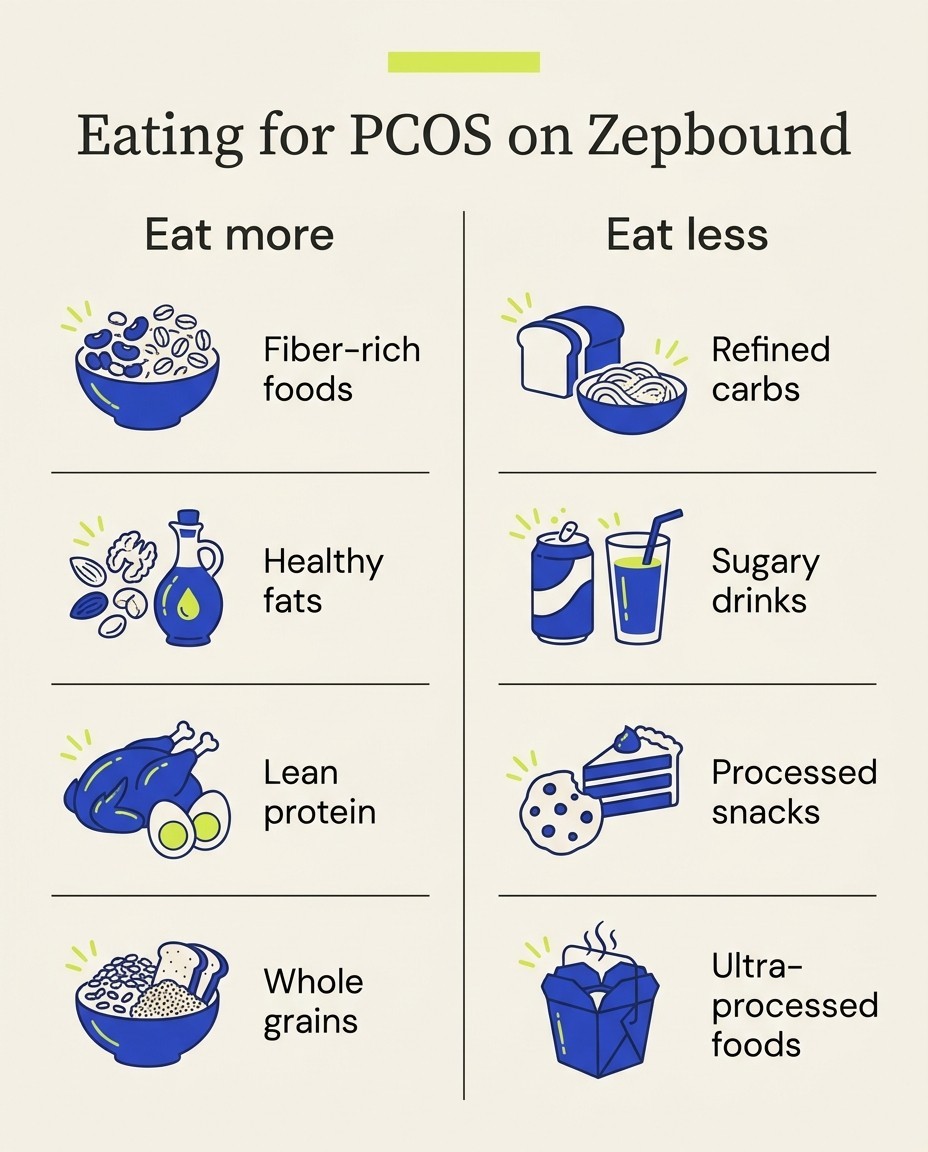
A balanced diet goes a long way. Whole foods, think vegetables, lean proteins, whole grains, help keep blood sugar steady and tamp down inflammation. Ditching processed foods and sugary drinks makes a real dent in fasting insulin levels.
Aim for at least 68 fluid ounces (about 8½ cups) of water daily, or 68–101 fluid ounces (about 8½–12½ cups) if you experience digestive side effects like constipation or nausea. For context, the National Academies sets an adequate total water intake of about 91 fluid ounces a day for women, from all beverages and food.
During active weight loss, aim for 0.45–0.55g of protein per pound of body weight daily. For someone weighing 180 pounds, that means roughly 80–100g of protein daily. Adequate protein helps preserve muscle mass while you’re losing weight.
Exercise adds even more benefit. Resistance training builds muscle, which helps your body use insulin better. Try for 30 minutes most days, brisk walks, cycling, or any strength work counts.
Key dietary changes:

You don’t have to go all-out at the gym. Even moderate activity helps your cells respond to insulin.
Lifestyle changes for lasting results
Zepbound can kickstart weight loss, but keeping it off takes habits you can actually live with.
Sleep matters more than most people think. Poor sleep makes insulin resistance worse and slows weight loss. Try to get seven to nine hours a night, even if it’s not always easy.
Stress management is underrated too. High stress disrupts hormones that control blood sugar. A little deep breathing or a quick walk can work wonders.
Some women look into bariatric surgery if lifestyle changes and medication just aren’t enough. It’s really for severe cases where metabolic health is in danger, not a first step, but sometimes life-changing.
Tracking your progress helps keep you motivated. Notice changes in your energy, how regular your periods are, or even how your clothes fit, not just the number on the scale.
Alternative and complementary therapies
Some supplements can work alongside Zepbound to tackle PCOS symptoms from different angles.
Inositol has pretty strong research backing. This supplement helps improve insulin sensitivity and might restore regular periods. Many women take 2–4 grams daily, usually split into two doses. It’s especially helpful for the metabolic side of PCOS.
Vitamin D deficiency shows up a lot in women with PCOS. If your levels are low, supplementing could support your overall metabolic health.
Omega-3 fatty acids from fish oil might help reduce inflammation. They can also improve cholesterol levels.
These work best as part of a broader approach, not just on their own.
Therapies to consider:
Always speak to your doctor or prescriber before adding supplements. They can interact with medications or even change how Zepbound works. What works well for one person may not suit another, so personalized advice matters.
The bottom line
Zepbound isn’t FDA-approved specifically for PCOS, but its effects on insulin resistance and weight loss make it a genuinely promising option for women struggling with the condition. By working on two hormone pathways at once, it tackles several PCOS challenges, from stubborn weight gain to irregular periods and excess androgens.
If you’re considering Zepbound for PCOS, speak to your doctor or prescriber about whether it’s right for you, and remember that pairing it with sustainable lifestyle changes gives you the best chance of long-term results.
Frequently asked questions
Is Zepbound FDA-approved for PCOS?
Zepbound is not FDA-approved specifically for treating PCOS. Its FDA-approved labeling covers reducing excess body weight and maintaining weight reduction long term in adults with obesity, or with overweight and a weight-related condition, alongside a reduced-calorie diet and increased physical activity. However, your doctor or specialist may prescribe it off-label if they believe it could help manage your PCOS symptoms, particularly insulin resistance and weight.
How quickly might I see improvements in my PCOS symptoms on Zepbound?
Many women notice appetite changes and some weight loss within the first few weeks. Improvements in insulin sensitivity can begin before significant weight loss occurs. Changes to menstrual regularity and androgen-related symptoms like excess hair growth typically take longer, often 3 to 6 months, as your hormonal balance gradually shifts.
Can I take Zepbound alongside metformin for PCOS?
Some women take both, as they work through different mechanisms. Metformin directly improves how your cells respond to insulin, while Zepbound works on appetite hormones and blood sugar regulation. Your prescriber will decide whether combining them is appropriate for your situation, considering your overall health and other medications.
Will Zepbound help with PCOS-related hair growth or acne?
It may help indirectly. By improving insulin resistance and reducing insulin levels, Zepbound can lower the androgen levels that drive excess hair growth and acne. These changes tend to happen gradually over several months. See the section on improving insulin sensitivity and reducing androgens above for more detail.
Can I use Zepbound if I’m trying to get pregnant?
Zepbound is not recommended during pregnancy or if you’re actively trying to conceive. However, using it before conception to improve weight, insulin resistance, and ovulation regularity may support future fertility. Zepbound may reduce the effectiveness of oral contraceptives, so use barrier contraception for 4 weeks after starting and after each dose increase. Speak to your prescriber about the right timing if pregnancy is part of your plan.
How much weight loss can I expect on Zepbound with PCOS?
In clinical trials (SURMOUNT-1), people taking tirzepatide at the highest dose lost an average of 22.5% of their body weight over 72 weeks. Results for women with PCOS specifically may vary, but even modest weight loss of 5–10% can significantly improve symptoms like irregular periods, excess androgens, and insulin resistance. Individual results vary significantly.
What are the most common side effects of Zepbound?
The most common side effects are gastrointestinal: nausea, vomiting, diarrhea, constipation, and reduced appetite. These are usually worst when you first start or after a dose increase, and typically improve within 2–4 weeks. Starting on a low dose and increasing gradually helps minimize these effects.
Should I take any supplements alongside Zepbound for PCOS?
Some supplements may complement Zepbound for PCOS management. See the alternative and complementary therapies section above for details on inositol, vitamin D, and omega-3s. Always speak to your doctor or prescriber before adding supplements, as they can interact with medications.
What happens if I stop taking Zepbound?
If you stop Zepbound, some of the benefits, particularly appetite suppression and weight loss, may reverse over time. Insulin resistance and PCOS symptoms could return if the underlying factors aren’t managed through diet, exercise, and other lifestyle changes. Any decision to stop should be made with your prescriber, who can help you plan a gradual approach.
This article is for informational purposes only and does not replace professional medical advice. PCOS treatment should always be discussed with your doctor or a specialist. Zepbound is a prescription medication and is not FDA-approved specifically for PCOS. Always speak to your prescriber before starting, stopping, or changing any medication.
Sources: Clinical information in this article is based on the Zepbound prescribing information and published clinical research cited throughout.
Sources
- SURMOUNT-1 trial: Tirzepatide Once Weekly for the Treatment of Obesity — Jastreboff AM, et al. New England Journal of Medicine, 2022
- STEP 1 trial: Once-Weekly Semaglutide in Adults with Overweight or Obesity — Wilding JPH, et al. New England Journal of Medicine, 2021
- Insulin resistance and the polycystic ovary syndrome revisited — Diamanti-Kandarakis E, Dunaif A. Journal of Clinical Endocrinology & Metabolism, 2012
- The prevalence and phenotypic features of polycystic ovary syndrome — Bozdag G, et al. Human Reproduction, 2016
- Development and Risk Factors of Type 2 Diabetes in Women With PCOS — Rubin KH, et al. Journal of Clinical Endocrinology & Metabolism, 2017
- Comparison of exenatide and metformin on menstrual cyclicity in overweight women with PCOS — Elkind-Hirsch KE, et al. Journal of Clinical Endocrinology & Metabolism, 2008
- Improvement in endocrine and ovarian function during dietary treatment of obese women with PCOS — Kiddy DS, et al. Clinical Endocrinology, 1992
- Zepbound prescribing information — DailyMed, National Library of Medicine
- PCOS | Polycystic Ovary Syndrome — MedlinePlus, National Library of Medicine
- Adult Activity: An Overview — Centers for Disease Control and Prevention
- Report Sets Dietary Intake Levels for Water, Salt, and Potassium — National Academies, 2004