


Nausea is the most common side effect of Zepbound, affecting roughly 1 in 4 people who take it (Zepbound prescribing information). If you’re feeling queasy, struggling to eat, or dreading mealtimes, you’re experiencing what many others go through during the adjustment period.
The good news: nausea is usually temporary and tends to improve within the first few weeks on a stable dose. Understanding why it happens and how to manage it can make the adjustment period much more bearable.
Key takeaways


Why does Zepbound cause nausea?
Zepbound contains tirzepatide, which works by mimicking two natural hormones called GLP-1 (glucagon-like peptide-1) and GIP (glucose-dependent insulinotropic polypeptide) that regulate appetite and blood sugar. Nausea is common with GLP-1 medications generally, not just Zepbound. One of its key effects is slowing gastric emptying, meaning food stays in your stomach longer than usual. For full prescribing information, see the Zepbound prescribing information.
This delayed emptying is part of how tirzepatide helps with weight loss: you feel fuller for longer, so you eat less. But it can also make you feel nauseated, particularly when your body isn’t used to this slower pace of digestion.
Several factors contribute to nausea on Zepbound:
Your stomach isn’t emptying as quickly
When food hangs around in your stomach longer, it can create a heavy, uncomfortable sensation that many people experience as nausea. This is especially noticeable after eating or first thing in the morning.
Your appetite signals are changing
Zepbound affects the brain’s appetite centers, reducing hunger and changing how you perceive food. This shift can initially feel unsettling, manifesting as queasiness or a general feeling of being “off.”
Your body is adjusting to the medication
Any new medication requires an adjustment period. Your digestive system is learning to function differently, and nausea is often part of that transition.
Dose increases trigger fresh adjustment
Each time you increase your Zepbound dose, you’re restarting the adjustment process. The medication’s effects become stronger, and your body needs time to adapt again.
How common is Zepbound nausea?
Clinical trials provide good data on how often nausea occurs. In the SURMOUNT-1 trial, nausea was reported by 24 to 26% of participants taking tirzepatide at higher doses, compared to 9% taking placebo (Jastreboff et al., 2022). Most cases were mild to moderate and decreased over time.
The SURMOUNT-2 trial in people with type 2 diabetes showed similar rates, with nausea affecting 18 to 20% of participants (Garvey et al., 2023).
How long does Zepbound nausea last?
For most people, nausea peaks during the first one to two weeks on a new dose, then gradually improves. By the third or fourth week, many people find it’s significantly better or gone entirely.
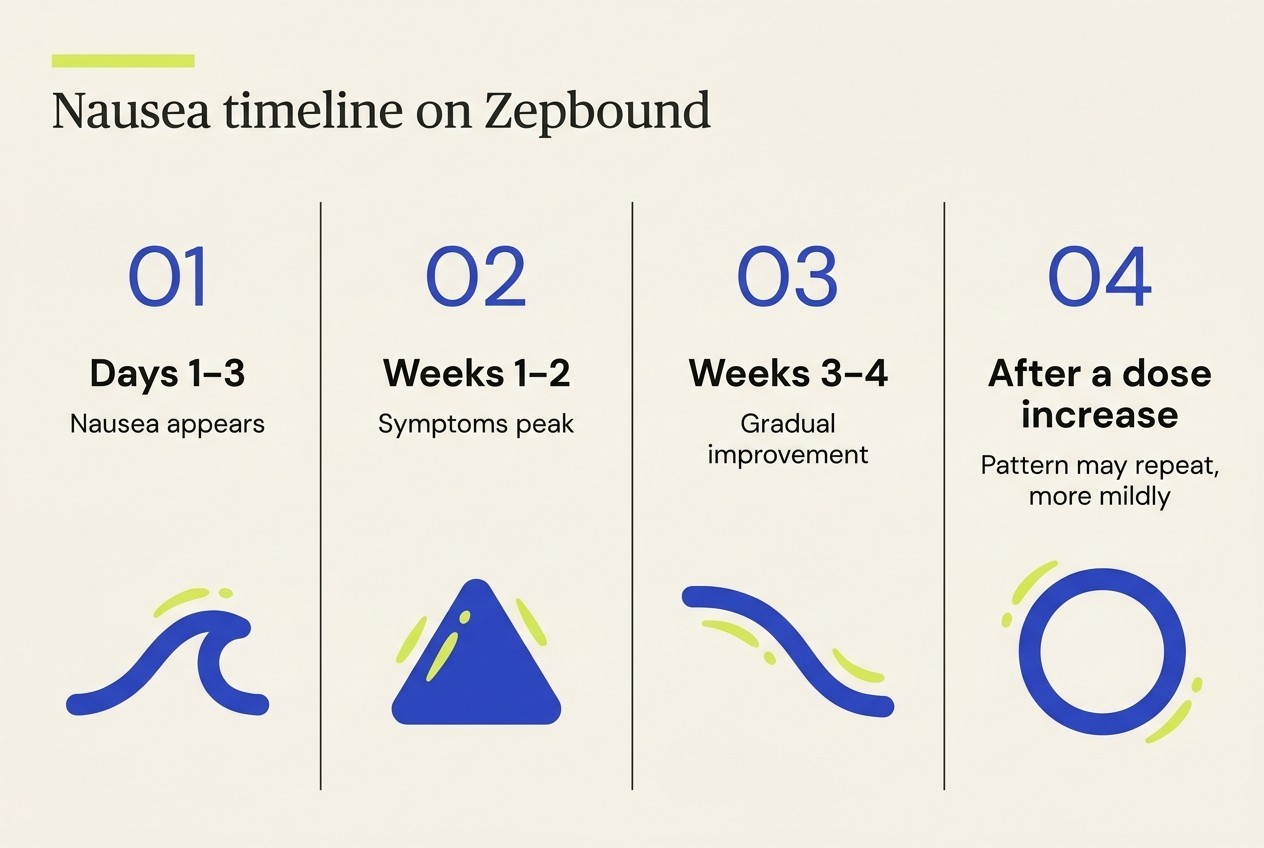
The pattern typically looks like this:
- Days 1 to 3: Nausea may appear or worsen
- Weeks 1 to 2: Symptoms often peak
- Weeks 3 to 4: Gradual improvement as your body adjusts
- After dose increase: Pattern repeats, though often less severely
Some people experience minimal nausea throughout treatment, while others find it challenging at every dose level. There’s significant individual variation, and your experience may differ from others.
If nausea persists beyond four to six weeks at the same dose without improvement, or if it’s severe enough to prevent you from eating and drinking adequately, speak to your healthcare provider.
How to get relief from Zepbound nausea
Several strategies can help reduce nausea and make the adjustment period more manageable. MedlinePlus has general guidance on managing nausea and vomiting that complements these Zepbound-specific tips.
Eat smaller, more frequent meals
Large meals are your enemy when you’re feeling nauseated. Your stomach is already processing food more slowly, so adding a big meal on top of that makes things worse.
Try eating five or six small meals throughout the day instead. Think snack-sized portions rather than full plates. This gives your stomach a better chance of keeping up with what you’re putting in.
Choose bland, easy-to-digest foods
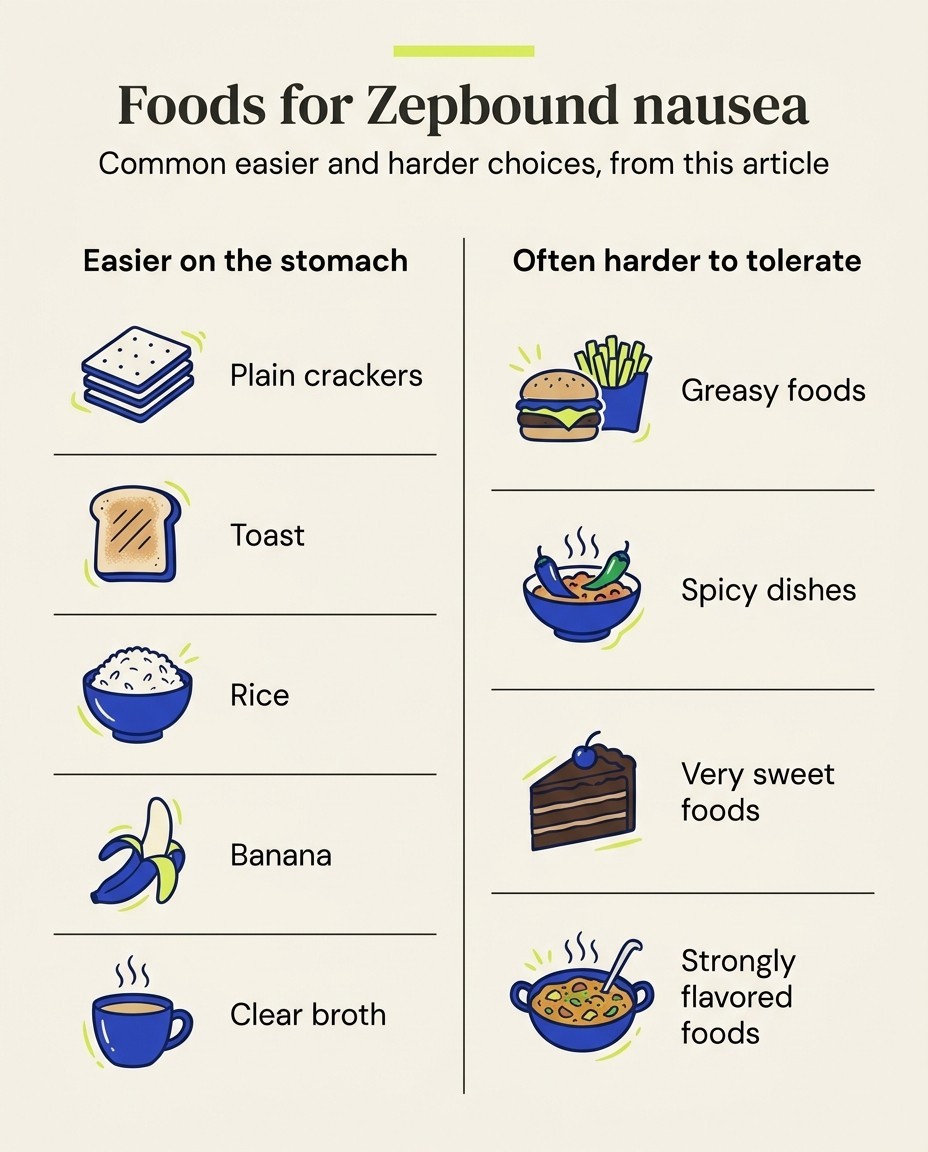
When nausea is at its worst, stick to foods that are gentle on your stomach: plain crackers or toast, rice or plain pasta, bananas, boiled potatoes, clear broths, plain chicken or fish, and applesauce.
Avoid foods that are greasy, spicy, very sweet, or strongly flavored until your nausea improves.
Eat slowly and chew thoroughly
Rushing meals makes nausea worse. Take your time, put your fork down between bites, and chew each mouthful properly. This helps your digestive system process food more easily.
Aim for at least 20 minutes per meal. Eating while distracted (watching TV, scrolling your phone) often leads to eating too quickly.
Stay hydrated, but sip slowly
Dehydration can worsen nausea, but gulping large amounts of water can also make you feel worse. Sip small amounts frequently throughout the day rather than drinking large glasses at once. Aim for about 8 to 12 cups (2 to 3 liters) of water daily when managing digestive side effects.
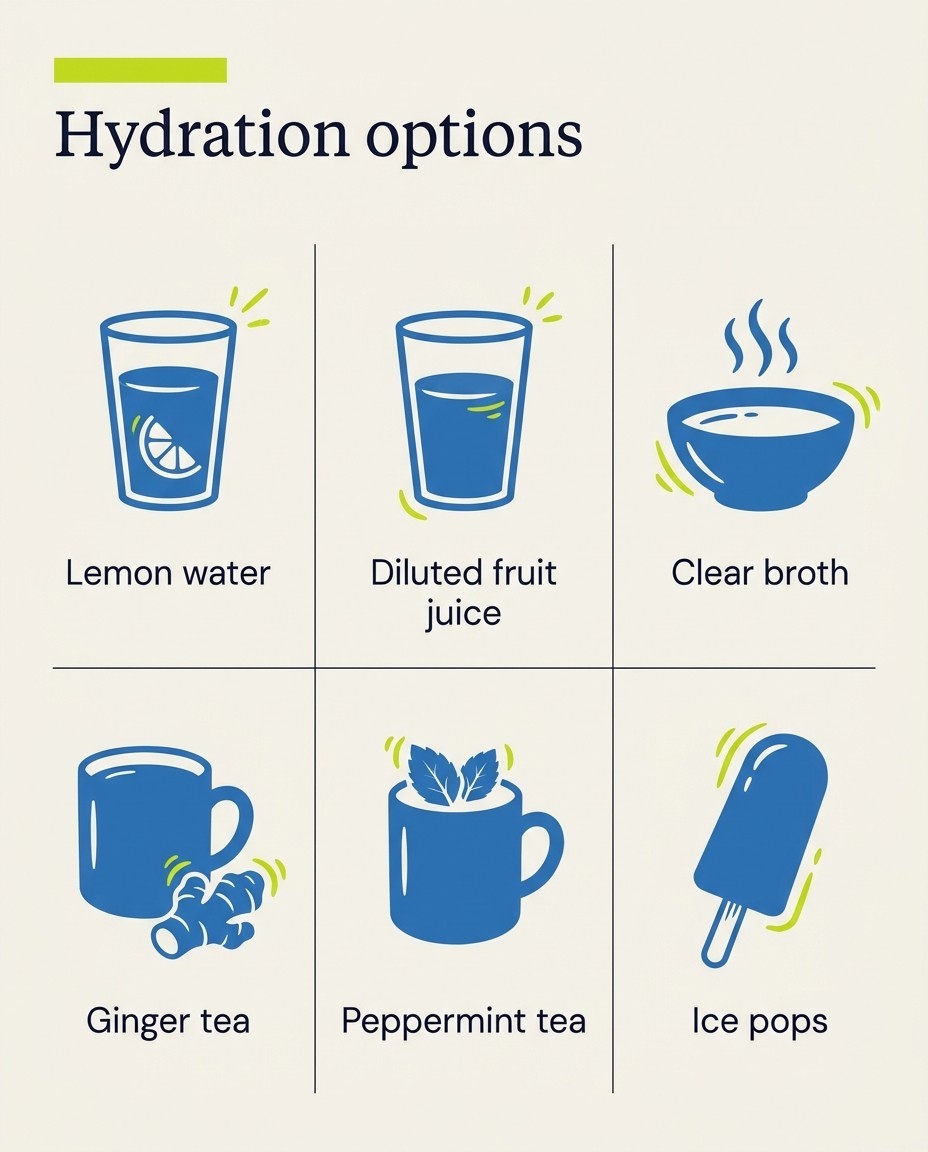
If plain water is unappealing, try:
- Water with a slice of lemon or cucumber
- Diluted fruit juice
- Clear broths
- Herbal teas (ginger or peppermint)
- Ice pops
- Ice chips
Try ginger
Ginger has been used for centuries to settle upset stomachs, and research supports its effectiveness for nausea. A clinical trial found that ginger can help reduce nausea in various contexts. Options include ginger tea (fresh ginger steeped in hot water), ginger cookies, crystallized ginger, and ginger supplements.
Start with small amounts to see how you tolerate it.
Consider peppermint
Peppermint can help relax the muscles in your digestive tract and ease nausea. Peppermint tea is a gentle option, or you can try peppermint oil capsules designed for digestive comfort.
Peppermint can worsen digestive reflux symptoms in some people, so if you’re prone to reflux, ginger might be a better choice.
Avoid lying down after eating
Staying upright helps gravity keep food moving in the right direction. Try to remain sitting or standing for at least two hours after eating.
If you need to rest, recline at an angle rather than lying flat.
Get fresh air
Sometimes a bit of fresh air can ease nausea. Step outside for a few minutes, open a window, or use a fan. Avoiding strong smells (cooking odors, perfumes) can also help.
Time your injection strategically
Some people find that taking Zepbound in the evening allows them to sleep through the initial wave of nausea. Others prefer morning injections. Experiment to find what works best for you.
Try over-the-counter remedies
If lifestyle measures aren’t enough, several OTC options may help. Bismuth subsalicylate (such as Pepto-Bismol) may help with some types of nausea (AAFP - OTC antiemetic medicines), antacids may help if nausea is accompanied by heartburn, and ginger supplements in standardized doses can be effective.
Check with your pharmacist that these are suitable alongside Zepbound and any other medications you take.
When nausea becomes a problem
Some level of nausea is expected and manageable. However, certain situations need medical attention.

Contact your healthcare provider if
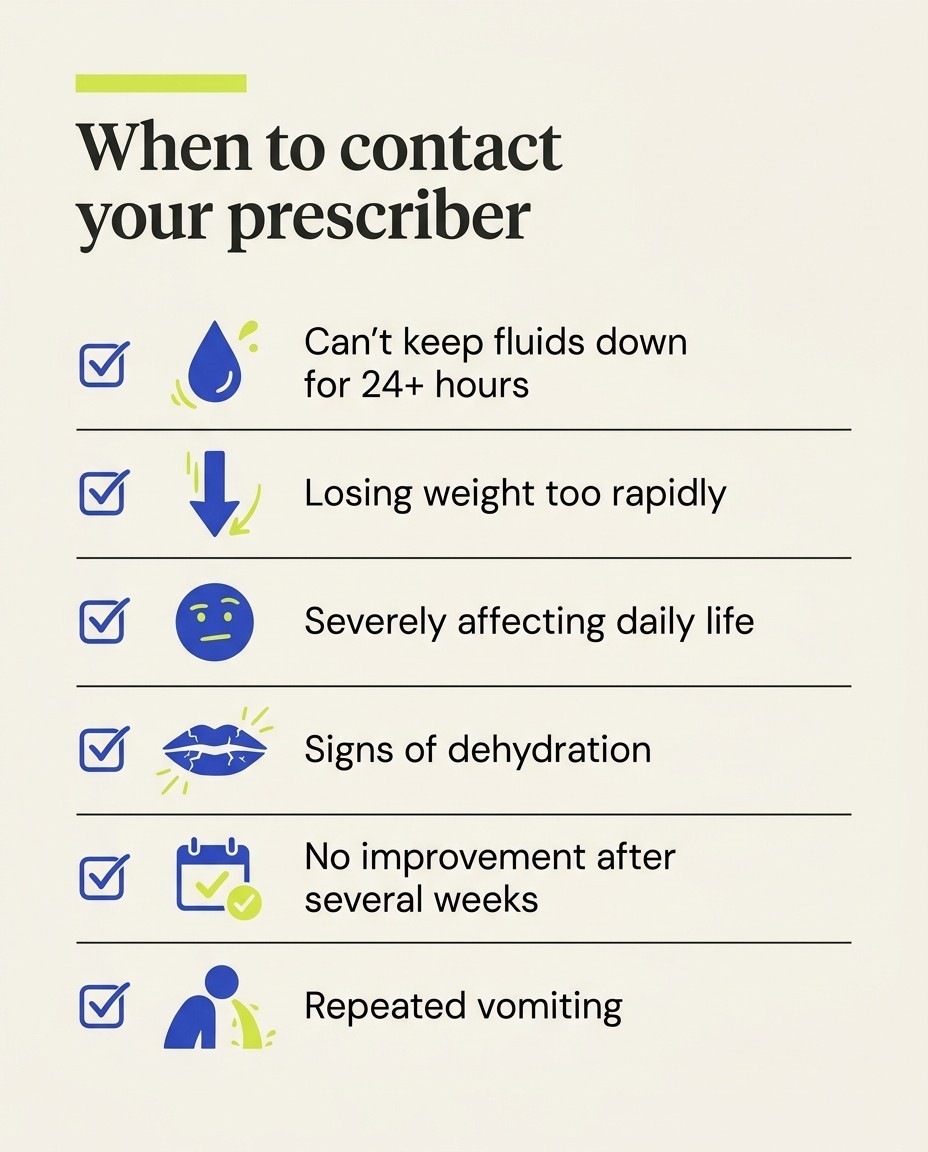
- You can’t keep any food or fluids down for more than 24 hours
- You’re losing weight too rapidly (more than 2 lb per week consistently)
- Nausea is severely affecting your quality of life
- You notice signs of dehydration (dark urine, dizziness, dry mouth) (MedlinePlus - Dehydration)
- Nausea doesn’t improve at all after several weeks
- You’re vomiting repeatedly
- You experience severe abdominal pain that radiates to your back (this could indicate pancreatitis, a rare but serious side effect)
Your prescriber might suggest slowing your dose escalation, staying at your current dose longer before increasing, prescription anti-nausea medication, or adjusting the timing of your injection.
Don’t suffer in silence. There are options if nausea is making treatment unbearable.
Nausea alongside other digestive symptoms
Nausea on Zepbound rarely occurs alone. You might also experience:
- Abdominal cramping: often overlaps with nausea
- Bloating: shares the same underlying cause
- Diarrhea or constipation: digestive changes go both ways
- Sulfur burps: result from slower digestion
- Heartburn: can worsen nausea
The good news is that the strategies helping with nausea (smaller meals, bland foods, eating slowly) often improve these other symptoms too. They share a common cause: Zepbound’s effect on your digestive system.
Does nausea mean the medication is working?
Not necessarily. Nausea is a side effect, not an indicator of effectiveness. People who experience minimal nausea can still lose significant weight on tirzepatide, while those with severe nausea might struggle if they can’t maintain adequate nutrition.
The medication works through its effects on appetite hormones and metabolism, which happen regardless of whether you feel nauseated.
The bottom line
Nausea is the most common Zepbound side effect, caused by the medication’s effect on gastric emptying and appetite signals. It typically peaks in the first couple of weeks on a new dose and improves as your body adjusts.
Eating smaller, bland meals, staying hydrated, and trying ginger or peppermint can help manage symptoms. Most people find nausea becomes less of an issue over time, though it may return temporarily with dose increases.
If nausea is severe, persistent, or preventing you from eating and drinking adequately, speak to your healthcare provider.
Frequently asked questions
How long does Zepbound nausea last?
Most people find nausea improves significantly within two to four weeks on a stable dose. It may return temporarily after dose increases but typically becomes less severe over time as your body adjusts to the medication.
Can I take anti-nausea medication with Zepbound?
Some over-the-counter options, such as bismuth subsalicylate (Pepto-Bismol), are used for certain types of nausea (AAFP), but check with your pharmacist or prescriber first to make sure they suit you alongside Zepbound. If nausea is severe, your prescriber can also recommend or prescribe stronger anti-nausea medication. Always check with your pharmacist if you’re taking other medications.
Does Zepbound nausea get better over time?
For most people, yes. Nausea tends to be worst when starting the medication and after dose increases, then improves as your body adjusts. Many people find that by the time they reach their maintenance dose (the dose you’ll continue taking long-term after the initial escalation period), nausea is minimal or absent.
Why is my nausea worse after eating?
Zepbound slows gastric emptying, so eating adds more food to a stomach that’s already processing slowly. This creates a heavy, uncomfortable sensation. Eating smaller portions and avoiding fatty foods can help reduce post-meal nausea.
Should I lower my Zepbound dose if I have nausea?
Not without discussing it with your prescriber. Some nausea is expected and usually improves with time. However, if nausea is severe or preventing you from eating adequately, your prescriber might recommend staying at your current dose longer before increasing, or adjusting your treatment plan.
Is vomiting on Zepbound normal?
Occasional vomiting can occur, particularly in the first few weeks. However, frequent or persistent vomiting isn’t normal and needs medical attention, as it can lead to dehydration and prevent the medication from working properly.
What foods should I avoid when experiencing Zepbound nausea?
Avoid fatty, greasy, or fried foods, spicy dishes, very sweet foods, and anything with strong flavors or smells. These can all make nausea worse because they’re harder to digest. Stick to bland, easy-to-digest options like plain toast, crackers, rice, bananas, and clear broths until your symptoms improve.
Can drinking ginger tea really help with Zepbound nausea?
Yes, ginger has evidence supporting its effectiveness for nausea. Clinical research shows it can help settle upset stomachs. Try ginger tea made from fresh ginger steeped in hot water, or ginger cookies and crystallized ginger. Start with small amounts to see how you tolerate it.
Will nausea come back every time I increase my Zepbound dose?
Many people do experience some return of nausea with each dose increase, as your body needs to adjust to the stronger effects. However, it’s often less severe than when you first started, and you’ll already know which management strategies work best for you. Each adjustment period typically follows the same pattern: symptoms peak in weeks 1 to 2, then improve by weeks 3 to 4.
Is it better to take Zepbound in the morning or at night for nausea?
There’s no single best time that works for everyone. Some people prefer evening injections so they can sleep through the initial wave of nausea. Others find morning works better for them. Experiment with different injection times to find what suits you best, and keep your injection day consistent once you find a good routine.