

If you’ve started tirzepatide, sold as Zepbound for weight management and Mounjaro for type 2 diabetes, and suddenly find yourself dealing with burps that smell like rotten eggs, you’re not alone. Sulfur burps are frequently reported by people using tirzepatide for weight management, even though they weren’t specifically measured in clinical trials.

Sulfur burps happen because tirzepatide slows your digestion, giving gut bacteria more time to ferment food and produce smelly hydrogen sulfide gas. They’re unpleasant but harmless, and usually improve within 2–4 weeks as your body adjusts to each dose. Avoiding trigger foods and eating smaller meals can help reduce them.
Key takeaways

What are sulfur burps?
Sulfur burps are burps that carry a distinctive rotten egg smell. The odor comes from hydrogen sulfide (H₂S), a gas naturally produced by gut bacteria when they break down sulfur-containing foods. It’s the same compound that gives rotten eggs their characteristic smell.
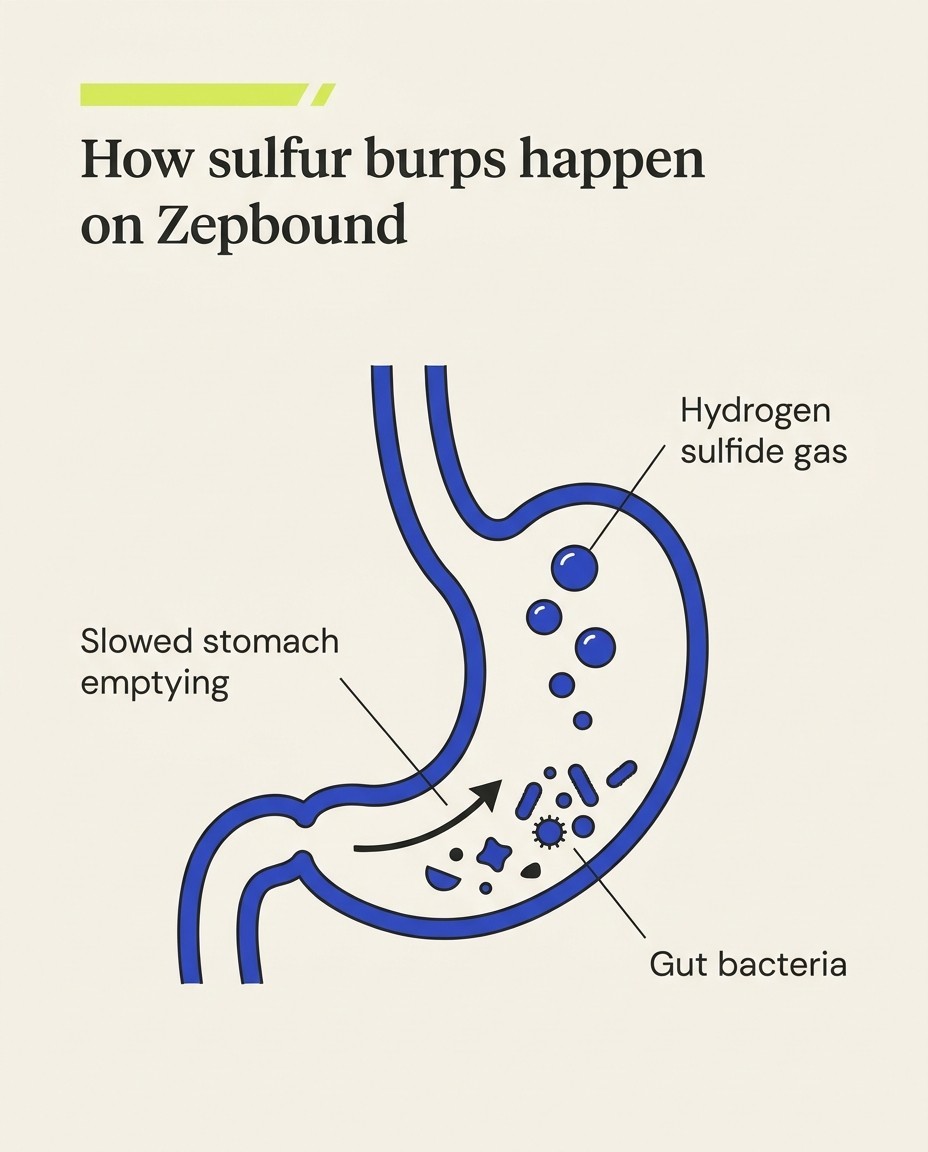
Normally, food moves through your digestive system quickly enough that this gas doesn’t build up to noticeable levels. But Zepbound slows down how fast your stomach empties its contents into your small intestine, affecting your metabolism and the pace of digestion. When food sits in your stomach and intestines for longer, gut bacteria have more time to ferment it, producing more hydrogen sulfide gas.
Why does Zepbound cause sulfur burps?
Tirzepatide (the active ingredient in Zepbound and Mounjaro) is a dual GLP-1 and GIP receptor agonist. It works on two appetite-regulating hormone receptors instead of one. Originally developed for type 2 diabetes to help control blood sugar levels, tirzepatide was found to produce significant weight loss in clinical trials. By mimicking these hormones, the medication helps you feel fuller for longer, reduces appetite, and affects your metabolism. This is how it supports weight loss. However, these same hormones also slow down how quickly food leaves your stomach (known as gastric emptying).
This slower digestion is beneficial for appetite control, but it creates the perfect environment for bacterial fermentation. Foods containing sulfur compounds sit around longer in your gut, giving bacteria extra time to break them down and produce hydrogen sulfide.
The effect is often more noticeable when you first start Zepbound or after moving up to a higher dose. Your digestive system needs time to adapt to the medication’s effects, and during this adjustment period, symptoms like sulfur burps tend to be more pronounced.
Sulfur burps are part of the broader digestive side effects that many people experience on Zepbound, alongside nausea, bloating issues, and painful stomach cramps.
Foods that make sulfur burps worse
Certain foods are higher in sulfur compounds than others, and eating these while on Zepbound can trigger or worsen sulfur burps. If you’re struggling with rotten-egg burps, consider cutting back on:
- Eggs (particularly the yolks, which are high in sulfur)
- Red meat and poultry (contain sulfur-containing amino acids)
- Garlic and onions (naturally high in sulfur compounds)
- Cruciferous vegetables (broccoli, cabbage, cauliflower, and Brussels sprouts)
- Dairy products (especially cheese)
- Beer and wine (fermentation adds sulfur compounds)
- Legumes (beans and lentils)
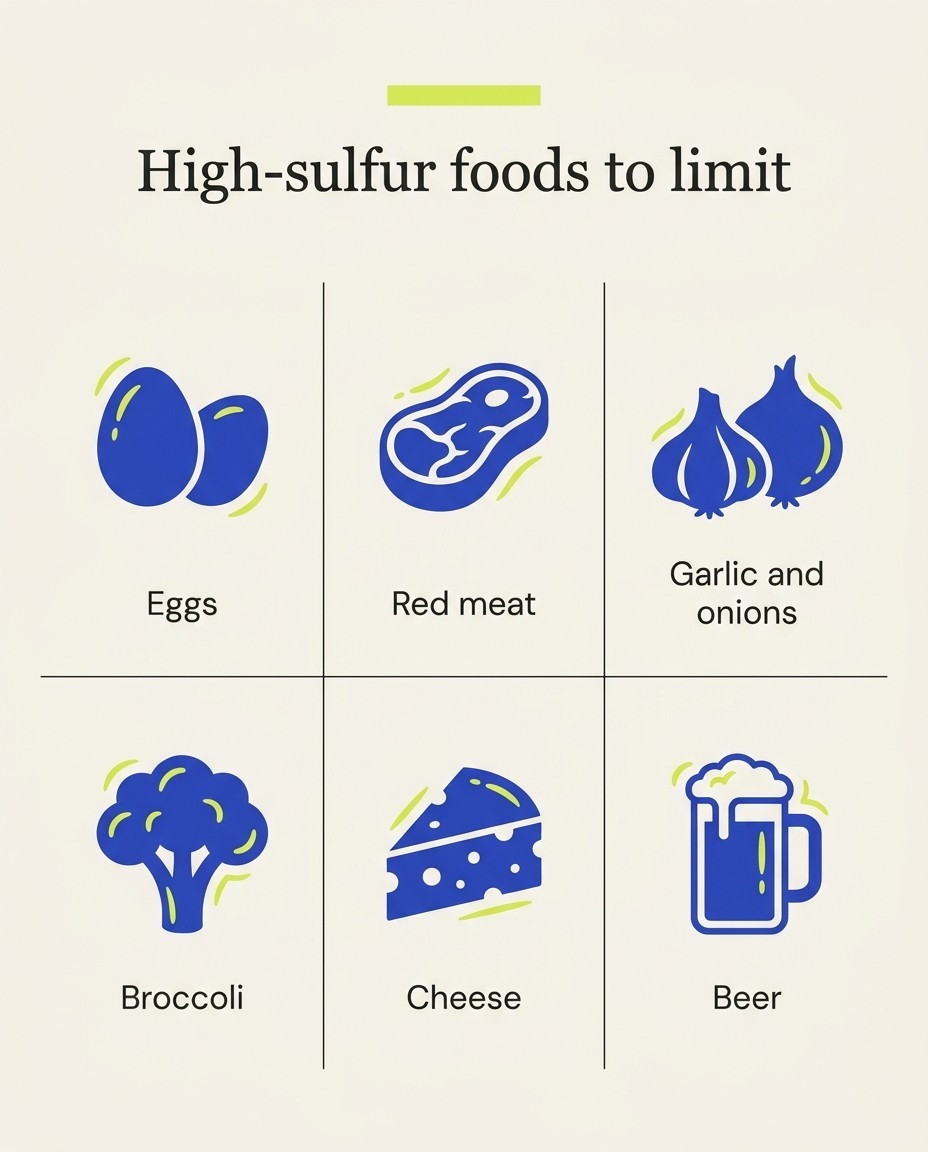
You don’t necessarily need to eliminate these foods entirely. Sometimes just reducing portion sizes or spacing them out differently can make a noticeable difference. Keep a food diary for a week or two to identify your personal triggers, as what causes problems for one person might be fine for another.
As part of a balanced diet, try to include plenty of fiber from low-sulfur sources like oats, rice, and most fruits. Fiber helps keep your digestive system moving, which may reduce the time food spends fermenting in your gut. However, increase fiber gradually. Adding too much too quickly can temporarily worsen bloating and gas.
How to reduce sulfur burps on Zepbound

While you can’t completely prevent the digestive slowdown that causes sulfur burps, several strategies can reduce their frequency and intensity.
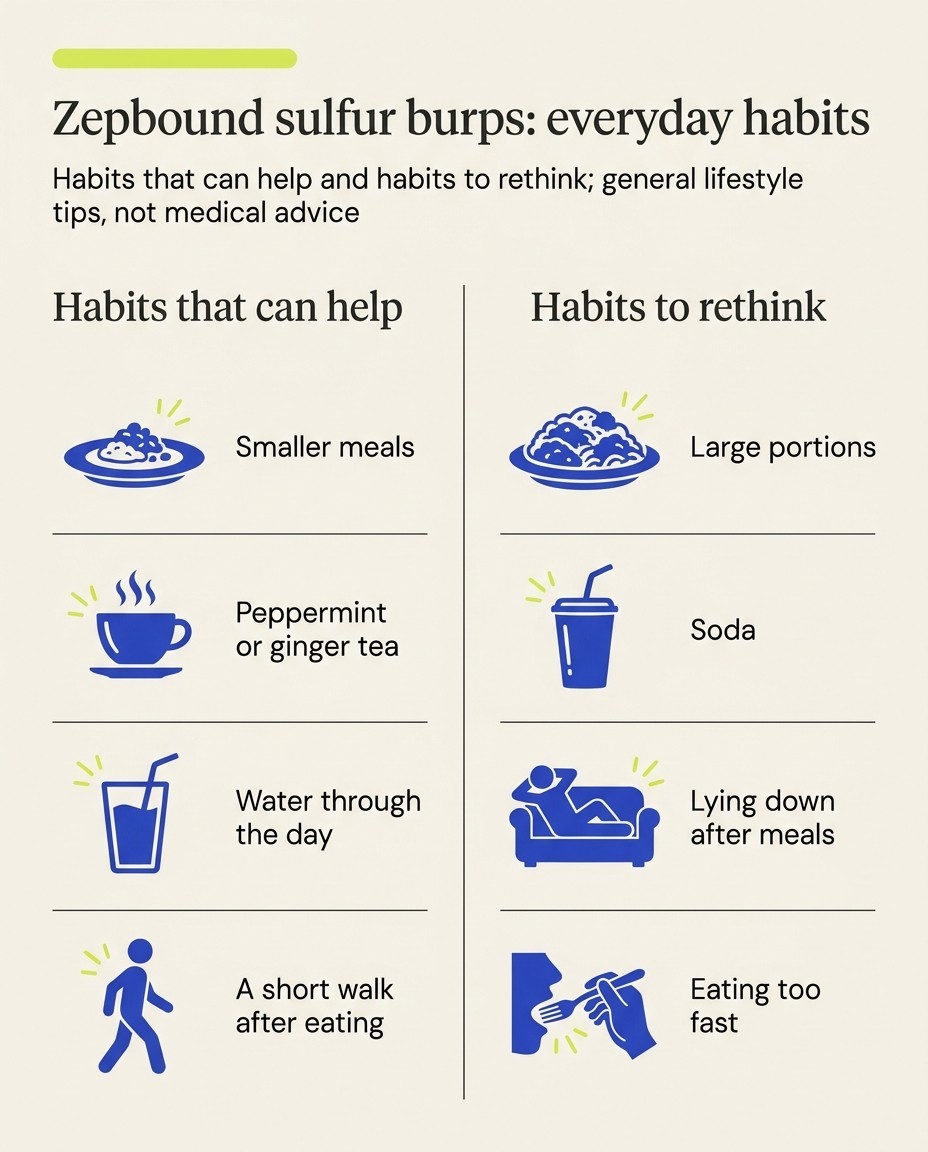
Eat smaller, more frequent meals
Large meals give bacteria more material to ferment. Smaller portions move through your digestive system more easily, even with slowed gastric emptying.
Try eating five or six small meals throughout the day instead of three large ones. Stop eating when you feel satisfied rather than full, as your slower digestive system may need less food than you’re used to.
Chew your food thoroughly
Proper chewing breaks food down mechanically before it reaches your stomach, making it easier to digest. It also reduces the amount of air you swallow, which can contribute to burping in general.
Aim for 20–30 chews per mouthful, and put your fork down between bites to slow yourself down.
Skip the carbonated drinks
Carbonated beverages introduce extra gas into your digestive system. When combined with the gas produced by bacterial fermentation, this can make burping worse.
Stick to plain water, herbal teas, or other non-carbonated options. This includes sparkling water, not just sodas.
Stay well hydrated
Dehydration can worsen digestive symptoms including sulfur burps. When you’re not drinking enough fluids, your digestive system works less efficiently, and food can sit in your stomach even longer. Aim for at least 68 fluid ounces (about 8½ cups) of water daily (more if you’re also experiencing diarrhea, which can occur alongside other digestive side effects). Signs of dehydration include dark urine, headaches, tiredness, and fatigue. Keeping a water bottle with you throughout the day can help you stay on track. MedlinePlus notes that the Dietary Reference Intake for total water, which includes water from other drinks and food, is between 91 and 125 fluid ounces (2.7 to 3.7 liters) a day for adults.
Try peppermint or ginger
Both peppermint and ginger have traditional uses for digestive discomfort. Peppermint may help relax the muscles in your digestive tract, while ginger has been used for centuries to settle upset stomachs. The National Center for Complementary and Integrative Health says some combination products containing peppermint oil or peppermint leaves may help relieve indigestion, but there isn’t evidence that peppermint oil alone helps, and it may worsen indigestion in some people.
Options include:
Note that peppermint can worsen stomach acid reflux in some people, so if you’re prone to acid reflux, ginger might be a better choice.
Consider simethicone
Over-the-counter gas relief medications containing simethicone can help break up gas bubbles in your digestive tract. Simethicone products are widely available from pharmacies and drugstores and are generally safe to use alongside Zepbound.
Check with your pharmacist before using simethicone if you’re pregnant, breastfeeding, or taking other medications.
Stay upright and consider gentle exercise
Lying down after meals can slow digestion even further and make gas more likely to travel upward. Try to stay upright for at least two to three hours after eating, especially in the evening. The NIDDK guidance on acid reflux says eating meals at least 3 hours before you lie down or go to bed may improve symptoms.
A gentle walk after meals can also help get your digestive system moving. Even 10–15 minutes of light exercise can make a difference. Regular physical activity as part of a balanced diet and exercise routine may also help reduce digestive symptoms over time and maintain your energy levels throughout your weight loss journey.
Don’t stop taking Zepbound without speaking to your prescriber first. Sulfur burps typically improve as your body adjusts, and your prescriber can advise if any changes to your treatment are needed.
When do sulfur burps go away?
For most people, sulfur burps improve after the first few weeks on Zepbound. Your digestive system gradually adapts to the medication’s effects, and the bacterial fermentation that causes these burps tends to settle down.
That said, you might notice a temporary return of symptoms each time you increase your dose. The pattern typically repeats: worse for a week or two after the dose change, then gradually improving as your body adjusts.
If sulfur burps persist for more than a few weeks at the same dose, or if they’re severe enough to affect your quality of life, discuss it with your prescriber. They might suggest staying at your current dose for longer before increasing, or exploring other ways to manage the symptom. While sulfur burps are among the more common short-term side effects, serious long-term side effects from tirzepatide are rare. Most digestive symptoms improve as your body adjusts to the medication.
Sulfur burps and other digestive symptoms
Sulfur burps rarely show up in isolation. They’re often accompanied by other digestive side effects that stem from the same cause: Zepbound’s effect on how quickly food moves through your system.
You might also experience:
- Heartburn or acid reflux
- Bad breath (often related to the same gases causing sulfur burps)
- abdominal gas and bloating and excessive gas
- Nausea, especially after eating
- stomach cramping or discomfort
- Diarrhea, particularly during dose escalation
- Tiredness or low energy levels, especially if you’re eating less
Some people also notice hair loss as a separate side effect, which is related to rapid weight loss and reduced calorie intake rather than digestive changes.
The good news is that managing one symptom often helps with others. The dietary changes that reduce sulfur burps (eating smaller meals and avoiding trigger foods) typically improve bloating and nausea too.
When to talk to your doctor

Sulfur burps on their own are annoying but not dangerous. However, certain symptoms alongside them might indicate something that needs medical attention.
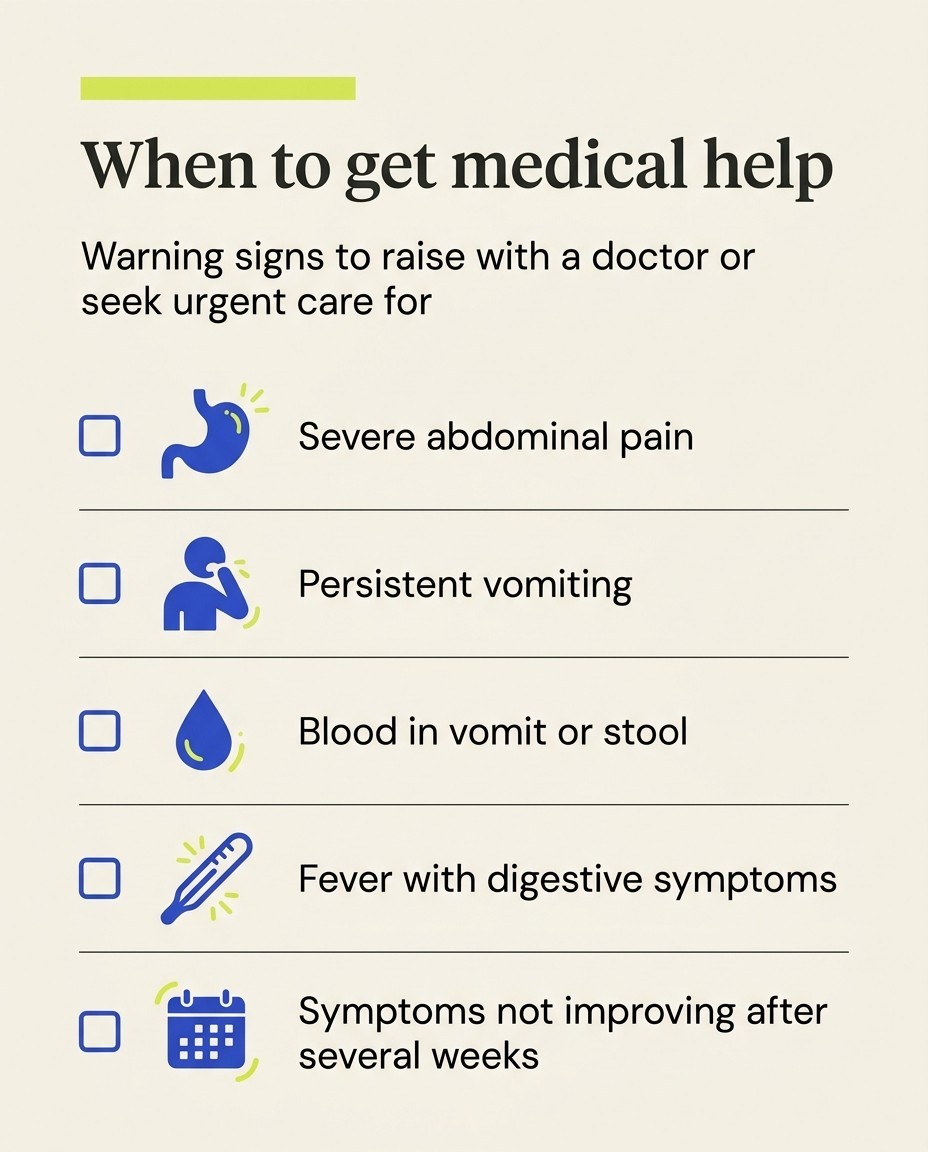
Contact your doctor or prescriber if you experience:
- Severe or persistent abdominal pain, especially if it radiates to your back (possible sign of pancreatitis)
- Vomiting that won’t stop
- Blood in your vomit or stool
- Unexplained weight loss beyond what you’d expect from the medication
- Fever alongside your digestive symptoms
- Signs of gallbladder problems such as pain in your upper right abdomen after eating fatty foods
- Sulfur burps that persist for several weeks without any improvement
These symptoms could indicate conditions like gastritis, a stomach infection, or other issues that need proper medical evaluation. Mention any concerns about blood pressure or other health changes during your regular check-ins.
Frequently asked questions
Can I take anything for sulfur burps on Zepbound?
Over-the-counter simethicone products can help break up gas bubbles. Peppermint tea or ginger may also provide relief. Check with your pharmacist that these are suitable alongside any other medications you take.
Are sulfur burps a sign that Zepbound is working?
Not specifically. Sulfur burps indicate that tirzepatide is slowing your digestion, which is one of its effects, but they’re not a measure of how well the medication is working for weight loss. Many people achieve good results without experiencing significant sulfur burps.
Should I stop taking Zepbound because of sulfur burps?
Don’t stop your medication without discussing it with your prescriber. Sulfur burps, while unpleasant, typically improve over time. If they’re significantly affecting your quality of life, your prescriber may suggest adjusting how quickly you move through the dose increases.
Do sulfur burps mean I have a stomach infection?
Usually not. Sulfur burps on tirzepatide are typically caused by slowed digestion rather than infection. However, if burps are accompanied by fever, severe pain, vomiting, or don’t improve over time, see your doctor to rule out other causes.
Are sulfur burps and bad breath connected?
Yes, they often are. The same hydrogen sulfide gas that causes sulfur burps can also contribute to bad breath. Managing one often helps with the other. Staying hydrated, eating smaller meals, and good oral hygiene can all help.
Are sulfur burps worse at certain times of day?
Many people notice sulfur burps are worse in the morning (after food has sat in the stomach overnight) or in the evening after larger meals. Eating your largest meal earlier in the day and keeping evening meals light may help reduce symptoms.
Will switching injection sites help with sulfur burps?
No, sulfur burps are caused by how tirzepatide affects your digestive system, not by the injection site. Changing where you inject won’t reduce digestive side effects.
Can probiotics help with sulfur burps on Zepbound?
Some people find probiotics helpful for digestive symptoms, though there’s limited research specifically on sulfur burps. If you want to try probiotics, choose one containing Lactobacillus or Bifidobacterium strains. Speak to your pharmacist for recommendations.
What to do next
If you’re experiencing sulfur burps on Zepbound, start by adjusting your diet. Eat smaller meals, reduce high-sulfur foods, and keep a food diary to identify your triggers. Give your body a few weeks to adjust, as symptoms typically improve with time.
If sulfur burps persist or significantly affect your quality of life, speak to your doctor or prescriber. They can review your treatment plan and advise on whether adjusting your dose schedule might help. For more general advice on managing digestive discomfort, see the NIDDK information on indigestion.
Sources
Sources:
- Zepbound prescribing information – DailyMed, U.S. National Library of Medicine
- NIDDK information on indigestion – National Institute of Diabetes and Digestive and Kidney Diseases
- NIDDK information on acid reflux (GER and GERD) in adults – National Institute of Diabetes and Digestive and Kidney Diseases
- SURMOUNT-1 trial results – New England Journal of Medicine
Note: Sulfur burps are widely reported by people taking tirzepatide but were not specifically measured in clinical trials. Prevalence data is based on patient reports rather than controlled studies.