Hair loss is one of the side effects that concerns people most when starting Mounjaro. This weight loss medication, which works by targeting GLP-1 and GIP receptors to reduce appetite and increase satiety, can lead to significant weight loss.
Finding more strands in your brush, on your pillow, or clogging the shower drain can be alarming, especially when you’re already going through significant physical changes on your weight loss journey.

Mounjaro doesn’t directly cause hair loss. The hair thinning some people experience is usually caused by rapid weight loss, not the medication itself. This type of temporary hair shedding, called telogen effluvium, typically resolves once your weight stabilises. Getting enough protein and nutrients can help reduce the impact.
Key takeaways

Does Mounjaro directly cause hair loss?
Mounjaro (tirzepatide) is a prescription weight loss medication also used to manage type 2 diabetes. It’s typically prescribed for people living with obesity who haven’t achieved sufficient weight loss through diet and exercise alone. Before starting treatment, you’ll have a consultation with a prescriber who will assess your suitability and discuss potential side effects, including the possibility of temporary hair changes during rapid weight loss.
Hair loss isn’t listed as a direct side effect of tirzepatide in clinical trials. However, many people taking Mounjaro do notice increased hair shedding, typically starting a few months after beginning treatment.
What’s actually happening is a condition called telogen effluvium, a type of temporary, stress-related hair shedding. Rapid weight loss, significant calorie restriction, and nutritional changes can all push hair follicles into a resting phase prematurely, leading to increased shedding weeks or months later.
This distinction matters because it means the hair loss isn’t caused by something inherently harmful about Mounjaro. It’s a response to the significant changes your body is going through, and would happen with any method of rapid weight loss, including bariatric surgery or very low-calorie diets.
Important: If you’re experiencing hair loss, don’t stop taking Mounjaro without speaking to your prescriber first. Hair shedding from weight loss is temporary and not a medical reason to discontinue treatment.
Understanding telogen effluvium
Your hair grows in cycles. According to the British Association of Dermatologists, at any given time around 85% of your scalp hair is in the active growth phase (called anagen), which lasts several years. The remaining 15% or so is in the resting phase (called telogen), after which those hairs naturally fall out and new ones grow in their place.
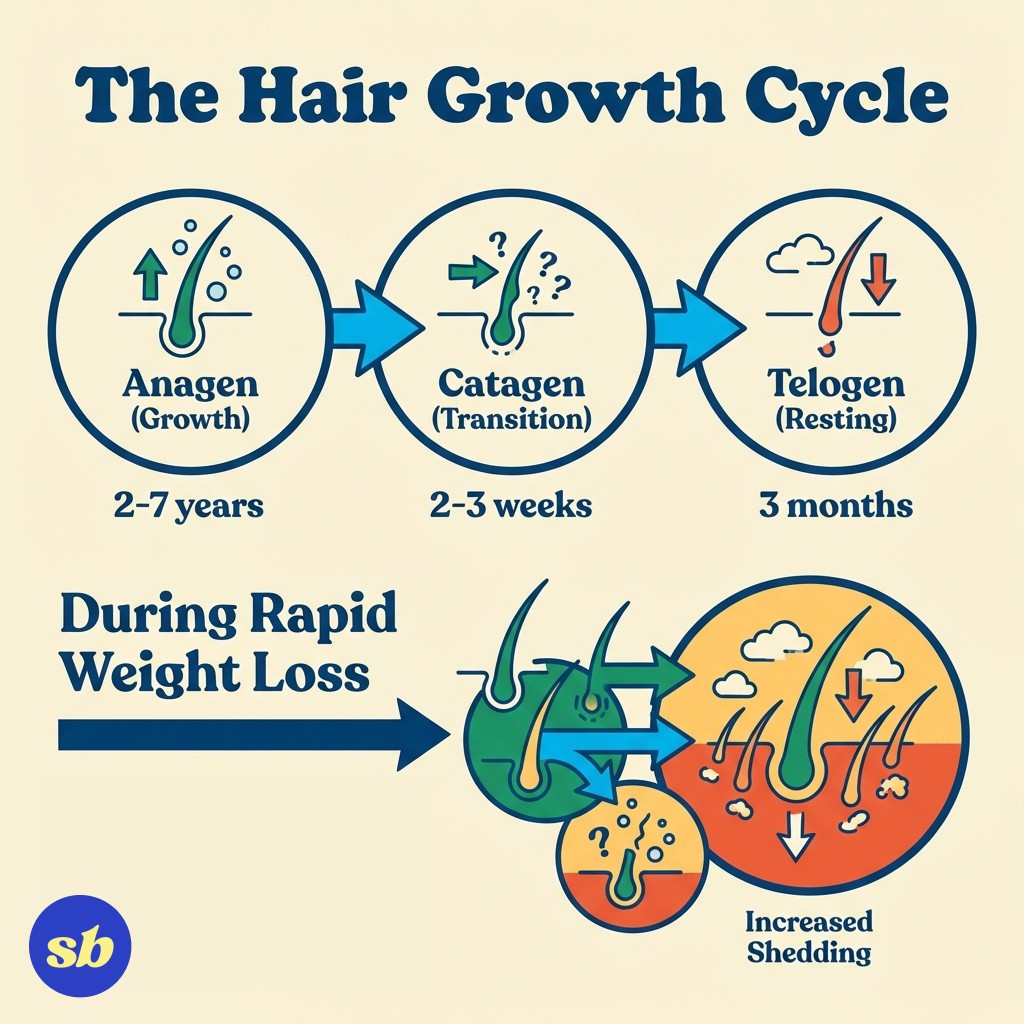
When your body experiences significant stress (such as losing weight quickly), more hair follicles shift into the resting phase at once. Research suggests this can happen when as many as 70% of growing hairs are pushed into the resting phase prematurely.
About two to four months later, all those resting hairs fall out around the same time. This delay explains why hair loss often appears a few months after starting Mounjaro, not immediately. By the time you notice increased shedding, your body has often already begun recovering, and new hair may already be starting to grow underneath.
Unlike digestive side effects which typically improve within 2–4 weeks on a stable dose, hair shedding has a longer timeline due to the hair growth cycle itself.
How common is hair loss on Mounjaro?
There isn’t precise data on how many Mounjaro users experience hair loss, since it’s connected to weight loss rather than the medication directly. However, a 2024 study on weight loss and telogen effluvium found that hair shedding typically occurred after an average weight loss of around 15% of body weight, or when losing weight at a rate of roughly 3.5kg per month.
The study also found that women and older adults were more vulnerable to this type of hair loss, even when their weight loss wasn’t more severe than in men or younger people.
The severity often depends on:
- How quickly you lose weight (faster loss increases risk)
- How much weight you lose overall (greater total loss increases risk)
- Whether you’re getting adequate nutrition (poor nutrition increases risk)
- Your individual susceptibility (some people are simply more prone than others)
Hair loss is one of several physical changes that can accompany weight loss on Mounjaro, alongside tiredness, feeling cold, and skin changes.
What does Mounjaro-related hair loss look like?
Telogen effluvium doesn’t cause the patchy bald spots you might associate with other types of hair loss. Instead, you’ll notice diffuse thinning: a gradual, even reduction in hair density across your whole scalp rather than from specific areas.
Signs you’re experiencing telogen effluvium:
- Finding more hair than usual in your brush, shower drain, or on your pillow
- Your ponytail feeling thinner
- Being able to see more of your scalp when you part your hair
- Hair loss that started a few months after beginning Mounjaro or after significant weight loss
- Shedding that’s evenly distributed rather than in patches
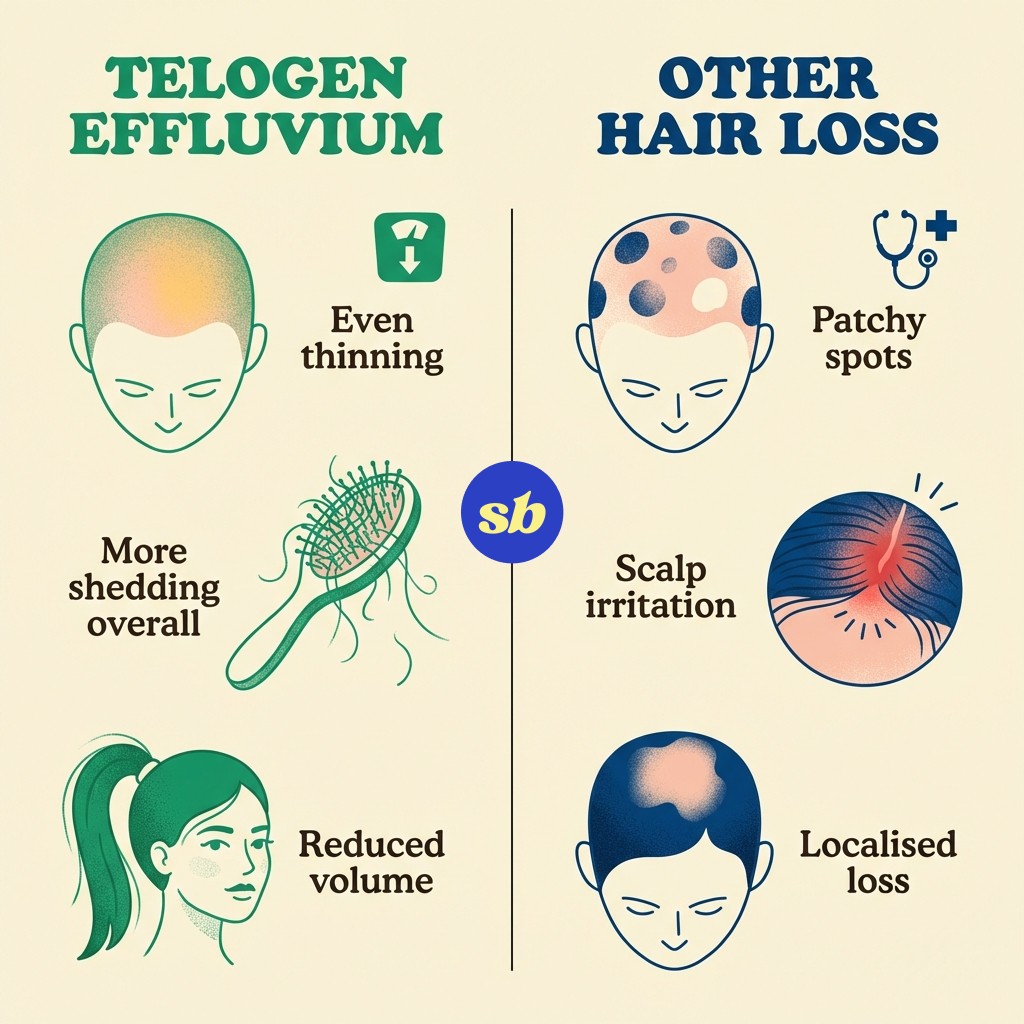
The British Association of Dermatologists notes that you may notice a decrease in hair thickness and volume rather than bald patches. It can feel alarming to lose more hair than you’re used to, but telogen effluvium is usually temporary. The shedding phase typically lasts a few months, after which your hair gradually returns to its normal growth cycle.
Will my hair grow back?
Yes, in most cases. Telogen effluvium is a temporary condition, and hair regrowth typically begins once the trigger (in this case, rapid weight loss) stabilises.
According to DermNet, after the initial shedding, hair fall begins to lessen and gradually tapers back to normal over six to nine months in most cases. The new hair coming up through the scalp actually pushes out the resting hairs, so increased shedding can be a sign that regrowth has already begun.
You might notice baby hairs around your hairline or crown before your overall thickness returns. This is a good sign: it means your follicles are actively producing new hair.
How to prevent or reduce hair loss on Mounjaro
Whilst you can’t completely prevent telogen effluvium if your body is prone to it, several strategies can help reduce hair loss and support healthy regrowth.
Prioritise protein intake
Hair is made of protein (specifically keratin, the same protein found in your nails and skin’s outer layer). When you’re eating less overall, as most people do on Mounjaro, it’s easy to fall short on protein without realising it. Your body prioritises essential functions over hair growth, so inadequate protein can contribute to shedding.
The British Heart Foundation recommends 0.75g of protein per kilogram of body weight daily for healthy adults. However, during weight loss, higher intakes may help preserve muscle and support hair health. A reasonable target is 1.0–1.2g per kilogram of your current body weight.
What this looks like in practice:
- If you weigh 80kg, aim for 80–96g of protein daily
- If you weigh 70kg, aim for 70–84g of protein daily
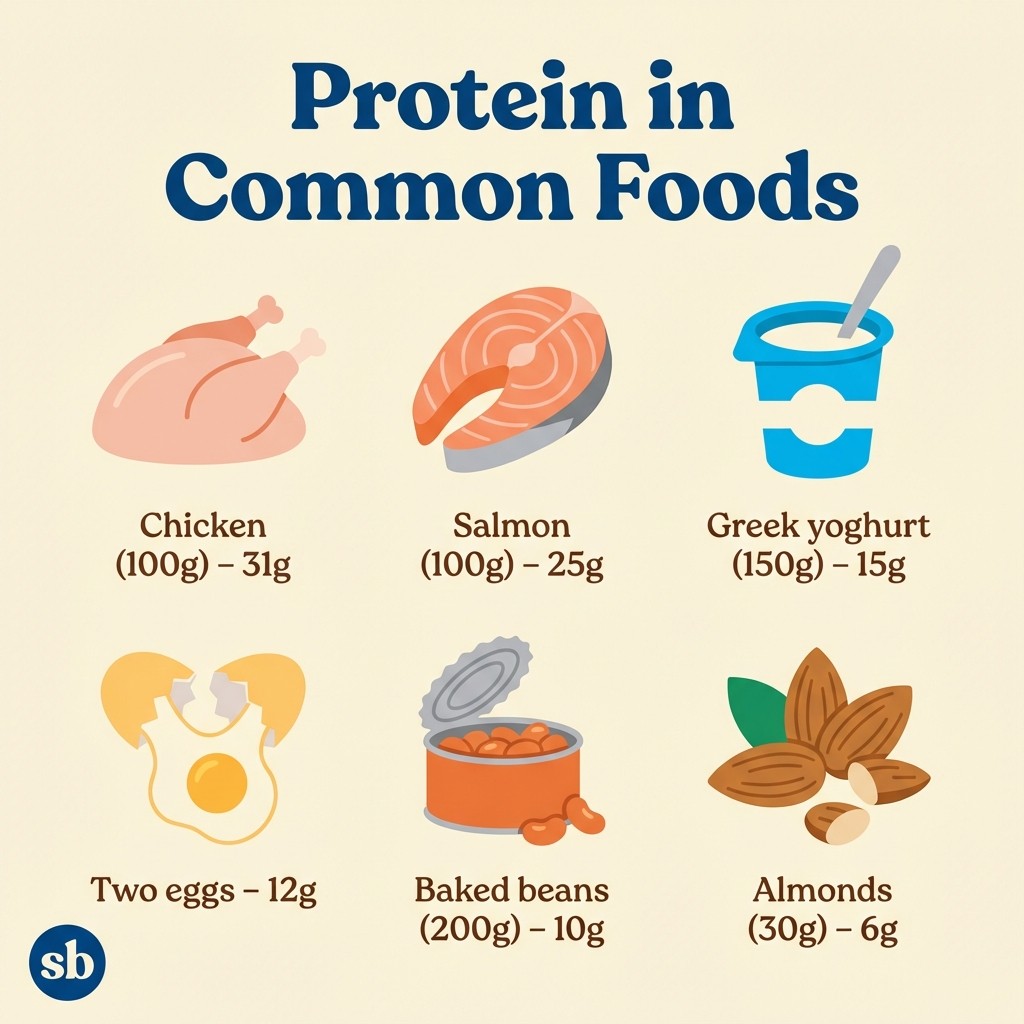
Protein content of common foods:
- Chicken breast (100g cooked): approximately 31g protein
- Salmon fillet (100g cooked): approximately 25g protein
- Greek yoghurt (150g pot): approximately 15g protein
- Two eggs: approximately 12g protein
- Tin of baked beans (200g): approximately 10g protein
- Handful of almonds (30g): approximately 6g protein
Spread your protein intake across meals rather than eating it all at once. Research suggests this helps your body use it more effectively.
Getting enough protein can be challenging when digestive nausea reduces your appetite. Protein shakes, smoothies, and softer protein sources like yoghurt or scrambled eggs may be easier to tolerate.
Stay well hydrated
Adequate hydration supports overall health and hair follicle function. Aim for at least 2 litres of water daily. The NHS Eatwell Guide recommends 6–8 glasses of fluid daily as a baseline, but you may need more during weight loss, particularly if you’re experiencing digestive side effects like diarrhoea.
Don’t skip meals
Mounjaro suppresses appetite significantly, and some people find themselves eating very little. Whilst reduced calorie intake is part of how the medication works, severely restricting calories can worsen hair loss.
Even if you’re not hungry, try to eat regular, balanced meals. Focus on nutrient density rather than volume, making sure every bite provides something your body needs.
Get key vitamins and minerals
Several nutrients are particularly important for healthy hair. According to the NHS, these include:
- Iron: deficiency is a common cause of hair loss, especially in women. Good sources include red meat, spinach, lentils, and fortified cereals.
- Zinc: plays a role in hair tissue growth and repair. Found in meat, shellfish, chickpeas, and pumpkin seeds.
- Biotin (vitamin B7): supports hair structure. Found in eggs, nuts, and whole grains.
- Vitamin D: deficiency is linked to hair loss. Consider a supplement, especially during winter months when sunlight is limited.
- Omega-3 fatty acids: support scalp health. Found in oily fish (salmon, mackerel, sardines), walnuts, and flaxseeds.
A daily multivitamin can help fill nutritional gaps. If you’re concerned about specific deficiencies, ask your GP about blood tests to check your iron, vitamin D, and thyroid function levels.
Slow down weight loss if possible
Very rapid weight loss is the primary trigger for telogen effluvium. If hair loss is a significant concern, discuss with your prescriber whether a slower approach might be appropriate.
Sometimes staying at a lower Mounjaro dose for longer before moving up can help moderate the pace of weight loss. This is a trade-off worth discussing: slower weight loss means staying on treatment longer to achieve the same results, but may reduce hair shedding.
Be gentle with your hair
Whilst you can’t stop telogen effluvium from running its course, you can avoid making things worse with harsh treatments. The British Association of Dermatologists recommends:
- Avoid tight hairstyles that pull on hair (ponytails, braids, tight buns)
- Reduce heat styling (blow dryers, straighteners, curling irons)
- Hold off on chemical treatments like bleaching, perms, or relaxers
- Use a wide-toothed comb and be gentle when detangling wet hair
- Consider a silk or satin pillowcase to reduce friction whilst sleeping
When to see a doctor about hair loss
Temporary hair shedding from weight loss usually resolves on its own. However, some situations warrant medical attention. If you have type 2 diabetes and are working with a diabetes care team, mention any hair changes at your regular reviews. For everyone, certain symptoms require a GP consultation.

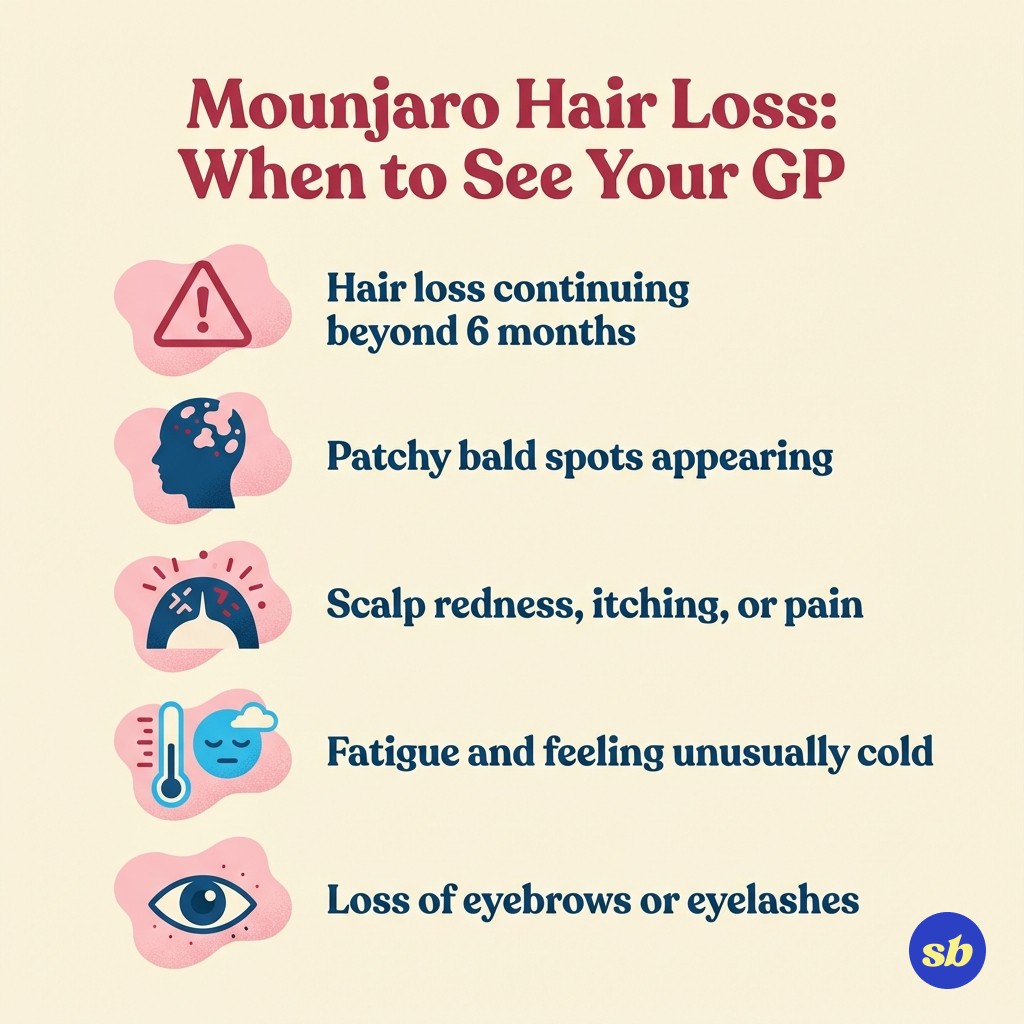
See your GP if you experience
- Hair loss that continues for more than six months without improvement
- Patchy bald spots rather than overall thinning
- Scalp redness, itching, pain, or irritation
- Hair loss accompanied by other symptoms like significant fatigue, unexplained weight gain, or feeling unusually cold
- Complete loss of eyebrows or eyelashes
These symptoms could indicate other conditions like thyroid problems, alopecia areata (an autoimmune condition), or nutritional deficiencies that need investigation. Your doctor can run blood tests to check your thyroid function, iron levels, and other relevant markers. For general information about hair loss causes and treatments, see the NHS hair loss guide.
If you’re experiencing significant tiredness and feeling cold alongside hair loss, thyroid function is particularly worth investigating, as these symptoms often occur together with thyroid disorders.
Frequently asked questions
Should I take biotin for Mounjaro hair loss?
Biotin supplements may help if you’re deficient, but there’s limited evidence they prevent hair loss in people with adequate levels. A general multivitamin is a reasonable approach. Focus first on getting enough protein and overall calories, as nutritional deficiency is a more common contributor.
When should I see a doctor about hair loss?
See your GP if hair loss continues beyond six months without improvement, if you develop patchy bald spots rather than diffuse thinning, if your scalp is irritated or painful, or if hair loss comes with other symptoms like extreme fatigue, feeling very cold, or unexplained weight changes.
Does this happen with Wegovy and other weight loss injections too?
Yes. Telogen effluvium is related to rapid weight loss, not to any specific medication. People taking semaglutide (Wegovy, Ozempic) or using other weight loss methods like very low-calorie diets or bariatric surgery can experience the same type of temporary hair shedding.
Can I stop taking Mounjaro if I’m losing hair?
Don’t stop your medication without discussing it with your prescriber. Hair shedding from weight loss is temporary and typically resolves once your weight stabilises. Stopping treatment won’t reverse hair loss that has already occurred, and may mean missing out on the health benefits of weight loss.
How long does Mounjaro-related hair loss last?
The shedding phase typically lasts a few months. According to dermatology research, hair fall begins to lessen and gradually returns to normal over six to nine months in most cases. You may notice new baby hairs appearing around your hairline before your overall thickness fully recovers.
Can I use minoxidil for hair loss while on Mounjaro?
Minoxidil (Regaine) is designed for pattern hair loss, not telogen effluvium. Since weight-loss-related hair shedding is temporary and self-resolving, minoxidil isn’t typically recommended. If you’re concerned, speak to your GP or a dermatologist who can assess whether your hair loss might have other contributing factors.
Will eating more protein definitely prevent hair loss?
Adequate protein supports healthy hair growth and may reduce the severity of shedding, but it can’t completely prevent telogen effluvium if your body is prone to it. Focus on getting 1.0–1.2g of protein per kilogram of body weight daily, alongside a balanced diet with key vitamins and minerals.
Is hair loss worse at higher Mounjaro doses?
Hair loss is related to the rate and amount of weight loss rather than the Mounjaro dose directly. Higher doses often lead to faster weight loss, which could increase the likelihood of telogen effluvium. Discuss with your prescriber if you’d prefer a slower dose escalation to moderate weight loss pace.
What to do next
If you’re experiencing hair loss on Mounjaro, the most important steps are getting adequate nutrition (particularly protein) and giving your body time to adjust. Most people find that shedding slows and regrowth begins once their weight loss stabilises. Remember that this is a normal part of the weight loss journey for some people, and doesn’t indicate a problem with the medication itself.
Keep track of your protein intake for a week to check you’re getting enough. If you’re falling short, look for ways to add protein-rich foods or consider a protein supplement. A daily multivitamin can help cover other nutritional bases.
If you have concerns about hair loss or other side effects, book a consultation with your prescriber to discuss your options. If hair loss persists for more than six months, develops in patches, or comes with other concerning symptoms, see your GP for investigation.
Finding the right provider
If your current provider isn’t giving you the nutritional guidance or ongoing support you need, it might be worth comparing what else is available. Provider quality varies a lot — particularly around clinical reviews and how they handle side effects beyond the obvious GI ones.
Sources
Sources:
- Telogen effluvium patient information – British Association of Dermatologists
- Telogen effluvium associated with weight loss – Annals of Dermatology, 2024
- Telogen effluvium (hair shedding) – DermNet
- Hair loss information – NHS
- Protein: how much do you need? – British Heart Foundation
- Protein for life: optimal protein intake in ageing adults – Nutrients journal
- Vitamins and minerals – NHS
- Water, drinks and hydration – NHS Eatwell Guide