

Starting Mounjaro changes how your body responds to food. Your appetite drops, your food intake naturally decreases, and you feel full much faster than before. The best foods to eat are lean proteins like chicken and fish, easily digestible carbohydrates such as rice and porridge, cooked vegetables, and small amounts of healthy fat.
Foods you used to enjoy might suddenly seem too heavy or just not appealing. To get the best results while avoiding weight gain when you eventually stop the medication, you need a balanced diet that works with these changes.
The best foods to eat on Mounjaro are lean proteins like chicken and fish, easily digestible carbohydrates such as rice and porridge, cooked vegetables, and small amounts of healthy fat. These foods work with the medication rather than against it, helping you avoid nausea, keep your energy steady, and protect your muscle while you lose weight.
This guide covers what to eat, what to avoid, and how to plan meals that work with your GLP-1 medication.
Key takeaways

How Mounjaro affects diet, weight loss, and appetite
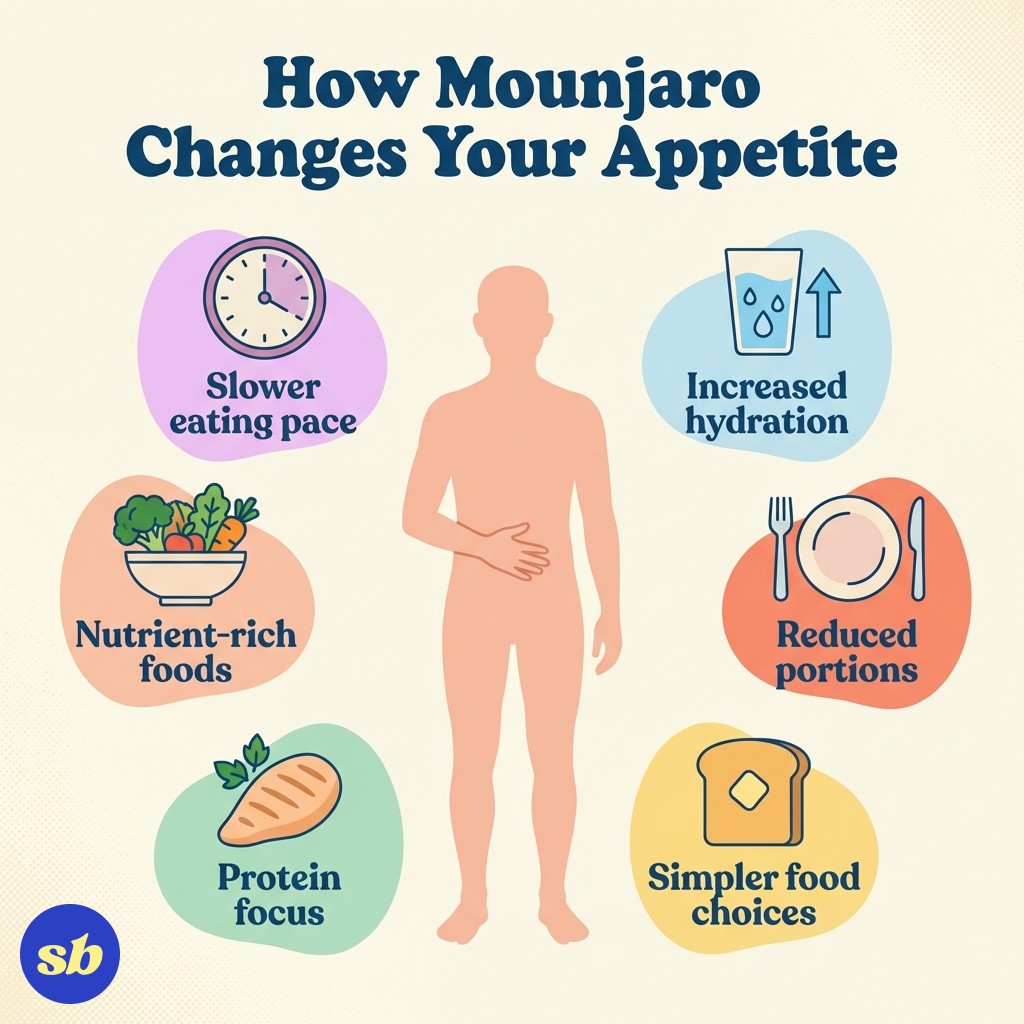
Mounjaro changes how your body handles food in three ways: it helps control blood sugar, naturally reduces appetite, and can cause side effects that influence what you want to eat.
The role of GLP-1, GIP, and blood sugar management
Mounjaro contains tirzepatide (the active ingredient), the first medication to work on two appetite-regulating hormones simultaneously. It activates both GLP-1 (glucagon-like peptide-1) and GIP (glucose-dependent insulinotropic polypeptide) receptors.
What does this mean in practice? These hormones tell your pancreas to release more insulin when you eat, helping to keep blood sugars stable. GLP-1 medications like Wegovy and Ozempic work on just one of these pathways. Mounjaro works on both, which clinical trials suggest leads to greater average weight loss and better blood sugar control.
The medication also slows how quickly food leaves your stomach (called gastric emptying). This means glucose enters your bloodstream more gradually, giving your body extra time to process the sugar from your food.
When blood sugar stays steady, you’re less likely to experience sudden energy crashes that leave you craving quick carbs. Stable blood sugar means fewer urgent hunger signals throughout the day.
Impact on appetite and food cravings
The appetite suppression from Mounjaro can feel dramatic, especially in the first weeks. Many people simply forget to eat or feel full after a few bites.
This happens because the medication affects hunger signals in your brain. You might notice that rich, fatty, or very sweet foods just don’t appeal to you anymore. Many people also report feeling full after eating smaller amounts than they would have managed before starting treatment.
The reduced appetite can make it difficult to eat enough protein and nutrients, so you need to be intentional about your choices. Your stomach capacity feels smaller, which means quality matters more than quantity.
Some people worry this appetite suppression will last forever, but it usually settles down after a few months as your body adjusts.
Common side effects that influence food choices
Approximately 1 in 4 people experience nausea, particularly during dose escalation. This makes certain foods harder to tolerate, even if you liked them before.
Fatty or greasy foods often make nausea worse. Vomiting can happen if you eat too much or too fast, since your stomach empties more slowly on Mounjaro.
Other digestive effects include:
- Constipation from eating less fibre and smaller food amounts
- Diarrhoea, particularly during dose increases
- Bloating after meals, especially with raw vegetables or beans
- Acid reflux from spicy or acidic foods
- Sudden food aversions
These side effects push you toward foods that work with the medication’s effects. Bland, easy-to-digest proteins and cooked vegetables often feel much better than heavy sauces and fried foods.
If you experience diarrhoea, stay well hydrated and consider oral rehydration powder if symptoms persist. Diarrhoea can cause you to lose fluids and electrolytes more quickly than usual. Stick to bland, easily digestible foods until symptoms settle, and contact your prescriber if diarrhoea continues for more than a few days.
Side effects usually improve as your body adjusts. Starting with gentle, simple foods helps you work out what suits your system.
Core principles of a Mounjaro meal plan
A solid Mounjaro meal plan comes down to three things: building balanced meals with protein, fibre, healthy fats, and carbohydrates; creating habits you can actually maintain; and learning portion control and meal timing.
Balanced meals: protein, fibre, healthy fats, and carbohydrates
Getting the right mix of nutrients matters more when you’re on Mounjaro. Since your appetite drops, every bite counts.
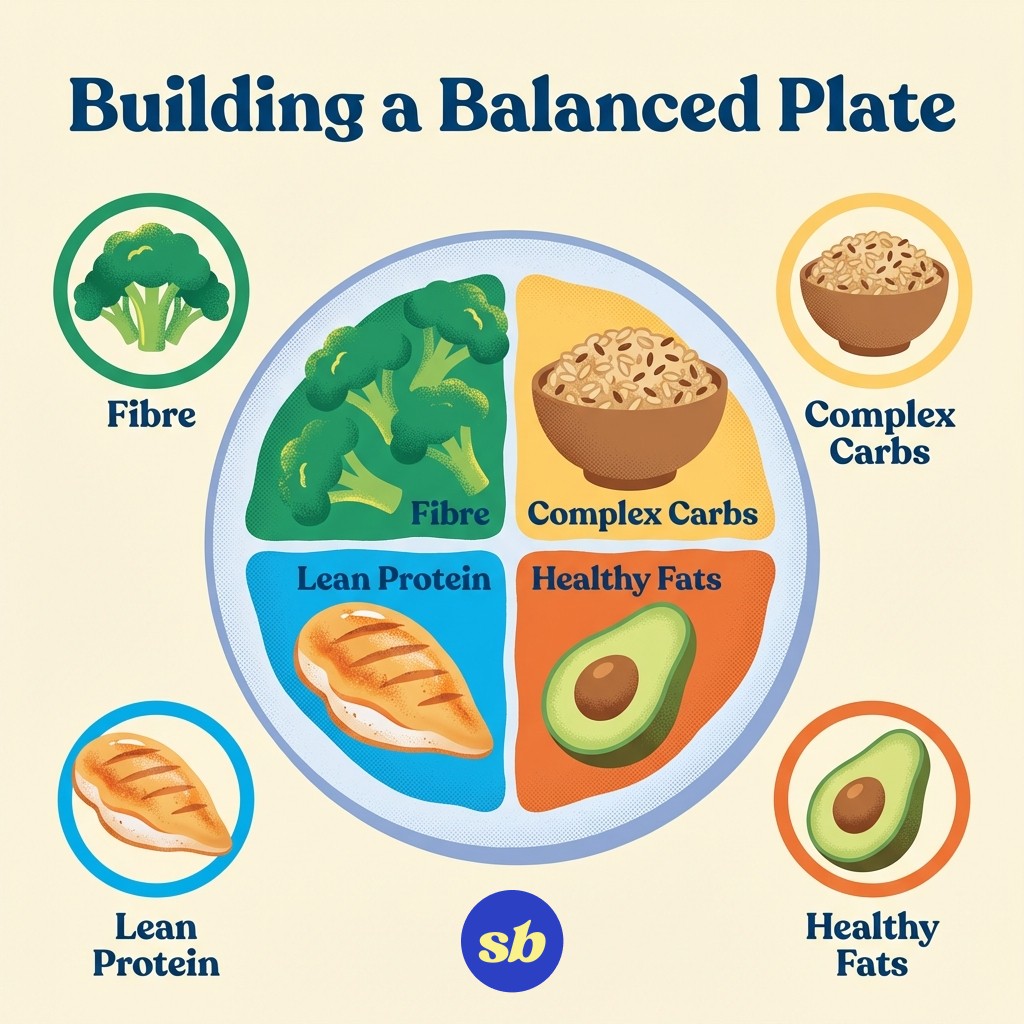
Protein should anchor each meal. NHS guidance for people taking weight loss medications recommends aiming for 60 to 80g of protein daily to protect muscle mass during weight loss.
Research published in Clinical Nutrition suggests that during weight loss, protein intake of 1.0–1.2g per kilogram of body weight helps preserve lean muscle (or up to 1.2–1.5g/kg if you’re doing regular strength training). For someone weighing 80kg, that’s roughly 80–100g daily, or up to 120g with intensive exercise.
Good protein choices include lean chicken, fish, eggs, Greek yoghurt, lentils, and tofu.
Fibre keeps your blood sugar steady and helps with digestion, which matters since the medication slows things down. Go for vegetables, whole grains, beans, and berries. These foods fill you up without excessive calories.
Healthy fats keep you satisfied between meals. Avocados, olive oil, nuts, and oily fish like salmon provide the fats you need and help you absorb certain vitamins. Keep portions modest, since fats are calorie-dense.
Complex carbohydrates give you energy without spiking your blood sugar. Brown rice, quinoa, sweet potatoes, and oats digest slowly and work well with GLP-1 medications.
Establishing sustainable eating habits
Weight loss only works if you can maintain it. That means building eating habits that feel natural, not like punishment. Keeping a food journal for the first few weeks can help you track what works for your body and ensure you’re meeting your nutritional needs.
Eat at regular times each day. This helps your body get used to Mounjaro’s effects on hunger. You might not feel hungry at mealtimes, but eating on a schedule prevents you from going too long without food.
Focus on whole foods rather than processed options. Fresh vegetables, lean proteins, and whole grains give you more nutrients per calorie and usually cause fewer digestive issues.
Plan your meals ahead. When you’re not hungry (which is often on Mounjaro), it’s easy to skip meals or grab whatever’s available. Having healthy options ready makes it easier to stick with nutrient-dense foods.
Listen to your body. Stop eating when you feel satisfied, not stuffed. This might mean eating less than usual, and that’s fine.
Portion control and meal timing
Mounjaro naturally shrinks your appetite, but you still need to eat enough to stay healthy.
Portion sizes will probably shrink on their own. Many people feel comfortable with half their usual portions. If it helps, use smaller plates. The goal is to get enough protein and nutrients without forcing food when you’re full.
Meal timing makes a difference too. Eating smaller meals more often can help manage nausea. Try three smaller meals with one or two light snacks if that feels better than three large meals.
Some people do better with their biggest meal earlier in the day, others prefer a light breakfast and bigger lunch. Find what works for you.
Make sure you’re getting enough protein throughout the day to keep your muscles strong. Spacing meals by 3 to 4 hours gives your digestive system time to work. Remember, Mounjaro slows digestion, so eating too close together might make you feel uncomfortable.
Consider tracking what you eat for the first few weeks, not forever, just until you understand your new patterns. This helps ensure you’re meeting your nutritional needs even as your appetite changes.
The best foods to eat on Mounjaro
When you’re on Mounjaro, your appetite changes significantly. You need foods that pack in nutrition without overwhelming your smaller stomach capacity. That means lean proteins, fibre-rich vegetables, whole grains, and healthy fats that actually keep you satisfied.
Lean protein choices and their importance
Protein is particularly important on Mounjaro. It helps you maintain muscle while you lose weight.
Your body needs adequate protein to protect muscles during weight loss. Without enough protein, you’ll lose muscle along with fat, which can slow your metabolism and leave you feeling weak.
Top lean protein sources:
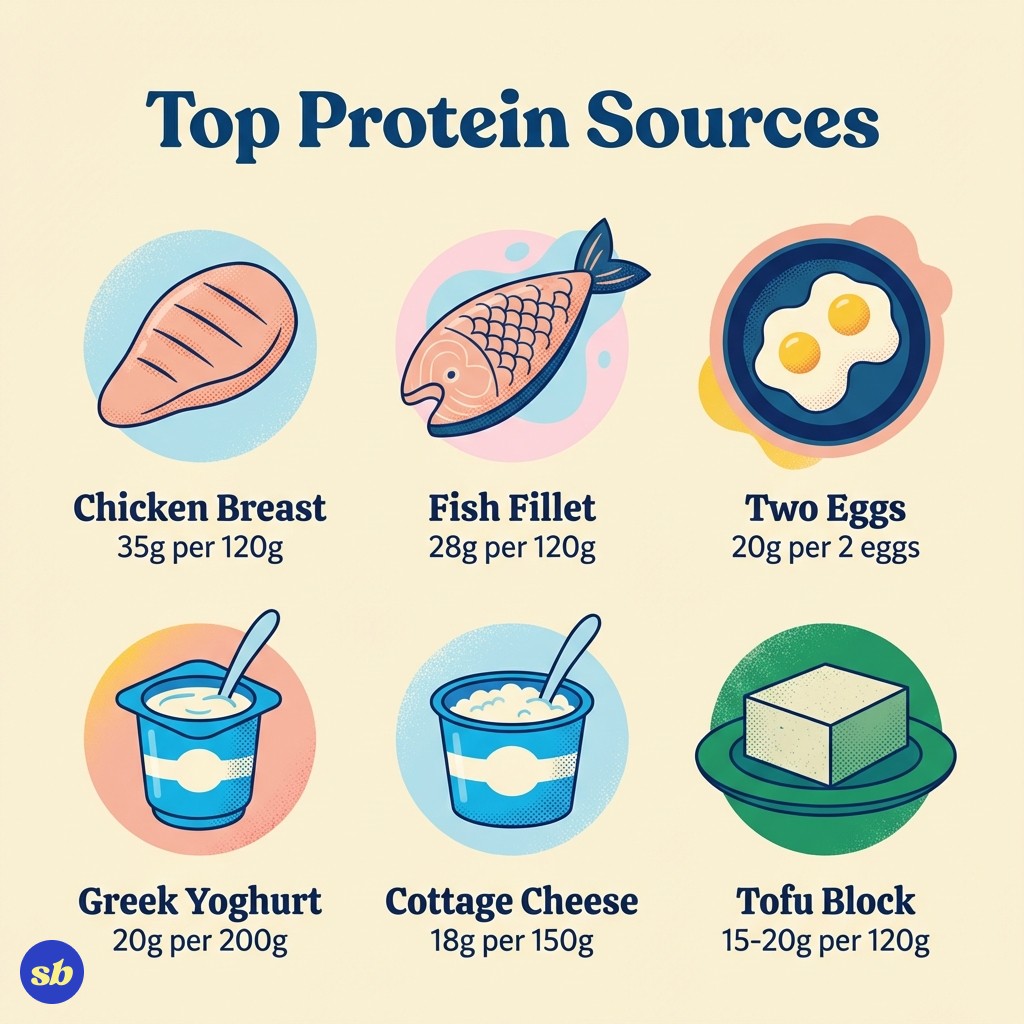
| Food | Portion | Protein |
| Chicken breast | 120g (cooked) | 35g |
| Turkey breast | 100g (cooked) | 26g |
| White fish (cod, haddock) | 120g (cooked) | 28g |
| Eggs | 2 whole + 2 whites | 20g |
| Greek yoghurt | 200g | 20g |
| Cottage cheese | 150g | 18g |
| Tofu or tempeh | 120g | 15 to 20g |
| Salmon (oily fish) | 100g | 20g |
Beans, lentils, and other pulses work too, though they contain more carbohydrates. A 200g portion of cooked lentils provides about 18g of protein.
Protein-rich foods support your nutritional needs when your appetite is reduced. If you struggle to hit your daily target with food alone, protein powder can help fill the gap, but whole foods should come first.
Vegetables and fibre-rich foods for satiety
Non-starchy vegetables should fill half your plate at every meal. They’re low in calories but high in nutrients and fibre, which helps prevent constipation, a common Mounjaro side effect.
Cooked vegetables usually go down easier than raw ones, especially when you’re just starting out. Steaming or roasting makes them gentler on your digestion.
The best vegetable choices:
- Leafy greens like spinach, kale, and lettuce
- Broccoli and cauliflower (cooked until tender)
- Green beans and asparagus
- Bell peppers (especially when cooked)
- Cucumber and tomatoes
- Mushrooms (all varieties)
- Brussels sprouts (roasted works best)
Sweet potatoes deserve special mention. One medium sweet potato (about 130g) has roughly 26g of carbohydrates and plenty of beta-carotene (a nutrient your body converts to vitamin A), making it nutrient-dense.
Fruits and vegetables together can give you the vitamins and minerals you need in smaller food volumes. Berries are popular because they’re lower in sugar than most fruits and rich in antioxidants.
Whole grains and complex carbohydrates
Complex carbohydrates keep your energy steady without causing blood sugar spikes. Try starting with smaller portions and see how your body responds.
Whole grains digest more slowly than refined carbohydrates, which actually works well with how Mounjaro slows your digestion. This combination keeps you fuller for longer.
Smart carbohydrate choices:
| Food | Portion | Carbohydrates |
| Brown rice (cooked) | 100g | 22g |
| Quinoa (cooked) | 80g | 20g |
| Oats (dry) | 40g | 30g |
| Wholemeal bread | 1 slice | 15g |
| Sweet potato | 1 medium (130g) | 25g |
Start at the lower end of portions and increase if you need more. Some people on Mounjaro find that 100g of cooked brown rice or quinoa is plenty for one meal.
Oats make an excellent breakfast. They’re gentle on your stomach and provide slow-release energy through the morning.
Healthy fats and nutrient-dense additions
Fat slows digestion, which sounds helpful in theory. But too much fat on Mounjaro can trigger nausea and discomfort, so keep portions small and strategic.
Focus on healthy fats that provide omega-3s, vitamins, and minerals. A little goes a long way with calories from fat.
The best sources of healthy fats:
- Avocado: A quarter of a medium avocado provides about 80 calories and 7g of healthy fats
- Olive oil: One teaspoon contains roughly 40 calories and 4g of fat
- Nuts and seeds: 10 almonds provide about 70 calories and 6g of fat
- Oily fish like salmon: A 100g serving offers 7g of healthy fats plus protein
- Chia seeds: One teaspoon adds omega-3s with minimal calories
Nuts and seeds are nutrient-dense, so you get vitamins and minerals in a small package. Just watch your portion sizes because they’re calorie-dense too.
Greek yoghurt and cottage cheese count as both protein and fat sources. They’re efficient choices when you’re eating less overall. If full-fat options upset your stomach, try lower-fat versions instead. Using low-fat milk in porridge or smoothies is another way to get protein and calcium while keeping fat content manageable.
Foods and habits to limit or avoid on Mounjaro
Certain foods can worsen Mounjaro’s side effects or work against your weight loss goals. Avoiding ultra-processed items, being careful with alcohol and diet drinks, and choosing gentle foods can help you feel better while getting the best results from your medication.
Ultra-processed, fried, and sugary foods
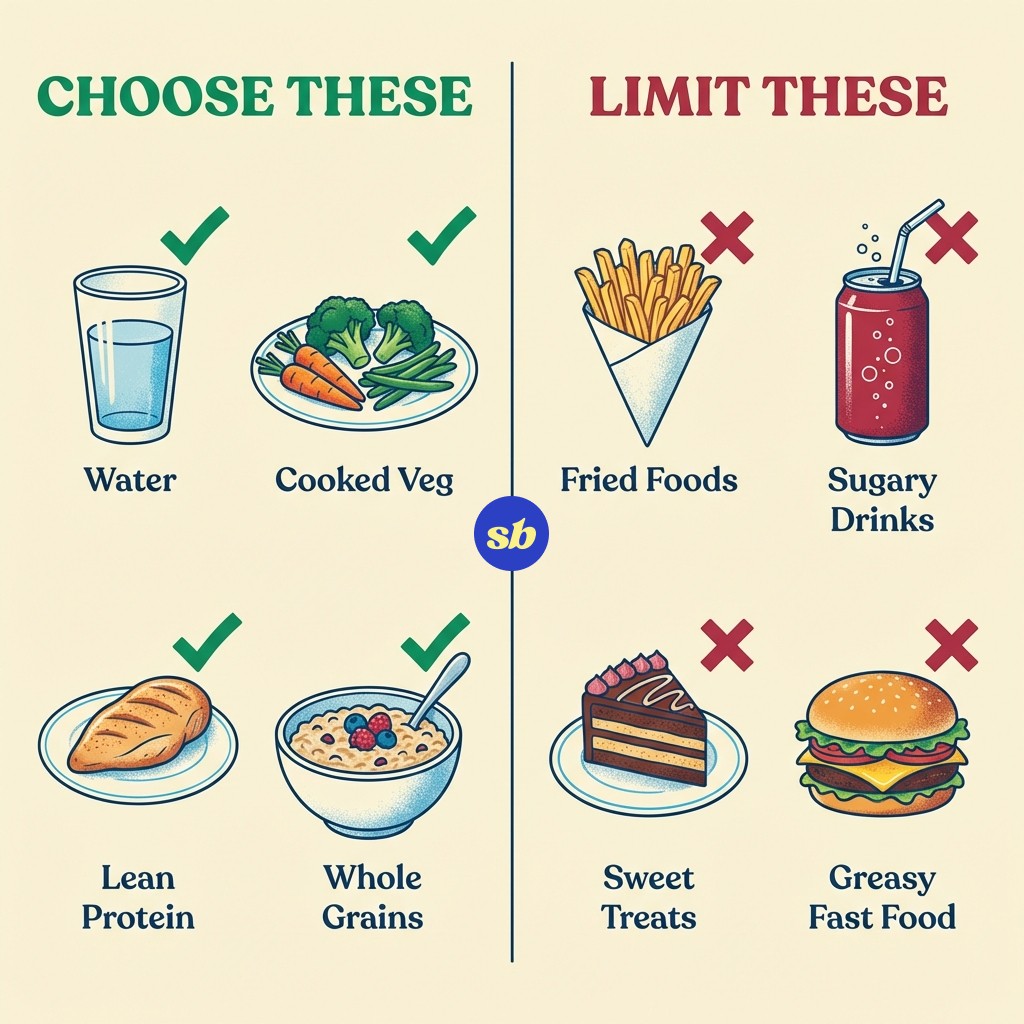
Fried foods are particularly problematic on Mounjaro. Things like chips, fried chicken, and battered fish can sit in your stomach for hours since the medication already slows digestion.
Greasy takeaways and fast food tend to cause the most problems. The fat triggers nausea and makes you feel uncomfortably full.
Sugary drinks and foods with added sugars bring their own problems. Fizzy drinks, sweetened coffee drinks, and fruit juice can spike your blood sugar even though Mounjaro helps regulate glucose. You’re also using up your reduced appetite on empty calories.
Sweets, pastries, and ice cream combine sugar and fat, a combination that often causes digestive upset.
Ultra-processed foods like ready meals, packaged snacks, and processed meats often contain hidden sugars, saturated fat, and trans fats. These ingredients worsen digestive side effects and don’t offer much nutrition.
Refined grains such as white bread, white pasta, and pastries digest quickly and don’t keep you satisfied. When your appetite is already reduced, choosing nutrient-dense foods becomes essential for your health.
Extreme or restrictive approaches like a carnivore diet are generally not recommended while on Mounjaro, as you need a variety of nutrients from different food groups to stay healthy during weight loss.
Alcohol, caffeine, and artificial sweeteners
Alcohol while taking Mounjaro isn’t strictly forbidden, but caution is sensible. Alcohol adds empty calories when you can barely eat enough nutritious food. It also tends to worsen nausea, which is already one of the most common Mounjaro side effects.
Some people find even a small glass of wine or beer triggers stomach upset they never experienced before starting the medication.
Artificial sweeteners might seem like a sensible swap, but many people notice increased bloating and digestive discomfort. Diet fizzy drinks contain both artificial sweeteners and carbonation, which can leave you feeling gassy and uncomfortable.
Sugar alcohols in sugar-free sweets and protein bars are notorious for causing digestive upset, even without Mounjaro.
Caffeine depends on the individual. Some people handle their morning coffee without problems, while others feel more nauseous or jittery on an emptier stomach. If you’re dealing with constipation, moderate caffeine might actually help, but too much can dehydrate you and make things worse.
Managing digestive discomfort through food choices
How you eat matters just as much as what you eat.
Spicy foods can irritate your stomach lining, especially if you’re already feeling sensitive from Mounjaro. Consider skipping hot curries, spicy sauces, and chilli-heavy dishes, at least until you understand how your body handles them.
Constipation is one of the more common side effects. Interestingly, some high-fibre foods that usually help can actually make things worse when your digestion slows down. Raw vegetables like broccoli, cabbage, or Brussels sprouts sometimes just lead to more bloating and discomfort.
Try cooking your vegetables thoroughly. It usually makes them easier to digest.
Foods that cause gas can be uncomfortable, especially during the first few weeks. Beans, lentils, and cruciferous vegetables tend to create uncomfortable pressure when your stomach is emptying slowly.
Temperature plays a role too. Very hot or ice-cold foods sometimes trigger nausea. Room temperature or gently warmed foods usually go down easier.
Eating too fast or barely chewing makes digestive side effects worse. Your stomach needs more time to deal with food now, so try eating slowly and stop when you feel satisfied, even if you’re tempted to keep going.
Sample meal ideas
Here are some practical meal ideas that work well with Mounjaro:
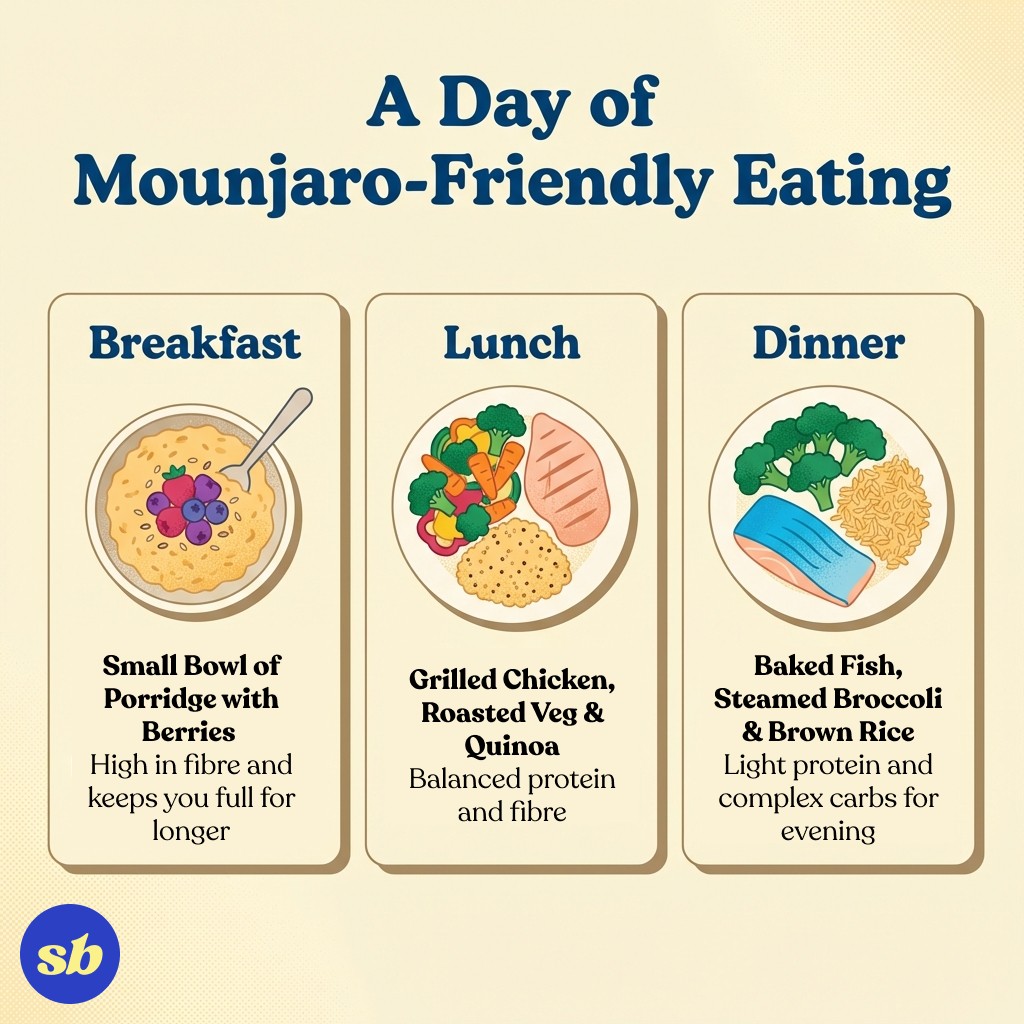
Breakfast options:
- Porridge made with 40g oats, topped with berries and a tablespoon of nut butter
- Two scrambled eggs on one slice of wholemeal toast
- 200g Greek yoghurt with a handful of nuts and seeds
Lunch options:
- Grilled chicken breast (120g) with roasted vegetables and 100g quinoa
- Salmon fillet with steamed broccoli and sweet potato
- Lentil soup with a slice of wholemeal bread
Dinner options:
- Baked cod with roasted Mediterranean vegetables and brown rice
- Turkey mince stir-fry with pak choi and rice noodles
- Tofu and vegetable curry (mild spice) with cauliflower rice
Snacks (if needed):
- Small handful of almonds (about 10)
- Cottage cheese with cucumber slices
- Half an avocado with a squeeze of lemon
When to seek medical advice
While dietary adjustments can help manage many Mounjaro side effects, some situations require professional guidance.

Contact your GP or prescriber if you
- Cannot keep food or fluids down for more than 24 hours
- Experience persistent nausea that doesn’t improve after several weeks
- Lose weight very rapidly (more than 1kg per week consistently)
- Feel excessively tired or weak despite eating regularly
- Notice signs of dehydration (dark urine, dizziness, dry mouth)
- Develop severe stomach pain (which could indicate pancreatitis, a rare but serious side effect)
- Have concerns about meeting your nutritional needs
A registered dietitian or health coach can provide personalised advice if you’re struggling to eat enough or need help planning meals. Your GP can refer you to NHS dietetic services, or you can find a private dietitian through the British Dietetic Association (BDA) website.
Frequently asked questions
Why do I feel sick after eating on Mounjaro?
Mounjaro slows gastric emptying, meaning food stays in your stomach longer. Eating too much, too quickly, or choosing fatty foods can trigger nausea. Try smaller portions, eat slowly, and choose easily digestible foods like cooked vegetables and lean proteins.
Can I drink alcohol on Mounjaro?
Alcohol isn’t forbidden, but many people find it worsens nausea and digestive discomfort. It also provides empty calories when your appetite is already reduced. If you choose to drink, start with small amounts to see how your body responds.
How do I stop constipation on Mounjaro?
Stay well hydrated (aim for 2 litres of water daily). The NHS Eatwell Guide recommends 6–8 glasses of fluid daily as a baseline. Include cooked vegetables and some fibre in your diet, and stay physically active. Interestingly, too much raw fibre can sometimes make constipation worse when digestion is slow. If constipation persists, speak to your pharmacist or GP.
Why am I not hungry on Mounjaro?
Appetite suppression is one of Mounjaro’s main effects. The medication works on hunger-regulating hormones in your brain and slows stomach emptying, both of which reduce appetite. This effect is usually strongest in the early weeks and often settles somewhat over time.
Should I eat if I’m not hungry on Mounjaro?
Yes, eat regularly even when you don’t feel hungry. Skipping meals can lead to muscle loss, nutritional deficiencies, and low energy. Focus on small, protein-rich meals at regular times rather than waiting until you feel hungry.
How long do Mounjaro food side effects last?
Most side effects improve within 2–4 weeks as your body adjusts to each dose. Side effects often return temporarily when you increase your dose, then settle again. If side effects persist beyond a few weeks, speak to your prescriber.
Can I take vitamins on Mounjaro?
Yes, and a multivitamin may be helpful if you’re eating significantly less. Because Mounjaro reduces how much you eat, you might not get all the vitamins and minerals you need from food alone. Speak to your pharmacist or GP about whether supplements are appropriate for you.
Should I keep a food journal on Mounjaro?
A food journal can be helpful, especially in the first few weeks. Tracking what you eat helps you identify which foods your body tolerates well and which trigger digestive discomfort. It also ensures you’re meeting your protein targets when your appetite is reduced. You don’t need to track forever, just until you understand your new eating patterns.
Who is eligible for Mounjaro on the NHS?
Mounjaro is available on the NHS through specialist weight management services if you’re living with obesity and have weight-related health conditions such as type 2 diabetes, high blood pressure, or sleep apnoea. Access through GP practices is currently limited to those with the highest clinical need: a BMI of 40+ (or 37.5+ if you’re of Asian, Black African, African-Caribbean, or Middle Eastern heritage) plus at least 4 weight-related conditions. Use the NHS BMI calculator to check yours. Eligibility criteria may vary by area, so check with your local integrated care board (ICB) for specific information in your region.
Will I gain weight if I stop taking Mounjaro?
Weight regain is common after stopping GLP-1 medications if eating habits return to what they were before. Building sustainable eating habits while on the medication is how you maintain weight loss. Focus on developing a balanced diet and regular physical activity that you can continue long-term. Speak to your prescriber about a gradual reduction plan rather than stopping abruptly.
The bottom line
Eating well on Mounjaro means choosing nutrient-dense foods that work with the medication rather than against it. Prioritise lean protein at every meal to protect your muscles, include plenty of cooked vegetables, and keep portions of fats and carbohydrates modest.
Side effects like nausea and digestive discomfort usually improve over time. In the meantime, gentle foods, smaller portions, and eating slowly can make a significant difference.
If you’re struggling to eat enough or experiencing persistent side effects, speak to your GP, prescriber, or a registered dietitian for personalised advice.
Sources
Sources:
- Guy’s and St Thomas’ NHS Foundation Trust. Dietary advice for people taking weight loss medicines. NHS website
- British Dietetic Association. How to achieve a healthier weight. BDA website
- Nauck MA, D’Alessio DA. Tirzepatide, a dual GIP/GLP-1 receptor co-agonist for the treatment of type 2 diabetes. Diabetologia. 2022;65(8). PubMed
- Min C, et al. Enhanced protein intake on maintaining muscle mass, strength, and physical function in adults with overweight/obesity. Clinical Nutrition ESPEN. 2024. ScienceDirect
- MHRA. Mounjaro Summary of Product Characteristics. Electronic Medicines Compendium
- NICE. Tirzepatide for managing overweight and obesity (TA875). NICE website
- NHS. The Eatwell Guide. NHS website