

We may earn a commission if you buy through links on this page.
You don’t need an app, a food scale or a new cookbook to put together a decent meal. You need a plate and a rough idea of what goes where. To build a balanced plate, fill about half of a standard 9-inch plate with non-starchy vegetables, with room for some fruit if you like, about one quarter with lean protein and about one quarter with whole grains or other carbohydrate foods, then add a small amount of healthy fat and water or another unsweetened drink. MyPlate and the CDC’s plate method use the same pattern.
It also matches common healthy eating advice. Clinical guidelines often recommend a balanced diet high in vegetables, fruits, whole grains, fiber and legumes. Researchers have also used hands-on balanced plate demonstrations in nutrition education, since seeing a meal laid out can make the guidance easier to follow.
This guide covers what goes in each section of your plate, with US measurements and simple swaps. You’ll also find tips for fitting balanced meals into busy weeknights, eating out and different food preferences. Whether you’re just starting out, actively losing weight or maintaining your results, you can adjust the method to suit you.
Key takeaways

The plate method: what goes where
The layout works with most cuisines and budgets. Here’s what goes in each section, with US portions and easy swaps.
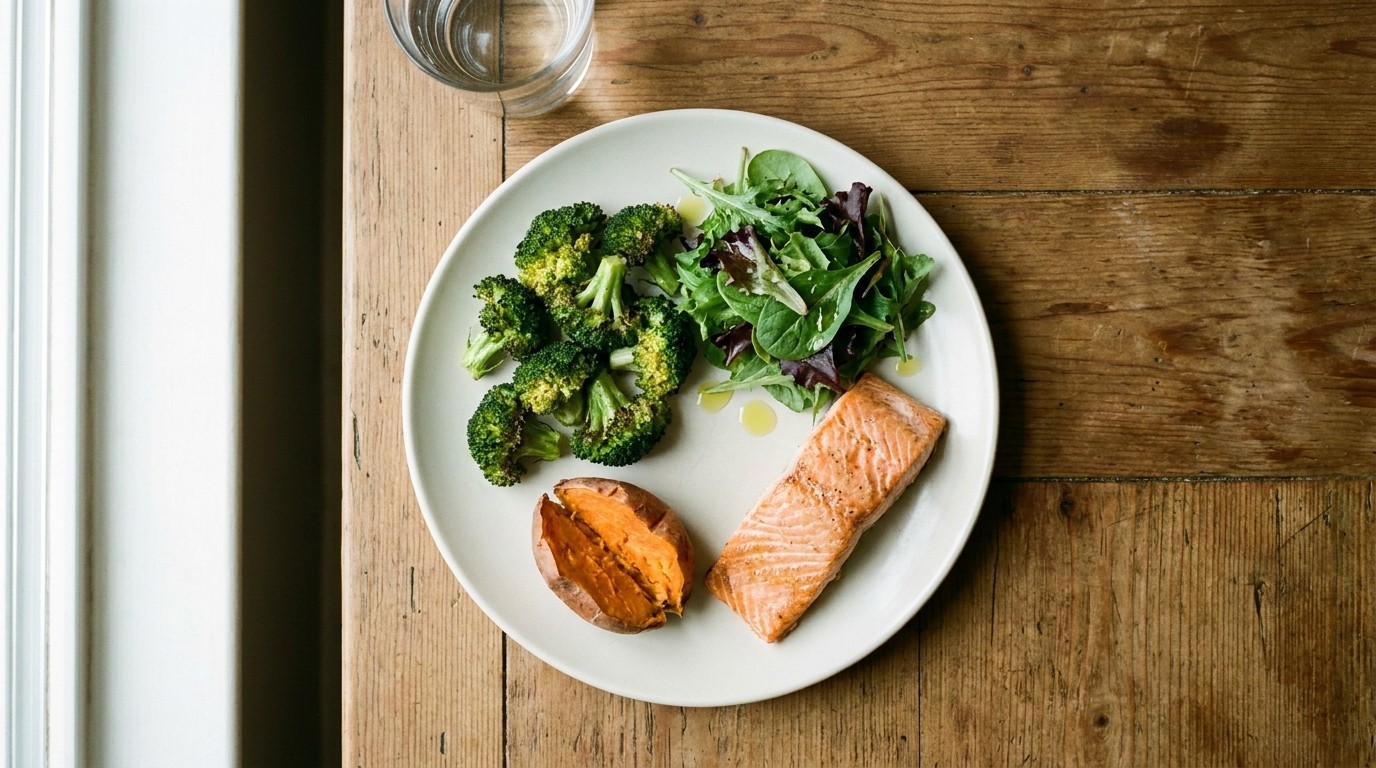
Start with half a plate of vegetables
Fill about half your plate with non-starchy vegetables, with room for some fruit if you like. Good options include leafy greens, broccoli, bell peppers, carrots, green beans, tomatoes, zucchini and cauliflower. Aim for colorful vegetables, since different colors provide different vitamins and minerals.
Fruit can take a smaller share of this half or be dessert. Fresh, frozen and canned all count. Choose canned fruit packed in water or juice, and canned vegetables labeled “no salt added” (the FDA explains what sodium labels mean).
- Quick wins: a bagged salad, frozen stir-fry vegetables or a handful of cherry tomatoes
- Serving guide: about 1 cup raw leafy greens or ½ cup cooked vegetables per serving
Fill one quarter with protein
Use about one quarter of your plate for protein foods. A typical portion is 3 to 4 ounces of cooked meat, poultry or fish, about the size of your palm. That gives roughly 20 to 35 grams of protein, depending on the food.
| Protein type | Examples |
|---|---|
| Lean animal protein | Chicken or turkey breast, fish, shrimp, eggs, lean beef |
| Plant-based protein | Beans, lentils, chickpeas, tofu, tempeh, edamame |
| Dairy | Greek yogurt, cottage cheese |
Try to eat fish, such as salmon or sardines, about twice a week, as the AHA recommends. Plant-based proteins add fiber along with protein.
Your protein needs can shift with age and activity. If you eat pasta or other mixed dishes, add protein and vegetables so the grains take up about a quarter of the meal, as MyPlate suggests.
Use the last quarter for whole grains or starchy vegetables
The last quarter of your plate holds carbohydrates. Choose fiber-rich carbohydrates most of the time, such as whole grains, beans and starchy vegetables. These are complex carbohydrates: they still contain their fiber, so your body breaks them down more slowly than white bread or white rice.
Refined grains have had most of their fiber removed, so they turn into glucose quickly. Whole grains and starchy vegetables like sweet potatoes keep their fiber, which slows things down and helps you stay full for longer.
- Whole grains: brown rice, quinoa, oats, farro, barley, whole wheat pasta, whole wheat tortillas
- Starchy vegetables: potatoes, sweet potatoes, corn, peas, winter squash
A portion is about ½ to 1 cup cooked, depending on your needs. Potatoes and corn belong in this quarter, not in the vegetable half.
When buying bread or pasta, check that “whole wheat” or another whole grain is the first ingredient listed, as MyPlate advises.
Add a little healthy fat
Fats are not a separate section of the plate, but a small amount belongs in your meal. Your body needs fat to absorb vitamins A, D, E and K (MedlinePlus).
Focus on unsaturated fats, which are linked to better heart health when they replace saturated fats, according to AHA guidance. Practical choices include:
- 1 to 2 teaspoons of olive oil or canola oil for cooking or dressing
- 1 tablespoon of nuts or seeds sprinkled on a salad
- ¼ of an avocado
- Fatty fish, which counts as both protein and healthy fat
Limit butter, lard and processed meats. Fats are high in calories, so measuring oil with a spoon instead of pouring it helps keep portions steady.
Choose water as your everyday drink
Pair your plate with water. It hydrates you without adding calories or sugar.
Sugary drinks such as soda, sweet tea, sports drinks and energy drinks are a major source of added sugar in the US diet, according to the CDC. Juice can also add up quickly, so keep it to a small glass if you drink it.
If plain water feels boring, try:
- Sparkling water without added sugar
- Water with lemon, cucumber or mint
- Unsweetened tea or coffee
Low-fat milk or unsweetened fortified soy milk can also go alongside a meal.
How the plate supports energy, fullness and health
Each part of the plate does a job. Together, these nutrient-dense foods (foods that give you a lot of vitamins, minerals and fiber for their calories) provide the macronutrients (protein, carbohydrates and fat) and micronutrients (vitamins and minerals) your body uses every day.
- Steady energy: When you eat carbohydrates, your body breaks them down into glucose, the sugar in your blood that fuels your cells. Fiber and protein slow digestion, so glucose enters your bloodstream more gradually (MedlinePlus). That can help limit sharp rises in blood sugar after meals, and the energy dips that sometimes follow.
- Fullness: Vegetables add volume, and protein helps you feel satisfied longer.
- Digestion and gut health: Fiber from vegetables, fruit, beans and whole grains supports regular digestion and feeds gut bacteria.
- Muscle health: Adequate protein helps maintain muscle, especially during weight loss (one review).
- Heart and metabolic health: Diets rich in vegetables, whole grains and unsaturated fats are associated with lower risk of heart disease and type 2 diabetes, according to the Dietary Guidelines.
Making balanced meals work in real life
The same plate pattern works for breakfast, lunch, dinner, takeout and budget grocery trips. Adjust portion size to your hunger and activity, keep snacks simple and aim for consistency over perfect meals.
Simple breakfast, lunch and dinner combinations
You don’t need new recipes to eat balanced meals. Start with foods you already like and check that each meal has a protein, a fiber-rich carb, some vegetables or fruit and a little healthy fat. Here are some meal ideas to start with:
| Meal | Protein | Carb | Produce | Fat |
|---|---|---|---|---|
| Breakfast | 2 eggs plus ½ cup cottage cheese, or ¾ cup Greek yogurt | 1 slice whole-grain toast or ½ cup oats | Berries or spinach | 1 tbsp nut butter |
| Lunch | 3–4 oz chicken or 1 cup chickpeas | ½ cup brown rice or quinoa | Mixed greens, cucumbers | ¼ avocado |
| Dinner | 4 oz salmon or tofu | 1 small sweet potato | 1–2 cups roasted broccoli | 1 tsp olive oil |
Bowls, soups, sandwiches and takeout

Mixed dishes follow the same rules. The only difference is that the parts sit together instead of in separate sections of the plate.

Plan and prep with pantry, frozen and fresh foods
Meal planning is easier when you keep a few reliable basics on hand. Frozen vegetables and plain frozen fruit are usually picked and processed near peak ripeness, and like canned beans, they keep for months.
A few basic food skills make healthy eating more doable. Researchers point to building food skills, such as preparing healthy options, as one part of nutrition literacy.
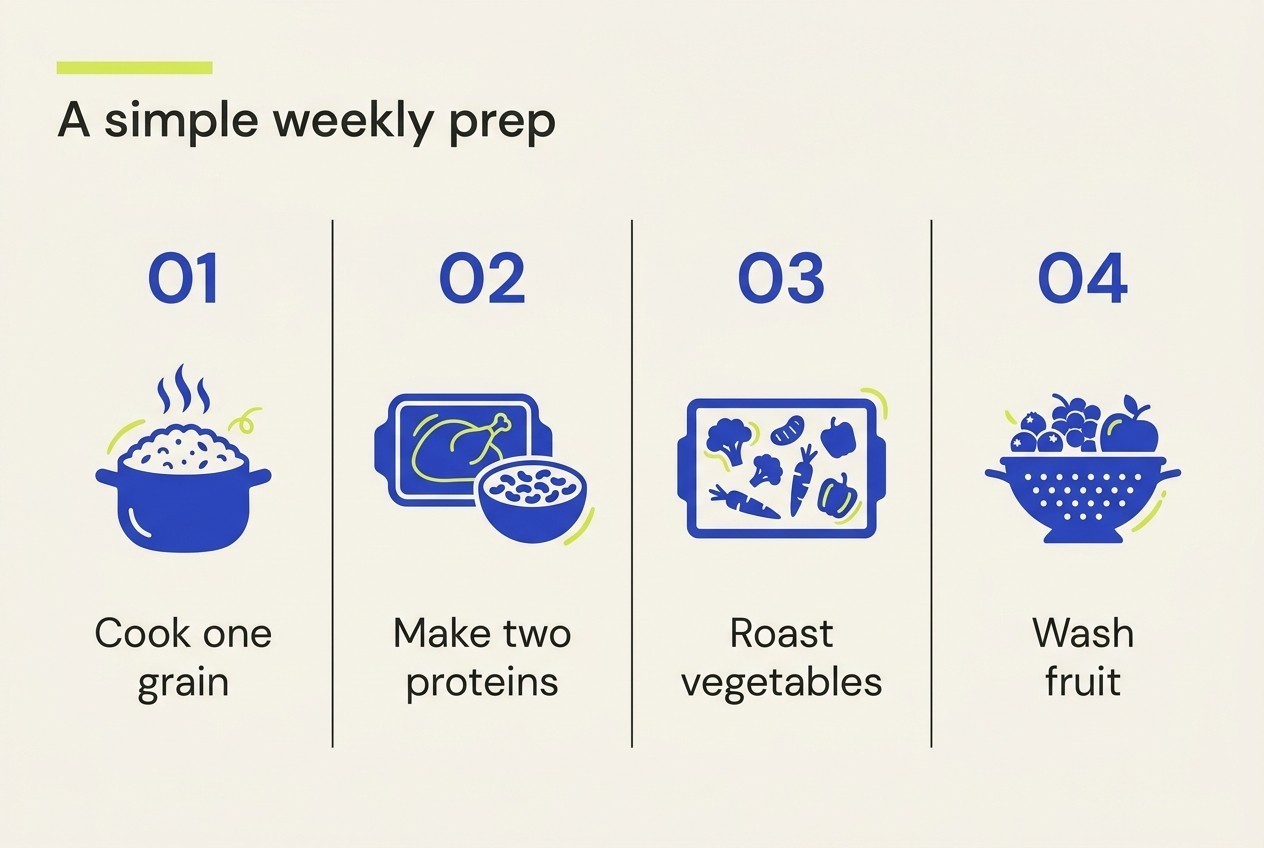
Try this simple weekly meal prep routine:
- Cook one grain in bulk, such as brown rice, farro or quinoa.
- Make two proteins, such as baked chicken thighs and seasoned black beans.
- Roast one or two sheet pans of vegetables.
- Wash fruit so it’s ready to grab.
Prepped grains reheat well. Pair them with the vegetables and protein you’ve already cooked and your plate stays balanced even on nights when you’d rather not cook. Brown rice and farro hold their texture for several days in the fridge.
On busy weeks, a prepared-meal service such as CookUnity or Trifecta can fill in. They cost more than cooking at home, and some meals are high in sodium, so check the label and pick ones that roughly match your plate pattern.
Adjust portions to your appetite, activity and health
There’s no single correct portion size. A plate works best as a rough visual guide, not a strict rule, which is how MyPlate uses it.
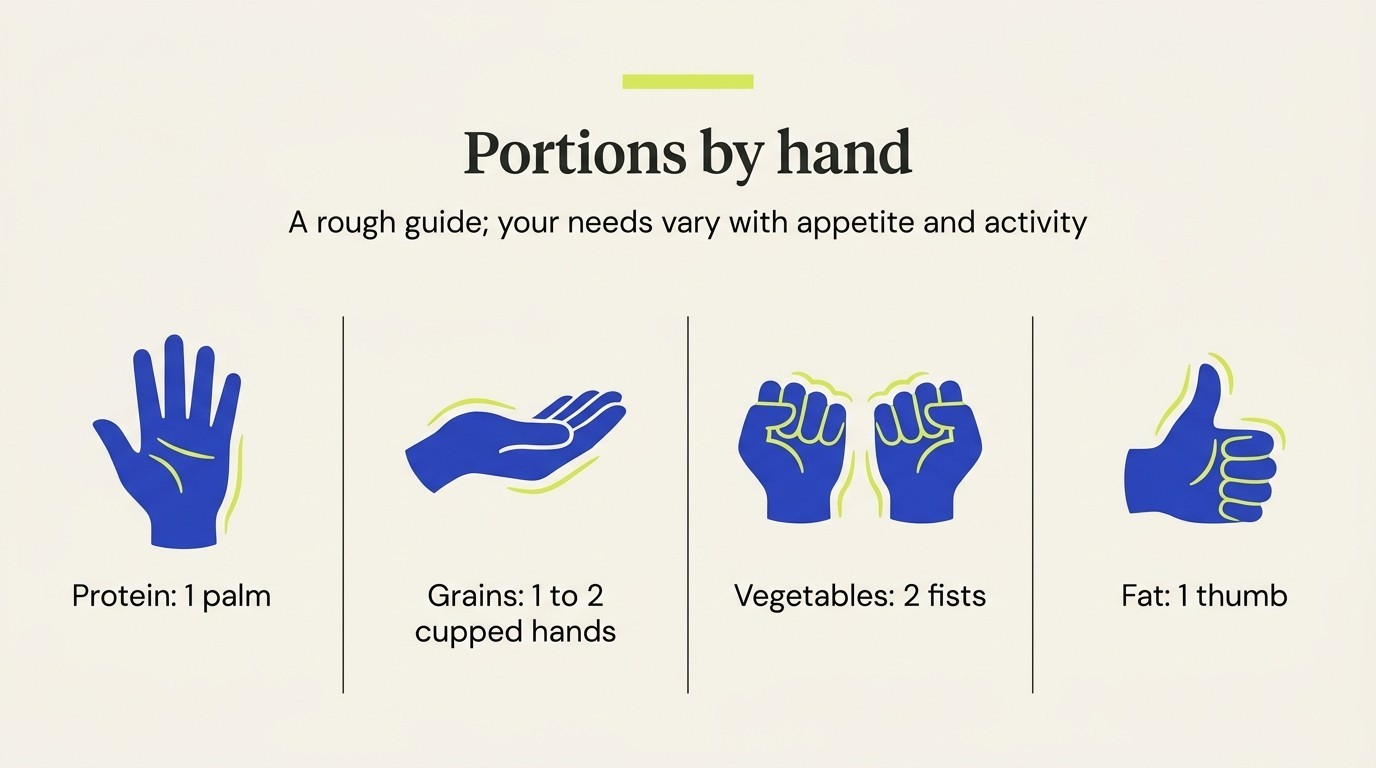
Your hands give you a quick way to estimate portions:
- Protein: 1 palm (about 3–4 oz)
- Grains or starchy carbs: about ½ to 1 cup cooked (one cupped hand is roughly ½ cup)
- Vegetables: 2 fists
- Fats: 1 to 2 teaspoons of oil, or about a thumb-sized portion of nuts, seeds or cheese
If you’re more active, you may need larger carb and protein portions. If weight management is your goal, keeping a full vegetable half can help you feel satisfied.
People with diabetes, kidney disease or other health conditions, and anyone taking a medication that affects appetite, should ask a doctor or registered dietitian for personal targets. If you manage your blood glucose, they can help you work out how much of the carbohydrate quarter suits you, since that’s the part of the plate that affects blood sugar most. If your appetite is smaller than it used to be, for any reason, start with the protein and vegetables on your plate and eat the rest if you’re still hungry.
Mindful eating can also help, such as slowing down and noticing when you feel comfortably full. If tracking portions makes eating feel stressful or brings up old habits around restriction, it’s fine to skip the measuring. A registered dietitian can help you find an approach that feels right.
Snacks that don’t need a full plate
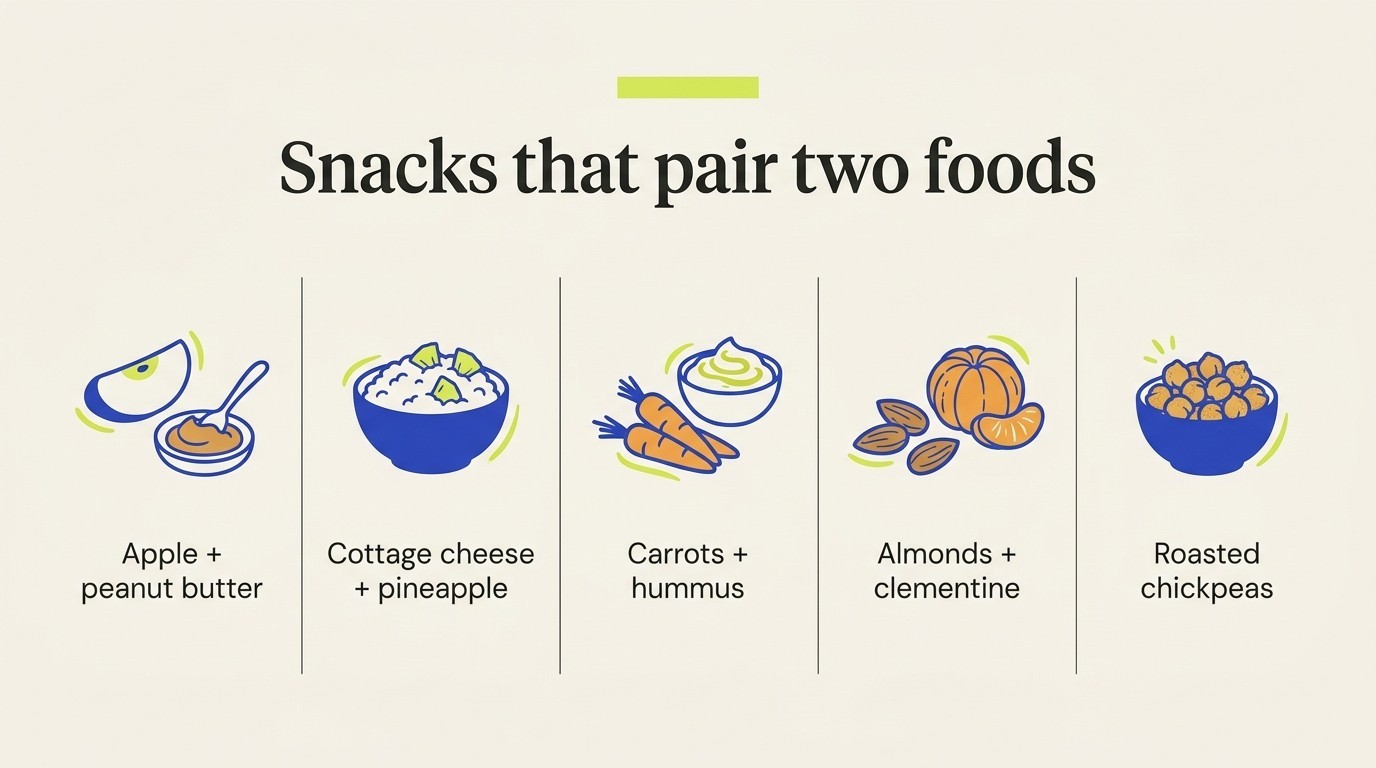
Snacks don’t need every food group. Pairing two components, usually protein or fat with fiber, tends to keep you fuller than a single refined carb.
Simple snack ideas:
- Apple slices with 1 tbsp peanut butter
- ½ cup cottage cheese with pineapple
- Baby carrots with ¼ cup hummus
- A small handful of almonds with a clementine
- Roasted chickpeas, a plant-based protein option
Adding one fiber-rich food doesn’t mean replacing everything else you usually eat. Small upgrades still add up.
Aim for consistency, not perfect meals
Not every meal will look like a textbook plate. In one study, parents of young children said everyday challenges, including picky eaters and tight schedules, often got in the way of the ideal meal.
Instead of aiming for perfect, focus on patterns:
- Aim for most meals to include protein and produce.
- If lunch was light on vegetables, add extra at dinner.
- Eating out, holidays and convenience foods can all fit into a balanced diet.
A balanced diet comes from what you eat across days and weeks, not from any single meal. If you return to the plate pattern at your next meal, you’re still on track.
Frequently asked questions
How do I build a balanced plate for everyday meals?
Start with a standard 9-inch dinner plate and fill half with non-starchy vegetables like broccoli, salad greens or green beans. Add a palm-sized portion of protein to one quarter, and put a whole grain or starchy vegetable on the last quarter. Finish with a small amount of fat, such as a teaspoon of olive oil or a few slices of avocado.
Do I have to use a 9-inch plate?
No. A 9-inch plate is just a handy reference. If your plates are bigger, use the same proportions and leave some space around the edge, or use a bowl and keep the same rough split.
What portions of vegetables, protein and whole grains should go on my plate?
Use the hand-based guides in “Adjust portions to your appetite, activity and health” above to portion without a scale. In short, that’s about 2 cups of vegetables, 3 to 4 ounces of cooked protein and ½ to 1 cup of cooked grains, plus 1 to 2 teaspoons of oil. Your exact needs depend on your age, size, activity level and health goals. A registered dietitian or your doctor can help you fine-tune these amounts.
What are some easy examples of balanced meals?
Here are a few simple combinations to try:
- Breakfast: scrambled eggs with sautéed spinach and tomatoes, plus a slice of whole-grain toast
- Lunch: a large green salad with grilled chicken, chickpeas and ½ cup of quinoa
- Dinner: baked salmon, roasted Brussels sprouts and a small baked sweet potato
If you eat within a set time window, a first meal built around protein, fiber and healthy fats follows the same plate structure.
Does the balanced plate work if I’m managing my blood sugar?
Yes. The same layout is the basis of the plate method that many US diabetes educators use. Filling half the plate with non-starchy vegetables and adding protein alongside a measured portion of carbohydrate can help limit sharp rises in blood glucose after meals. If you have diabetes or prediabetes, ask your doctor or a registered dietitian how many carbs suit you.
How can I create a balanced plate on a budget?
Frozen vegetables can be just as nutritious as fresh and keep for months, which cuts down on waste. Canned beans, eggs, canned tuna and chicken thighs are lower-cost protein options. Choose canned goods labeled “low sodium” when you can, or rinse them before use.
Buying brown rice, oats and dried lentils in bulk also stretches your grocery store budget. Cooking a large batch once and portioning it into containers can cover several meals in a week.
How can I build a balanced plate with vegetarian or vegan foods?
Swap the protein quarter for tofu, tempeh, lentils, beans, edamame or seitan (a chewy protein made from wheat gluten, so not suitable if you avoid gluten). Eating a mix of these across the day helps you get a full range of amino acids, the building blocks of protein. Different plant foods contain different amounts of each. The Dietary Guidelines also point to plant-forward eating patterns like these.
If you eat a fully vegan diet, vitamin B12 is mainly found in animal foods, so fortified foods or a supplement are usually needed (NIH fact sheet). Talk with your doctor about whether you should also check your iron, vitamin D or omega-3 intake.
How can I adapt a balanced plate for children or older adults?
For children, use a smaller plate and kid-sized portions, but keep the same layout (MyPlate for kids). Offering new foods alongside familiar ones is a good start. Some children, including some autistic children, are very selective about food, which research links to sensory sensitivity. A slow, patient approach and support from a pediatrician or registered dietitian can help.
Older adults may have smaller appetites, so it helps to include protein at each meal and choose soft, easy-to-chew foods like fish, eggs, yogurt and cooked vegetables. Eating with others can also support regular meals, and NIA guidance has more practical tips for eating well as you get older.