
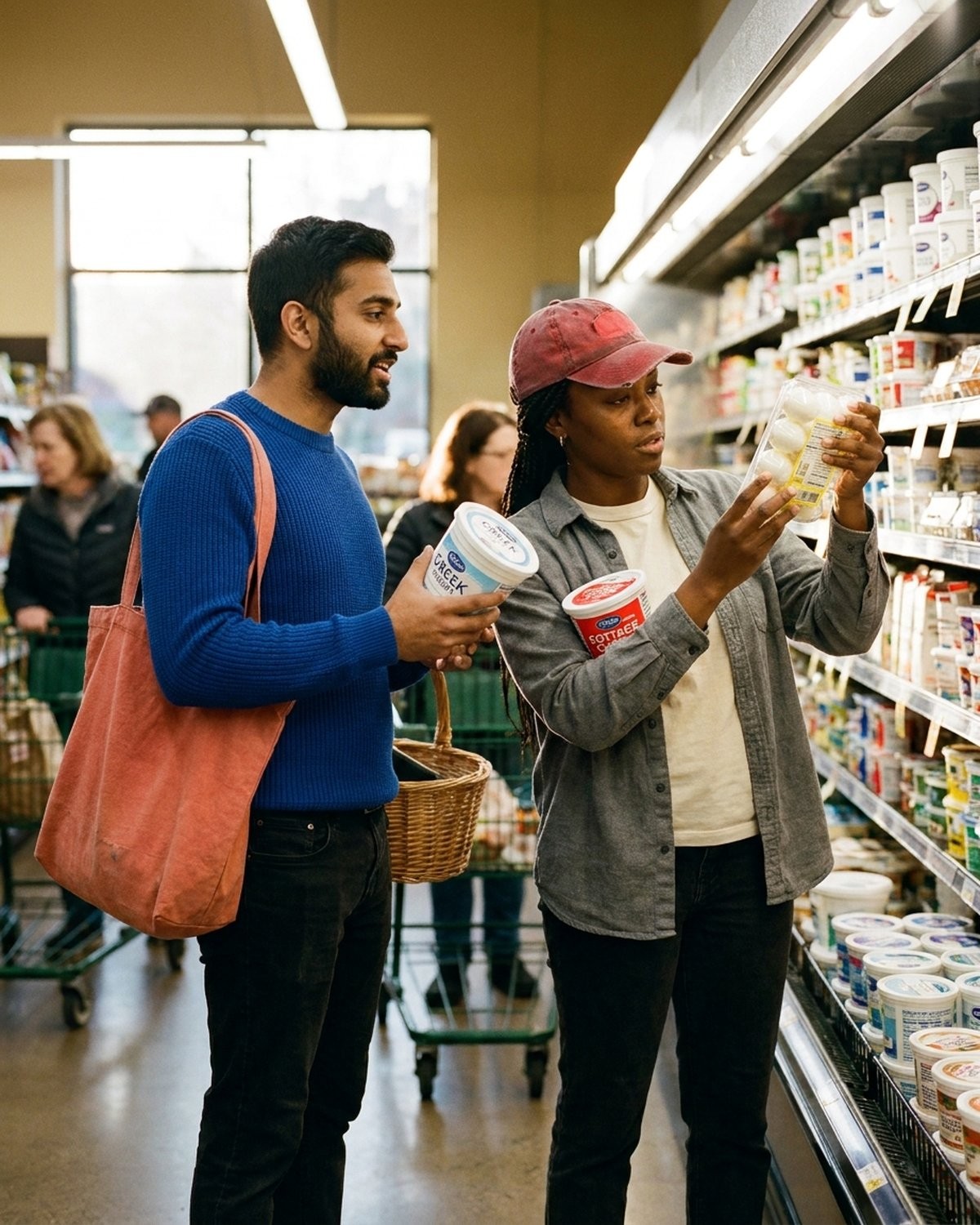
The mid-afternoon dip is familiar: lunch was hours ago, dinner is still a long way off, and the vending machine starts making a surprisingly persuasive case for itself. A snack with some protein can help you stay full and focused until your next meal without much prep.
The best protein-rich snacks for busy afternoons pair about 10 to 20 grams of protein with fiber, such as Greek yogurt with berries, cottage cheese with fruit, hard-boiled eggs with whole-grain crackers, or roasted edamame. In this study, teenagers who ate a high-protein soy snack in the afternoon had better appetite control and diet quality than those who ate a high-fat snack or no snack at all.
Below are quick high-protein snacks you can put together in minutes, make-ahead options for packed days, and answers to common questions about protein-packed snacks.
Key takeaways

Quick bites you can make in minutes
Easy high-protein snacks like Greek yogurt with berries, cottage cheese, turkey roll-ups, hard-boiled eggs, canned salmon, and edamame each take five minutes or less to put together. Pairing them with fruit, vegetables, or whole grains adds fiber, which can help you stay full until dinner.
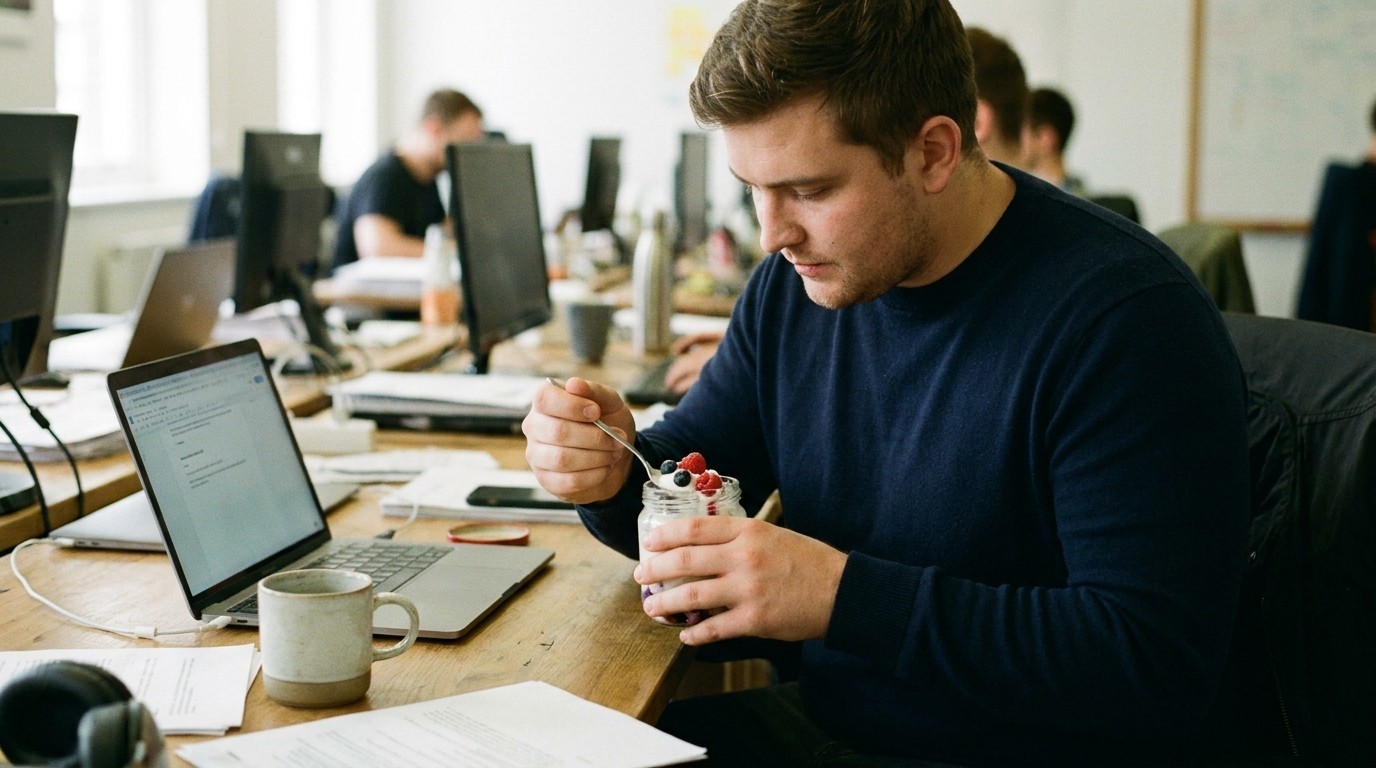
Greek yogurt and berries with optional granola
Greek yogurt is strained, so it has more protein than regular yogurt. A 3/4-cup serving of plain nonfat Greek yogurt has about 15 to 17 grams of protein, depending on the brand.
Top it with 1/2 cup of fresh or thawed frozen berries for fiber and natural sweetness. To make a Greek yogurt parfait, layer the yogurt and berries in a jar the night before.
Granola adds crunch, but many brands are high in added sugar. A protein granola can add a few extra grams of protein. Keep the portion to about 2 tablespoons and check the label for added sugar.
- Swap: Use unsweetened plant-based yogurt with added protein if you avoid dairy.
- Tip: Plain yogurt gives you more control over sweetness than flavored versions.
Cottage cheese with pineapple or crunchy vegetables
A 1/2-cup serving of cottage cheese has roughly 12 to 14 grams of protein. It works with sweet or savory toppings, so it is easy to keep in your rotation.
For a sweet option, cottage cheese with pineapple is a classic pairing. Use fresh pineapple or canned pineapple packed in juice instead of syrup.
For a savory option, try these add-ins:
- Sliced cucumber and cherry tomatoes
- Chopped bell pepper with black pepper
- A sprinkle of everything bagel seasoning
Cottage cheese can be high in sodium. If you are watching salt, look for lower-sodium versions on the label.
Turkey and cheese roll-ups with cucumber
Turkey roll-ups need no cooking and no bread. Lay a slice of turkey flat, add a thin slice of cheese, place a cucumber spear on top, and roll it up.
Two ounces of sliced turkey breast provides about 10 to 12 grams of protein. One slice of Swiss or cheddar adds about 5 to 7 grams more.
Protein tends to be more filling than the same calories from carbohydrate or fat, according to a research review, which makes turkey and cheese roll-ups a useful mid-afternoon option.
Variations: Add a thin layer of mustard or hummus, or swap the cucumber for a strip of bell pepper. Choose lower-sodium deli meat when you can, since many deli meats are high in sodium.
Hard-boiled eggs with vegetables and whole-grain crackers
One large egg has about 6 grams of protein. Two hard-boiled eggs give you about 12 grams, which is a solid base for a snack.
Cook a batch at the start of the week. Hard-boiled eggs keep in the refrigerator for up to one week, according to FoodSafety.gov. Leave them in their shells until you’re ready to eat them.
Round out the snack with:
- Vegetables: baby carrots, snap peas, or radishes
- Whole-grain crackers: 4 to 6 crackers, depending on size
- Seasoning: salt, pepper, paprika, or a dash of hot sauce
Many grocery stores also sell peeled hard-boiled eggs in the refrigerated section if you do not have time to cook.
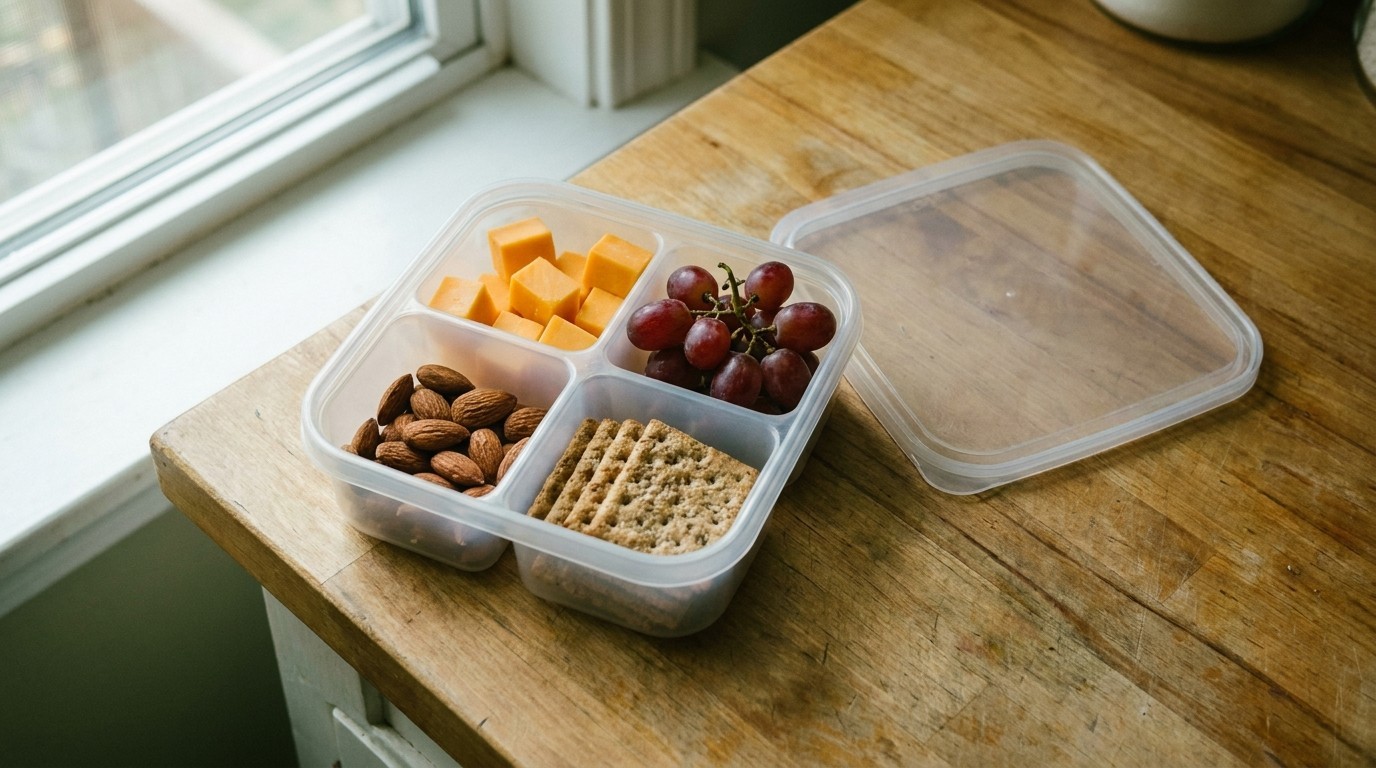
Cheese and grape snack boxes
Cheese and grapes are a simple pairing that packs well. One ounce of cheddar or Monterey Jack has about 7 grams of protein.
To build a snack box, use a container with small compartments:
| Compartment | Example | Approximate amount |
|---|---|---|
| Cheese | Cheddar cubes or string cheese | 1 to 1.5 oz |
| Fruit | Red or green grapes | 1/2 to 3/4 cup |
| Extra protein | Almonds or roasted chickpeas | 2 tbsp |
| Crunch | Whole-grain crackers | 4 to 5 crackers |
You can prep three or four boxes at once. Wash and dry the grapes first so they last longer in the refrigerator.
Canned salmon on whole-grain crackers
Canned salmon is shelf-stable and ready to eat. A 3-ounce serving has about 17 to 20 grams of protein, plus omega-3 fatty acids, a type of fat found mostly in oily fish that’s linked with heart health.
Mix the salmon with a spoonful of plain Greek yogurt or mayonnaise, a squeeze of lemon, and some dill or black pepper. Spoon it onto whole-grain crackers or cucumber rounds.
Canned salmon with soft bones adds calcium. The bones mash easily into the mix, but you can buy boneless, skinless versions if you prefer.
Single-serve pouches are handy for work. Keep a few in your desk drawer with a sleeve of crackers.
Edamame with sea salt and chili flakes
Edamame are young soybeans. One cup of shelled edamame has about 17 to 18 grams of protein, along with fiber.
Buy them frozen, in or out of the pod. Microwave a cup according to the package directions, which usually takes about 3 to 5 minutes.
Season with:
- Flaky sea salt
- Red chili flakes
- A squeeze of lime or a dash of low-sodium soy sauce
It works well cold, too, so you can pack leftovers for the next day.
Protein smoothies and ready-to-drink shakes
A protein smoothie takes about five minutes to blend. Try this base:
- 1 cup milk or soy milk (about 7 to 8 grams of protein)
- 1/2 cup plain Greek yogurt or 1 scoop protein powder
- 1/2 cup frozen fruit, such as berries or banana
- 1 tablespoon peanut butter or chia seeds
Per serving (1 smoothie, made with Greek yogurt and peanut butter): about 310 calories, 23 g protein, 3 g fiber.
A ready-to-drink protein shake is useful when you have no time at all. Most contain 20 to 30 grams of protein per bottle, but check the label for added sugar and the protein per serving. Shakes are convenient, but they usually have little or no fiber, so pair one with a piece of fruit when you can.
Pair protein with fiber to stay full longer
Protein and fiber help in different ways. Protein tends to be more filling than the same calories from carbohydrate or fat, and fiber adds bulk and slows digestion, which MedlinePlus notes can help you feel full. Put them together and you get a snack with real staying power, which is a better bet for the stretch between lunch and dinner than a small packaged snack made mostly of refined carbohydrates. Researchers call that lasting fullness satiety, and it’s the main thing you’re after at 3 p.m.
Fiber may also help keep blood sugar steadier than a snack of refined carbohydrates alone, which can mean more even energy through the afternoon.
| Protein | Fiber pairing |
|---|---|
| Greek yogurt | Raspberries or blackberries |
| Cottage cheese | Pineapple or cucumber |
| Hard-boiled eggs | Whole-grain crackers and carrots |
| Cheese | Grapes or an apple |
| Edamame | Already contains both |
To compare protein amounts in other foods, search FoodData Central, the USDA’s free nutrient database. Aim for about 10 to 20 grams of protein per snack, depending on your appetite and needs.
If you’re wondering how snacks fit into your whole day, Harvard Health Publishing explains that the recommended dietary allowance for protein, 0.8 grams per kilogram of body weight or about 0.36 grams per pound, is a minimum to avoid deficiency rather than an ideal target. For someone who weighs 150 pounds, that’s about 54 grams a day, so a 15-gram afternoon snack covers a useful share. You can read more in Harvard Health.
Make-ahead snacks and grab-and-go planning
About 90 minutes of prep on the weekend can give you roasted chickpeas, turkey meatballs, energy bites, chia pudding, and quinoa cups ready for the week. Pair those with a few well-chosen packaged bars or jerky and safe storage habits, and you won’t need to make protein-rich snacks on the spot when your afternoon gets busy.
Roasted chickpeas and crispy tofu cubes
Roasted chickpeas are one of the simplest crunchy snacks you can batch-cook. A half cup of cooked chickpeas has about 7 grams of protein, according to USDA FoodData Central. Rinse a can, pat the chickpeas very dry, toss with 1 tablespoon of olive oil and spices, then roast at 400°F for 25 to 35 minutes.
Per serving (1/3 of a 15-ounce can): about 160 calories, 7 g protein, 5 g fiber.
For a tofu snack, press one 14-ounce block of extra-firm tofu for 15 minutes, cut it into 3/4-inch cubes, and toss with 1 tablespoon of soy sauce, then 1 tablespoon of cornstarch. Spread on a parchment-lined baking sheet. Bake at 400°F for about 25 minutes, flipping halfway through.
Per serving (1/4 of the block): about 95 calories, 10 g protein, 1 g fiber.
- Keep roasted chickpeas in a loosely covered container at room temperature for 2 to 3 days. Sealing them in tightly makes them soft.
- Store tofu cubes in the fridge and eat them within 4 days. You can re-crisp them in an air fryer.
Turkey meatballs for savory snack portions
Turkey meatballs work well as a savory snack when you want something more filling than crackers. Mix 1 pound of ground turkey with 1 egg, 1/3 cup of rolled oats or breadcrumbs, garlic, and Italian seasoning. Roll the mixture into 1-inch balls, which makes about 24.
Bake on a lined baking sheet at 400°F for 15 to 20 minutes, until the center reaches 165°F. That is the safe minimum internal temperature for ground poultry, according to FoodSafety.gov.
Pack 3 or 4 meatballs with a small cup of marinara, tzatziki, or hummus for dipping. They keep in the fridge for 3 to 4 days, and you can freeze extras for 3 to 4 months, according to the cold storage chart.
Per serving (3 meatballs): about 105 calories, 12 g protein, under 1 g fiber.
Homemade trail mix with pumpkin seeds
Homemade trail mix lets you control how much sugar goes in and how much protein you get. Pumpkin seeds (pepitas) have about 8 to 9 grams of protein per ounce, based on USDA FoodData Central, so they make a good base.
| Ingredient | Amount per batch | Role |
|---|---|---|
| Shelled pumpkin seeds | 1 cup | Protein, crunch |
| Roasted almonds or peanuts | 1 cup | Protein, healthy fats |
| Roasted edamame | 1/2 cup | Extra protein |
| Unsweetened dried fruit | 1/2 cup | Sweetness |
| Dark chocolate chips | 1/4 cup | Optional treat |
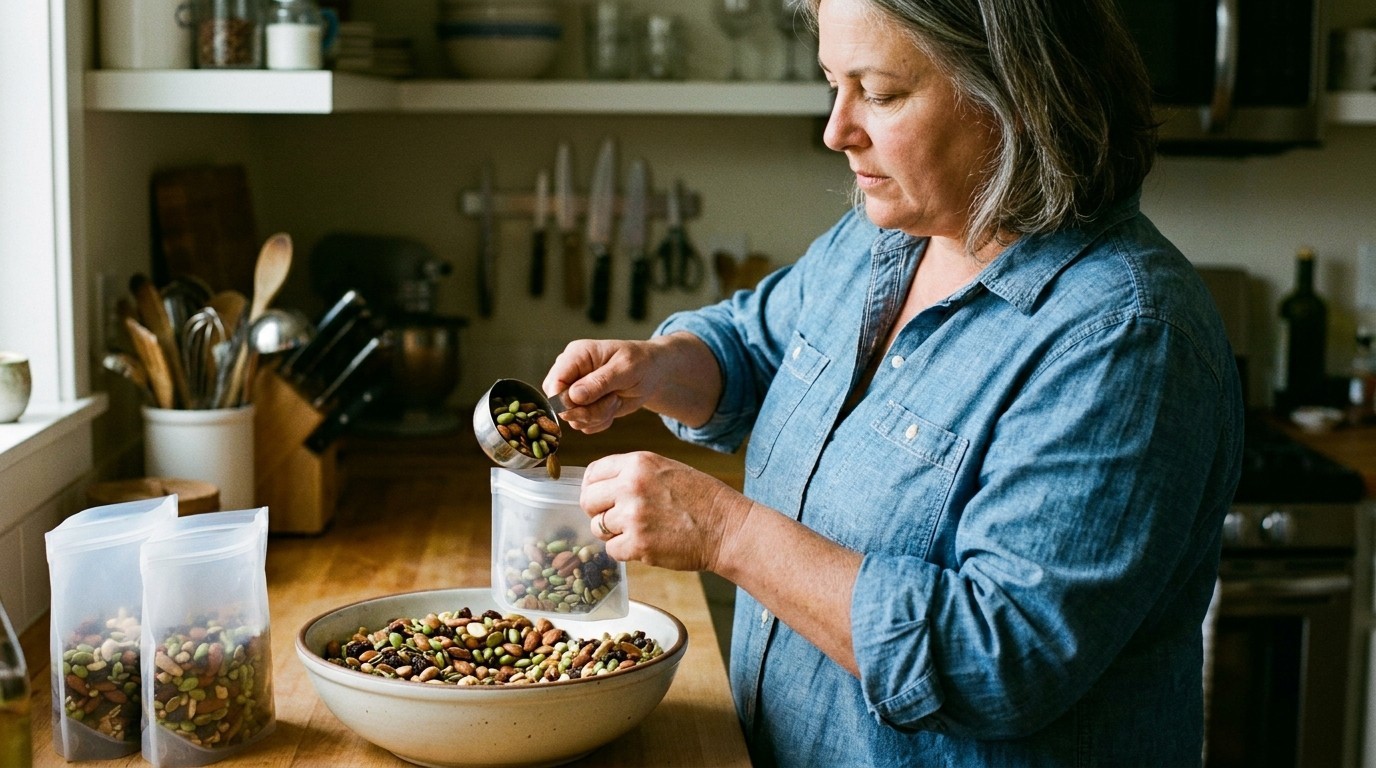
Trail mix is calorie-dense, so it helps to portion it into 1/4-cup bags right away. For a nut-free version, swap the almonds for extra pumpkin seeds or sunflower seeds.
Per serving (1/4 cup): about 170 calories, 7 g protein, 3 g fiber.
No-bake energy bites with oats and nut butter
Energy bites take about 15 minutes and need no oven. Stir together these ingredients:
- 1 cup of rolled oats
- 1/2 cup of nut butter
- 1/3 cup of honey
- 2 tablespoons of ground flaxseed
- 1 to 2 scoops of unflavored or vanilla protein powder
Chill the mixture for 20 minutes, then roll it into 1-inch balls. This makes about 20 bites.
If the mix is too dry, add milk 1 teaspoon at a time. If you have a peanut allergy, sunflower seed butter is a good swap. Keep the bites in an airtight container in the fridge for up to a week, or freeze them for up to 2 months.
Per serving (1 bite, made with 1 scoop of protein powder): about 80 calories, 3 g protein, 1 g fiber.
Chia pudding and overnight oats with extra protein
Chia pudding and overnight oats set up in the fridge overnight, and you can make several jars at once.
For chia seed pudding, stir 3 tablespoons of chia seeds into 3/4 cup of milk. Two tablespoons of chia seeds have about 4 to 5 grams of protein, per USDA FoodData Central. For overnight oats, combine 1/2 cup of rolled oats with 1/2 cup of milk and 1/2 cup of plain Greek yogurt.
Per serving (1 jar of chia pudding made with 2% milk): about 265 calories, 12 g protein, 12 g fiber.
Per serving (1 jar of overnight oats as written): about 275 calories, 20 g protein, 4 g fiber.
You can raise the protein in either one with these additions:
- Plain Greek yogurt: stir in 1/2 cup
- Protein powder: add 1 scoop and an extra splash of milk
- Soy milk or ultra-filtered milk (filtered to concentrate protein, often about 13 grams per cup) in place of almond milk, which has only about 1 gram
- Hemp hearts: sprinkle 1 to 2 tablespoons on top
Most jars keep in the fridge for 3 to 5 days. Add fresh fruit the day you eat them.
Quinoa and bean snack cups
Quinoa gives you about 8 grams of protein per cooked cup, based on USDA FoodData Central. When you pair it with beans, you get a savory snack that tastes good cold.
Cook 1 cup of dry quinoa and let it cool. Then mix it with:
- 1 can of rinsed black beans
- 1 cup of corn
- Diced bell pepper
- Lime juice, cumin, and a little salt
Divide the mix into 1-cup portions (about 8 grams of protein each), or pair a smaller portion with a hard-boiled egg. Use small lidded containers.
Per serving (1 cup): about 170 calories, 8 g protein, 6 g fiber.
You can also make baked quinoa cups. Combine 2 cups of cooked quinoa with 2 eggs and 1/2 cup of shredded cheddar, press the mixture into 6 greased muffin cups, and bake at 350°F for about 20 minutes. Both versions keep in the fridge for 3 to 5 days.
Protein muffins and homemade bars
Protein muffins work well when you want something that feels like a baked treat. A basic muffin batter uses these ingredients:
- 1 cup of oat flour
- 1 scoop of protein powder
- 2 eggs
- 3/4 cup of Greek yogurt
- 1 mashed banana
- 1 teaspoon of baking powder
Mash the banana, then whisk in the eggs and yogurt. Stir in the oat flour, protein powder and baking powder until just combined. Divide among 8 greased or lined muffin cups and bake at 350°F for 18 to 22 minutes, until a toothpick comes out clean. The banana is the only sweetener, so add 2 tablespoons of maple syrup if you like them sweeter.
Per serving (1 muffin, without maple syrup): about 110 calories, 9 g protein, 1.5 g fiber.
Protein powder absorbs liquid and can dry out baked goods. Replace no more than about one-third of the flour with protein powder.
For homemade bars, press a double batch of the energy bite mixture into a lined 8×8 pan, chill it, and slice it into 10 to 12 bars. Freeze muffins individually so you can take one out each morning.
Choosing packaged protein bars and jerky
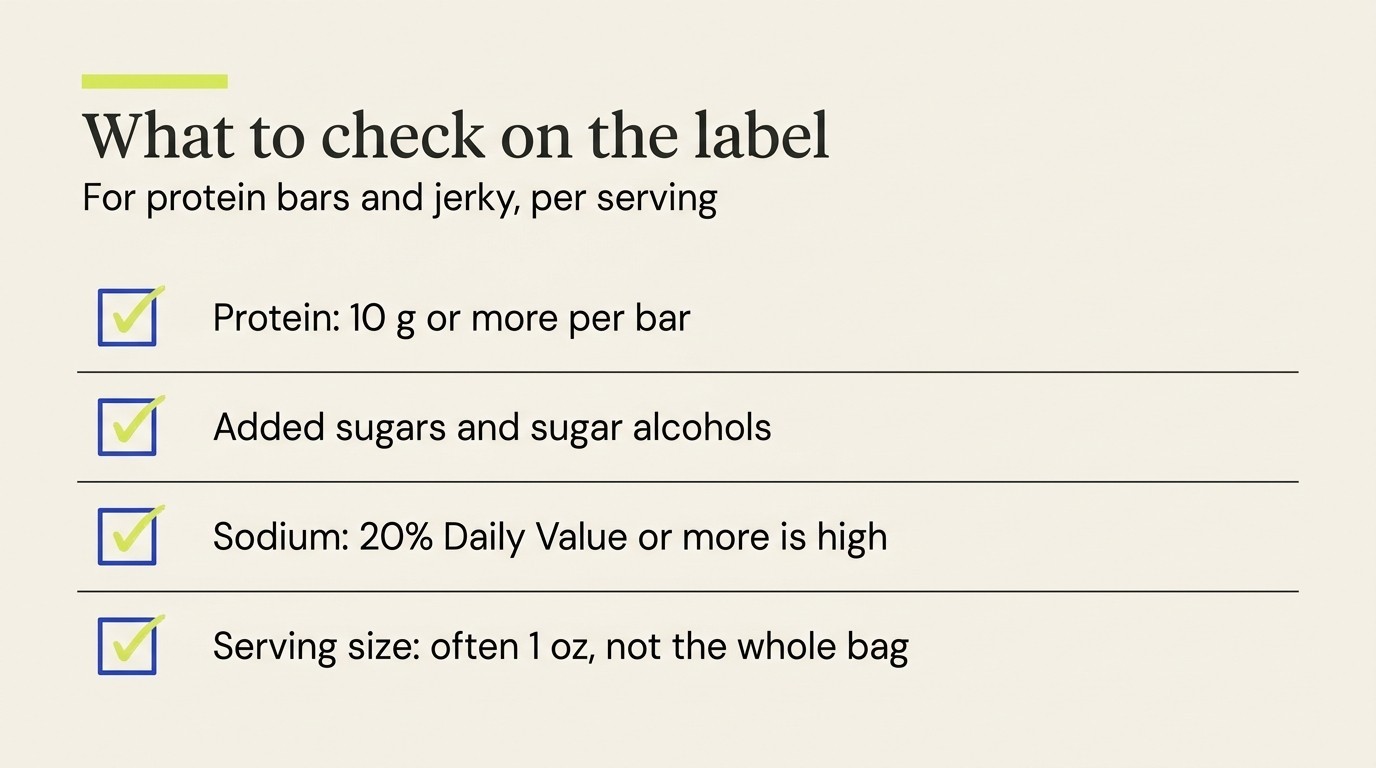
On weeks when you don’t have time to cook, packaged foods can fill the gap. The FDA label guide shows you how to compare protein, added sugars, and sodium per serving.
| What to check | Protein bars | Beef jerky / turkey jerky |
|---|---|---|
| Protein | 10 g or more per bar | About 9 to 12 g per ounce |
| Watch for | Added sugars, sugar alcohols | Sodium per serving |
| Serving size | Usually 1 bar | Often 1 oz, not the whole bag |
Sugar alcohols such as erythritol and maltitol add sweetness with fewer calories, but larger amounts can cause gas or bloating in some people.
The FDA notes that 20% Daily Value or more of sodium per serving is considered high. Some jerky reaches that level.
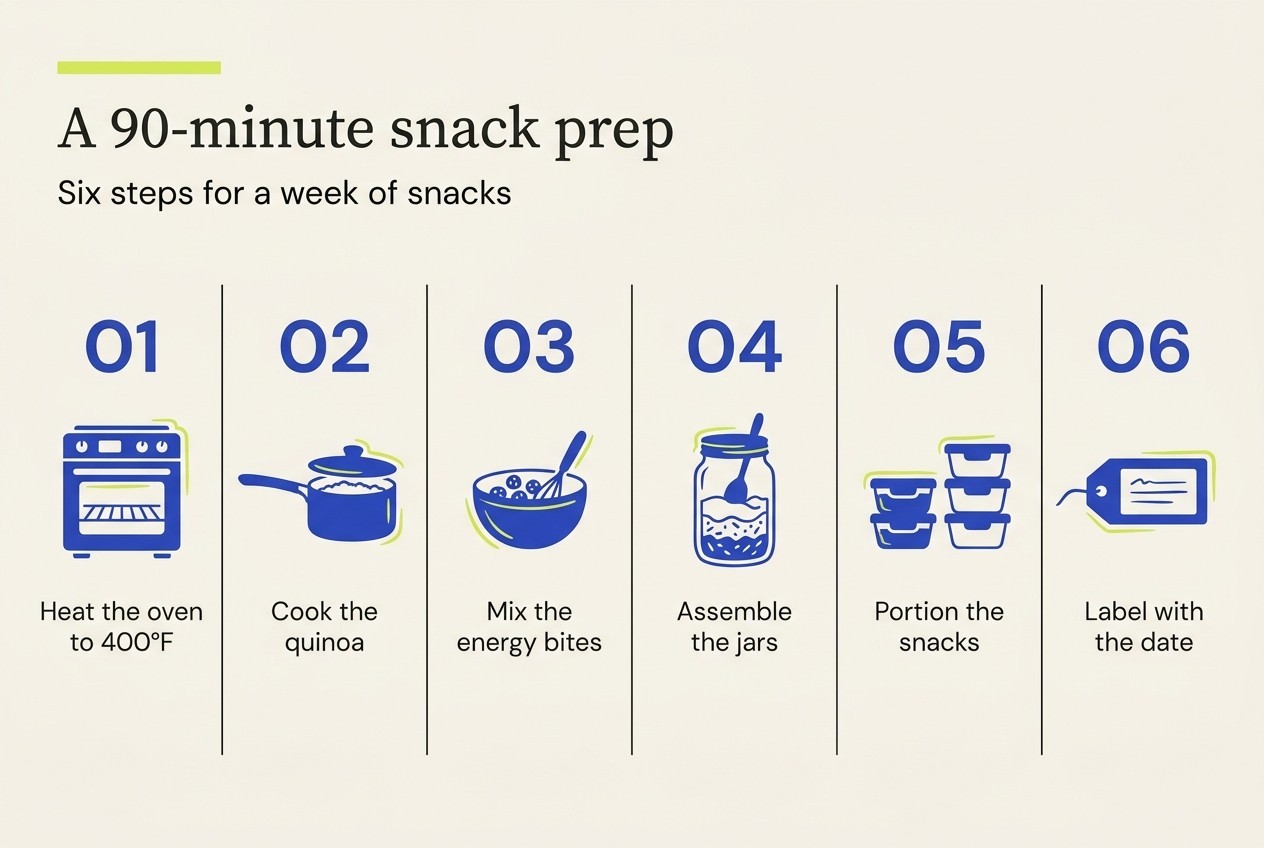
A 90-minute weekly prep routine
Many of the ingredients above are lower-cost pantry staples, such as dried or canned beans, oats, eggs, frozen ground turkey, and tofu. Buying chia seeds, pumpkin seeds, and oats in bulk usually lowers the cost per serving.
Here is a sample 90-minute Sunday routine:
- Start the oven at 400°F. Roast the chickpeas and bake the meatballs at the same time.
- Cook the quinoa on the stove while those bake.
- Mix the energy bites and put them in the fridge to chill.
- Assemble 3 or 4 jars of chia pudding or overnight oats.
- Portion the trail mix and quinoa cups into containers.
- Label everything with the date it was made.
Rotate two or three recipes each week so you don’t get tired of the same snacks.
Storing and packing snacks for work

Perishable foods like meatballs, yogurt jars, and quinoa cups shouldn’t sit between 40°F and 140°F for more than 2 hours. The USDA calls this range the Danger Zone. Keep your fridge at 40°F or below.
Follow these packing tips from the USDA’s bag lunch guidance:
Frequently asked questions
What are some quick, healthy high-protein snacks for busy afternoons?
Good no-cook options include a 6-ounce cup of plain nonfat Greek yogurt (about 15 to 17 grams of protein), two hard-boiled eggs (about 12 grams), or a half cup of cottage cheese (about 12 to 14 grams). A string cheese with an apple or a handful of almonds also works when you have only a few minutes.
These snacks may also help with the post-lunch dip. Military nutrition research summarized in a National Academies report found that a high-carbohydrate lunch triggered more fatigue than a protein-rich lunch. That finding was about meals rather than snacks, so treat it as a useful clue rather than a guarantee.
Which store-bought high-protein snacks are best for eating on the go?
Look for items that come in single-serve packs and list at least 10 grams of protein per serving on the Nutrition Facts label. Common picks include:
- Beef or turkey jerky: about 9 to 12 grams per ounce, so check sodium
- Tuna or salmon pouches: about 15 to 17 grams per 2.5-ounce pouch
- Ready-to-drink protein shakes: often 20 to 30 grams per bottle
- Dry-roasted edamame: about 13 to 14 grams per quarter cup
Light tuna is among the FDA’s best choices for lower mercury; albacore is higher, so eat it less often.
Protein bars vary widely. Compare protein, added sugar and fiber on the label before you buy.
What high-protein snacks can I keep at my desk without refrigeration?
Shelf-stable choices include jerky, tuna pouches, roasted chickpeas, pumpkin seeds (about 8 to 9 grams per ounce), nut butter packets and protein powder you can mix with water. Sports dietitian Nancy Clark suggests keeping instant oatmeal in a desk drawer. To raise the protein, make it with a scoop of protein powder.
Once opened, nut butters and pouches should be finished or stored as the package directs.
Which high-protein afternoon snacks are good for weight loss?
Snacks that pair protein with fiber and stay around 200 calories are a practical fit, because they take the edge off hunger without turning into a fourth meal. Greek yogurt with berries, cottage cheese with cucumber, or a quarter cup of roasted edamame all work.
The soy snack study mentioned at the top found better satiety and diet quality with a high-protein afternoon snack, but it was one study in teenagers, so treat it as encouraging rather than proof that it will work the same way for you.
How can I get 30 grams of protein in a quick snack?
Combine two protein foods instead of relying on one. A few combinations that reach about 30 grams:
| Combination | Approximate protein |
|---|---|
| 1 cup plain nonfat Greek yogurt + 2 tablespoons hemp seeds | 30 g |
| 1 tuna pouch + 1 cup cottage cheese (low-fat) | 40 g |
| 1 ready-to-drink shake (20 g) + 1 string cheese + 1 hard-boiled egg | 32 g |
Two of these combinations are closer to a small meal than a snack, so they work best when dinner is late or you’ve just trained.
What are some easy high-protein snacks to support muscle gain?
If you’re trying to build muscle, a larger snack of 20 to 30 grams of protein after strength training is a common target, which is more than the 10 to 20 grams that works for most afternoon snacks. Greek yogurt with granola, a protein shake with a banana, or two turkey and cheese roll-ups with whole-grain crackers (about 30 grams) all supply protein plus carbohydrates to refuel.
The International Society of Sports Nutrition recommends spreading protein across meals and snacks every few hours (ISSN guidance). Protein alone doesn’t build muscle, though, so pair these snacks with regular resistance training.
What’s a good high-protein snack if I’m not very hungry?
Pick something small and dense in protein rather than a full plate. A string cheese, a single-serve Greek yogurt or a few slices of turkey each give 6 to 15 grams in a handful of bites. If your appetite is smaller than usual, whether because of a medication, stress or a long day, eating slowly and stopping when you’re comfortable is fine. Talk to your doctor if a low appetite is making it hard to eat enough overall.