
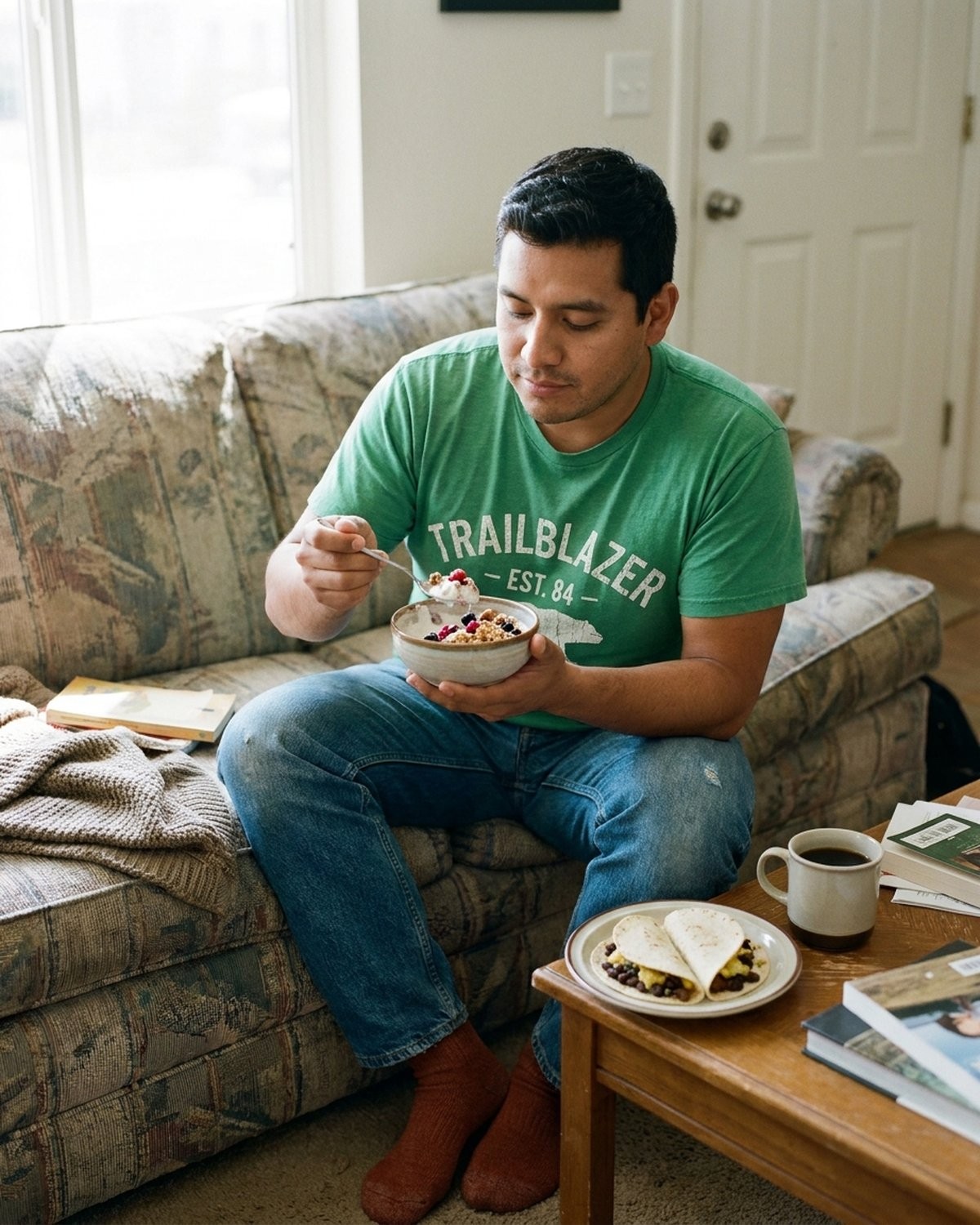
Scrambled eggs are a perfectly good breakfast. Scrambled eggs every morning for six weeks is how people end up skipping breakfast altogether. These seven high-protein breakfasts use familiar ingredients like Greek yogurt, eggs, beans, tofu and smoked salmon, and each one lists approximate protein, calories and fiber per serving so you can fit it into whatever you’re tracking. Some you make the night before, some take five minutes, and one you can drink on the way out the door.
Use the estimates as a starting point: brands and serving sizes change the totals. If you’re tracking closely, check the nutrition labels on your own ingredients.
Key takeaways

Breakfast
Protein
Calories
Fiber
Time
1. Greek yogurt peanut butter overnight oats
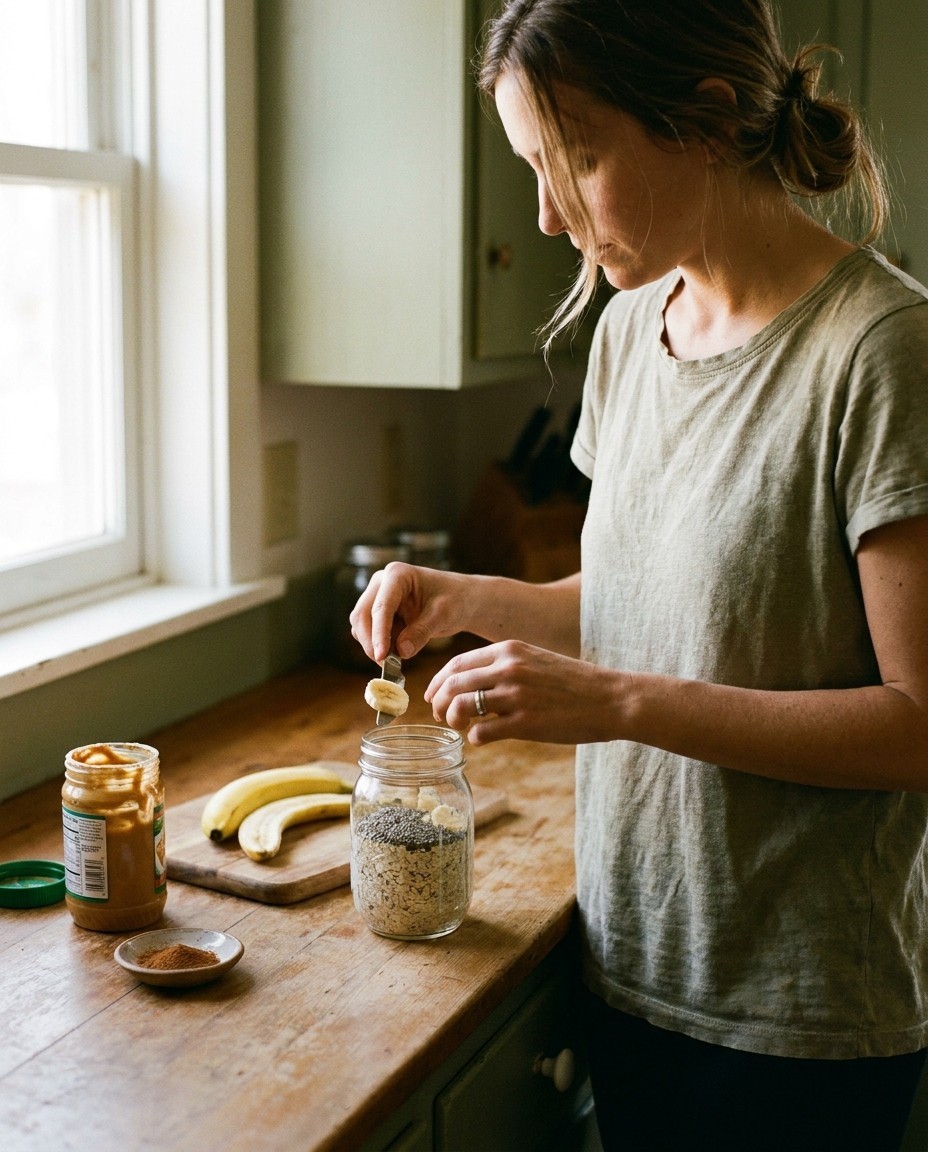
These overnight oats bring together creamy yogurt, peanut butter, and fruit for a make-ahead breakfast with about 30 grams of protein per serving. Stir them together the night before, then add the banana just before eating for a fresher texture.
Yield: 1 serving
Prep time: 5 minutes
Chill time: At least 6 hours
Per serving (approx.): 30g protein, 520 calories (made with 2% milk), 11g fiber
Ingredients
- ½ cup old-fashioned rolled oats
- ¾ cup plain nonfat Greek yogurt
- ½ cup milk
- 1 tablespoon peanut butter
- 1 tablespoon chia seeds
- ½ medium banana, sliced
- ½ teaspoon cinnamon
Method
- Stir the oats, yogurt, milk, peanut butter, chia seeds, and cinnamon together in a covered container.
- Refrigerate at 40°F or below for at least 6 hours.
- Add the banana before serving. Thin the oats with a splash of milk if you prefer a softer consistency.
For a dairy-free bowl, use unsweetened soy yogurt and soy milk; check their labels to estimate the new protein total.
2. Cottage cheese berry crunch bowl
A bowl of cottage cheese, berries, and crunchy toppings gives you about 30 grams of protein per serving with five minutes of prep. Choose a cottage cheese texture you enjoy, then add the granola and hemp hearts just before eating so the granola stays crisp.
Yield: 1 serving
Prep time: 5 minutes
Cook time: None
Per serving (approx.): 30g protein, 410 calories, 4g fiber
Ingredients
- 1 cup low-fat cottage cheese
- ½ cup mixed berries
- ¼ cup granola
- 1 tablespoon hemp hearts (shelled hemp seeds)
- 1 teaspoon honey, optional
Method
- Spoon the cottage cheese into a bowl and top it with the berries.
- Add the granola and hemp hearts. Drizzle with honey if you like a sweeter bowl.
For a dairy-free version, use an unsweetened high-protein soy yogurt and compare its label with the cottage cheese estimate. If you’re watching added sugar, leave out the honey and choose a granola with less added sugar, or swap it for chopped nuts.
3. Black bean and egg breakfast tacos
Black beans and eggs make two hearty tacos with about 25 grams of protein per serving. Warm the beans while the eggs cook, then finish with salsa and a squeeze of lime for a bright, savory breakfast.

Yield: 1 serving, 2 tacos
Prep time: 5 minutes
Cook time: 8 minutes
Per serving (approx.): 25g protein, 470 calories, 11g fiber
Ingredients
- 2 large eggs
- ½ cup canned black beans, drained and rinsed
- 2 small corn tortillas
- 2 tablespoons shredded cheddar cheese
- 2 tablespoons salsa
- 1 teaspoon olive oil
- 1 tablespoon chopped cilantro, optional
Method
- Heat the oil in a skillet over medium heat. Add the beans and cook for 2 minutes, stirring until warm.
- Beat the eggs in a bowl, pour them into the skillet, and scramble with the beans until the eggs are set and no liquid egg remains (160°F).
- Warm the tortillas in a dry skillet, then divide the egg-and-bean mixture between them. Top with cheese, salsa, and cilantro.
For a dairy-free option, skip the cheddar and add sliced avocado or extra beans.
4. Turkey sausage and spinach breakfast burritos
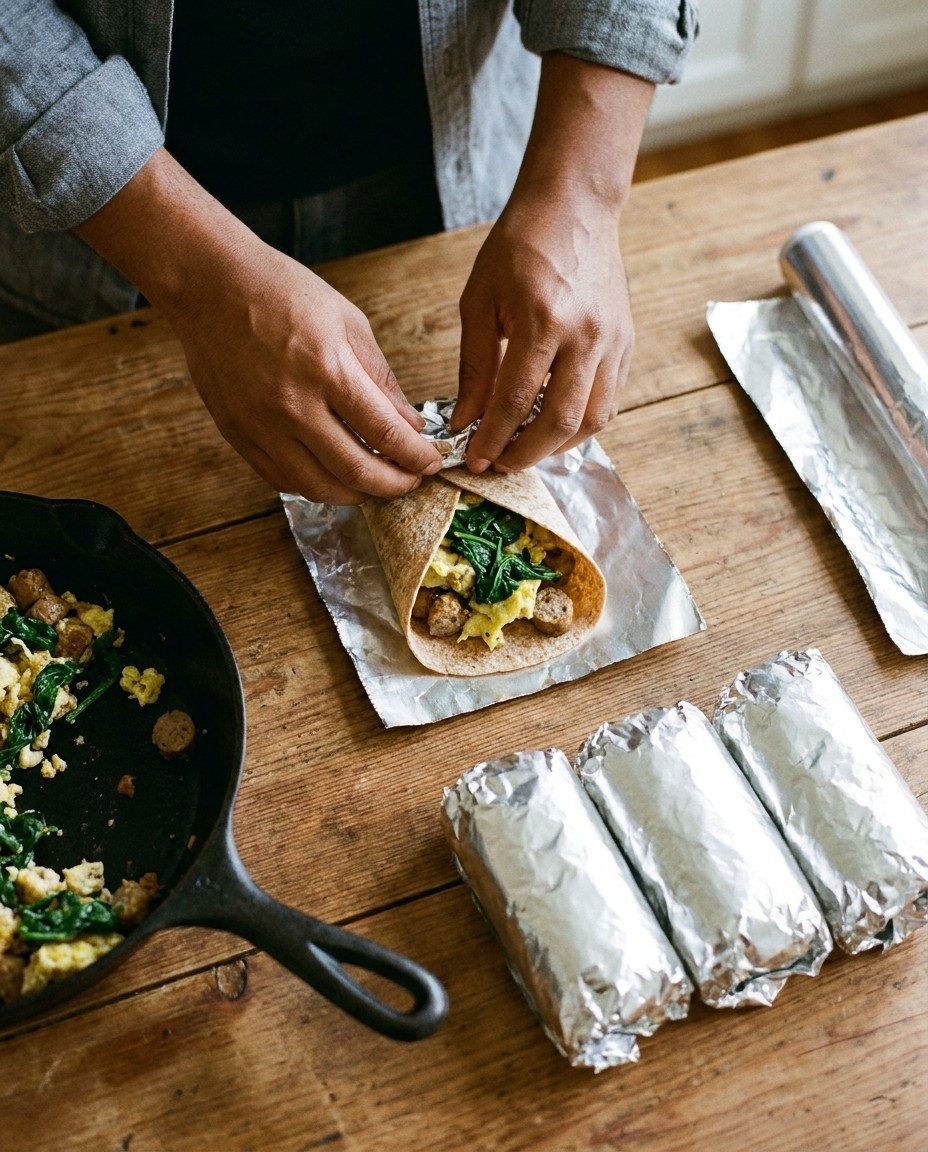
A turkey sausage burrito gives you a portable breakfast with about 40 grams of protein per serving. Cook a batch of the filling ahead, then wrap and refrigerate individual portions for quick weekday mornings.
Yield: 1 burrito
Prep time: 10 minutes
Cook time: 12 minutes
Per serving (approx.): 40g protein, 620 calories, 5g fiber
Ingredients
- 4 ounces raw lean turkey breakfast sausage
- 2 large eggs
- 1 cup baby spinach
- 1 large whole-wheat tortilla
- 2 tablespoons shredded Monterey Jack cheese
- 1 teaspoon olive oil
Method
- Heat the oil in a skillet over medium heat. Add the sausage and break it into small pieces as it cooks.
- Cook the sausage to 165°F, the safe temperatures guidance for ground poultry. Add the spinach and stir until wilted.
- Beat the eggs, add them to the skillet, and scramble until they’re set and no liquid egg remains (160°F). Spoon the filling onto the tortilla, add the cheese, and roll it into a burrito.
For a vegetarian version, replace the sausage with ½ cup seasoned black beans. The bean version has about 30 grams of protein. Refrigerate cooked filling promptly and use it within 3 to 4 days, in line with FoodSafety.gov’s storage chart.
5. Smoked salmon avocado toast with skyr
Skyr, an Icelandic-style cultured dairy product that’s thicker and often higher in protein than regular yogurt, adds a tangy, creamy layer to smoked salmon toast, bringing the serving to about 30 grams of protein. The whole breakfast takes less than 10 minutes, with crisp toast balancing the soft avocado and fish.
Yield: 1 serving
Prep time: 8 minutes
Cook time: 2 to 4 minutes
Per serving (approx.): 30g protein, 300 calories, 5g fiber
Ingredients
- 1 slice whole-grain bread
- ½ cup plain skyr
- 2 ounces smoked salmon
- ¼ medium avocado
- 1 teaspoon lemon juice
- 1 tablespoon chopped dill
- Black pepper, to taste
Method
- Toast the bread until crisp.
- Mash the avocado with the lemon juice and spread it over the toast.
- Spread 2 to 3 tablespoons of the skyr over the avocado, top with the smoked salmon, and finish with dill and black pepper. Serve the rest of the skyr on the side with cucumber slices or a few berries.
For a vegetarian toast, use a sliced hard-boiled egg in place of the salmon. The egg version has about 25 grams of protein. If you’re choosing smoked salmon, compare sodium amounts on the package labels. If you’re pregnant, the CDC advises avoiding refrigerated smoked seafood unless it’s cooked, because of the risk of listeria, so swap in the hard-boiled egg or canned salmon instead.
6. Chocolate-cherry tofu smoothie
Silken tofu, a soft, custard-like tofu that blends completely smooth, and soy milk make this chocolate-cherry smoothie creamy, with about 25 grams of protein per serving. Blend it until completely smooth for an easy breakfast you can sip when a full plate feels like too much.

Yield: 1 serving
Prep time: 5 minutes
Cook time: None
Per serving (approx.): 25g protein, 390 calories, 6g fiber
Ingredients
- 8 ounces firm silken tofu
- 1 cup unsweetened soy milk
- ½ cup frozen pitted cherries
- 1 tablespoon peanut butter
- 1 tablespoon unsweetened cocoa powder
- ½ cup ice
- 1 teaspoon maple syrup, optional
Method
- Add the tofu, soy milk, cherries, peanut butter, cocoa powder, and ice to a blender.
- Blend until smooth, then taste and add maple syrup if you want extra sweetness.
- Pour into a glass and drink right away, or refrigerate in a sealed container.
For a peanut-free smoothie, use sunflower seed butter. Soy milk provides more protein than many other plant milks, so check labels if you choose a different one.
7. High-protein cereal bowl with Greek yogurt and berries
Pairing high-protein cereal with Greek yogurt makes a fast bowl with about 30 to 35 grams of protein per serving, depending on the cereal you choose. It’s a good pick for mornings when your cravings point firmly toward something sweet and crunchy. Add the yogurt and berries just before eating to keep the crunch.
Yield: 1 serving
Prep time: 3 minutes
Cook time: None
Per serving (approx.): 30–35g protein, 370 calories, 4–15g fiber (depending on cereal)
Ingredients
- 1 serving high-protein cereal (often ¾ to 1 cup; look for at least 10 grams of protein per serving)
- ¾ cup plain nonfat Greek yogurt
- ½ cup berries
- 1 tablespoon chopped almonds
- ¼ cup milk, optional
Method
- Spoon the Greek yogurt into a bowl and add the berries.
- Top with cereal and almonds. Pour milk over the bowl if you prefer a more traditional cereal texture.
A high-protein cereal such as Magic Spoon or Kashi GO can be a convenient option; compare the serving size, protein and fiber on the package. For a dairy-free bowl, use a high-protein soy yogurt and milk.
How much protein should you aim for at breakfast?
Is 25–30 grams a useful breakfast range?
A breakfast with 25 to 30 grams of protein is a practical target for many adults, though some people need more or less, and it isn’t a required amount for every meal. You can use the range to plan a satisfying plate, then adjust the portion based on your daily needs and appetite.
Part of the appeal is how full protein keeps you. Gram for gram, it tends to be more filling than carbohydrate or fat, which researchers describe as satiety: the feeling of being satisfied after eating that carries you through to your next meal. A review in The American Journal of Clinical Nutrition found that spreading protein across meals, at around 25 to 30 grams each, can support appetite control during weight loss and maintenance, though how much it helps varies from person to person.
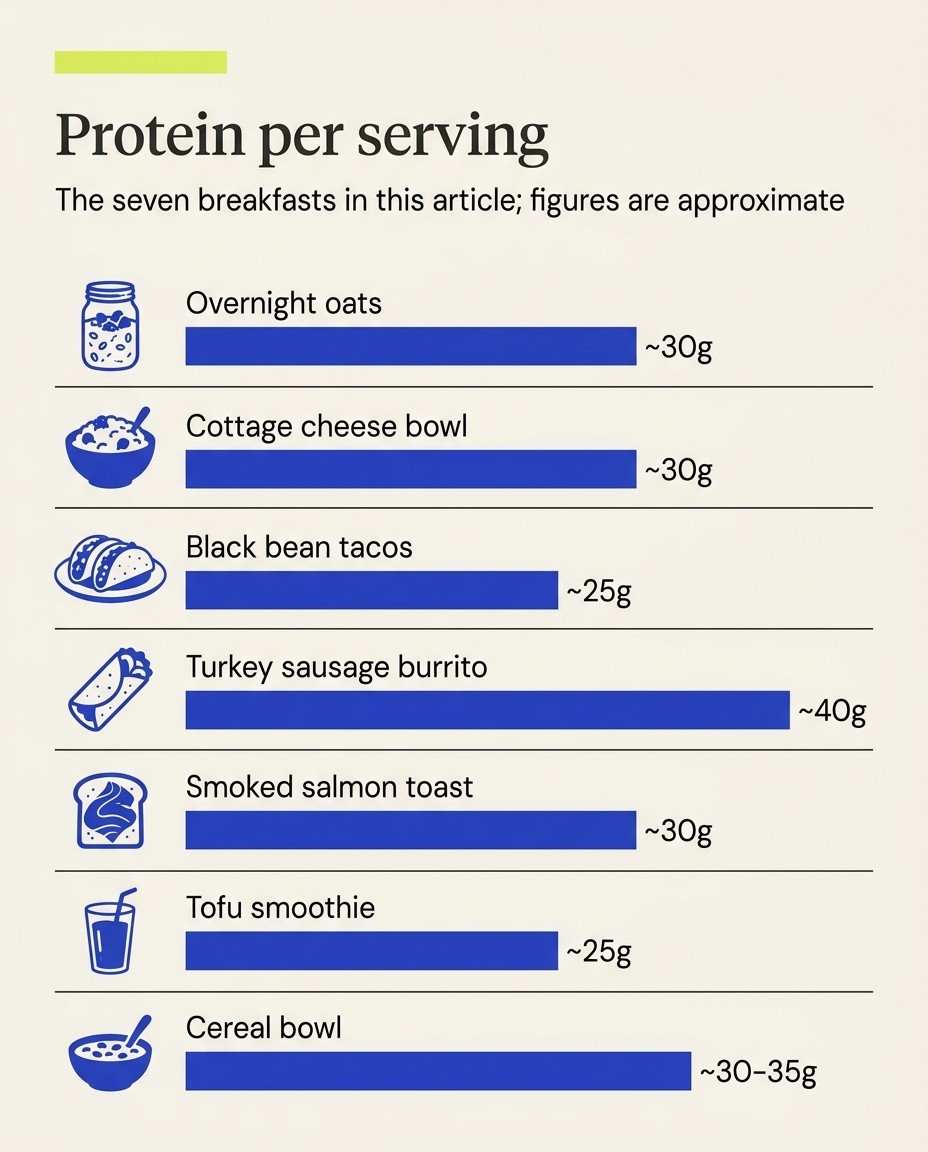
A mix of protein foods can make the target easier to reach. For example, Greek yogurt with oats and peanut butter combines several ingredients in one bowl, while eggs with beans add protein to a savory meal.
How can protein needs differ from person to person?
Your body size, age, activity level, health needs, and total food intake all affect how much protein makes sense across the day. Pregnancy, recovery from illness, and some medical conditions can also change individual needs.
As a baseline, the Recommended Dietary Allowance for adults is 0.8 grams of protein per kilogram of body weight, or about 0.36 grams per pound. For someone who weighs 180 pounds, that’s roughly 65 grams a day. The RDA is a minimum to avoid deficiency, not a target, and many adults, including people who are losing weight, may benefit from more (see the National Academies’ DRI report).
If you have a health condition or a prescribed nutrition plan, ask your doctor or a registered dietitian how to apply general breakfast ranges to your situation. If you take a GLP-1 medication and your appetite is smaller, a compact option such as the cottage cheese bowl or the tofu smoothie may feel easier to manage, and you can make a half portion of any recipe here.
How should protein estimates be checked?
Use the nutrition facts labels on your specific ingredients and add the protein amounts for the portions in your recipe. Yogurt, bread, cereal, and plant-based substitutes can vary considerably by brand.
The estimates in this article are based on typical values from USDA FoodData Central. For homemade portions, measure the ingredients you use and divide the total protein by the number of servings. Treat recipe estimates as approximate when ingredients are swapped or serving sizes change.
Frequently asked questions
How can I get 30 grams of protein at breakfast?
Combine a protein-rich main ingredient with one or two supporting foods, such as Greek yogurt with oats and peanut butter or eggs with black beans and cheese. Adjust the portions until your serving reaches your preferred target.
Are high-protein breakfasts helpful for weight management?
They can be. A protein-forward breakfast may help with satiety through the morning, and some people find it takes the edge off mid-morning cravings. It isn’t a weight-loss tool on its own, though. Your overall eating pattern, the calories across your whole day, and what you actually enjoy eating matter more than any single meal.
How many calories should a high-protein breakfast have?
There’s no single right number. It depends on your size, activity level and what the rest of your day looks like. If you’re tracking calories, pick the recipe that fits your plan, or scale portions up or down and recalculate.
What if I have a small appetite, including on a GLP-1 medication?
Choose a compact option with protein in a smaller volume, such as the cottage cheese bowl, the tofu smoothie or a half portion of the overnight oats. If eating feels difficult or you have nutrition concerns while taking medication, discuss them with your doctor or a registered dietitian.
Can I prepare these breakfasts ahead?
Overnight oats and burrito filling are useful make-ahead choices, and you can portion cereal toppings or wash berries in advance. Refrigerate perishable ingredients promptly at 40°F or below, and keep crunchy toppings separate until serving.
Can I freeze breakfast burritos?
Yes. Let the burritos cool, wrap each one tightly in foil or plastic wrap, and freeze for up to 2 months for the best texture. Reheat until hot all the way through (165°F), about 2 to 3 minutes in the microwave, turning halfway.
What are easy high-protein breakfasts to eat on the go?
A sealed overnight-oats jar, a wrapped egg-and-bean burrito, or a smoothie in a lidded cup travels well. Pack cold foods with an ice pack, and don’t leave them unrefrigerated for more than 2 hours (1 hour if it’s above 90°F).
Sources
- Leidy HJ, et al. The role of protein in weight loss and maintenance. The American Journal of Clinical Nutrition. 2015;101(6)–1329S.
- National Academies. Dietary Reference Intakes for Energy, Carbohydrate, Fiber, Fat, Fatty Acids, Cholesterol, Protein, and Amino Acids.
- FoodSafety.gov. Safe minimum internal temperatures.
- FoodSafety.gov. Cold food storage charts.
- FDA. How to understand and use the Nutrition Facts label.
- USDA. FoodData Central.
- CDC. Preventing listeria infection.