

New weight-loss headlines appear almost every week, and it can be hard to tell which ones matter for you. If you’ve read that a spice, a supplement and a morning drink all “work like Ozempic” in the same week, you’re not alone. Some headlines come from large clinical trials. Others come from small or early studies that still need confirmation.
The research most worth your attention comes from large, long-term randomized clinical trials that track how much weight people lose and what happens to their health and weight after treatment changes or ends. Randomized clinical trials are studies where people are assigned by chance to a treatment or a placebo (a dummy treatment), so the results are a fair comparison. Keeping weight off has long been harder than losing it, which is why researchers have spent decades running maintenance trials. Longer follow-up also matters for health markers, as one blood pressure review shows.
This guide explains what GLP-1 medication studies show about results, side effects and regain. It also covers what researchers are learning about nutrition and muscle. Whether you take a GLP-1, are considering one, or never plan to, you’ll see which findings are established and which are still emerging.
Key takeaways

What medication studies reveal about results, risks, and regain
In large clinical trials, GLP-1 drugs such as semaglutide and tirzepatide produced average weight loss of roughly 15% to 21%, along with improvements in blood sugar and, for semaglutide, fewer heart attacks and strokes in people with heart disease. The same research shows common digestive side effects and substantial weight regain for many people after treatment ends.
Semaglutide and tirzepatide: how weight-loss results compare
Semaglutide acts on the GLP-1 hormone receptor. Tirzepatide acts on both GLP-1 and GIP receptors. GIP is another gut hormone involved in blood sugar control and appetite. In the STEP 1 trial, adults without diabetes taking semaglutide 2.4 mg lost an average of about 14.9% of their body weight over 68 weeks, compared with 2.4% on placebo. In SURMOUNT-1, tirzepatide at the highest dose (15 mg) produced about 20.9% average loss over 72 weeks.
Nobody in these trials was taking the medication alone. Participants in STEP 1 and SURMOUNT-1 were also asked to eat about 500 fewer calories a day than they needed and to build up to 150 minutes of physical activity a week. The placebo groups got the same advice, which is why their small average loss is a fair comparison.
| Trial | Medication | Average weight loss | Length |
|---|---|---|---|
| STEP 1 | Semaglutide 2.4 mg | ~14.9% | 68 weeks |
| SURMOUNT-1 | Tirzepatide 15 mg | ~20.9% | 72 weeks |
| SURMOUNT-5 (head-to-head) | Tirzepatide vs. semaglutide | ~20.2% vs. ~13.7% | 72 weeks |
These figures are averages. For someone starting at 220 pounds, a 15% loss is about 33 pounds and a 21% loss is about 46 pounds. Your own response could be larger or smaller.
Ozempic, Wegovy, Mounjaro, and Zepbound: why indications and doses matter
In the US, semaglutide and tirzepatide are each sold under different brand names for different uses. All four of the best-known versions are once-weekly injections, approved either for weight loss or for diabetes depending on the brand. Ozempic (semaglutide) and Mounjaro (tirzepatide) are approved for type 2 diabetes. Wegovy (semaglutide) and Zepbound (tirzepatide) are approved for chronic weight management. Semaglutide also comes as a daily tablet: Rybelsus for type 2 diabetes and, since December 2025, an oral form of Wegovy for weight management.
Wegovy also carries approvals for reducing cardiovascular risk and for a fatty liver condition called MASH with moderate to advanced liver scarring. Zepbound is approved for moderate to severe obstructive sleep apnea in adults with obesity.
The doses also differ. Wegovy’s standard maintenance dose is 2.4 mg weekly, while Ozempic’s top dose is 2 mg. A higher 7.2 mg Wegovy dose has been under regulatory review, so the current label is the place to check. The trials studied specific doses in specific groups, so results from a weight-loss trial don’t automatically apply to a diabetes prescription, and the reverse is also true.
Benefits beyond weight loss: blood sugar and heart health
Both drugs were first developed to lower blood sugar. In SURPASS-2, tirzepatide lowered HbA1c, a blood test that reflects your average blood sugar over the past two to three months, by about 2 to 2.4 percentage points on average in people with type 2 diabetes, depending on dose. This finding is well established.
Heart evidence is strongest for semaglutide. The SELECT trial enrolled about 17,600 adults with overweight or obesity and existing heart disease but no diabetes. Those taking semaglutide had a 20% lower risk of heart attack, stroke or cardiovascular death. For tirzepatide, the SURPASS-CVOT trial in people with type 2 diabetes and heart disease found it performed at least as well as another GLP-1 drug, dulaglutide, on heart outcomes (Nicholls et al., New England Journal of Medicine, 2025). A trial in people without diabetes, SURMOUNT-MMO, is still underway.
Nausea and other side effects: established risks versus emerging signals
Digestive symptoms are the most common side effects. In trials, nausea affected roughly a quarter to nearly half of participants (about 25% to 31% with tirzepatide in SURMOUNT-1 and 44% with semaglutide in STEP 1), often during dose increases. For most people, these symptoms ease within two to four weeks on a stable dose. Other common effects include:
- Diarrhea and constipation
- Vomiting
- Abdominal pain
Less common but established risks listed on the Wegovy and Zepbound labels include pancreatitis, gallbladder problems, and a boxed warning (the FDA’s strongest label warning) about thyroid C-cell tumors seen in rodent studies. It hasn’t been confirmed in people, but these medications aren’t recommended for anyone with a personal or family history of medullary thyroid cancer or a condition called MEN 2. Researchers note in this review that GLP-1 medications carry known risks that became more visible as weight-loss use expanded.
Signals still being studied include a rare eye condition called NAION (non-arteritic anterior ischemic optic neuropathy), where blood flow to the optic nerve drops, causing sudden, usually painless vision loss in one eye. The European Medicines Agency listed it as a very rare side effect of semaglutide in 2025. Check the current US label on DailyMed for whether the FDA has made a similar change. If you notice sudden vision loss in one eye, seek medical care right away.
Stopping treatment: weight regain, affordability, and long-term support
Trial data show regain is common after stopping. One year after the STEP 1 participants stopped semaglutide, they had regained about two-thirds of the weight they had lost, according to the STEP 1 extension. In SURMOUNT-4, people switched from tirzepatide to placebo regained about 14% of their body weight, while those who continued lost an additional 5.5%. Improvements in blood pressure and blood sugar also tended to fade.
Habits may affect what happens after treatment. A Danish study found that combining supervised exercise with a GLP-1 medication helped people keep more weight off a year after treatment ended, compared with medication alone. Research also suggests the habits linked to keeping weight off differ from those that help you lose it, according to this study. Cost and insurance coverage also affect how long people stay on treatment, so talk with your doctor about a long-term plan before you start. Prices and coverage change often, so check your plan’s current rules first rather than after.
Nutrition, muscle preservation, and the next research frontiers
Researchers now look beyond how much weight you lose to what you lose, with protein, strength training and fiber getting close attention. Newer oral drugs and combinations show promise, but trial length, dropout rates and real-world results determine how much those findings mean for you.
Protein intake and resistance training: protecting muscle during weight loss
When you lose weight, some of that loss is lean mass (everything that isn’t fat, including muscle, organs, bone and water). In a body-composition substudy of the STEP 1 trial of semaglutide, lean mass made up roughly a third or more of total weight lost. A 2026 review describes nutrition, exercise and monitoring as ways to address this.
The two strategies with the strongest support are:
- Adequate protein intake: Reviews often discuss targets above the standard 0.8 grams per kilogram of body weight per day (about 0.36 grams per pound). A practical starting point many dietitians use is about 25 to 30 grams of protein per meal, spread across the day.
- Resistance training: A 2025 joint advisory on nutrition during GLP-1 therapy, from the American College of Lifestyle Medicine, the American Society for Nutrition, the Obesity Medicine Association and The Obesity Society, recommends pairing adequate protein with strength training to help preserve muscle. Keeping muscle matters because losing it while carrying higher body fat can lead to sarcopenic obesity (low muscle mass and strength alongside higher body fat).
You don’t need a gym membership to start. The CDC recommends at least 150 minutes of moderate physical activity a week for adults, plus muscle-strengthening activity on two or more days. Bodyweight squats, wall push-ups and resistance bands all count.

Your ideal protein amount depends on your kidney health and other conditions, so confirm it with your doctor.
Fiber and natural GLP-1 release: why food is not a medication substitute
Your gut makes its own GLP-1. When gut bacteria ferment certain fibers, they produce short-chain fatty acids, compounds your gut bacteria make when they digest fiber, which can prompt intestinal cells to release GLP-1. This is why fiber-rich foods like beans, oats and vegetables are sometimes marketed as “natural GLP-1” options.
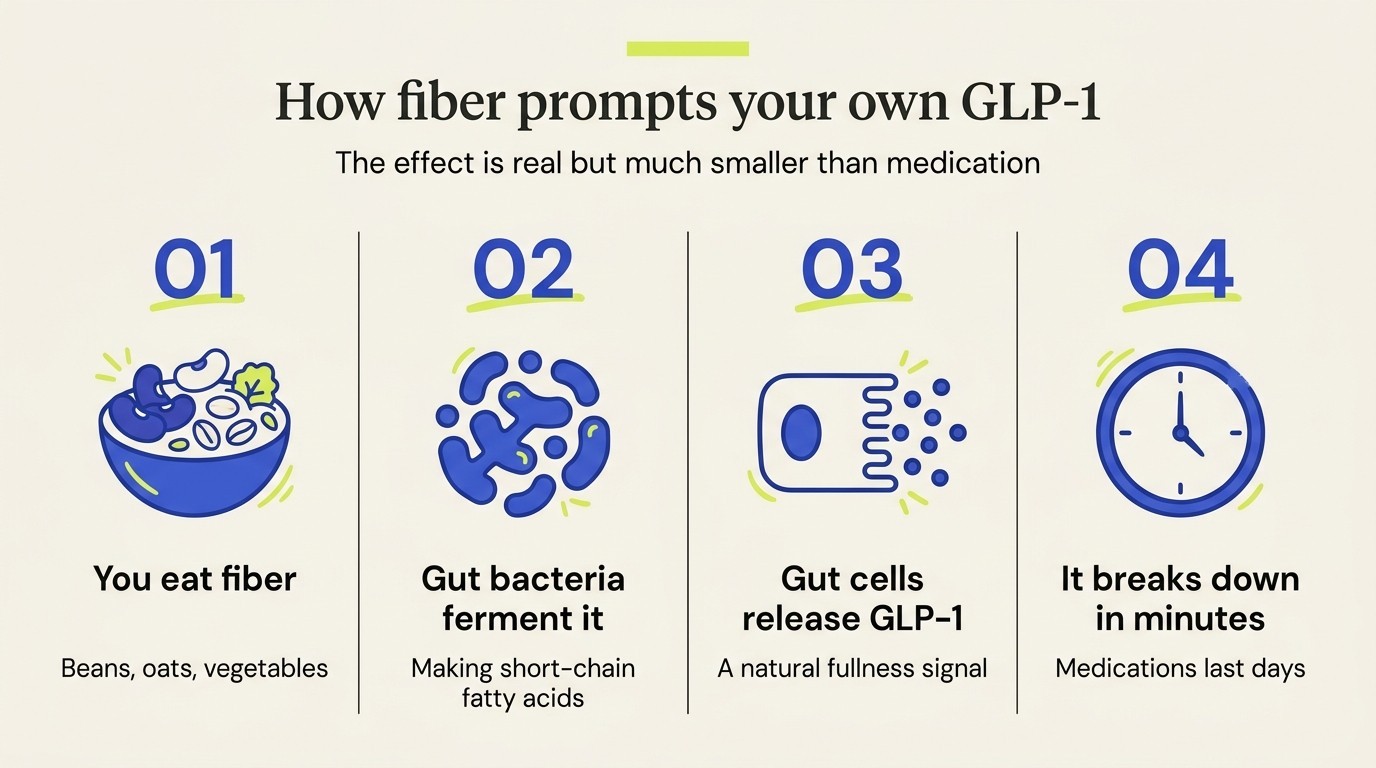
The effect is real but small. Natural GLP-1 breaks down within minutes, while GLP-1 drugs are designed to last days. Fiber supports fullness and digestion, which can make it easier to eat fewer calories without feeling deprived, but it does not produce the weight loss seen in clinical trials of medication. No food or supplement has shown weight loss close to the medications in clinical trials. Researchers are studying precision nutrition alongside GLP-1 therapy, which is still emerging evidence.
The same caution applies to other trending claims. Social media is full of drinks and routines that promise to “lower cortisol” or “balance hormones” for weight loss, but they haven’t been tested in the kind of large trials that back the medications.
Oral treatments and new drug combinations: what trials must still establish
Pill forms of GLP-1 treatment, such as oral semaglutide and orforglipron, and newer drugs that act on more than one hormone, such as tirzepatide and the investigational retatrutide and CagriSema, are expanding the options. For people who’d rather not use weight-loss injections, pills are the most watched development. The open question is whether they can match the results of the weekly shots over years, not just months. Key open questions include:
| Question | Why it matters |
|---|---|
| Long-term lean mass effects | A 2026 review notes long-term effects on lean-mass preservation for tirzepatide remain unclear |
| Durability after stopping | Weight regain is common when treatment ends |
| Effects in specific groups | Older adults and people with heart or kidney disease need separate data |
Researchers also flag muscle health in cardiovascular-kidney-metabolic syndrome (the overlap of heart disease, kidney disease, type 2 diabetes and excess weight) as an area needing more study.
Reading research clearly: study duration, dropouts, and real-world outcomes
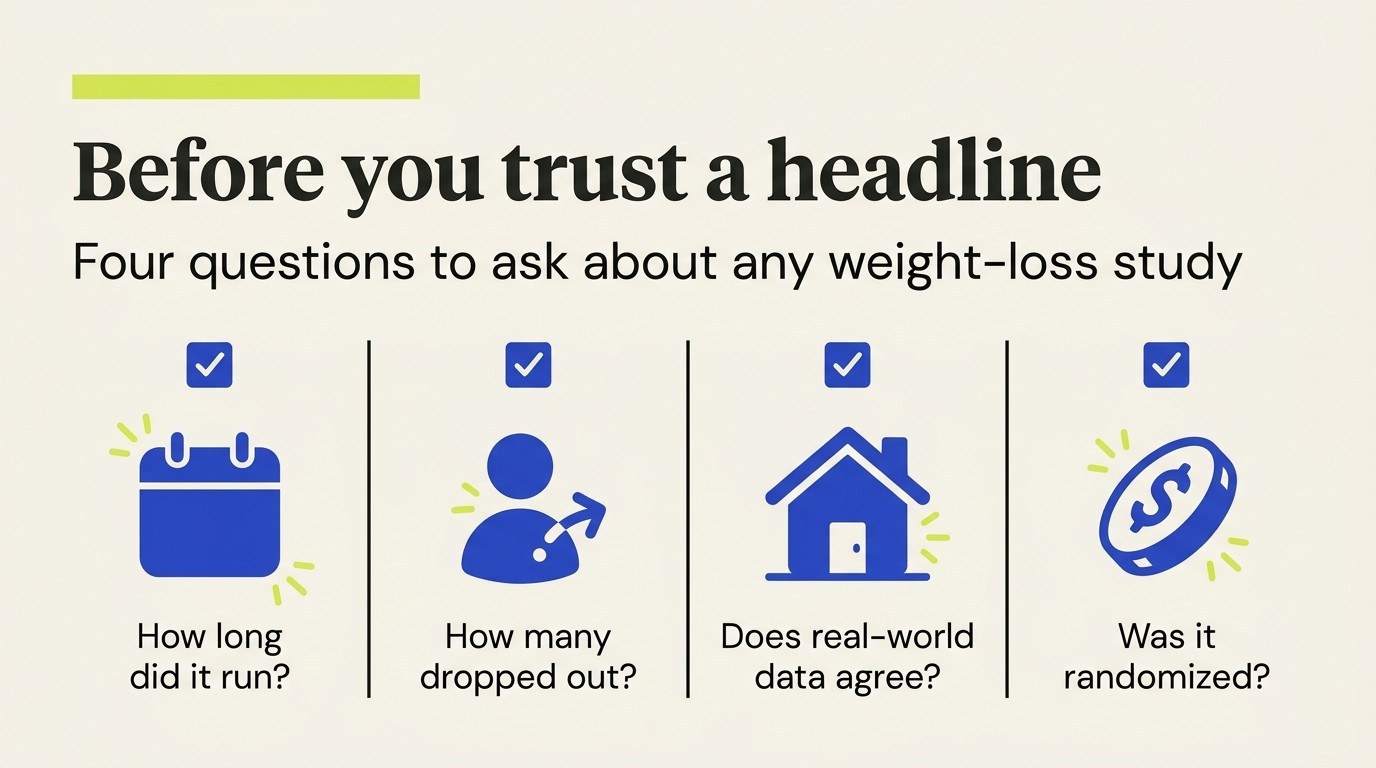
Headline numbers come from controlled trials, and conditions there differ from daily life. When you read a study, check:
- Duration: Many obesity trials last about 68 to 72 weeks. That is shorter than lifelong use.
- Dropouts: If many participants quit due to side effects, results may look better than typical experience.
- Real-world data: Observational studies, which follow people in everyday care rather than assigning treatments, often show smaller average weight loss, partly because people stop treatment or miss doses. A Cleveland Clinic analysis of people using these drugs in routine care (Gasoyan et al., Obesity, 2025) is one example.
Also check whether a finding comes from a randomized trial or a review of earlier work.
These trial results apply to FDA-approved products. Compounded versions of semaglutide and tirzepatide aren’t FDA-approved and weren’t tested in these trials, so the same results can’t be assumed. Their quality and dose can also vary. See the FDA guidance for more.
Turning findings into a personalized plan with your healthcare team
Research gives averages, while your plan needs to fit you. Whether or not you take medication, bring specific questions to appointments: How much protein should you eat? Should you have a body-composition scan, such as a DEXA scan, which measures how much of your weight is fat, muscle and bone? Which exercises suit your joints and fitness level?

A registered dietitian can help with meal planning. Some researchers are exploring companion foods that support muscle and nutrition, though these are early-stage ideas. Any decisions about starting, stopping or adjusting medication belong with your prescriber.

When to call your doctor
If you take a GLP-1 medication, call your doctor promptly if you have:
- Severe stomach pain that doesn’t go away, with or without vomiting. It can spread to your back and may be a sign of pancreatitis.
- Pain in the upper right side of your belly, fever, or yellowing of your skin or eyes, which can point to a gallbladder problem.
- Vomiting or diarrhea that keeps you from holding fluids down, or signs of dehydration such as dizziness, very dark urine or peeing much less than usual.
- A lump or swelling in your neck, trouble swallowing, or a hoarse voice that doesn’t go away.
- Sudden vision loss or blurring in one eye.
- Shakiness, sweating or confusion if you also take insulin or a sulfonylurea, which can mean low blood sugar.

When to call 911 or go to the ER
Call 911 or go to the ER for signs of a severe allergic reaction, such as swelling of your face, lips or throat or trouble breathing, or for severe abdominal pain with fainting.
Frequently asked questions
Which weight-loss treatments work best, according to research?
Among medications, semaglutide and tirzepatide produce the largest average weight loss in trials so far (see the trial figures above). Bariatric surgery still produces the largest and most lasting losses for many people.
Lifestyle programs remain the foundation of care. Their results are more modest, and people commonly regain weight after behavioral treatment ends, as this review describes. Researchers also point out that weight loss is not the only target for heart health, since exercise improves cardiovascular fitness on its own.
How do I find a legitimate weight-loss clinical trial?
Start with ClinicalTrials.gov, the federal registry run by the National Library of Medicine. You can filter by condition, location, and recruitment status. ResearchMatch, an NIH-funded registry, can also connect you with studies.
A legitimate trial lists its sponsor, has ethics board approval, and gives you a written informed consent form. It should never ask you to pay to join. Some trials offer compensation for your time or travel, but you can leave at any point.
Are GLP-1 medications safe long term?
The most common side effects are nausea, vomiting, diarrhea, and constipation, which usually ease on a stable dose (see “Nausea and other side effects” above). FDA labeling also lists risks such as pancreatitis, gallbladder problems, and a boxed warning about thyroid C-cell tumors seen in rodent studies.
Some long-term data is encouraging, including the roughly 20% lower cardiovascular risk seen with semaglutide in the SELECT trial. Evidence beyond five or so years is still emerging, so your doctor is the best person to weigh risks for you.
What happens when you stop a GLP-1?
Weight tends to come back, as the STEP 1 extension and SURMOUNT-4 both showed (see “Stopping treatment” above). That’s worth discussing with your care team before any change.
What weight-loss medications are there besides GLP-1s?
Several FDA-approved options have years of data behind them, according to NIDDK:
- Phentermine-topiramate: about 8% to 10% average weight loss at one year in trials, and it must not be taken during pregnancy because of a risk of birth defects
- Naltrexone-bupropion: about 5% to 6% average weight loss, and it carries a boxed warning about suicidal thoughts and behaviors, especially in younger people
- Orlistat: about 3% beyond diet alone, with digestive side effects
- Setmelanotide: approved only for certain rare genetic conditions
Phentermine on its own is approved only for short-term use, typically a few weeks.
Dietary supplements are a different story. Evidence for most is weak or inconsistent across studies, and the NIH fact sheet on weight-loss supplements reaches a similar conclusion.
Which weight-loss medications are most affordable?
Generic phentermine is widely available and is often the lowest-cost prescription option. Orlistat is sold over the counter at a lower dose under the name Alli. Coverage for newer drugs varies widely by employer and state plan.
Medicare Part D has long excluded drugs used only for weight loss, although it can cover Wegovy to lower cardiovascular risk and Zepbound for obstructive sleep apnea. Pricing and coverage agreements announced in late 2025, including proposed Medicare coverage for obesity drugs, may change this, so check Medicare.gov for the current rules. Ask your insurer about prior authorization (your insurer’s approval before it will cover a drug), and check manufacturer savings programs.
Do “natural GLP-1” foods or supplements work like the medications?
Not in the same way. Fiber-rich foods can nudge your body’s own GLP-1 release, which may help with fullness, but the effect is much smaller than medication (see “Fiber and natural GLP-1 release” above).
Do compounded GLP-1s have the same research behind them?
No. The trials in this article tested FDA-approved products, and compounded versions aren’t FDA-approved (see “Reading research clearly” above).