

When you start a weight loss medication, you’ll probably notice physical changes before anything else. Your jeans might feel looser, your energy shifts, and suddenly, people start to comment. But honestly, what’s going on in your head can be just as big — and it’s not always what you might expect.

Research shows weight loss can help with depression and quality of life, but it doesn’t magically fix everything.
The psychological effects of weight loss go beyond just feeling lighter. For people on Zepbound or Wegovy, the first few months can feel like a rollercoaster as your appetite shifts, your energy changes, and your body starts to look different in the mirror.
Let’s dig into the emotional effects of weight loss — not just the glossy stuff you see on Instagram. Whether you’re on Zepbound, Wegovy, or another weight loss medication, you’ll see what research says about mood changes, what people actually experience, and how you can look after your mental health while your body is changing.
Key takeaways

The relationship between weight loss and mental health
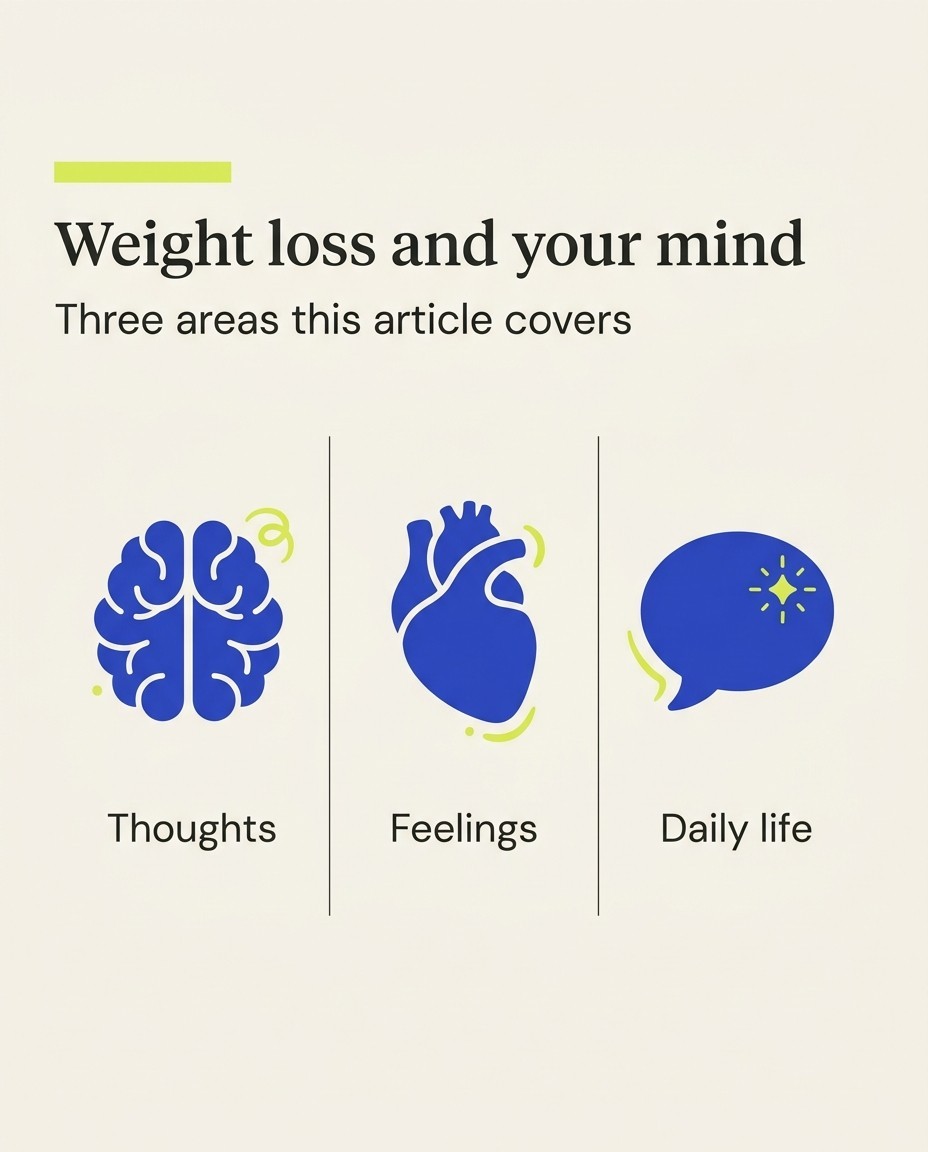
Weight loss changes more than your body. It shifts how you think, how you feel, and how you handle daily life in ways you might not see coming.
Understanding the psychological benefits of weight loss
Losing weight, especially through a structured programme, can make everyday life feel easier. Research points out that physical composite quality of life scores improved significantly at three and six months during weight loss programmes, with physical health showing the biggest jump.
It’s not just about moving more easily. Many people say they feel more able to tackle daily tasks. Climbing stairs, carrying groceries, or playing with kids suddenly doesn’t feel like such a chore.
That physical boost can lift your mood in a real way. When your body works with you, not against you, it changes how you approach the day.
But the link between weight loss and overall mental wellbeing isn’t so clear-cut. Studies looking at depression, anxiety, and mood found no consistent relationship between the amount of weight lost and improvements in mental health.
Potential negative impacts of weight loss on mood
Not everyone feels mentally better when they lose weight. Weight loss medication side effects like nausea, fatigue, and reduced appetite can affect your mood in ways that go beyond the physical discomfort. Some people find the whole process emotionally tough.
If you start a weight loss programme with higher depression symptoms, you’re likely to lose less weight over time. When you’re already feeling low, adding the stress of managing food, appointments, and side effects can feel like too much.
Sleep struggles make things worse. People who take longer to fall asleep at the start of a programme see less improvement in physical function during weight loss.
Anger and stress can get in the way too. They don’t just make things harder — they actually interfere with the progress you’re trying to make.
Researchers have debated for years whether weight loss or weight cycling is psychologically risky. There’s no simple answer.
Some folks find the restrictions manageable. Others end up with old patterns resurfacing or new ones developing, changing how they relate to food and their bodies.

Get immediate help if you or someone you know experiences:
- Thoughts of self-harm or suicide
- Feeling unable to cope or keep yourself safe
- A mental health crisis that feels overwhelming
Call 999 in an emergency. Contact the Samaritans free on 116 123 (24 hours a day) or text SHOUT to 85258 for the crisis text line. You can also contact your GP surgery for an urgent same-day appointment.
Obesity and its effects on mental health
Living with obesity affects mental health, even if you’re not trying to lose weight. It’s a two-way street.
Studies looking at the relationship between obesity and mental health show that your weight history — including past attempts to lose weight — can really shape your psychological wellbeing. These effects play out differently for men and women.
The emotional and social weight of obesity can be just as heavy as the physical side. Stigma, discrimination, and internalised shame create a steady background stress.
If you carry extra weight, you’re more likely to feel depressed or distressed. Treating obesity, though, doesn’t automatically fix those mental health issues.
Studies on mental health and weight loss show that impulsivity, depression, stress, and anxiety can all mess with your results. These things often work through eating disorder patterns, not just straightforward cause and effect.
It’s complicated. That’s why two people can follow the same plan and have totally different emotional journeys.
Emotional wellbeing and body image
Losing weight changes how you see yourself, and those changes ripple through your mental health in unexpected ways. The link between losing weight and feeling better about your body isn’t simple — it mixes self-esteem, social pressure, and personal feelings about looks.
Self-esteem and confidence changes
Losing weight usually boosts self-esteem, but not for everyone. Research shows improvements in body dissatisfaction and mood during weight loss can actually predict long-term success, not just the other way around.
When you hit a healthier weight, confidence often grows. You might do things you used to avoid. Social events feel less stressful. Shopping for clothes gets easier.
Still, self-esteem doesn’t always match the number on the scale. Some people feel amazing after losing a stone, while others still fight negative self-talk even after big changes. The connection between body image and psychological wellbeing really depends on the person.
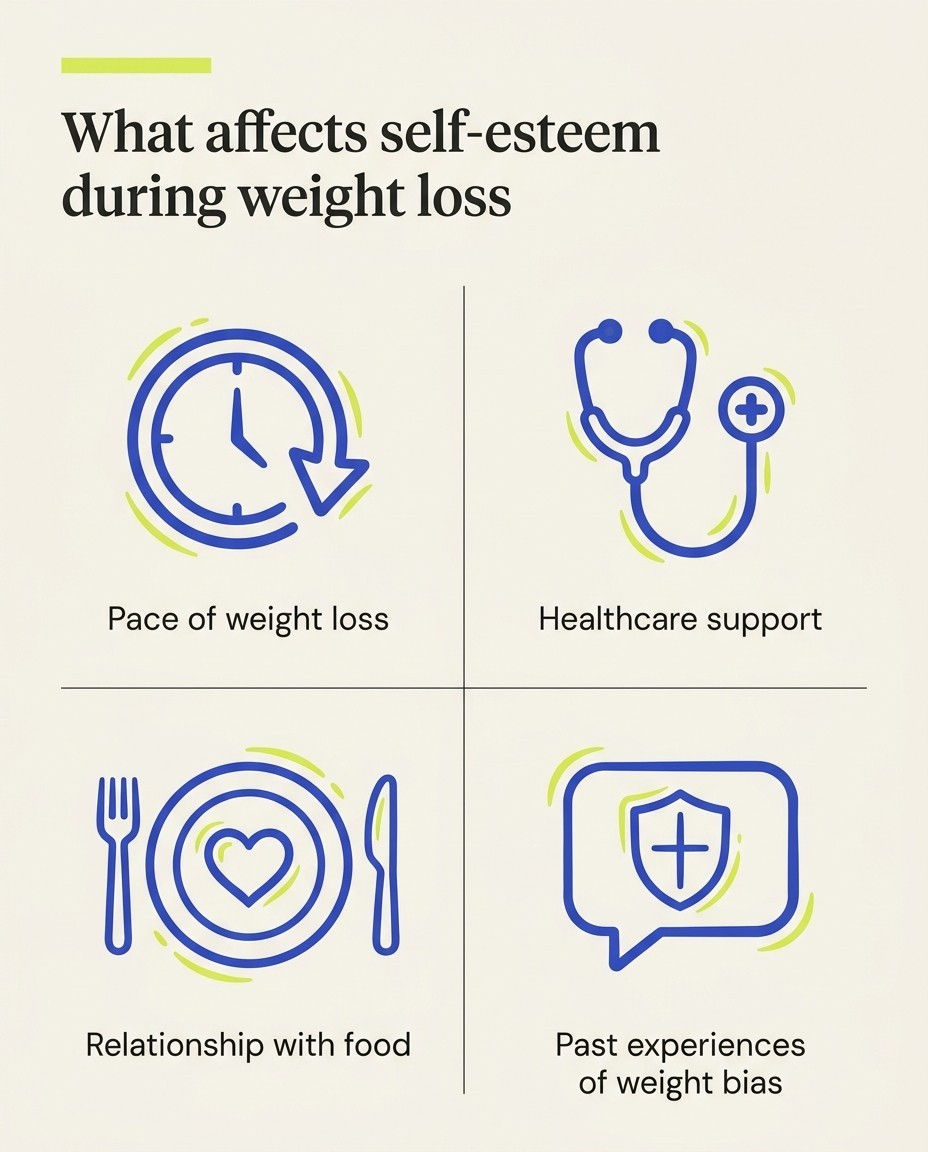
What affects self-esteem during weight loss:
-
How quickly you’re losing weight
-
Support from healthcare providers
-
Your relationship with food before starting
-
Past experiences with weight bias or discrimination
The medication handles the biology, but building real confidence means working through the thoughts you’ve had about your body for years.
The role of body image in mental health
Body image sits right at the centre of mental wellbeing when you’re losing weight. It’s not just about looking different. It’s about the stories you tell yourself about your body.
How you feel about your body sometimes matters more than the actual physical changes. You could lose 2 stone and still feel uncomfortable if your body image issues don’t shift.
Weight loss meds change your body fast. Your brain takes its sweet time to catch up. You might still reach for bigger sizes in shops or get surprised when you fit into a smaller chair.
Body dissatisfaction doesn’t just vanish with weight loss. For some, it actually gets trickier. Loose skin, new proportions, or realising thinness didn’t solve every problem can bring fresh mental health challenges.

Common body image experiences on treatment — these are normal:
- Feeling disconnected from your new reflection
- Worrying about regaining weight
- Feeling relief mixed with grief about your old self
- Getting unexpected emotions when people comment on your body
These reactions are a normal part of adjusting to significant body changes. If they persist or feel overwhelming, talk to your GP or a therapist.
Mental wellbeing improves most when you work on body image alongside the physical changes, not just hope it’ll sort itself out.
Social and peer influences on weight loss experience
People around you shape your weight loss journey more than you’d think. Social reactions to your changing body can have a real impact on your mental health.
Weight bias shows up even among friends and family. People might make comments they think are nice, but they land weird. Family members might suddenly care what you eat. Colleagues might treat you differently.
Research on obesity stigmatisation and mental health says that past experiences of weight bias can shape how you handle weight loss mentally. If you’ve faced discrimination before, losing weight can bring up old feelings.
Peer support helps a lot. Talking to others on the same meds makes you feel less alone with all the weird side effects and emotional swings. That’s why online communities are packed with people on weight loss treatment.
Social factors that impact mental wellbeing:
-
How your partner or family reacts to your body changes
-
Whether friends support your new eating habits
-
How professionals treat your body at your new weight
-
Connections with others on similar journeys online
The social side of weight loss isn’t just background noise. It really affects whether you keep the weight off and feel good mentally. Finding your people — whether that’s an online group or a supportive GP — makes the mental side of treatment a lot easier.
Challenges and risks during weight loss journeys
Losing weight can stir up mental health challenges that catch people off guard. Restrictive eating, rapid weight loss, and the constant pressure can create conditions for disordered eating to sneak in or get worse.
Eating disorders and disordered eating behaviours
The line between “being good” on your plan and disordered eating can blur fast. When you’re tracking every bite and celebrating eating less, you’re walking a tightrope.
Research shows that weight loss programmes may worsen pre-existing psychiatric problems in some people. This is especially true if you’ve ever struggled with eating disorders like bulimia or binge eating disorder — a condition where you regularly eat large amounts of food in a short time and feel unable to stop.
Disordered eating isn’t always a full-blown diagnosis. It might look like:
-
Panicking if you can’t weigh or track food
-
Labelling foods as “good” or “bad” and feeling guilty
-
Avoiding social events because you can’t control the menu
-
Thinking about food constantly, even when you’re not hungry
The tricky part? Sometimes your GP or online provider praises these habits as “dedication.” But if tracking is making you miserable or cutting you off from life, it’s time to take a closer look.
Studies on social difficulties while dieting show that tension in your relationships or skipping plans for your diet can push you toward more extreme behaviours. If your plan is making life smaller, something needs to change.
If you’re worried about developing an eating disorder, BEAT (the UK’s eating disorder charity) has a helpline and online support that can help.

Talk to your GP or prescriber if you notice:
- Persistent low mood lasting more than two weeks
- Anxiety that’s getting worse rather than better
- Obsessive thoughts about food, weight, or your body that interfere with daily life
- Signs of disordered eating — skipping meals deliberately, bingeing, purging, or using laxatives
- Feeling emotionally numb or disconnected from your life
Your prescriber needs to know about mood changes. They can adjust your treatment, refer you for talking therapy, or help you access other support.
Rapid weight loss and its consequences
Losing weight quickly can feel great at first, but it comes with real downsides. If you drop more than 0.5 to 1kg per week for a while, you risk both physical and mental health issues.
You don’t just lose fat with rapid weight loss. You lose muscle too, which slows your metabolism and makes maintenance harder later. What happens in your head might be even more worrying.
Rapid weight loss can trigger:
-
Mood swings and irritability from low blood sugar or missing nutrients
-
Anxiety about gaining it all back
-
Obsessive thoughts about food and your body
-
Fatigue that makes daily life feel like a slog
There’s evidence that losing weight fast can even lead to binge eating disorder, even if you’ve never had it before. When your body thinks it’s starving, it fights back with wild hunger and cravings.
The mental fog from extreme calorie restriction is more than annoying. It can mess with your work, your relationships, and your ability to make good choices. If you can’t focus or feel emotionally flat, your pace might be too harsh for your system.
The cycle of restrictive eating and binge eating
Here’s what most people don’t warn you about: the stricter you get, the more likely you are to binge. It’s not about willpower. It’s just how our brains and bodies work.
Restrictive eating creates both physical deprivation (your body needs more energy) and psychological deprivation (you feel punished or resentful). Both make overeating more likely, not less.
Studies on weight management challenges show this pattern creates tension that’s tough to keep up long-term. You might stick to the rules for a while, then suddenly eat a whole packet of biscuits at the kitchen counter.
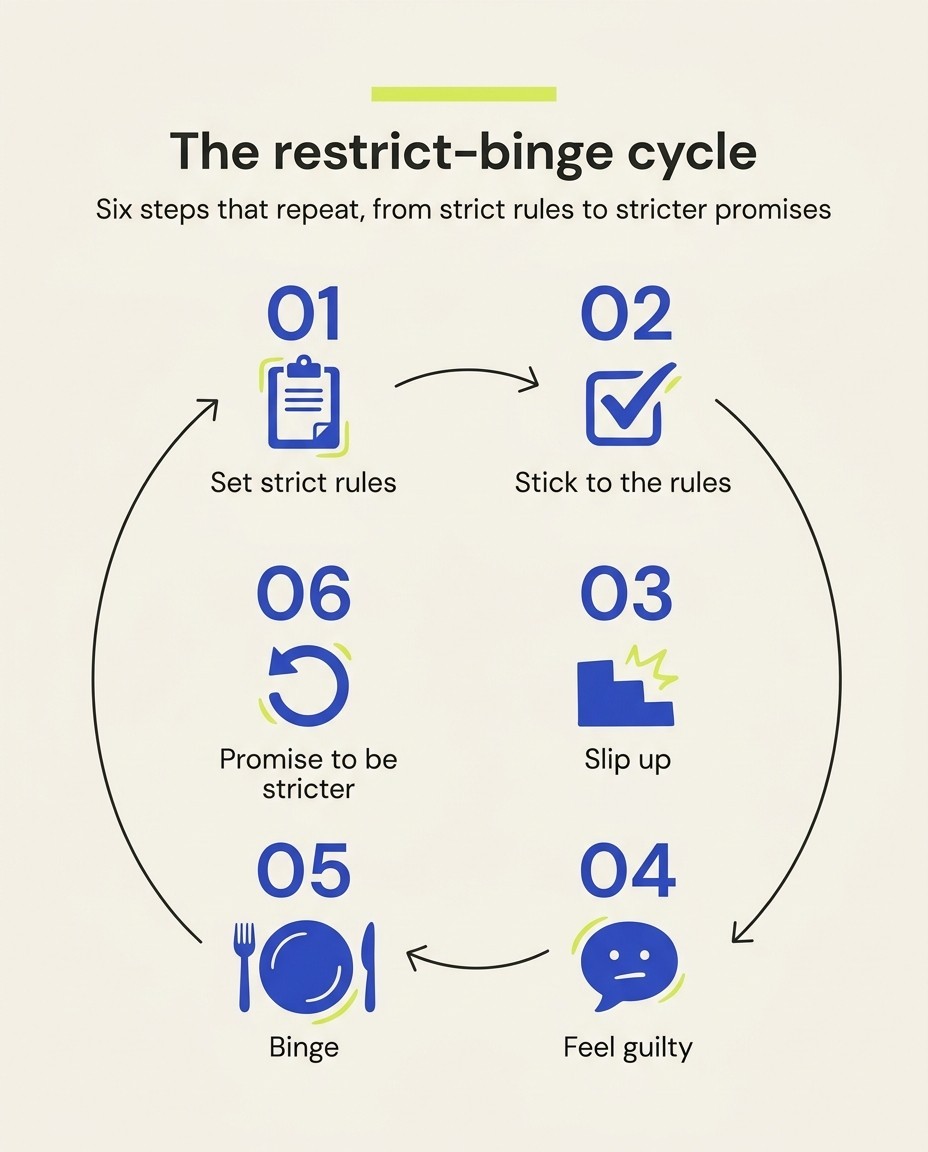
The restrict-binge cycle usually goes like this:
-
Set strict food rules (“no carbs after 2pm,” “nothing white”)
-
Stick to rules for a bit
-
Slip up, even a little
-
Feel guilty and think “what the hell”
-
Binge because “the day’s ruined anyway”
-
Promise to be even stricter tomorrow
This cycle hits people with obesity and depression especially hard. The shame after a binge can make depression worse, which then makes balanced eating even trickier.
Breaking the cycle usually means easing up, not doubling down. Letting yourself have foods you actually like, in reasonable amounts, tends to cut down on binges over time. It feels backwards, but often the restriction is the real problem — not you.
Strategies for healthy weight management and mental wellbeing
Managing your weight isn’t just about your body — it’s about your mind too. Honestly, getting the right support, building habits you can actually keep up with, and making sleep and stress management a priority are all part of what makes treatment stick for the long haul.
Building sustainable habits: nutrition and activity
Eating well during treatment with Zepbound, Wegovy, or other GLP-1 medications isn’t always what people expect. When your appetite takes a nosedive, the real struggle isn’t about resisting food. It’s about getting enough of what your body really needs.
Protein steps up as a total game-changer here. Aim for about 1.0 to 1.2g per kg of your body weight each day to keep your muscles protected while losing weight. So, if you’re around 70kg, that’s roughly 70 to 85g of protein.
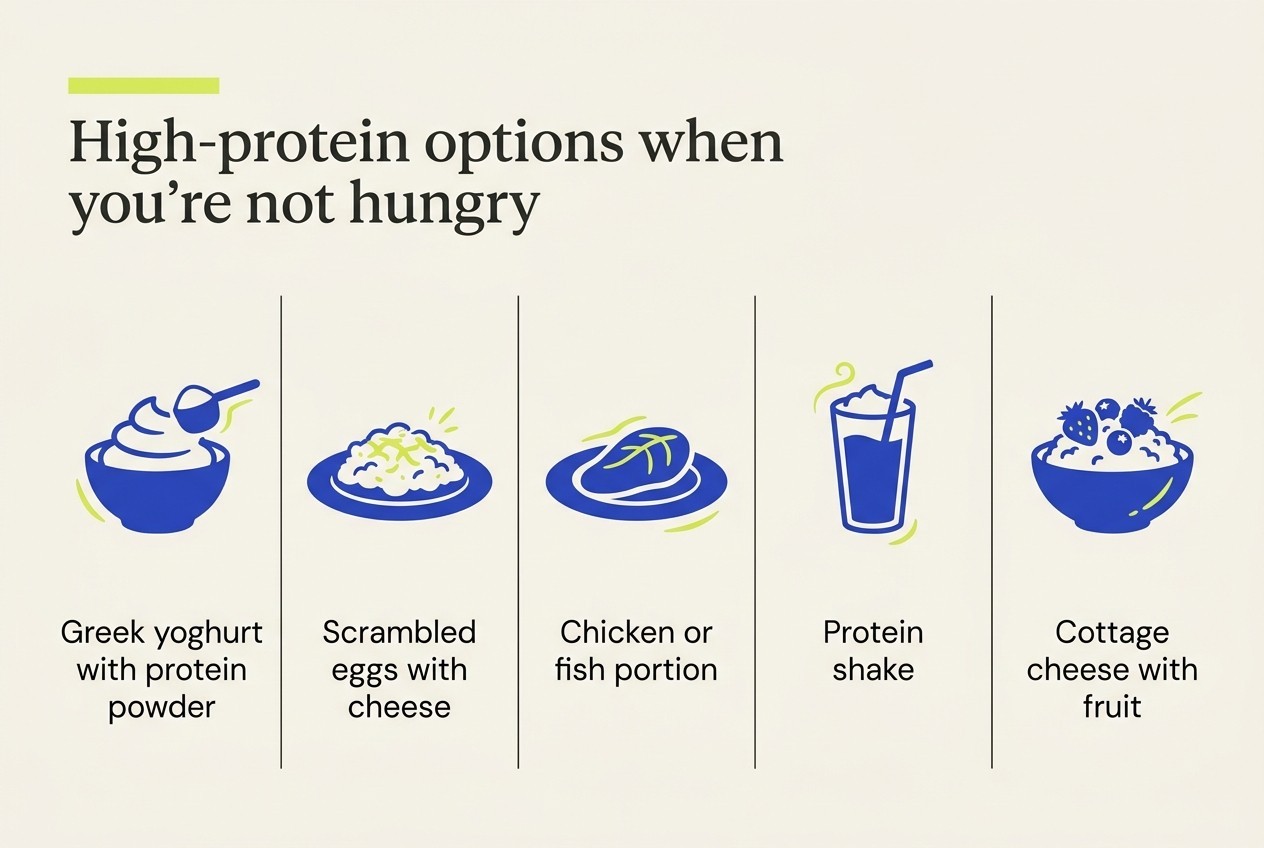
Practical protein sources when you’re not hungry:

Staying hydrated matters too — aim for at least 2 litres of water daily. When you’re eating less, it’s easy to forget to drink enough, but dehydration can worsen fatigue, headaches, and low mood. The NHS Eatwell Guide recommends 6–8 glasses of fluid daily as a baseline.
Physical activity matters, but not in the way diet culture tried to convince us. We’re not here to “burn off” calories. Instead, we’re keeping muscle, supporting bone strength, and looking after our mental health.
Research shows that regular physical activity can reduce symptoms of depression and anxiety.
Try strength training twice a week. Even just 20 minutes with resistance bands at home counts. Walking is fantastic for both your body and your mind, especially if you can get outside for a bit.
The importance of mental health support
Treatment helps with the physical side of things, but it doesn’t magically fix emotional eating or get to the root of why we turned to food in the first place. That stuff really needs proper mental health support along with any medication.
Some of us have leaned on food to deal with stress, boredom, or tough emotions for years. When treatment with Zepbound or Wegovy takes away your appetite, those old coping habits suddenly vanish. You’re left facing feelings you might have avoided, and sometimes you don’t have new ways to handle them yet.
Seeking professional support and talking therapies
Start with a good GP — they’ll know where to send you. They can refer you to NHS Talking Therapies (the free NHS service for anxiety and depression, previously called IAPT) or help you find local support. Waiting lists can drag on, but it’s worth getting your name down.
Cognitive behavioural therapy (CBT) works well for tackling tricky thought patterns around food and body image. It gives you practical ways to challenge those unhelpful thoughts and respond differently.
Working with a registered dietitian can be a game-changer too. Not the kind who hands you a strict meal plan, but someone who understands how tough eating can be on GLP-1 medications (like Zepbound and Wegovy) that reduce appetite. They’ll help you get the nutrition you need, even when eating feels like a chore.
What to look for in professional support:
If NHS waits are way too long, private options exist. Lots of therapists offer sliding scale fees. Some workplaces even have employee assistance programmes with free counselling sessions.
Managing stress and improving sleep quality
If you’re taking Zepbound or Wegovy, sleep disruption can be an early side effect that settles as your body adjusts. But even once the medication side effects ease off, stress and poor sleep can throw a wrench into weight management.
When stress hits, your body cranks out cortisol — a stress hormone that nudges you to store fat around your middle and crave sugary or fatty food.
Sleep quality matters way more than most of us want to admit. Research shows that people who get less than six hours a night usually have higher BMIs and a greater risk of obesity.
Bad sleep messes with your hunger hormones and, honestly, just makes life feel tougher.
Practical ways to improve sleep on treatment:
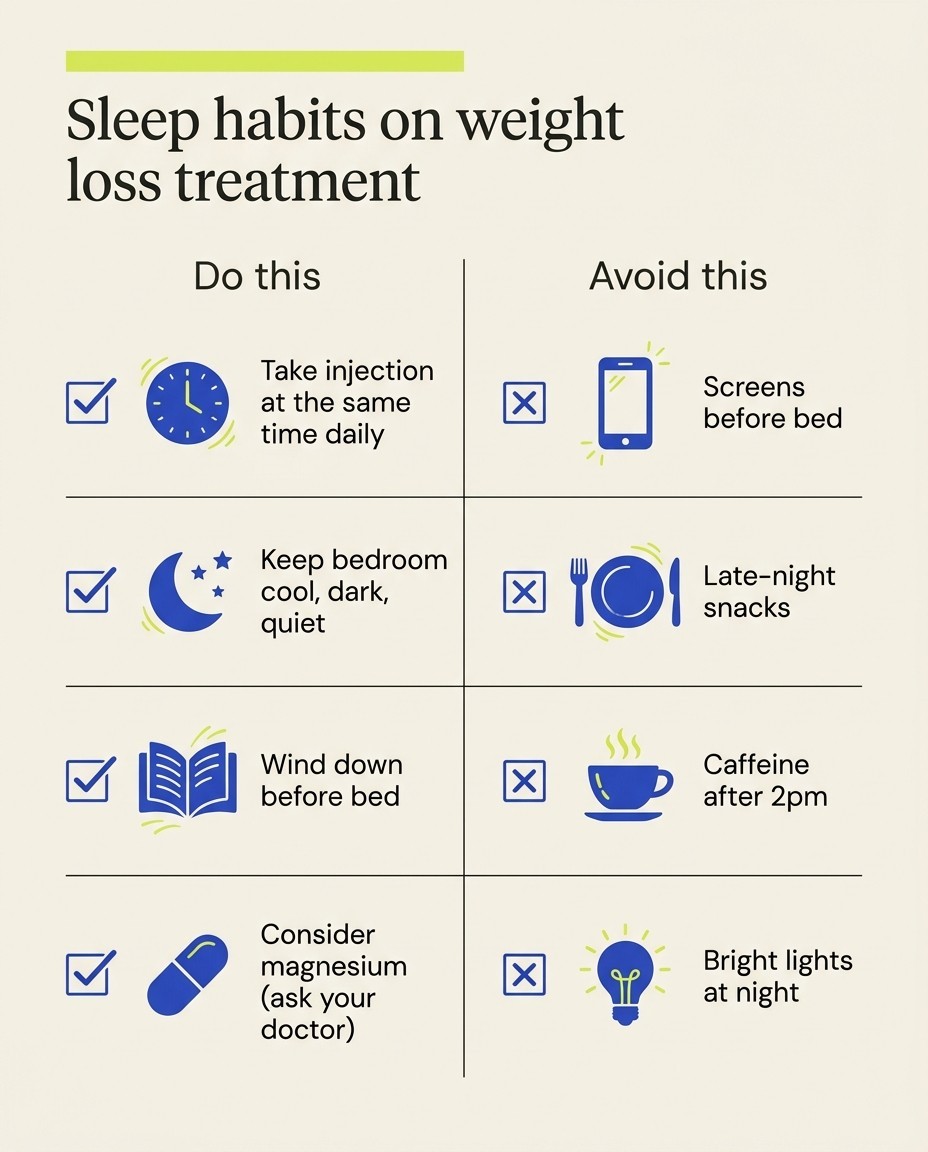
Managing stress isn’t just about bubble baths and candles — unless you really enjoy those. You’ve got to find what actually works for your nervous system.
Maybe that’s exercise, or hanging out with friends, or getting creative. Sometimes, it’s just saying no to stuff that drains you.
People talk about mindfulness and meditation a lot, and honestly, there’s good evidence behind it. Even a few minutes of deep breathing can dial down cortisol and help you handle stress a bit better.
The bottom line
Weight loss can genuinely improve your quality of life and ease symptoms of depression, but it isn’t a cure-all for mental health. The emotional side of losing weight — shifting body image, changing relationships with food, navigating other people’s reactions — deserves just as much attention as the number on the scales.
If you’re on Zepbound, Wegovy, or another weight loss treatment, keep an eye on your mental wellbeing alongside your physical progress. Talk to your GP if your mood dips, seek out a therapist or dietitian who understands weight management, and connect with others who get what you’re going through. Looking after your mind isn’t a nice-to-have. It’s what makes the whole journey sustainable.
Frequently asked questions
Can weight loss medications like Zepbound or Wegovy cause depression?
There’s no strong evidence that GLP-1 medications directly cause depression. However, the process of losing weight — changes to appetite, body image shifts, and adjusting to a new relationship with food — can affect your mood. If you notice persistent low mood after starting treatment, speak to your GP or prescriber so they can assess whether it’s related to your medication or other factors.
Is it normal to feel emotional during weight loss?
Yes. Many people experience a mix of positive and difficult emotions when losing weight. You might feel proud of your progress one day and unexpectedly sad or anxious the next. If you’ve used food to cope with stress or emotions, losing your appetite on treatment can leave you without your usual coping mechanism. These feelings are common, but if they’re persistent or overwhelming, seek support from your GP or a therapist.
How do I know if my eating habits have become disordered?
Watch for signs like panicking if you can’t track food or thinking about food constantly even when you’re not hungry. If your approach to eating is making you miserable, isolating you, or taking over your thoughts, speak to your GP. There’s no shame in asking for help — disordered eating is surprisingly common during weight loss.
Should I see a therapist while taking weight loss medication?
It’s not essential for everyone, but it can be genuinely helpful — especially if you have a complicated relationship with food or your body. Cognitive behavioural therapy (CBT) is effective for tackling unhelpful thought patterns around eating and body image. You can self-refer to NHS Talking Therapies or ask your GP for a referral. If NHS waiting lists are long, many private therapists offer sliding scale fees.
Why do I still feel unhappy after losing weight?
Weight loss can improve physical health and daily functioning, but it doesn’t automatically resolve underlying mental health issues, relationship problems, or low self-esteem. If you expected weight loss to fix everything, reaching your goal weight and still feeling unhappy can be genuinely disorienting. This is more common than people admit. Working on body image, self-worth, and emotional wellbeing alongside physical changes gives you the best chance of feeling better overall.
Does exercise help with mental health during weight loss?
Yes. Regular physical activity can reduce symptoms of depression and anxiety regardless of whether it leads to weight loss. Even 20 minutes of walking or light strength training can improve your mood. The mental health benefits come from the activity itself — improved sleep, reduced stress hormones, a sense of achievement — not from calories burned.
What should I do if I’m struggling mentally while losing weight?
Start by talking to your GP or prescriber — they need to know how you’re feeling. They can refer you to NHS Talking Therapies, adjust your treatment if needed, or connect you with local support services. Connecting with others on the same medication through online communities can also help you feel less alone.
Can rapid weight loss affect my mental health?
Yes. Losing weight too quickly can cause mood swings, irritability, anxiety, obsessive thoughts about food, and fatigue that affects your daily life. Rapid weight loss can also trigger binge eating patterns, even in people who haven’t experienced them before. A steady rate of 0.5 to 1kg per week is generally safer for both physical and mental health. If you’re losing weight faster than this, discuss your dose and eating patterns with your prescriber.
This article is for general information only and does not replace medical advice. If you’re considering starting or changing a weight loss medication, speak to your GP or prescriber. If you’re struggling with your mental health, contact your GP, call NHS 111, or reach out to the Samaritans on 116 123.