You’re taking tirzepatide (Mounjaro for type 2 diabetes, or Zepbound for weight management), and it’s making a difference. But can you still have that glass of wine at dinner or a beer with friends? It’s a fair thing to wonder about, especially since so many social gatherings involve alcohol.

You can drink alcohol on Zepbound, but it’s not recommended. The medication slows digestion, which means alcohol stays in your stomach longer, worsening side effects like nausea and increasing the risk of low blood sugar. If you do drink, stick to one drink with a meal and stay hydrated. If you have concerns about alcohol and Zepbound, speak to your doctor or prescriber for advice tailored to your situation.
Mixing Zepbound and alcohol isn’t totally off-limits, but it can lead to some rough side effects like bad nausea, a higher risk of low blood sugar, and worse digestive issues. Zepbound slows your digestion, so alcohol just hangs around in your stomach longer. That can turn a single drink into a whole night of nausea and discomfort. If you’re taking Zepbound as part of your weight management plan, understanding how alcohol fits in matters.
There’s also some interesting evidence that medications like Zepbound may naturally reduce how much you want to drink. That could change your whole relationship with alcohol.
This guide breaks down what actually happens when you mix Zepbound with alcohol. You’ll see why some people get sick after just one drink, how to handle social events, and what to do if you decide to drink anyway.
The point isn’t to lecture you. It’s to give you straight-up facts so you can make choices that fit your life and your health.
Key takeaways

Can you drink alcohol on Zepbound?
Mixing tirzepatide and alcohol isn’t banned, but it usually makes you feel worse than expected. Since Zepbound slows digestion, alcohol lingers in your stomach and hits you differently than before.
How alcohol interacts with Zepbound
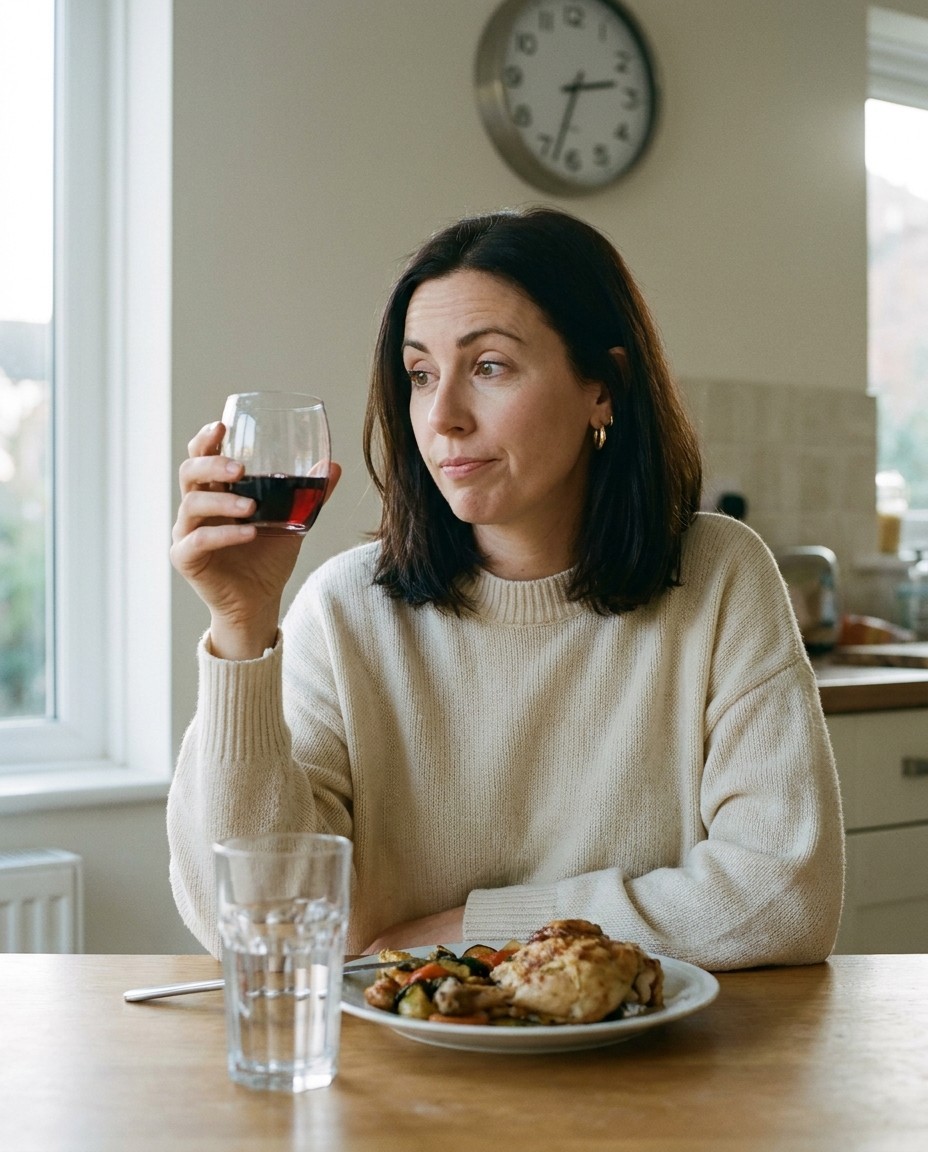
Taking Zepbound changes how your body processes alcohol. Tirzepatide (the active ingredient in Mounjaro and Zepbound) is a dual GLP-1 (glucagon-like peptide-1) and GIP receptor agonist, meaning it works on two appetite-regulating hormones instead of one. One key effect is that Zepbound slows how quickly food leaves your stomach (known as gastric emptying), helping you feel full longer. But this delayed gastric emptying also means food and drinks, including alcohol, stay in your stomach longer.
That means alcohol irritates your stomach for longer than usual. You end up with nausea, bloating, and discomfort that can feel worse than a regular hangover.
Research shows that slowed gastric emptying changes how quickly alcohol gets into your blood. Instead of moving quickly to your small intestine, it just sits around.
Zepbound also promotes satiety (the feeling of fullness after eating), which is a key part of how it supports weight loss. When alcohol is added to the mix, it can confuse these fullness signals. You might not feel hungry enough to eat a proper meal before drinking, which increases your risk of low blood sugar and stomach irritation.
Both tirzepatide and alcohol lower blood sugar. Zepbound works partly by improving how your body responds to insulin, the hormone that controls blood sugar levels. Tirzepatide lowers blood sugar as part of its mechanism of action, and alcohol independently suppresses glucose production by the liver. When you combine them, the risk of hypoglycemia (dangerously low blood sugar) goes up. You might feel dizzy, shaky, or confused, and those symptoms can look a lot like being drunk, which makes them easy to miss.
Alcohol consumption guidelines for Zepbound users
No official rules say you can’t drink at all on Zepbound. But moderation matters even more now.
If you decide to drink, stick to one drink max. Have it with a meal that includes protein and complex carbs. Never drink on an empty stomach while taking this medication.
Here’s what we suggest:
-
Time it right - Wait until you’ve settled into your current dose before having any alcohol. Most side effects improve within 2-4 weeks as your body adjusts to each dose, so give yourself that settling-in period before introducing alcohol.
-
Stay hydrated - Drink water between sips of alcohol
-
Monitor yourself - Check your blood sugar if you have diabetes
-
Have a plan - Know what you’ll do if you start to feel off
Some people just can’t handle alcohol anymore on tirzepatide. That’s common and nothing to feel weird about.
Drinking scenarios: light to heavy alcohol use
-
Light drinking (one glass of wine with dinner) might be okay for some, especially with a solid meal. Still, even that can bring on nausea or stomach pain.
-
Moderate drinking (two to three drinks) bumps up your risk of feeling lousy. The combination of Zepbound and alcohol can cause hours of stomach misery.
-
Heavy drinking on Zepbound? Genuinely dangerous. You could end up with severe nausea, vomiting, low blood sugar, and dehydration. Your body is already working overtime on this medication.
The type of drink matters, too. Sugary cocktails spike your blood sugar and then crash it. Beer can make you feel extra bloated. Spirits on an empty stomach? Brutal.
A lot of people notice they just don’t want to drink as much on tirzepatide. Studies suggest GLP-1 medications may reduce alcohol intake in people with obesity, which is a pretty handy side effect.
Potential risks and effects of combining Zepbound and alcohol
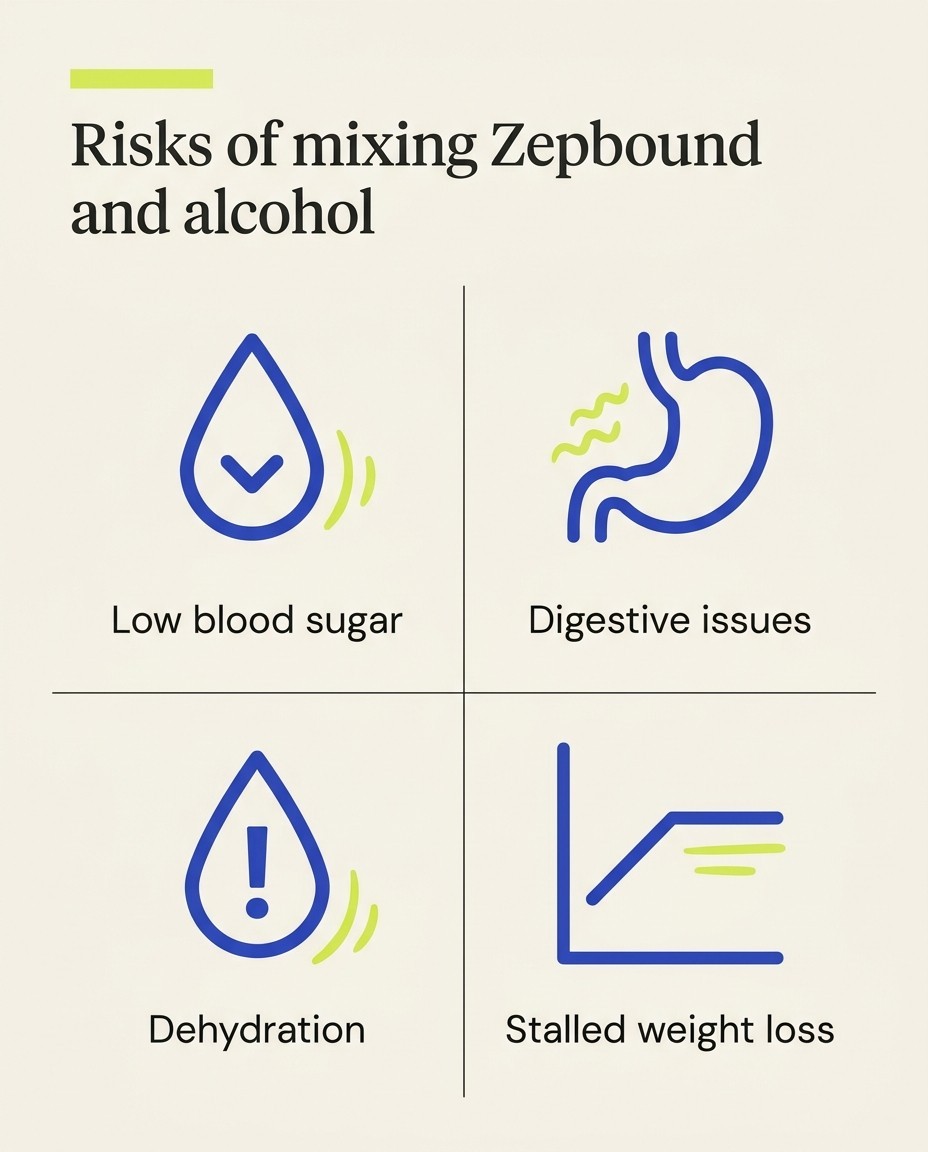
Mixing Zepbound with alcohol brings on physical risks that go well beyond the usual side effects. Your blood sugar can drop too low, your stomach struggles more, and dehydration can hit harder than you expect.
Low blood sugar and hypoglycemia risk
As covered above, both Zepbound and alcohol lower blood sugar. Put them together, and your blood sugar can drop to unsafe levels. The tough part is that low blood sugar symptoms look a lot like being drunk, so others might not realize you’re dealing with hypoglycemia.
Common hypoglycemia symptoms include:
-
Dizziness and light-headedness
-
Trembling or shakiness
-
Excessive sweating
-
Difficulty thinking clearly
-
Irritability or mood changes
-
Blurred vision

Seek immediate medical help if you experience:
- Loss of consciousness or fainting
- Seizures or convulsions
- Severe confusion or inability to respond
- Severe abdominal pain (potential sign of pancreatitis)
Call 911 if someone on Zepbound passes out after drinking alcohol - do not assume they are simply drunk.
If you’re new to Zepbound or just increased your dose, your body is already adjusting. Throwing alcohol into the mix makes things even less predictable.
Gastrointestinal side effects
Alcohol irritates your stomach lining. Normally, your stomach would get rid of the alcohol pretty quickly. On Zepbound, it just sits there because of the slowed gastric emptying.
Think of it like this: your digestive system is moving in slow-mo, and now you’ve added something that actively irritates it. The alcohol lingers, making nausea worse and sometimes causing vomiting.
Early research suggests that semaglutide and tirzepatide may reduce alcohol use in people with obesity, possibly because drinking just feels so unpleasant.
You might experience:
-
Nausea that sticks around for hours
-
Sharp stomach cramps
-
Vomiting
-
Extra-bad bloating

These are common and usually settle on their own:
- Mild nausea after a small amount of alcohol
- Feeling full or bloated more quickly than usual
- Reduced interest in finishing your drink
- Slightly worse hangover than pre-Zepbound
These reactions are your body’s way of telling you it’s processing alcohol differently. They typically don’t need medical attention unless they’re severe or prolonged.
Even one glass of wine can set off these symptoms when you’re on Zepbound.
Dehydration and hangover severity
Alcohol is a diuretic (it makes your kidneys produce more urine), so it pulls water from your body. If you’re also vomiting or dealing with diarrhea from Zepbound, you’re losing even more fluids.
This combination can dehydrate you much faster than alcohol alone. If you’re taking Zepbound, aim for at least 68 ounces (about 8 cups) of water daily, and 68-101 ounces if you’re experiencing digestive side effects like nausea or vomiting. The hangover you get the next day is probably going to be rough.
Dehydration doesn’t just make you feel bad. It can crank up nausea, give you a pounding headache, and leave you wiped out. You lose important electrolytes, too, which messes with your nerves and muscles.
Some people end up with hangovers that last two or three days after just a drink or two on Zepbound.

See your doctor or prescriber if you experience:
- Persistent nausea or vomiting lasting more than 24 hours after drinking
- Repeated episodes of low blood sugar
- Signs of dehydration that don’t improve with fluids (dark urine, dizziness, rapid heartbeat)
- Abdominal pain that doesn’t settle
Alcohol’s impact on weight loss and appetite
If you’re taking Zepbound for weight management, alcohol works against you. It’s packed with empty calories that add up fast and don’t make you feel full. Those calories provide no nutritional value, so they don’t support the healthy eating patterns that make the medication most effective.
A single gin and tonic is about 170 calories. A 12-ounce regular beer is around 150. Cocktails can get out of hand, calorie-wise.
Common drinks and their calorie counts:
| Drink | Approximate calories |
|---|---|
| Glass of wine (5 oz) | 120-130 |
| Regular beer (12 oz) | about 150 |
| Shot of 80-proof spirits (1.5 oz) | about 100 |
| Gin and tonic | 170 |
| Margarita | 250-300 |
| Piña colada | 300-450 |
Source: Rethinking Drinking, National Institute on Alcohol Abuse and Alcoholism (NIAAA). Mixed drinks vary with the recipe.
Alcohol also messes with your food judgment. After a couple of drinks, that greasy takeout starts to look like the best idea ever. You’re more likely to overeat and pick foods loaded with fat and salt.
Your liver prioritizes breaking down alcohol over other metabolic processes, including fat burning. That slows your metabolism while your body deals with the booze. For anyone on Zepbound trying to lose weight, that’s just another hurdle, and it can stall your progress.
How Zepbound may affect alcohol cravings and tolerance
Zepbound seems to change how people react to alcohol, both in how much they want it and how their body handles it. Research shows these meds can reduce alcohol cravings and how much people drink. Many users say alcohol just feels different now.
Research into tirzepatide and similar meds like semaglutide (in Ozempic and Wegovy) has turned up something unexpected. These drugs weren’t made to treat alcohol use, but they seem to have that effect anyway.
Studies show that GLP-1 receptor agonists cut down alcohol cravings and the number of heavy drinking days. This seems to happen through the brain’s reward system.
Zepbound dampens the brain’s craving centers, which usually light up when we see something rewarding, like food or alcohol. It’s not just about willpower. The medication actually changes the urge at a brain level.
This is a promising area of research, and it suggests these medications may have benefits beyond weight management. They might also work on other addiction-like behaviors, not just food.
Alcohol tolerance changes on Zepbound
A lot of people notice their alcohol tolerance drops after starting Zepbound. What used to be a normal amount now feels like too much.
Users often say they feel stronger effects from less alcohol. Patient stories show reduced tolerance, with people describing nausea or feeling full after just a drink or two.
Common changes include:
-
Getting drunk faster than before
-
Feeling more nauseous after a small amount
-
Worse hangovers from the same number of drinks
-
Not really wanting to finish drinks
Patient experiences and research insights
Real-life reports from people on Zepbound line up with what researchers are seeing. Social media and clinical studies both show similar trends.
Research looking at online forums found that people reported fewer cravings and lower alcohol tolerance after starting these meds. Many said they cut back or even stopped drinking without really trying.
Some people actually feel sick if they drink alcohol on Zepbound, which naturally puts them off it.
Researchers are now looking into whether GLP-1 meds could help treat addiction to things like alcohol, nicotine, and opioids. Early signs are promising, but more studies are needed before we know for sure.
Practical tips for drinking safely while on Zepbound
If you’re planning to drink while taking Zepbound, the kind of drink you choose matters just as much as the amount. Eating before you drink, and knowing when to skip alcohol altogether, can help you avoid a miserable night.
Best alcohol choices and portion control
Not all drinks hit your body the same way when you’re on Zepbound. Some just go down easier than others.
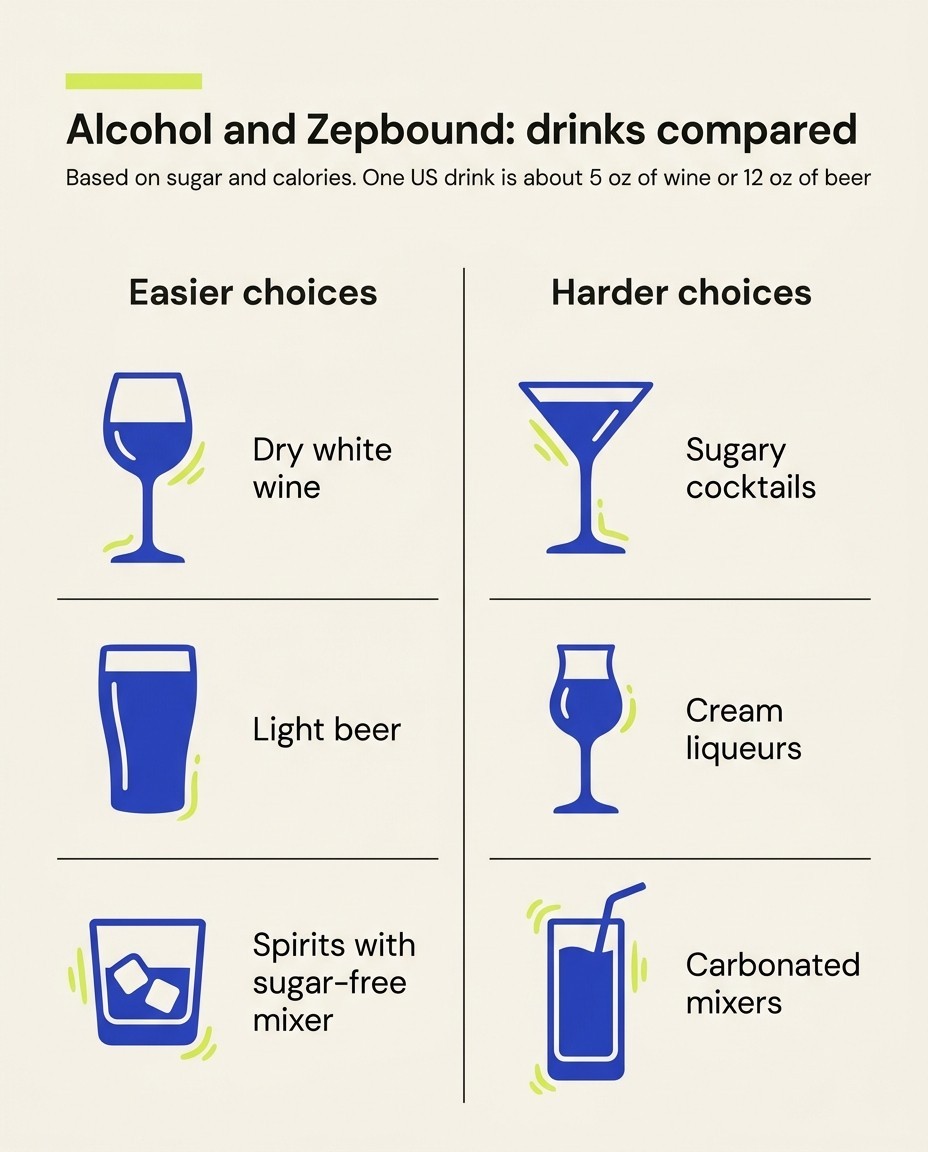
Light beer and dry white wine usually work out better than sugary cocktails or heavy spirits. They pack less sugar and fewer calories. A standard US drink means about 5 ounces of wine or 12 ounces of regular beer.
Sugary drinks spike your blood sugar fast, then leave you crashing. That just makes you feel worse.
Tips for choosing drinks on Zepbound:

If you want spirits, go for sugar-free mixers and keep it to a single shot.
Honestly, a lot of people find even small amounts of alcohol just don’t sit well on this medication.
Timing of doses and eating before drinking
Never drink on an empty stomach if you’re taking Zepbound. That’s non-negotiable. Eating before drinking helps slow alcohol absorption and reduces the risk of low blood sugar.
Eat a real meal before you have a drink. Make sure it includes protein, some healthy fats, and complex carbs. That combination helps slow down alcohol absorption even more.
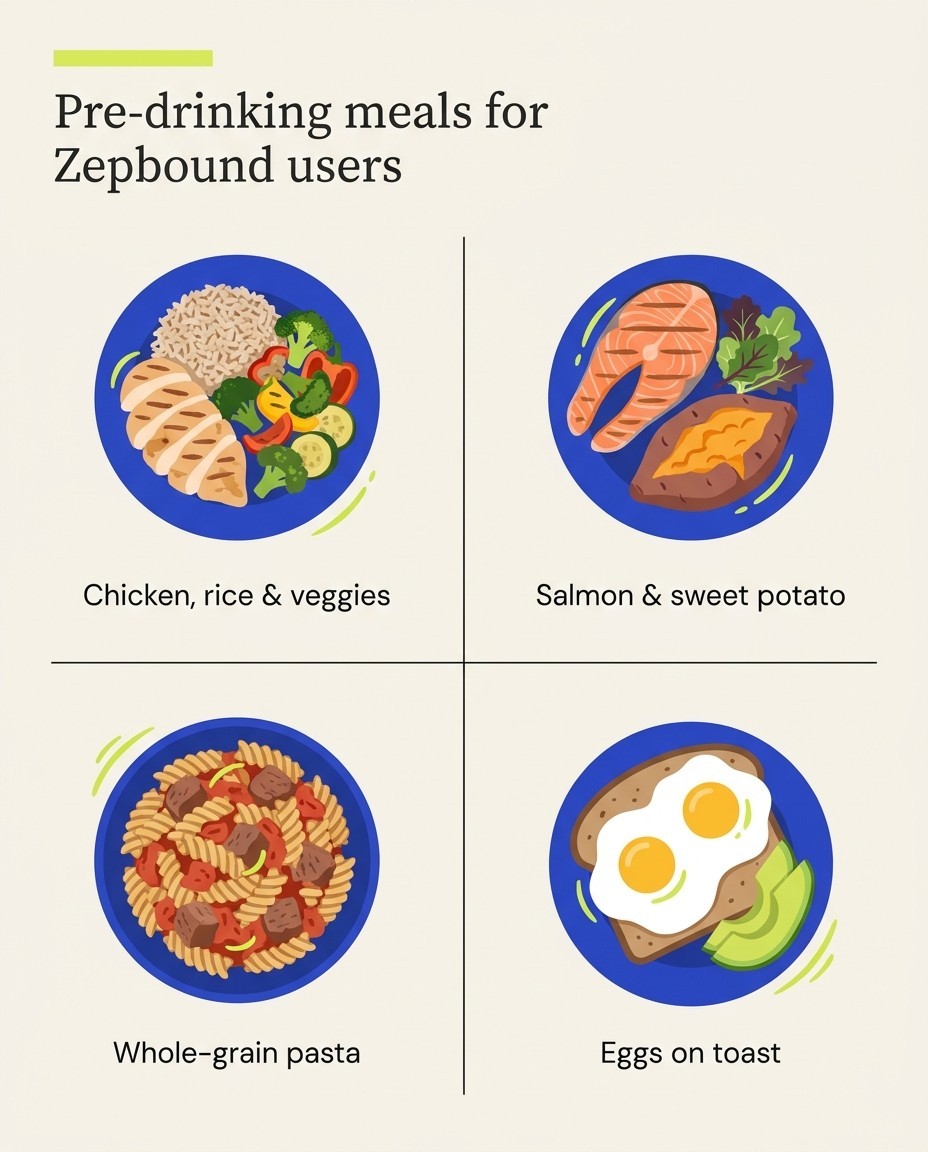
Good pre-drinking meal ideas:
-
Grilled chicken with brown rice and veggies
-
Salmon with sweet potato and salad
-
Whole grain pasta with lean meat and tomato sauce
-
Eggs on whole wheat toast with avocado
Take your Zepbound at your usual time. Don’t skip or delay it just because you plan to drink. The medication works best on a steady schedule.
Wait two to three hours after eating before you drink. That gives your stomach a chance to start breaking down your meal.
Monitoring for adverse reactions
You really need to watch out for warning signs when you mix Zepbound and alcohol. Your body will let you know if something’s off.
Stop drinking right away if you feel:
-
Bad nausea or stomach pain
-
Dizziness or confusion
-
Sweating a lot
-
Shaky or trembling
-
Heart racing
These could mean your blood sugar dropped too low. If you have diabetes and can check your glucose, do it. Have some water and a small snack, like crackers.
Pay attention to how you feel after drinking. Sometimes problems don’t show up until the next morning. If you feel awful every time, it’s probably time to rethink drinking on this medication.
Let someone you’re with know you’re on Zepbound. It’s just safer that way.
When to avoid alcohol entirely
Sometimes, drinking just isn’t worth the risk.
Don’t drink alcohol if you:
-
Just started Zepbound or bumped up your dose recently
-
Already feel nauseous from the medication
-
Have a history of pancreatitis (inflammation of the pancreas), since both alcohol and Zepbound can increase the risk of this serious condition, and combining them raises the danger further
-
Take other medications that interact with alcohol
-
Take oral contraceptives, as Zepbound may reduce their effectiveness and alcohol can further interfere with absorption. Use additional barrier contraception (such as condoms) for 4 weeks after starting treatment and for 4 weeks after each dose increase
-
Have liver problems
-
Get frequent low blood sugar episodes
If you’re planning to increase your dose soon, skip alcohol for at least a week before and after the change. Your stomach will thank you.
If you don’t feel like drinking, maybe that’s your body looking out for you.
The bottom line
Alcohol isn’t strictly banned on Zepbound, but the combination can make side effects significantly worse and poses real risks, particularly around low blood sugar and dehydration. Many people find their desire to drink naturally decreases on the medication. If you do choose to drink, eat a proper meal first, stick to one drink, alternate with water, and monitor how you feel. If you’re unsure whether drinking is safe for you, speak to your doctor or prescriber for personalized advice.
Frequently asked questions
Why do I feel sick after drinking on Zepbound?
Zepbound slows how quickly food and drinks leave your stomach (delayed gastric emptying). This means alcohol sits in your stomach longer than usual, irritating the lining and making nausea, bloating, and stomach pain worse. Even a single drink can trigger these symptoms.
Does Zepbound lower your alcohol tolerance?
Many people report feeling the effects of alcohol more strongly after starting Zepbound. You may feel drunk faster, experience worse hangovers, or feel nauseous after smaller amounts than you’re used to. See the “Alcohol tolerance changes” section above for more detail.
Can Zepbound help with alcohol cravings?
Early research suggests GLP-1 medications like Zepbound may reduce alcohol cravings by acting on the brain’s reward system. Many users report naturally losing interest in drinking. However, Zepbound is not approved as a treatment for alcohol use disorder, and more research is needed.
How long after taking Zepbound can I drink alcohol?
There’s no specific waiting period, since Zepbound stays active in your body for a full week. If you’re going to drink, focus on eating a solid meal with protein and complex carbs two to three hours beforehand, and limit yourself to one drink. Avoid alcohol entirely during the first few weeks on a new dose.
Can alcohol affect how well Zepbound works for weight loss?
Yes. Alcohol is high in empty calories (a 12-ounce regular beer has about 150 calories) and can increase appetite and food cravings, making it harder to maintain a calorie deficit. Your liver also prioritizes processing alcohol over burning fat, which can slow your weight management progress.
What are the signs of low blood sugar after drinking on Zepbound?
Watch for dizziness, shakiness, excessive sweating, confusion, blurred vision, and irritability. These symptoms can look similar to being drunk, which makes them easy to miss. If you have diabetes, check your blood sugar levels. If symptoms are severe or you lose consciousness, call 911.
Should I skip my Zepbound dose if I plan to drink?
No. Never skip or delay your Zepbound dose because you plan to drink alcohol. The medication works best on a consistent weekly schedule. If you’re concerned about drinking on a particular occasion, speak to your doctor or prescriber for personalized advice.
This article is for information only and does not replace medical advice. Always speak to your doctor or prescriber before making changes to your medication routine or if you have concerns about drinking alcohol while taking Zepbound.
Sources: Clinical information in this article is based on the FDA-approved Zepbound prescribing information and Medication Guide, NIAAA guidance on standard drink sizes, and published clinical research.