

When you start Zepbound, you build up through smaller doses over several months. But where do you actually land?

The standard Zepbound maintenance dose is typically between 5 mg and 15 mg once weekly, though some people stay on lower doses. Your prescriber will help you find the dose that balances effective weight management with minimal side effects.
Your maintenance dosage is the amount you stick with long-term once you’ve found the right balance between weight loss results and manageable side effects. Like all Zepbound treatment, it is taken as weekly injections using a pre-filled pen.
We know it can feel confusing. You’ve heard people talk about higher doses producing greater weight loss, but does that mean you should always aim for the maximum? Not necessarily. Your maintenance dose isn’t about reaching a specific number on the pen. It’s about finding what works for your body and your goals.
Some people reach their maintenance dose and stay there for months or years. Others need adjustments along the way. We’ve put together this guide to help you understand what to expect when you reach this stage, how to know if your dose is right, and what to do if things change down the line.
Key takeaways

Understanding the Zepbound maintenance dose
Zepbound (tirzepatide, the active ingredient) is a dual GLP-1 and GIP receptor agonist, meaning it works on two appetite-regulating hormones instead of one. After you start treatment and work your way up through different doses, you’ll eventually reach what’s called a maintenance dose. This is the amount that keeps working for you over the long term, whether that’s for weight loss or managing type 2 diabetes. In the US, tirzepatide is sold as Mounjaro for type 2 diabetes and as Zepbound for weight management.
What is a maintenance dose?
A maintenance dose is the steady amount of Zepbound you take once you’ve finished increasing your dosage. Think of it like finding the right temperature for your shower: you start low and adjust until it feels right, then you keep it there.
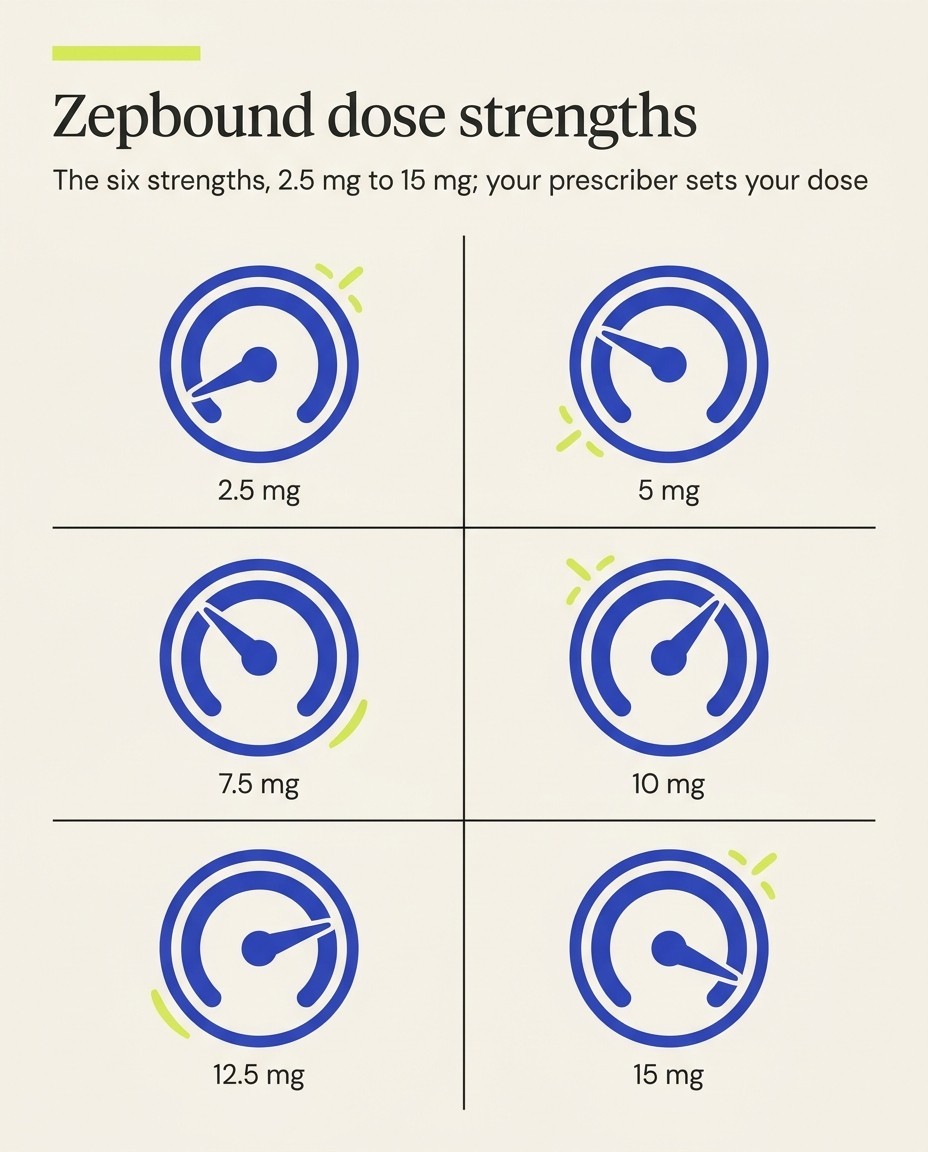
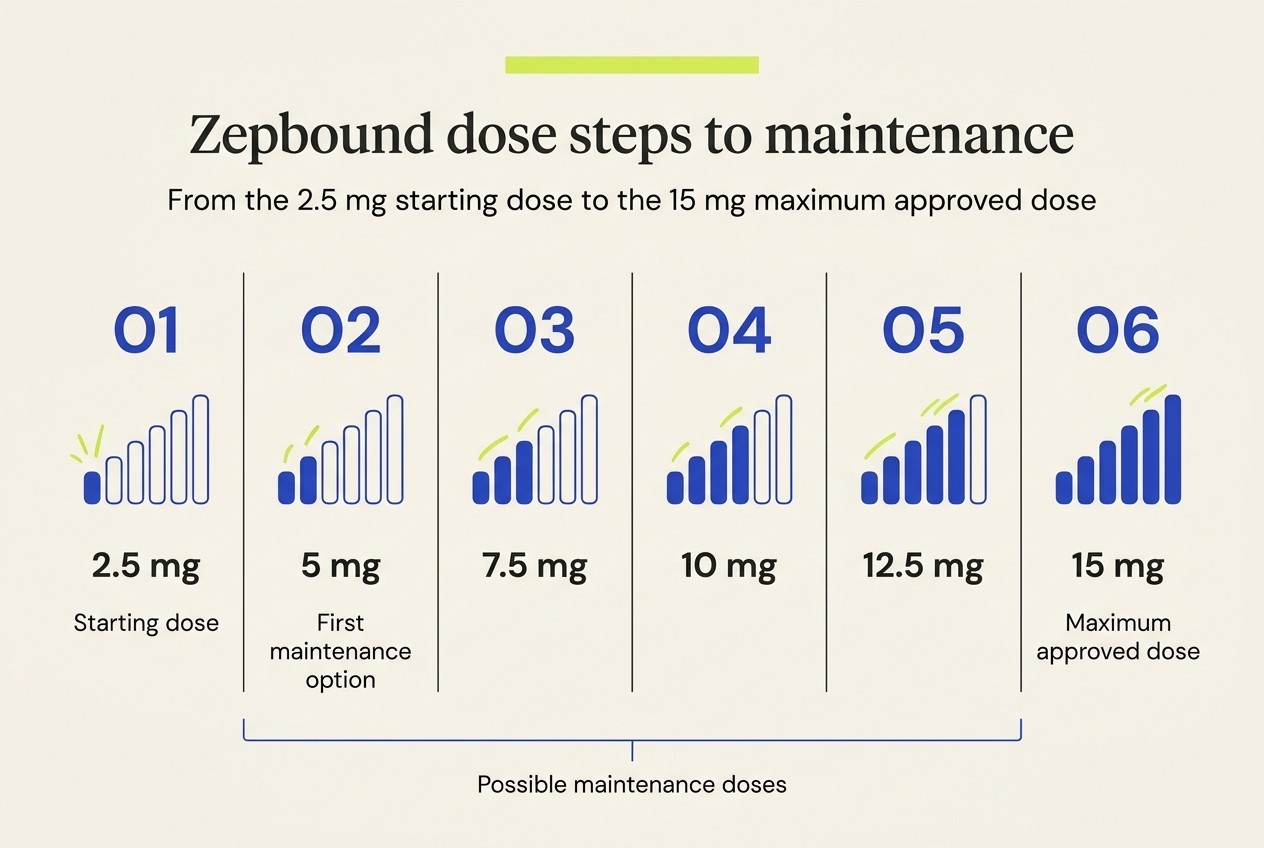
Most people don’t start at their maintenance dose. You begin at 2.5 mg and increase every four weeks. This gradual approach helps your body adjust and reduces side effects like nausea. Approximately 1 in 4 people experience nausea, particularly during dose escalation, though it typically improves within 2-4 weeks on a stable dose.
Your maintenance dose depends on how well you respond to treatment. Some people reach their goals at 5 mg, while others need 10 mg or 15 mg. The key is staying on this dose consistently. Your body needs regular levels of tirzepatide to keep appetite suppressed and blood glucose levels stable. Consistent weekly injections ensure the medication remains effective rather than dipping between doses.

These are normal when adjusting to a new dose:
- Mild nausea, especially in the first week or two
- Slight decrease in appetite
- Occasional bloating or mild stomach discomfort
These symptoms typically improve within 2-4 weeks as your body adjusts.
How the maintenance dose supports long-term weight management
The maintenance dose keeps doing what it did when you were losing weight. It continues to slow down how quickly food leaves your stomach and keeps sending signals to your brain that reduce hunger. Weight loss medication like Zepbound isn’t a quick fix. The maintenance dose is about keeping the weight off, not just losing it. Research shows that people who stop taking tirzepatide often regain weight because the hormonal effects wear off.
Your Zepbound maintenance dose works best when paired with the habits you’ve built during treatment: regular movement, better food choices, and managing stress. The medication makes these changes easier to stick with, but it doesn’t replace them. Some people continue losing weight on their maintenance dose, while others stay steady. Both outcomes can be completely normal and healthy, depending on your starting point and goals.
Approved maintenance dose levels and their differences
After the starting dose of 2.5 mg, the approved maintenance options include:
| Dose | Maintenance option |
|---|---|
| 5 mg | First maintenance option |
| 7.5 mg | Second maintenance option |
| 10 mg | Third maintenance option |
| 12.5 mg | Fourth maintenance option |
| 15 mg | Maximum approved dose |
Clinical trials showed that higher doses generally led to greater weight loss. But that doesn’t mean everyone needs or should take 15 mg. Your prescriber will help you find the right level based on your response and any side effects you experience.
The difference between doses isn’t just about numbers. Each step up increases how strongly tirzepatide affects your GLP-1 and GIP receptors. More isn’t always better if you’re already seeing good results and managing well on a lower amount.
Transitioning to and adjusting your maintenance dose
Once you’ve reached your weight loss goal on Zepbound, the next step is figuring out which dose keeps you steady without unnecessary side effects.
When to transition from weight loss to maintenance phase
Most people reach their maintenance phase after the active weight loss phase ends, either because they’ve hit their target weight or because their weight loss naturally plateaus. This usually happens after several months of treatment.
You don’t need to keep increasing your dose just because that’s what the dose escalation schedule (called titration) suggests. If you’re happy with your results and your weight has stabilized, that’s your signal to stop escalating.
Transitioning doesn’t mean stopping weight management habits. The lifestyle adjustments you’ve made during weight loss still matter just as much in the maintenance phase.
Criteria for determining the right dose
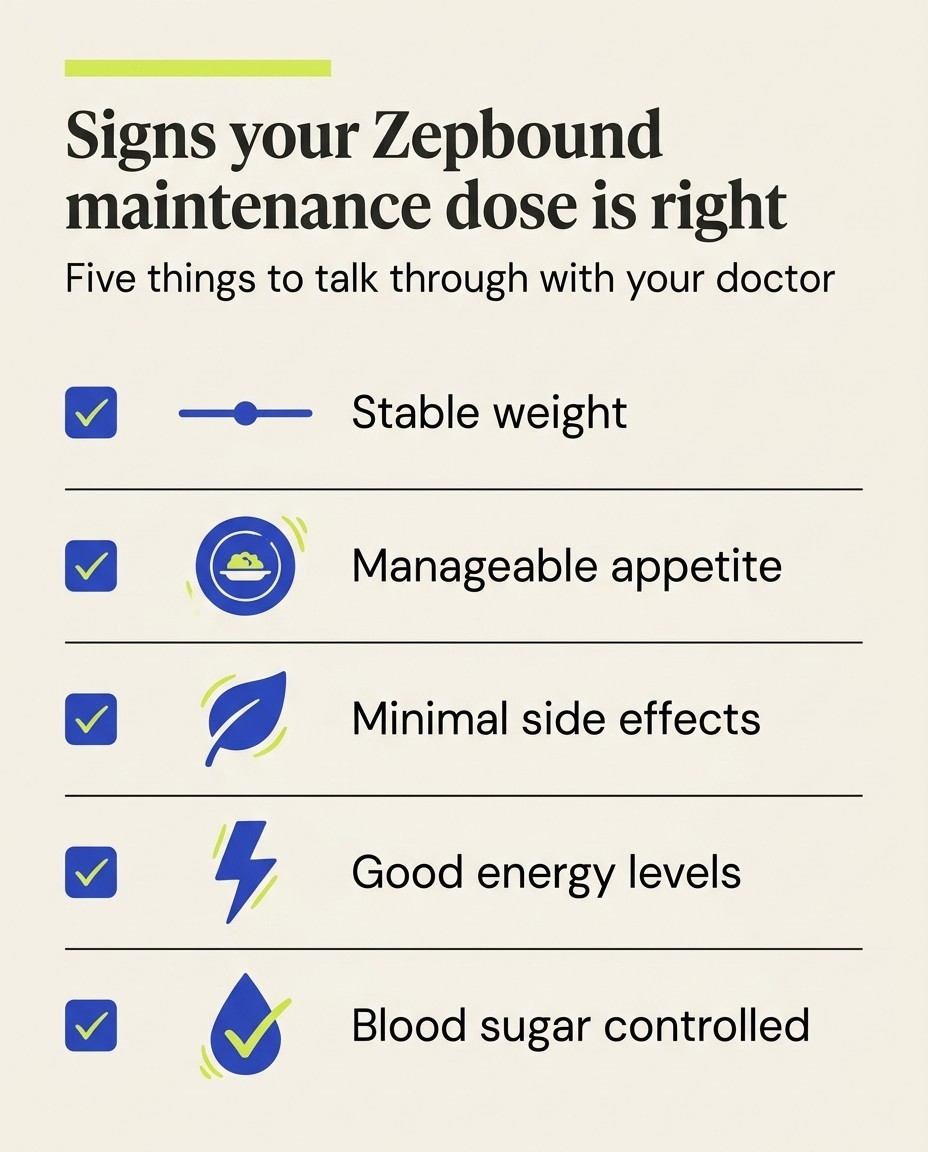
Your maintenance dose should keep your appetite in check without making you feel unwell. Here’s what we look for:
- Stable weight: Your weight stays within a few pounds of your goal without significant fluctuations
- Manageable appetite: You feel satisfied after meals and don’t experience intense cravings
- Minimal side effects: Any stomach issues are mild and don’t interfere with daily life
- Good energy levels: You don’t feel exhausted or overly sluggish
- Maintained insulin sensitivity: For those with diabetes, blood sugar levels remain well controlled
For those managing type 2 diabetes alongside weight loss, your prescriber will also monitor your HbA1c levels (a blood test that shows your average blood glucose levels over the past two to three months) to ensure your maintenance dose is providing adequate glycemic control as well as supporting weight management.
If you check most of these boxes, you’ve likely found your maintenance dose. If not, a dose adjustment might be needed.
Dose adjustment and individual factors
Everyone responds differently to Zepbound. Your ideal maintenance dose depends on factors like your starting weight, metabolism, and how sensitive you are to the medication.
Some people can step down to a lower dose once they’ve reached their goal and still maintain their weight loss. Others need to stay at their current dose to avoid regaining weight.
Age, sex, and baseline health conditions all play a role too. Someone with type 2 diabetes might need a different maintenance dose compared to someone taking Zepbound purely for weight management. If you’re experiencing bothersome side effects, talk to your prescriber about adjusting down. Sometimes even a small reduction can make a big difference in how you feel while still keeping your weight stable.
Your body needs time to adjust after any dose change. We typically recommend waiting at least four weeks before deciding if a new dose is working for you.
Living well on the Zepbound maintenance dose
Once you’ve reached your maintenance dose, the focus shifts from losing weight to keeping it off. Success at this stage depends on building habits around food, movement, and daily routines that support your body without feeling like a constant struggle.
Supporting healthy weight with diet
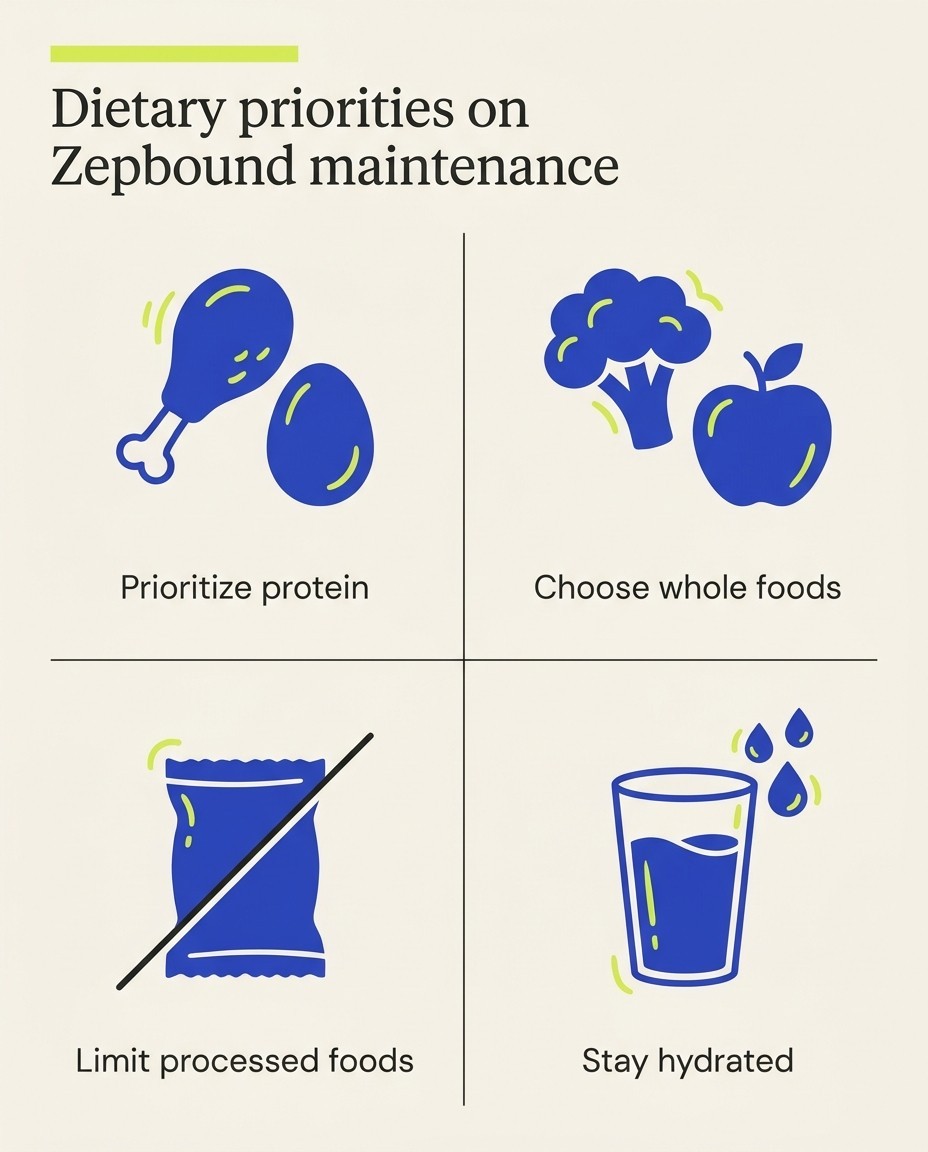
Zepbound helps by reducing appetite and cravings. But what you eat still matters. Focusing on protein at each meal helps maintain muscle mass during weight loss. Lean meats, fish, eggs, beans, and Greek yogurt are all good choices. Protein keeps you fuller for longer and supports your metabolism.
Key dietary priorities:

Fiber is equally important. It supports digestion, feeds healthy gut bacteria, and adds bulk to meals without many calories. Think vegetables, berries, oats, and lentils.
Because Zepbound reduces your appetite, you are naturally eating less. But eating less does not automatically mean you are in a calorie deficit large enough to continue losing weight. If you are aiming for further weight loss on your maintenance dose, tracking your intake for a few weeks can help confirm you are consuming fewer calories than your body uses each day. Prioritize foods rich in vitamins and minerals rather than empty calories from candy or ultra-processed snacks.
Role of regular exercise and physical activity
Exercise isn’t optional if you want to maintain weight loss long-term. It burns calories, preserves muscle, and keeps your metabolism working efficiently.
Resistance training is particularly valuable. Lifting weights or doing bodyweight exercises signals your body to hold onto muscle while losing fat. This matters because muscle tissue burns more calories at rest than fat does. Aim for at least 150 minutes of moderate activity per week. That could be brisk walking, cycling, swimming, or any movement you actually enjoy. Consistency beats intensity here.
Types of activity to include:
Regular physical activity improves insulin sensitivity (how well your body responds to insulin to control blood sugar), which complements how Zepbound works. It also improves mood and reduces stress, both of which can trigger emotional eating.
Integrating Zepbound with a healthy lifestyle
Zepbound works best when it’s part of a broader approach to health, not a standalone solution. Think of it as a tool that makes following a balanced diet and maintaining regular exercise easier by reducing hunger.
Sleep matters too. Poor sleep disrupts hunger hormones and makes it harder to stick to healthy choices. Aim for 7-9 hours per night. Managing stress is equally important. Many of us eat in response to emotions rather than true hunger. Finding other ways to cope, like walking, talking to a friend, or practicing mindfulness, helps prevent those patterns from derailing progress.
You’ll also need to use barrier contraception for at least four weeks after starting Zepbound and after each dose increase if you’re able to become pregnant. Zepbound may reduce the effectiveness of oral contraceptives, so use additional barrier contraception such as condoms for 4 weeks after starting treatment and for 4 weeks after each dose increase.
Taking your injection on the same day each week keeps drug levels stable. Missing doses can bring back appetite and slow progress. Set reminders if needed.
Managing changes, stopping, or switching medications
Your needs might change over time, and that’s completely normal. Whether you’re thinking about stopping Zepbound, switching to another medication like Wegovy, or just weighing your options, it helps to know what to expect.
Coming off Zepbound: what to expect
Stopping Zepbound isn’t something to rush into without a plan. When you stop the medication, its effects don’t disappear overnight. Tirzepatide has a half-life of around five days, meaning it takes about that long for half the medication to leave your system. You might not notice major appetite changes immediately.

Speak to your prescriber before stopping Zepbound. Stopping without a plan can lead to:
- Appetite typically returning within two to three weeks
- Weight regain if lifestyle habits are not maintained
- A rebound in hunger that may feel stronger than before starting treatment
Your prescriber can help you create a tapering plan or transition to another treatment if needed.
The most important thing we’ve learned is that stopping doesn’t mean failure. It just means you need a solid plan to maintain your progress. Many people who stop Zepbound successfully keep weight off by focusing on the eating habits they built while on the medication.
If you’re stopping because of side effects, talk to your prescriber first. Sometimes adjusting your dose or trying a different medication works better than stopping altogether.
Switching from Zepbound to Wegovy
A lot of people switch from Zepbound to Wegovy because of side effects or cost. Honestly, the switch tends to go pretty smoothly.
Prescribers often suggest starting Wegovy when your next Zepbound dose would have been due, about seven days after your last one. Some want you to wait longer, so follow your own prescriber’s plan.
During the washout period:
- You probably won’t feel much hungrier than usual.
- Tirzepatide still lingers in your system.
If the gap is short, you likely won’t see much weight regain.
Your prescriber might bump up your starting Wegovy dose above the usual 0.25 mg, depending on your current Zepbound dose. For example, if you’ve been taking Zepbound 7.5 mg, they could start you on Wegovy 0.5 mg or even 1 mg. This happens a lot, but it’s technically off-label (meaning it’s not the officially approved starting approach, though prescribers can use their clinical judgment).
One key difference: Wegovy doesn’t interact with oral contraceptives, while Zepbound can make them less effective.
Comparing Zepbound vs Wegovy
Zepbound vs Wegovy — it’s not really about which one wins. They work in different ways, and what fits you best just depends on your individual circumstances.

Feature
Zepbound
Wegovy
In clinical trials, people on Zepbound lose a bit more weight on average. But out in the real world, the results can surprise you. Some people respond better to semaglutide than tirzepatide, so individual results can differ from trial averages.
Both medications offer improved glycemic control for people with type 2 diabetes, though tirzepatide’s dual mechanism may provide slightly greater improvements in blood glucose levels and HbA1c in some patients. For people living with overweight or obesity without diabetes, the choice often comes down to tolerability, availability, and cost.
If you’ve got heart disease or high cardiovascular risk, Wegovy’s official approval for reducing heart attack and stroke risk might tip the scales.
Cost matters too. Check what your insurance covers, and ask about each maker’s savings program or self-pay pricing (LillyDirect for Zepbound, NovoCare for Wegovy).
When to seek urgent medical help

Seek immediate medical help if you experience:
- Severe abdominal pain, especially radiating to your back (potential pancreatitis)
- Signs of allergic reaction: facial swelling, difficulty breathing, severe rash
- Severe or persistent vomiting that does not improve
- Signs of thyroid issues: a lump or swelling in your neck, hoarseness, difficulty swallowing
Call 911 for suspected allergic reactions or pancreatitis.
See your doctor or prescriber if you experience:
- Persistent nausea or vomiting lasting more than a few days
- Significant changes in bowel habits
- Unexpected weight changes (rapid loss or gain)
- Symptoms of low blood sugar: shakiness, sweating, confusion
- Injection site reactions that worsen or do not improve
- Mood changes or signs of depression
The bottom line
Your Zepbound maintenance dose is the weekly amount that keeps your weight stable and your side effects manageable. Most people settle between 5 mg and 15 mg, but there is no single correct dose. Work closely with your prescriber to find your level, maintain the healthy habits you have built during treatment, and speak to your healthcare team before making any changes to your medication. If you are considering stopping or switching treatments, do so with medical guidance rather than on your own.
Frequently asked questions
What is the most common Zepbound maintenance dose?
The most common maintenance doses are 5 mg, 10 mg, and 15 mg taken once weekly. Your prescriber will help you find the dose that provides the best balance of weight management and tolerability.
Can I stay on a lower maintenance dose like 2.5 mg?
Yes, some people maintain their weight loss on 2.5 mg if it continues to control their appetite effectively. Your prescriber may recommend staying on a lower dose if you are experiencing good results with minimal side effects.
How long do I need to stay on my maintenance dose?
Zepbound is typically a long-term treatment. Research from the SURMOUNT-4 trial showed that people who stopped tirzepatide after reaching their maintenance dose regained a significant amount of weight over the following year. Most prescribers recommend continuing treatment for as long as it remains effective and well-tolerated.
What happens if my maintenance dose stops working?
If you notice your appetite increasing or your weight creeping up, speak to your prescriber. They may recommend increasing your dose (if you are not already on 15 mg), reviewing your diet and exercise habits, or considering a switch to another medication such as Wegovy.
Can I reduce my Zepbound dose after reaching my weight loss goal?
Some people can step down to a lower dose and still maintain their weight loss, particularly if they have built strong lifestyle habits. This should always be done under medical supervision, as reducing too quickly can lead to weight regain. See the dose adjustment section above for more detail.
Does the maintenance dose have fewer side effects than the escalation phase?
Most people find that side effects such as nausea and digestive discomfort improve significantly once they have been on a stable dose for a few weeks. Side effects are most common during the escalation phase when your body is adjusting to each new dose level.
Can I switch between Zepbound maintenance doses?
Yes, your prescriber can adjust your maintenance dose up or down depending on your response. Any dose change should be discussed with your healthcare team, and you should allow at least four weeks before assessing whether a new dose is working.
Is the Zepbound maintenance dose the same as Mounjaro’s for type 2 diabetes?
Zepbound and Mounjaro are the same medicine, tirzepatide, and come in the same doses (2.5 mg to 15 mg), but the target maintenance dose may differ. For weight management, prescribers often aim for higher doses where tolerated, as clinical trials showed greater weight loss at 10 mg and 15 mg. For type 2 diabetes, the dose is guided by blood glucose control and HbA1c levels as well as weight.
Do I need to keep having check-ups on my maintenance dose?
Yes. Regular check-ins with your prescriber help monitor your weight, side effects, and overall health. These appointments are an opportunity to discuss any concerns, review whether your current dose is still appropriate, and ensure the medication continues to work safely for you.
How do weekly injections work on the maintenance dose?
You continue taking Zepbound as a once-weekly subcutaneous injection (injected just under the skin using a pre-filled pen). Take it on the same day each week, at any time of day, with or without food. Rotate your injection site between your stomach, thigh, or upper arm to reduce the chance of injection site reactions.
This article is for general information only and does not replace professional medical advice. Always speak to your doctor or prescriber before starting, stopping, or changing any weight loss medication. Treatment decisions should be made in consultation with a qualified healthcare professional who understands your individual health needs.
Sources
- SURMOUNT-1 trial (Jastreboff et al., NEJM 2022) — Tirzepatide efficacy and safety for weight management
- SURMOUNT-4 trial (Aronne et al., NEJM 2024) — Tirzepatide weight regain after withdrawal
- STEP trials (Wilding et al., NEJM 2021) — Semaglutide efficacy for weight management
- SELECT trial (Lincoff et al., NEJM 2023) — Semaglutide cardiovascular outcomes
- SURPASS-CVOT (NEJM 2025) — Tirzepatide versus dulaglutide cardiovascular outcomes
- Zepbound prescribing information — FDA-approved prescribing information
- CDC physical activity guidelines for adults — Exercise recommendations
- CDC Steps for Losing Weight — Weight management support