

Traveling with Zepbound (tirzepatide) doesn’t have to be stressful. You can keep your medication safe and at the right temperature if you use a proper travel case.
A good travel case protects your injection pen from bumps and temperature swings. That way, you won’t have to worry about your medication losing its effectiveness.

The best Zepbound travel cases are insulated bags that keep your medication between 36°F and 46°F (2°C and 8°C) during transit. Unopened pens can stay at room temperature (below 86°F, or 30°C) for up to 21 days, which gives you flexibility for most trips.
When traveling with Zepbound, the right case makes everything easier. Your pen stays cushioned, your supplies stay organized, and your treatment stays on track.
Key takeaways

Why you need a Zepbound travel case
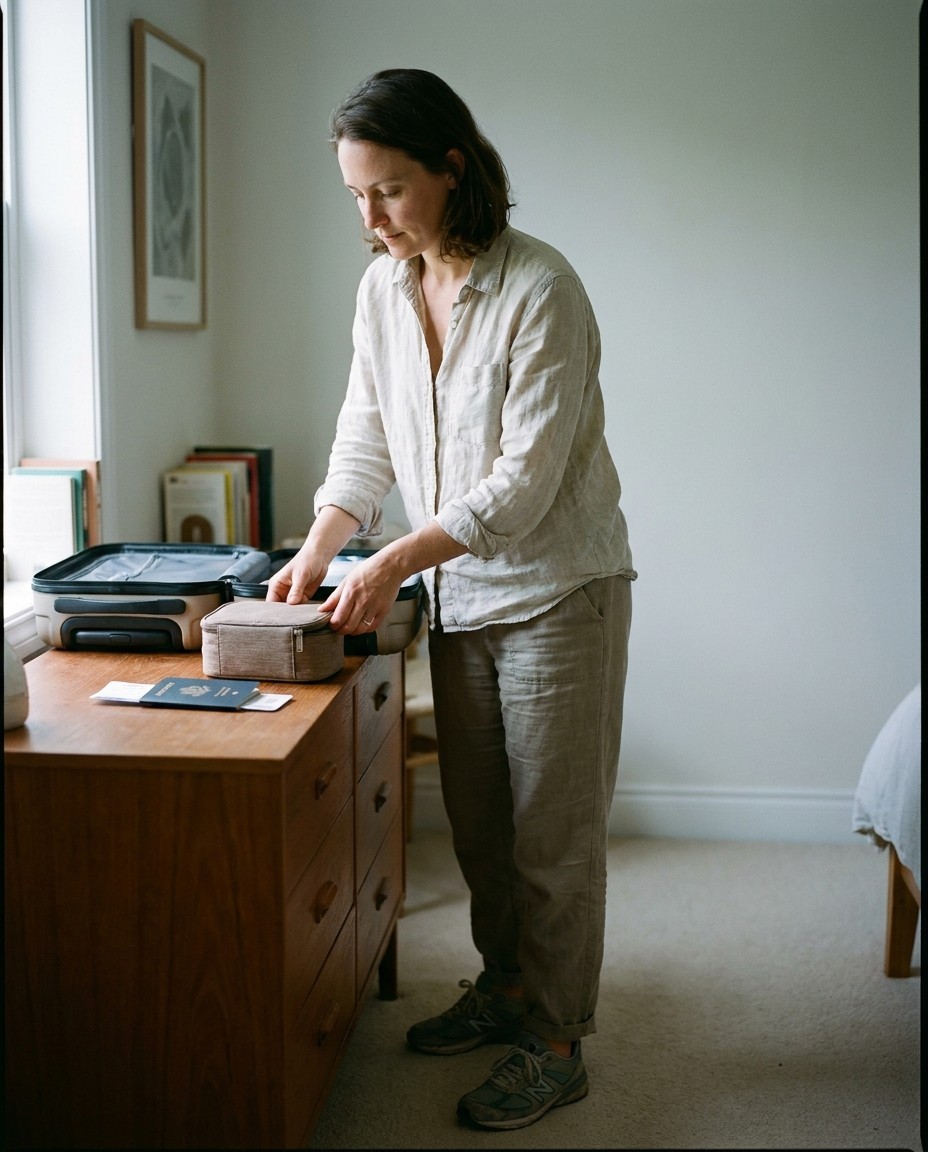
Zepbound contains tirzepatide, the active ingredient that works on two appetite-regulating hormones, and it breaks down quickly if it gets too hot or too cold. The same ingredient is sold as Mounjaro for type 2 diabetes, and the storage rules in this guide apply to both. A travel case keeps your medication at the right temperature and shields it from damage while you’re out and about.
Understanding temperature-sensitive medications
Tirzepatide is one of those injectable medicines that needs careful handling. Store it outside the right temperature range and it starts to lose effectiveness.
Most people don’t realize how easily medications can spoil on the road. A car trunk on a summer day can hit over 104°F. Airport tarmacs are even hotter.
Cold can ruin it too. If your Zepbound pen freezes, you have to throw it away. Freezing damages the protein structure of tirzepatide, meaning it can no longer work properly in your body. Once frozen, the medication is no good, even if it thaws later.
Temperature requirements for Zepbound:
-
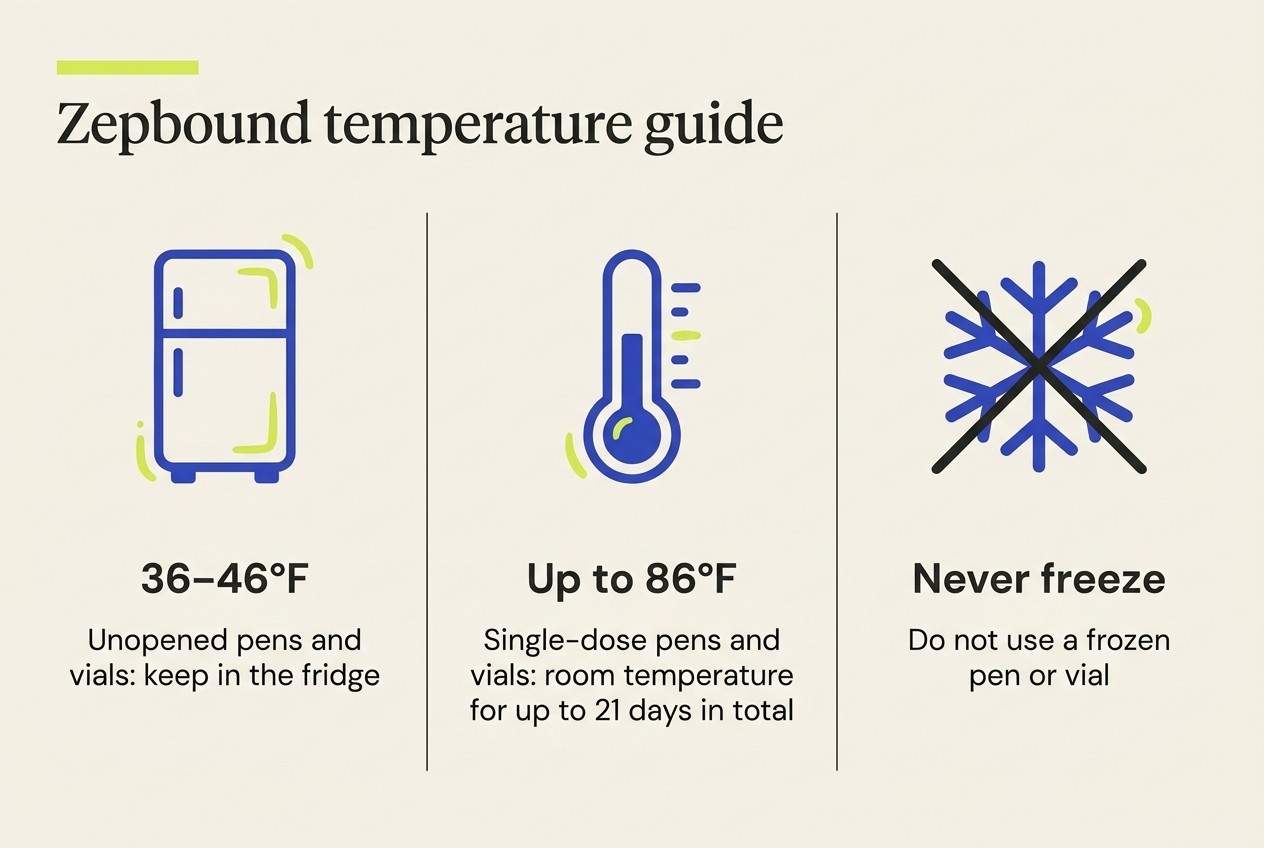
Unopened pens: Store at 36°F to 46°F (2°C to 8°C) in the fridge.
-
Out of the fridge: Single-dose pens can stay at room temperature, below 86°F (30°C), for up to 21 days. Don’t return a pen to the fridge once it has been stored at room temperature.
-
Never freeze: Freezing ruins the medication permanently.
Source: Tirzepatide Injection, MedlinePlus
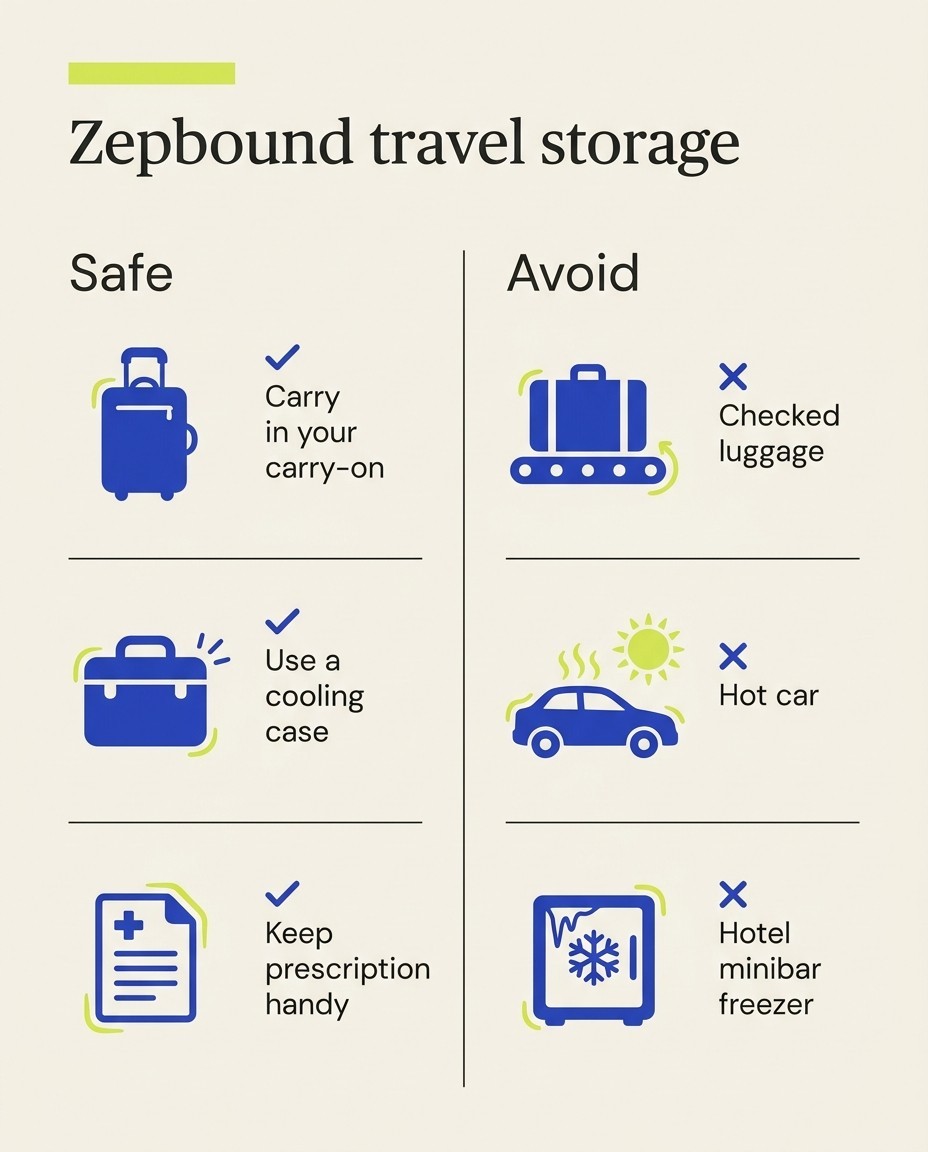
Without protection, your medication risks getting cooked in checked bags, baked in hot cars, or damaged by direct sunlight.
Zepbound can also cause side effects like nausea, diarrhea, and stomach discomfort, especially during the early weeks of treatment or after a dose increase. If you’re planning a trip around the time of a dose change, it’s worth packing anti-nausea remedies and keeping hydrated throughout your journey. Being prepared for potential side effects while away from home means you can enjoy your trip without unnecessary worry.
The importance of proper storage for tirzepatide
Traveling with Zepbound requires planning. Temperature swings can affect how well tirzepatide works in your system.
Proteins like tirzepatide start breaking down above 86°F. You might not see any visible changes, but the medicine inside could be compromised. Like insulin and other injectable medications, tirzepatide is sensitive to temperature extremes, so the same careful storage principles apply whenever you travel.
Unopened pens can survive at room temperature for up to 21 days, but refrigeration is the safest option whenever it’s available.
A quality travel case uses insulation and cooling packs to keep things stable. This is especially important for long trips or when you’re moving between different climates.
Think about your travel days. Hours in airports, sitting in warm cars, wandering around in summer heat — your medication faces a lot without good storage.
Risks of improper transportation
Damaged medication means wasted money and missed doses. Losing a pen to heat damage hits both your wallet and your treatment progress.
If you use compromised medication, your weight loss results can suffer. You might not get the dose you need if the tirzepatide has broken down.
Common travel mistakes to avoid:

Airlines don’t guarantee temperature control in cargo holds. Your checked bag might bake on a runway for an hour. Always carry Zepbound in your carry-on bag with proper cooling.
Physical damage is a real risk too. If you drop your pen or crush it in a packed bag, you could damage it. A travel case with padding helps protect against these knocks and bumps.
Key features of the best Zepbound travel cases
A good Zepbound travel case keeps your medication at the right temperature and is easy to pack and carry. The best cases combine solid cooling tech with smart storage and tough materials that can handle airports, car trunks, and whatever else you throw at them.
Insulation and cooling technology
Temperature control is the top feature. Your medication needs to stay between 36°F and 46°F when unopened, though it can handle room temperature (below 86°F) for up to 21 days if needed.
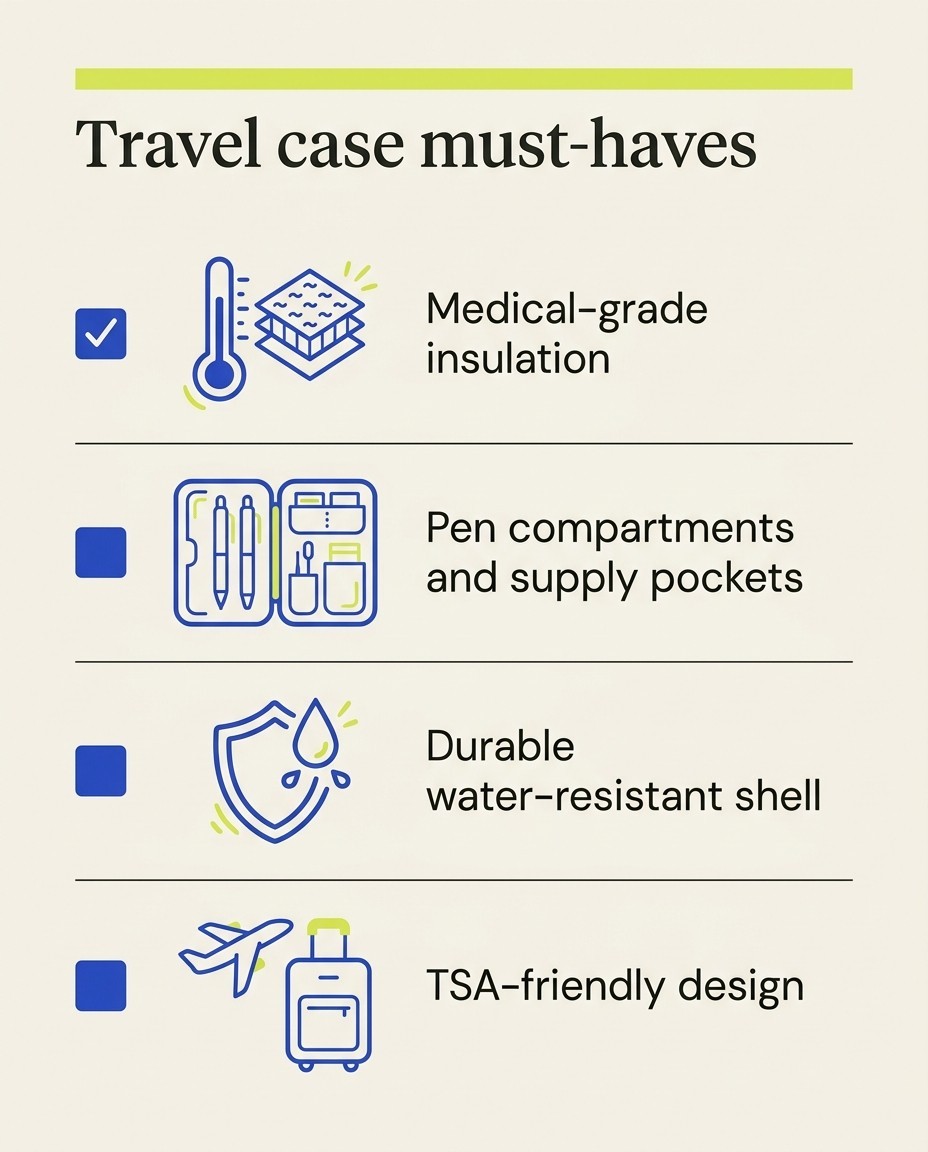
Medical-grade insulation sets a real travel case apart from a lunch bag. Go for cases with several insulation layers that keep things stable for 8 to 12 hours. Some pricier ones use vacuum-sealed panels like lab coolers.
Most cases work with reusable gel packs you freeze before the trip. Just make sure the packs don’t actually touch your Zepbound pens. Freezing the medication ruins it, so better cases use barriers or mesh pockets.
TSA-approved gel packs are worth it if you’re flying. Security rarely questions them, and they usually keep things cold longer than regular ice packs.
Capacity and compartments for Zepbound pens
How many pens do you really need to carry? A weekend trip is different from a month-long adventure.
Single-pen cases work for short journeys. They’re small and fit in a purse or coat pocket.
If you’re traveling with Zepbound for longer, you’ll want space for backups.
Multi-pen cases usually hold 2 to 6 pens in padded slots. These keep pens from banging together. Broken pens are wasted medication.
Cases with separate compartments for supplies are more helpful than you’d think. Look for spaces for:
-
Alcohol swabs
-
Spare needles
-
Sharps container
-
Prescription documents
Some designs include elastic loops or zippered mesh pockets. These keep things organized so you don’t have to dig around for a swab in your hotel room.
Durability and portability
Your Zepbound travel case will get tossed in overhead bins, squashed under seats, and knocked around in bags. Cheap cases won’t last.
Hard-shell cases protect your medication best. EVA (ethylene-vinyl acetate) is common in quality cases. It’s lightweight, protective, and doesn’t crack with temperature changes.
Water resistance is a must. Spills, rain, and rough baggage handling happen. Go for sealed zippers and water-repellent coatings.
Portability features like sturdy handles, detachable straps, and compact size make travel easier. The best cases are about 8 x 6 x 3 inches, small enough for a carry-on bag but big enough for insulation.
Weight matters. A heavy empty case becomes a chore once you load it up. Good ones stay under 14 ounces before packing.
Travel-friendly design
Airport security goes smoother if your case looks professional. Generic cooler bags can invite questions. Medical cases with clear labels usually get waved through.
TSA-friendly features include transparent compartments so staff can see inside without opening it. Some cases even have an outer pocket for your prescription, which speeds up screening.
Color coding helps if you carry multiple medications or share a case. Bright interior linings make it easier to spot your pens.
The case should open fully flat or have a clamshell design. Digging through a narrow opening in an airport bathroom isn’t fun. It’s better if you can see and grab everything at once.
Magnetic or snap closures are easier than fiddly zippers when you’re tired or in a rush. Still, they need to seal tightly enough to keep the cold in. The best cases use both: magnetic flaps for quick access and a zipper for security.
Handle placement matters, too. Top handles work for upright storage, while side handles help you slip the case into tight spaces.
Choosing the ideal travel case for your needs
Not all cooling cases are equal. The right one depends on your trip length, destination, and how much space you need.
Some cases are compact for weekends. Others handle longer trips or more pens.
Nomad Travel Cooler and Big Nomad Travel Cooler
The Nomad Travel Cooler is for people who want reliable temperature control without a bulky bag. It’s compact and fits in most carry-on luggage.
The standard Nomad keeps your Zepbound pen cool for about 12 hours with no ice or electricity. That’s great for short flights or day trips. It uses medical-grade cooling tech that keeps the right temperature range without risking freezing.
The Big Nomad Travel Cooler gives you more space. It holds multiple pens or extra supplies like swabs and needles. This one’s better if you need to travel with Zepbound for a week or more.
Both are TSA-approved and have a hard shell exterior to protect against bumps and drops.
Companion Cooling Bag Solutions
Companion cooling bags take a different approach. They use reusable ice packs that fit into insulated pockets around the medication.
These bags are usually lighter than hard-shell cases. Some people prefer them for hiking or outdoor activities where weight matters.
You’ll need access to a freezer to recharge the ice packs every 8 to 12 hours, though.
Most companion bags include temperature strips so you can check if your medication stays in the safe 36°F to 46°F range. If you’re traveling somewhere warm, that’s extra peace of mind.
Comparing popular Zepbound travel cases
Feature
Nomad Travel Cooler
Big Nomad Travel Cooler
Companion Cooling Bag
Cooling duration
Up to 12 hours
Up to 12 hours
8–12 hours (with ice packs)
Capacity
1 pen
Multiple pens
1–2 pens
Weight
Medium
Medium-heavy
Lightweight
Power source
None needed
None needed
Reusable ice packs
Best for
Short trips
Extended travel
Active outdoor use
Think about your usual travel style. Do you take short business trips or long vacations? Will you have a fridge at your destination?
If you fly a lot, a Nomad-style case is handy because it doesn’t rely on ice packs. If you’re driving or have good refrigeration, a companion bag might save you some weight and cash.
Practical tips for traveling with Zepbound
When you fly with temperature-sensitive medication, keeping your pen at the right temperature is everything. You’ll also need the right paperwork for security and a plan to protect your medication the entire trip.
Traveling with Zepbound by plane
Always pack your Zepbound in your carry-on. Never in checked bags.
The cargo hold can get far too cold or hot, and you have zero control over what happens down there.
Keep your pen in its original box with the pharmacy label showing. That makes security checks much easier.
When traveling with Zepbound on a plane, airport staff rarely ask questions if your medication is in the original packaging. Security teams are used to seeing injectable medications like insulin, so a clearly labeled Zepbound pen in its box shouldn’t cause any issues. They might ask about needles or cooling packs, though, so have your prescription handy.
Use a medical-grade cooling bag with ice packs for longer flights. Just make sure the pen doesn’t touch the ice pack directly. Wrap it in a towel if you need to.
Most airlines allow cooling packs for medical use. Let security know you’re carrying medication that needs to stay cool. Sometimes they’ll test your cooling pack separately, but that’s standard.
Set a phone reminder if you need to take your dose while traveling. Time zones can mess with your schedule, so plan ahead for when you’ll inject.
Essential documentation and travel prep
Before you head out, ask your prescriber for a medical travel letter. This letter should explain why you need injectable medication, including details of your prescription and dosage. Your prescriber can provide a travel letter whether you take tirzepatide as Zepbound for weight management or as Mounjaro for type 2 diabetes.
If customs officials start asking questions, the letter comes in handy. Some countries really clamp down on bringing in medications, especially injectables.
Documents to carry when traveling with Zepbound:
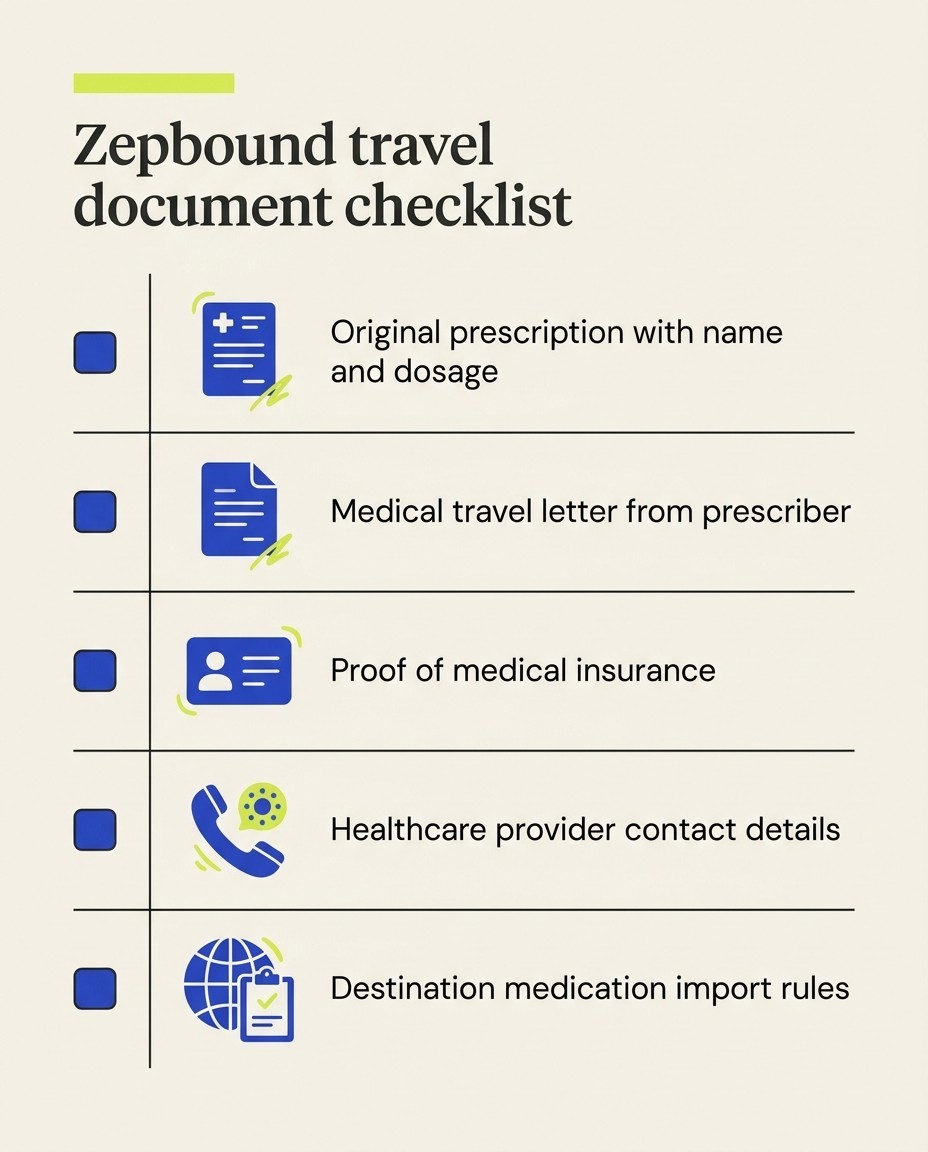
Make copies of every document. Keep one set in your carry-on and stash another in a different bag. If you lose the originals, at least you’ve got backups.
Look up your destination’s rules about importing prescription medicines. Some places want advance approval for certain drugs.
Allow at least a month for paperwork, as some countries have lengthy approval processes for importing prescription medications.
It’s also sensible to pack a list of potential side effects and what to do about them, particularly if you’re in the early stages of treatment. Having this information on hand means you can quickly check whether a symptom is a common side effect of Zepbound or something that needs medical attention while you’re abroad.
If you also take insulin or other injectable medications, make sure your travel letter covers all your treatments and that your travel case has enough capacity for everything you need.
Keeping medication safe during journeys
Temperature control really matters every single day you’re away. Zepbound can stay unrefrigerated at room temperature below 86°F for up to 21 days. This is similar to how insulin pens can be kept at room temperature for a limited period once in use, though the exact timeframes differ between medications. Always check the MedlinePlus drug information and the Medication Guide that comes with your specific product.
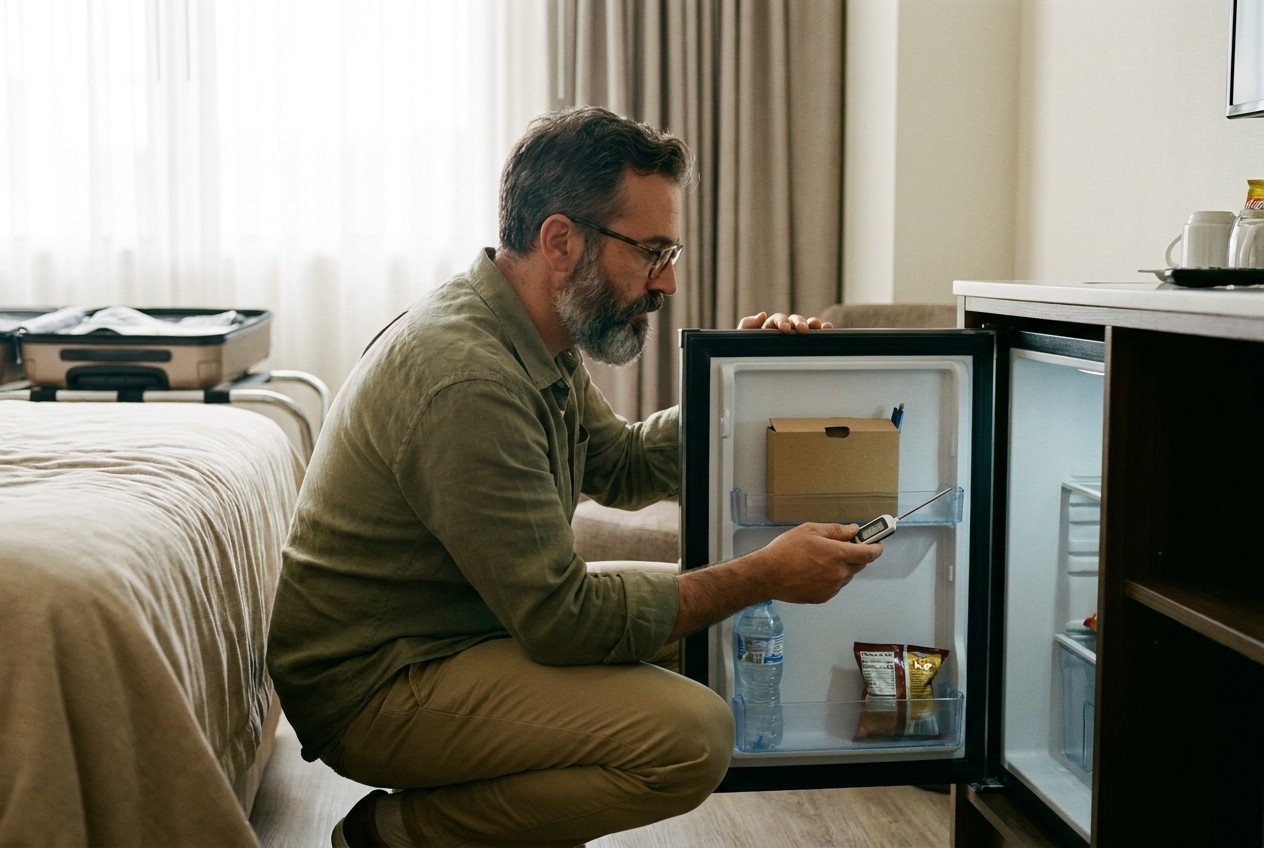
Refrigeration is still better when you can manage it. Before you arrive, ask your hotel if they have a fridge in your room.
Most hotels will provide one if you explain it’s for medical storage. Sometimes there’s a small fee, but it’s worth it for peace of mind.
Bring along a small thermometer to check your storage spot. Hotel mini-fridges can run too cold near the back. Try to keep your pen up front, where temperatures stay more stable. It’s a small detail, but it helps.
Pack extra supplies in case something goes wrong. Bring spare alcohol swabs, extra needles, and a portable sharps container for used needles. It’s surprisingly hard to find these things when you’re traveling.

Contact your prescriber or a local pharmacy if:
- You suspect your Zepbound pen has been exposed to temperatures above 86°F
- Your pen has been frozen, even briefly
- You notice any visible changes in the medication’s appearance
- You’re unsure whether your medication is still safe to use
Using compromised medication may mean you don’t receive the correct dose, which could affect your weight loss progress. When in doubt, it’s safer to replace the pen.
Never leave your medication in a hot car or direct sunlight. Even 20 minutes in a warm vehicle can damage the pen. Take it with you whenever you leave the vehicle.
If you’re out for the day, use an insulated lunch bag with a small ice pack. That keeps your backup pen safe while you’re out exploring.
The bottom line
Traveling with Zepbound is straightforward once you have the right setup. A quality insulated travel case, your prescription paperwork, and a little advance planning are all you need to keep your medication safe on any trip. Always carry your pen in your carry-on bag, keep it away from extremes of temperature, and speak to your prescriber if you have any concerns about managing your treatment while away from home.
Frequently asked questions
Does Zepbound need to be refrigerated while traveling?
Unopened Zepbound pens should ideally be kept refrigerated at 36°F to 46°F (2°C to 8°C). However, they can be stored at room temperature below 86°F (30°C) for up to 21 days, which gives you flexibility during travel. Once a pen has been stored at room temperature, don’t put it back in the fridge. An insulated travel case with cooling packs is the safest option for maintaining the right temperature on the go. Source: Tirzepatide Injection, MedlinePlus
Can I take Zepbound on a plane?
Yes. Always carry your Zepbound in your carry-on bag, not in checked bags. Keep it in its original packaging with the pharmacy label visible. Bring your prescription and a medical travel letter from your prescriber. Most airlines allow cooling packs for medical use. Let security staff know you’re carrying temperature-sensitive medication. Security teams are accustomed to seeing injectable medications like insulin, so a clearly labeled Zepbound pen shouldn’t cause any issues.
What happens if my Zepbound pen freezes?
If your Zepbound pen freezes, you must throw it away and not use it, even if it thaws. Freezing damages the protein structure of tirzepatide, making it ineffective. To prevent freezing, make sure cooling packs in your travel case don’t directly touch the pen. Use a barrier cloth or mesh pocket. Source: Tirzepatide Injection, MedlinePlus
How long can Zepbound stay out of the fridge?
Zepbound pens can stay out of the fridge for up to 21 days, provided the temperature stays below 86°F. Don’t return a pen to the fridge once it has been stored at room temperature, and discard it if it isn’t used within the 21 days. Source: Tirzepatide Injection, MedlinePlus
Do I need a doctor’s letter to travel with Zepbound?
It’s strongly recommended. A medical travel letter from your prescriber explains why you carry injectable medication and can smooth things over at customs or security. Some countries require advance approval for importing prescription medications, so check your destination’s rules at least a month before your trip.
Can I use a regular cooler bag for Zepbound?
A regular cooler bag can work in a pinch, but it’s not ideal. Standard cooler bags don’t offer the same level of insulation or temperature stability as medical-grade travel cases. They also lack protective compartments for pens, and ice packs can freeze the medication if they touch it directly. A dedicated medication travel case is a worthwhile investment for regular travelers.
What should I do if my Zepbound gets too warm while traveling?
If you suspect your pen has been exposed to temperatures above 86°F, do not use it. Contact your prescriber or a local pharmacy for advice. Using medication that may have been compromised could mean you don’t get the full dose, affecting your treatment progress. When in doubt, it’s safer to replace the pen.
Are Zepbound travel cases allowed through airport security?
Yes. TSA allows medically necessary gel ice packs in reasonable quantities, even if they are melted or slushy. Tell the officer at the checkpoint that you’re carrying them so they can be inspected. Keep your medication in its original packaging and have your prescription or medical travel letter ready to show. Security staff may want to inspect the cooling packs separately, which is standard procedure.
This guide is for information only and does not replace medical advice. Zepbound is a prescription medication. Speak to your doctor or prescriber before starting treatment or if you have concerns about managing your medication while traveling.
Sources:
-
Tirzepatide Injection — MedlinePlus
-
Traveling Abroad with Medicine — CDC Travelers’ Health
-
Gel ice packs — TSA