

Sleep often gets dropped when your schedule fills up, your stress rises, or your phone keeps you scrolling past bedtime. If you are working on weight loss or maintenance, those short nights can make food choices and energy levels feel harder to manage.
The sleep routines worth protecting are the simple ones you can repeat most nights: a consistent sleep and wake time, a wind-down period without screens, and a bedroom set up for rest. The CDC recommends that adults get at least 7 hours of sleep per night, and steady habits make that goal easier to reach. Research on bedtime routines, mostly in children, links a consistent routine with better sleep and longer sleep, not just an earlier lights-out.
You do not need a perfect routine to see a difference. This guide covers practical sleep habits, how to keep them going when life gets in the way, and when to talk with your doctor about sleep health, recovery, and mental well-being.
Key takeaways

Daily habits that make better sleep easier
Good sleep often depends on choices you make long before bedtime, such as when you wake up, how much light you get, and when you have your last coffee.
Protect a consistent wake time and enough time for sleep
A consistent sleep schedule gives your circadian rhythm, your body’s roughly 24-hour internal clock, a steady anchor. As covered above, most adults need at least 7 hours a night, so your bedtime depends on when you have to get up.
Your wake time matters most. Getting up at the same time each day, including weekends, helps build sleep regularity, and the AASM statement on adult sleep stresses getting enough sleep on a regular basis, not just now and then. Sleep pressure, the growing urge to sleep, then builds through the day, and you feel sleepy again that night.
To set a consistent bedtime, count back from your wake time:
- Wake at 6 a.m.: aim to be in bed by about 11 p.m.
- Wake at 7 a.m.: aim to be in bed by about 11 p.m.
Allow some extra time, since most people take a little while to fall asleep.
Use morning light and dimmer evenings to support your body clock
Light exposure is the main signal for your sleep-wake cycle, according to NIGMS. Bright morning light tells your brain the day has started. It also helps time the evening release of melatonin, the hormone that signals it is time to sleep.
If you can, get outside within an hour or so of waking, even briefly. Outdoor daylight is much brighter than indoor lighting, even on a cloudy day.

In the evening, do the opposite:
- Switch to lamps instead of overhead lights for the last hour or two before bed.
- Turn down screen brightness or use night mode. It may help a little, but putting the phone down helps more.
- Keep hallway and bathroom lights low if you get up at night.
Set a caffeine cutoff that fits your bedtime
The longer you’re awake, the more adenosine builds up in your brain, which creates sleep pressure. Caffeine blocks adenosine’s effect, so you feel more alert than you otherwise would. Its effects can last for hours. In one study, 400 mg of caffeine taken six hours before bedtime still cut total sleep by more than an hour.
A common caffeine cutoff is about 8 hours before bed. If you go to bed at 10
p.m., that means finishing caffeine around 2 p.m.| Your bedtime | Suggested caffeine cutoff |
|---|---|
| 10 p.m. | 2 p.m. |
| 11 p.m. | 3 p.m. |
| Midnight | 4 p.m. |
Caffeine sensitivity varies, so adjust your cutoff based on how you feel. Remember that caffeine is also in tea, soda, energy drinks, chocolate, and some pre-workout products.
Build a simple wind-down with less scrolling
A wind-down routine helps your body move from alert to calm. Using your phone in bed is linked with taking longer to fall asleep and sleeping less, so cutting back on late screen time is a useful place to start.
Your bedtime routine can be short. Spend 30 to 60 minutes on a few calm activities:
- Charge your phone outside the bedroom.
- Take a warm shower or read a paper book.
- Write tomorrow’s to-do list to clear your mind.
- Try breathing techniques, such as inhaling for 4 counts and exhaling for 6.
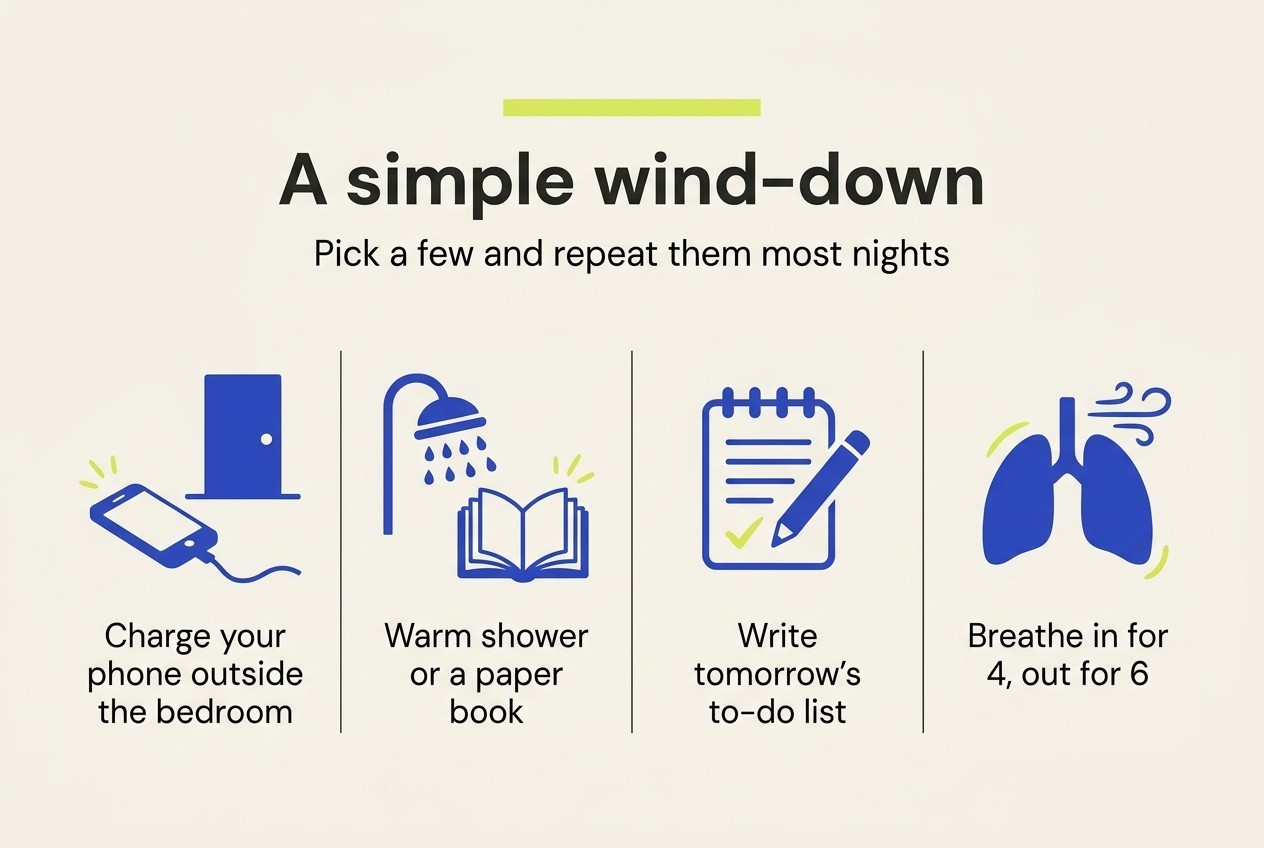
These steps lower stress and make it easier to fall asleep. They work best when you repeat them most nights, because your brain starts to treat the routine itself as a signal that sleep is coming.
Make your bedroom dark, quiet, and cool
Your sleep environment affects how deeply you sleep. Your core body temperature drops as you fall asleep, and a cooler room helps that process. A commonly suggested range is about 60 to 67°F, but the right temperature is the one where you don’t wake up hot.
Simple ways to improve your bedroom include:
- Darkness: use blackout curtains or a sleep mask.
- Quiet: use white noise or a fan to mask sudden sounds.
- Comfort: choose breathable bedding and a supportive pillow.
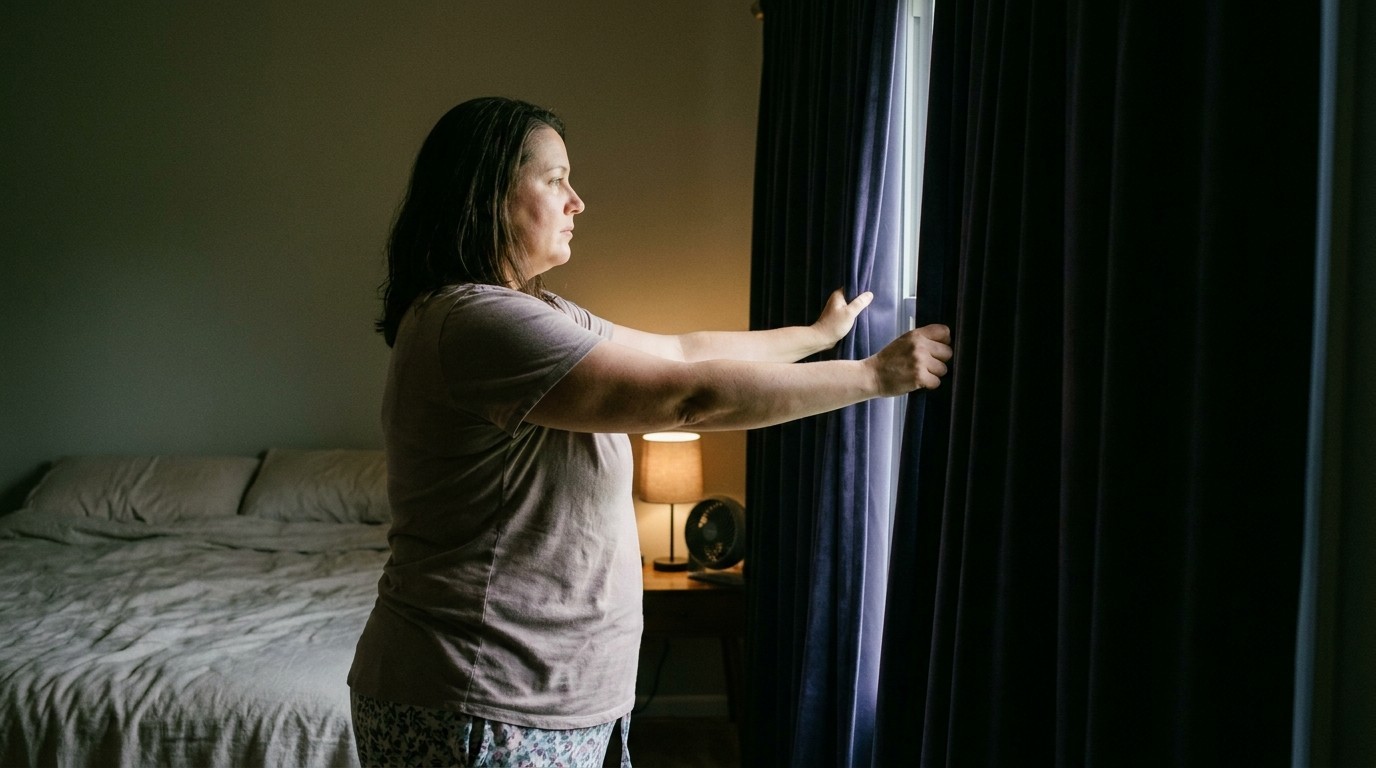
If you tend to sleep hot, a cooling mattress cover is one option. A fan, lighter blankets, and cotton sheets can also help keep your bedroom cool at night.
Daytime movement and well-timed naps
Regular physical activity is linked to falling asleep faster and getting deeper sleep, according to the HHS guidelines. Walks, strength training, or cycling all count. If intense evening workouts leave you wired, move them earlier in the day.
Daytime sleep can help you, or it can make bedtime harder:
- Keep naps to about 20 to 30 minutes.
- Nap before mid-afternoon.
- Skip naps if you have trouble falling asleep at night.
If you feel dangerously sleepy while driving, pull over somewhere safe and rest. Don’t push on. If it keeps happening, or you nod off during everyday tasks, talk with your doctor soon. Ongoing daytime sleepiness can be a sign of a sleep disorder such as sleep apnea.
Keep heavy meals and alcohol away from bedtime
Large, rich, or spicy meals close to bedtime can cause heartburn and discomfort when you lie down. Try to finish your main meal 2 to 3 hours before bed. If you are hungry later, a light snack such as yogurt or a banana is gentler on your stomach. A healthy sleep routine often includes eating balanced meals at regular times.
Alcohol can make you feel drowsy, but it tends to disrupt sleep later in the night. As your body processes it, sleep gets lighter, REM sleep (the stage linked with dreaming and memory) is reduced, and you’re more likely to wake in the early hours, according to this review. If you drink alcohol, having it earlier in the evening and in smaller amounts gives your body more time to process it before you sleep. If you’re cutting back for weight reasons, sleep is one more reason the earlier, smaller drink tends to win.
How sleep fits with weight loss and maintenance
If you’ve ever noticed that a short night makes the vending machine louder, you’re not imagining it. Short sleep is linked with more hunger and stronger cravings the next day, and with less energy for the walk or workout you planned. In a small 2022 study, adults who usually slept less than six and a half hours were coached to sleep longer, and they ended up eating fewer calories per day than a comparison group without being asked to change their diet. Better sleep quality won’t replace the other parts of losing or maintaining weight, but it makes the rest of your habits easier to keep.
Make your routine work through disruptions and sleep problems
Your routine doesn’t have to look the same every night. Here’s how to keep it going through busy weeks, travel and shift work, and when to get help.
A minimum routine for busy nights and shared homes
On packed nights, use a shorter version of your routine. Consistency seems to matter more than length, so repeating the same two or three steps every night likely does more for your sleep than a long routine you only manage on quiet weekends.
A minimum routine might include:
- Dim the lights about 30 minutes before bed
- Put your phone on a charger across the room or outside the bedroom
- Do one cue activity, such as brushing your teeth or reading two pages
If you share a home, agree on quiet hours and keep your cue the same even when your bedtime shifts.
Noise, light sleepers, and unfamiliar bedrooms
Light sleepers often wake to sounds others ignore. Sound masking with a fan, white noise machine, or app gives your brain a steady background, so sudden noises stand out less. Foam earplugs are another option.
A blackout sleep mask helps in hotel rooms, guest rooms, or bedrooms with streetlights. In unfamiliar places, bring a familiar item, such as your own pillowcase. Many people sleep more lightly on the first night somewhere new, which researchers call the “first-night effect,” so a rough first night in a hotel says more about the hotel than about your routine.
Travel, jet lag, and shift work
For jet lag, get morning light after flying east and afternoon or evening light after flying west. Shifting your bedtime by an hour a day before a trip can also help.
Shift workers face a harder challenge, because working at night disrupts normal sleep-wake timing (this study). For daytime sleep, try these steps:
| Step | Why it helps |
|---|---|
| Wear sunglasses on the drive home | Limits morning light that signals “wake up” |
| Pull over and rest if you feel drowsy on the drive | Drowsy driving after night shifts is a real crash risk |
| Use blackout curtains | Makes the bedroom dark during the day |
| Set a “do not disturb” period with your household | Protects your sleep block |
Some people ask about melatonin for jet lag or shift work. It’s sold as a supplement, so it isn’t regulated like a prescription drug and the amount in a product can vary. Talk with your doctor or pharmacist first, especially if you take other medications or are pregnant (NCCIH).
Try a two-week sleep check-in, not a perfect score
A sleep check-in works best as a short experiment, not a daily test. For two weeks, note a few items each morning:
- Bedtime and wake time
- Caffeine after your cutoff time (yes/no)
- Screens in bed (yes/no)
- How rested you feel (1–5)
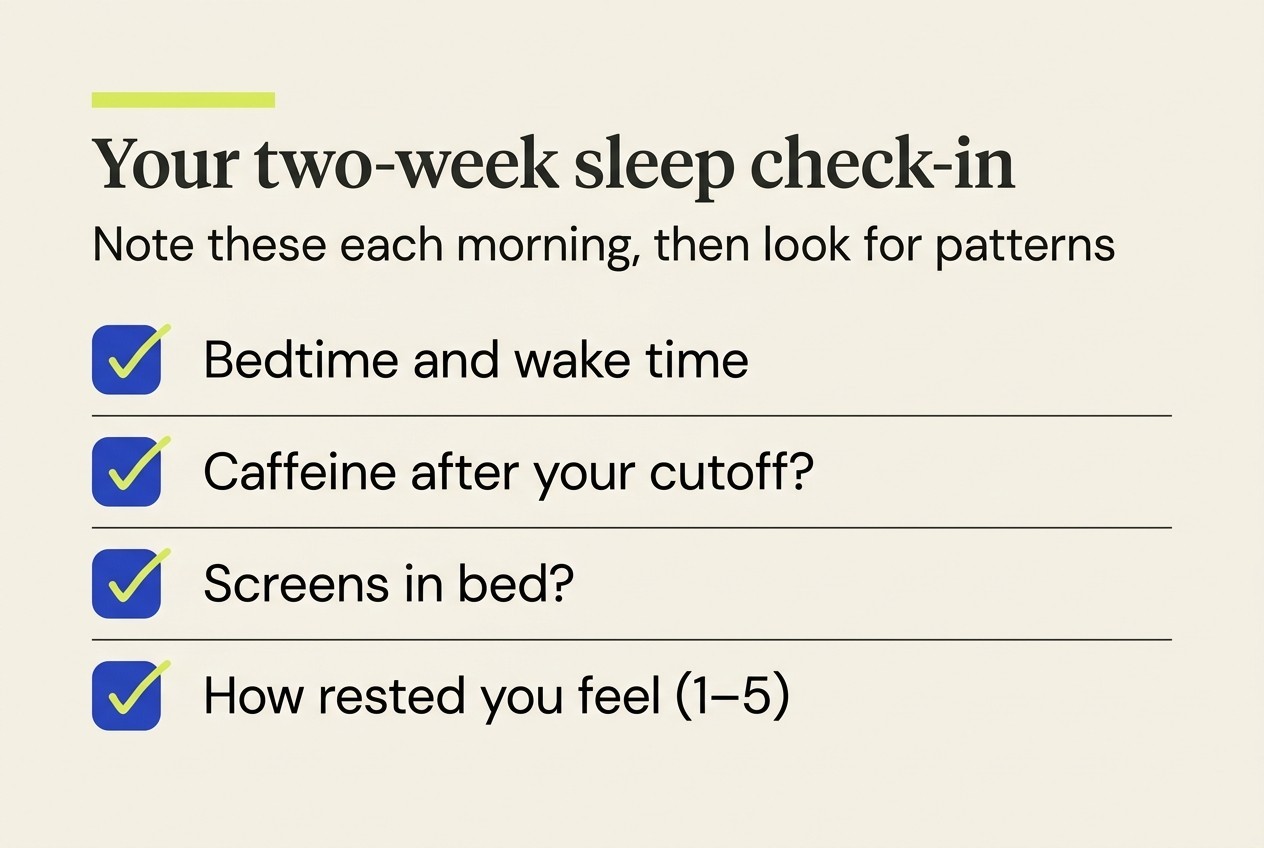
Look for patterns at the end, not on any single day. A sleep-tracking ring or watch can add data on timing and sleep efficiency (the share of your time in bed that you actually spend asleep), but wearables estimate sleep stages from movement and heart rate, so treat their “deep sleep” numbers as rough guesses, not measurements.
If checking your scores makes you anxious, take a break from them. Some people sleep worse when they focus on hitting a number, something researchers have described as “orthosomnia.”
Sleep cycles without the 90-minute math
During the night, you move through sleep cycles that last roughly 90 minutes on average. Each cycle includes light sleep, deep sleep, and REM sleep. Deep sleep tends to come earlier in the night, and REM periods get longer toward morning, according to NINDS.
Cycle length varies between people and even from one cycle to the next, so setting your alarm in exact 90-minute blocks is less reliable than it sounds. A regular wake time and enough total sleep are a simpler way to improve sleep quality, and they don’t require a calculator at 11 p.m.
What to do when you can’t fall back asleep
Trying hard to sleep usually keeps you awake longer. If you’ve been lying awake for what feels like 20 minutes, try stimulus control, a technique from insomnia treatment that helps your brain link your bed with sleep rather than lying awake:
- Get up and go to another dimly lit room
- Do something calm, like reading a paper book or folding laundry
- Return to bed only when you feel sleepy
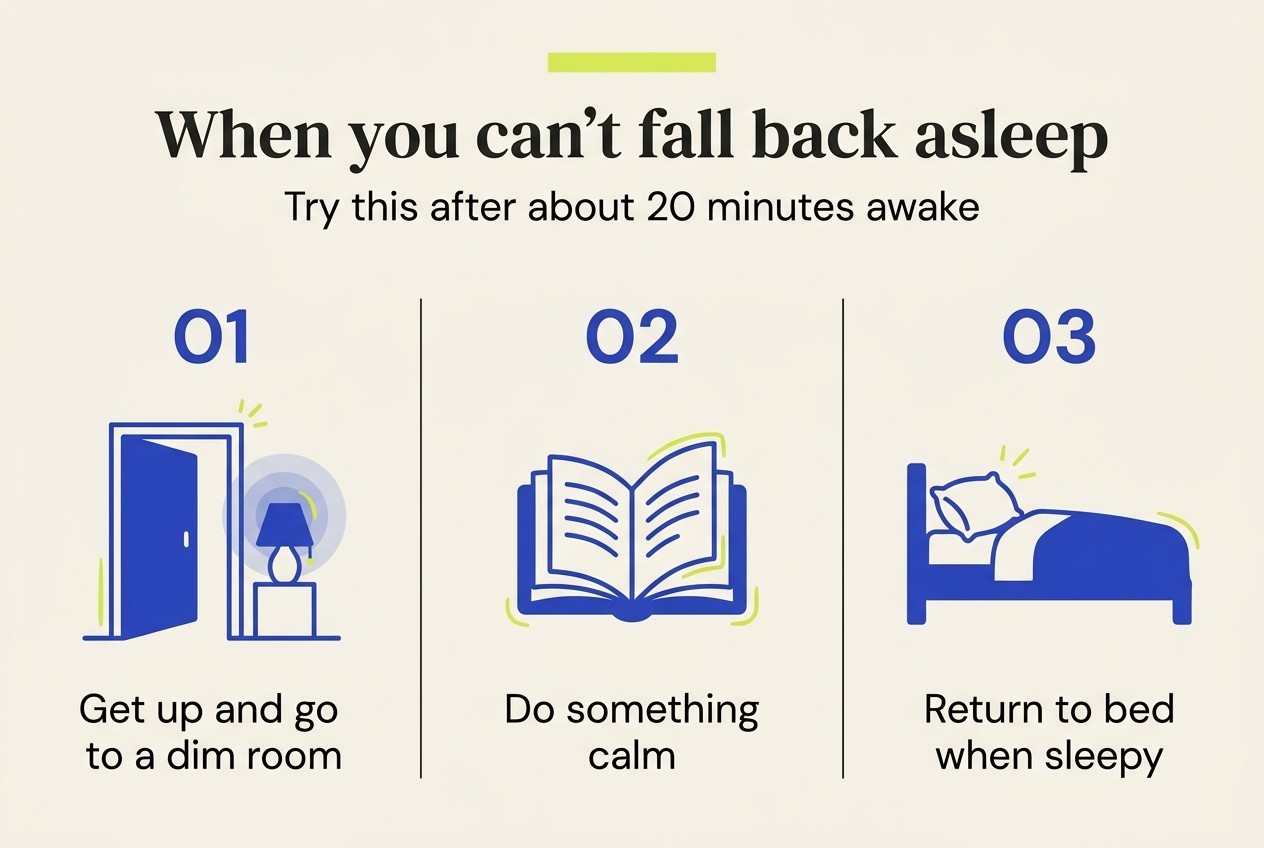
Avoid checking the clock, since counting the hours can raise stress. Keep your usual wake time the next morning, even after a poor night. This helps build sleep pressure for the following night.

When to talk to your doctor about sleep
Occasional bad nights are common. Chronic insomnia usually means trouble falling or staying asleep at least three nights a week for three months or more, along with daytime effects (NHLBI).
The first-line treatment recommended for chronic insomnia is cognitive behavioral therapy for insomnia (CBT-I), according to the ACP guideline. It’s a structured program, usually 4 to 8 sessions, that changes the habits and thoughts that keep insomnia going. Clinicians trained in behavioral sleep medicine offer it in person or online, and your doctor can refer you.
See a doctor if you notice:
- Loud snoring, gasping, or pauses in breathing, which can be signs of sleep apnea. One study found insomnia symptoms are common in people with breathing problems during sleep, such as sleep apnea, so the two can overlap.
- Strong daytime sleepiness, which has been linked to lower quality of life in obstructive sleep apnea
- An urge to move your legs at night, a possible sign of restless legs syndrome
- Low mood, constant worry, or feeling hopeless alongside poor sleep. Sleep problems and mental health often affect each other, and your doctor can help with both. If you’re in crisis or thinking about harming yourself, call or text 988 to reach the 988 Suicide & Crisis Lifeline.
Weight changes can affect some sleep disorders, including sleep apnea, so mention any recent changes to your doctor. If a medication seems to be affecting your sleep or causing nighttime symptoms such as reflux, tell your doctor or pharmacist rather than changing how you take it.
Frequently asked questions
What are the most important sleep habits to stick to every day?
The habit with the biggest payoff is a consistent wake time, because it anchors your body clock. Next comes enough time in bed to reach at least 7 hours of sleep, which the CDC recommends for adults ages 18 to 60.
A dark, cool, quiet bedroom also matters. So does protecting long stretches of sleep from interruptions.
Can poor sleep make weight loss harder?
It can make it feel harder. Short sleep is linked with more hunger, more cravings and less energy for movement the next day. Sleep won’t do the work on its own, but protecting it gives your other habits a better chance. See “How sleep fits with weight loss and maintenance” above for the research.
How can I build a relaxing bedtime routine that works for me?
Start with 30 to 60 minutes of calm, low-light activities you enjoy, such as reading, stretching, a warm shower, or journaling. Keep the order roughly the same each night so your brain links those steps with sleep.
There’s no single correct routine. If you’re managing a busy schedule, caregiving, or appetite changes during weight loss, a 15-minute version still counts.
Why is it important to keep a consistent sleep schedule, even on weekends?
Your body clock runs on regular cues. Sleeping in 2 or 3 hours on weekends can create “social jet lag,” which makes Sunday night sleep and Monday mornings harder.
Keeping a similar wake time every day, within about an hour, is one of the simplest ways to avoid that Monday slump. If you like data, a sleep-tracking ring or watch can show how much your timing shifts from weekday to weekend.
What can I do during the day to sleep better naturally at night?
Get outdoor light within an hour or two of waking, since morning light helps set your body clock. Regular physical activity is linked to better sleep quality, though some people find hard workouts close to bedtime keep them alert.
Keep naps short, around 20 to 30 minutes, and before mid-afternoon.
How long before bed should I avoid caffeine, screens, and heavy meals?
| Habit | Common guideline |
|---|---|
| Caffeine | Stop about 8 hours before bed, earlier if you’re sensitive |
| Heavy or large meals | Finish 2 to 3 hours before bed |
| Screens | Put them away 30 to 60 minutes before bed |
In many adults, it takes around 5 hours for the body to clear half the caffeine you’ve had (its half-life), though this varies widely from person to person, so an afternoon coffee can still be active at bedtime. Screens can delay sleep through light exposure and engaging content.
Is it OK to take melatonin every night?
Melatonin appears to be safe for most adults in the short term, but less is known about nightly use over months or years. It’s more useful for shifting your body clock, as with jet lag, than for chronic insomnia. Talk to your doctor or pharmacist before using it regularly, especially if you take other medications. See the melatonin note in “Travel, jet lag, and shift work” above for details on supplement labeling.
What is the 10-5-3-2-1 rule for better sleep?
It’s an informal countdown, not a clinical guideline. It’s built on the timing habits above:
- 10 hours before bed: no more caffeine. That’s stricter than the 8-hour cutoff above, which works for many people.
- 5 hours before bed: no alcohol
- 3 hours before bed: no large meals
- 2 hours before bed: stop work tasks
- 1 hour before bed: no screens
If 5 hours isn’t realistic, the earlier and smaller the drink, the better for the second half of your night.
The rule hasn’t been studied as a package, but each step reflects common sleep hygiene advice. Treat it as a flexible starting point and adjust the numbers to fit your life.