


Feeling exhausted after starting Zepbound? You’re not imagining it. Tiredness and fatigue are common complaints among people taking tirzepatide, especially during the first few weeks of treatment or after a dose increase. If Zepbound is making you exhausted, understanding why it happens can help you manage it.
Key takeaways

Important: Don’t stop taking Zepbound because of tiredness without speaking to your prescriber first. Fatigue is usually temporary and manageable.
Why does Zepbound cause tiredness?
Zepbound (tirzepatide) works as a dual GLP-1 and GIP receptor agonist. In plain terms, it mimics two natural gut hormones (GLP-1 and GIP) that your body releases after eating. These hormones help regulate appetite, blood sugar, and digestion. By activating both pathways at once, Zepbound reduces hunger and helps you feel full for longer.
These effects can lead to fatigue through several mechanisms. Tiredness is one of the recognized Zepbound side effects, though it’s usually temporary and manageable.

You’re eating fewer calories
This is the most straightforward explanation. Zepbound reduces appetite, which means you’re probably eating less than before. Fewer calories means less fuel for your body, and that can leave you feeling drained.
Your body needs energy to function, and when intake drops suddenly, it takes time to adapt to running on less. If you’re eating much less than before, your body is also working harder to access stored energy (fat), which can feel taxing at first.
Your blood sugar is changing
Tirzepatide helps regulate blood glucose levels, which is one of its benefits for people with type 2 diabetes. However, your body may have been used to higher blood sugar levels before starting treatment.
As your glucose stabilizes at healthier levels, you might feel temporarily sluggish. This is particularly noticeable if you previously relied on blood sugar spikes for quick energy bursts throughout the day. These spikes would give you a short-term boost followed by a crash. Without them, your energy may feel more steady but lower overall at first.
Your body is adjusting to the medication
Any new medication requires an adjustment period. Zepbound affects multiple systems in your body, including digestion, appetite signaling, and how you process energy (your metabolism).
During the first few weeks, your body is recalibrating. This adjustment process itself can be tiring, similar to how jet lag leaves you exhausted even though you haven’t done anything physically demanding.
Digestive side effects are draining
If you’re dealing with nausea and digestive issues, loose stools, or abdominal discomfort, these symptoms take a toll on your energy. Feeling unwell is exhausting, and digestive issues can affect nutrient absorption and hydration, both of which impact energy levels.
According to clinical trial data from the SURMOUNT weight management studies, gastrointestinal side effects are the most commonly reported adverse events with tirzepatide, affecting up to 29% of participants (nausea) and 23% (diarrhea) at the highest doses.
Dehydration may be playing a role
When you eat less, you get less fluid from food. If you’re also experiencing digestive side effects that increase fluid loss, dehydration can develop. Even mild dehydration causes fatigue, migraines, and difficulty concentrating.
Does Zepbound fatigue go away?
For most people, yes. If you’re wondering how long Zepbound fatigue lasts, the answer is usually two to four weeks on a new dose, then it gradually improves as your body adapts.
You might notice a pattern: energy dips after each dose increase, followed by gradual improvement over the following weeks. This is normal and suggests your body is adjusting appropriately.
The timeline varies between individuals. Some people feel back to normal within a week or two, while others take longer. Factors that influence recovery include:
- How much your calorie intake has decreased
- Whether you’re getting adequate nutrition from what you do eat
- Your overall health and fitness level
- How well you’re sleeping
- Whether you’re managing other side effects
If fatigue persists for more than a month at the same dose, or if it’s severe enough to interfere with your daily life, discuss this with your healthcare provider. Persistent exhaustion could indicate other issues that need addressing, such as thyroid problems, anemia, or vitamin deficiencies.
How to manage tiredness on Zepbound
While you can’t completely eliminate the adjustment period, several strategies can help you maintain better energy levels.
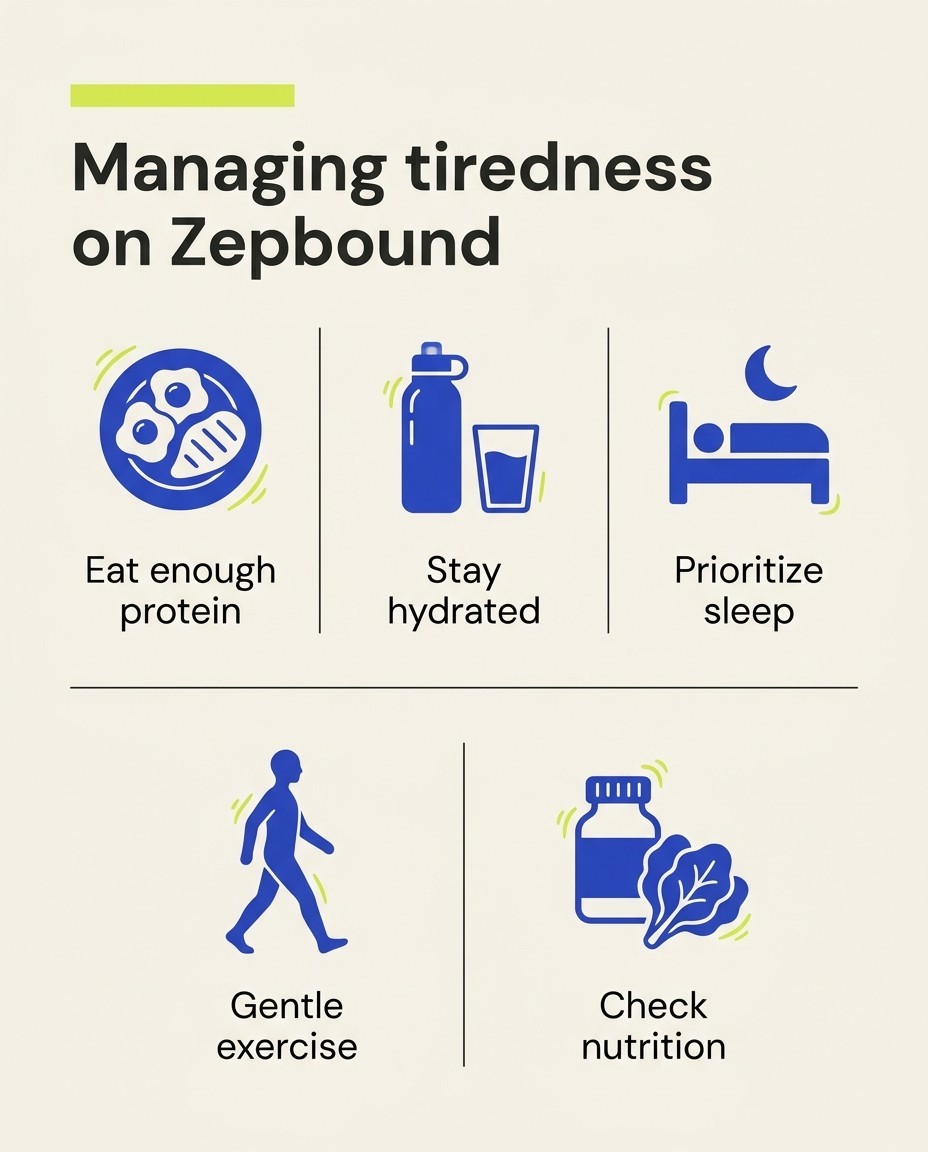
Eat enough, even when you’re not hungry
Zepbound suppresses appetite so effectively that some people barely eat. This might seem like a weight loss win, but severely restricting calories will leave you exhausted and can actually slow your metabolism.
Even if you’re not hungry, aim to eat regular, balanced meals. Focus on:
- Protein at every meal to support energy and preserve muscle. The US Recommended Dietary Allowance is 0.8g per kilogram of body weight daily, about 0.36g per pound, but during weight loss, slightly higher intakes (around 0.45–0.55g per pound) may help preserve muscle mass. For someone weighing 180 pounds, that’s about 81–99g of protein daily, spread across meals. Good sources include chicken breast (31g per 3.5 ounces), eggs (around 6g each), Greek yogurt (10g per 3.5 ounces), and lentils (9g per 3.5 ounces cooked).
- Complex carbohydrates for sustained energy, such as whole grains, vegetables, and legumes. These release energy slowly rather than causing spikes and crashes.
- Healthy fats to help you feel satisfied, such as nuts, avocado, and olive oil.
- Plenty of colorful vegetables for vitamins and minerals.
If large meals feel impossible, eat smaller portions more frequently throughout the day. The goal is adequate nutrition, not necessarily three big meals.

Stay hydrated
Dehydration is a sneaky cause of fatigue that’s easy to overlook. When you’re eating less, you’re also getting less fluid from food. Add in potential digestive side effects and you might be more dehydrated than you realize.
Aim for at least 68 ounces of water daily. The National Academies set adequate total water intake at about 91 ounces a day for women and 125 ounces for men, counting water from all beverages and food, and you may need more if you’re experiencing digestive side effects like diarrhea. Signs of dehydration include dark urine, headaches, dry mouth, and fatigue.
Get proper sleep
This sounds obvious, but it’s worth saying. Your body is going through significant changes, and quality sleep helps it adapt. The CDC recommends 7 or more hours per night for adults, though individual needs vary.
Try to maintain a consistent sleep schedule. Going to bed and waking at similar times each day helps regulate your body clock. If insomnia or poor sleep quality is an issue, address it rather than just pushing through. Poor sleep compounds fatigue and makes everything harder.
Time your injection strategically
Some people find that taking Zepbound in the evening helps them sleep through the initial side effects. Others prefer morning injections so they’re not dealing with symptoms at bedtime.
There’s no single right answer. It depends on how your body responds. Experiment to find what works best for your energy levels.
Keep moving, but gently
It might seem backwards when you’re tired, but light exercise can actually boost energy levels. The CDC notes that physical activity helps you feel better, function better and sleep better, which can ease tiredness.
Don’t push yourself to maintain your pre-Zepbound workout intensity, especially during the adjustment period. Listen to your body and scale back if needed. The goal is movement that energizes rather than depletes you. A short walk, gentle yoga, or light stretching can help combat fatigue without overtaxing your system.
Check your nutrition
When you’re eating less overall, every bite matters more. Make sure you’re getting adequate:
- Iron. Deficiency causes fatigue, especially in women. Good sources include red meat, beans, and dark leafy greens.
- Vitamin B12. Essential for energy production. Found in meat, fish, dairy, and fortified foods.
- Vitamin D. Low levels are linked to tiredness.
- Magnesium. Supports energy metabolism. Found in nuts, seeds, and whole grains.
A daily multivitamin can help fill gaps, but food sources are better when possible. If you suspect a specific deficiency, ask your doctor about blood tests.
Fatigue alongside other symptoms
Tiredness on Zepbound often comes with other side effects that share similar causes. You might also notice:
- Feeling cold sensations more than usual
- Headaches
- Dizziness or lightheadedness
- Difficulty concentrating or brain fog
- Muscle weakness
These symptoms often share common causes: reduced calorie intake, dehydration, and the body’s adjustment process. Addressing hydration and nutrition often improves multiple symptoms at once.
If you’re experiencing significant fatigue alongside mood changes, speak to your healthcare provider. The combination may warrant additional support.
Note on thyroid symptoms: If you’re experiencing fatigue combined with feeling unusually cold, constipation, dry skin, or unexplained weight changes, mention this to your doctor. These could indicate thyroid issues, which your prescriber may want to investigate with blood tests.
When to see a doctor about fatigue
Some level of tiredness is expected when starting Zepbound. However, certain situations warrant medical attention.
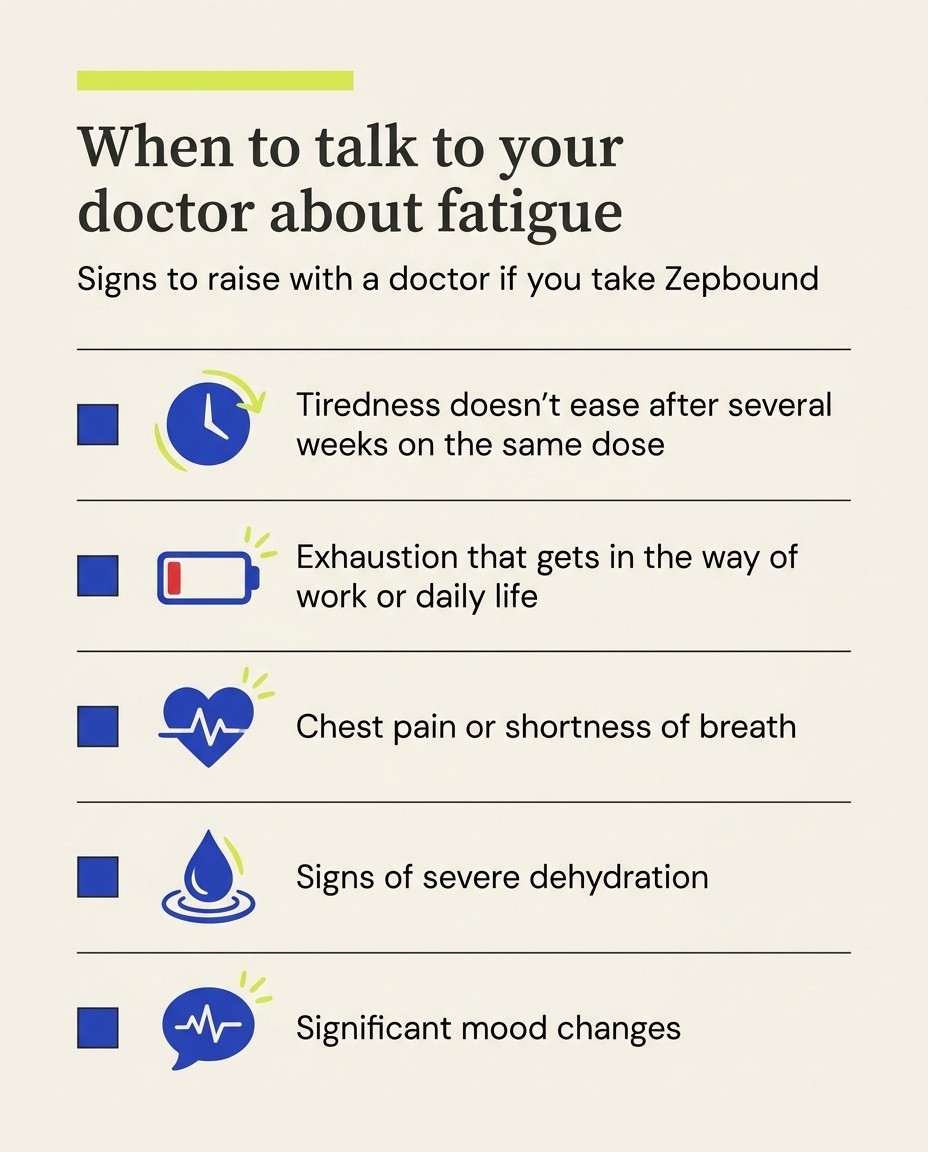

Contact your doctor or prescriber if
- Fatigue doesn’t improve after several weeks at the same dose
- Exhaustion is severe enough to interfere with work or daily activities
- Fatigue comes with unusual symptoms like chest pain or shortness of breath
- You notice signs of severe dehydration (very dark urine, dizziness, confusion)
- Fatigue comes with significant mood changes or depression
- You’re losing weight too rapidly (more than 2 pounds per week consistently)
Your doctor can check for underlying issues like thyroid problems, anemia, or vitamin deficiencies that might be contributing to your fatigue.
What to do next
If you’re about to start Zepbound:
- Stock up on easy, nutritious foods you can eat even when not hungry
- Get a reusable water bottle to help track hydration
- Plan for lighter exercise during the first few weeks
If you’re currently experiencing fatigue:
- Check that you’re eating at least 1,200 calories daily with adequate protein
- Monitor your water intake, aim for at least 68 ounces daily
- Consider whether digestive side effects are contributing to dehydration
- Track your energy levels to identify patterns (worse on injection day? Better in mornings?)
If fatigue persists beyond 4 weeks:
- Book an appointment with your doctor or prescriber
- Ask about blood tests for thyroid function, iron, B12, and vitamin D
- Discuss whether your dose escalation timeline needs adjusting
Sources
- US Food and Drug Administration. Zepbound (tirzepatide) prescribing information. Available at: dailymed.nlm.nih.gov
- Jastreboff AM et al. Tirzepatide once weekly for the treatment of obesity. New England Journal of Medicine. 2022;387(3). (SURMOUNT-1 trial)
- National Academies (Institute of Medicine). Report sets dietary intake levels for water, salt, and potassium to maintain health and reduce chronic disease risk. Available at: nationalacademies.org
- CDC. About sleep. Available at: cdc.gov
- CDC. Benefits of physical activity. Available at: cdc.gov
- Wolfe RR et al. Optimizing protein intake in adults: interpretation and application of the Recommended Dietary Allowance compared with the Acceptable Macronutrient Distribution Range. Advances in Nutrition. 2017;8(2). Available at: pmc.ncbi.nlm.nih.gov
Frequently asked questions
Should I exercise if I’m tired on Zepbound?
Light exercise like walking or gentle yoga can actually boost energy. However, don’t push yourself to maintain intense workouts during the adjustment period. Listen to your body and scale back if needed.
Is fatigue a sign Zepbound is working?
Not really. Fatigue indicates your body is adjusting to eating less and to the medication’s effects. Many people achieve good weight loss results without significant fatigue, while others feel tired without losing much weight at first.
When should I worry about fatigue on Zepbound?
See your doctor if fatigue is severe, doesn’t improve after several weeks, interferes with daily life, or comes with other concerning symptoms like chest pain, severe mood changes, or signs of dehydration.
Should I drink more coffee if I’m tired on Zepbound?
Be cautious with caffeine. While it can provide a temporary energy boost, too much can disrupt sleep, which may worsen fatigue in the long run. Caffeine can also worsen dehydration and may irritate an already sensitive stomach. If you do drink coffee, try to limit it to mornings and avoid having it within 6–7 hours of bedtime.
Does it matter what time of day I take Zepbound for fatigue?
It can. Some people find evening injections help them sleep through initial side effects, while others prefer morning doses to avoid symptoms at bedtime. There’s no universally correct time. Experiment to find what works best for your energy levels and schedule.
Will the tiredness come back every time I increase my dose?
Many people notice a temporary dip in energy after each dose increase, but it’s usually milder than when first starting treatment. Your body has already begun adapting to Zepbound, so subsequent adjustments tend to be easier. If fatigue after dose increases is significantly affecting your daily life, speak to your prescriber about slowing down your escalation timeline.
Is tiredness on tirzepatide different from other weight loss medications?
Fatigue can occur with any weight loss medication that reduces appetite, because eating fewer calories naturally affects energy levels. Tirzepatide works on two hormone pathways rather than one, which may cause a more significant initial adjustment period for some people. However, the management strategies are similar regardless of which medication you’re taking: eat enough nutritious food, stay hydrated, and give your body time to adapt.
Can I take supplements to help with tiredness on Zepbound?
A daily multivitamin can help fill nutritional gaps when you’re eating less. However, avoid taking individual high-dose supplements without checking with your doctor first, as some can interact with medications or cause problems in excess. If you suspect a specific deficiency (like iron or B12), ask your doctor about blood tests rather than self-supplementing.