

Starting a weight loss medication like tirzepatide (Zepbound), the weight loss version of Mounjaro, brings up a lot of questions, especially if you’re living with obesity or are overweight and considering treatment for the first time. The biggest one is usually, “When will this actually start working?”

Most people start noticing weight loss within 2 to 4 weeks of taking Zepbound, with initial results showing about 2 to 4% of total body weight lost. The medication mimics hormones that regulate blood sugar and appetite, so you feel fuller for longer.
But the timeline really depends on the person. Knowing what to expect helps you stay patient and motivated along the way.
Let’s break down how Zepbound works in your body, what weight loss phases you might go through, and which factors could speed things up (or slow them down).
Whether you’re just starting out or comparing your results to someone else’s, here’s what you need to know.
Key takeaways

How does Zepbound work in the body?
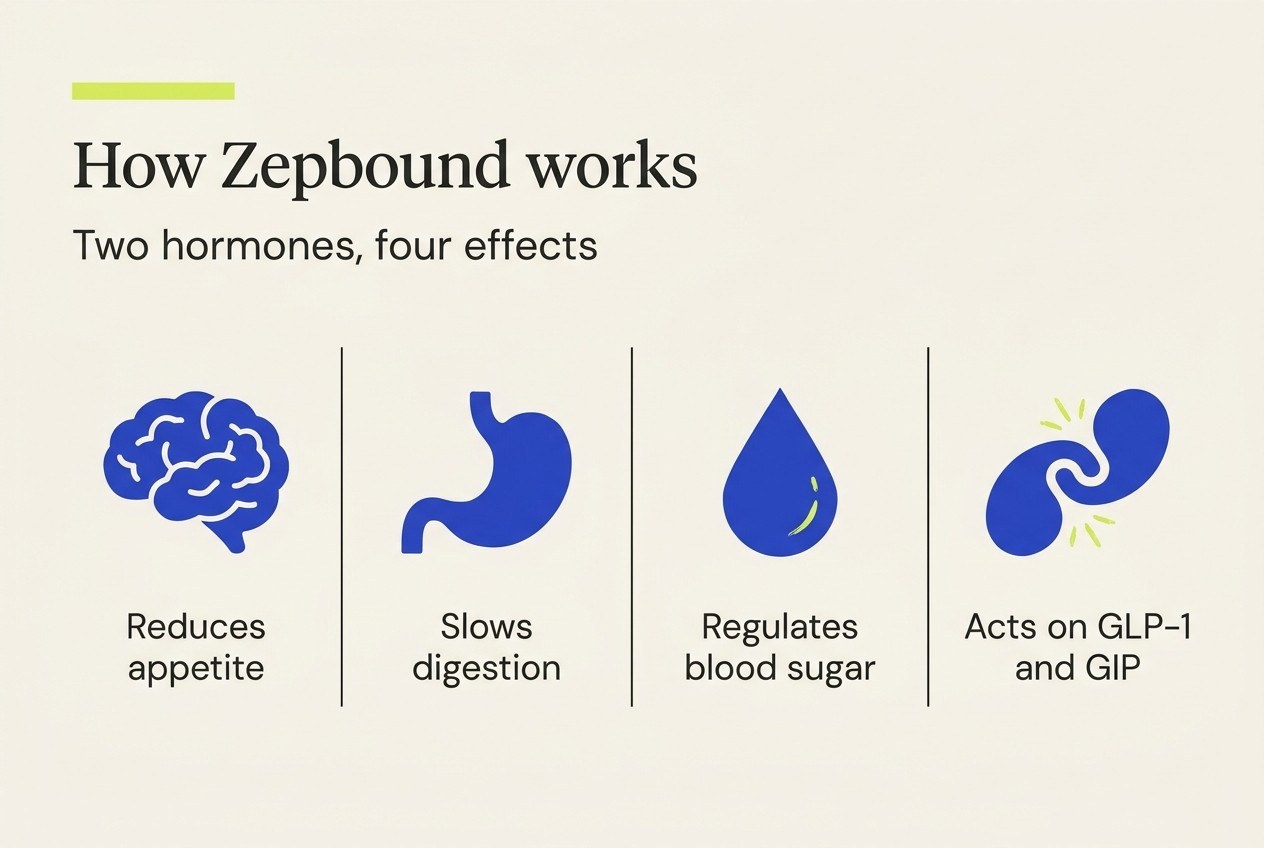
Tirzepatide (the active ingredient in Zepbound) is a dual GLP-1 and GIP receptor agonist. In plain terms, it works on two appetite-regulating hormones instead of one. It slows digestion, reduces your appetite, and helps your body handle glucose better.
Active ingredients and mechanism
Most weight loss medications only target GLP-1 receptors. Tirzepatide targets both GLP-1 and GIP at the same time, which clinical trials suggest leads to greater average weight loss compared to treatments targeting GLP-1 alone.
What each hormone does:
- GLP-1 slows food leaving your stomach and quiets hunger signals
- GIP (glucose-dependent insulinotropic polypeptide) boosts insulin release when there’s glucose and may play a role in fat storage
When tirzepatide activates GLP-1 receptors, it slows down how fast food leaves your stomach (known as delayed gastric emptying), helping you feel full longer. It also acts directly on appetite centers in your brain, so persistent food cravings typically ease up as the medication takes effect.
Most people notice appetite changes within the first few weeks. You might feel satisfied with less food or stop caring about snacks you used to crave.
Dose progression and steady state
You don’t start Zepbound at the highest dose. Instead, you begin with a lower dose and increase it over time.
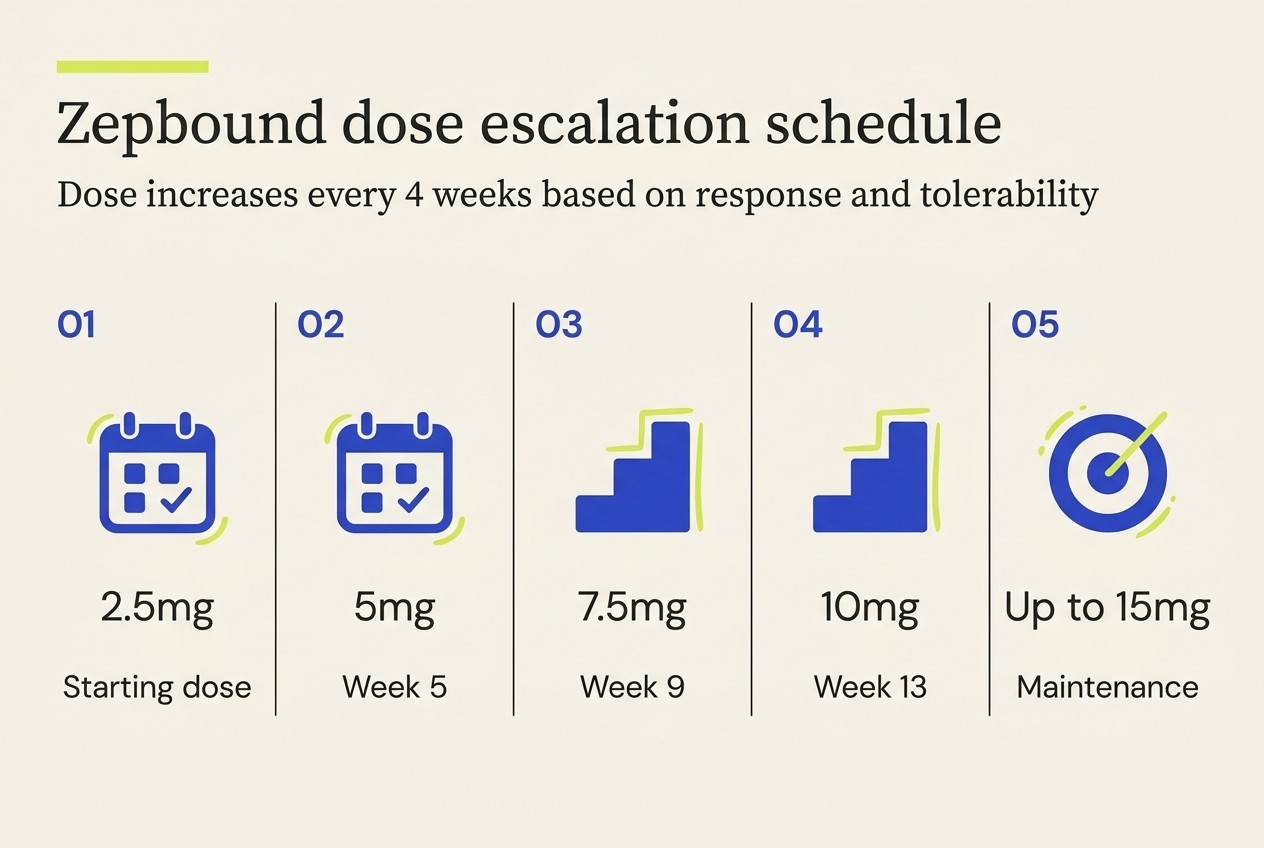
The usual starting dose is 2.5mg once a week. After four weeks, most people move up to 5mg. Your prescriber may keep increasing the dose every four weeks until you reach the right level for your body. This gradual approach (called dose escalation) helps your body adjust and reduces side effects like nausea. The maximum dose is 15mg once weekly.
Typical dose progression:
| Week | Dose |
|---|---|
| 1–4 | 2.5mg |
| 5–8 | 5mg |
| 9–12 | 7.5mg or 10mg |
| 13+ | 10mg, 12.5mg, or 15mg |
Source: Zepbound prescribing information
Zepbound comes as a single-dose pen, a single-dose or multi-dose vial, or a four-dose KwikPen, and the pens make self-injection straightforward. You select your dose, press the pen against your skin (stomach, thigh, or upper arm), and hold it in place. Each pen is single-use, so there’s no measuring or mixing involved.
The medication reaches what’s called a steady state after about four to five weeks at each dose. That’s when your body has fully adjusted to that dose level and you’ll feel its full effects, and when the amount leaving your body matches what you’re injecting.
Zepbound works best when you pair it with healthy eating and exercise. It’s not a magic fix, but it makes sticking to lifestyle changes a whole lot easier.
Zepbound results timeline: When to expect changes
Most people notice appetite changes within days of their first injection. Measurable weight loss usually shows up in the first month.
The biggest changes tend to happen after three to six months of steady treatment.
First few weeks: Early weight loss
The first month on Zepbound usually brings clear changes on the scale. Most people lose between 2–5% of their body weight in this time, based on SURMOUNT-1 trial data. For someone weighing 210 pounds, that’s roughly 4–10 pounds lost.
Sometimes your clothes fit differently even before the scale moves much. That’s normal. Your body composition shifts as you eat less and fill up faster.
What you might notice:

Don’t expect overnight miracles. Weight loss injections work gradually, and your body needs time to adjust.
Three months and beyond: Long-term progress
Here’s where longer-term results become more apparent. The SURMOUNT-1 trial showed people lost an average of 15–22.5% of their body weight over 72 weeks, with up to 22.5% at the highest dose (15mg). Individual results vary significantly.
Months three to six are often when Zepbound patients see the biggest changes. The weight comes off steadily, not all at once.
Expected timeline:
| Timeframe | Average weight loss |
|---|---|
| First month | 2–5% of body weight |
| Three months | 5–10% of body weight |
| Six months | 10–15% of body weight |
| 12+ months (72 weeks) | 15–22.5% of body weight (SURMOUNT-1 trial) |
Source: Jastreboff AM, et al. N Engl J Med. 2022;387(3)
Everyone’s weight loss journey is different. Some lose weight faster, some slower. The important part is steady progress, not comparing yourself to someone else.
Factors influencing Zepbound’s effectiveness
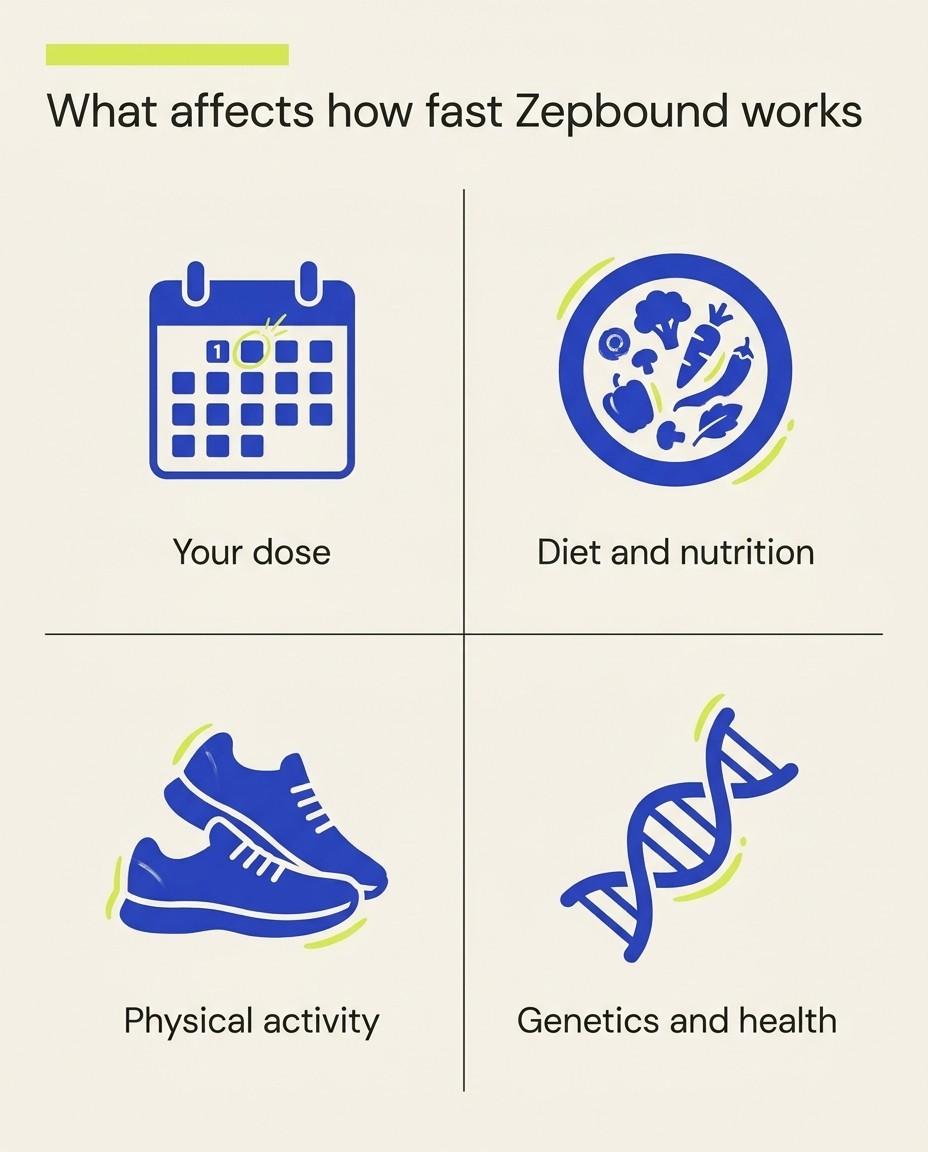
How quickly Zepbound works really depends on you. Your starting dose, daily habits, and genetics all play a part in how your body responds.
Dosage and individual response
Some people see results at 5mg. Others need 10mg or 15mg for the same effect. Metabolism and genetics can really change how you respond.
Your prescription should fit your needs, not someone else’s. What works for your friend might not be right for you, and that’s completely normal.
Lifestyle habits and diet
Medication isn’t enough on its own. What you eat matters just as much as your Zepbound dose.
Portion control gets easier with Zepbound, but if you keep eating mostly processed foods or skip meals, your results might stall. A balanced diet with protein, vegetables, and whole grains helps the medication do its job. During active weight loss, aim for about 0.45–0.55g of protein per pound of body weight daily. For someone weighing 176 pounds, that means roughly 80–100g of protein daily.
Regular physical activity boosts weight loss results when you combine it with Zepbound. You don’t need to run marathons. Walking, swimming, or lifting some weights a few times a week makes a real difference.
Staying well hydrated matters too. Aim for at least 68 fluid ounces of water daily, or 68–101 fluid ounces if you’re experiencing digestive side effects like nausea or constipation.
Sleep matters as well. Poor sleep disrupts your hunger hormones and can slow things down. Try to get seven to nine hours a night.
Genetics and other medical conditions
Your genes affect how Zepbound works for you. Some people have genetic variations that change how they process the medication. This can speed up or slow down your results.
Medical conditions matter too. Thyroid issues, PCOS, or insulin resistance (where your body doesn’t respond to insulin as well as it should, making weight loss harder) can all affect your progress and might mean you need extra monitoring or support from your prescriber. Being overweight also increases the risk of conditions like type 2 diabetes, hypertension, and sleep apnea, which Zepbound can help address alongside weight loss.
Other medications can interact with Zepbound. Always tell your doctor or prescriber about everything you’re taking, including supplements, as some can interact. Regular check-ins with your healthcare team help monitor your progress, adjust dosing if needed, and catch any side effects early.
Comparing Zepbound with other weight loss injections
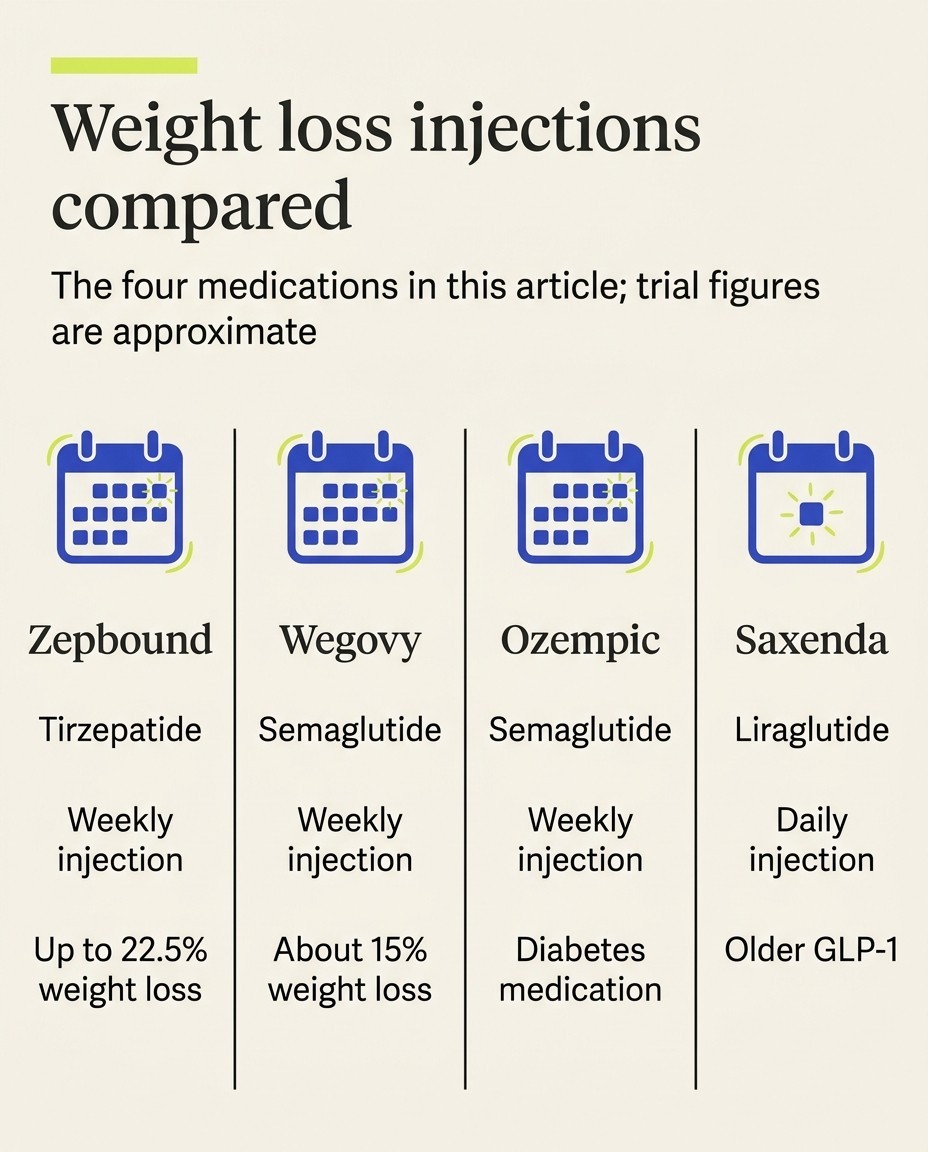
When you’re looking at weight loss injections, it’s worth knowing how tirzepatide compares to the others. Semaglutide-based options like Ozempic and Wegovy work differently from tirzepatide’s dual-action formula.
Zepbound vs Ozempic
Ozempic contains semaglutide, a GLP-1 receptor agonist (a medication that mimics the appetite-regulating hormone GLP-1) first approved for type 2 diabetes. Many people use it off-label for weight loss, meaning it’s prescribed for a purpose it wasn’t originally licensed for.
Tirzepatide’s additional GIP action makes it more effective for weight loss in clinical trials. The SURMOUNT-1 trial compared tirzepatide with placebo and showed substantial weight loss at all doses tested.
Both are weekly injections, but tirzepatide’s GIP component appears to boost appetite suppression and fat metabolism. That’s why clinical trials consistently show stronger results with tirzepatide for people focused on weight loss rather than diabetes management alone.
Zepbound vs Wegovy
Wegovy is the brand name for semaglutide when prescribed for weight loss. It uses the same active ingredient as Ozempic, but at a higher maximum dose of 2.4mg.
Zepbound showed higher average weight loss in trials (up to 22.5% vs. 15% for Wegovy at maximum doses over 68–72 weeks), but Wegovy has a longer track record for weight management. Some people respond better to one than the other, so your prescriber can help you decide which to try first.
Both medications work well. The choice often comes down to availability, cost, and how your body reacts. Some people tolerate semaglutide better than tirzepatide, or vice versa.
Sources: SURMOUNT-1 trial (tirzepatide); STEP 1 trial (semaglutide)
Zepbound and other alternatives
Zepbound is the weight loss version of Mounjaro. Both use tirzepatide as the active ingredient.
There’s also Saxenda (liraglutide), which is an older GLP-1 injection taken every day rather than weekly. Many people find the daily schedule less convenient, and it typically leads to less weight loss compared to the weekly medications.
Newer weekly injections like Zepbound and Wegovy have become more popular due to their convenience and stronger clinical trial results, though the best option depends on your individual circumstances, availability, and how your body responds.
More alternatives are being developed, which may help improve access and reduce costs for people seeking clinical support.
When to seek medical help
Zepbound is generally well tolerated, but it’s important to know which symptoms are normal and which need medical attention.

These are normal and usually improve within 2–4 weeks:
- Mild nausea, especially in the first few days after an injection or dose increase
- Reduced appetite (this is the medication working as intended)
- Minor injection site reactions like redness or itching
- Mild bloating or indigestion
- Slight changes in bowel habits

See your doctor or prescriber if you notice:
- Nausea or vomiting that doesn’t improve after 2–4 weeks on a stable dose
- Persistent diarrhea or constipation
- Dizziness or feeling faint
- Changes in your vision
- Unusual tiredness that doesn’t improve with rest
- Signs of low blood sugar: shakiness, sweating, confusion, fast heartbeat

Seek immediate medical help if you experience:
- Severe abdominal pain, especially if it radiates to your back (possible sign of pancreatitis)
- Signs of an allergic reaction: swelling of the face, lips, or throat, or difficulty breathing
- Severe, persistent vomiting that won’t stop
- Sudden pain in your upper right abdomen (possible gallbladder problems)
- A lump or swelling in your neck, hoarseness, or difficulty swallowing
Call 911 for suspected allergic reactions or pancreatitis.
Zepbound is not suitable for everyone. It should not be used if you have a personal or family history of medullary thyroid carcinoma or Multiple Endocrine Neoplasia syndrome type 2 (MEN2). Your prescriber will check this during your consultation. It’s also not recommended during pregnancy or breastfeeding.
Zepbound may reduce the effectiveness of oral contraceptives. Use additional barrier contraception (such as condoms) for 4 weeks after starting treatment and for 4 weeks after each dose increase.
The bottom line
Zepbound typically starts reducing appetite within the first few days, with measurable weight loss appearing within 2 to 4 weeks. Most people see the biggest changes between months three and six, with the SURMOUNT-1 trial showing average weight loss of up to 22.5% over 72 weeks at the highest dose. Your results depend on your dose, lifestyle habits, genetics, and medical history. Speak to your doctor or prescriber before starting treatment, and give the medication time to work. Rushing to the highest dose won’t necessarily speed up your results.
Frequently asked questions
How long does it take to lose weight on Zepbound?
Most people notice appetite changes within the first few days and measurable weight loss within 2 to 4 weeks. The biggest changes typically happen between months three and six. Individual results vary significantly based on your dose, diet, exercise habits, and medical history. See the results timeline section above for detailed breakdowns by timeframe.
What is the best dose of Zepbound for weight loss?
There’s no single “best” dose. Some people see good results at 5mg or 7.5mg, while others need the maximum dose of 15mg. Your prescriber will help find the right dose based on your weight loss progress and how well you tolerate each increase. See the dose progression table above for the typical escalation schedule.
Why am I not losing weight on Zepbound?
Weight loss can stall for several reasons. You might need a dose increase, or your diet and activity levels may need adjusting. Medical conditions like thyroid problems, PCOS, or insulin resistance can slow progress. Stress, poor sleep, and certain medications can also affect results. If you’ve been on the same dose for more than 4 weeks without progress, speak to your prescriber about adjusting your treatment plan.
Does Zepbound work right away?
Zepbound starts working in your body within hours of your first injection. Most people feel reduced appetite within the first few days. Visible weight loss on the scale usually takes 2 to 4 weeks to appear, though, as the medication needs time to build up in your system.
Can I drink alcohol while taking Zepbound?
There’s no strict rule against alcohol, but it’s worth being cautious. Zepbound slows how quickly food leaves your stomach, which can intensify the effects of alcohol. Alcoholic drinks also add calories that can slow your weight loss progress. If you do drink, keep it moderate and be aware that you may feel the effects more quickly than usual. Speak to your prescriber if you have concerns.
What happens when I stop taking Zepbound?
Research suggests that weight regain is common after stopping GLP-1 medications, as the appetite-suppressing effects wear off. The lifestyle habits you build while taking Zepbound, such as smaller portions, regular exercise, and healthier food choices, are important for maintaining your results long term. Speak to your prescriber before stopping treatment, as they can help plan a gradual approach.
What are the most common side effects of Zepbound?
The most common side effects are gastrointestinal: nausea (affecting about 1 in 4 people), diarrhea, constipation, and reduced appetite. These are most common in the first few weeks after each dose increase and typically improve within 2 to 4 weeks on a stable dose. Eating smaller, bland meals and staying hydrated can help manage these symptoms.
This article is for information only and does not replace medical advice. Zepbound is a prescription medication that should only be taken under medical supervision. Speak to your doctor or prescriber before starting, stopping, or changing any weight loss medication.
Sources:
- SURMOUNT-1 trial: Tirzepatide Once Weekly for the Treatment of Obesity — New England Journal of Medicine
- STEP 1 trial: Once-Weekly Semaglutide in Adults with Overweight or Obesity — New England Journal of Medicine
- Zepbound prescribing information — DailyMed, US National Library of Medicine