
Stopping Mounjaro can feel like stepping off a moving walkway. Your body gets used to the medication, and when you quit, the changes catch you off guard.

When you stop taking Mounjaro, you may experience weight regain, increased appetite, and changes in blood sugar levels as your body readjusts to functioning without the medication. These changes typically begin within one to two weeks and can be managed with a planned transition, lifestyle adjustments, and support from your GP or prescriber.
Some people say they feel more tired or notice food cravings return with a vengeance. These aren’t classic withdrawal symptoms, but more like your body snapping back to its old self.
Key takeaways

Understanding Mounjaro withdrawal symptoms
When you stop taking Mounjaro (tirzepatide), your body doesn’t just flip back to how things were before. The medication changes how your brain and gut communicate about food, hunger, and reward.
Those systems need time to readjust once the drug leaves your system.

How Mounjaro works in the body
Mounjaro is a dual GIP and GLP-1 receptor agonist. It mimics two hormones your gut releases when you eat.
The GLP-1 (glucagon-like peptide-1) part slows down gastric emptying (how quickly food leaves your stomach and moves into your intestines), so food stays in your stomach longer and you feel full for more time. It also helps control blood sugar and tells your brain you’re full.
The GIP component works alongside it to boost these effects and improve how your body handles glucose.
But here’s what really stands out. Mounjaro quiets the brain’s craving centres in regions like the ventral striatum and orbitofrontal cortex. Brain imaging research has shown that tirzepatide dampens activity in the brain’s food-reward pathways (Martin et al., Nature Medicine 2025).
These are the same brain areas that light up when you see pizza or chocolate cake. Brain scans show tirzepatide actually tones down your reward circuitry.
Suddenly, high-calorie foods just don’t seem as tempting — not because of willpower, but because your brain literally cares less.
Why stopping Mounjaro leads to withdrawal-like changes
When Mounjaro leaves your system, those quieted brain pathways wake back up. Your reward centres start reacting to food cues like they did before treatment.
The medication doesn’t just make you feel full. It changes how your brain values food. Without it, that slice of cake you barely noticed might suddenly call your name again.
Your stomach empties faster too. Food moves through your gut at its old pace, so fullness doesn’t last as long.
That physical feeling of satiety just fades away. It’s not your body being stubborn; it’s just going back to its baseline.
But after months of reduced hunger and quiet food thoughts, the shift can feel surprisingly abrupt.
Timeline for symptom onset and duration
Most people notice changes within three to five days after their last dose. Tirzepatide has a half-life of about five days (Mounjaro Summary of Product Characteristics, EMC), so it takes roughly two weeks to clear out.
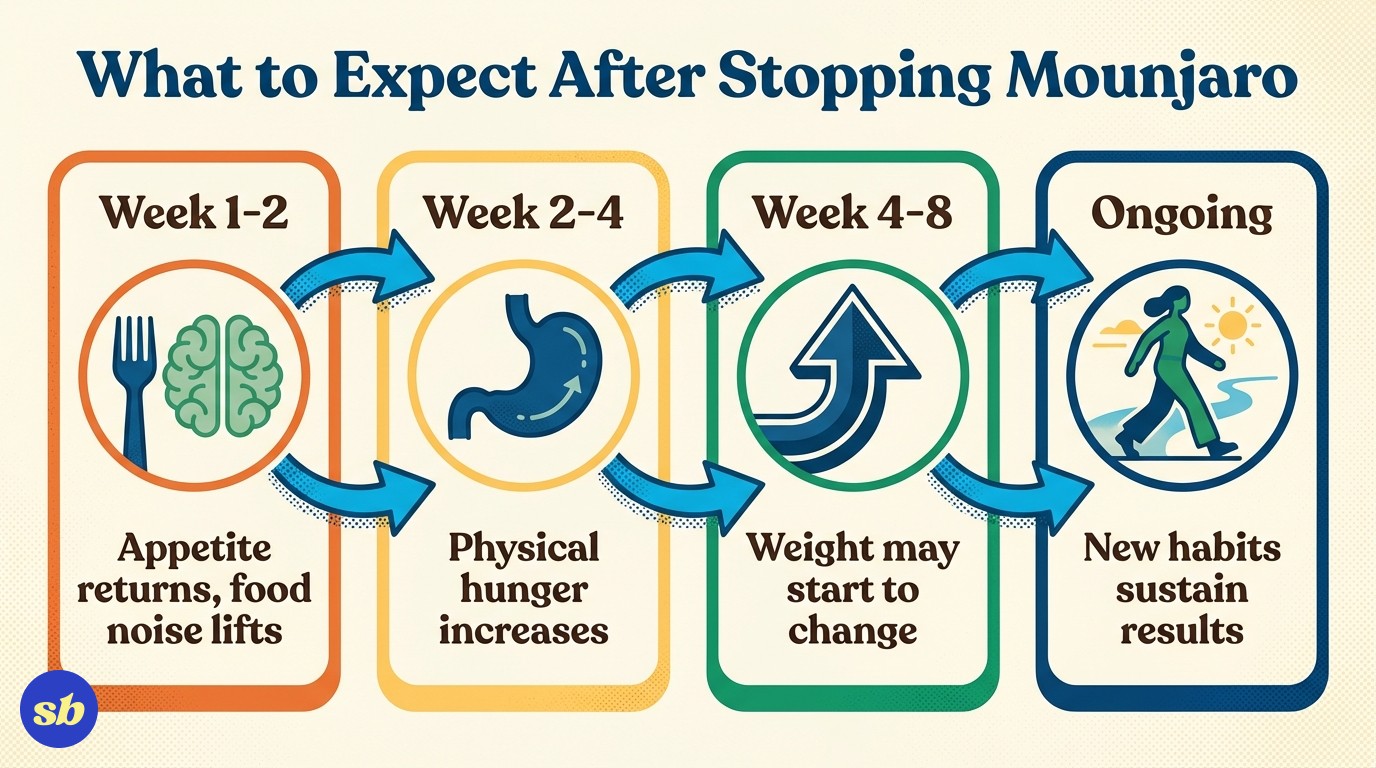
Week 1–2: Appetite usually returns first. The mental quiet around food starts to lift, and cravings creep back in.
Week 2–4: Physical hunger gets more noticeable. Your stomach empties at its normal speed again, and you might feel hungry between meals.
Week 4–8: This is when weight regain can pick up if eating habits haven’t changed. Your metabolism adjusts to the absence of the medication.
The intensity really varies. Some folks feel a big shift in days, while others notice a slow drift back to old patterns over weeks.
Common symptoms after stopping Mounjaro
When you stop taking Mounjaro, your body needs time to get used to functioning without it. Most people notice a return of appetite, digestive changes, mood shifts, and blood sugar fluctuations as the drug wears off. At the same time, side effects you experienced during treatment, such as nausea, constipation, diarrhoea, or vomiting, typically improve and eventually resolve once the medication leaves your system.
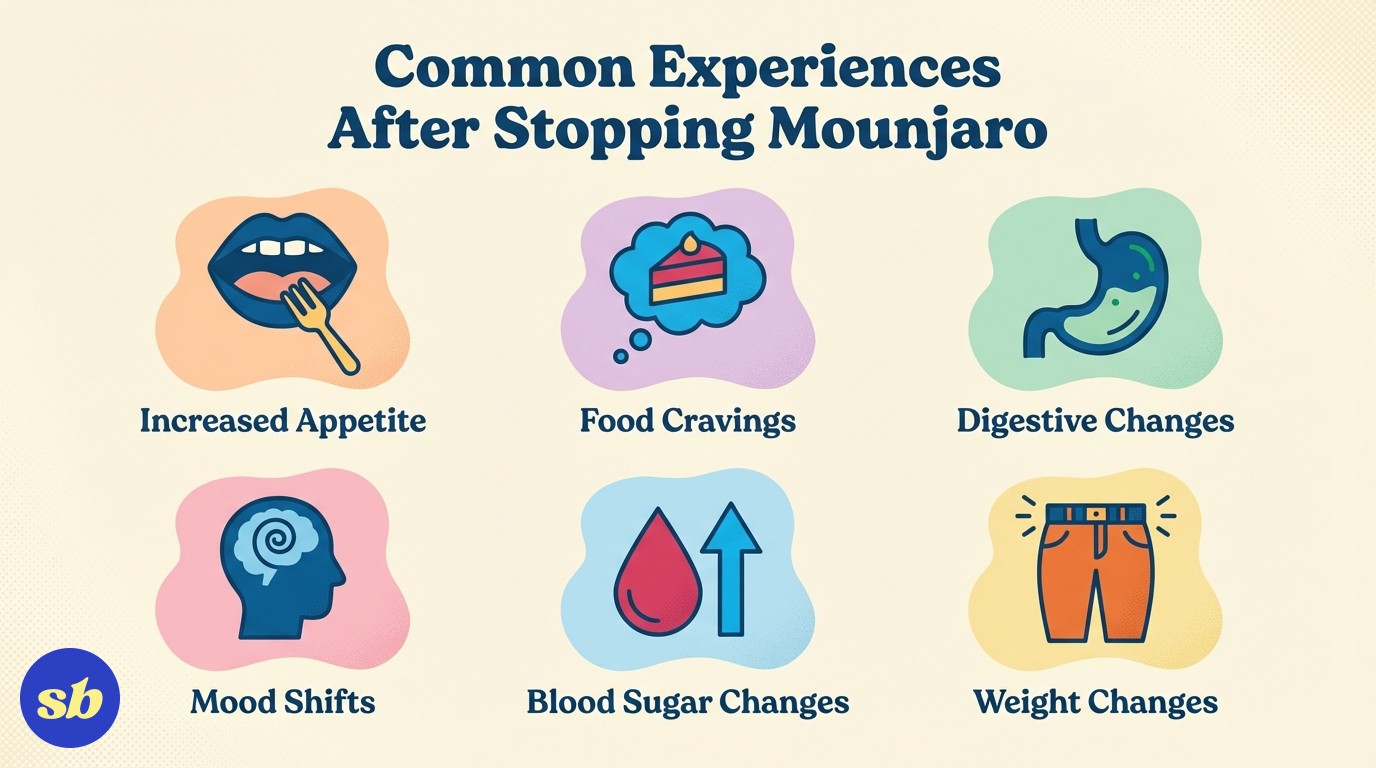
Return of increased appetite and food noise
This is usually the first thing people notice after stopping Mounjaro. The medication mimics hormones that control hunger, so when it’s gone, those signals come roaring back.
Rebound hunger can feel intense. And it’s not just physical hunger. Many describe the return of “food noise”, that constant mental chatter about what to eat, when to eat, and cravings that pop up all day.
Your body’s natural ghrelin levels start to rise again. Ghrelin is often called the “hunger hormone” because it signals your brain that it’s time to eat. The more ghrelin your body produces, the hungrier you feel. While you were on Mounjaro, those signals stayed pretty quiet.
Now they’re back, and sometimes it feels like they’re louder than before. But this is a normal biological response. Your body is just returning to its baseline.
Digestive system readjustment
Mounjaro slows down gastric emptying (how quickly food leaves your stomach and moves into your intestines), so food hangs out in your stomach longer and you feel full for more time. When you stop, your digestive system speeds back up.
While you were on Mounjaro, you may have experienced side effects like nausea, constipation, diarrhoea, or vomiting, particularly during dose escalation. When you stop the medication, these gastrointestinal side effects typically resolve as your digestive system returns to its normal pace (Mounjaro SmPC, EMC). Some people find that their digestion feels different for a few weeks during the transition, as their stomach adjusts to emptying at its pre-treatment speed.
You might also notice a temporary change in bowel habits. Constipation that developed while on Mounjaro usually improves once the medication clears your system, while some people experience a brief period of looser stools or diarrhoea as their gut recalibrates. Nausea and vomiting, which are among the most commonly reported side effects during treatment, typically stop once you’re no longer taking the medication. If any digestive symptoms persist beyond a few weeks, speak to your GP.
The digestive changes often reverse faster than the appetite changes. Your stomach might get back to its normal speed within a few weeks, but hunger signals can take longer to settle.
This is pretty similar to what happens with other GLP-1 medications like semaglutide (Ozempic, Wegovy) or liraglutide.
Mood changes and psychological effects
The psychological effects of stopping Mounjaro can sneak up on you. People tend to focus on the physical stuff, but the mental side is real too.
Weight regain after stopping can affect your confidence and mood. If you’ve lost a lot, seeing the numbers creep up again can sting.
There’s also the mental hit of food noise returning. After months of quiet, having those cravings back can feel overwhelming.
Some people feel anxious about keeping weight off without medication. Others get frustrated, especially if they thought the weight loss would last forever. Research into the psychological effects of weight changes during GLP-1 treatment is still emerging, but the NHS mental health resources can offer support if you’re struggling.
Blood sugar fluctuations
If you have type 2 diabetes or prediabetes, stopping Mounjaro can shake up your blood sugar control. The medication helps regulate glucose, so quitting might change your readings.
For people with type 2 diabetes: Your blood sugar levels may rise as the medication leaves your system. It doesn’t happen overnight, but it’s worth monitoring your blood sugar readings closely.
Mounjaro improves several markers of metabolic health beyond visible blood sugar readings. During treatment, many people see improvements in their fasting insulin levels, the amount of insulin your body produces when you haven’t eaten, which is a key indicator of how well your body manages glucose. After stopping, fasting insulin levels may gradually return to pre-treatment levels, particularly if weight regain occurs. Your GP can check your fasting insulin and HbA1c levels to monitor how your body is adjusting.
For people without diabetes: You might not notice blood sugar changes as much, but your insulin response is still shifting back.
Weight gain after stopping GLP-1 medications is common, and that can make blood sugar harder to manage.
Your GP or prescriber should help you set up a monitoring plan, especially if you were taking Mounjaro for blood sugar more than weight loss. If you take Mounjaro alongside other diabetes medications, your GP may need to adjust your other prescriptions when you stop. Stopping Mounjaro without adjusting accompanying treatments could affect your blood sugar control.
Weight regain patterns and maintaining results
When you stop taking Mounjaro for weight loss, your body doesn’t just pick up where it left off. Most people regain some weight. How much depends on the habits you build and the support you keep after you stop.
Risk of weight gain after stopping Mounjaro
Weight regain after stopping GLP-1 medications is common and, honestly, pretty frustrating. The SURMOUNT-4 trial found that participants who switched from tirzepatide to placebo regained a significant portion of their lost weight over 52 weeks, while those who continued treatment maintained their results (Aronne et al., JAMA 2024).
Why does this happen? Mounjaro mimics gut hormones that control hunger and blood sugar. When you stop, those signals fade, and your appetite comes back, sometimes stronger than before.
The timeline varies. Some notice changes in weeks. Others hold steady for months before the scale starts creeping up.
Factors that influence weight regain:
-
How long you took Mounjaro
-
Your starting weight and how much you lost
-
Changes you made to eating patterns
-
Your activity level after stopping
-
Metabolic factors like insulin sensitivity, that’s how well your body responds to insulin to process blood sugar
Weight regain isn’t a guarantee. But it’s realistic to expect some unless you’ve made deep lifestyle changes.
Preserving muscle mass and preventing fat gain
Loss of lean body mass is a real concern with GLP-1 weight loss. Quick weight loss doesn’t just burn fat; it can take muscle too.
Why care? Muscle burns more calories at rest than fat. Less muscle means a slower metabolism, so weight comes back more easily.
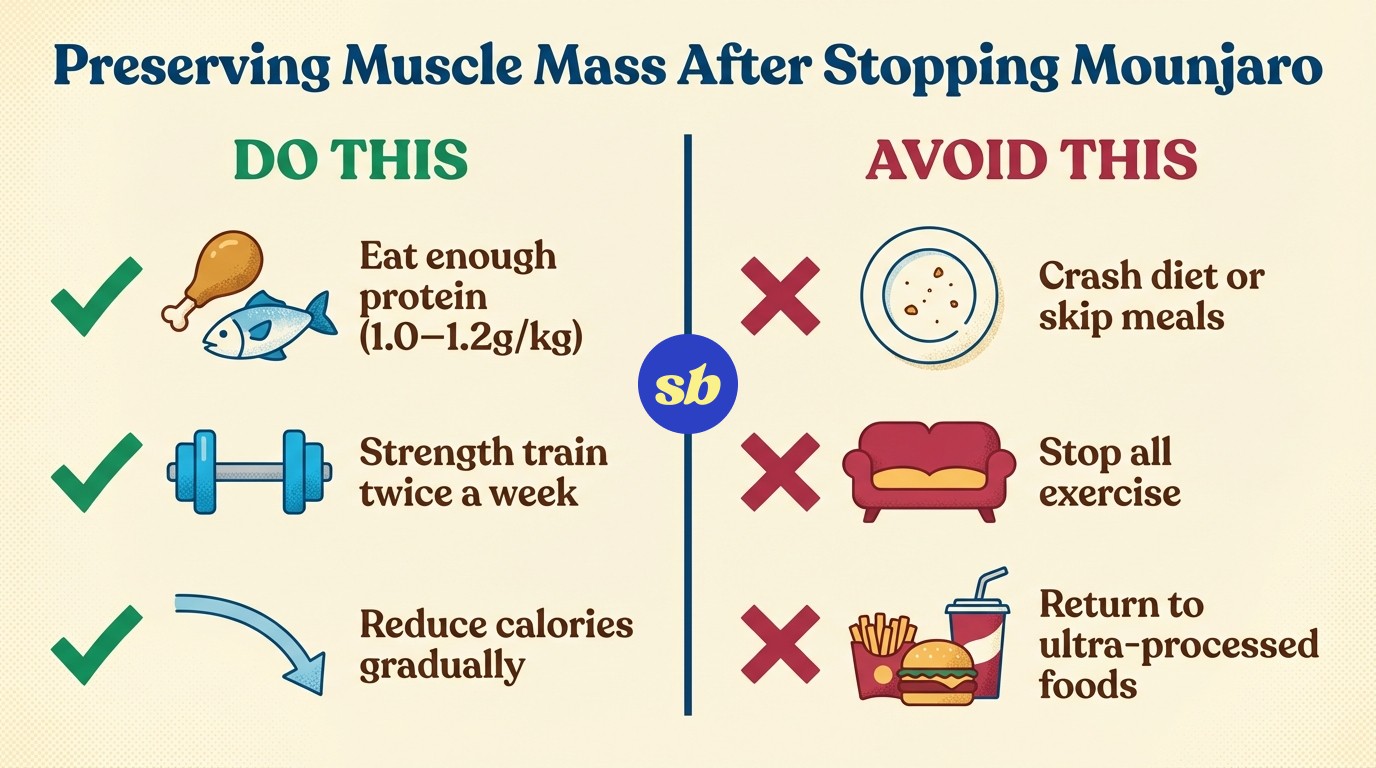
How to keep muscle:
-
Eat enough lean proteins (chicken, fish, eggs, tofu)
-
Include healthy fats from nuts, avocados, olive oil
-
Do resistance training at least twice a week
-
Avoid slashing calories too drastically
Protein really matters. Aim for 1.0–1.2g per kilogram of body weight daily during active weight loss, or up to 1.2–1.5g per kilogram daily if you’re doing regular strength training. For someone weighing 80kg, this means roughly 80–100g of protein daily during weight loss.
Strength training doesn’t have to mean gym marathons. Bodyweight moves, resistance bands, or light dumbbells all count.
Role of physical activity and nutrition choices
Physical activity gets even more important after you stop Mounjaro. It’s one of the best tools left for weight management without medication.
Regular movement helps maintain your insulin sensitivity, that’s how well your body responds to insulin to process blood sugar. Better insulin sensitivity means your body handles glucose more efficiently and stores less fat.
Exercise supports long-term weight maintenance better than diet alone. The NHS physical activity guidelines recommend at least 150 minutes of moderate-intensity activity per week for adults.
Realistic activity goals:
-
150 minutes of moderate activity each week (brisk walking is great)
-
Two strength sessions per week
-
Move daily, even if it’s just a 10-minute stroll
Nutrition matters just as much. The NHS Eatwell Guide provides a solid foundation for balanced eating. While cravings are easier to manage on Mounjaro, after stopping, those cravings often come back.
Stick to whole foods. Fill half your plate with veggies. Choose complex carbs over refined ones. Nothing flashy, but it works if you keep at it.
Long-term outcomes and realistic expectations
Most people don’t keep off 100% of their weight loss after stopping Mounjaro. That’s not failure; it’s just how bodies work.
Some weight regain is normal. The goal isn’t perfection; it’s keeping off enough weight to help your health and feel better day to day.
What counts as success? In the SURMOUNT-1 trial, participants taking tirzepatide at the highest dose achieved an average of 22.5% body weight loss over 72 weeks (Jastreboff et al., NEJM 2022). If you keep off a meaningful portion of that, blood pressure, blood sugar, joint pain, all can improve compared to where you started. Individual results vary significantly.
Realistic expectations after stopping:
-
You might regain a portion of what you lost
-
Appetite will probably go up
-
You’ll need to work harder to maintain results
-
Support from your GP or prescriber definitely helps
Some people restart Mounjaro if weight regain gets out of hand. Others use their initial weight loss as a springboard for better habits. There’s no one right answer.
Having a plan before you stop is key. Work with your GP or prescriber to figure out when and how to come off. Build sustainable habits while you’re still on the medication.
That prep really makes a difference.
Strategies for a successful transition off Mounjaro
Stopping Mounjaro isn’t just about quitting the injections. You need a real plan: medical guidance, practical eating strategies, support for your body and mind, and regular check-ins to keep you honest.
Working with a GP or prescriber
Don’t try to handle this on your own. Bring your GP or prescriber into the conversation right from the start.
They’ll help you figure out if you should taper your dose slowly or just stop altogether. Some folks cut back over several weeks to let their bodies catch up. Others might stop right away, depending on what makes sense for them.
Your GP or prescriber keeps an eye on physical changes during the switch. They’ll check your weight, blood sugar (if that’s relevant for you), and see how your appetite shifts.
If you work with a registered dietitian, they’ll create a meal plan that’s actually tailored for you, not something generic.
Sometimes your team might suggest a different medication or more hands-on lifestyle support. They could even refer you to someone who specialises in weight management.
Mindful eating and managing cravings
When Mounjaro’s appetite-dulling effect wears off, hunger can come back hard. That’s when mindful eating actually matters.
Try eating slowly. Pay attention to whether you’re truly hungry. Set your fork down between bites. Notice when you feel satisfied, not overstuffed.
A few practical tricks for handling a bigger appetite:

Cravings? Yeah, they’re probably going to get louder. When Mounjaro is active, it dampens activity in the brain’s food-reward pathways. Now, you’ll need some backup strategies.
Try the 10-minute rule. When a craving shows up, wait it out for 10 minutes and do something else. Sometimes, that’s all it takes for the urge to fade.

Supporting digestive and mental health
Your digestive system might act up for a bit. Some folks notice changes in their bathroom routine or a little discomfort.
Drink plenty of water while your body adjusts. Hydration helps digestion and can even take the edge off hunger. Aim for at least 2 litres of water daily. The NHS Eatwell Guide recommends 6–8 glasses of fluid daily as a baseline, and you may need 2–3 litres if you’re experiencing digestive changes.
If you get stomach cramps, a gentle walk can ease things. If discomfort persists, speak to your GP for guidance on managing digestive symptoms during the transition.
Mental health deserves real attention here:
-
Mood swings or irritability might show up, and that’s normal
-
Practice stress-busting habits like deep breathing, or even meditation if that’s your thing
-
Reach out to friends or family who get it
-
If emotional eating creeps in, maybe talk to a counsellor
Your body’s finding its new normal. Give yourself some grace while things settle down.
Ongoing monitoring and support
Regular check-ins keep you accountable and help you spot problems before they get out of hand. Try scheduling follow-up appointments with your GP or prescriber every few weeks, at least in the beginning.
Track your weight, but don’t let the tiny daily changes mess with your head. Weekly weigh-ins give you a clearer picture and save you a lot of stress.
Keep an eye on other things too, like your energy, sleep, or just how your clothes feel. Sometimes those little details say more than the number on the scale.
Find a support group or connect with people who get what it’s like to come off Mounjaro. Online communities can be a lifeline when your motivation tanks.
Sharing your ups and downs with others reminds you that you’re not the only one going through this.
Move your body as often as you can. Staying active helps you keep the weight off and does wonders for your mood.
Pick activities you actually like. Forcing yourself through workouts you hate is a recipe for burnout.
Think about working with professionals for the long haul, not just during the switch. A registered dietitian, trainer, or therapist might be the edge you need to keep your progress going.
When to seek medical help
Knowing the difference between normal readjustment and something that needs medical attention is important. Use this traffic light guide to help you decide.

These are normal and usually settle within a few weeks:
- Gradual return of appetite and food cravings
- Feeling hungry between meals again
- Mild digestive changes as your stomach empties at its normal speed
- Slight mood fluctuations as you adjust
- Mild increase in food noise (thinking about food more often)

See your GP if you notice:
- Rapid or significant weight regain (more than 5% of your body weight in a month)
- Blood sugar readings consistently outside your target range
- Persistent low mood, anxiety, or difficulty coping
- Digestive symptoms that don’t settle within a few weeks
- Any new or worsening symptoms after stopping treatment

Seek immediate medical help if you experience:
- Severe abdominal pain, especially radiating to your back (possible pancreatitis)
- Signs of allergic reaction: facial swelling, difficulty breathing, severe rash
- Confusion, fainting, or severe weakness
- Persistently high blood sugar readings (if you have diabetes) with symptoms such as excessive thirst, frequent urination, or blurred vision
Call 999 for suspected allergic reactions or pancreatitis symptoms.
Although rare, pancreatitis (inflammation of the pancreas) has been reported in people taking GLP-1 and GIP receptor agonist medications including Mounjaro. While this risk is primarily associated with active treatment rather than stopping, it’s worth being aware of the symptoms during any transition period. Severe abdominal pain that radiates to your back, persistent vomiting, or a swollen and tender abdomen could be signs of pancreatitis and require immediate medical attention.
This article is for information only and does not replace medical advice. Always speak to your GP or prescriber before stopping or changing any medication, including Mounjaro. If you have type 2 diabetes or other health conditions, your doctor will need to monitor you closely during any transition off treatment.
Sources: Clinical information is based on the official Mounjaro Summary of Product Characteristics and NICE guidance TA1026.
The bottom line
Stopping Mounjaro is a transition that works best with preparation. Most people experience some return of appetite and weight regain, but building sustainable habits while you’re still on the medication gives you the strongest foundation. Work with your GP or prescriber to create a tapering plan, prioritise protein and regular movement, and be patient with yourself as your body adjusts. If weight regain becomes significant, restarting treatment is always an option to discuss with your doctor.
Frequently asked questions
Is it safe to stop Mounjaro suddenly?
It’s generally safe to stop Mounjaro, but you should always discuss stopping with your GP or prescriber first. They may recommend tapering your dose gradually rather than stopping abruptly, particularly if you take Mounjaro for type 2 diabetes. A planned transition gives your body time to adjust and allows your doctor to monitor any changes in your blood sugar or weight.
How long do Mounjaro withdrawal symptoms last?
Most people notice changes within one to two weeks of their last dose, as tirzepatide has a half-life of approximately five days. Appetite and food cravings typically return first, within the first two weeks. Physical hunger and digestive changes usually settle within four to eight weeks. The timeline varies from person to person; some adjust quickly, while others notice a more gradual shift.
Will I gain all the weight back after stopping Mounjaro?
Weight regain is common after stopping GLP-1 medications, but you won’t necessarily regain everything. The SURMOUNT-4 trial showed that participants who stopped tirzepatide regained a significant portion of their lost weight, though the amount depends on lifestyle changes made during treatment (Aronne et al., JAMA 2024). If you’ve built sustainable habits around nutrition and physical activity, you’re more likely to maintain a meaningful portion of your weight loss.
Can I restart Mounjaro if I gain weight back?
Yes, restarting Mounjaro is an option if weight regain becomes significant. Speak to your GP or prescriber about whether resuming treatment is appropriate for you. They’ll consider your overall health, the reasons you stopped, and whether the medication is still the best approach for your situation.
What can I do to prevent weight regain after stopping?
Focus on three key areas: protein-rich nutrition (aim for 1.0–1.2g per kilogram of body weight daily), regular physical activity (at least 150 minutes of moderate exercise per week plus two strength sessions), and ongoing support from your GP or a registered dietitian. Building these habits while still on Mounjaro gives you the strongest foundation.
Does stopping Mounjaro affect blood sugar levels?
If you have type 2 diabetes or prediabetes, stopping Mounjaro can lead to rising blood sugar levels as the medication’s glucose-regulating effects wear off. Your GP may need to adjust your other diabetes medications or increase monitoring during the transition. If you don’t have diabetes, blood sugar changes are less likely to be noticeable.
Should I taper off Mounjaro or stop all at once?
There’s no single right answer; it depends on your individual circumstances. Some people taper by reducing their dose over several weeks, while others stop after their current dose runs out. Your GP or prescriber can advise on the best approach based on why you’re stopping, how long you’ve been on the medication, and whether you have diabetes or other health conditions.
What is “food noise” and will it come back?
Food noise refers to the constant mental chatter about food, thinking about what to eat, when to eat, and experiencing frequent cravings. Mounjaro quiets this by dampening activity in your brain’s reward centres. When you stop the medication, food noise typically returns within the first two weeks as those brain pathways reactivate. Mindful eating strategies and structured meal planning can help manage the return of food noise.
Can exercise replace Mounjaro for weight management?
Exercise alone is unlikely to produce the same level of weight loss that Mounjaro provides, but it’s one of the most effective tools for maintaining weight loss after stopping. Regular physical activity improves insulin sensitivity, preserves muscle mass, and supports mental wellbeing. Combined with good nutrition, it’s the foundation of long-term weight management without medication. The NHS physical activity guidelines recommend at least 150 minutes of moderate activity per week.
When should I see my GP after stopping Mounjaro?
Book a follow-up with your GP within two to four weeks of your last dose. They can check your weight, blood sugar (if relevant), and discuss how you’re managing. If you experience rapid weight regain, persistently high blood sugar, severe mood changes, or any concerning symptoms, contact your GP sooner.
Sources
-
Mounjaro Summary of Product Characteristics – Electronic Medicines Compendium (EMC)
-
NICE TA1026: Tirzepatide for managing overweight and obesity – National Institute for Health and Care Excellence
-
SURMOUNT-1 trial: Tirzepatide once weekly for the treatment of obesity – Jastreboff et al., New England Journal of Medicine, 2022
-
SURMOUNT-4 trial: Tirzepatide for weight loss maintenance – Aronne et al., JAMA, 2024
-
The Eatwell Guide – NHS
-
NHS weight management – NHS
-
Find a registered dietitian – British Dietetic Association