
Mounjaro has been all over the weight loss conversation lately. But honestly, it’s far from your only option.

The best alternatives to Mounjaro include Wegovy (closest in weight loss results), Ozempic and Rybelsus (same active ingredient, different formats), Saxenda (daily injection), and orlistat (a non-injection option). The right choice depends on your health profile, budget, and preferences. Speak to your prescriber to find the best fit.
Maybe your provider doesn’t offer Mounjaro. Or the price tag makes you cringe. Some people just can’t tolerate the side effects and want to try something else.
Whatever’s driving your search, knowing what else is out there lets you pick what actually fits your life and your wallet.
We’ve pulled together this guide to help you sort through the main alternatives. Here’s how these medications stack up, what sets each apart, and when lifestyle changes might actually work better than another prescription.
Key takeaways

Why seek alternatives to Mounjaro?
People look for alternatives to Mounjaro for all sorts of reasons. Cost, side effects, or just not being able to get it can all make you rethink things.

Common reasons for switching
Mounjaro just doesn’t work the same for everyone. Some people lose weight at first, then hit a wall and can’t seem to lose any more, no matter what they do.
Others don’t see much change at all. If you’ve been on it for months and the scales haven’t budged, you’ll naturally start thinking about trying something else.
Personal preference matters, too. Weekly injections aren’t for everyone. Some people would rather take a pill or have a different routine.
Your prescriber will carry out a fresh clinical assessment to determine which alternative suits your updated health profile. Weight loss success with GLP-1 medications partly comes down to finding a plan you can actually stick with.
Your health can change, too. Maybe a new diagnosis or medication means Mounjaro isn’t a good fit anymore.

Important: Don’t stop or switch weight loss medication without speaking to your prescriber first. Stopping suddenly can cause rebound weight gain and may affect blood sugar control if you have type 2 diabetes.
Cost and insurance considerations
Mounjaro isn’t cheap, especially if your insurance leaves you hanging. Prices swing a lot depending on whether you’re paying privately or through the NHS.
Private prescriptions can run between £120 and £300 each month. That adds up fast for most people.
Insurance coverage is a whole other headache. Some plans only pay for Mounjaro if you tick certain boxes, like a specific BMI (Body Mass Index, a measure of weight relative to height) or a diabetes diagnosis. Others won’t cover weight loss medications at all.
You can’t get a generic or biosimilar version (a cheaper near-identical copy) of tirzepatide (the active ingredient in Mounjaro) yet. So there’s no lower-cost alternative version available yet.
If cost is a dealbreaker, it’s worth seeing if other GLP-1 medications (treatments that mimic a natural appetite-regulating hormone) or different approaches fit your budget better. Some have been around longer and might be easier to get covered.
NHS eligibility for Mounjaro
Mounjaro is available on the NHS through specialist weight management services if you’re living with obesity and have weight-related health conditions such as type 2 diabetes, high blood pressure, or sleep apnoea. Initially, access through GP practices is limited to those with the highest clinical need: a BMI of 40+ (or 37.5+ if you’re of Asian, Black African, African-Caribbean, or Middle Eastern heritage) plus at least 4 weight-related conditions.
Eligibility may vary by area. Check with your local integrated care board (ICB) for specific criteria in your region.
Side effects, contraindications and tolerability
Mounjaro brings side effects for a lot of people. Nausea, vomiting, and diarrhoea pop up most often, especially when you first start or bump up your dose. Approximately 1 in 4 people experience nausea, particularly during dose escalation, though it typically improves within 2–4 weeks on a stable dose. Your prescriber should carry out a thorough clinical assessment before starting you on any GLP-1 medication, and regular check-ins help catch any issues early.
Some people can handle it, and those symptoms usually settle down. Others just find it too miserable to keep going.
Persistent hunger on Mounjaro is another complaint, which can undermine one of the medication’s key benefits. The Mounjaro Summary of Product Characteristics provides full details on reported side effects and their frequency.
If you take oral contraceptives, be aware that Mounjaro (and some alternatives) may reduce their effectiveness. Use additional barrier contraception such as condoms for 4 weeks after starting treatment and for 4 weeks after each dose increase.
Certain health issues mean you should steer clear of Mounjaro entirely. These include:
-
Personal or family history of medullary thyroid cancer (a rare type of thyroid cancer)
-
Multiple endocrine neoplasia syndrome type 2 (MEN2, a rare inherited condition affecting hormone-producing glands)
-
Severe gastrointestinal disease
-
Pregnancy or planning to get pregnant
You’ve also got to watch for rare but serious problems like pancreatitis, gallbladder issues, or vision changes if you have diabetic retinopathy. If these crop up, switching medications isn’t just a preference — it’s a must.

Seek immediate medical help if you experience:
- Severe abdominal pain, especially radiating to your back (potential pancreatitis)
- Signs of allergic reaction: facial swelling, difficulty breathing, severe rash
- Persistent vomiting that won’t stop
- Signs of gallbladder problems: severe upper stomach pain, fever, yellowing of skin or eyes
Call 999 for suspected allergic reactions or pancreatitis.
Access and availability challenges
Supply hiccups have made Mounjaro tough to get in the UK and elsewhere. Sometimes, demand just outpaces what’s on the shelves.
Miss a dose or have to stop suddenly? That can make the weight come back fast. We’ve seen it happen when people can’t get their prescriptions filled on time.
Where you live matters, too. Not every GP or clinic prescribes Mounjaro, and some places have long waits.
Sometimes only certain doses are stocked. It’s frustrating if your dose isn’t available, especially since ramping up slowly is key for tolerability.
Import rules and prescription hoops make it even harder. Buying from sketchy online sources is risky, so if you can’t get Mounjaro safely, finding a legitimate alternative just makes sense.
Telehealth services have made accessing weight loss treatment more convenient for many people. If your local GP doesn’t prescribe Mounjaro, an online consultation through a regulated telehealth provider can connect you with a prescriber who does. Just make sure any service you use is registered with the Care Quality Commission (CQC) and involves a proper clinical assessment before prescribing.
How Mounjaro and its alternatives work
Mounjaro takes a two-pronged approach, hitting two hormones at once. Most alternatives only target one. How you take them matters, too: some are weekly injections, some daily, and now there are even pills.
Overview of GLP-1 and GIP mechanisms
After you eat, your gut releases hormones. GLP-1 (glucagon-like peptide-1) and GIP (glucose-dependent insulinotropic polypeptide) are two of the big players.
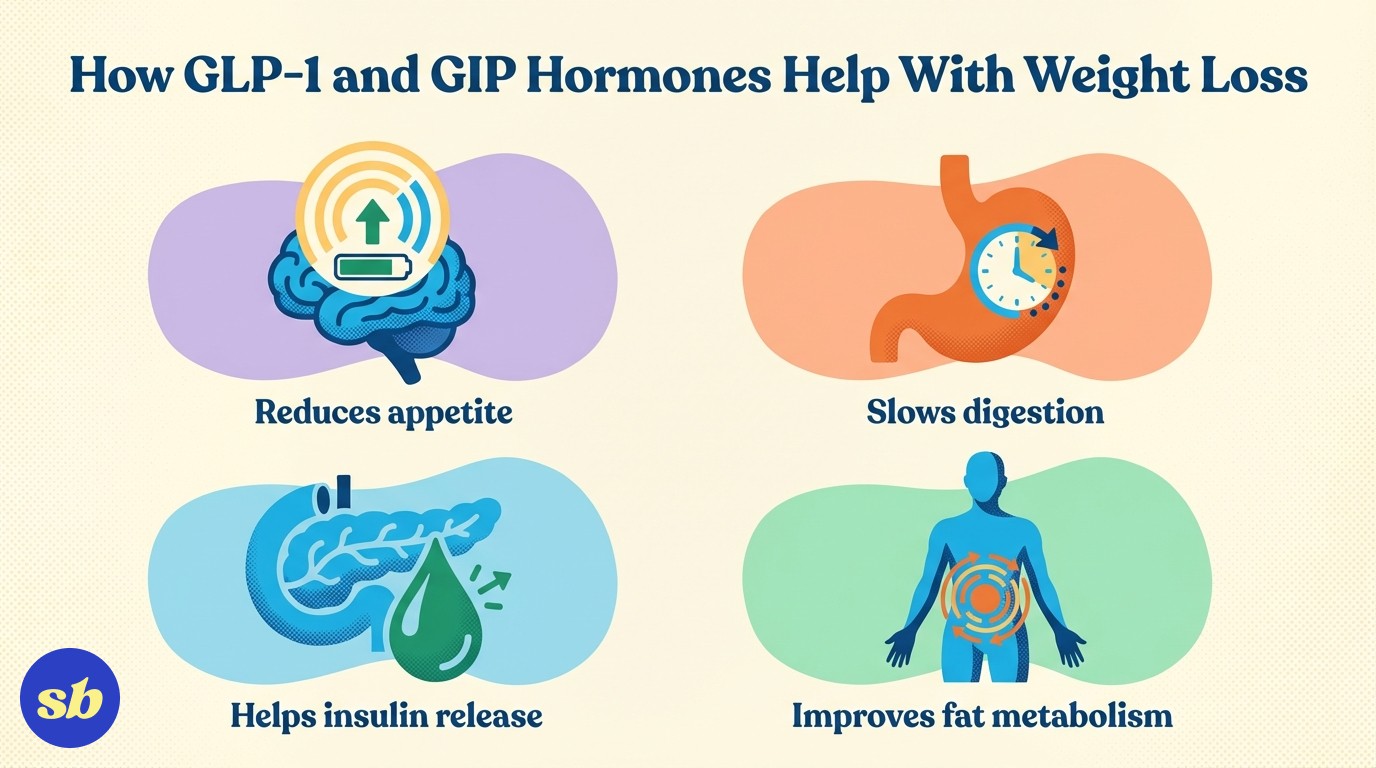
GLP-1 does a few things at once. It tells your brain you’re full, slows your stomach emptying, and helps your pancreas release insulin when your blood sugar spikes. All of this helps control appetite and blood sugar.
GIP works with GLP-1. It also triggers insulin release after meals. Research published in The Lancet shows GIP matters for fat metabolism, especially the stubborn fat around your organs.
If you have obesity or type 2 diabetes, your body might not make enough of these hormones, or they just don’t work right. That’s where these medications step in.
Dual GLP-1/GIP agonists vs. GLP-1 receptor agonists
Tirzepatide (the active ingredient in Mounjaro) is a dual GLP-1 and GIP receptor agonist: it works on two appetite-regulating hormones instead of one. That’s its big selling point.
Most other options stick to GLP-1 only. Wegovy (semaglutide) and Saxenda (liraglutide) just mimic GLP-1. GIP isn’t involved.
Why does this matter? Combining GIP with GLP-1 can mean more weight loss and better fat breakdown. In the SURMOUNT-1 trial published in The New England Journal of Medicine, tirzepatide usually led to more weight lost than semaglutide.
Here’s the gist:
-
Tirzepatide (Mounjaro): Targets both GLP-1 and GIP
-
Semaglutide (Wegovy, Ozempic): GLP-1 only
-
Liraglutide (Saxenda): GLP-1 only
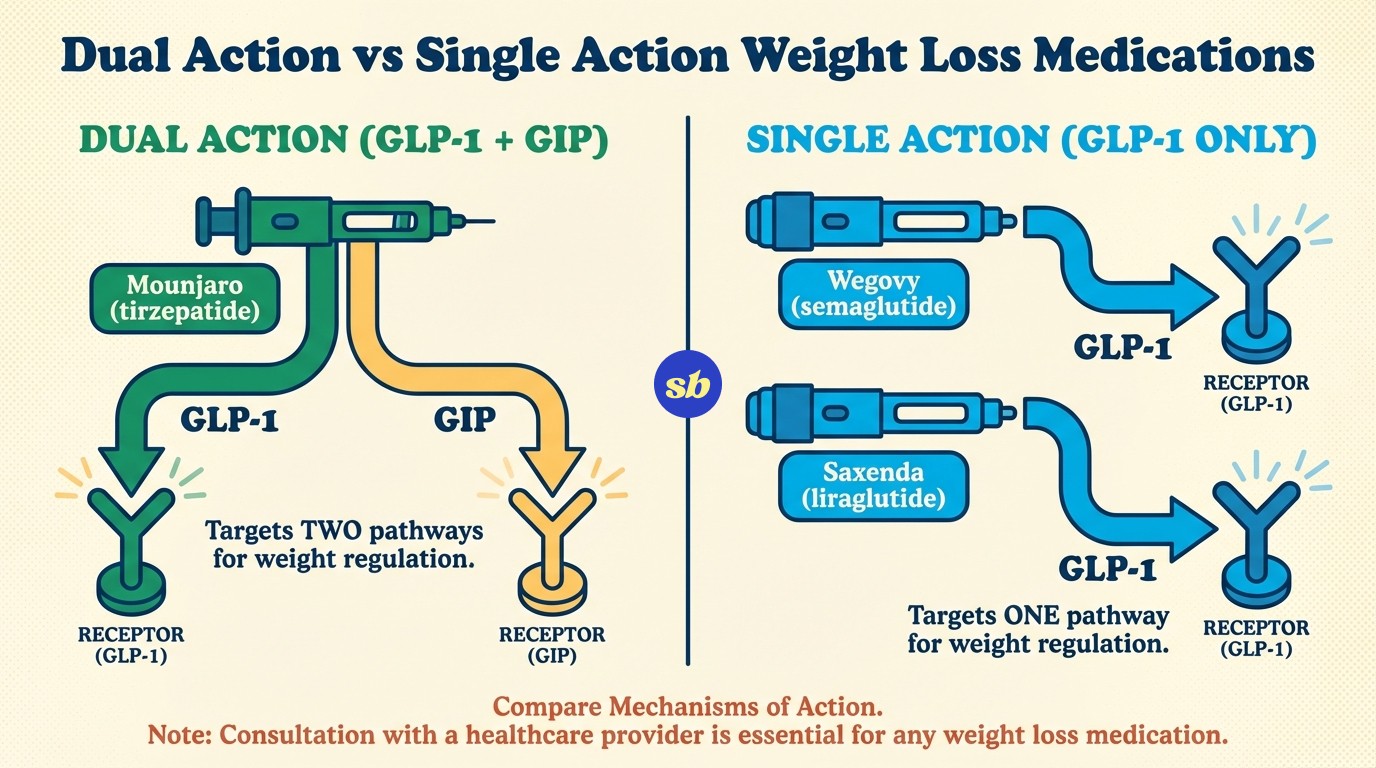
That dual action seems to help some people drop more weight with Mounjaro. But it’s not a guarantee for everyone.
Weekly vs. daily injections and oral options
How often you have to inject yourself really changes things.
Once-weekly injections: Mounjaro and Wegovy fall here. One injection a week, and most people find that manageable. You’ll start Mounjaro on 2.5 mg once weekly for 4 weeks, then increase every 4 weeks. Maintenance doses range from 5 mg to 15 mg depending on your response and tolerability.
Once-daily injections: Saxenda (liraglutide) makes you inject every day. That’s a lot: 365 times a year.
Oral GLP-1 options are showing up now. Rybelsus is a semaglutide tablet. You take it on an empty stomach with a bit of water, then wait half an hour before eating or drinking.
We’ve noticed weekly injections seem to cause fewer stomach issues. Your body gets a steady dose, instead of the rollercoaster of daily ups and downs.
Weight loss effects compared
The clinical trial data shows clear differences between these medications.
On the highest dose of Mounjaro (15 mg), people lost an average of 15–22.5% of their body weight over 72 weeks in clinical trials. Individual results vary significantly. If you weigh 100 kg (about 15 st 10 lb), that’s up to 22.5 kg (roughly 3 st 8 lb) gone. Source: SURMOUNT-1 trial, The New England Journal of Medicine.
Wegovy users shed about 15% on average over 68 weeks in clinical trials, though newer higher doses (7.2 mg) have shown results closer to Mounjaro’s. Source: STEP 1 trial, The New England Journal of Medicine.
Saxenda’s results are more modest, usually 5–10% weight loss. It’s still helpful, but not as dramatic. Source: SCALE trial, The New England Journal of Medicine.
Metformin isn’t a GLP-1 drug at all. It mainly cuts down how much sugar your liver makes. Most people lose just 2–3 kg on it.
Medication
Average weight loss
Injection frequency
Mounjaro (tirzepatide)
15–22.5%
Once-weekly
Wegovy (semaglutide)
~15%
Once-weekly
Saxenda (liraglutide)
5–10%
Once-daily
Metformin
2–3 kg
Oral tablets (daily)
Sources: SURMOUNT-1 (tirzepatide), STEP 1 (semaglutide), SCALE (liraglutide) trials
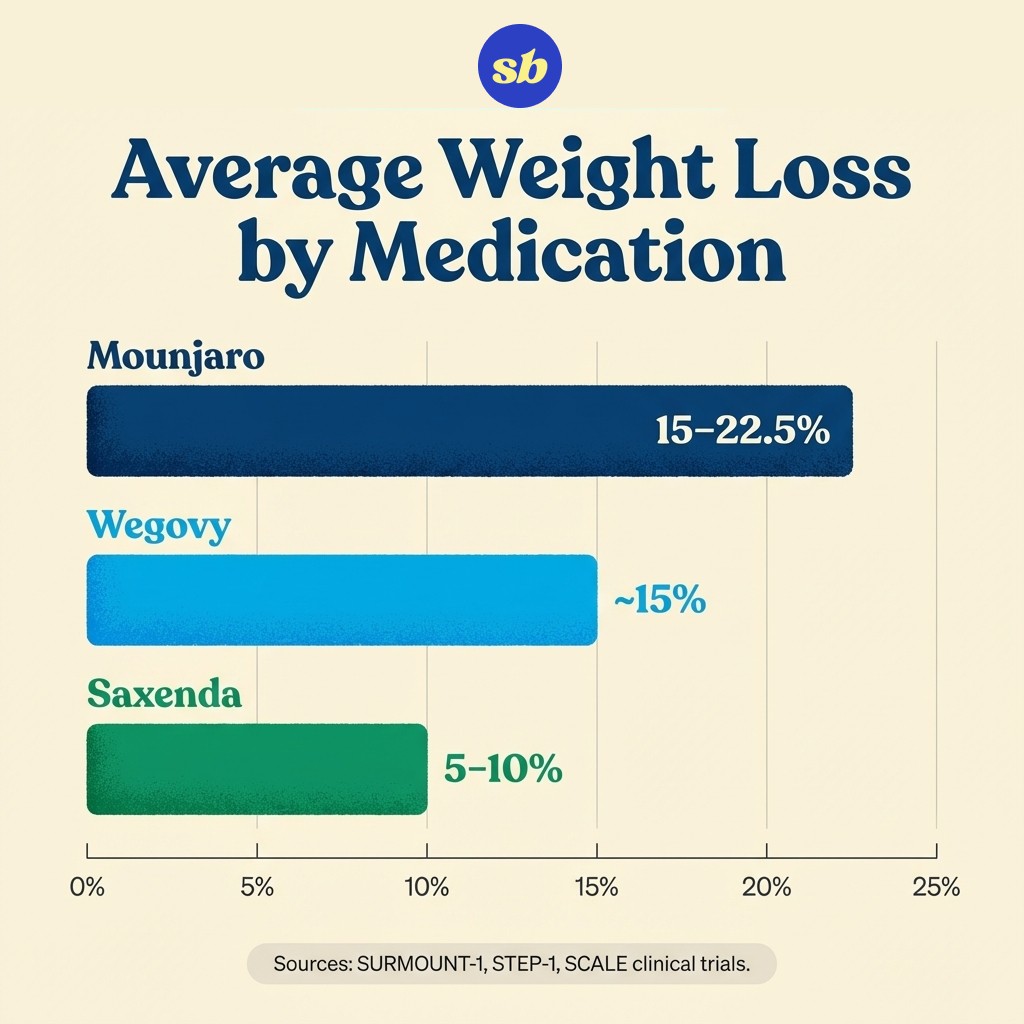
These are just averages. Some people do better on Saxenda and can’t handle Mounjaro’s side effects. Others find metformin plus lifestyle tweaks is enough.
Leading Mounjaro alternatives: comparing options
Several weight loss medications work a lot like Mounjaro, but they differ in dosing, weight loss potential, and side effects. Wegovy gives results closest to Mounjaro, while Saxenda and orlistat take a different tack.

Wegovy (semaglutide)
Wegovy is one of the closest alternatives to Mounjaro in terms of weight loss results, based on current clinical trial data. It’s a once-weekly injection that acts like the GLP-1 hormone, curbing appetite and slowing digestion.
In the SURMOUNT-5 head-to-head trial, Mounjaro 15 mg led to 20.2% average weight loss, compared to 13.7% with Wegovy 2.4 mg after 72 weeks. But the newer Wegovy 7.2 mg dose clocks in at 20.7% weight loss, basically matching Mounjaro’s best.
How Wegovy differs from Mounjaro:
-
Focuses on GLP-1 only (no dual action)
-
Has a set dose increase up to 2.4 mg or 7.2 mg
-
Been around longer, so there’s more real-world safety information
-
Side effects are similar, mostly nausea and constipation
Wegovy was approved for weight management in 2021 in the US and received MHRA approval in the UK in 2022, with NICE recommending it for eligible patients. Most people handle it fine, though higher doses can mean more stomach trouble.
Ozempic and Rybelsus
Both use semaglutide, just like Wegovy, but they’re mainly approved for type 2 diabetes rather than weight loss.
Ozempic is a once-weekly shot in 0.5 mg, 1 mg, or 2 mg doses. Rybelsus is a daily pill at 3 mg, 7 mg, or 14 mg.
Why consider these?
-
Sometimes cheaper than Wegovy
-
Work the same way as Wegovy
-
Rybelsus lets you skip the needle
-
Doctors sometimes prescribe them off-label for weight loss, meaning for a purpose the medication wasn’t originally approved for, though it’s still a common and legal practice
Weight loss with Ozempic is about the same as Wegovy at matching doses. Rybelsus usually leads to less weight loss, since the body doesn’t absorb it as well. And you have to take it on an empty stomach and wait 30 minutes before eating, which can be a pain.
Saxenda, Trulicity and dulaglutide
These are older GLP-1 medications. They usually lead to less weight loss than Mounjaro or Wegovy.
Saxenda (liraglutide) is a daily injection for weight management. On average, it helps people lose about 8% of their body weight, according to the SCALE trial published in The New England Journal of Medicine.
That’s roughly half of what you’d expect from Mounjaro. Daily injections turn some people off, but a few actually like having the choice to adjust their dose each day.
Trulicity (dulaglutide) is a once-weekly shot for type 2 diabetes. Some doctors use it off-label for weight loss, but that’s not what it was made for.
Most people lose 3–5% of their weight with Trulicity, based on data from the AWARD trial programme and the Trulicity prescribing information. It’s just not as strong as the newer medications.
Saxenda usually costs less than Wegovy or Mounjaro. But you have to inject it every day instead of once a week.
Side effects for all GLP-1 drugs mostly hit your stomach: nausea, diarrhoea, sometimes a little queasiness. These typically improve as your body adjusts to each dose.
Orlistat, Alli and Xenical
These work in a totally different way from Mounjaro. They stop your gut from absorbing about a third of the fat you eat.
Orlistat comes as Alli (60 mg, over the counter) or Xenical (120 mg, prescription-only). You take it three times a day with meals that contain fat.
Average weight loss is 5–10%, based on data from the orlistat prescribing information and NICE clinical guideline CG189.
Major considerations:
-
Doesn’t touch appetite or cravings
-
Only works if your meal has fat
-
Oily stools and urgent trips to the bathroom happen
-
Much cheaper than injections
-
No needles involved
GLP-1 alternatives usually give better results than orlistat. Still, orlistat can make sense if you can’t handle GLP-1 side effects or don’t want to inject anything.
The bowel issues often get better if you eat less fat. Honestly, that’s part of how this medication helps people lose weight: nobody wants to deal with the side effects, so you naturally cut back.
Supportive and natural alternatives
Not everyone wants medications, and honestly, that’s fair. Changing how you eat, increasing your physical activity, and learning to manage stress can lead to real weight loss without any prescriptions.
Natural supplements might give you a little boost, but they can’t really compete with GLP-1 drugs.
Lifestyle changes and behavioural approaches
Tackling emotional eating makes a huge difference for a lot of people. We often eat when we’re stressed, bored, or anxious, not because we’re actually hungry.
Noticing these triggers helps you pause before grabbing food. It’s not easy, but it works.
A food diary can open your eyes to patterns you never saw coming. Jot down what you eat and how you felt right before. Sometimes the emotional link is obvious once you see it written out.
Some people find therapy or counselling helpful for breaking these habits. It doesn’t work for everyone, but if you’ve tried everything else, why not?
Sleep matters more than most people think. Bad sleep messes with your hunger hormones and makes you crave sugar.
Aim for seven to nine hours a night. You might be surprised how much easier it is to eat well when you’re rested.
Stress management plays a big role too. High stress cranks up your cortisol, which encourages fat to settle around your middle.
Mindfulness techniques like meditation and deep breathing can help. Even ten minutes a day can change how you relate to food.
Diet and exercise strategies
A balanced diet is the backbone of real, long-lasting weight management. Lean proteins, vegetables, whole grains: you’ve heard it before, but it works.
Cut back on processed snacks and sugary drinks. You don’t need to go extreme.
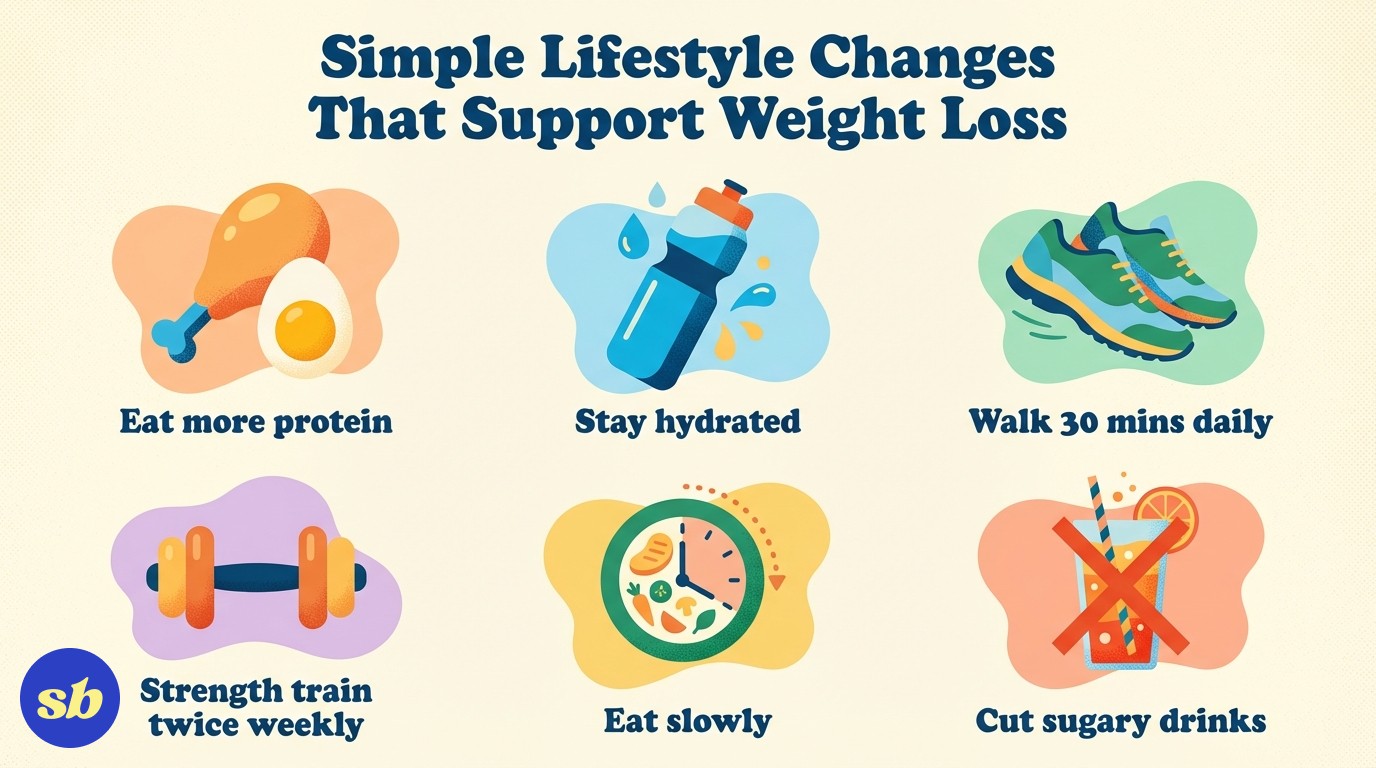
Small changes stick better. Try eating a little slower or shrinking your portions. Protein with every meal helps you stay full. During active weight loss, aim for 1.0–1.2 g of protein per kilogram of body weight daily. For someone weighing 80 kg, this means roughly 80–100 g of protein daily.
Staying well hydrated is especially important if you’re taking GLP-1 medications: aim for at least 2 litres of water daily. The NHS Eatwell Guide recommends 6–8 glasses of fluid daily as a baseline, but you may need 2–3 litres if you’re experiencing digestive side effects.
Regular physical activity is part of any sustainable weight loss plan, whether you’re on medication or not. You don’t need gruelling gym sessions: walking for 30 minutes most days burns calories and helps your body handle insulin more effectively.
Strength training twice a week builds muscle. More muscle means your metabolism gets a little boost, even when you’re just sitting around. The key is finding physical activity you actually enjoy, so you’ll stick with it long-term.
Start small. Maybe swap crisps for nuts, or add a walk at lunch. Once that feels normal, add something else.
Combining diet and physical activity with medication almost always works better than doing just one or the other.
Natural supplements and remedies
Some natural supplements claim to help with weight loss, but honestly, the evidence is all over the place. Green tea extract, for example, might give your metabolism a tiny nudge.
Fibre supplements like glucomannan can make you feel fuller. The effects are there, but they’re pretty modest.
Probiotics could support gut health, which might play a role in weight. Apple cider vinegar has its fans, but research shows it barely moves the needle.
Don’t assume herbal remedies are always safe just because they’re natural. Some supplements can mess with your medications or cause unexpected side effects.
It’s worth checking with your GP before trying anything new, especially if you have health issues.
Natural alternatives to Mounjaro take their sweet time and really need consistency. They’re probably best for people aiming for slow, steady progress without jumping straight to medication.
The bottom line
Mounjaro is a highly effective weight loss treatment, but it’s far from your only option. Wegovy offers comparable results with a once-weekly injection, while Saxenda, orlistat, and oral options each have their place depending on your needs, budget, and tolerance for side effects. Lifestyle changes, including a balanced diet, regular physical activity, and good sleep, work best when combined with medication. Whatever you’re considering, speak to your GP or prescriber for a clinical assessment to find the safest, most effective approach for you.
Choosing the right treatment provider
Whichever option you and your prescriber settle on, the provider you go through matters just as much as the medication itself. Pricing, dose availability, and ongoing clinical support vary widely between UK providers, so it’s worth comparing before you commit.
Frequently asked questions
What is the best alternative to Mounjaro for weight loss?
Wegovy (semaglutide) is the closest alternative in terms of weight loss results. The newer 7.2 mg dose has shown results comparable to Mounjaro. Like Mounjaro, it’s a once-weekly injection. Your prescriber can help you decide which option suits your health profile and budget. See the ‘Weight loss effects compared’ section above for detailed trial data.
Can I switch from Mounjaro to Wegovy?
Yes, but always do so under medical supervision. Your prescriber will typically start you on a lower dose of the new medication and gradually increase it, similar to when you first started treatment. Don’t stop Mounjaro and start Wegovy on your own: a clinical assessment ensures a safe transition.
Are there any oral alternatives to Mounjaro?
Rybelsus (oral semaglutide) is a daily tablet that works on the same GLP-1 pathway, though it typically produces less weight loss than injectable options. Metformin and orlistat are also available as tablets, though they work through different mechanisms and generally lead to more modest results.
How much do Mounjaro alternatives cost in the UK?
Costs vary widely. Private prescriptions for Wegovy typically range from £150 to £300 per month. Saxenda may be slightly cheaper. Orlistat is available over the counter as Alli (60 mg) for around £30–£50 per month. On the NHS, eligible patients can access some of these treatments at no cost through specialist weight management services.
Can lifestyle changes work as well as Mounjaro?
Lifestyle changes alone typically produce more modest weight loss, usually around 3–7% of body weight. Combining a balanced diet, regular physical activity, and behavioural strategies with medication consistently produces better results than either approach alone. For some people, lifestyle changes are a sensible starting point before considering medication.
What side effects should I expect when switching to a Mounjaro alternative?
Most GLP-1 medications share similar digestive side effects, including nausea, diarrhoea, and constipation, particularly during the first few weeks or after dose increases. Each medication has a slightly different side effect profile, so your experience may differ. See the ‘Side effects, contraindications and tolerability’ section above for more detail.
Is Mounjaro available on the NHS?
Yes. See the NHS eligibility criteria earlier in this article for full details on who qualifies and how to check your local area’s requirements.
Do I need a prescription for Mounjaro alternatives?
Most effective alternatives, including Wegovy, Ozempic, Saxenda, and Rybelsus, require a prescription. Orlistat is available over the counter in its lower-dose form (Alli, 60 mg), though the higher-dose version (Xenical, 120 mg) is prescription-only. Natural supplements don’t require a prescription but offer much more modest results. A telehealth consultation or visit to your GP is the best way to explore your prescription options.
This guide is for information only and doesn’t replace medical advice. Weight loss medications are prescription treatments that require proper medical assessment. Speak to your GP or prescriber before starting, switching, or stopping any weight loss medication.
Sources:
-
SURMOUNT-1 trial (tirzepatide) — The New England Journal of Medicine
-
SURMOUNT-5 trial (tirzepatide vs semaglutide) — The New England Journal of Medicine
-
STEP 1 trial (semaglutide) — The New England Journal of Medicine
-
SCALE trial (liraglutide) — The New England Journal of Medicine
-
NICE TA875: Tirzepatide for managing overweight and obesity — National Institute for Health and Care Excellence
-
NICE TA964: Semaglutide for managing overweight and obesity — National Institute for Health and Care Excellence
-
Mounjaro Summary of Product Characteristics — Electronic Medicines Compendium
-
Wegovy Summary of Product Characteristics — Electronic Medicines Compendium
-
NHS Eatwell Guide — NHS
-
NHS England — Weight management injections — NHS England