

If you’ve lost weight and noticed you feel hungrier than before, you’re not imagining it. As you lose weight, your appetite usually increases, because your body works to defend its previous weight.
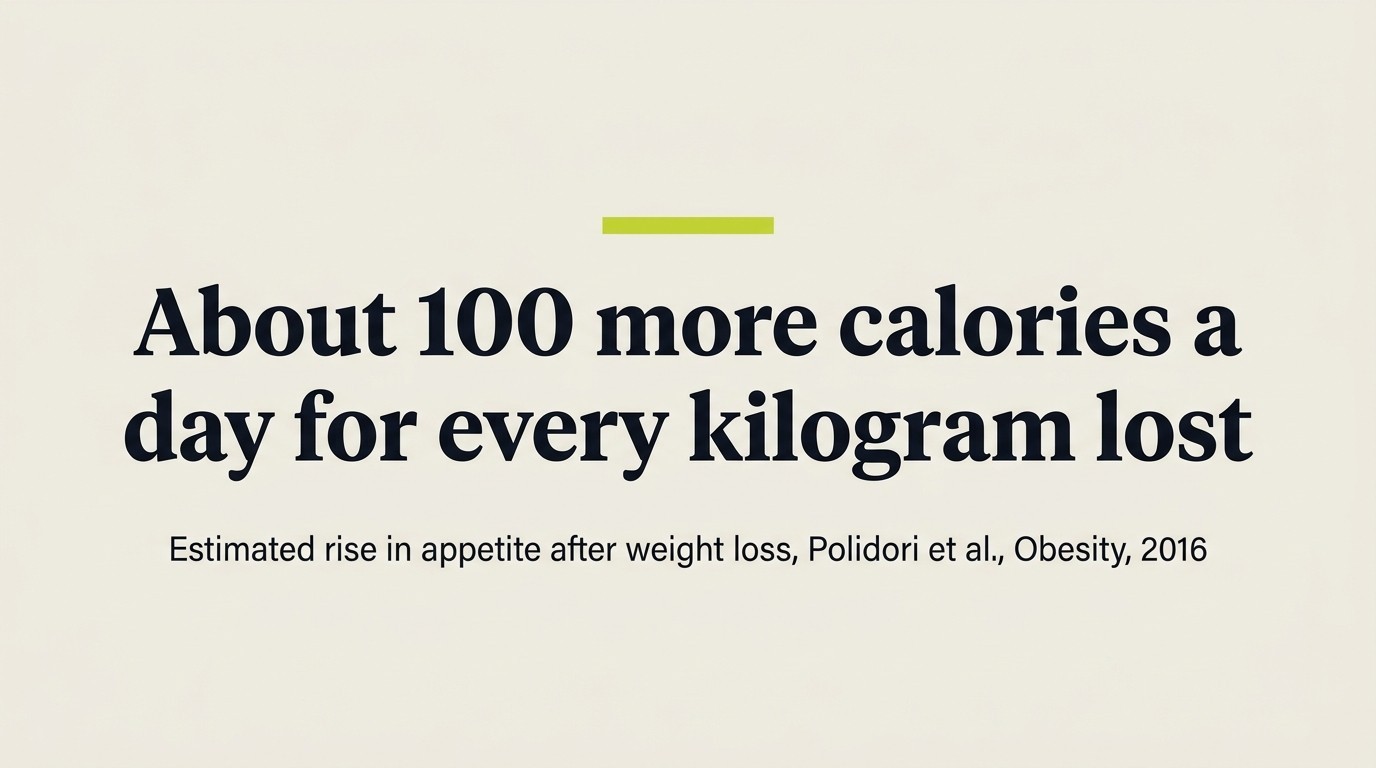
One analysis estimated that people eat about 100 more calories per day for each kilogram (about 2.2 pounds) of weight lost, compared with their starting intake. That increase in appetite helps explain why weight loss often slows and why weight regain is common.
This response comes from appetite regulation in your brain and gut, where hunger and fullness signals change after weight loss. Researchers are still working out exactly how hormones carried in your blood shape appetite after weight loss (this research, a newer review). Here’s what’s well established, what’s still emerging, and how to manage hunger whether or not you take a GLP-1 medication.
Key takeaways

Why your body pushes back: hormones and metabolism
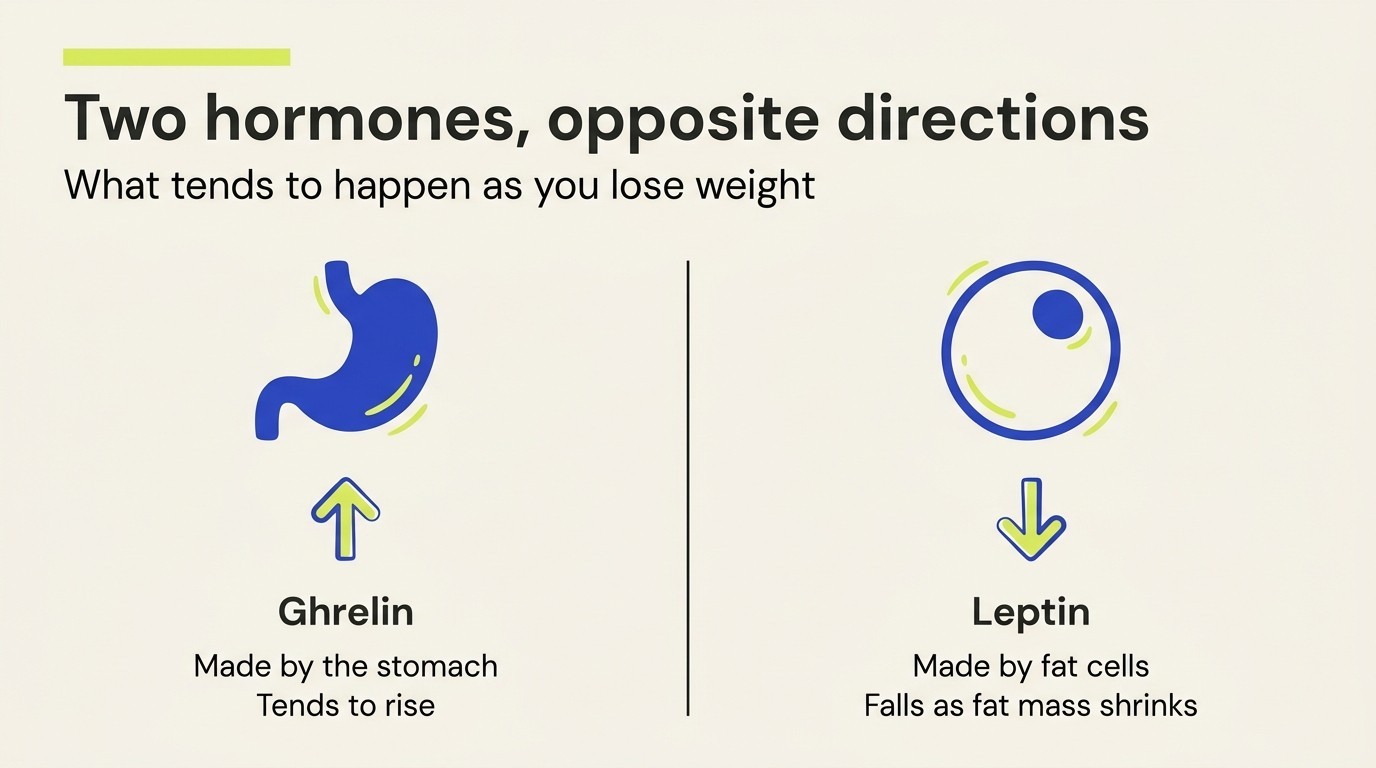
When you eat less and lose weight, your body responds by raising hunger signals like ghrelin, lowering fullness signals (also called satiety signals) like leptin, and burning slightly fewer calories than expected.
Why a calorie deficit often increases hunger
Your brain tracks your energy balance, the gap between your calorie intake and your energy expenditure. When you eat less than you burn, hormones and nerve signals from your gut and fat tissue report the shortfall to the hypothalamus. The hypothalamus is the brain region that regulates hunger, fullness and other metabolic signals.
Inside the hypothalamus, a group of cells called AgRP neurons becomes more active when energy is low. Researchers describe these neurons as integrators of metabolic and environmental cues that push you toward food (AgRP research). This response is well established in animal studies. Its exact role in human weight loss is still being studied.
In practice, this is part of why hunger can feel louder and more persistent when you’re eating less, even if you’re doing everything “right”. Most of the human research on this comes from adults with overweight or obesity who lost weight through diet, medication or surgery, and the pattern is similar across those groups.
How ghrelin and leptin change
Two appetite hormones move in opposite directions during weight loss:
| Hormone | Made by | Normal job | What happens as you lose weight |
|---|---|---|---|
| Ghrelin | Stomach | Signals hunger before meals | Levels tend to rise |
| Leptin | Fat cells | Signals stored energy to the brain | Levels fall as fat mass shrinks |
Ghrelin, often called the hunger hormone, acts on brain neurons that drive appetite (this review). In a 2011 study in The New England Journal of Medicine, 50 adults with overweight or obesity followed a 10-week very low-calorie diet. A year later, their ghrelin was still higher and their leptin still lower than before they started, and they reported feeling hungrier, even though they had regained some weight.
Many people with obesity also have leptin resistance, which means the brain responds less strongly to leptin than expected. It’s one reason leptin injections tested in clinical trials produced only modest weight loss for most people. Over-the-counter “leptin” supplements don’t contain the hormone at all.
GLP-1, insulin and other fullness signals
Several satiety hormones help you feel full after a meal:
- GLP-1 slows stomach emptying and signals fullness to the brain.
- Peptide YY (PYY) is released from the gut after eating and reduces appetite.
- Cholecystokinin (CCK) responds to fat and protein in a meal.
- Insulin helps move glucose into cells and also sends fullness signals to the brain.
After diet-based weight loss, studies have found that some of these satiety hormones are released in lower amounts after meals. The carbohydrate-insulin model proposes that high insulin drives fat storage and hunger. Reviews have found the evidence is mixed, so treat it as a debated theory, not a settled fact.
Why you need less food but feel hungrier
A smaller body uses fewer calories at rest and during movement. Your metabolic rate drops partly because you have less tissue to maintain.
Your metabolism may also slow a bit more than your new size predicts. Scientists call this adaptive thermogenesis. Reviews of weight loss with GLP-1 medications describe lower energy expenditure, loss of lean mass and increased hunger as factors that favor weight regain (one review).
The result is a mismatch: your body needs less food, while your hormones push for more. That’s biology, not a willpower problem.
Why some people feel less hungry
Not everyone feels hungrier while losing weight. Common reasons include:
- Food choices: Meals higher in protein and fiber tend to increase fullness, and eating enough overall matters more for long-term nutrition than any single food. Highly palatable foods can trigger hedonic hunger, the urge to eat for pleasure rather than because your body needs fuel.
- GLP-1 medications: These drugs mimic the GLP-1 hormone at higher, longer-lasting levels, which reduces appetite for many users. Semaglutide (Wegovy) mimics GLP-1. Tirzepatide (Zepbound) mimics both GLP-1 and a second gut hormone, GIP. Reduced appetite often comes with side effects such as nausea, especially early on or after a dose increase. Talk with your doctor about whether they are right for you.
- Bariatric surgery: Gastric bypass raises after-meal GLP-1 and PYY levels. Sleeve gastrectomy removes much of the stomach tissue that makes ghrelin.
Wegovy and Zepbound carry an FDA boxed warning about a possible risk of thyroid C-cell tumors, so tell your doctor about any personal or family history of thyroid cancer.
Ketogenic diets may also blunt the rise in hunger for some people, according to one meta-analysis, though this evidence is still emerging.
How to manage hunger while losing and maintaining
Some appetite changes are normal, but certain patterns are worth discussing with a doctor.
Build meals with protein, fiber and enough food
Good nutrition won’t switch off the hormonal push toward eating more, but it can take the edge off. Meals that pair a solid serving of protein with fiber-rich foods tend to keep people fuller for longer per calorie than meals built mostly on refined carbs. If you’re not sure where to start, a registered dietitian can help you plan meals that fit your tastes, budget and schedule.
- Protein (eggs, fish, poultry, beans, Greek yogurt) is consistently linked to greater fullness per calorie. About 25–30 grams per meal is a practical target. That’s roughly a cup of Greek yogurt with a handful of nuts, or a palm-sized piece of chicken. Protein needs vary with age, activity and health conditions, so a doctor or registered dietitian can help you set a number that fits you.
- Fiber (vegetables, fruit, whole grains, legumes) adds volume and slows digestion.
- Enough food matters too. Very low intake can backfire, since overeating at later meals can cancel out an earlier calorie cut.
- Regular meal times can reduce habit-driven snacking.
If a medication has reduced your appetite, getting enough protein can be harder simply because you’re eating less. Spreading protein across several small meals and snacks can help you reach your target.

Keep muscle with strength training
Losing weight usually means losing some muscle mass along with fat. Less muscle means slightly lower energy expenditure, which can make weight maintenance harder.

Strength training two or more days a week helps you keep muscle, as the CDC guidelines recommend. Regular physical activity is also common among people who keep weight off, according to registry data. Researchers are still studying how exercise affects appetite control, so treat appetite-specific claims about exercise as emerging evidence.
Sleep, stress and mindful eating
Short sleep is associated with stronger hunger and cravings. In one small study, two nights of short sleep lowered leptin, raised ghrelin and increased hunger in healthy young men. Aiming for at least seven hours a night, as the CDC recommends for adults, is a practical starting point.
Stress can also push you toward energy-dense foods. Research, mostly in animals, suggests that high-fat, high-sugar foods can dampen the brain’s stress response (this research), which is one reason stress can feel like hunger. Mindful eating means slowing down, noticing hunger and fullness cues, and enjoying your food. Some researchers argue that food pleasure, simply enjoying what you eat, may support weight management better than strict self-denial.

| Habit | How it may help |
|---|---|
| Consistent sleep | Steadier hunger and satiety signals |
| Stress breaks | Fewer stress-driven snacks |
| Eating without screens | Clearer fullness cues |
What to expect at your maintenance weight
Your body tends to defend its weight through changes in hunger and energy use. In the 2011 study described above, appetite-related hormone changes after a 10-week diet were still present about a year later. This is an established finding, not a personal failing.
Hunger may vary day to day, and it can feel steady or even stronger in maintenance, because your body’s push to regain weight doesn’t switch off when you stop losing. A randomized trial found that the rate of weight loss did not change long-term regain, so a steady pace is fine. Habits linked to maintenance include self-monitoring food intake, planning meals and, for some people, weighing themselves regularly (maintenance research). Skip the scale if it makes you anxious; it’s one tool among several.

When to talk to your doctor about appetite changes
Some appetite changes call for a conversation with your doctor:
- Hunger that stays intense despite balanced meals
- Appetite loss with unplanned weight loss
- Nausea, vomiting or trouble eating enough
- Feeling tired, dizzy or lightheaded, especially if you’re eating very little
- Thoughts or habits around food that feel out of control or distressing, such as bingeing, purging or strict restriction
If you take a medication that affects appetite, talk with your prescriber before making any changes. They can check for underlying causes and adjust your plan safely.
If food or eating feels like a struggle, you can talk to someone at the ANAD helpline (1-888-375-7767). If you’re in crisis, call or text 988.

When to get medical help right away
Get medical help right away (call 911 or go to the ER) if you have severe stomach pain that won’t go away, with or without vomiting, if you can’t keep fluids down, or if you feel faint. If you take a GLP-1 medication, these can be signs of a serious side effect such as pancreatitis or dehydration.
Frequently asked questions
Does your appetite decrease as you lose weight?
For most people, it doesn’t. When you eat less and lose body fat, levels of leptin drop and levels of ghrelin tend to rise. The exception is when a medication is suppressing appetite. GLP-1 medications mimic a gut hormone that helps regulate appetite and blood sugar. Even so, no single hormone fully explains why you feel hungry, since sleep, stress and habits all play a role.
Why might you feel hungrier after losing weight?
Your body treats weight loss as a drop in stored energy and tries to restore it. As covered above, hunger hormones can stay shifted for at least a year (NEJM study), and appetite rises by roughly 100 calories a day for each kilogram lost (one analysis). Emotions matter too, as covered in “Sleep, stress and mindful eating” above.
How long does it take for your appetite to adjust to eating less?
There isn’t a fixed timeline. Hunger tied to habit, such as wanting a snack at 3 p.m., often eases after a few weeks of a new eating routine. The biological drive to regain weight can last much longer.
If you take a GLP-1 medication, many people notice a smaller appetite within the first few weeks, though it varies with the medication and dose. Your doctor or pharmacist can tell you what to expect for your prescription.
Does your stomach actually shrink when you lose weight?
Not in a meaningful physical way for most people. Your stomach is a stretchy muscle, and its resting size stays fairly stable in adults unless you have surgery.
Some small studies suggest that eating smaller portions over several weeks may reduce how much the stomach comfortably holds (one small study). This finding is limited, so treat it as early evidence rather than an established fact.
Why do you feel full faster after losing weight?
Smaller meals can shift your sense of what a “normal” portion feels like. Stretch receptors in your stomach and signals from your gut also respond to the protein, fiber and water in your food.
GLP-1 medications add another effect: they slow how fast your stomach empties, as noted on the FDA label, so food stays there longer. This can make you feel full after only a few bites.
How can you manage increased hunger while losing weight?
See “How to manage hunger while losing and maintaining” above for the full picture. In short: prioritize protein (about 25–30 grams per meal), add fiber and volume, sleep seven or more hours (sleep study) and keep regular meal times.
Will my appetite come back if I stop a GLP-1 medication?
For many people, yes. In the STEP 1 extension and SURMOUNT-4 trials, participants who stopped semaglutide or tirzepatide regained a substantial share of the weight they had lost within a year, which suggests appetite returned toward previous levels. Never stop or change a medication on your own; talk to your prescriber about a plan first.
Is it normal to feel hungrier at maintenance than while losing weight?
It can be. See “What to expect at your maintenance weight” above. Regular meals with protein and fiber, enough sleep and strength training all help. Hunger that feels unmanageable is worth raising with your doctor.